
Most people don’t expect one of Maryland’s most surprising attractions to be hiding underground.
Instead of a famous monument or scenic overlook, this record-breaking spot takes you on a ride that lasts nearly three minutes and rises more than 100 feet.
If you love quirky roadside attractions, impressive engineering, or finding unusual places to add to your travel list, this one deserves a spot on your itinerary.
Keep reading to discover where you’ll find the longest escalator in the Western Hemisphere and why it’s worth seeing for yourself.
Where Is It?

You’ll find the Wheaton Station Escalator inside Wheaton Station, located at 11171 Georgia Avenue in Silver Spring, Maryland.
It’s about a 25-minute drive from Washington, D.C., 40 minutes from Baltimore and Annapolis, and 45 minutes from Frederick, depending on traffic.
About
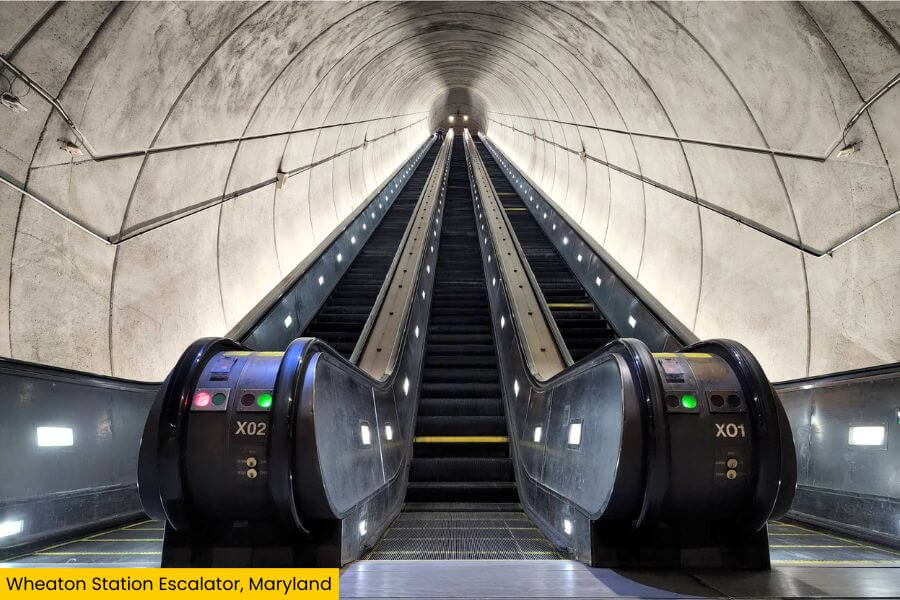
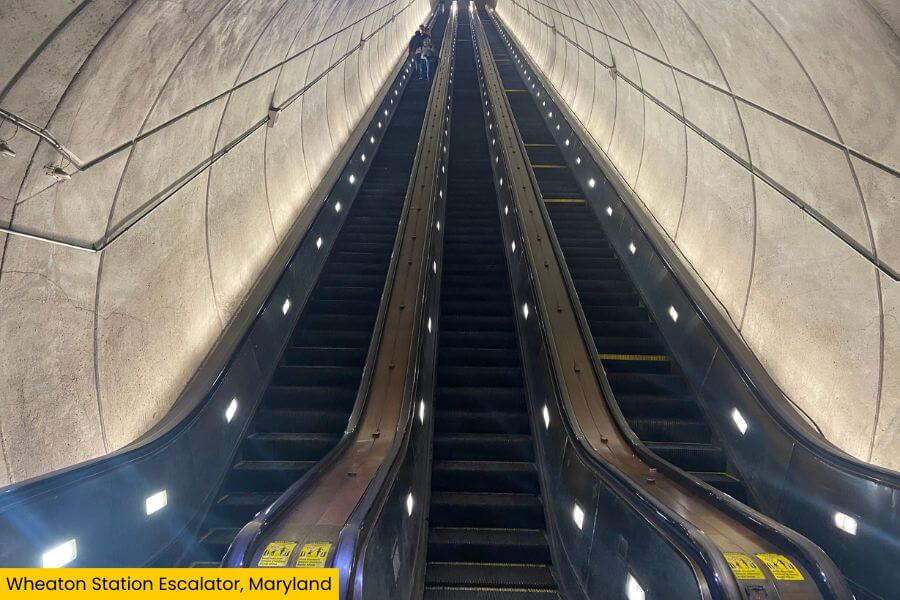
The Wheaton Station Escalator is known as the longest single-span escalator in the Western Hemisphere, and the ride itself is part of the attraction.
It stretches 230 feet long with a vertical rise of 115 feet, and the ride takes about 2 minutes and 45 seconds, giving you plenty of time to take in the view.
The towering concrete tunnel adds to the experience, creating an optical illusion that makes it seem even longer than it already is.
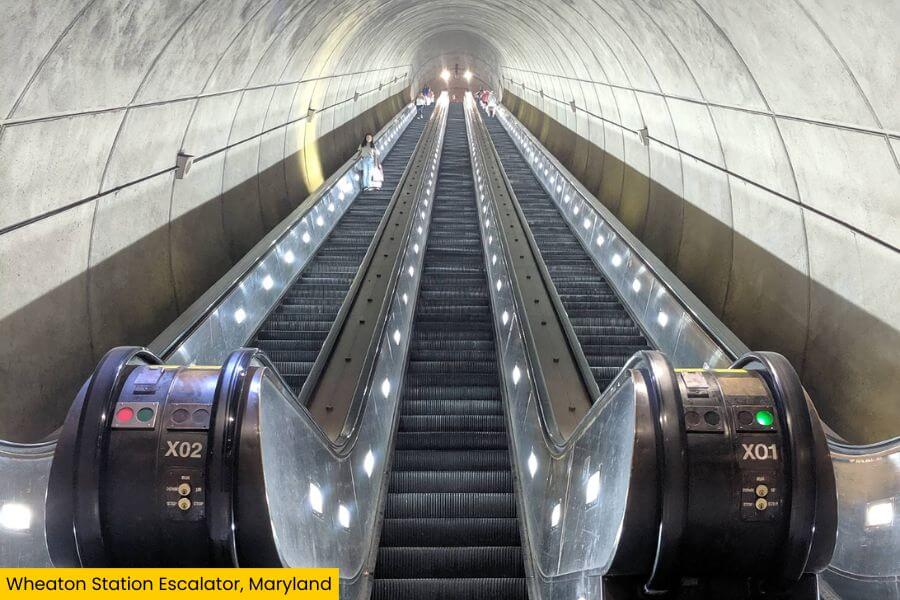
The ride is smooth and surprisingly relaxing, especially compared with the much shorter escalators found in most subway systems.
On your first trip down, you’ll watch the people at the top gradually become tiny as you descend into the station.
It’s even more impressive from the bottom, where the long rows of lights and handrails create a dramatic perspective that’s popular with photographers.
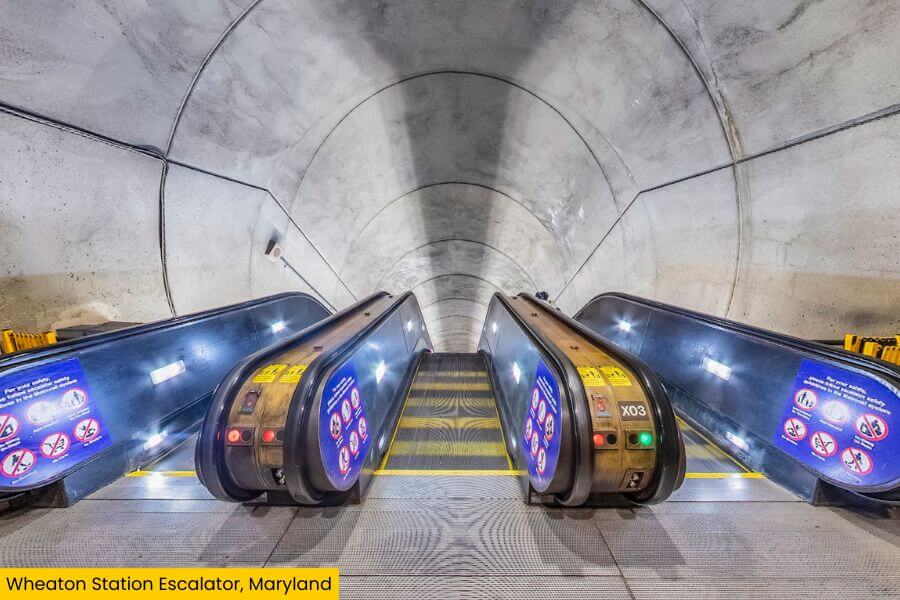
If you stop by during rush hour, the middle escalator can get pretty crowded, but the two on either side are usually a good alternative.
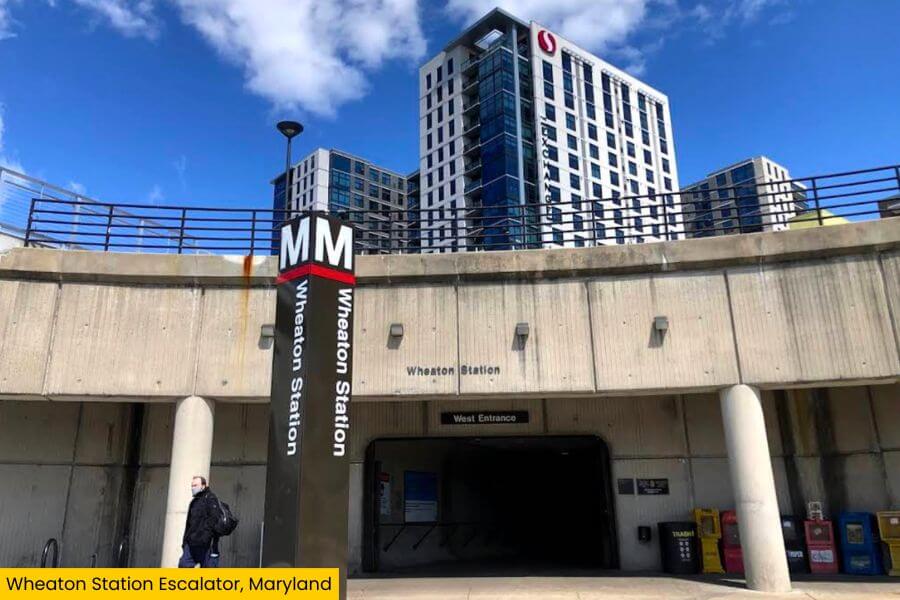
As for Wheaton Station itself, it opened on September 22, 1990, when the Washington Metro’s Red Line was extended to Forest Glen, Wheaton, and Glenmont.
And because the station was built so deep underground, engineers designed this extra-long escalator to connect street level with the platform below.
So if you enjoy unusual engineering projects, transportation landmarks, or quirky record holders, the Wheaton Station Escalator is a must-visit hidden gem.
Know Before You Go
Opening Hours
Wheaton Station is generally open daily, with the first trains beginning around 5:00 a.m. on weekdays and 6:00 a.m. on weekends.
Late-night service varies by day, so it’s a good idea to check WMATA’s current schedule before your visit, especially on holidays.
Admission and Metro Fare
There is no admission fee to enter the station’s mezzanine area, so you can see the famous escalator without buying a Metro fare if you are not planning to ride the train.
If you want to ride the escalator all the way to the platform and back, simply tap your Smart Trip card or a contactless credit or debit card to pay the fare.
Best Time to Visit
Weekday rush hours, generally between 7:00 a.m. and 9:00 a.m. and 4:00 p.m. and 6:30 p.m., bring the largest crowds.
For a quieter experience and better photo opportunities, visit during the middle of the day.

Visitor Tips
Hold the handrail and stand on the right side of the escalator so people in a hurry can walk past on the left, which is standard Metro etiquette throughout the Washington area.
If heights make you uneasy, keep your eyes forward during the ride instead of looking all the way to the top or bottom, since the long, steep tunnel can feel surprisingly dramatic.
Things to Do Nearby
After your visit, there are several nearby places worth checking out if you have extra time.
You can drive about two minutes to Westfield Wheaton, a large shopping mall with plenty of stores and restaurants for a meal or a quick stroll.

There’s also Wheaton Regional Park, just a 5-minute drive away, where you’ll find 538 acres of trails, picnic areas, a miniature train, and the beautiful Brookside Gardens.
If you’re interested in history and science, drive just 10 minutes to the National Museum of Health and Medicine for fascinating exhibits on military medicine, anatomy, and more.
Related Posts