Washington is packed with waterfalls, forests, and mountain views.
But tucked within the wide open farmland is a landscape that feels completely different from anything else around it.
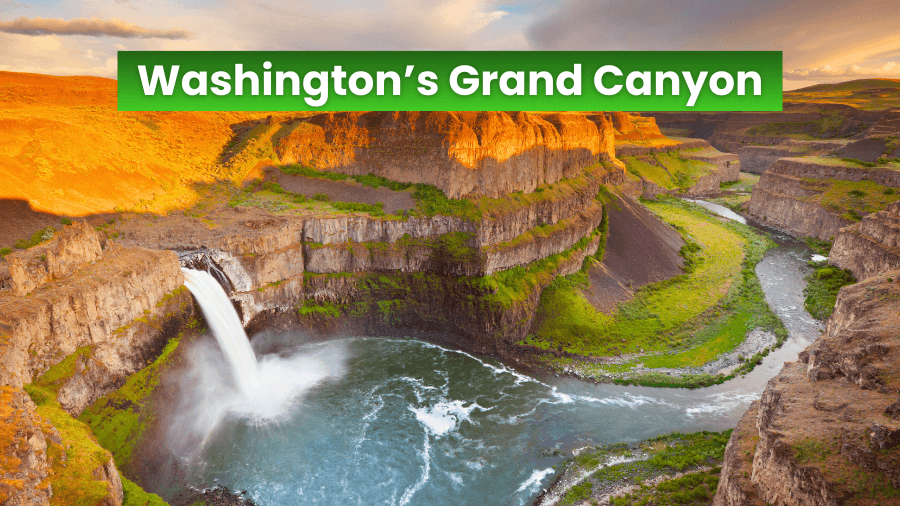
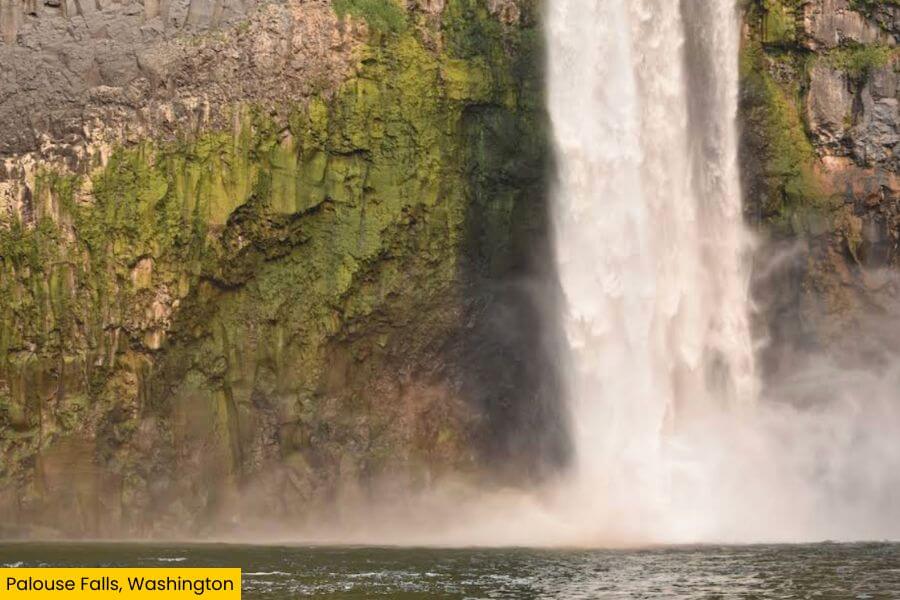
Out of nowhere, the ground suddenly splits open into a massive canyon with a powerful waterfall crashing below.
It’s one of the most surprising natural sights in the state, and many people have never even heard of it.
If you have ever wondered where to find Washington’s own version of the Grand Canyon, keep reading because it delivers a view you will not forget.
Where Is It?
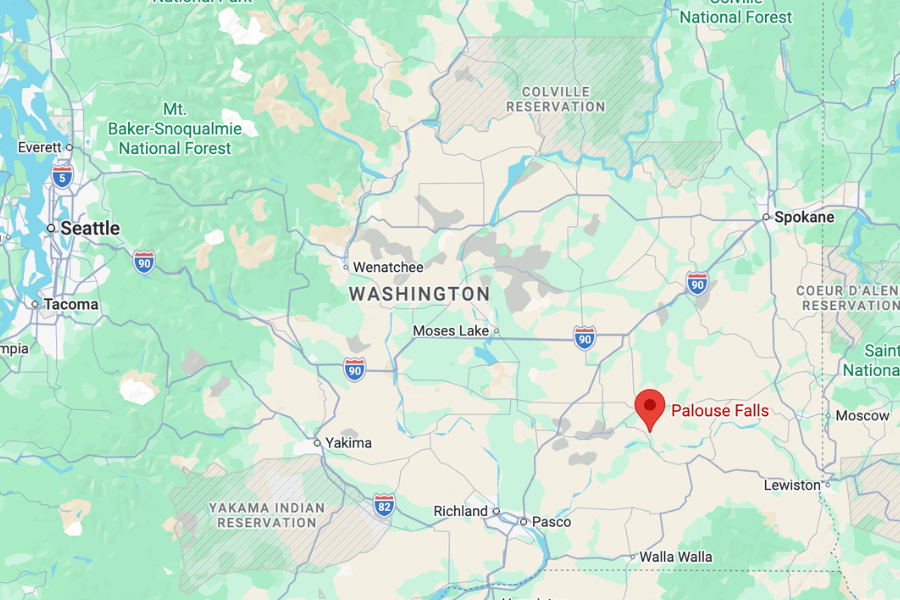
Palouse Falls is located in Palouse Falls State Park in Franklin County, near the small town of Washtucna in southeastern Washington.
It’s about a 1 hour 45 to 2 hour drive from the Tri-Cities (Richland, Kennewick, and Pasco), about 2 hours from Walla Walla or Spokane, and roughly 4 hours from Seattle.
About
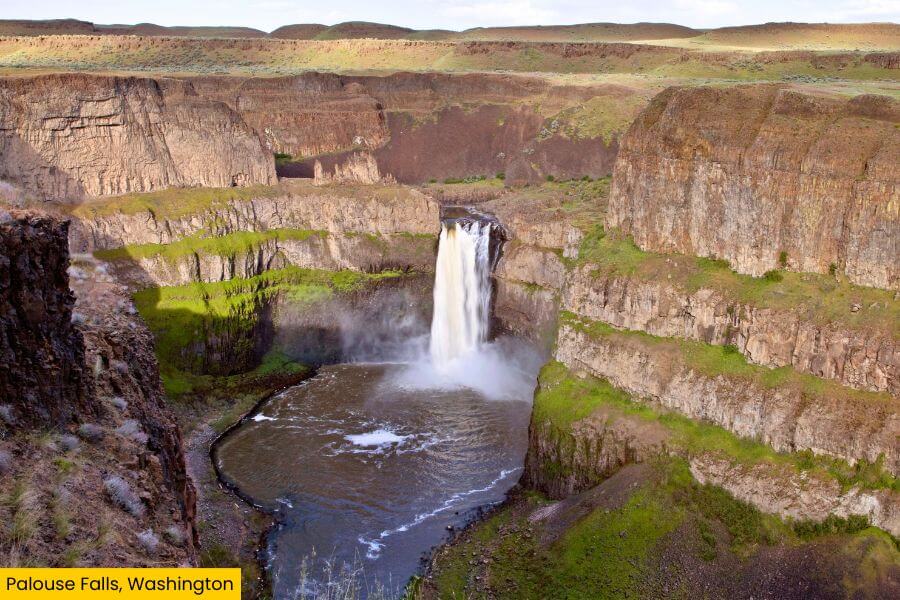
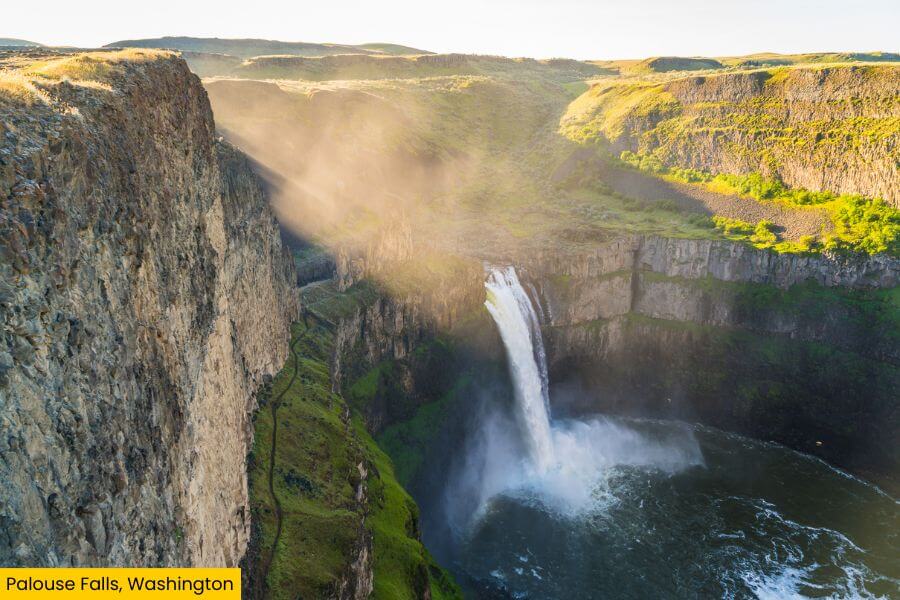
Palouse Falls is one of the most dramatic natural landmarks in the state, measuring about 200 feet tall.
It plunges into a large basin surrounded by towering basalt canyon walls that rise hundreds of feet above the Palouse River.
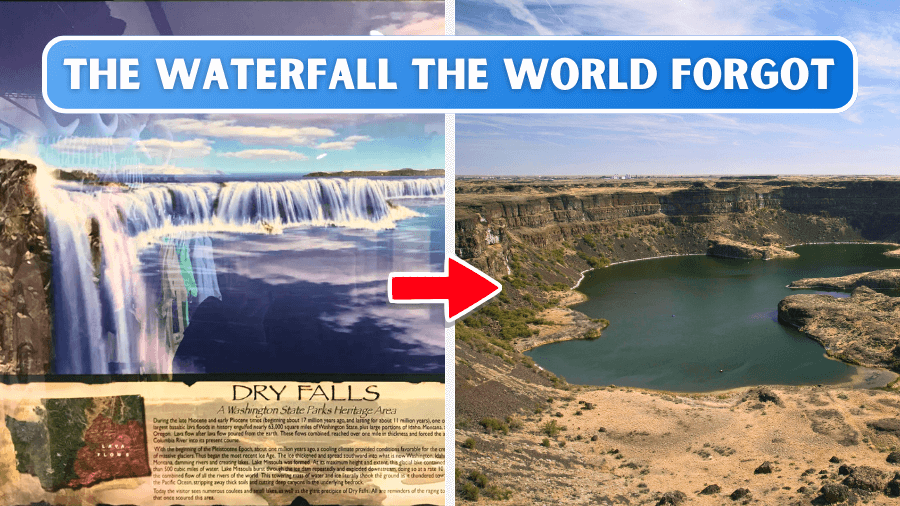
Much of the landscape you see here was shaped about 15,000 to 13,000 years ago during the Ice Age floods, also known as the Missoula Floods.
These massive floods swept across eastern Washington and carved the cliffs, coulees, and canyons that make up the Channeled Scablands.
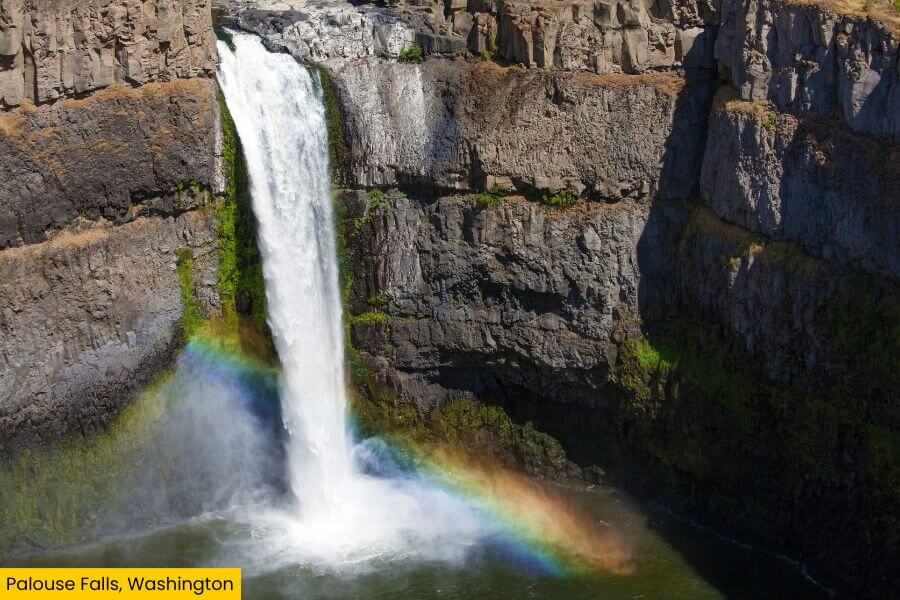
Today, Palouse Falls stands as one of the most striking examples of that ancient force and has been named the official state waterfall of Washington.
And when you finally arrive at the 94-acre Palouse Falls State Park, you will quickly notice how open and remote everything feels.
The canyon stretches out in layers of rocky slopes and winding river bends that continue for miles beyond the falls.
So make sure to take your time and soak in the raw, rugged beauty that surrounds you.
Things To Do
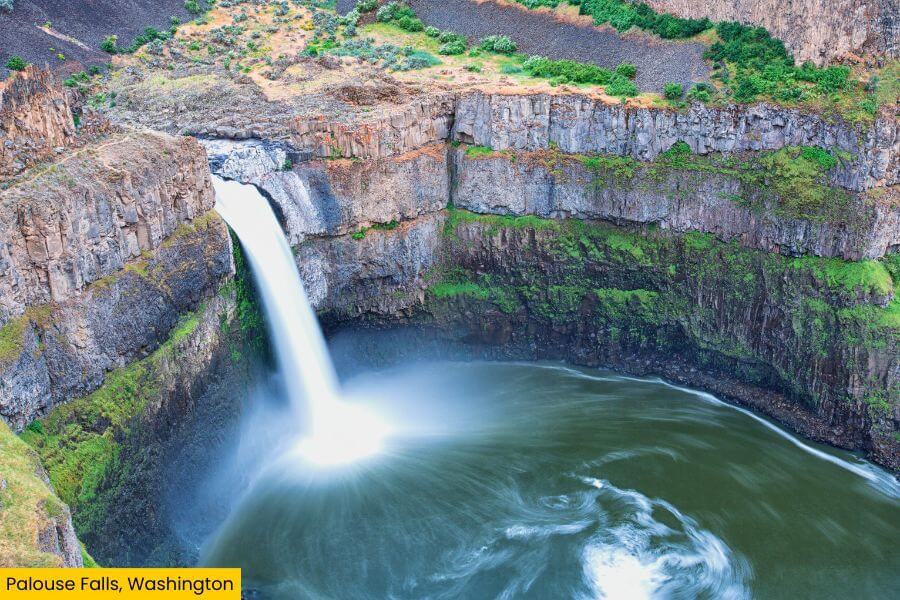
The first thing you will want to do is head straight to the main viewing area near the parking lot, which gives you one of the best first looks at Palouse Falls.
From here, you get that classic postcard angle of the waterfall plunging into the canyon.
If you follow the paved interpretive path, it leads to another viewpoint with signs explaining the history of the canyon.
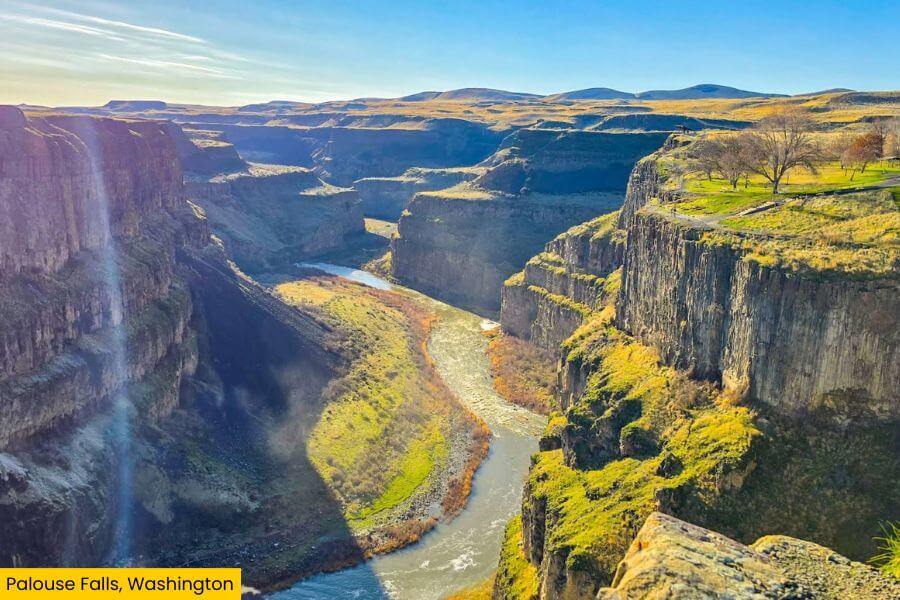
And if you continue further, you will reach the highest viewpoint in the park, the Fryxell Overlook.
This spot offers sweeping views of the falls and the Palouse River Canyon stretching into the distance.
As you move between the viewpoints, remember to pause and appreciate the scenery from slightly different angles.
Photography is another popular activity here, especially at sunset when the canyon walls catch the light, and the waterfall glows against the cliffs.
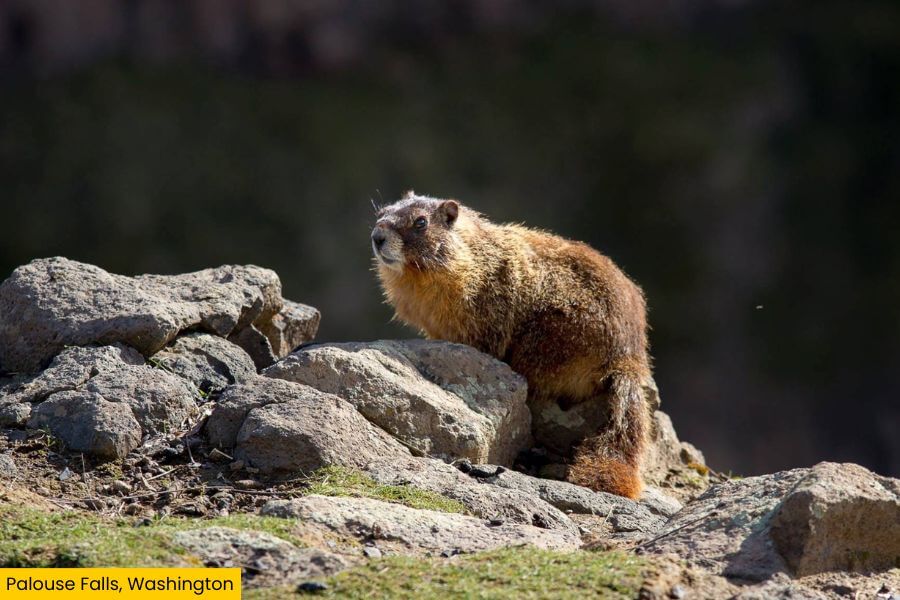
Wildlife watching can also be surprisingly good, so keep an eye out for ravens soaring overhead, rock doves, and the marmots that live around the park.
In spring, take a moment to look for wildflowers popping up across the hillsides, including patches of lupine scattered across the rolling terrain.
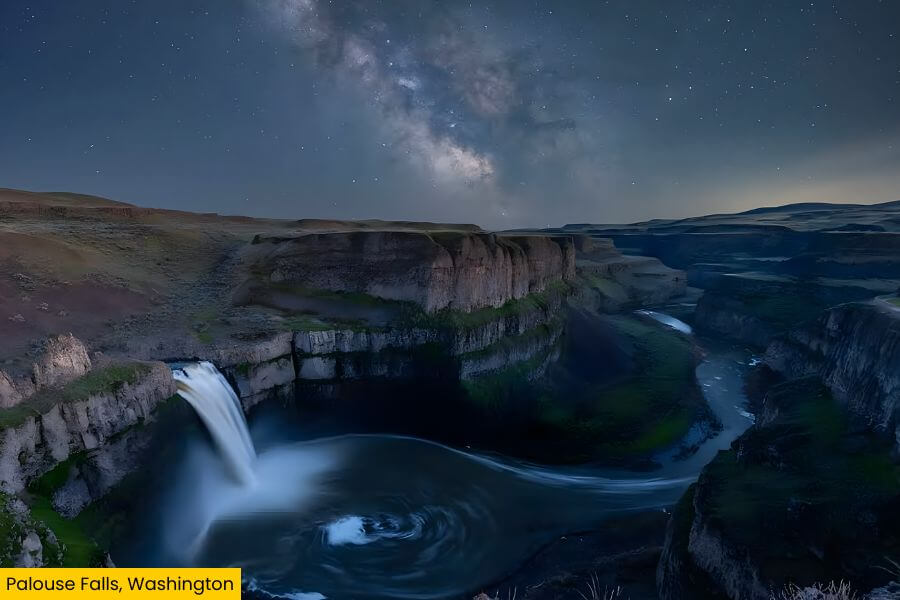
And if you happen to stay after dark, the stargazing is incredible since this part of the state has very little light pollution, and the stars stretch across the sky.
While you watch the sky slowly darken, the waterfall continues crashing in the background, making the whole place feel even more dramatic.
Know Before You Go
Best Time to Visit
Timing your visit makes a big difference because the waterfall changes a lot throughout the year.
Spring is usually the best time to visit, especially from April through June, when snowmelt and seasonal rain send the most water over the falls.
The flow is much smaller by late summer, although the canyon views are still impressive.
Best Time of Day for Photos
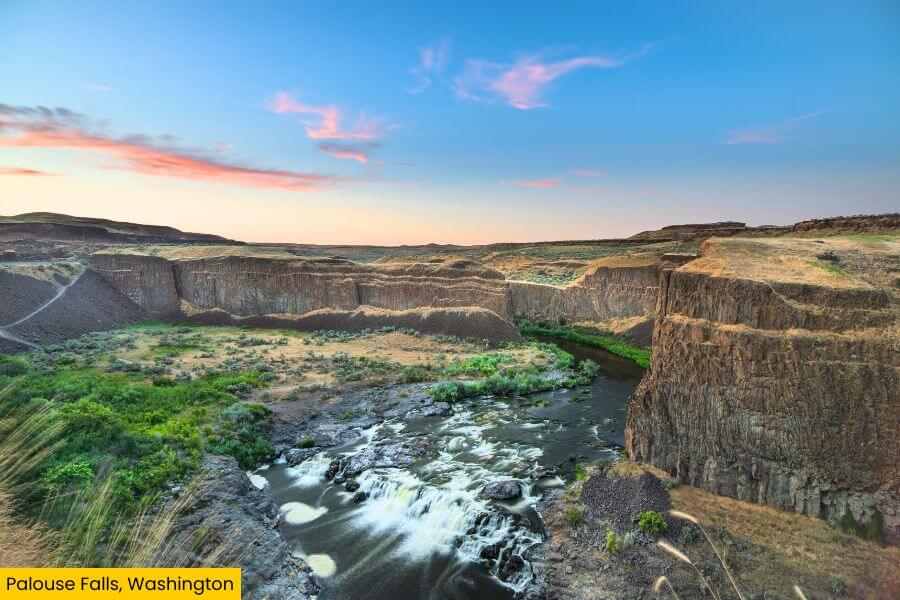
Early morning and late evening usually offer the best lighting conditions at Palouse Falls.
The sun lights up the canyon walls just right, creating warm colors on the layered basalt cliffs.
Midday light can be harsh since there is very little shade in the park.
Hours and Fees
Palouse Falls State Park is open year-round till dusk, with summer hours beginning at 6.30 am and winter hours beginning at 8 a.m.
There is no entrance fee, but a Washington Discover Pass is required to park in the lot.
It costs $10 for a single day or $45 for an annual pass and is required at most Washington State Parks.
Reminders
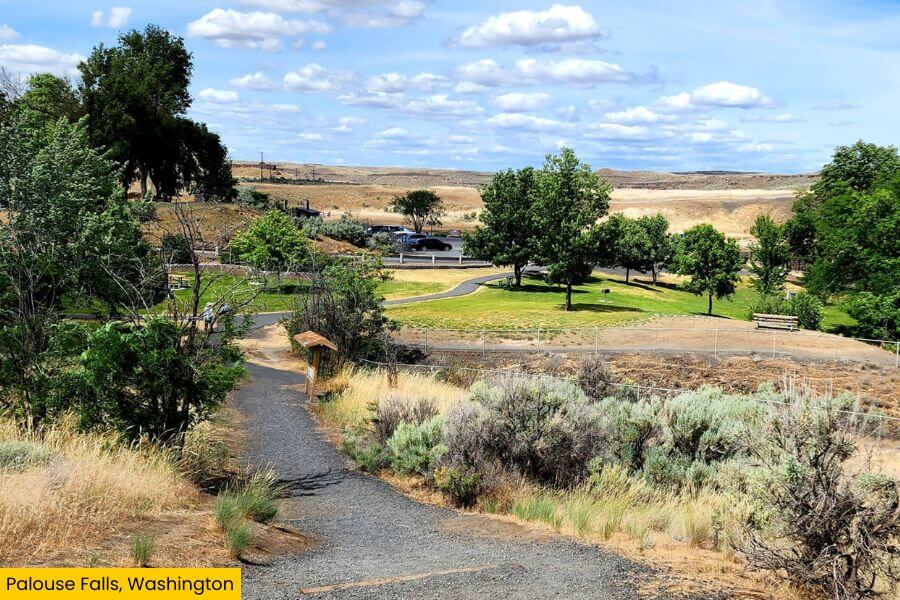
Facilities at the park are pretty limited, with just a parking lot, restrooms, picnic tables, and a few short walking paths, so pack everything you need.
Cell service can be spotty or completely unavailable in the canyon, so it is a good idea to download maps or directions before you arrive.
The cliffs around the falls are steep and the terrain is rough, so it is important to stay behind the marked viewpoints to prevent accidents.
Nearby Places to Visit
If you want to explore more of the area, there are several interesting stops within driving distance.
You can visit Ritzville just an hour away, a small historic town with local cafes, antique shops, and the Railroad Depot Museum.
About 1.5 hours away is Pullman, home to Washington State University and known for its restaurants, breweries, and the Jordan Schnitzer Museum of Art WSU.
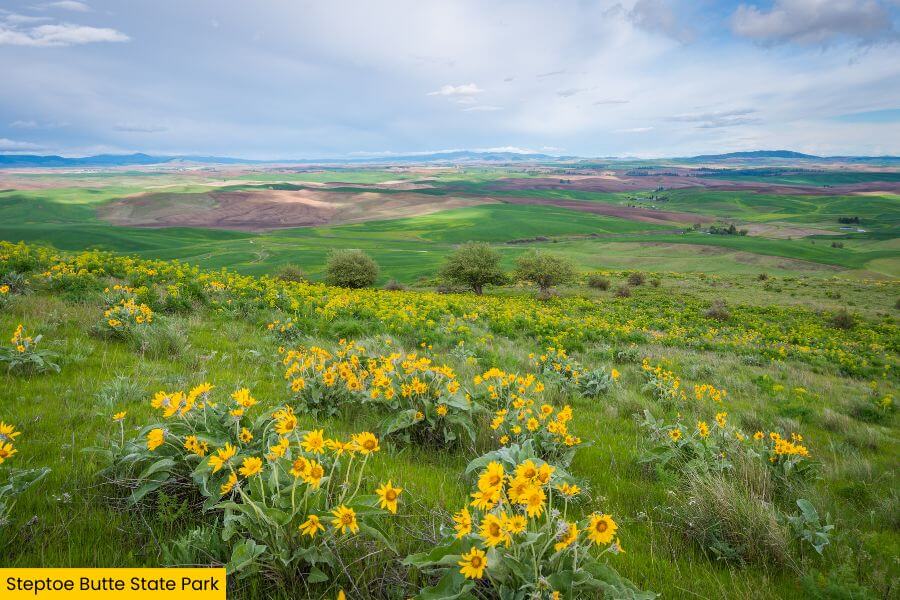
If you’re craving more nature, head to Steptoe Butte State Park, where a 3,612-foot thimble-shaped summit offers sweeping views of the famous Palouse farmland.
Related Posts