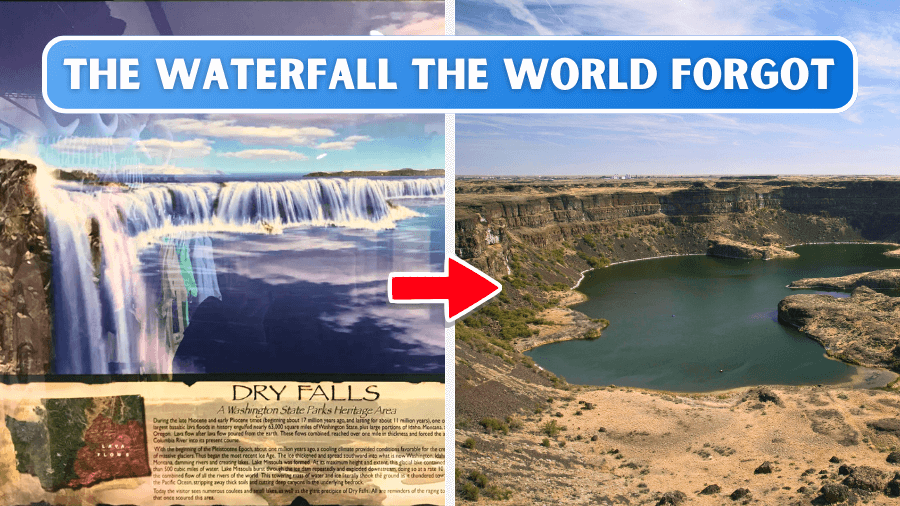
Imagine standing at the edge of a cliff that once held the biggest waterfall on the entire planet.
Today you can still see its massive cliffs, carved rock walls, and a wide dry basin where a 3.5-mile curtain of water once thundered down.
Thousands of years ago, floodwaters so powerful that they reshaped the land in days tore through this place, then vanished without a trace.
What’s left behind still looks unreal, and it’s waiting for you to see it up close.
Ready to check out the place where the biggest waterfall on Earth once ruled the landscape? Keep reading.
Where Is It?

Sun Lakes–Dry Falls State Park is located in Coulee City in central Washington.
It’s about a 3-hour drive from Seattle, around 2 hours from Spokane, and just 1 hour and 20 minutes from Wenatchee.
If you’re road-tripping through central Washington, it makes for an easy and seriously scenic stop.
About

Sun Lakes–Dry Falls State Park is famous for something almost impossible: this quiet stretch of desert cliffs was once home to the largest waterfall on Earth.
It’s called Dry Falls, and it stretches about 3.5 miles wide, with cliffs that drop around 400 feet from top to bottom.
To put that in perspective, Dry Falls was roughly 5 times the width of Niagara Falls!

When it was roaring, scientists estimate it carried ten times the flow of all the rivers on Earth combined today (yep, that’s not a typo).
It all traces back to the Ice Age Missoula Floods, which formed the waterfall around 15,000 to 13,000 years ago.
Back then, a massive ice dam in present-day Montana held back Glacial Lake Missoula.
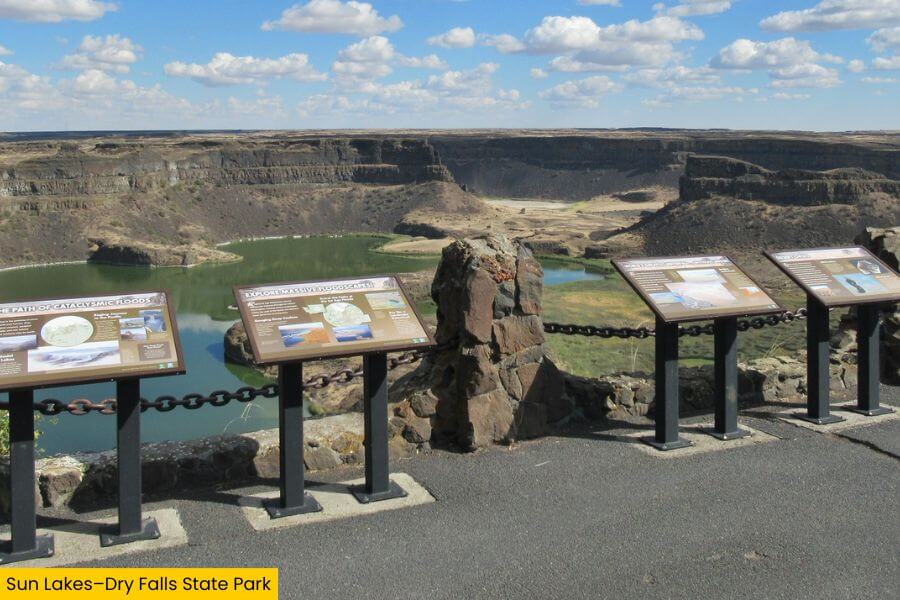
When it failed, billions of gallons of water blasted across eastern Washington at speeds up to 65 miles per hour.
This didn’t happen just once but dozens of times, with each surge ripping through the Columbia Basin and carving out deep channels known as the Channeled Scablands.
That’s how Dry Falls was created, as water spilled over a basalt cliff and thundered into what is now the Lower Grand Coulee.

When the outburst floods eventually stopped near the end of the last Ice Age, the waterfall dried up for good.
Today, instead of a wall of crashing water, you’ll see towering cliffs, rocky slopes, and a string of lakes.
As for Sun Lakes–Dry Falls State Park itself, it covers over 3,700 acres, with wide-open views that can make you stop talking for a second.
Things To Do

Now that you’ve wrapped your head around the fact that you’re standing at the site of the biggest waterfall Earth has ever seen, it’s time to explore it.
Your first stop should be the Dry Falls Visitor Center, which overlooks the cliff rim and offers a jaw-dropping panoramic view of the entire formation.
Inside, you’ll find interpretive exhibits that explain the Ice Age Missoula Floods and the geology that shaped this dramatic landscape.
(At the time of writing, the visitor center is temporarily closed for a renovation project, so check online before planning your visit.)

Once you’ve soaked in the big-picture view, head down into the coulee to explore the lakes below.
Park Lake is one of the most popular spots in the park, and it’s the kind of place where you can spend hours on the water.
It’s a go-to for boating, kayaking, and paddleboarding, especially in summer when the water is warm and calm.

If you prefer to stay on land, lace up your shoes and hit one of the park’s hiking trails.
The Umatilla Rock via Monument Coulee trail is about 5 miles long and takes you around the base of Umatilla Rock, where desert scenery steals the show.

For something shorter, try the Park Lake Trail, an easy walk that keeps you close to water and wide desert views.
Into photography? Golden hour here is unreal, when the cliffs glow orange and the lakes reflect the sky like a mirror.
Birdwatching is another low-key highlight, and you might spot eagles, crows, or magpies.
And if one day isn’t enough, camping is a big draw if you want to stay overnight.
The park has more than 130 campsites, including full hookup RV sites and tent sites, perfect if you want to slow down and unplug.
Know Before You Go

Discover Pass and Fees
First things first, Sun Lakes–Dry Falls State Park requires a Washington State Discover Pass for day use.
A single-day pass costs $11.50 per vehicle, and an annual pass is $50, which pays for itself quickly if you explore other Washington state parks.
Park Hours
The park is open year-round, though hours and services vary with the seasons.
The Dry Falls Visitor Center also operates on a seasonal schedule, so check the Washington State Parks website or call ahead for current hours before you go.

Best Time to Visit
Summer is the busiest time to visit, especially from June through August.
Expect hot, dry weather, so bring plenty of water since this high-desert terrain offers very little shade.
Spring and fall are fantastic if you want cooler temperatures and fewer crowds.
If you don’t mind colder temperatures, winter is peaceful and dramatically quiet, though some facilities may be closed.
Extra Tips
- Cell service can be spotty once you’re down in the coulee, so download maps ahead of time.
- The terrain is rocky and uneven in places, so wear sturdy shoes if you plan to hike.
- If you’re boating, check current water levels and regulations, especially during shoulder seasons.
- Fire restrictions are common in summer due to dry conditions, so always check for burn bans before lighting a campfire.
Related Posts