
What if I told you there’s a beach in Massachusetts where the sand actually makes noise when you walk on it?
Not the crash of waves or the cry of seagulls, but the sand itself letting out a high-pitched squeak right under your feet.
Yep, it’s real!
This stretch of shoreline on the North Shore has been surprising beachgoers for more than a century with its strange, chirping sand.
Curious how it works and where you can hear it for yourself?
Keep reading, because this beach has more going on than just a pretty view of the Atlantic.
Where Is It?

You’ll find Singing Beach in the town of Manchester-by-the-Sea on Massachusetts’ North Shore.
Driving time is around 45 minutes from downtown Boston, 50 minutes from Cambridge, 20 minutes from Salem, and 15 minutes from Gloucester.
It sits right along Beach Street, roughly a 15-minute walk from the Manchester commuter rail stop on the Newburyport/Rockport Line, making it easy to visit without a car.
About

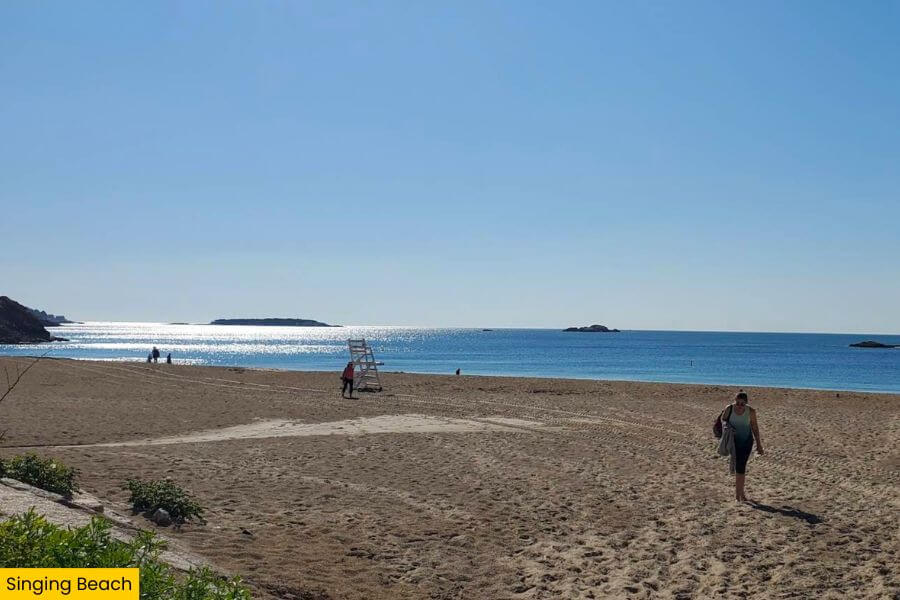
Singing Beach spans roughly half a mile and is easily one of the most unique beaches in the state.
It curves gently along the water, offering wide-open views of the Atlantic Ocean and the rocky coastline.

Up close, the sand looks smooth and fine, perfect for spreading out a towel, building sandcastles, or digging your toes in while you watch the waves roll in.
You’ll be surprised as you walk along the sand and hear it “singing” beneath your feet (more on that later).
Step into the water and you’ll find it’s classic New England cold, especially in early summer, but it can feel refreshing rather than shocking.
Lifeguards are on duty during the summer season, which typically runs from mid-June through Labor Day, making it a great spot if you’re swimming with kids.

If you want to wash off the salt and sand, you’ll find a bathhouse with restrooms and outdoor showers on site.
Even with those amenities, you won’t find a flashy boardwalk or big amusement rides here, just clean shoreline, scenic views, and a classic, unfussy atmosphere.

It’s the kind of place where you can spend the whole day swimming, reading, and strolling along the waterline without ever getting bored.
Stick around toward sunset, and the sky often turns shades of pink and orange, making the end of your beach day just as memorable as the beginning.
Why Does the Sand Sing?
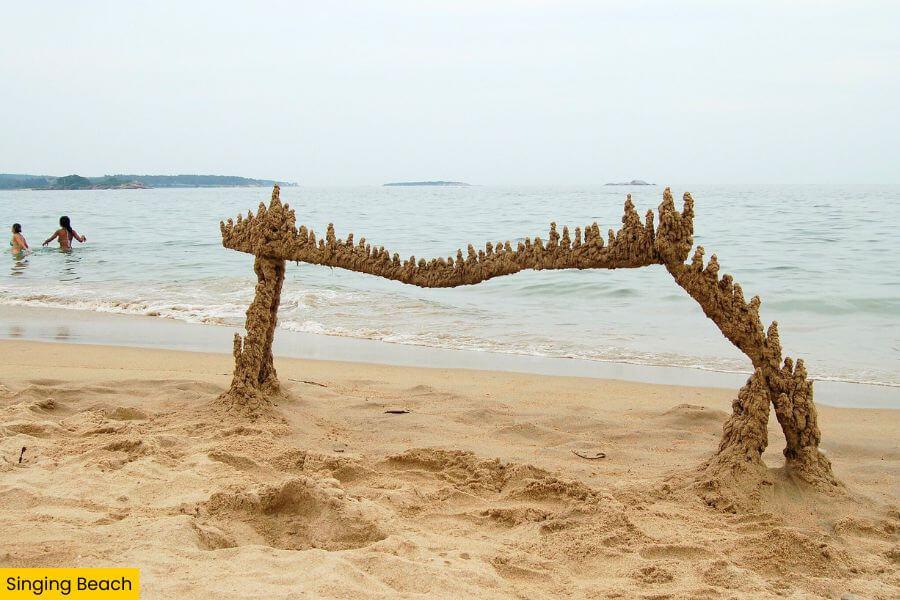
So about that “singing” part.
The sand at Singing Beach really does make noise when you walk on it, though it’s more of a squeak, whistle, or chirp than an actual melody.
It happens because the grains here are unusually uniform in size and made mostly of hard minerals like quartz.
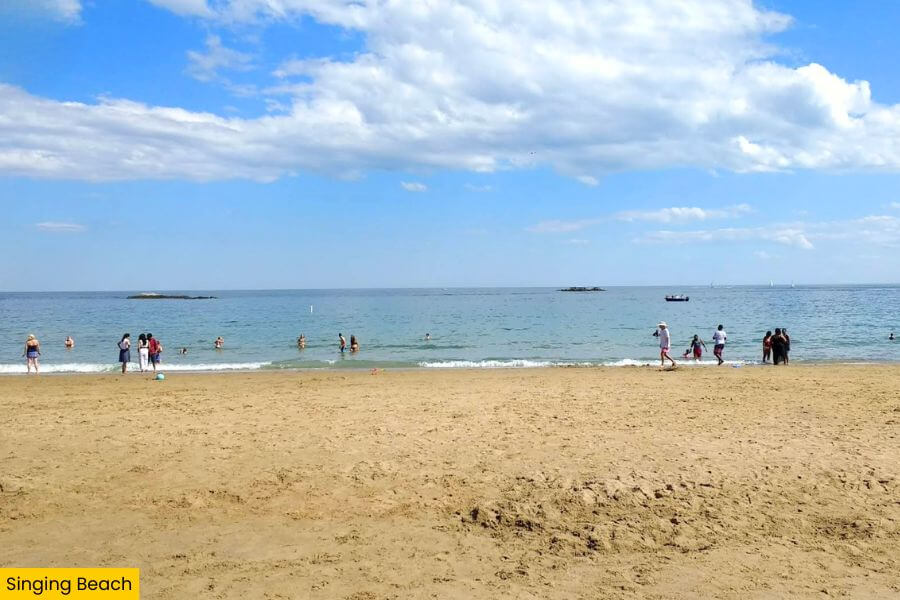
When the sand is dry and you shuffle your feet, those grains slide against each other and create tiny vibrations that add up to a squeaking sound.
Dryness is the real secret because when the sand is damp, moisture makes the grains stick together and mutes the sound.
If you want the best chance of hearing it, look for the lightest, driest sand and do the awkward penguin shuffle.
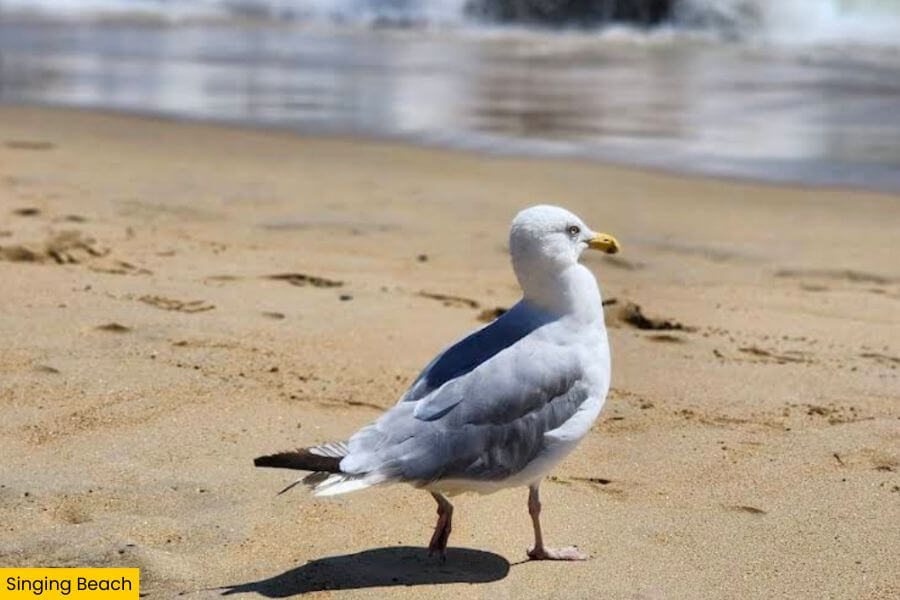
Try pushing the side of your sneaker across the surface instead of taking normal steps.
Bare feet can work too, but sneakers often make it louder because the rubber grips and drags the grains more.
But remember: not every step will sing, and that unpredictability is part of the fun.
Know Before You Go
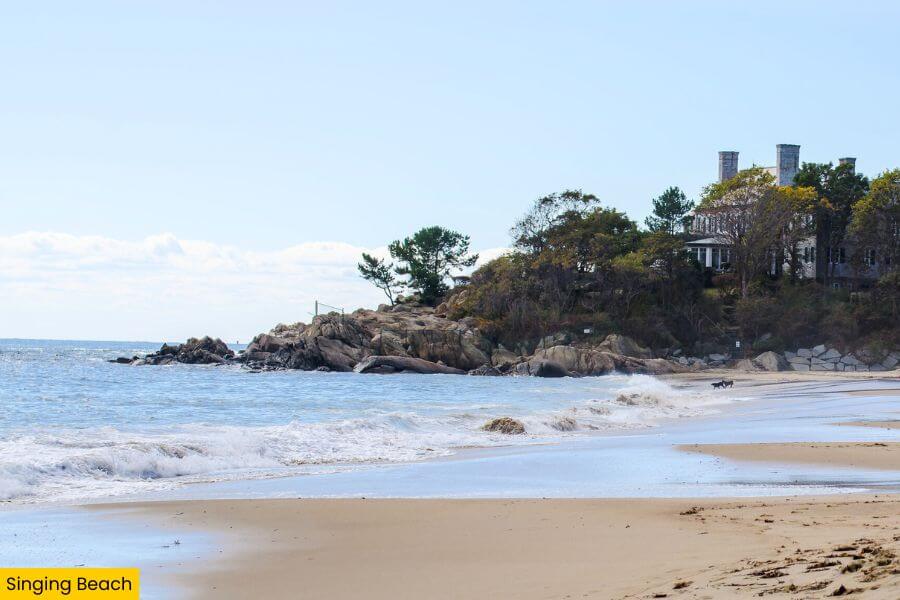
Best Time to Visit
If you want the full singing effect, aim for a dry, sunny day in mid to late summer.
July and August usually bring the warmest air temperatures, which help dry out the upper layer of sand and make those squeaks easier to hear.
Low tide also gives you more exposed shoreline to explore, meaning more space to test out that foot shuffle and hunt for the loudest squeak.
Parking and Fees
Parking at Singing Beach is limited, and the rules can be a little tricky, especially from mid-June through Labor Day, so it’s best to plan ahead.
At certain times of year, the parking lot is reserved for Manchester-by-the-Sea residents only.
If the beach lot is full or unavailable, you can find more parking about a half-mile away at Masconomo Park or along downtown streets.
There’s also a walk-on beach fee of $10 per person during the main season (ages 13–65), so bring cash or a card for that too.

What to Bring
- Pack layers even if the forecast looks warm because ocean breezes can drop the temperature quickly in the late afternoon.
- Food options right at the beach are seasonal, so it’s smart to bring a cooler with snacks, sandwiches, and plenty of water.
- Dogs are allowed from mid-October through mid-April, but you must clean up after them, so check local rules before bringing your pup.
Nearby Things to Do
If you feel like exploring beyond your beach towel, drive 25 minutes to Halibut Point State Park in Rockport and hike the 1.7-mile quarry loop for ocean views.

You can also head 20 minutes to Salem and wander through the Peabody Essex Museum, home to over 1.3 million works of art and cultural objects.
For a classic North Shore harbor stroll, Gloucester is just 15 minutes away, where you can visit the historic Fishermen’s Memorial.
If you’d rather grab something local, walk around Beach Street and swing by Captain Dusty’s Ice Cream for a cone piled high with New England flavors.
Related Posts