If you’re craving a weekend trip with creepy stories, ocean views, and just the right amount of weird, then Salem, Massachusetts should be at the top of your list.
This little city is packed with history, haunted spots, cool museums, and some seriously tasty food.

You can walk from place to place, see everything in two days, and still feel like you’ve stepped into a totally different world.
Whether you’re into witches, old ships, or just love a good New England adventure, this road trip has all the must-see stops you don’t want to miss.
1. Salem Willows Park

Salem Willows Park is a seaside park right on the edge of Salem Harbor, and it’s been a local favorite since 1858.
It’s known for its old-school charm, with arcade games and classic seaside treats like fried clams, ice cream, and some of the best popcorn in New England.
You’ll also find big shady willow trees (that’s where the name comes from), a small beach, a fishing pier, and even a historic carousel that’s still spinning today.
And on summer weekends, the park buzzes with people picnicking by the water, live music, and community events.
2. The House of the Seven Gables

Just five minutes from the Willows, The House of the Seven Gables is one of the coolest historic homes you can visit in Salem.
Built in 1668, it’s the real-life house that inspired Nathaniel Hawthorne’s famous novel, and yes, it’s got secret staircases and all.
During the tour, you can walk through the original mansion, spend time in Hawthorne’s birth home on the same property, and take in harbor views from the grounds.
It feels like both a museum and a time machine, and it’s totally worth it if you’re into old houses, hidden doors, and spooky New England history.
3. Salem Maritime National Historic Site

Up next is the Salem Maritime National Historic Site, which takes you straight into the city’s salty, sea-trading past.
It spans 9 acres along the waterfront and includes 12 historic buildings, as well as a reconstructed tall ship called the Friendship of Salem.

One highlight is the 1819 Custom House, where Nathaniel Hawthorne once worked.
While you’re here, you can stroll Derby Wharf (it’s half a mile long), check out real sailor artifacts, and learn how Salem was a major port back in the late 1700s.
4. Peabody Essex Museum
A 10-minute walk from the waterfront leads you to the Peabody Essex Museum, where Salem’s artsy side really shows off.
This place is huge, with over 850,000 pieces in its collection, from ancient Chinese sculptures to wild contemporary art installations.
One of the coolest things here is the Yin Yu Tang house, a 200-year-old Chinese home that was moved from China and rebuilt inside the museum, room by room.
If you’re into museums that mix old and new with a few fun surprises, you’re gonna love spending a few hours here.
5. Salem Witch Museum
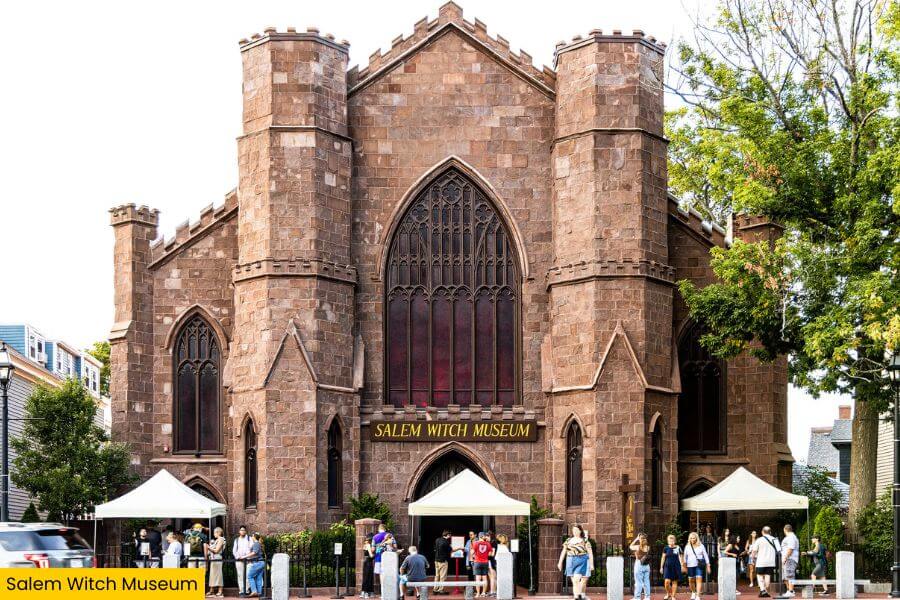
After soaking up some art and culture, it’s time to get spooky at the Salem Witch Museum, one of the most visited spots in the city.
Inside, you’ll sit in a dark theater as life-sized figures and dramatic lighting tell the story of the 1692 witch trials.
The second part explores the history of witches and witch hunts, including how ideas and fears around witchcraft took shape.
Overall, the experience feels creepy, dramatic, and super memorable, especially if you’re into the darker side of history.
6. The Witch House at Salem
Then there’s The Witch House, the only building still standing here with direct ties to the witch trials.
It was once home to Jonathan Corwin, one of the judges who sent people to trial, and the atmosphere inside is just as intense as you’d expect.
You can tour the creaky old rooms, see 17th-century furniture, and check out artifacts from the era.
It’s smaller than some of the other sites, but packed with eerie details that make it feel like stepping straight into the past.
7. Salem Pioneer Village

If you’re up for one more trip back in time, head over to Salem Pioneer Village.
Built in 1930 as the first living history museum in the U.S., this place shows what Salem looked like in 1630 (before the trials and tourist crowds).
You’ll find thatched-roof cottages, blacksmith shops, herb gardens, wigwams, and dugouts.
It’s quiet and super photogenic, so you can take your time and soak up what early colonial life was actually like.
Related Posts