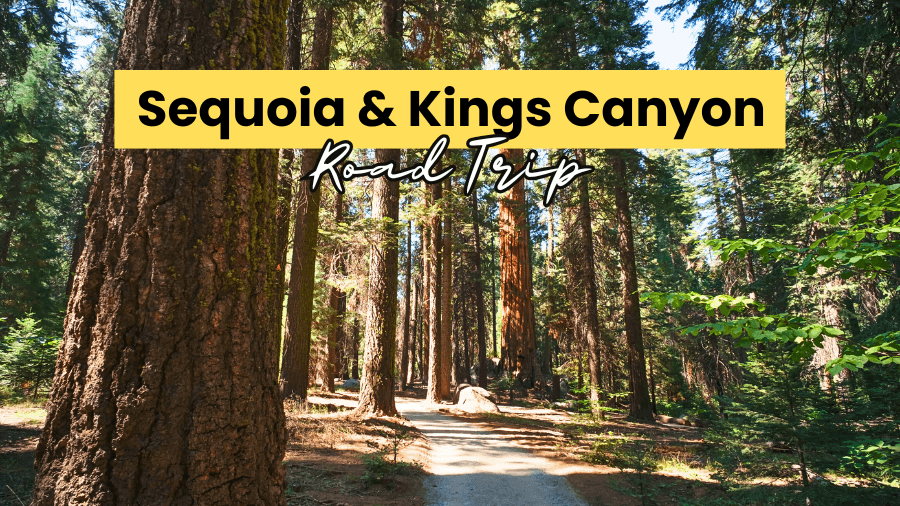
Towering trees, roaring waterfalls, and sweeping canyon views make Sequoia and Kings Canyon National Parks an unforgettable road trip destination.
This drive takes you from some of the largest living things on Earth to high-elevation overlooks, peaceful meadows, and hiking trails leading to hidden spots deep in the Sierra Nevada mountains.
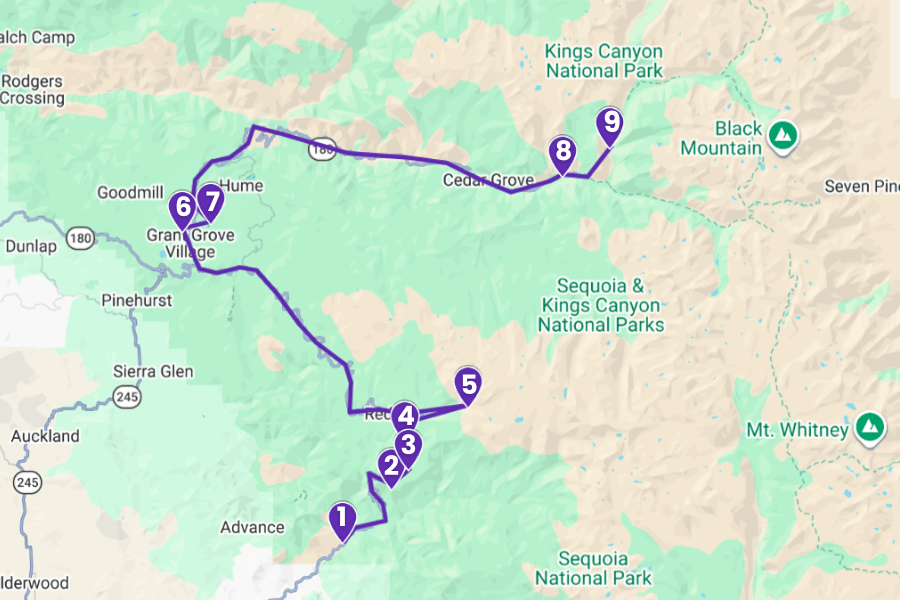
Along the way, you’ll pass through giant forests, climb stone staircases carved into granite domes, spot rivers rushing through dramatic canyon walls, and find roadside stops that have been making travelers pull over for photos for decades.
Whether you’re planning a quick weekend getaway or a full national park adventure, this itinerary packs in scenic drives, famous landmarks, easy walks, and a few unforgettable surprises.
1. Tunnel Rock
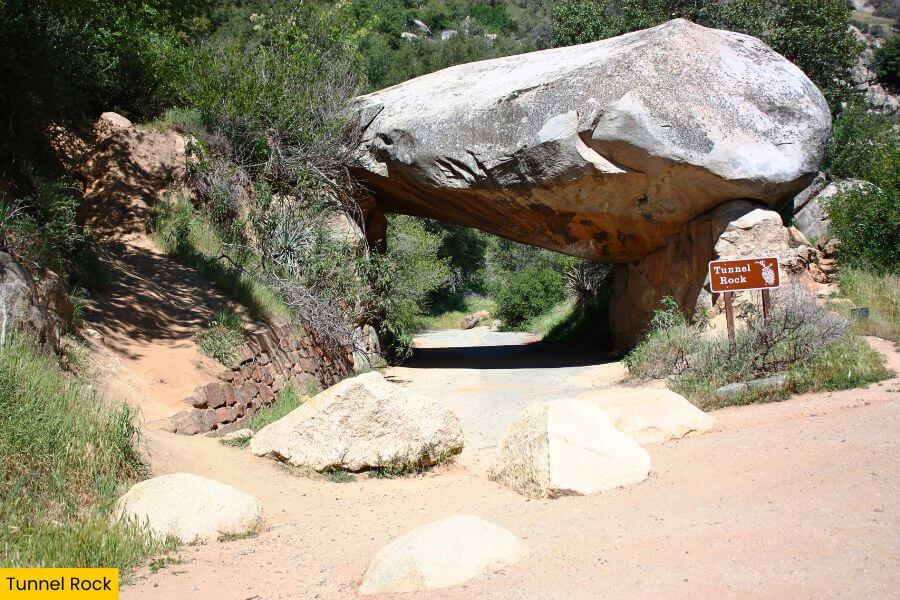
Tunnel Rock sits right beside Generals Highway, just beyond the Foothills Visitor Center in Sequoia National Park, and this giant granite boulder looks like it was dropped straight onto the road from the mountains above.
The rock became famous in the 1930s when crews from the Civilian Conservation Corps (CCC) carved a tunnel underneath so cars could keep driving through.
For decades, visitors loved snapping photos while driving directly under the rock, and the unusual tunnel became one of the most photographed roadside attractions in the park.
Although vehicles can no longer pass beneath Tunnel Rock, you can still see this historic landmark and imagine what it felt like cruising under a gigantic granite boulder in the middle of the Sierra Nevada mountains.
2. Moro Rock
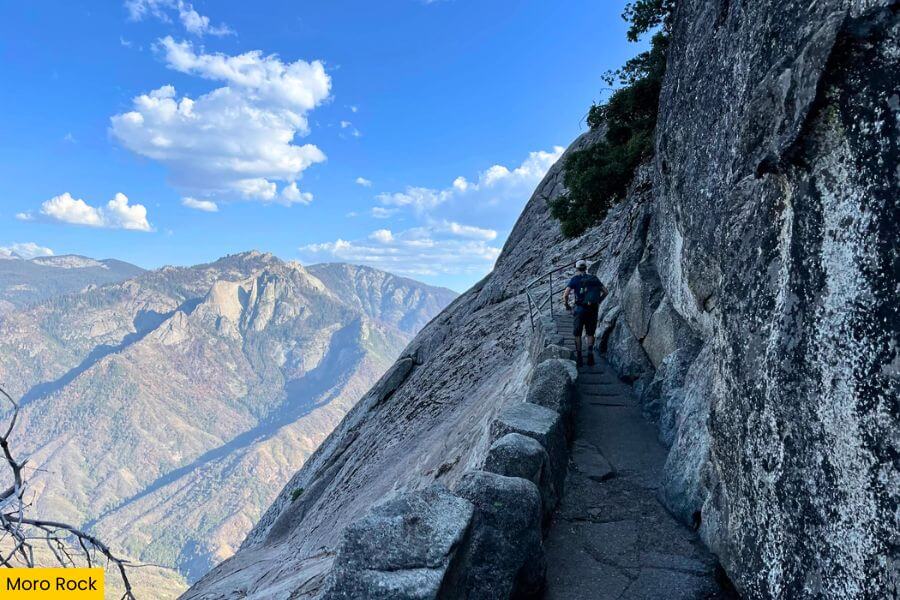
Just up the road from Tunnel Rock, Moro Rock gives you one of the most jaw-dropping views in Sequoia National Park from the top of a massive granite dome rising more than 6,725 feet above sea level.
To reach the summit, you’ll climb a steep staircase carved directly into the rock, with roughly 350 steps leading you past sweeping views of the Great Western Divide and the San Joaquin Valley.
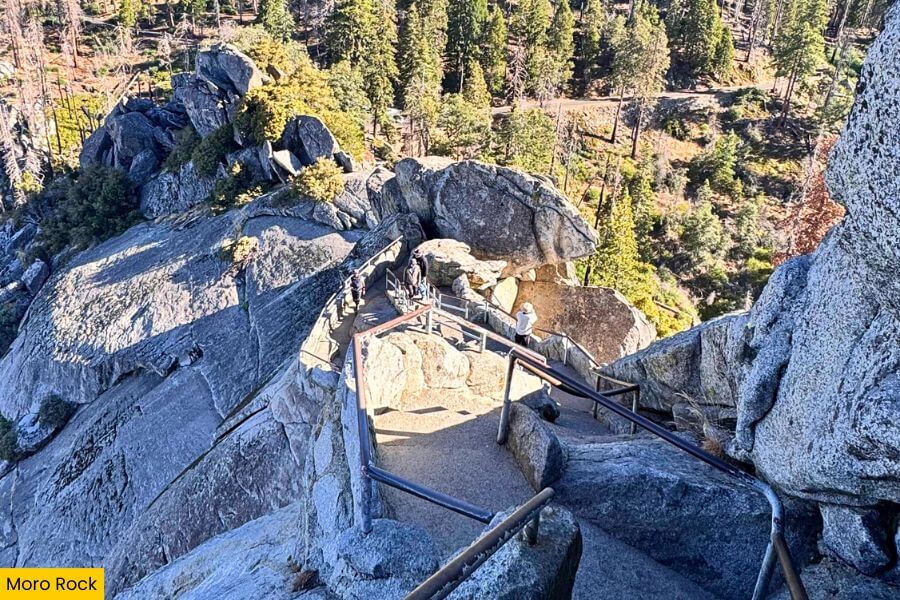
On clear days, you can see deep into the Sierra Nevada for more than 100 miles, and during summer weekends, the park often runs a shuttle because Moro Rock is one of the busiest and most popular stops in the entire park.
Keep an eye out for peregrine falcons soaring around the cliffs, and if you visit at sunrise or sunset, the granite glows in shades of orange and pink that make the whole mountain look completely unreal.
3. Crescent Meadow
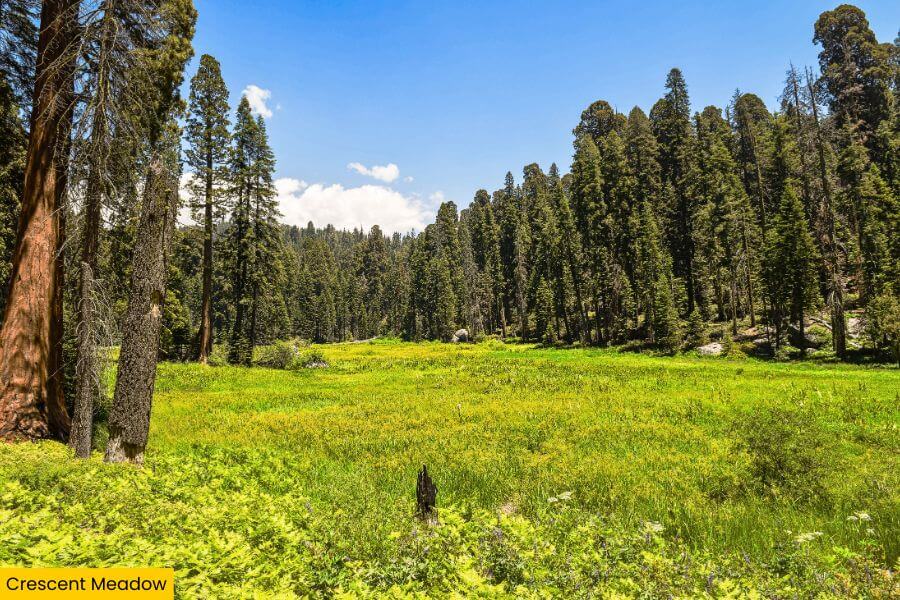
Crescent Meadow is a 5-minute drive away and is the perfect place to slow down, with a peaceful grassy clearing surrounded by towering giant sequoias.
This beautiful meadow is the starting point for several famous trails, including the easy 1.8-mile Crescent Meadow Loop and the route to Tharp’s Log, a fallen sequoia that pioneer Hale Tharp once used as a summer cabin in the late 1850s.
You’ll also pass through Tunnel Log nearby, where a fallen giant sequoia has a carved-out tunnel wide enough for cars to drive through, making it one of the park’s most iconic photo stops.
Early mornings here are especially magical because deer often wander through the tall grass and black bears are sometimes spotted near the tree line.
4. Giant Forest & General Sherman Tree
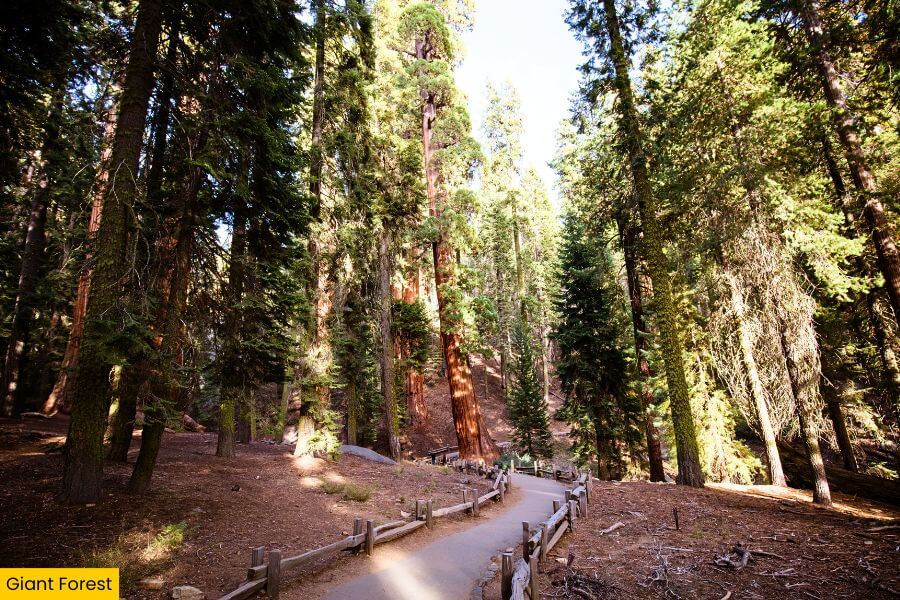
From Crescent Meadow, it’s a 15-minute drive into Giant Forest, home to more than 8,000 giant sequoias packed across the western slopes of the Sierra Nevada.
The biggest star here is the General Sherman Tree, which stands at 275 feet tall and holds the title of the largest tree on Earth by volume, with an estimated trunk volume of more than 52,000 cubic feet and an age believed to be around 2,200 years old.
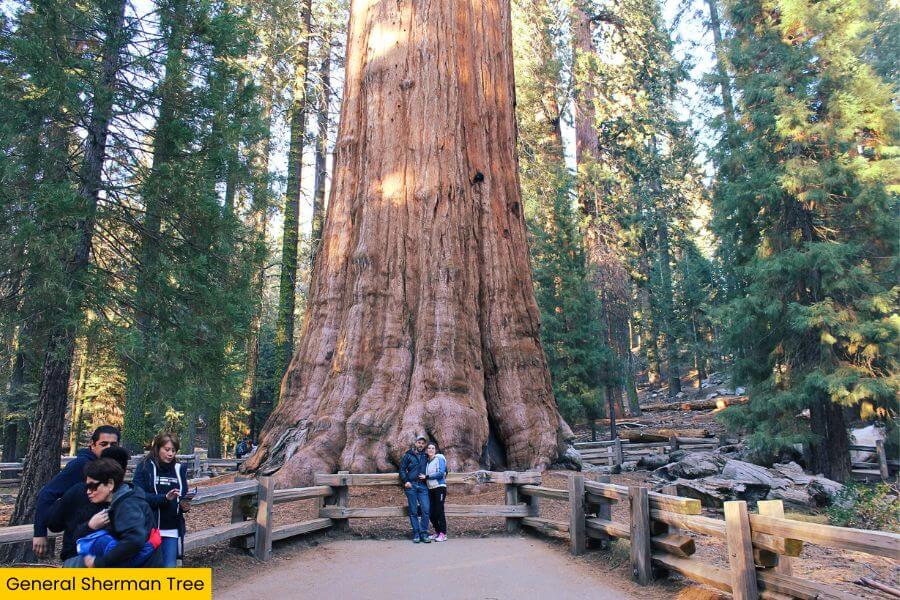
The paved trail to General Sherman is only 0.5 miles, but get ready for a steep uphill walk on the way back.
As you wander through Giant Forest, you’ll pass enormous sequoias with trunks wider than city buses, fallen trees that stretch across the forest floor, and peaceful side trails where the towering trees will make you feel tiny.
5. Tokopah Falls
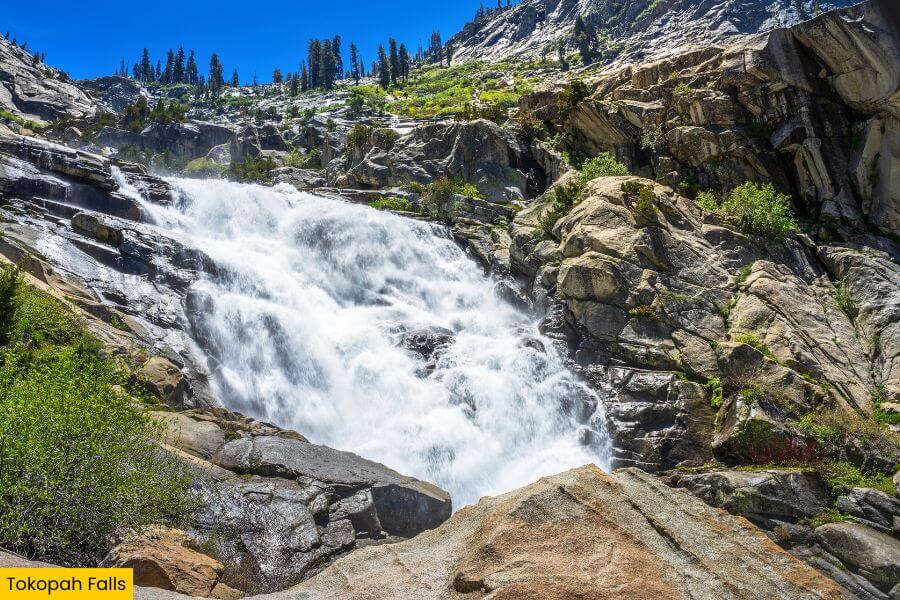
Tokopah Falls switches things up completely with a scenic hike into a glacier-carved canyon filled with granite cliffs, rushing water, and huge mountain views.
The Tokopah Falls Trail is roughly 3.4 miles round trip from Lodgepole Campground, following the Marble Fork of the Kaweah River through pine forest and rocky terrain before reaching the waterfall at the end of the canyon.
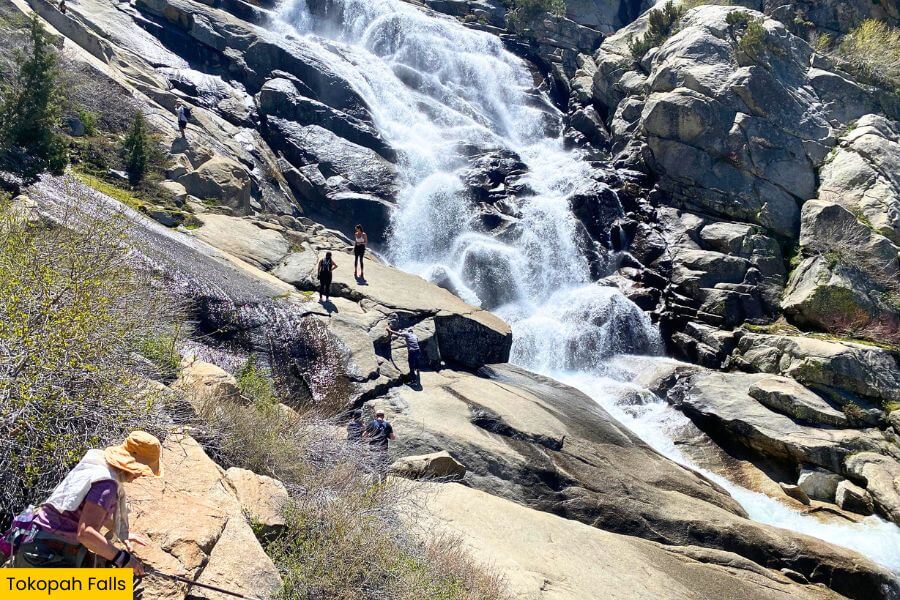
In spring and early summer, snowmelt sends Tokopah Falls crashing 1,200 feet down the granite wall, making it one of the tallest waterfalls in Sequoia National Park and easily the most dramatic after heavy winter snow years.
Keep an eye out for marmots sunbathing on boulders and don’t be surprised if you stop every few minutes to take photos because the granite peaks surrounding the canyon are seriously hard to ignore.
6. General Grant Grove
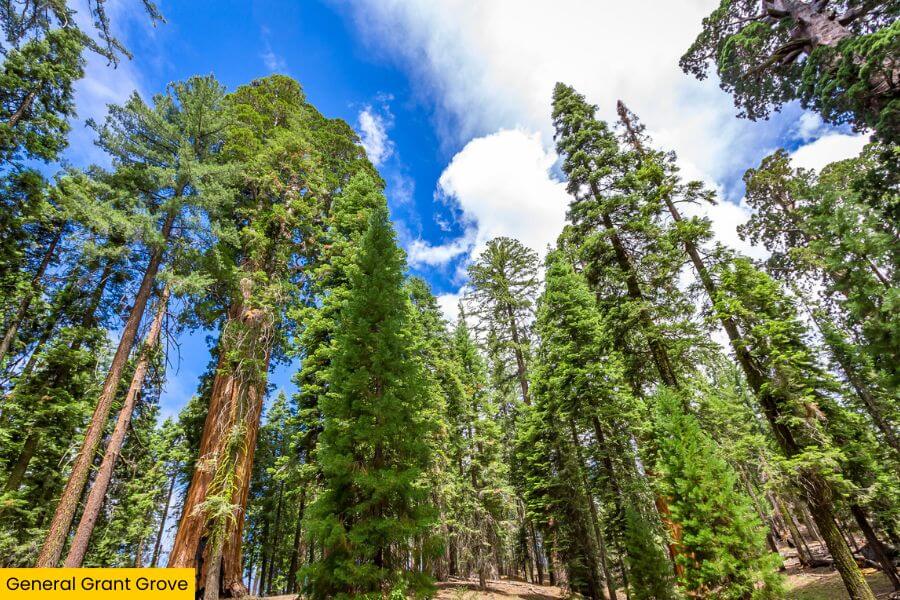
A 1-hour drive brings you to Kings Canyon National Park and General Grant Grove, where some of the world’s largest sequoias stand just steps from the parking area.
The biggest attraction here is the General Grant Tree, a giant sequoia that rises about 268 feet tall, measures around 40 feet in diameter at the base, and is estimated to be 1,700 years old.
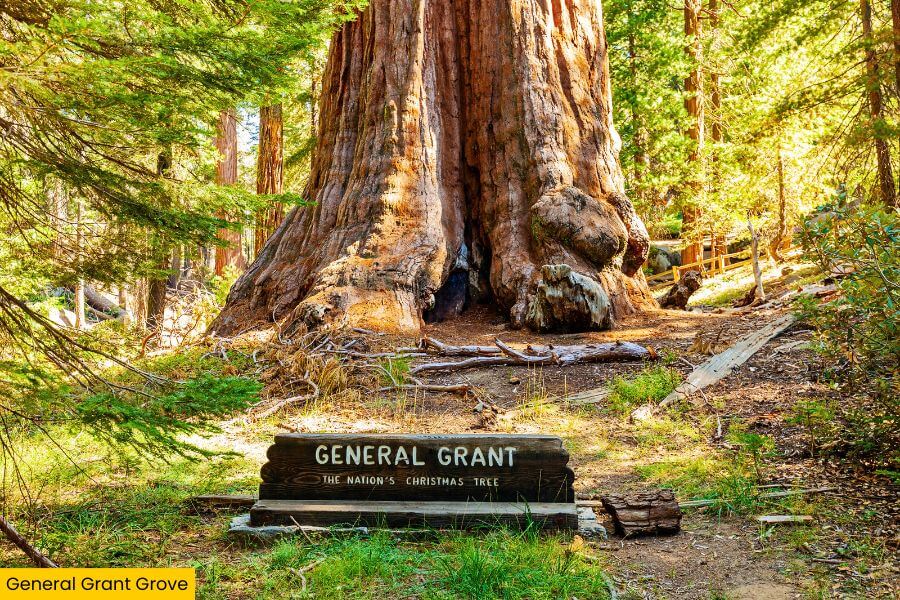
Known as the Nation’s Christmas Tree since 1926, this massive tree is also considered a national shrine honoring members of the U.S. Armed Forces.
Plus, the short 0.5-mile paved loop makes it one of the easiest major sequoia groves to explore on a road trip through the parks.
Along the trail, you’ll pass the Fallen Monarch, a gigantic hollow sequoia that once served as a shelter, horse stable, and even a saloon in the early 1900s.
7. Panoramic Point Overlook (Kings Canyon National Park)
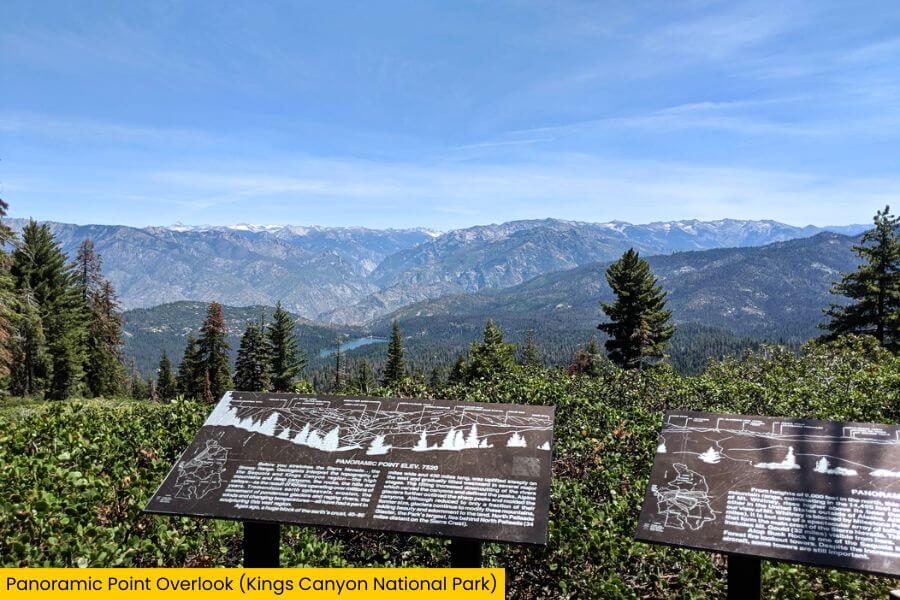
Leaving the giant sequoias behind, the winding drive up to Panoramic Point Overlook rewards you with one of the biggest mountain views in Kings Canyon National Park, stretching across layer after layer of Sierra Nevada peaks.
The overlook sits at about 7,520 feet elevation near the end of a narrow branching off Highway 180 in the Grant Grove area, and a short paved trail leads to the viewpoint perched high above the surrounding forest.
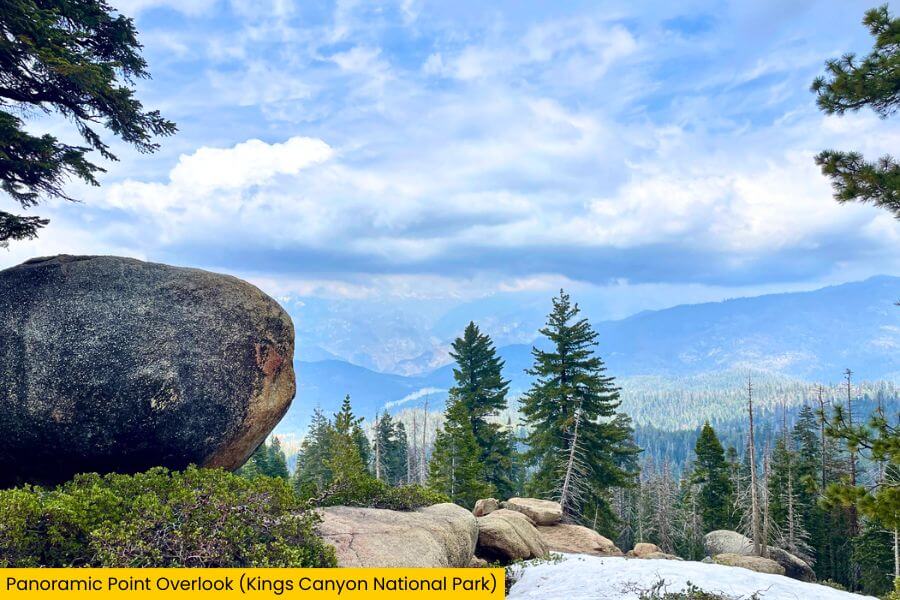
On clear days, you can spot famous landmarks like Hume Lake, the rugged canyon walls of Kings Canyon, and even distant summits.
Sunset is the best time to visit because the fading light turns the granite peaks gold and orange, and the cooler mountain air up here feels like the perfect break after a long day of driving through the parks.
8. Zumwalt Meadow
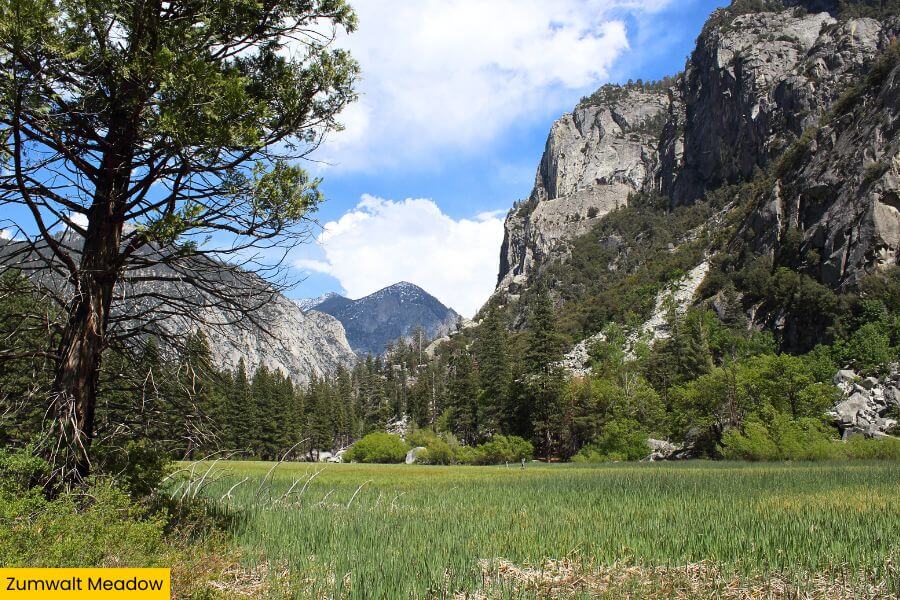
From the sweeping mountain views at Panoramic Point, the road drops deep into Kings Canyon where Zumwalt Meadow brings you right down to the canyon floor beside the roaring Kings River.
This beautiful meadow sits near Cedar Grove, surrounded by massive granite cliffs that rise thousands of feet above the valley and create one of the most dramatic landscapes anywhere in the park.
The easy Zumwalt Meadow Loop is about 1.5 miles, crossing wooden boardwalks, open grassy sections, and shady pine forest while giving you incredible views of the jagged granite walls of Grand Sentinel.
Spring and early summer are especially stunning here because wildflowers bloom across the meadow and the Kings River crashes through the canyon with powerful snowmelt.
9. Mist Falls
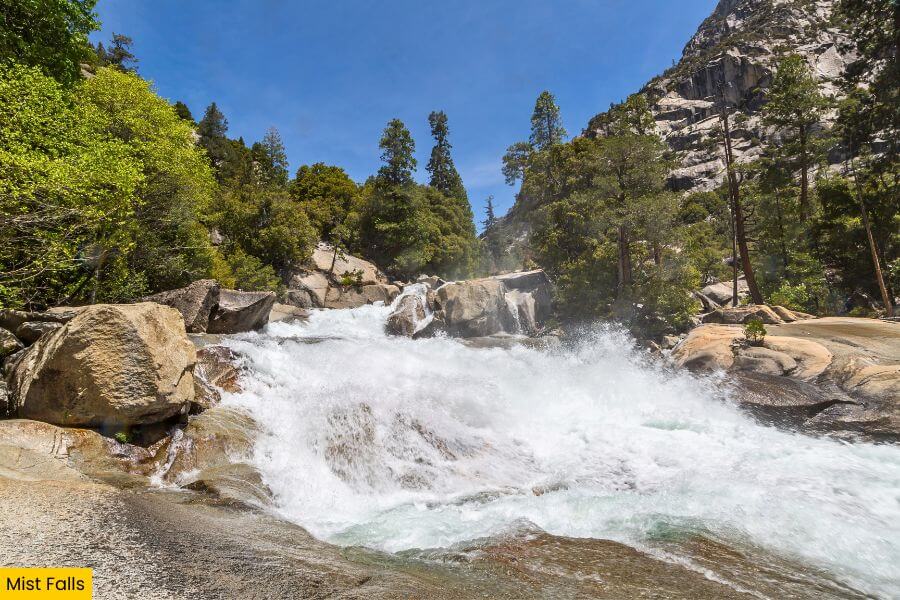
The final stop on our road trip is Mist Falls.
The hike to the waterfall is 8 miles round trip from Roads End, climbing gradually through pine forest, rocky canyon walls, and several scenic bridges before reaching the powerful 100-foot waterfall.
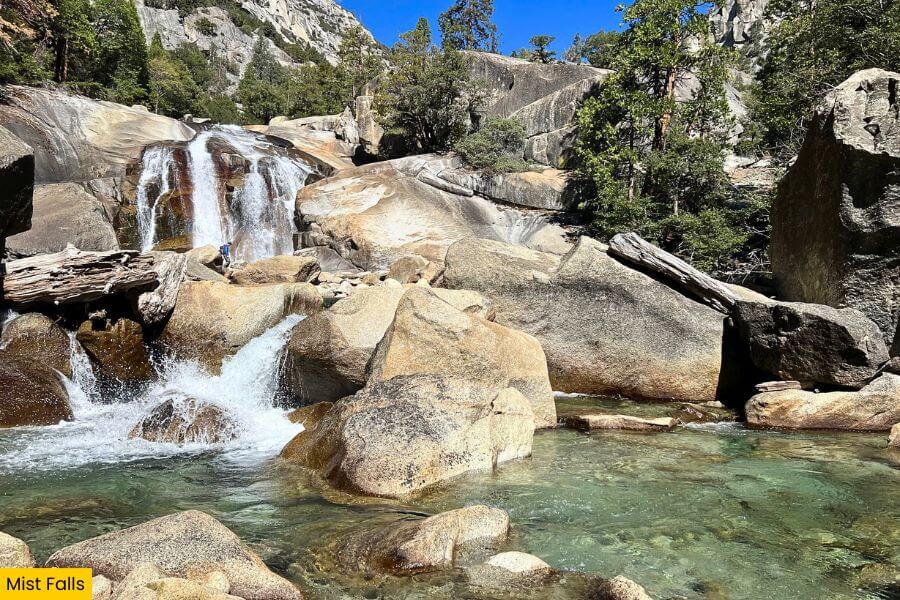
In late spring and early summer, snowmelt from the high Sierra turns the falls into a thundering wall of whitewater that blasts cool mist across the trail and fills the canyon with nonstop crashing sounds.
This trail also gives you a taste of the famous John Muir Wilderness and the longer Rae Lakes Loop route.
Related Posts