New York City is packed with famous landmarks, from towering skyscrapers to massive bridges and buildings that seem to scrape the clouds.
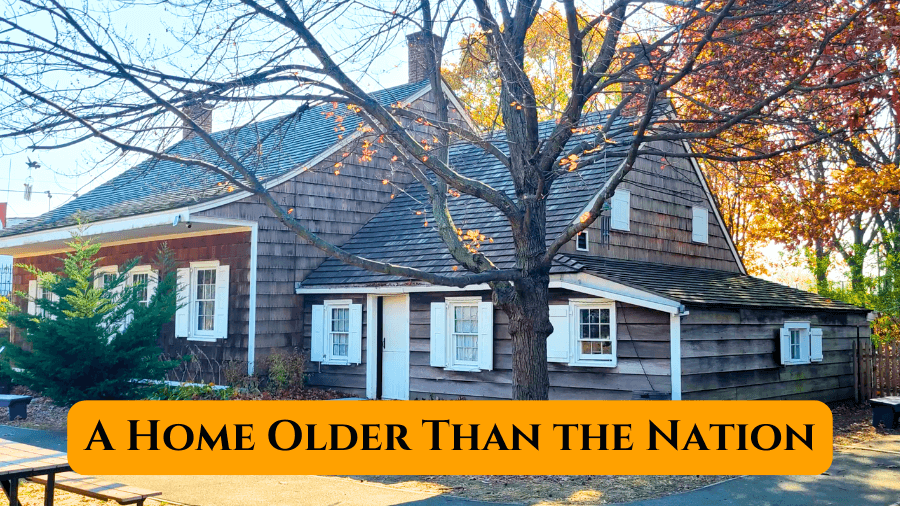
But tucked away in a quiet neighborhood is something completely different: a small wooden farmhouse that was already standing in the 1600s.
This house was built before the United States existed, so visiting it feels less like a museum trip and more like stepping into a time machine.
So if you’re curious, let’s take a closer look at the oldest home in the city and the fascinating story behind it.
Where Is It?
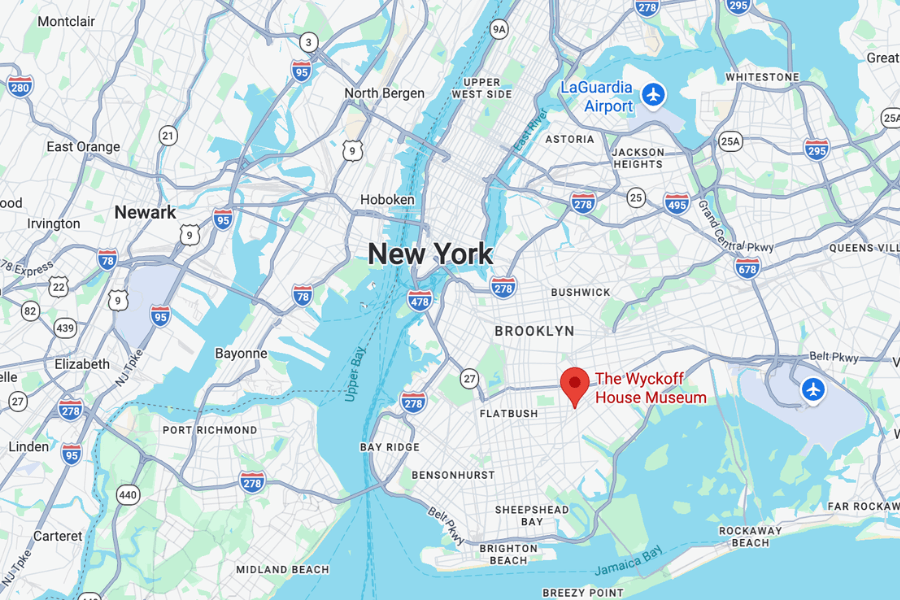
The Wyckoff House Museum is at 5816 Clarendon Road in the East Flatbush neighborhood of Brooklyn, New York City.
If you’re taking the subway, hop on the B or Q train to Newkirk Plaza, then catch the B8 bus to Beverley Rd/Ralph Ave, and walk about a block to the entrance.
Another option is to take the subway to Sutter Ave–Rutland Road, then ride the B47 bus to Ralph Ave and Clarendon Rd, and walk half a block to the museum.
Once you arrive, you’ll spot the low wooden farmhouse looking wildly out of place among the surrounding Brooklyn homes, which is exactly what makes it so cool.
About
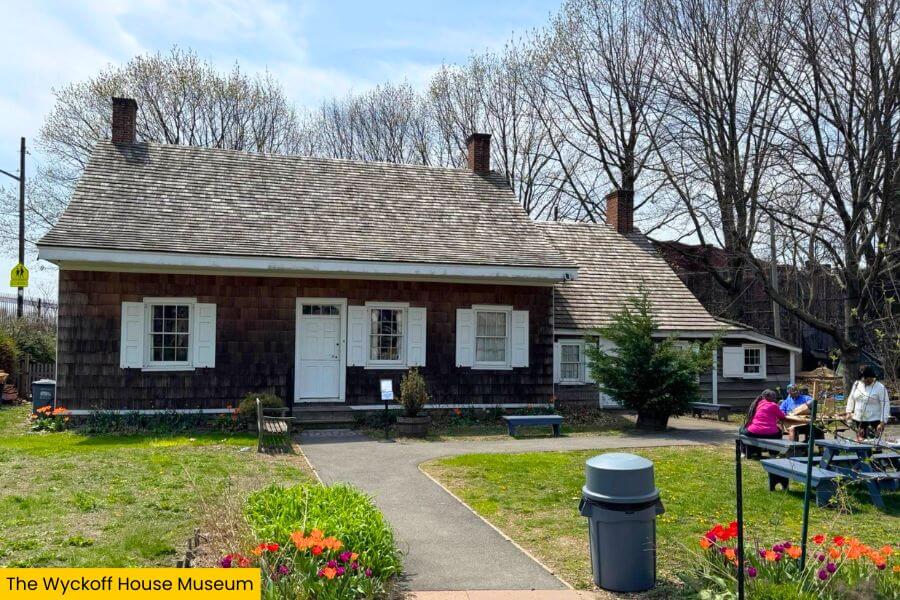
The Wyckoff House Museum is the oldest surviving building in New York City, with its earliest section dating to around 1652.
That means it was already around before the United States became a country, which is pretty wild when you let it sink in.
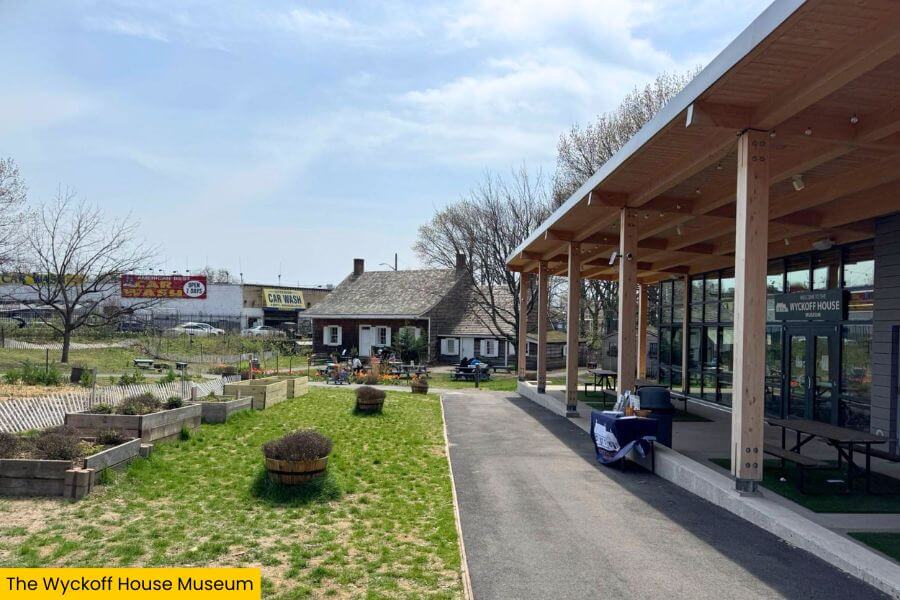
Today, the house sits within Fidler-Wyckoff Park, a 1.5-acre public space that gives the historic building a little breathing room from the surrounding neighborhood streets.
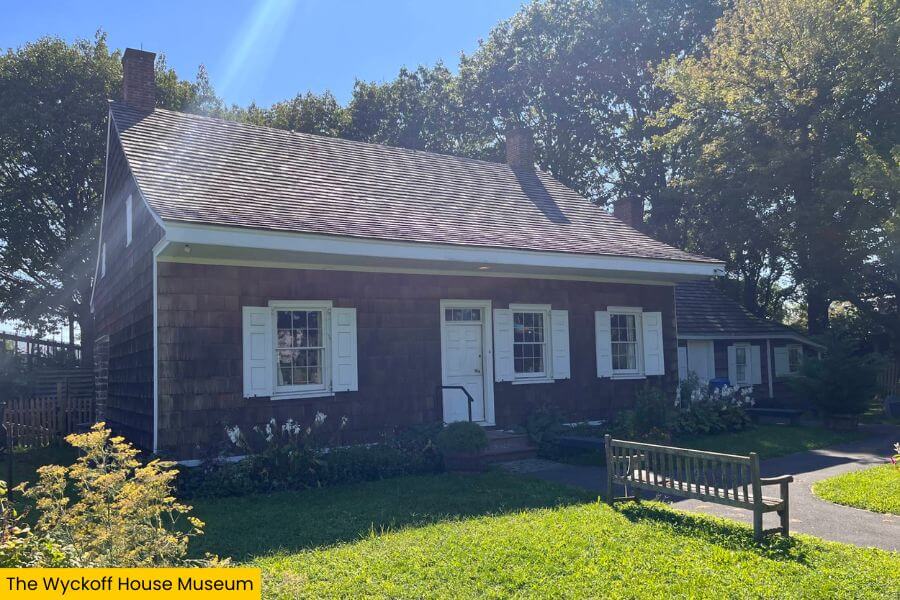
Its exterior is a classic Dutch colonial farmhouse, complete with a low-sloping shingle roof, wooden siding, shuttered windows, and brick chimneys.
The design is famous for its H-frame structure, which was brought to New Netherland by Dutch settlers in the 1600s.
This style used massive wooden beams that formed an H-shaped frame to support the house, which helped the structure survive for centuries.
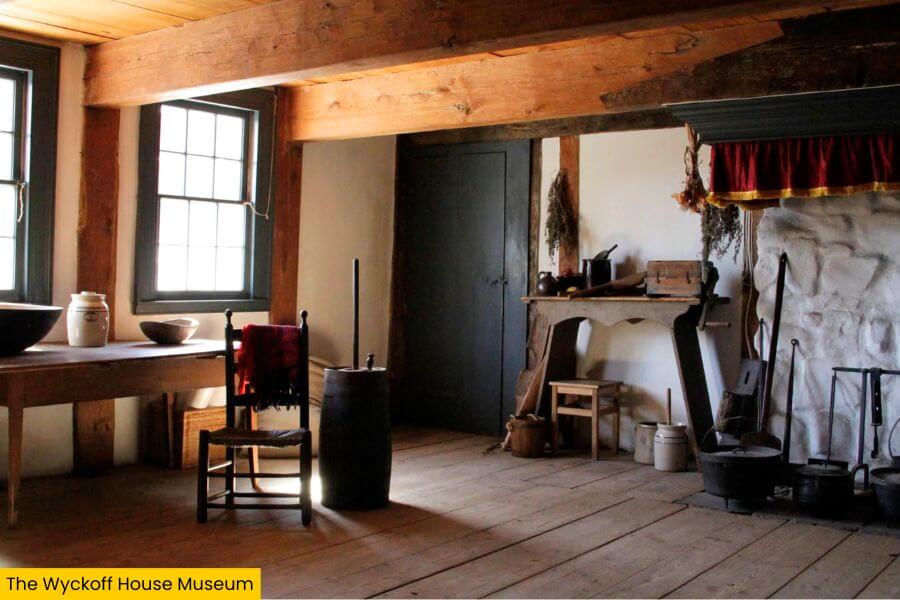
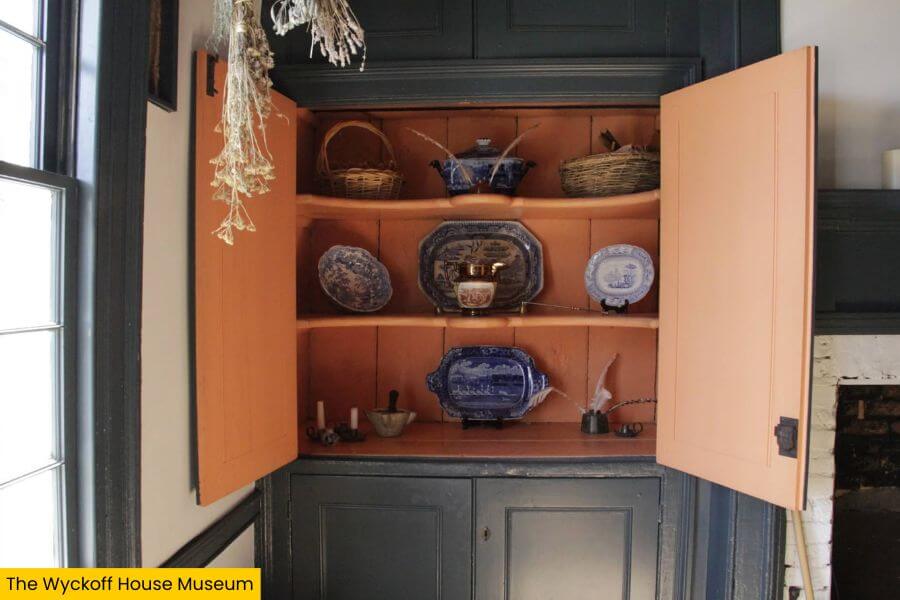
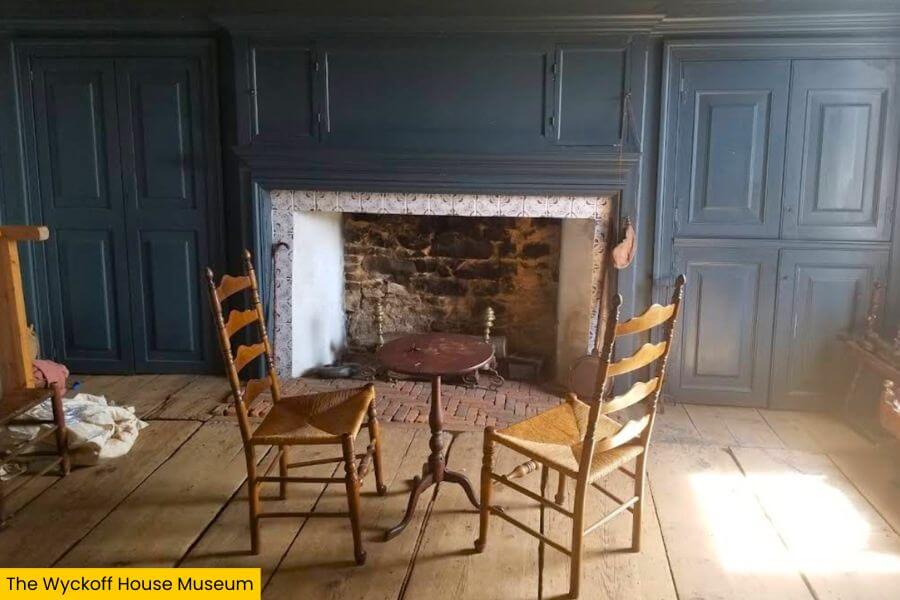
Step inside and you’ll walk through spaces filled with period furnishings, plaster floorings, historic cooking tools, and everyday household items.
You’ll also see the hearth room with its jambless fireplace, along with small sleeping quarters that show how simply early colonial families lived.
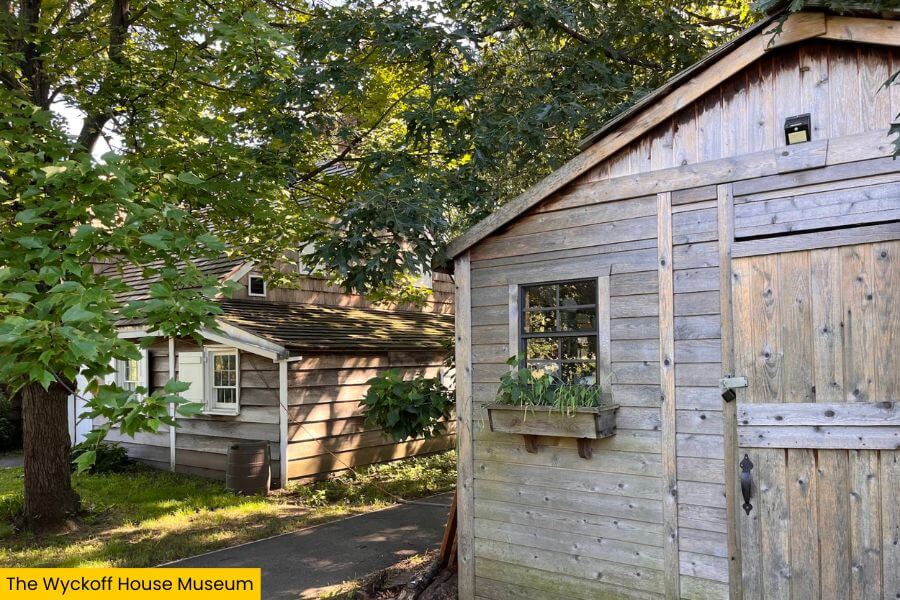
Outside the house, the grounds include heritage gardens and small farm plots growing heirloom vegetables and herbs common in colonial times.

To see it all up close, you’ll join a guided tour that walks through each section while explaining how the building was constructed and how people used each room.
The museum also hosts school programs, seasonal events, and community activities that help bring early Brooklyn history to life in a hands-on way.
So even if you only spend about 45 to 60 minutes here, you’ll leave with a surprisingly clear picture of what life looked like in New York City hundreds of years ago.
History
So how did a 1600s farmhouse survive this long in a city that loves tearing things down and building them back up taller?
It starts with the Wyckoff family.
In the mid-1600s, Pieter Claesen Wyckoff settled in New Amersfoort, a rural settlement in the Dutch colony of New Netherland that later became Brooklyn.
He and his family built a working farm here, and the house became the center of land used for growing crops and everyday life.
The Wyckoffs stayed connected to the property, and over time, it expanded with new rooms and modifications as different generations adapted it to their needs.
Meanwhile, Brooklyn transformed around it as farmland slowly gave way to growing neighborhoods.

Over time, the house that once stood in open countryside found itself surrounded by an expanding borough.
And after nearly three centuries in the Wyckoff family’s hands, the property was eventually sold, and the aging farmhouse faced the real possibility of demolition.
That’s when historians, locals, and Wyckoff descendants rallied in the 1960s to preserve it.
Their efforts helped create the Wyckoff House & Association and led to the house receiving National Historic Landmark status in 1967.
Today, the building stands inside a small Brooklyn park, offering a rare glimpse into the city’s Dutch colonial past.
You’re not looking at a grand mansion built to impress, but a home that survived because it was cared for and recognized as priceless before it was too late.
Know Before You Go
Hours and Admission
Hours at the Wyckoff House Museum are limited, so it’s smart to plan ahead before heading over.
Public house tours are usually offered on Saturdays from 11:00 AM to 2:00 PM between mid-February and mid-December, with occasional Sunday openings.
Admission is free, though donations are encouraged to support preservation and educational programs.

Best Time to Visit
If you want the best experience, try to arrive earlier in the afternoon when tours begin.
Spring through early fall is the most enjoyable time to visit because the outdoor gardens are active and the weather makes it easier to explore the park.
Summer visits can also include community events and educational workshops that bring the historic farm setting to life, giving you a more interactive experience.
Expect the entire stop at the museum and park to take about 45 minutes to 90 minutes, depending on whether you join a tour and explore the grounds.
Nearby Things to Do
After your visit, there are a few interesting stops nearby if you want to keep exploring Brooklyn.

About a 15-minute drive away, you’ll find Prospect Park, a 526-acre park designed by Frederick Law Olmsted and Calvert Vaux.
Inside, you can check out the Prospect Park Zoo or walk around the 60-acre Prospect Park Lake.
You can also swing by the LeFrak Center at Lakeside, which turns into a roller skating rink in summer and an ice skating rink in winter.
If you’re interested in more history, the Flatbush Dutch Reformed Church, founded in 1654, is about 15 minutes away and connects to the same early Dutch settlement story as the Wyckoff House.
Related Posts