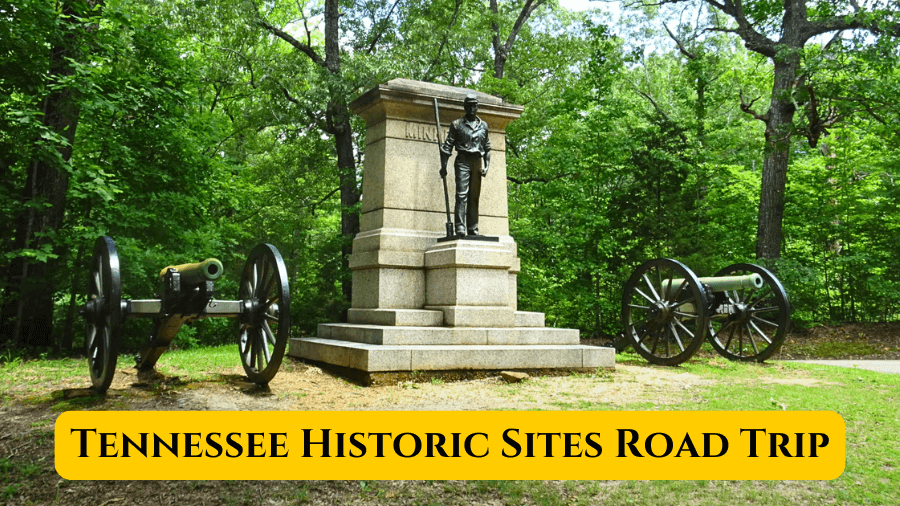
Tennessee isn’t just about country music and mountains, it’s also packed with wild stories, big moments, and people who helped shape the whole country.
From presidents and pioneers to battles and breakthroughs, this state has been right in the middle of some seriously important stuff.
And the best part is that you can still visit the exact spots where it all went down.

We’re talking real homes, old forts, famous trails, and even the place where one of the most powerful speeches in history came to a sudden stop.
If you’re into cool museums, epic views, and stories that’ll stick with you long after the trip, you’re gonna love this list.
Here are 9 historic sites that tell the story of Tennessee.
1. National Civil Rights Museum

The National Civil Rights Museum is located in Memphis, inside the Lorraine Motel, where Dr. Martin Luther King Jr. was assassinated in 1968.
This powerful museum walks you through more than 400 years of African American history, with over 260 artifacts, interactive exhibits, and detailed displays covering everything from slavery to the Civil Rights Movement.
You’ll see the actual room where Dr. King spent his last night, plus a replica of the Montgomery Bus, and tons of audio and video stories that bring history to life.
2. Alex Haley Museum and Interpretive Center

Next up is the Alex Haley Museum and Interpretive Center in Henning, where you can visit the childhood home of the man who wrote Roots.
This cozy bungalow house is packed with personal items, rare photos, and stories about how Haley traced his family’s ancestry all the way back to Africa, changing the way millions of Americans think about their own history.
The museum also includes a modern interpretive center that dives into genealogy, storytelling, and the impact Roots had when it aired on TV in 1977.
3. Shiloh National Military Park

Shiloh National Military Park in Shiloh takes you straight into one of the bloodiest fights of the Civil War.
The Battle of Shiloh happened here in April 1862, and today you can walk the battlefield trails, see over 150 monuments, and visit the Shiloh National Cemetery where approximately 3,584 soldiers are buried.
There’s even a visitor center with a 45-minute film and artifacts like muskets, cannonballs, and uniforms that show just how intense the two-day battle really was.
4. Andrew Jackson’s Hermitage
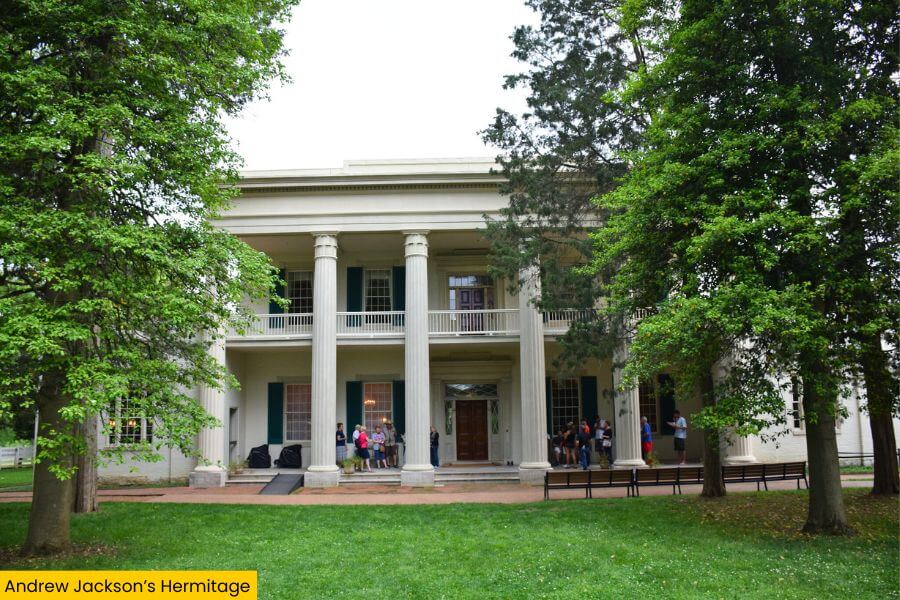
Andrew Jackson’s Hermitage in Nashville lets you peek into the life of the 7th U.S. president right where he lived.
The 1,120-acre plantation includes his original mansion, gardens, family tomb, and even the preserved slave quarters that tell a fuller story of life here in the early 1800s.
You can take a self-guided audio tour and check out thousands of artifacts, from personal items to plantation relics uncovered through archaeological research.
5. Blount Mansion

Located in downtown Knoxville, Blount Mansion might look small from the outside, but it’s packed with important history.
This was the home of William Blount, signer of the U.S. Constitution and governor of the Southwest Territory.
It served as the executive mansion and de facto capitol until 1796, before Knoxville became Tennessee’s first state capital.
You can tour the original 1792 house, walk through the gardens, and see period furniture and maps that show how Tennessee got its start.
6. Museum of Appalachia

The Museum of Appalachia in Clinton feels like stepping into a real-life mountain village.
This 65-acre living history museum has over 35 log cabins, barns, and pioneer buildings, plus more than 250,000 artifacts like musical instruments, quilts, and old-timey tools.

There are live bluegrass performances, goats and peacocks roaming the grounds, and occasional blacksmith demonstrations showing off how folks in the Appalachian Mountains lived and worked.
7. Cumberland Gap National Historical Park

Cumberland Gap National Historical Park stretches across the corner of the state where Tennessee, Kentucky, and Virginia all meet.
This was the main route pioneers took heading west in the 1700s, and today you can hike 85 miles of trails, check out actual wagon ruts, and explore Gap Cave with its massive underground rooms.

The Pinnacle Overlook is the real showstopper though as it sits 2,440 feet up and gives you a jaw-dropping view of three states at once.
Please note that Gap Cave guided tours are only available from May through September.
8. Andrew Johnson National Historic Site

In Greeneville, the Andrew Johnson National Historic Site tells the story of a tailor who literally stitched his way into presidency.
You can tour his original brick home from the 1850s, step inside his tiny tailor shop, and visit the cemetery where he’s buried under a 28-foot-tall monument.
The visitor center has exhibits on his bumpy time as the 17th president after Lincoln’s assassination, including how he was the first U.S. president to be impeached (spoiler: he stayed in office by just one vote).
9. Sycamore Shoals State Historic Park

Last but definitely not boring, Sycamore Shoals State Historic Park in Elizabethton takes you back to the wild days of frontier life in the late 1700s.
This is where the Watauga Association, basically one of the first American governments, got started.

It’s also where the Overmountain Men gathered before marching off to win the Battle of Kings Mountain.
You can walk along the 1.2-mile Patriot’s Path, tour the reconstructed replica of Fort Watauga, and catch epic outdoor dramas like Liberty! that bring all the pioneer action to life.
Related Posts