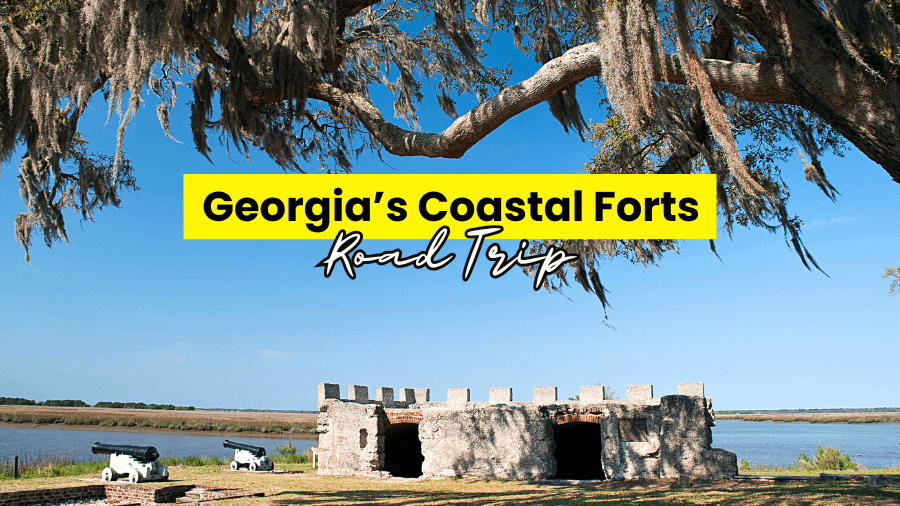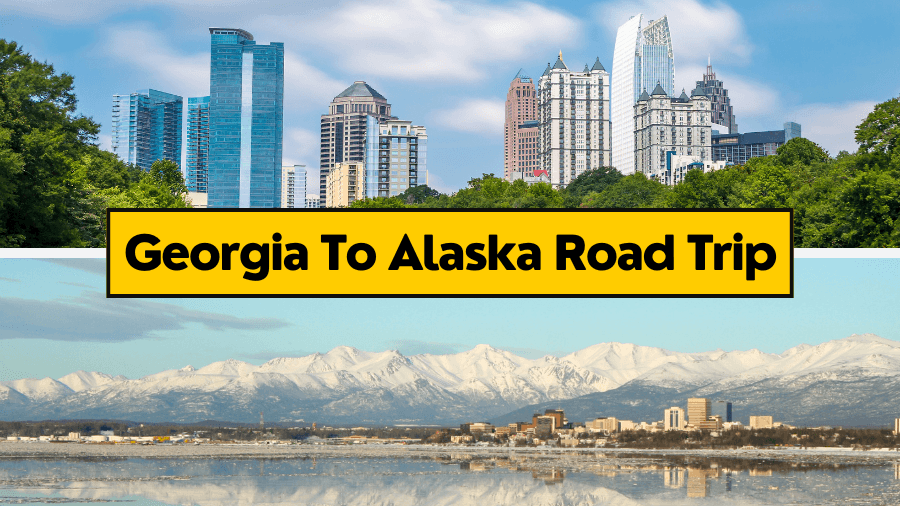
Picture this: you start in a buzzing southern city and end surrounded by glaciers, towering peaks, and some of the wildest landscapes in North America.
This road trip stretches over 4,000 miles and takes you through changing scenery that goes from busy streets to quiet plains to remote mountain highways.
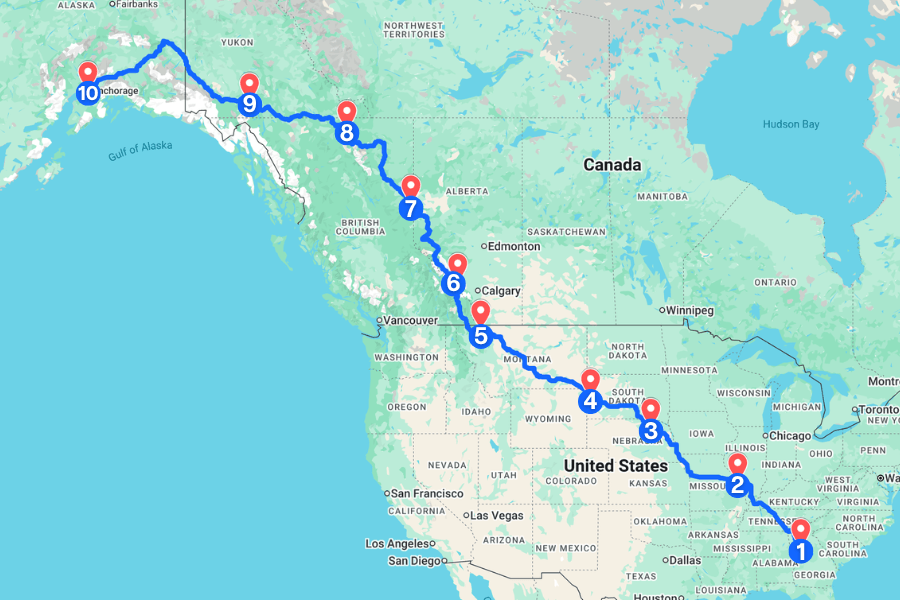
Along the way, you’ll pass unique roadside stops, soak in natural hot springs, and even walk through history frozen in time.
If you’re ready for long driving days, unforgettable views, and stories you’ll be telling for years, this is the kind of trip that turns the journey into the main event.
1. Atlanta, Georgia
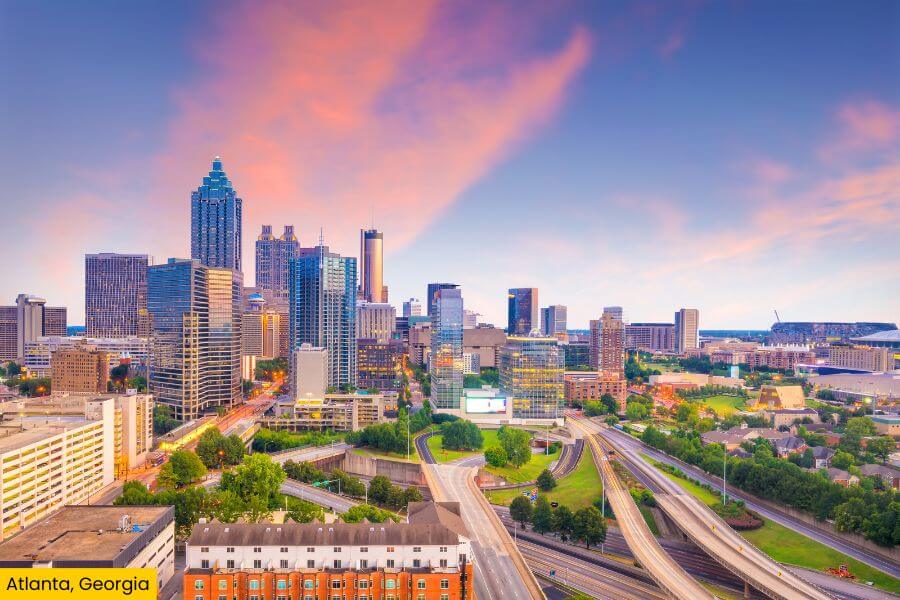
We’re starting our road trip in Atlanta.
To explore, you can visit the Georgia Aquarium, walk through the 22-acre Centennial Olympic Park, and learn about soda history at the World of Coca-Cola.
For a more local feel, stroll or bike sections of the 22-mile Atlanta BeltLine loop and visit the Martin Luther King Jr. National Historical Park, home to his birthplace.
(At the time of writing, the Birth Home of Martin Luther King Jr. is temporarily closed for renovations, so check online before planning your visit.)
2. St. Louis, Missouri
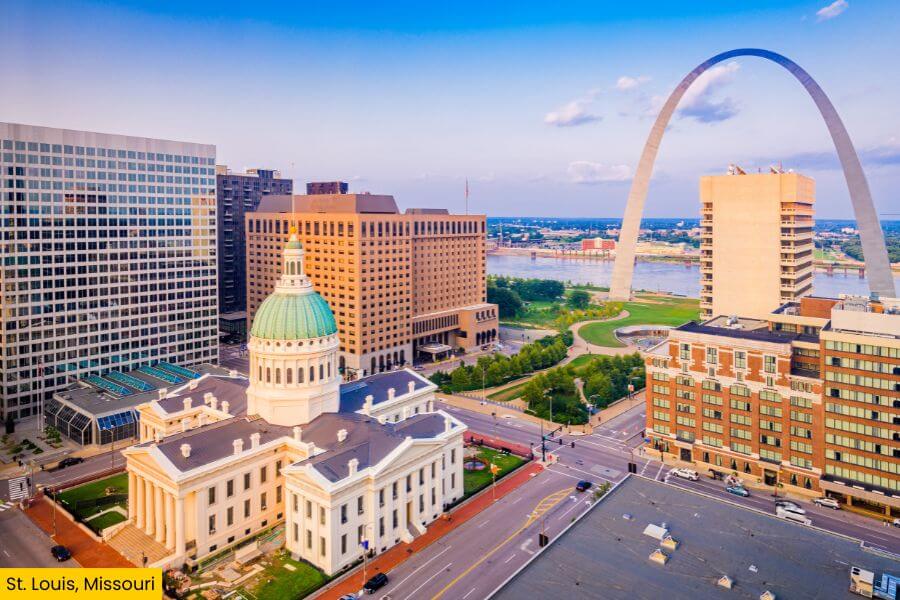
From Atlanta, it’s about an 8 hour drive to St. Louis, Missouri, a city along the Mississippi River.
It’s best known for the 630-foot Gateway Arch in Gateway Arch National Park, the tallest monument in the U.S., where you can ride a tram for huge river views.
You can also wander through the 1,300-acre Forest Park, home to the Saint Louis Zoo, Saint Louis Art Museum, and Missouri History Museum, with free admission.
And before you leave, try some St. Louis-style pizza with its thin crust and Provel cheese or catch a Cardinals game at Busch Stadium, known for its passionate fans.
3. Ashfall Fossil Beds State Historical Park, Nebraska
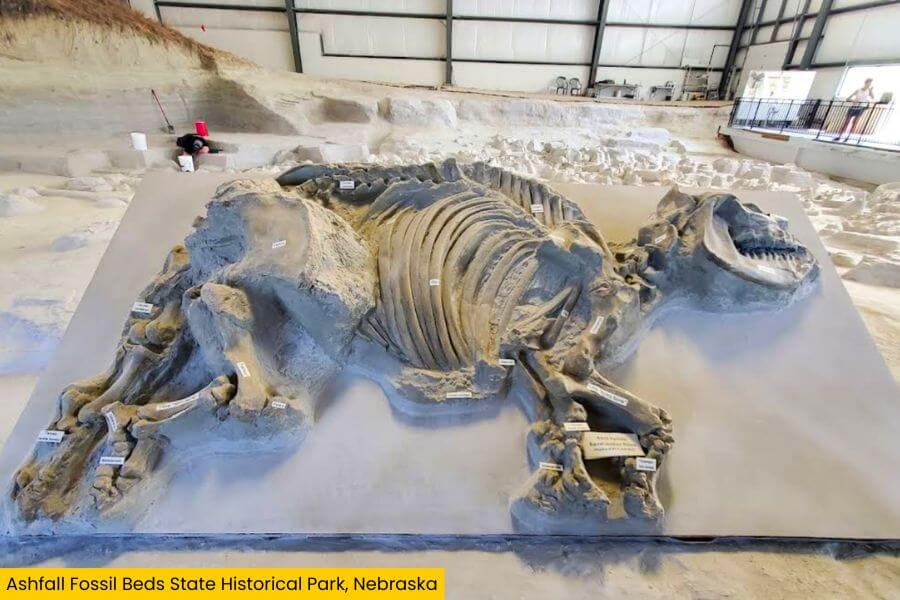
Up next is Ashfall Fossil Beds State Historical Park in Nebraska, where a volcanic eruption about 12 million years ago froze an entire watering hole in time.
The main draw is the Hubbard Rhino Barn, where a boardwalk lets you view fossils preserved in place and see illustrations of the animals along the walls.
You can also stop by the Working Visible Lab to watch student interns work on real finds and chat with them about their research.
If you want to explore more, you can hike the park’s nature trails to spot local plants and wildlife or stop by the gift shop for books and souvenirs.
4. Deadwood, South Dakota
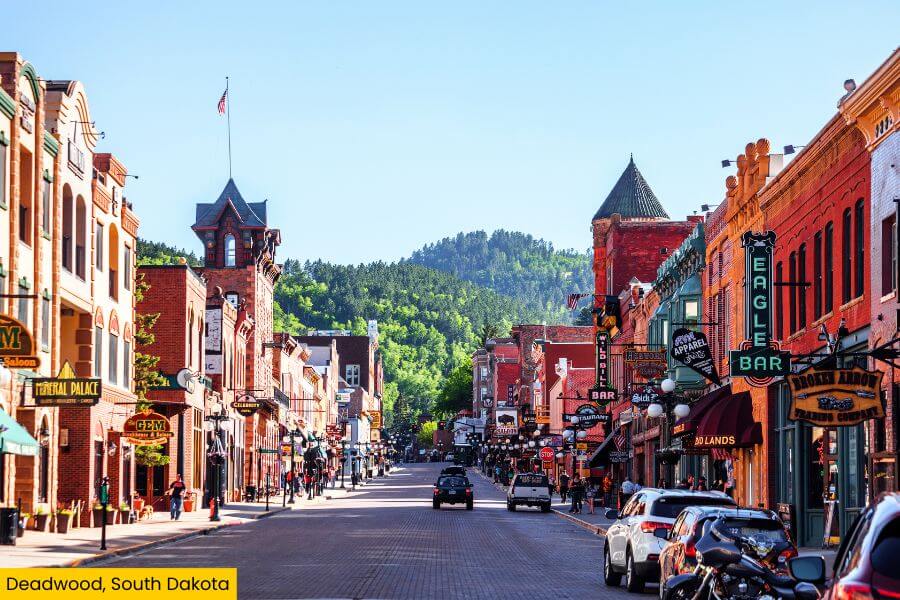
A 6-hour drive from the historical park takes you to Deadwood, South Dakota, a former gold rush town that still feels like the Wild West never left.
This place took off in 1876 after gold was discovered, sparking the Black Hills Gold Rush and drawing in outlaws, gamblers and gunslingers.
Today, you can visit spots like Saloon No. 10, tied to where Wild Bill Hickok was shot during a poker game, holding the famous “dead man’s hand.”
There’s also Main Street, where you’ll find charming buildings, lively casinos, and summer reenactments of Old West shootouts that bring the past to life.
For a break from the action, you can hike the 109-mile George S. Mickelson Trail or visit Mount Moriah Cemetery, where the town’s notable figures are buried.
5. Glacier National Park, Montana
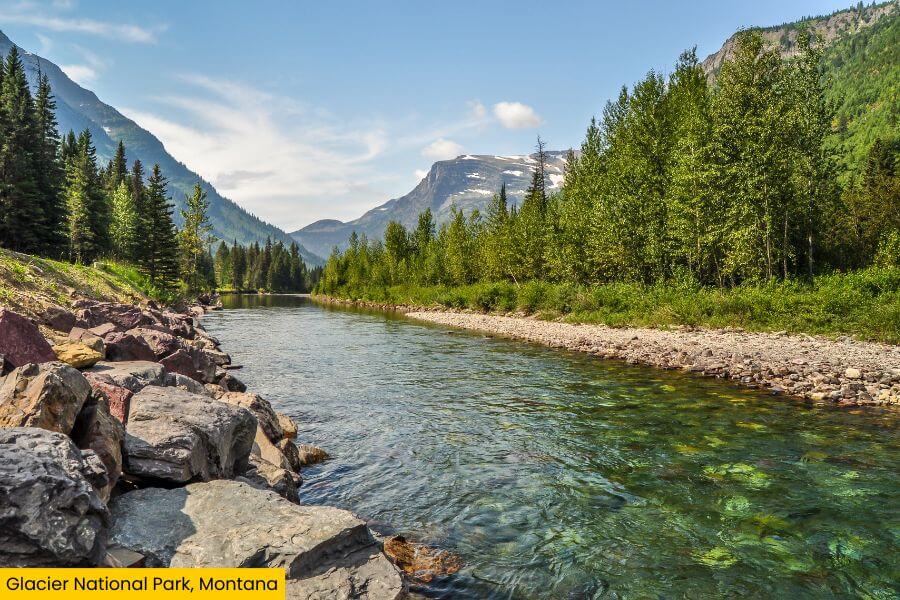
Next is Glacier National Park in northwestern Montana, set along the Canadian border.
It covers over 1 million acres of mountains and forests, with about 762 lakes, including the 10-mile-long Lake McDonald, the largest in the park.
The highlight here is the 50-mile Going-to-the-Sun Road, a scenic alpine drive that reaches Logan Pass at 6,646 feet with views of glaciers, waterfalls and valleys.
If you’re up for a hike, tackle the 15.2-mile Highline Trail from Logan Pass or the 6-mile trail to Avalanche Lake, where you’ll reach a shoreline framed by steep cliffs.
6. Banff National Park, Alberta (Canada)
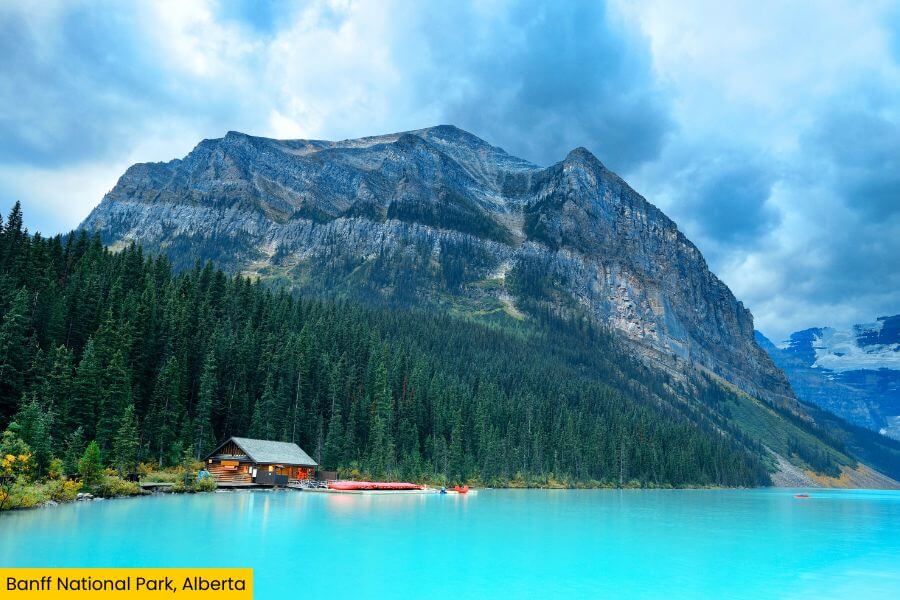
Now cross into Alberta and you’ll find Banff National Park, Canada’s first national park, spanning 2,564 square miles in the heart of the Canadian Rockies.
This spot is known for its striking blue lakes like Lake Louise and Moraine Lake, where glacially fed water gives them their bright turquoise color.
To take it all in, you can drive the 144-mile Icefields Parkway, one of the most scenic roads on Earth, and stop at the Columbia Icefield to see the Athabasca Glacier.
For an easy adventure, you can walk the 2.2-mile Lake Agnes Tea House Trail for mountain views and snacks or ride the Banff Gondola up Sulphur Mountain.
7. Dawson Creek, British Columbia (Canada)
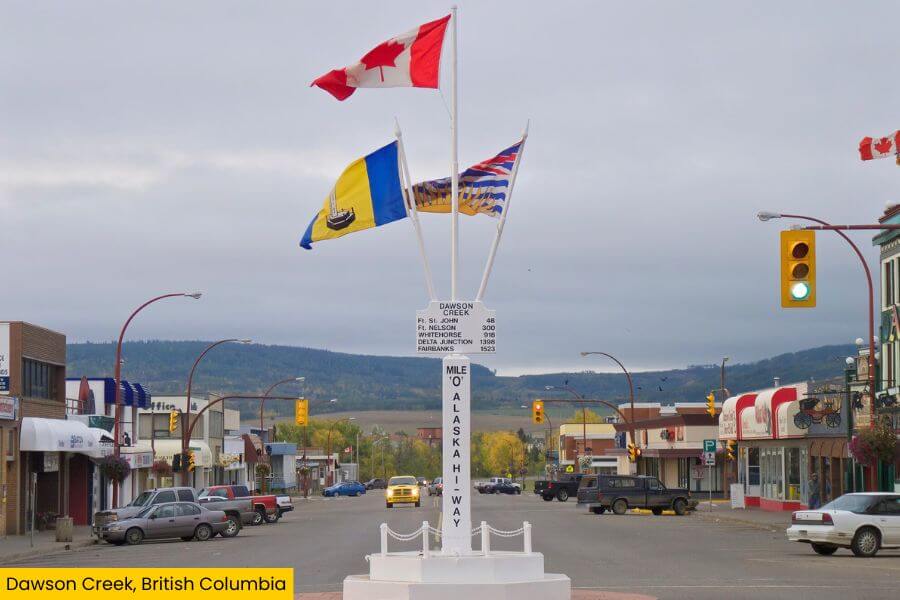
Leave the alpine peaks behind and drive about 8 hours and 15 minutes to Dawson Creek, the official Mile 0 of the legendary Alaska Highway.
This small city of around 12,850 people marks the starting point of the 1,387-mile route, built in just eight months in 1942.
Here, you can snap a photo at the Mile 0 Post and explore the Walter Wright Pioneer Village with its collection of restored buildings and artifacts.
Before you hit the road again, fuel up and get your car ready because you’re about to drive one of North America’s most famous highways.
(Please note that the Walter Wright Pioneer Village is open seasonally from May to September, so plan ahead if you want to visit.)
8. Liard River Hot Springs, British Columbia (Canada)
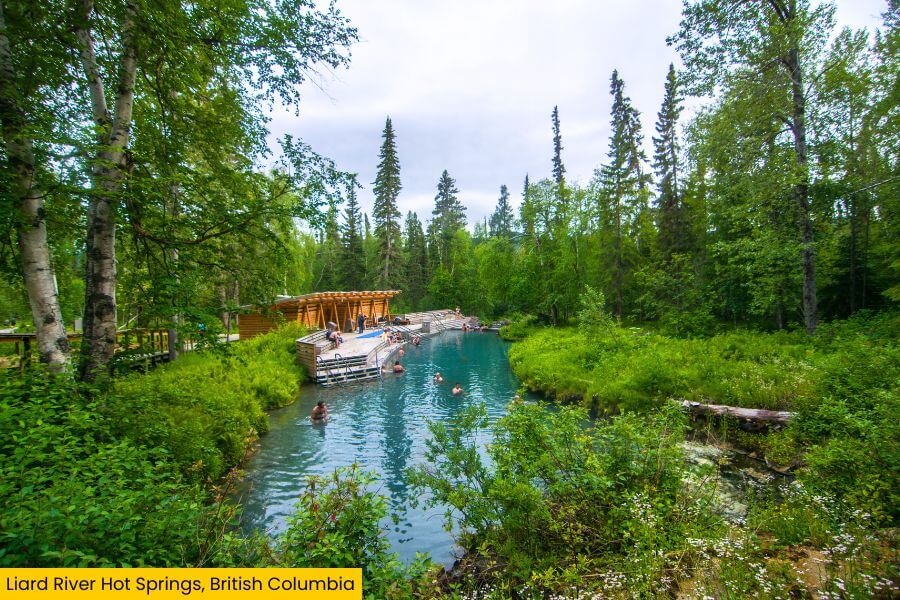
At Mile 496 along the Alaska Highway is Liard River Hot Springs Provincial Park, one of Canada’s largest natural hot springs.
The Alpha Pool here stays between 107°F and 125°F, depending on the season, and is fed by mineral-rich water rising from deep underground.
To reach it, walk a short boardwalk trail through a swamp and boreal forest, where you can take in the scenery.
It’s the kind of place where you can take a break from the road and enjoy a quiet moment in nature.
9. Whitehorse, Yukon (Canada)
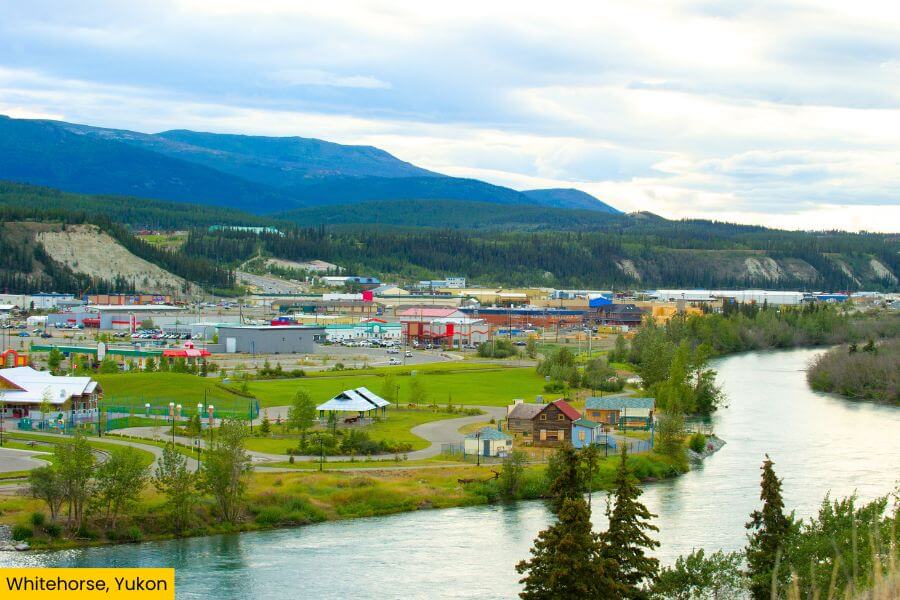
From the hot springs, it’s about a 7.5-hour drive to Whitehorse, the capital of Yukon, set along the fast-moving Yukon River.
This city of roughly 31,900 people became a key stop during the Klondike Gold Rush, and you can learn that history at the MacBride Museum of Yukon History.
For a quick adventure, hike around Miles Canyon to see dark green water rushing through basalt cliffs in a dramatic river gorge.
If you’re here between late August and April, keep an eye on the night sky since Whitehorse sits near the auroral oval, giving you a great chance to see the northern lights.
10. Anchorage, Alaska
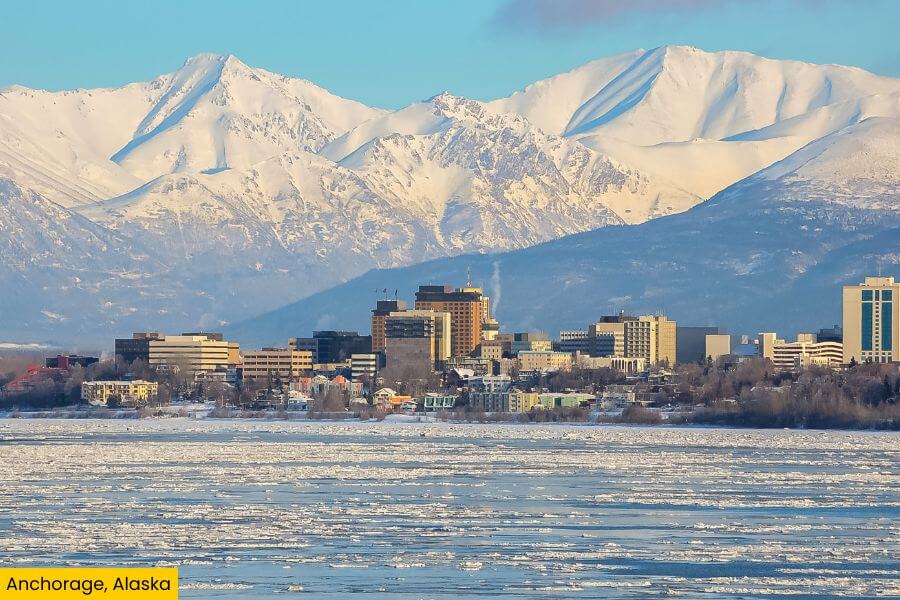
Then there’s Anchorage, Alaska, the largest city in the state, sitting at the end of Cook Inlet with the Chugach Mountains nearby.
About 288,000 people live here, and you’re never far from nature thanks to the 11-mile Tony Knowles Coastal Trail along the water with views of Denali on clear days.
If you want to explore the culture, you can visit the Alaska Native Heritage Center or stop by the Anchorage Museum, which showcases the state’s history and art.
For a classic Alaska experience, drive the 127-mile Seward Highway, with glaciers along the way, chances to spot Dall sheep, and possible beluga whale sightings.
Related Posts