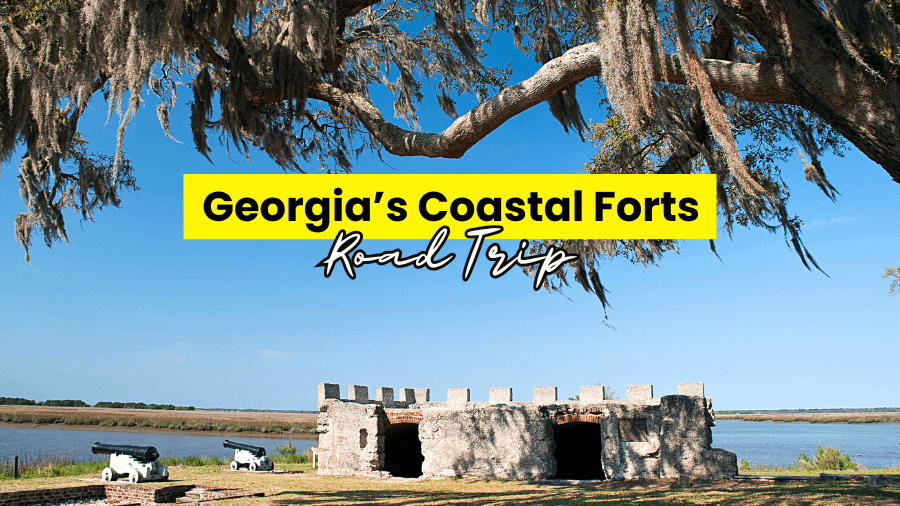
If you’re into cannon blasts, secret tunnels, and historic battles, this Georgia road trip is totally your thing.
Georgia’s coast is packed with old forts that once defended rivers, ports, and towns, and they’ve got the stories (and the scars) to prove it.

Some spots feel like movie sets, others are peaceful, but every one of them has something wild and unexpected to show you.
1. Battery Garland

Battery Garland is a historic coastal fort located on the north end of Tybee Island, near the mouth of the Savannah River, and is now home to the Tybee Island Museum.
It was built in 1899 and was armed with a single 12‑inch coastal gun as part of the defense system guarding the mouth of the Savannah River.

Today, you can walk through the concrete structure, check out the old gun mounts, and explore the underground magazines where ammunition was once stored.
Even though it was never used in battle, it’s a super cool spot for history lovers and has awesome views of the river and nearby Fort Pulaski.
2. Fort Pulaski National Monument
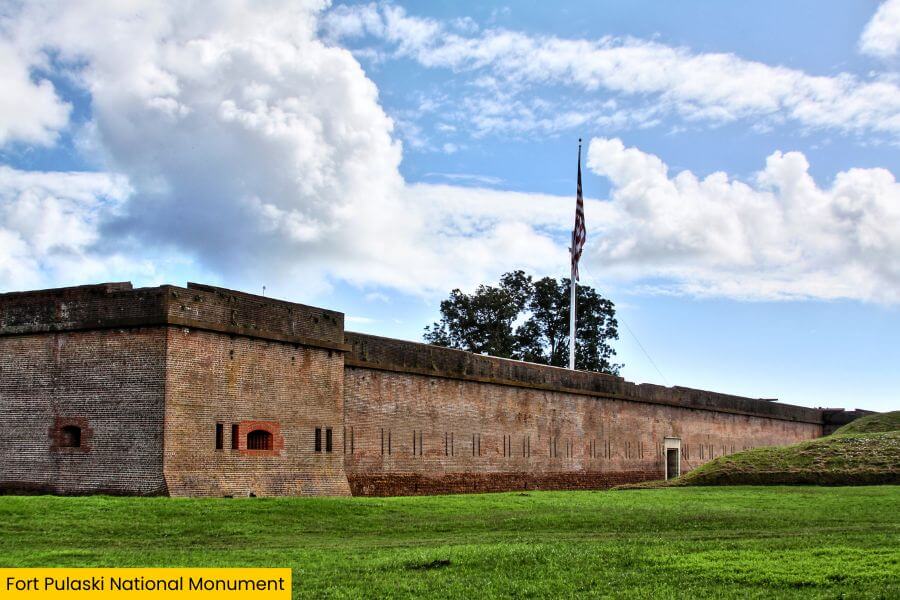
About a 10-minute drive from Battery Garland, Fort Pulaski National Monument is the real star of the show with its massive brick walls and historic drawbridge.
This Civil War-era fort was captured in 1862 using rifled cannons, a move that totally changed military history and made brick forts outdated overnight.

You can walk the moat, climb up to the ramparts, and even see cannonball damage still stuck in the walls.
Don’t miss the museum inside which is packed with uniforms, old weapons, and wild stories from soldiers who lived here over 150 years ago.
3. Old Fort Jackson

Just a 20-minute drive from Fort Pulaski, Old Fort Jackson brings the boom with daily cannon firings and costumed guides who make history feel like a live show.
Built in 1808, it’s the oldest brick fort still standing in Georgia and was active during the War of 1812 and the Civil War.

You can explore the passageways, peek into old barracks, and climb the ramparts for sweeping views of the Savannah River.
If you’ve got kids (or you’re just a big kid at heart), the interactive demos and cannon drills are seriously fun.
4. Fort McAllister State Park
For a totally different vibe, Fort McAllister State Park blends Civil War history with peaceful riverfront views and shady oak trees draped in Spanish moss.
This earthen fort withstood years of bombardment and was finally captured in December 1864 during General Sherman’s March to the Sea.
You can explore the fort’s bombproof bunkers, stand inside the old barracks, and check out historic cannons that once defended the Ogeechee River.
After all the exploring, kick back with a picnic, go fishing off the pier, or take a quiet hike along the 3.1-mile Redbird Creek Trail.
5. Fort Morris State Historic Site

Tucked away near the small town of Midway, Fort Morris State Historic Site is all about Revolutionary War history and wide open marsh views.
Back in 1778, American troops here famously told the British to “Come and take it!” when asked to surrender.

There aren’t massive walls or cannons everywhere, but the earthworks, museum, and peaceful nature trails make it feel like a secret piece of Georgia’s past.
Time your visit right and you might catch a living history day with musket demos, colonial games, and folks in full 1700s gear.
6. Fort King George State Historic Site

Just down in Darien, Fort King George State Historic Site takes you back to the early 1700s, when it was the southernmost outpost of the British Empire in North America.
The fort’s been beautifully reconstructed with a blockhouse, barracks, and a guardhouse, all made from hand-cut logs and palisades.
You can climb lookout towers, walk the wooden palisades, and even see how soldiers lived in the swampy wilderness over 300 years ago.
It’s quiet, a little eerie, and packed with cool details that show just how tough life was on Georgia’s colonial frontier.
7. Fort Frederica National Monument

About a 45-minute drive from Fort King George State Historic Site, Fort Frederica National Monument on St. Simons Island feels like walking through a ghost town where nature has taken over the past.
Built in the 1730s by James Oglethorpe to defend Georgia from Spanish Florida, it once protected a bustling British colonial town with around 1,000 residents.
Today, you’ll see ruins of old homes, moss-covered foundations, and tabby walls still standing from battles fought nearly 300 years ago.
Rangers give great tours, but even on your own, it’s easy to imagine the town that once stood buzzing with soldiers, shopkeepers, and settlers.
Related Posts