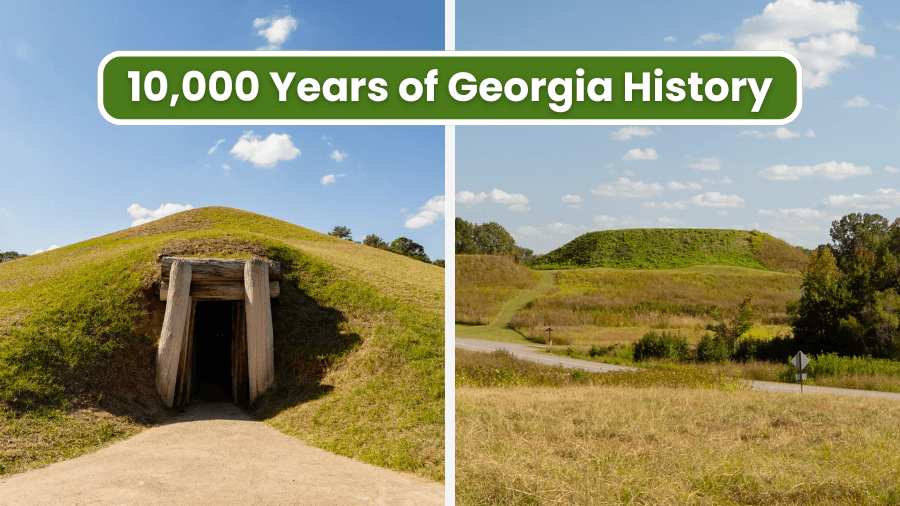
While most parks tell one story, this one tells more than 12,000 years of them.
Hidden in the heart of Georgia, you’ll find an incredible place where massive mounds and ancient history have survived for thousands of years.
As you explore the trails, you’ll walk through the same river valley where generations of Native people lived and built remarkable structures by hand.
From towering eathworks with sweeping views to peaceful forest paths, every corner has another piece of an amazing story waiting to be discovered.
If you’re looking for one of Georgia’s most unforgettable historic sites, keep reading because this park is unlike anywhere else in the state.
Where Is It?
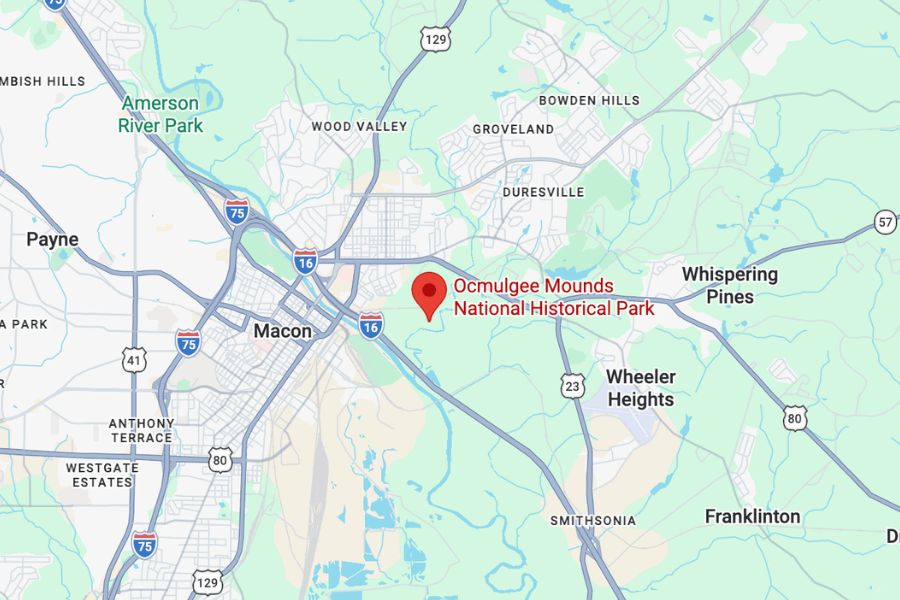
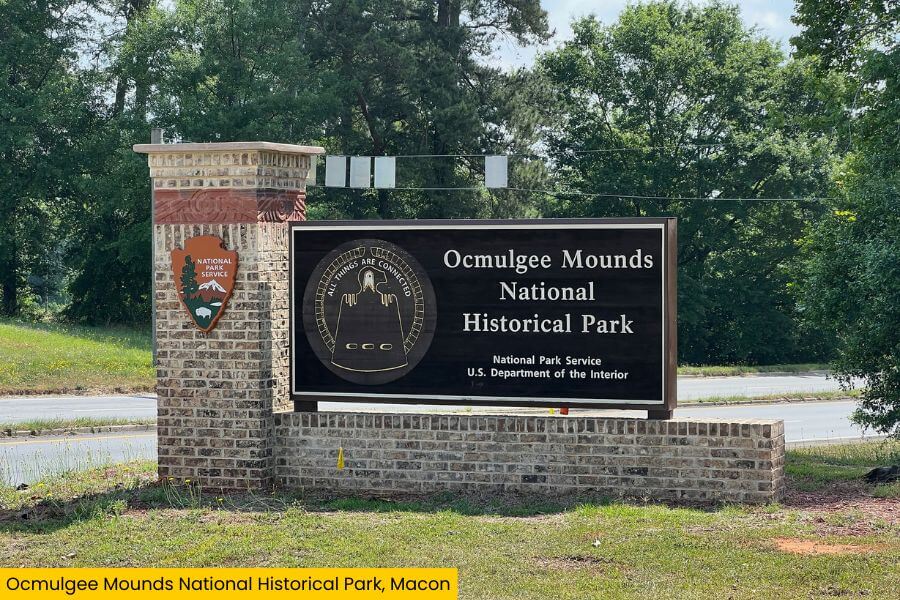
Ocmulgee Mounds National Historical Park is located in Macon, Georgia, just a 5-minute drive from downtown along the Ocmulgee River.
You can reach it in about 1 hour and 20 minutes from Atlanta, 2 hours from Augusta, 1 hour and 45 minutes from Columbus, and 2.5 hours from Savannah.
Its central location makes it an easy day trip from several of Georgia’s largest cities, whether you’re stopping by for a few hours or spending the whole day exploring.
About
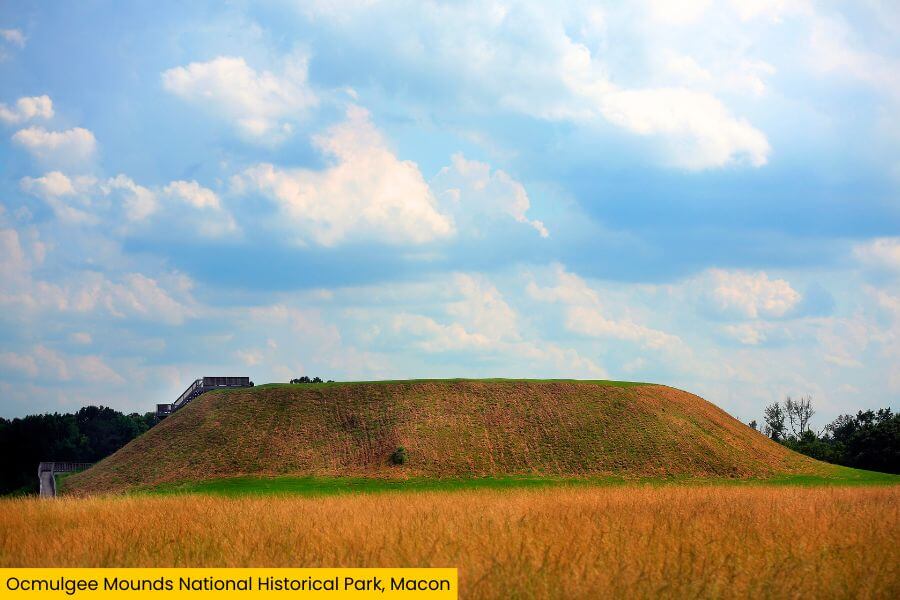
Spanning about 3,336 acres, Ocmulgee Mounds National Historical Park is one of the most important archaeological sites in the southeastern United States.
It’s best known for its massive Native American earthworks, including ceremonial and burial mounds, and amazing pieces of the past.
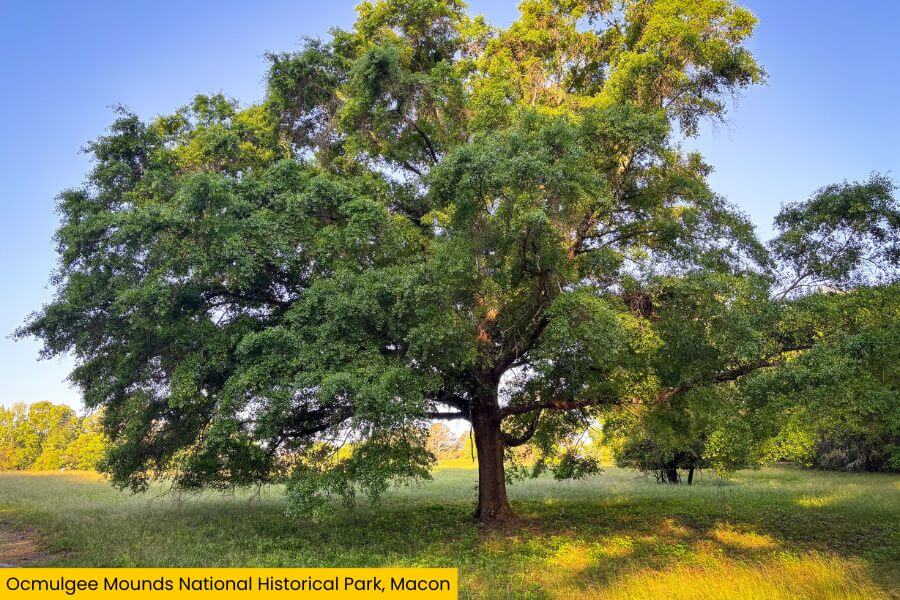
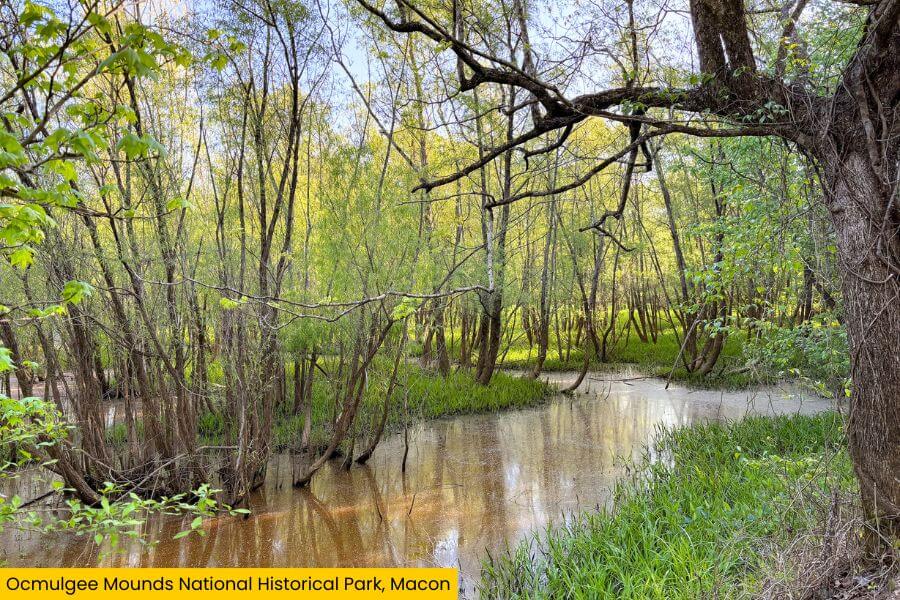
The landscape combines thousands of years of human history with forests and wetlands, so you can spend the day exploring both cultural landmarks and scenic natural areas.
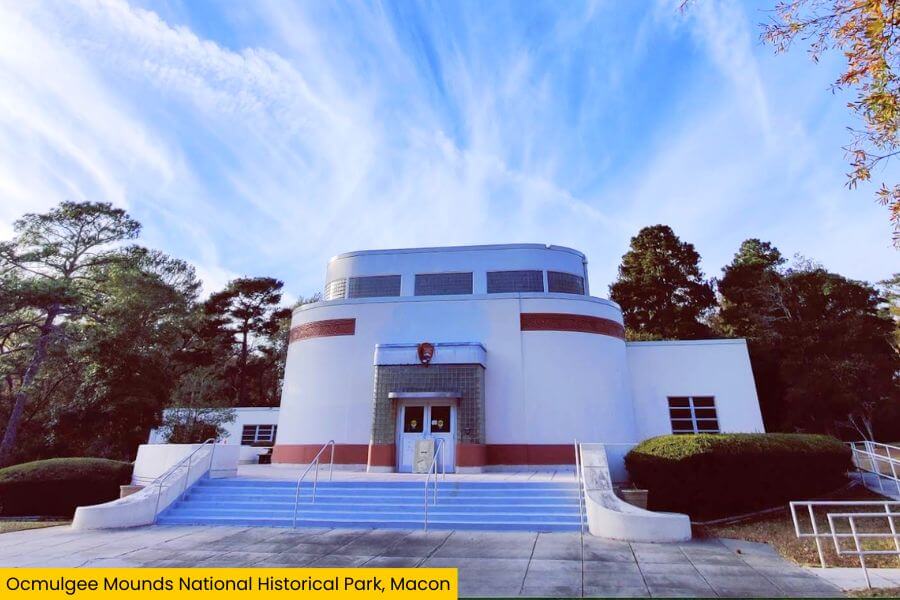
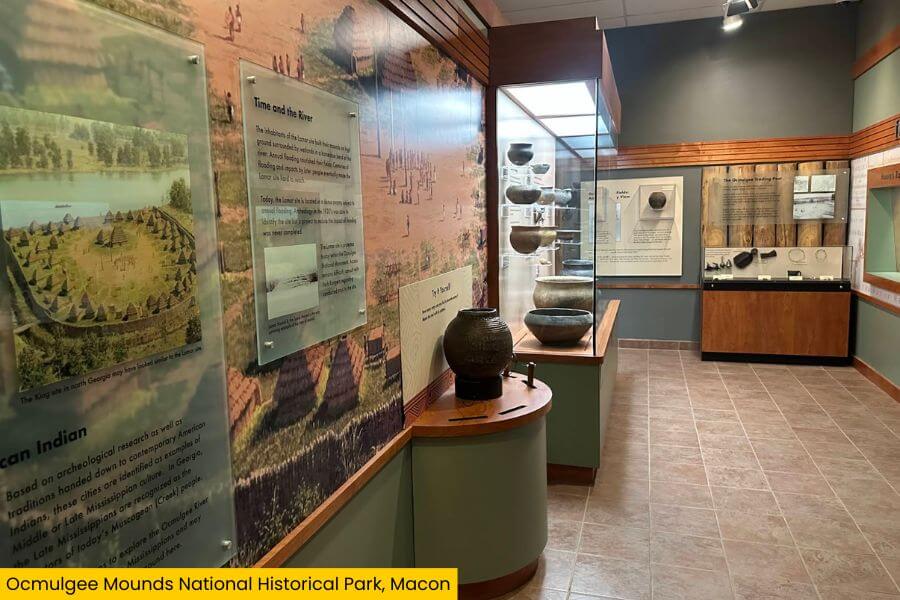
One of the first places you’ll want to visit is the Ocmulgee Mounds NHP Visitor Center.
Inside, you’ll find an archaeology museum with artifacts and exhibits that tell the story of the Native cultures that lived here, including the historic Muscogee Creek people.
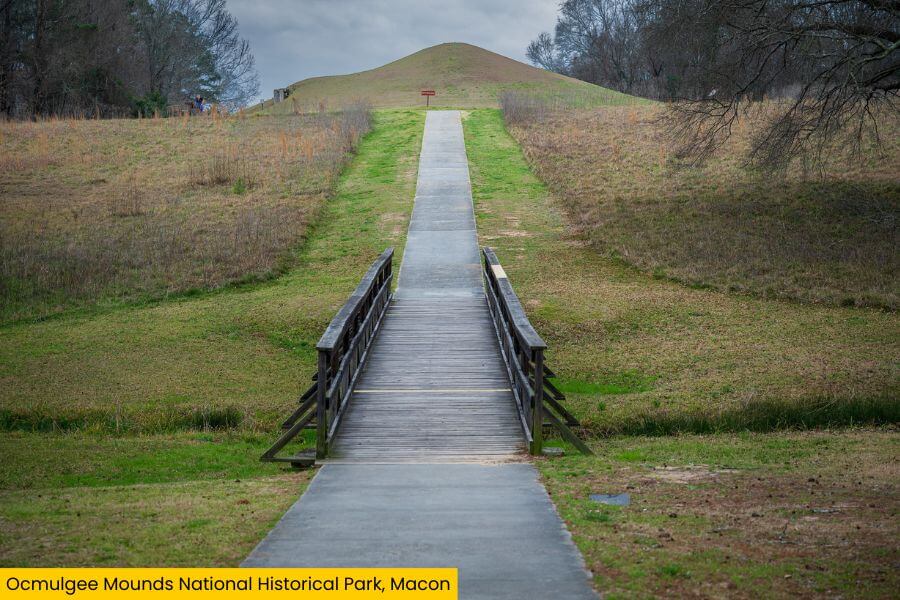
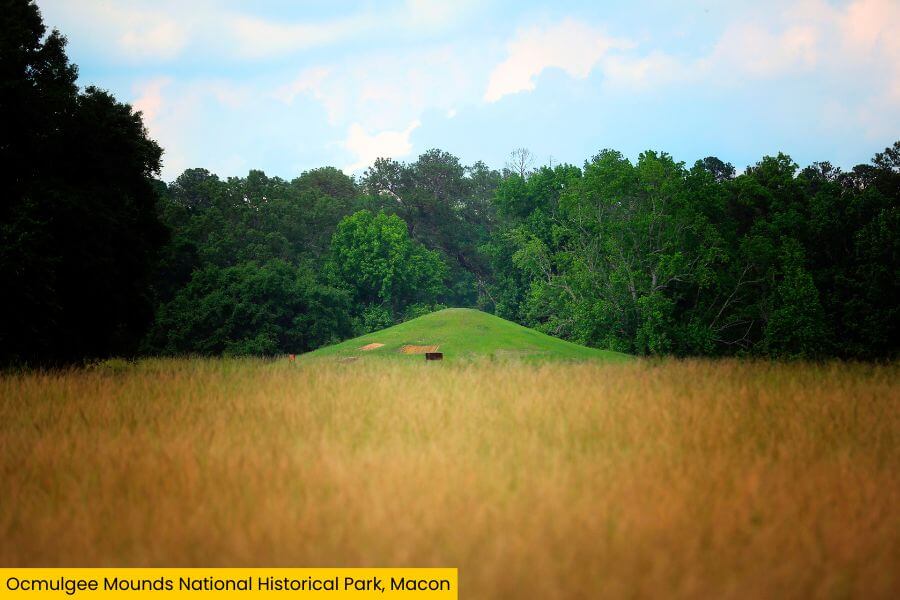
From there, head to the park’s biggest highlight, the Great Temple Mound.
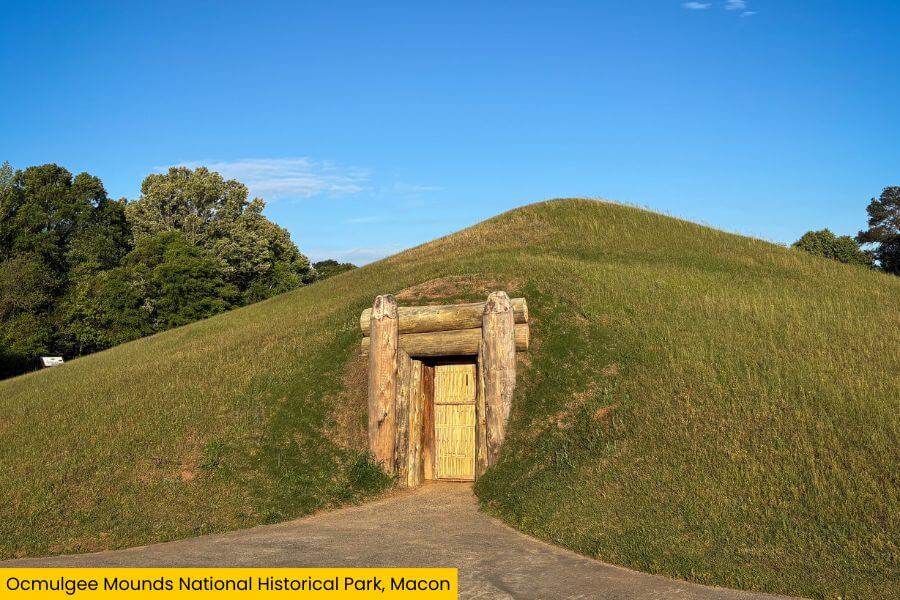
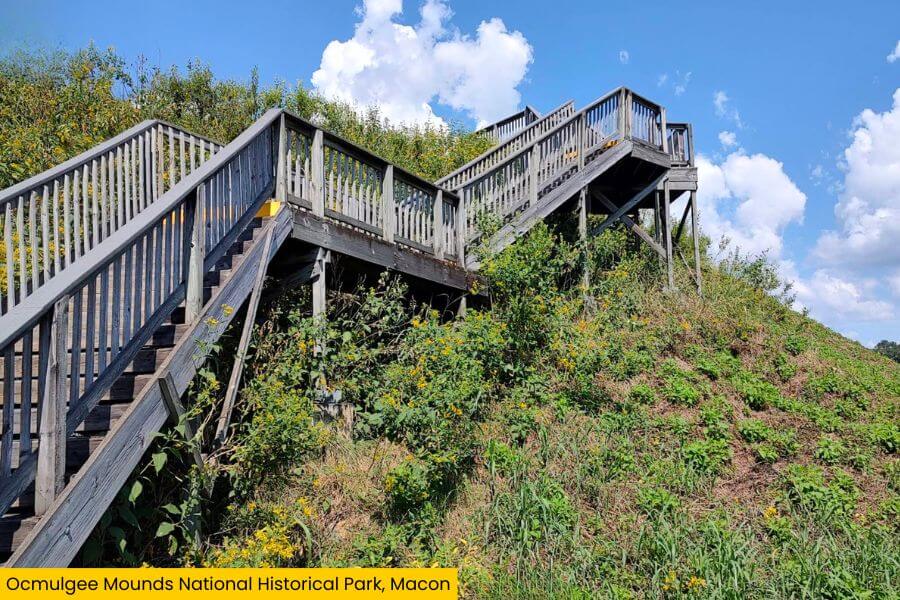
Standing about 55 feet tall, this massive platform mound can be climbed by taking the staircase to the top.
At the summit, you’ll get sweeping views of the surrounding forest and floodplain while standing on a site that once supported an important ceremonial structure.
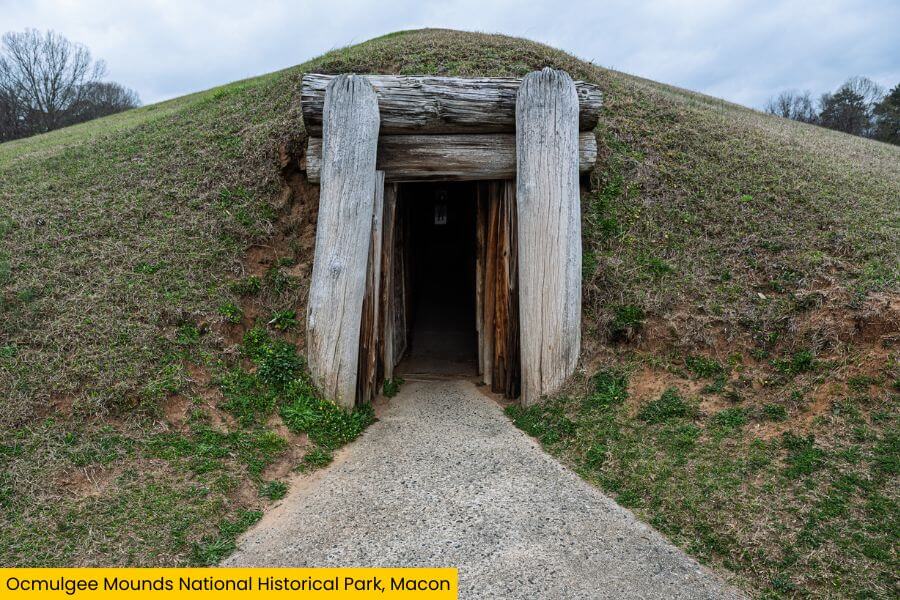
Another must-see stop is the Earth Lodge, where you can step inside a reconstructed council chamber with its original clay floor.
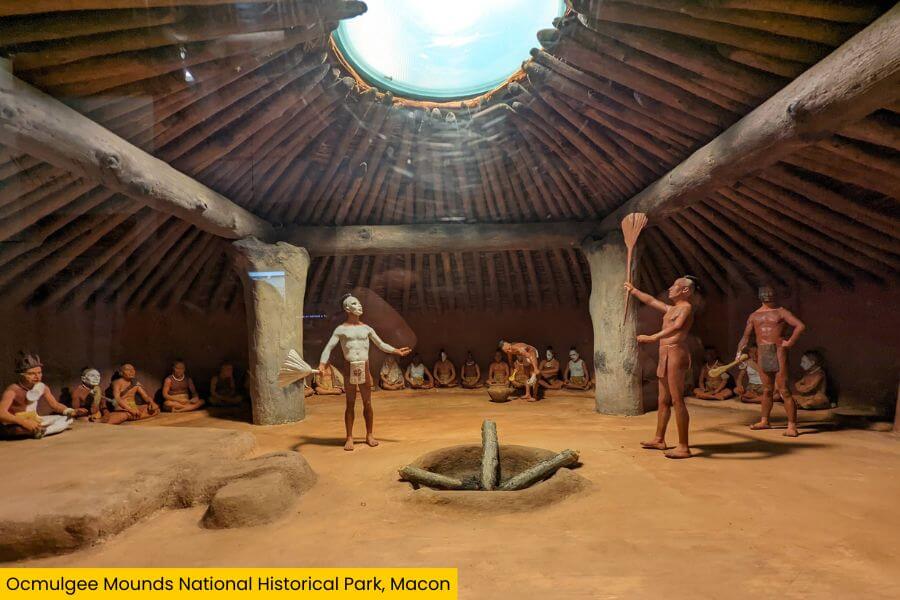
Several other mounds are scattered throughout the park, including the Funeral Mound, Cornfield Mound, and Lesser Temple Mounds.
Each one offers another glimpse into the impressive engineering and ceremonial traditions of the people who built them.
If you’re ready to see more, the park has several trails that lead beyond the archaeological sites.
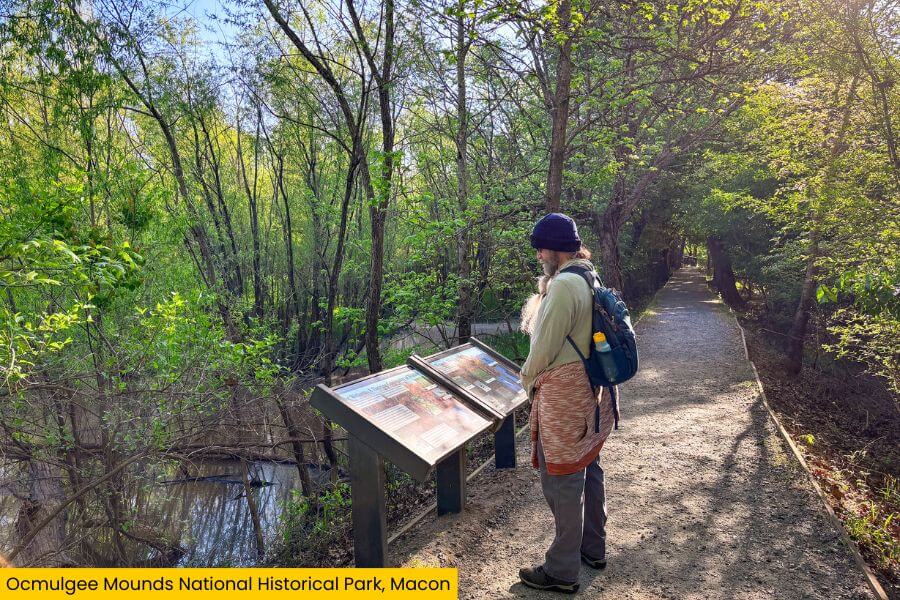
You can follow the 1-mile Opelofa Trail through peaceful wetlands, where you’ll have a good chance of spotting birds like egrets, ospreys, and anhingas.
There’s also the half-mile River Trail, which takes you through the woods along Walnut Creek before reaching the Ocmulgee River, with plenty of opportunities to spot wildlife.
If you plan your visit in the fall, you can experience the annual Ocmulgee Indigenous Celebration, one of Georgia’s largest Native American cultural events.
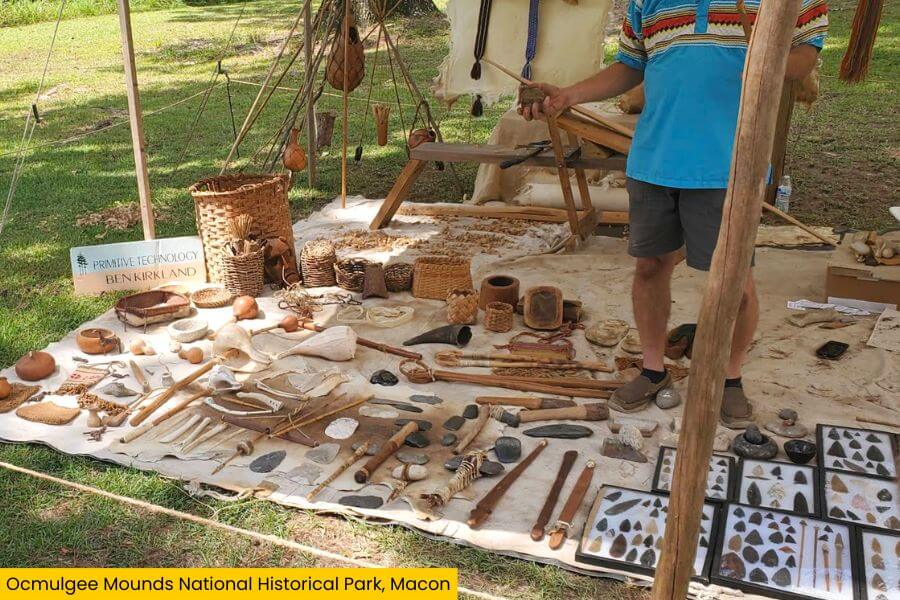
During the festival, you can watch traditional dancing, browse handmade art, listen to music, and learn from Native American tribes from across the country.
Whether you’re interested in archaeology, hiking, or wildlife, Ocmulgee Mounds National Historical Park offers a full day of discoveries around every corner.
History
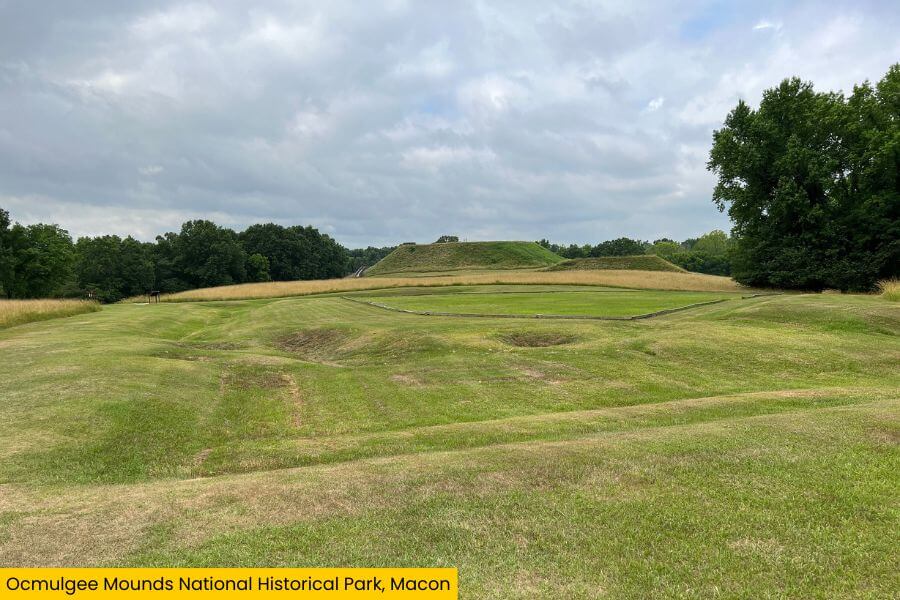
That full-day adventure comes with a seriously long timeline, because Ocmulgee Mounds preserves evidence of more than 12,000 years of human life.
People were living, hunting, building, worshiping, and holding ceremonies here long before Macon existed, Georgia became a state, or Europeans arrived in North America.
The first people to pass through this area were Paleo-Indians, nomadic hunters who traveled across the Macon Plateau in search of Ice Age megafauna.
As the climate changed, Archaic people settled into the Macon Plateau, hunting deer and fish and gathering nuts, berries, and roots.
During the Woodland period, people built the area’s first semi-permanent villages and began growing sunflower seeds.
Around 900 CE, people from the Mississippian culture arrived in the area and began building the huge mounds that still make the park famous today.
These earthworks were built by hand using countless loads of soil, with every mound representing thousands of hours of organized labor.
The Earth Lodge is one of the park’s most powerful links to this Mississippian world.
Its original clay floor dates to around 1015 CE, and the raised bird-shaped platform inside likely served as a place for leaders or important community members.
The large village at Ocmulgee eventually declined, and the nearby Lamar culture became the region’s center.
Around 1600, Hernando de Soto and other European explorers arrived, bringing major changes to the people and communities who called this place home.
The survivors and their descendants came together as the people English settlers later called the Creek, now known as the Muscogee.
Today, the Muscogee (Creek) Nation considers Ocmulgee its ancestral homeland, and the park works closely with the Nation to share its history and connection to this land.
Know Before You Go
Opening Hours and Admission
Ocmulgee Mounds National Historical Park’s visitor center and Earth Lodge are open daily from 9:00 a.m. to 5:00 p.m., while the park grounds open a bit earlier at 8:00 a.m.
It’s closed on Thanksgiving, Christmas, and New Year’s Day, so keep those dates in mind when planning your trip.
One of the best things about visiting is that admission is completely free, so you can explore the entire park without paying an entrance fee.
How Long to Spend Here
Plan to spend at least 2 to 3 hours here if you want to see the main archaeological sites and museum.
If you enjoy hiking or like taking your time reading exhibits, setting aside 4 to 5 hours will make for a much more relaxed visit.
Tips for Your Visit
Start your visit at the visitor center because the museum helps you understand the mounds before you see them up close.
Wear comfortable walking shoes because you’ll cover quite a bit of ground.
The staircase leading to the top of the Great Temple Mound also has plenty of steps, so be prepared for a bit of climbing.
Water, sunscreen, insect repellent, and a hat are also good ideas if you plan to spend time on the longer trails.
Best Time to Visit
Photography is encouraged throughout the park.
Early morning and late afternoon offer the best lighting for photos from the top of the Great Temple Mound, and you’ll often find fewer people on the trails at those times.
For an even more memorable visit, plan your trip in mid-September during the annual Ocmulgee Indigenous Celebration, one of the park’s biggest events.
Things to Do Nearby
Once you’ve finished exploring the park, you’re only a few minutes from downtown Macon.
Just 5 minutes away, you’ll find The Tubman Museum, one of the largest museums in the Southeast dedicated to African American art, history, and culture.

You can also check out The Allman Brothers Band Museum at The Big House, where Southern rock fans will find guitars, memorabilia, and plenty of band history.
If you’re interested in architecture, don’t miss the Hay House, an impressive 18,000-square-foot Italian Renaissance Revival mansion completed in 1859.
Related Posts