Florida isn’t just theme parks, beaches, and crowded souvenir shops, because there’s another side most people totally miss.
We’re talking abandoned forts, crumbling ghost towns, secret swimming spots, and places with stories so strange you’ll have to read them twice.

This road trip skips the usual tourist stuff and takes you deep into the weird, wild, and downright forgotten corners of the Sunshine State.
If you’ve ever wanted to explore old ruins, paddle past floating houses, or walk through the remains of a utopian cult (yep, really), you’re in for a ride.
1. The Old Gilchrist County Jail
The Old Gilchrist County Jail, located just outside Trenton, was built in 1928 with solid concrete walls and a spooky reputation.
Known as one of the most haunted spots in Florida, it’s said to echo with ghostly whispers, shadowy figures, and cold spots in the old cells.
There are two levels, eight small cells, and graffiti from former inmates still on the walls, giving the place a frozen-in-time feel.
And if you’re into creepy history, you can join a ghost tour or paranormal investigation and explore it with just a flashlight.
2. Cruger-dePeyster Plantation Sugar Mill Ruins

Next is the Cruger-dePeyster Plantation Sugar Mill Ruins in New Smyrna Beach, which tells a different kind of story, built from coquina rock and burned-out dreams.
These ruins are all that’s left of an 1830s sugar mill that was destroyed during the Second Seminole War, and its crumbling walls still stand today.
For a closer look, walk around the grounds where steam-driven machines long ago crushed sugarcane under mossy trees.
It’s quiet and eerie, and it’s wild to think this was once a booming plantation powered by enslaved labor.
3. Fort Dade

Now catch a ferry to Egmont Key and explore Fort Dade, a ghost town with palm-lined brick roads and overgrown army buildings.
Built in the late 1800s to defend Tampa Bay during the Spanish-American War, the fort once had 70 buildings, a hospital, tennis courts, and even a movie theater.
Today, you’ll find decaying barracks, bunkers, and rusted batteries, with the Gulf breeze drifting through.
There are no cars, no crowds, and no snack bars here, only gopher tortoises waddling along the quiet paths.
4. Koreshan State Park
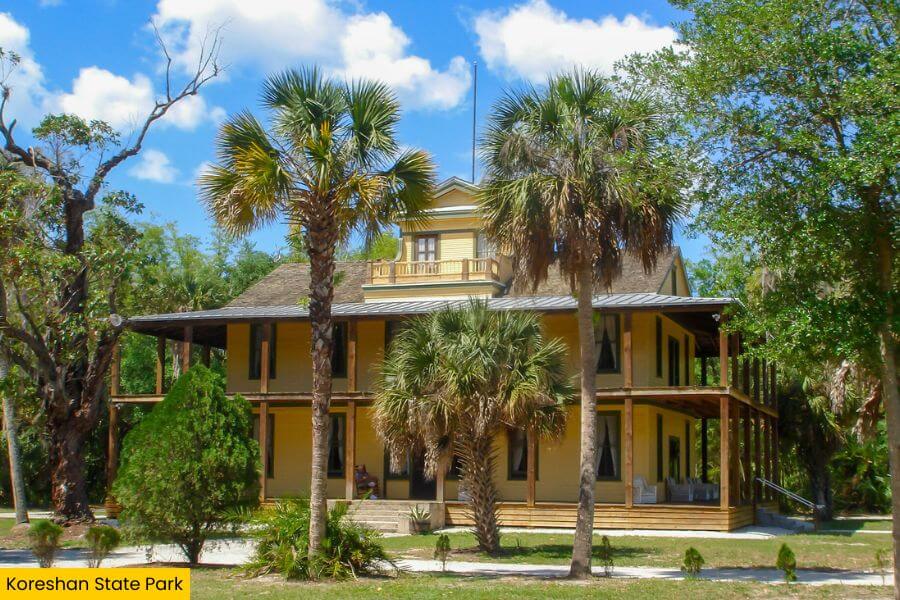
Then there’s Koreshan State Park in Estero, once home to a utopian cult that believed the entire universe existed inside a hollow Earth.
The Koreshans built their community here in the late 1800s with a bakery, machine shop, and power plant, and you can still tour the preserved buildings today.
You’ll also find giant bamboo, plants from around the world, and peaceful trails along the Estero River, where you can rent a kayak and spot manatees.
5. Venetian Pool (Coral Gables)
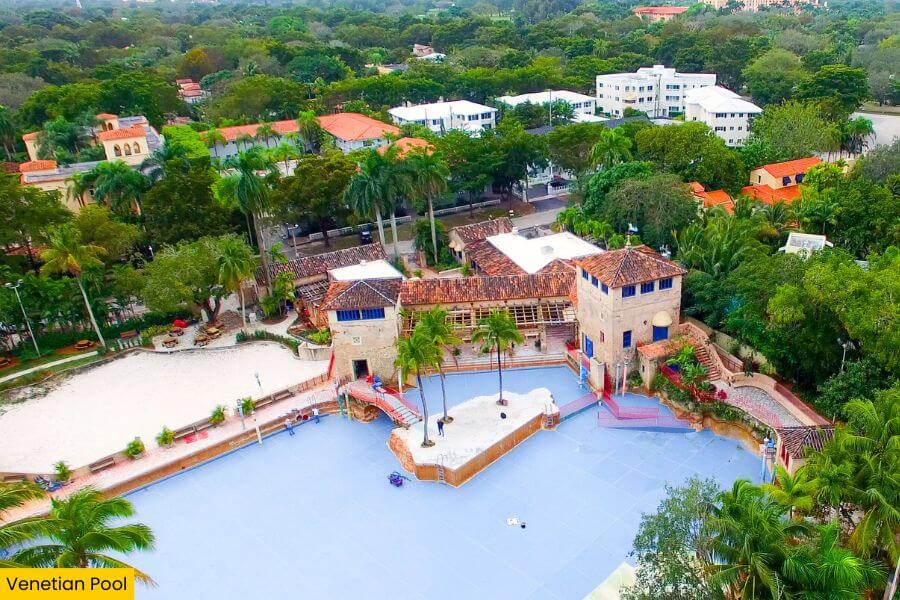
Just when you think this road trip has peaked, you land at the Venetian Pool in Coral Gables, a giant swimming hole carved from coral rock.
It opened in 1924 and looks straight out of a Mediterranean daydream, with waterfalls, grottos, and a bridge arching over turquoise water.
Aside from being pretty, this place is also huge, holding 820,000 gallons of fresh spring water that’s drained and refilled daily in summer.
There are no gimmicks here, only clear water and old-school charm that make it seem more hidden lagoon than public pool.
6. Stiltsville

Head out into the water off the coast of Miami and you’ll come across Stiltsville, a cluster of pastel houses standing on wooden stilts in Biscayne Bay.
These unusual buildings started popping up in the 1930s as party spots and private clubs, and at one point there were 27 of them.
Now only six remain (weather-beaten and half-sinking), preserved by the National Park Service and still totally Instagram-worthy.
You can’t go inside without a special permit, but boating or paddling past them feels like gliding through a hidden chapter of Miami’s past.
7. Bahia Honda Railroad Bridge
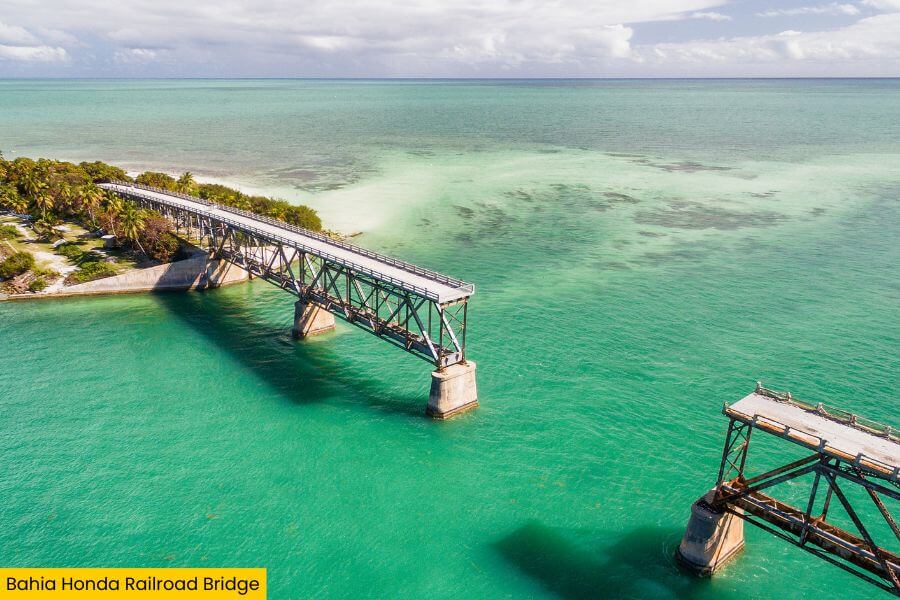
Last but not least is the Bahia Honda Railroad Bridge in the Lower Florida Keys, a broken piece of Henry Flagler’s old railway that now looks half-built.
This steel giant was built in the early 1900s to connect Key West to the mainland, but a powerful 1935 hurricane destroyed the tracks and ended the dream.
Today, part of the bridge is still standing above the bright blue water, and a short hike in Bahia Honda State Park leads to the best views.
It’s the kind of place that makes you stop and wonder how they managed to build something so massive in the middle of the ocean over a century ago.
Related Posts