Concord is the kind of town where huge moments in American history happened on quiet streets, grassy fields, and peaceful riverbanks.
You can spend a weekend here walking the same paths as revolutionaries, writers, and thinkers who helped shape the country.
Between outdoor trails, historic homes, and places that invite you to slow down and look around, this town packs a lot into a small area.
Everything is close together, easy to explore, and perfect for a relaxed but meaningful getaway.
If you love learning stories where they actually happened, this Concord weekend is going to be right up your alley.
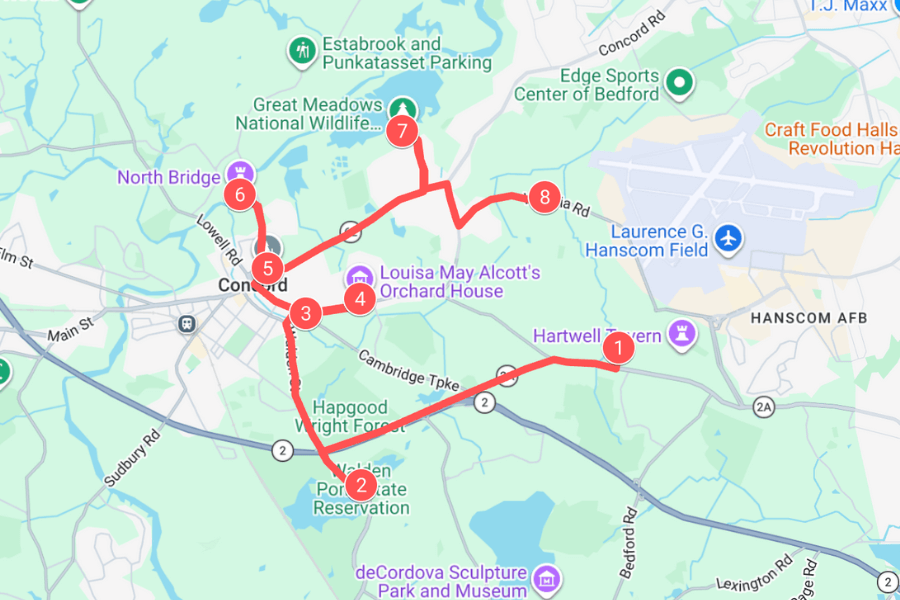
1. Minute Man National Historical Park – Minute Man Visitor Center
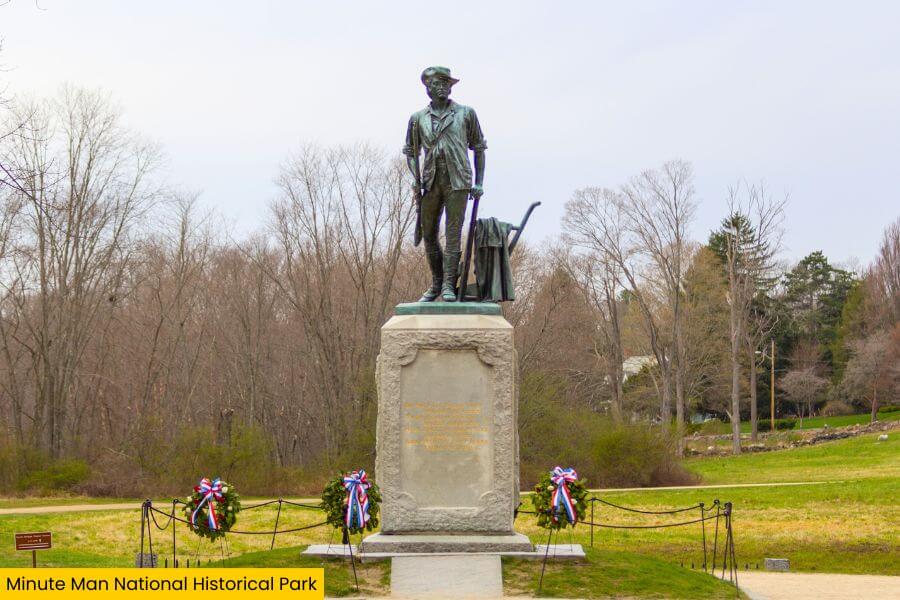
Minute Man National Historical Park covers Concord, Lincoln, and Lexington and spans more than 1,000 acres of fields, forests, and historic colonial roads.
You’ll be starting your itinerary at Minute Man Visitor Center at the eastern entrance of the park at 210 North Great Road.
By starting at at the Minute Man Visitor Center you’ll be able to catch the ‘Road to Revolution’ multimedia theater program that runs every 30 minutes.
The exhibits here also include a forty-foot mural that portrays the fighting between Colonists and British Regulars and artifacts from the Parker’s Revenge Archaeological investigation
One of the best ways to explore the park is by hiking the Battle Road Trail, a mostly flat 5-mile path that follows the route British soldiers took from Lexington to Concord.
Along the way, you’ll pass stops like Meriam’s Corner and the 1733 Hartwell Tavern.
Minute Man National Historical Park is also famous for April 19, 1775, when one of the first shots of the American Revolution was fired at the Old North Bridge (don’t worry you’ll get to see this later in the itinerary).
2. Walden Pond State Reservation
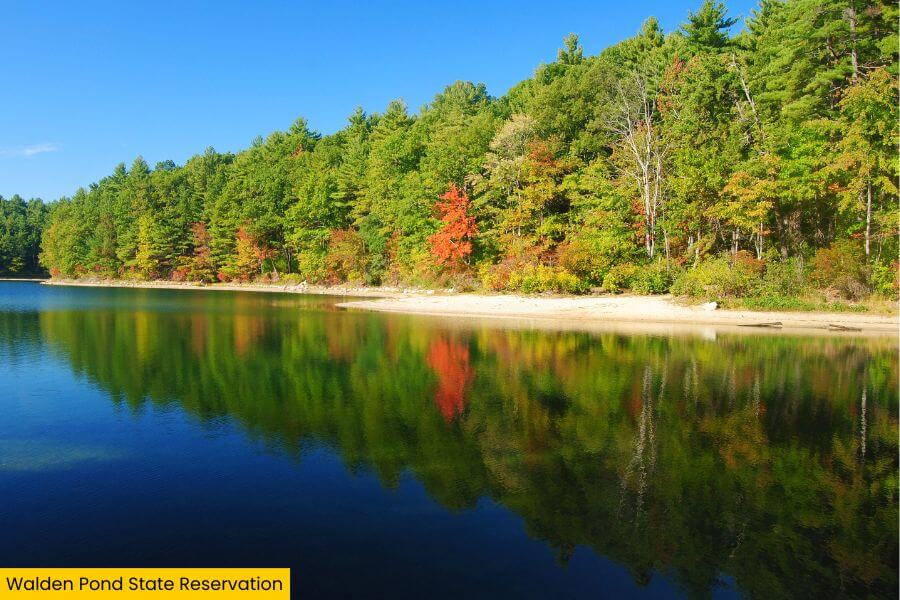
Just 5 minutes from the Minute Man Visitor Center is Walden Pond State Reservation, which circles a clear 64.5-acre pond where Henry David Thoreau lived and wrote Walden.
The pond is about 102 feet deep, and in summer, you can swim at the main beach or relax on the sandy shore.
You can also take a walk on the easy 1.7-mile loop trail, which passes a replica of Thoreau’s tiny cabin and a few quiet places to pause.
This spot feels calm and reflective compared to the battlefields, making it a great balance of nature, history, and a little mental reset.
3. Concord Museum
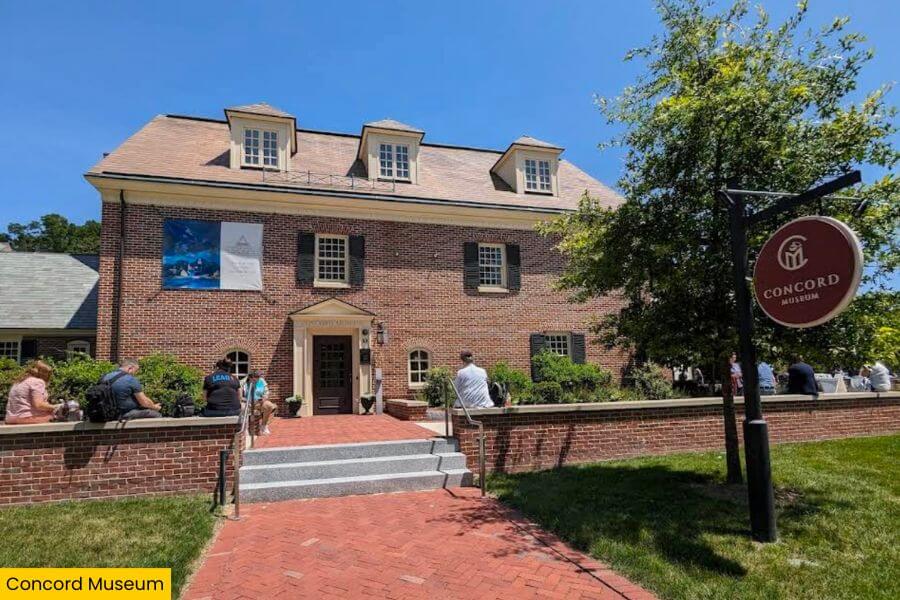
After soaking up the outdoors, head to the Concord Museum on Cambridge Turnpike to dig deeper into the stories that shaped this area.
It’s home to the original lantern from Paul Revere’s famous ride, along with muskets, maps, and everyday objects that make the Revolutionary War feel personal.
You’ll also find displays about Concord’s literary legends like Ralph Waldo Emerson and Henry David Thoreau, including furniture and books.
Everything is clearly labeled and easy to follow, so you can move at your own pace while learning why this small town played such a big role in American history.
4. Louisa May Alcott’s Orchard House
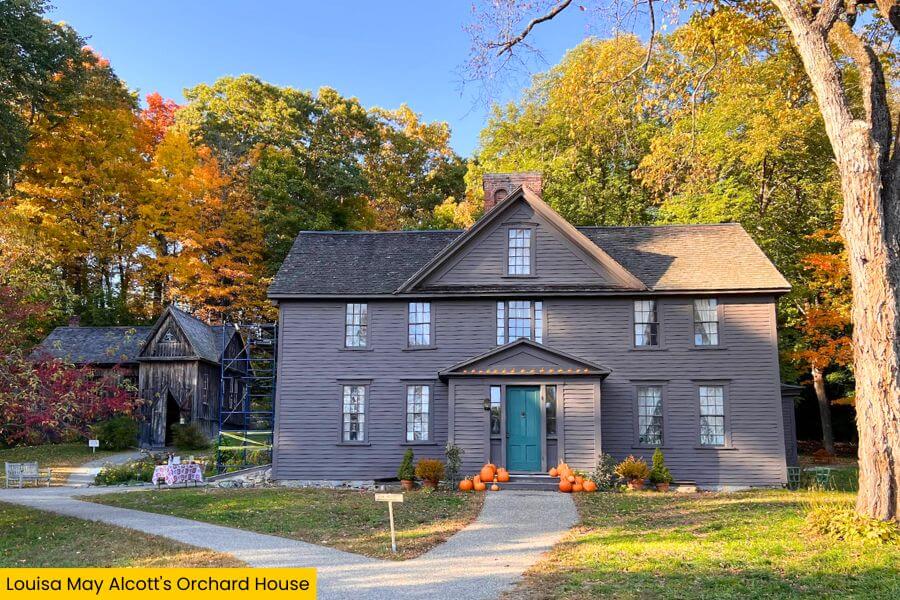
From the museum, it’s a 2-minute drive to Louisa May Alcott’s Orchard House, a charming home on Lexington Road where Little Women was written.
This was the Alcott family’s residence from 1858 to 1877, and many rooms still hold the original furniture, photos, and personal items they actually used.
You can only go inside on a guided tour, which lasts about 45 minutes and shares Louisa’s writing process and the real-life inspiration behind the March characters.
The entire space feels warm and lived in, offering a personal, behind-the-scenes look at the book that made Concord famous far beyond Massachusetts.
5. Sleepy Hollow Cemetery
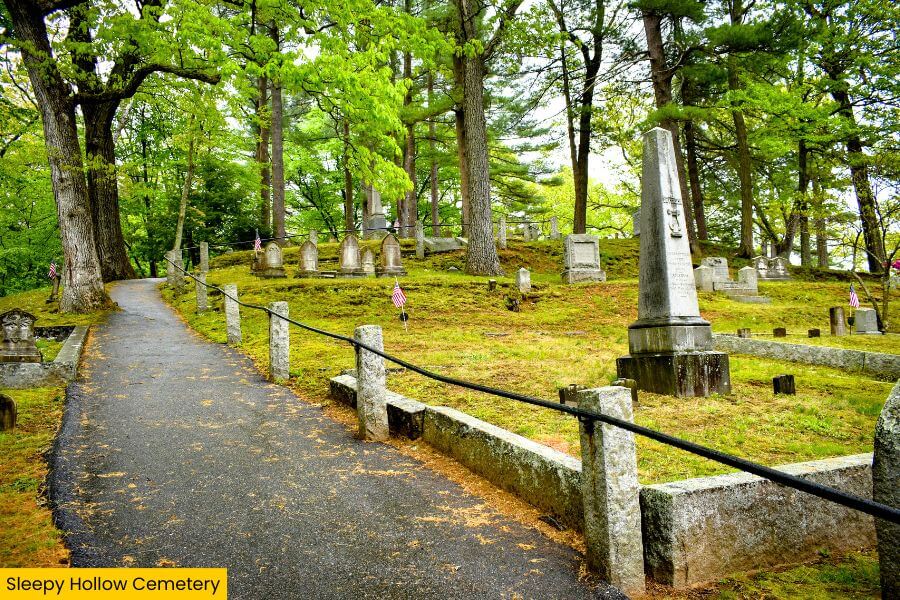
Next up is Sleepy Hollow Cemetery, which covers about 119 acres of winding paths and tall trees that feel more like a peaceful park than a cemetery.
This is where you can find Author’s Ridge, the final resting place of Emerson, Thoreau, Alcott, and Nathaniel Hawthorne, all buried within a few steps of each other.
You can walk or drive through the grounds, stopping at simple grave markers and stone monuments that date back to the mid 1800s.
It’s a quiet stop that highlights the town’s literary legacy and gives you a calm place to pause and reset.
6. Old North Bridge

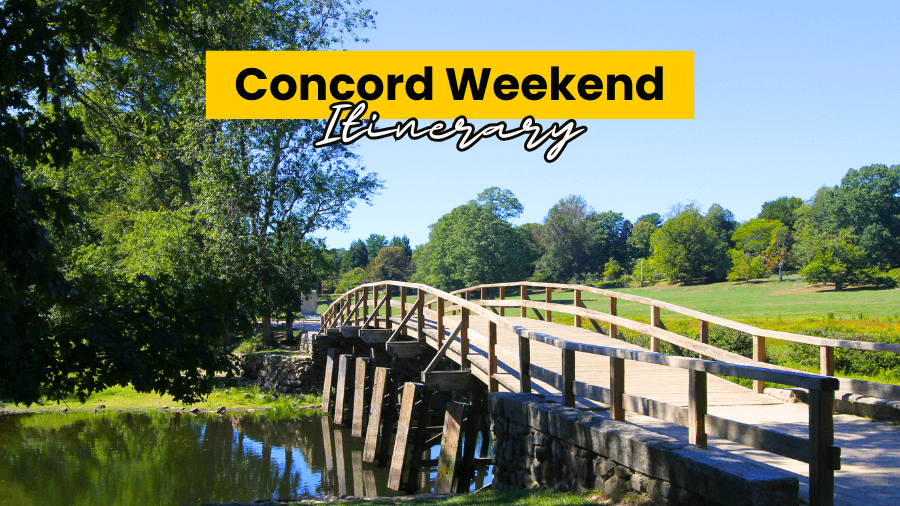
A short two-minute drive from the cemetery takes you to Old North Bridge, one of the most important landmarks of the American Revolution.
It crosses the Concord River where colonial militia and British soldiers exchanged fire on April 19, 1775, later known as the “shot heard ’round the world.”
Today, you can walk across it and look out over the calm water that contrasts with the intense history of the site.
The North Bridge Visitor Center is about 500 yards from the battle site and it features a short video about the North Bridge fight, a bookstore and exhibits.
If you want to keep exploring, short paths loop around the area, giving you time to wander along the river and nearby memorials.
7. Great Meadows National Wildlife Refuge – Concord Unit
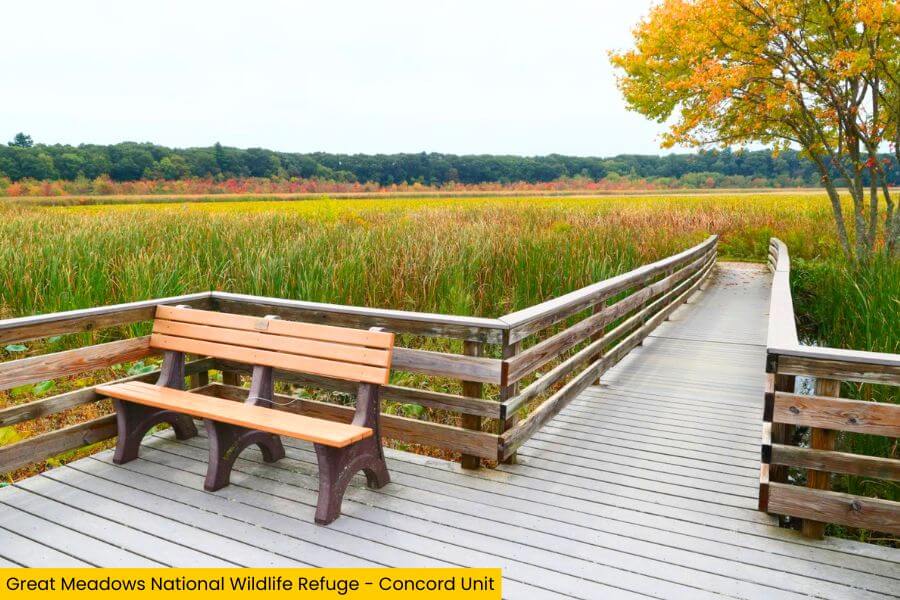
Then there’s the Concord Unit of Great Meadows National Wildlife Refuge, located just five minutes from Old North Bridge.
This protected area covers hundreds of acres of wetlands along the Concord River and is best known for birdwatching, with 200+ species recorded year-round.
You’ll also find a wildlife observation tower, an observation platform, and direct access to the river (keep in mind there is an entrance fee).
After a history-filled stretch, it feels like a refreshing reset with wide-open skies, quiet water, and classic New England nature.
8. Thoreau Farm

Before heading out of town, make one last meaningful stop at Thoreau Farm, the birthplace of Henry David Thoreau.
The small farmhouse dates back to the 1730s, and he was born here in 1817, long before becoming one of America’s most influential writers and thinkers.
Inside, guided tours take you through the restored rooms while sharing stories about his early life and the ideas that later shaped Walden and Civil Disobedience.
It’s a thoughtful place that neatly connects Concord’s natural landscapes with the people who found inspiration in them.
Related Posts