
What if I told you there’s a place in Texas where people have been digging up colorful rock for more than 13,000 years?
Not for fun or decoration, but to survive.
Sharp, strong, and super valuable, this rock was used to hunt, build, and trade across huge distances long before highways or cities were around.
Today, you can hike the same hills those early Texans once walked, see the exact spots where they dug into the ground, and touch the stone they worked with every day.
It’s quiet, wild, and full of stories carved into the land.
Curious yet? Let’s go.
Where Is It?

You’ll find Alibates Flint Quarries National Monument at 37084 Alibates Rd., Potter County, TX 79036 in the Texas Panhandle.
It’s about a 40-minute drive from Amarillo, 2.5 hours from Lubbock, around 4 hours from Oklahoma City, and closer to 6 hours from Dallas.
This spot feels remote, but it’s easy to reach by car and totally worth the trip.
About
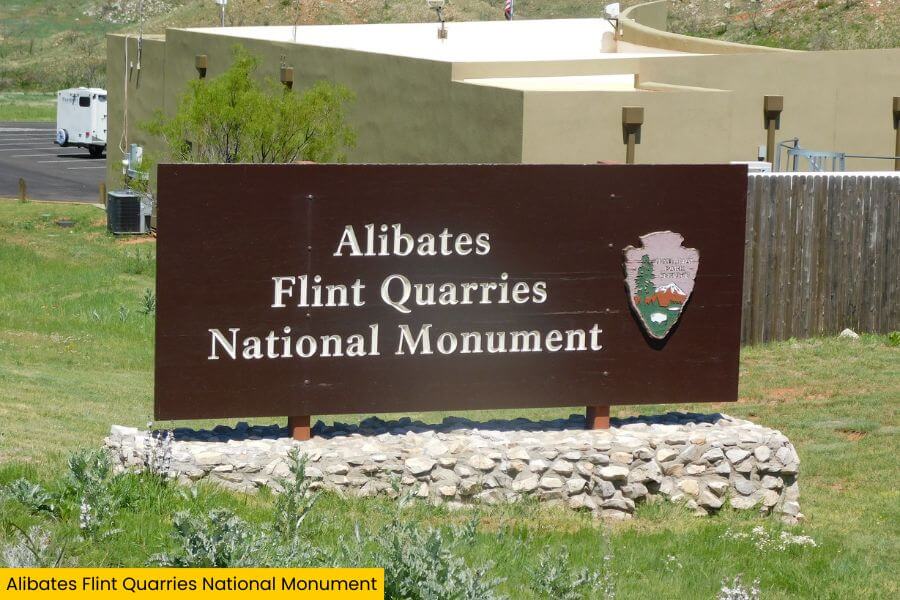
Alibates Flint Quarries National Monument is all about rocks, but not just any rocks.
This place is famous for its Alibates flint, a very hard and colorful stone that ancient people used to make tools and weapons.
And we’re not talking casual collecting, because for thousands of years, they came to this exact spot to dig, shape, and trade it.
What makes the flint here so special is the color, with red, orange, and purple-blue tones layered deep in the dolomite hills above the Canadian River.
Today, the monument is managed by the National Park Service, and it’s part of the larger Lake Meredith National Recreation Area.
And the best way to experience it is to start at the visitor center, where you’ll find exhibits, a bookstore, and rangers who know all the cool facts.
They also have real flint samples and even a short film if you want the big-picture overview.
Just a heads-up, you can’t explore the quarry on your own, so you’ll need to join a ranger-led tour to see the actual pits.
It’s a 2-mile round-trip hike with about 170 feet of elevation gain, and it takes you right up the hillside to see where the flint was dug out.
Tours are free, but you’ll need to reserve a spot in advance, especially in the spring and fall when things get busy.
If hiking’s not your thing, you can stay at the visitor center, walk the short garden trail out back, or drive around the surrounding Lake Meredith area.
You can also camp, fish, or even go boating nearby if you want to make a whole weekend out of it.
Overall, it’s not a huge park, but it’s a seriously cool Texas Panhandle stop if you’re into geology, archaeology, or just looking for something different.
History
Now that you know what to expect at Alibates Flint Quarries, let’s talk about the wild history behind it.
This spot has drawn visitors for over 13,000 years, including the Clovis people, some of the earliest known inhabitants of North America.
They used the flint from these hills to make razor-sharp spear points for hunting mammoths and other giant prehistoric animals.
Fast forward a few thousand years, and the quarrying kept going, with flint so prized it was traded all over North America.
One of the busiest periods at the quarries came during the Antelope Creek era, when communities lived here roughly between 1150 and 1450 AD.
They didn’t just pass through, because they built permanent villages nearby, with homes made from stone.
From there, they dug hundreds of quarry pits across the mesas, prying the flint from deep below the surface and shaping it into tools like arrowheads and knives.
This wasn’t a small operation, but a full-on production site that supplied gear for hunting and daily life.
After the Antelope Creek era, other Native groups still came through, but the site gradually faded from large-scale use.
Thankfully, by the 1930s, archaeologists and local advocates started pushing to protect the area, and the timing was perfect.
With the Works Progress Administration (WPA) funding projects all over the country, teams were sent in to excavate and document what was left.
Because of that, the Alibates quarries became Texas’s first National Monument in 1965, and the pits remain untouched today, with nothing rebuilt or recreated.
Know Before You Go
Before you head out to Alibates Flint Quarries National Monument, here’s the lowdown on everything you need to know so your trip goes off without a hitch.
Best Time to Visit
Timing matters here, and spring and fall are the best seasons to swing by.
Summers in the Texas Panhandle are hot with very little shade on the trails, so if you go then, book an early morning tour to beat the heat.
Winter weather here is often cold and windy, but the park remains open if you want to explore without the crowds.
Visitor Center Hours + Admission
The visitor center is open every day from 9 AM to 4 PM.
Admission is totally free, and that includes the ranger-led hikes, museum exhibits, and the trail behind the visitor center.
What to Wear + What to Bring
Wear sturdy shoes, bring water, and don’t forget the sunscreen.
You’ll be walking over uneven ground and loose rocks, so flip-flops are a no-go.
It can also get very windy on the tours, even during summer, so be prepared with layers.

Food, Gas, and Picnic Spots
There aren’t any restaurants or gas stations inside the monument, so plan to fuel up in nearby Fritch or Amarillo before you arrive.
You can bring snacks or lunch and use the shaded picnic tables near the visitor center.
Rules and Respecting the Site
Since this is a protected archaeological site, you can’t collect flint, climb into the quarry pits, or wander off-trail.
Leave everything exactly as you found it so future visitors can experience the same sense of discovery.
Related Posts