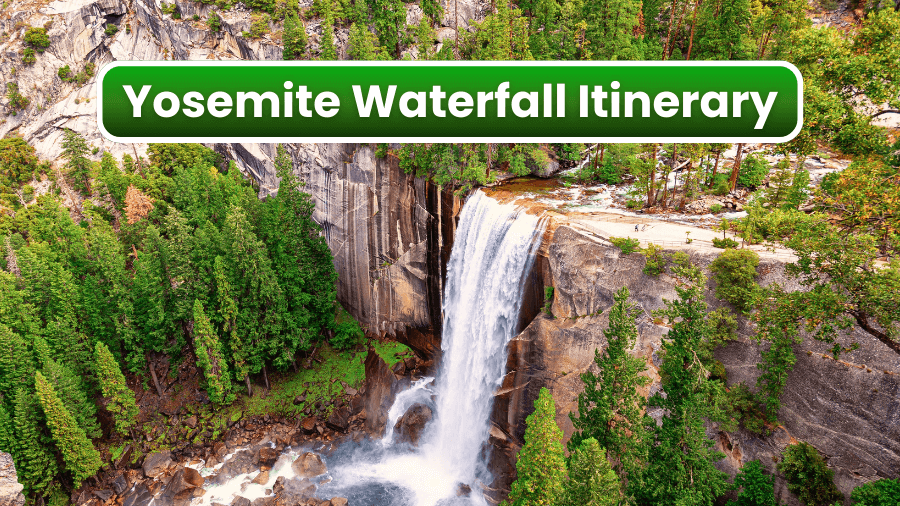
Yosemite National Park packs more waterfall power into one valley than almost anywhere in the United States.
Massive granite cliffs send rivers of water plunging hundreds and sometimes thousands of feet, creating thunderous crashes and swirling mist below.
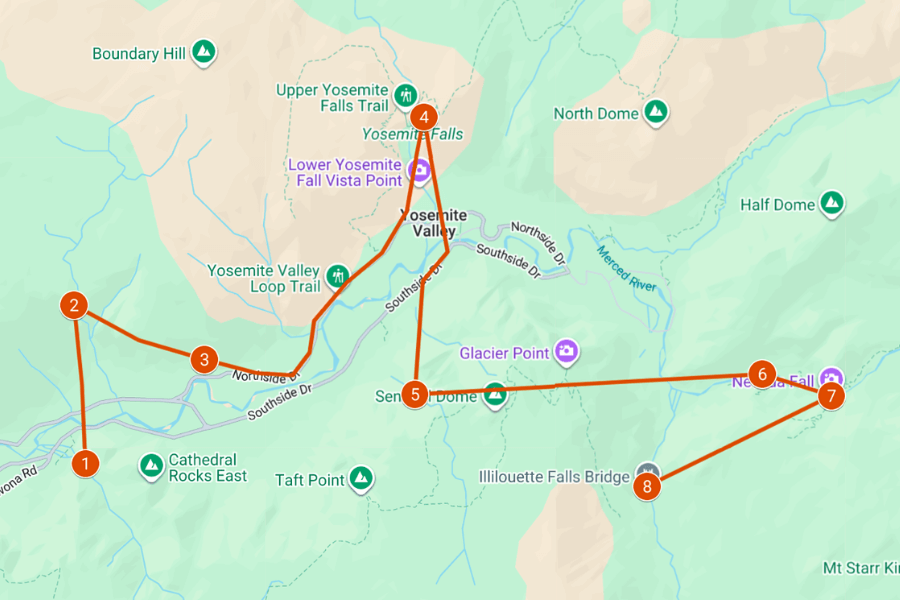
This road trip takes you to some of the most jaw dropping waterfalls in the park, from famous giants you can hear from the road to seasonal cascades that only show up for a short time each year.
Get ready to chase roaring water, scenic overlooks and a few unforgettable surprises as you explore one of the greatest waterfall drives in California.
1. Bridalveil Fall
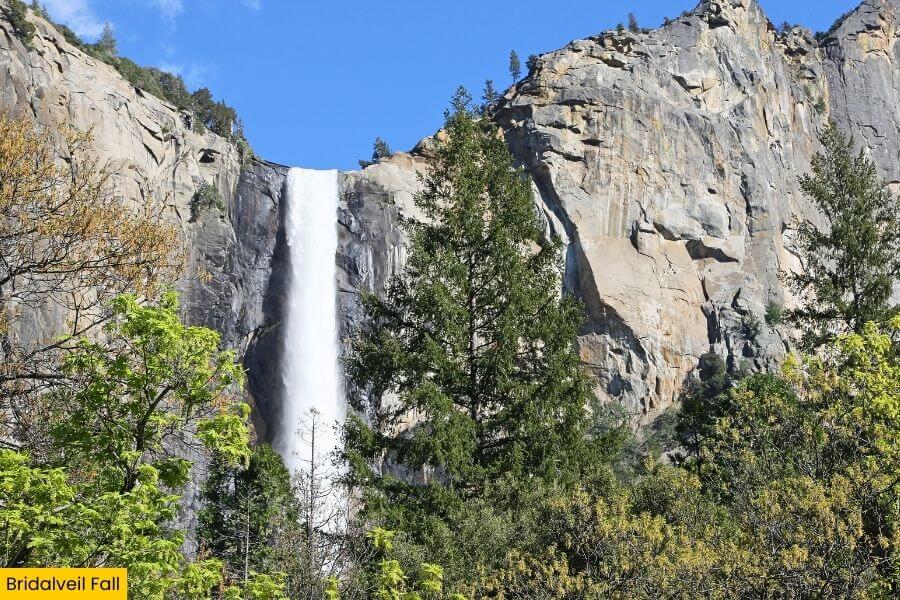
Bridalveil Fall crashes 620 feet down a granite cliff on the west end of Yosemite Valley, just past the famous Tunnel View overlook along Wawona Road.
This waterfall flows year round thanks to Bridalveil Creek, and in spring it roars so loudly you can hear it before you even reach the parking area.
A quick 0.5 mile walk leads you to the base where the wind whips the spray into the air, creating the wispy curtain effect that gave the waterfall its bridal veil name.
On sunny afternoons the mist often creates bright rainbows near the viewing area, so keep your camera ready and expect to get a little wet.
2. Ribbon Fall (Seasonal)
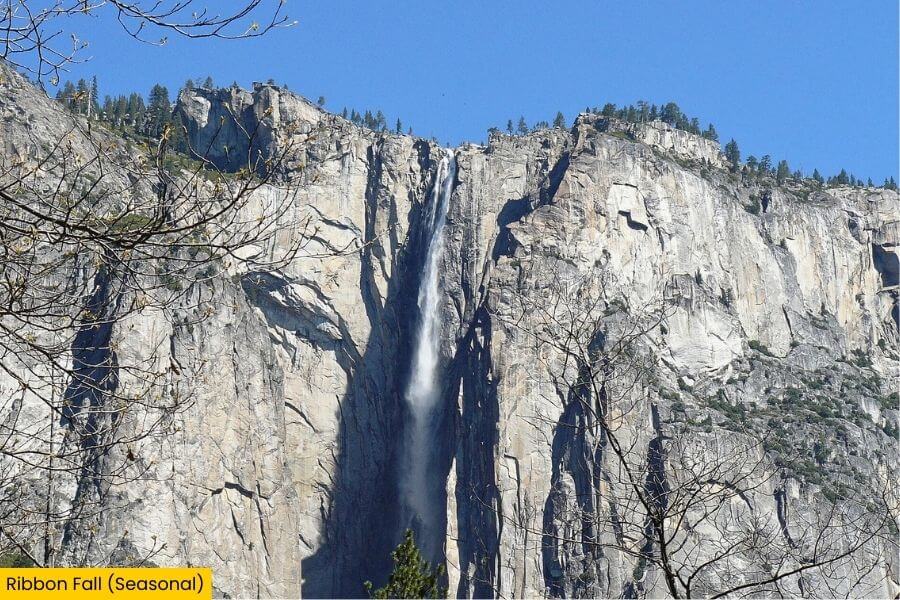
Ribbon Fall is located on the northern side of Yosemite Valley with a drop of about 1,612 feet, making it the longest single drop waterfall in North America.
This seasonal waterfall pours over a cliff on the west side of El Capitan and usually flows from March through early June when snowmelt is strongest.
Unlike Bridalveil Fall’s roaring power, Ribbon Fall looks like a thin white ribbon sliding down the rock, which is exactly how it earned its name.
You can spot it easily from Northside Drive or the El Capitan Meadow area, and during peak spring runoff the delicate stream stretches the full height of the cliff before disappearing into the forest below.
3. Horsetail Fall (Seasonal)
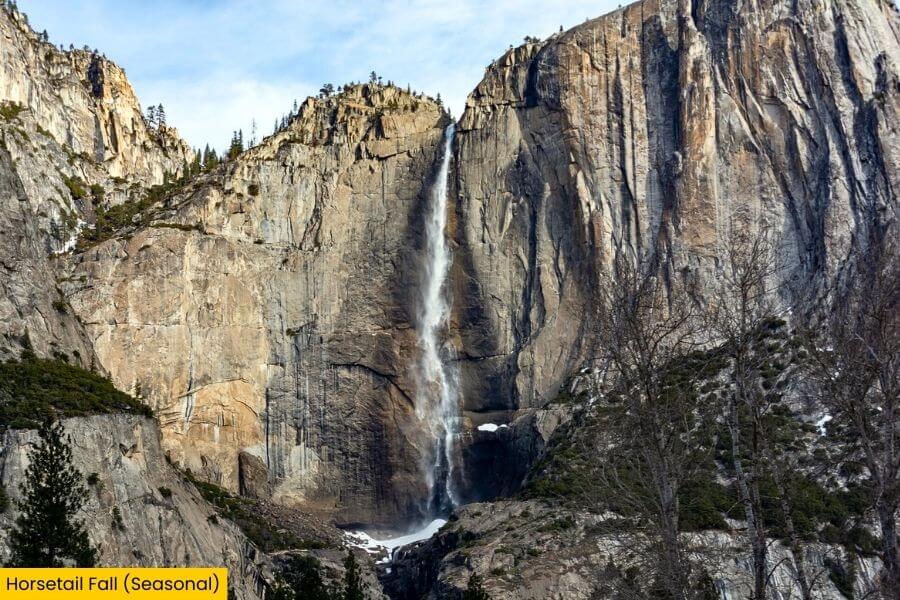
Keep your eyes on the eastern edge of El Capitan because Horsetail Fall drops about 1,000 feet down the massive granite wall during late winter and early spring when melting snow feeds the stream above.
This seasonal waterfall usually flows from December through April, but it becomes world famous for a totally different reason in mid to late February.
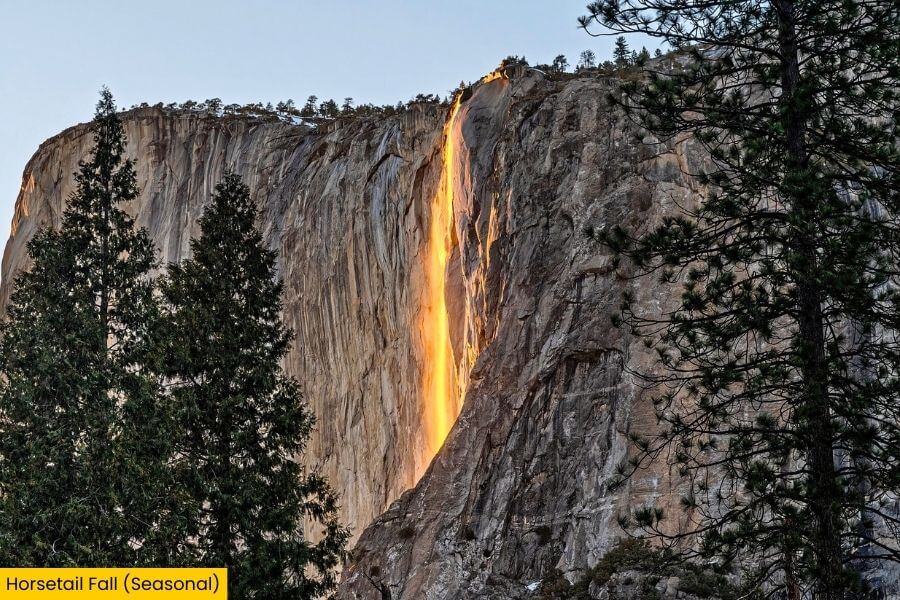
For a few evenings each year, the setting sun hits the falling water at just the right angle and the entire cascade glows bright orange, creating the incredible “Firefall” effect that people line up for along Northside Drive.
If you visit during this short window and the sky is clear, you can watch the thin waterfall light up like molten lava sliding down El Capitan’s face.
4. Yosemite Falls
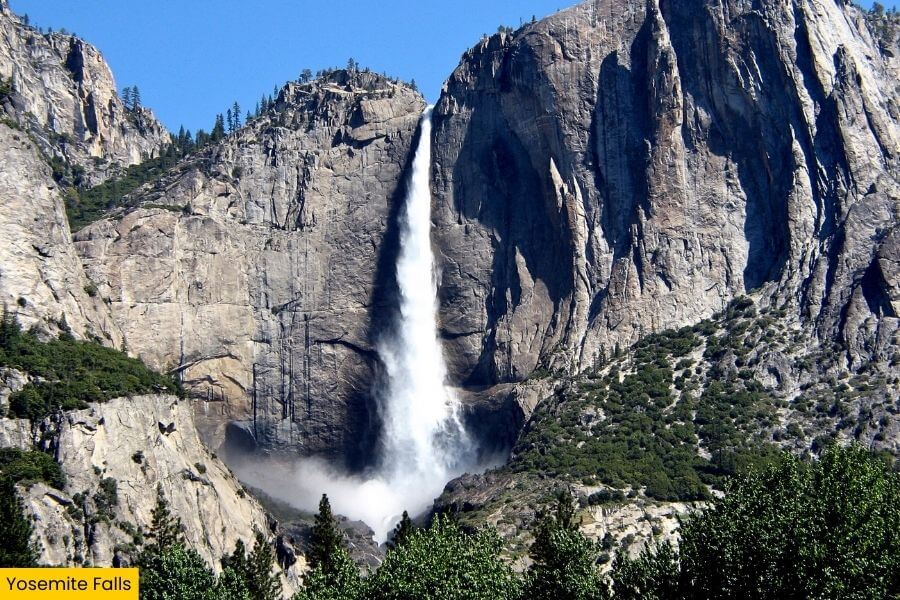
Just when you think the waterfalls cannot get any bigger, Yosemite Falls completely steals the show with a total drop of 2,425 feet, making it the tallest waterfall in North America.
The waterfall has three sections: Upper Yosemite Fall at 1,430 feet, the middle cascades dropping 675 feet, and Lower Yosemite Fall plunging another 320 feet near the valley floor.
A super easy 1 mile loop trail takes you right to the base of Lower Yosemite Fall where you can feel the cool mist and hear the thunder of water crashing over the rocks.
Spring is the best time to see it at full power as snowmelt from the Sierra Nevada surges down Yosemite Creek and sends huge waves of water over the towering granite cliffs.
5. Sentinel Fall (Seasonal)
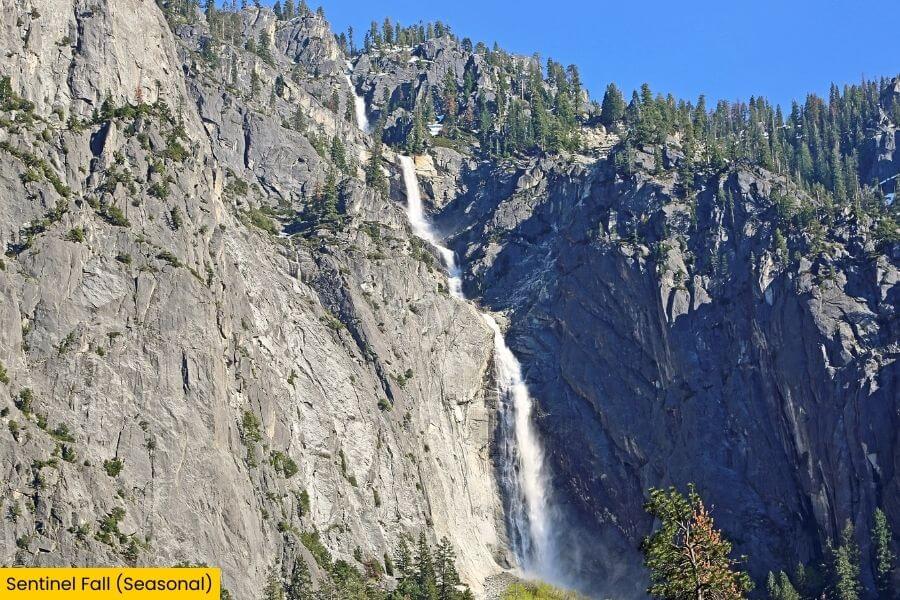
As you continue across Yosemite Valley, look up at the towering cliff beside Sentinel Rock where Sentinel Fall drops an incredible 2,000 feet down the granite wall during peak spring snowmelt.
This seasonal waterfall usually roars to life between March and early June when melting snow from the rim above Yosemite Valley feeds the cascade.
From the valley floor the water splits into multiple thin streams that tumble down wide ledges before plunging in long vertical drops toward the trees below.
You can spot Sentinel Fall easily from Southside Drive near Sentinel Beach, and during a strong runoff year the waterfall becomes one of the most dramatic sights in the entire valley.
6. Vernal Fall

Next up on the Merced River is Vernal Fall, a powerful 317 foot waterfall that crashes down a steep granite ledge along the famous Mist Trail in Yosemite National Park.
You can reach the base by hiking about 1.6 miles from Happy Isles, but the full Mist Trail climb to the top covers roughly 2.4 miles with about 1,000 feet of elevation gain.
As you climb the long granite staircase beside the waterfall, roaring water and heavy spray fill the air, which is exactly how the trail earned its name.
Spring and early summer bring the most dramatic views when snowmelt sends huge waves of water over the cliff and creates thick clouds of mist and bright rainbows along the trail.
7. Nevada Fall
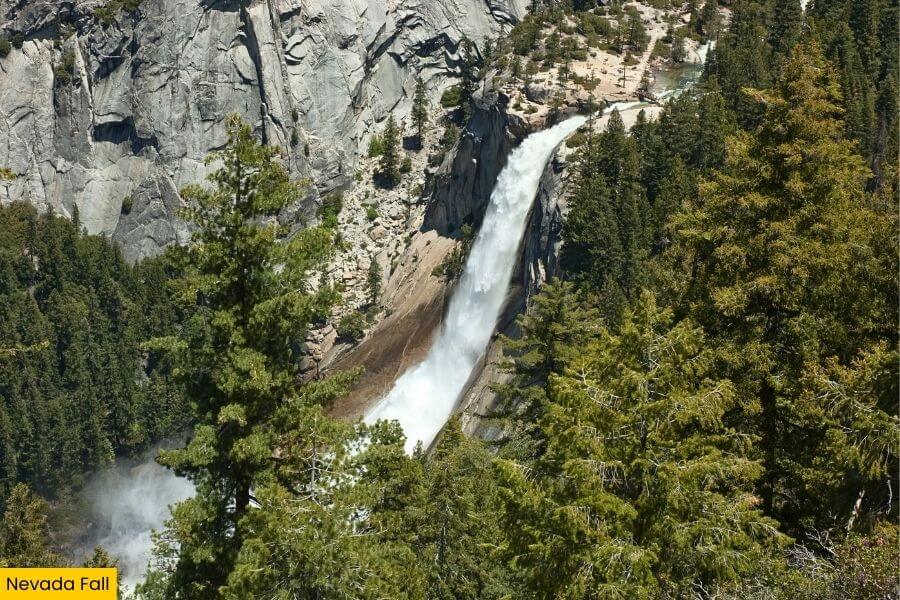
Just upstream from Vernal Fall, the Merced River launches over Nevada Fall with a powerful 594 foot drop that sends whitewater crashing down a steep granite slope.
You can reach the top by continuing past Vernal Fall on the Mist Trail or by taking the John Muir Trail, with the full hike from Happy Isles covering about 8 miles round trip.
From the top you get one of Yosemite’s best viewpoints, with wide open views of Liberty Cap, the 8,800 foot summit of Half Dome, and the winding Merced River far below.
Peak snowmelt in late spring turns Nevada Fall into a roaring wall of water, and the force of the current creates the churning, foamy plunge.
8. Illilouette Fall

Just when you think Yosemite has shown you every waterfall it has, Illilouette Fall appears deep in the backcountry with a powerful 370 foot drop along Illilouette Creek.
You can reach viewpoints of this waterfall from the Panorama Trail, a scenic 8.2 mile route that starts at Glacier Point and winds past Nevada Fall before descending toward Yosemite Valley.
From the trail you will see the creek explode over a wide granite ledge before crashing into a rugged canyon far below.
Because it sits away from the busy valley floor, Illilouette Fall often feels quieter and more remote, giving you one last impressive waterfall view before the trail leads back toward the heart of Yosemite Valley.
Related Posts