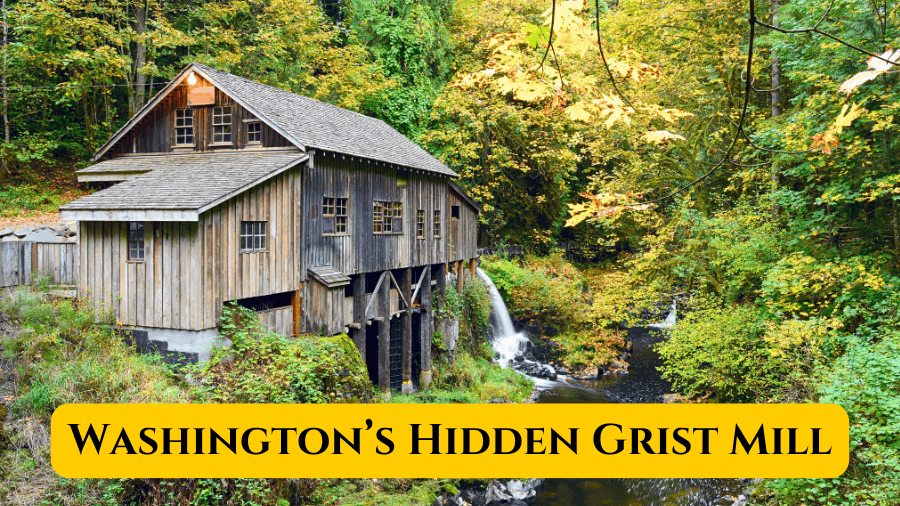
Tucked away in a quiet corner of Washington, there’s a place where time seems to slow down the second you arrive.
You’ll hear the steady rush of water before you see it, followed by the soft creak of old wood and the rhythmic turning of something that’s been in motion for well over a century.
This isn’t a flashy attraction or a crowded tourist stop.
It’s a simple, working piece of the past that’s still doing exactly what it was built to do, surrounded by towering trees and the kind of scenery that makes you want to stay a little longer than planned.
It’s easy to visit, surprisingly peaceful, and packed with small details that make you stop and look twice.
Keep reading, because this historic grist mill has a story and a setting that are way more impressive than you’d expect at first glance.
Where Is It?
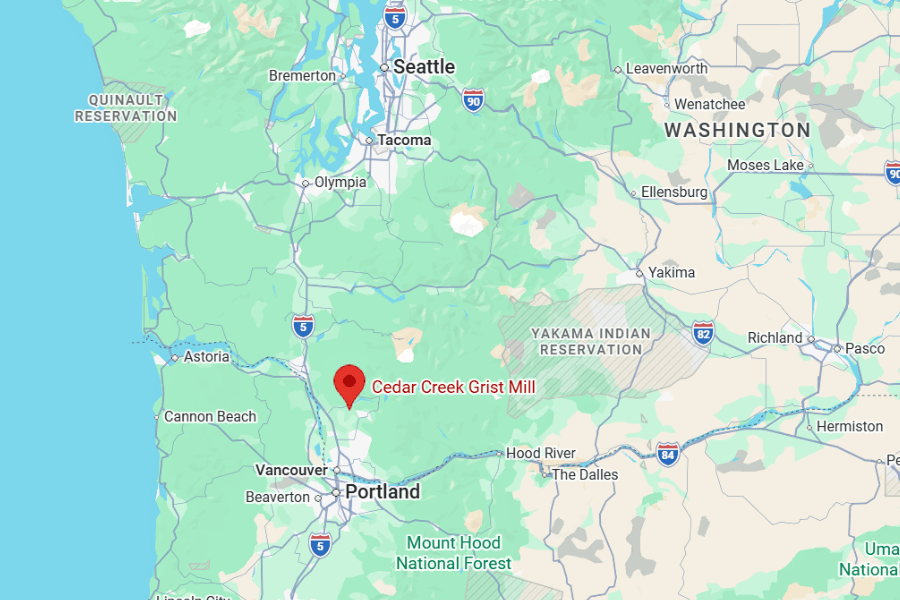
Cedar Creek Grist Mill is located in Woodland, tucked along Cedar Creek in Clark County just a few miles east of Interstate 5.
You’ll find it about a 35-minute drive from Vancouver, Washington and roughly 1 hour from downtown Portland, Oregon.
If you’re coming from Seattle, plan for about a 2-hour and 50-minute drive heading south on I-5.
It also makes a great stop if you’re exploring the Mount St. Helens area, sitting about 1 hour and 50 minutes from the Johnston Ridge Observatory.
About

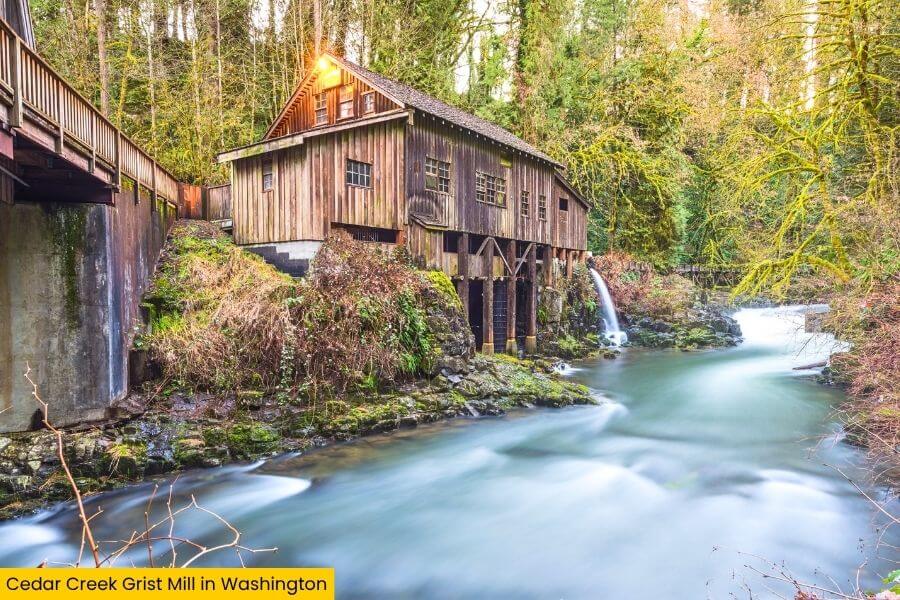
Cedar Creek Grist Mill is one of those places that feels like you accidentally stumbled into a living postcard from the 1800s, complete with a wooden mill building, a turning water wheel, and a peaceful creek flowing right underneath it.
The mill sits right on Cedar Creek, and yes, the mill is still powered by the steady flow of water that has been running through this spot for generations.
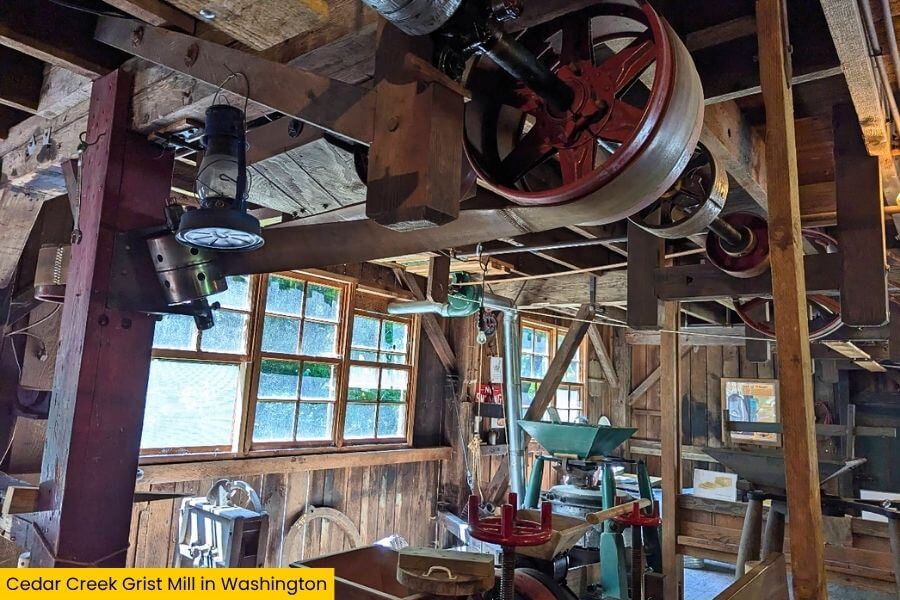
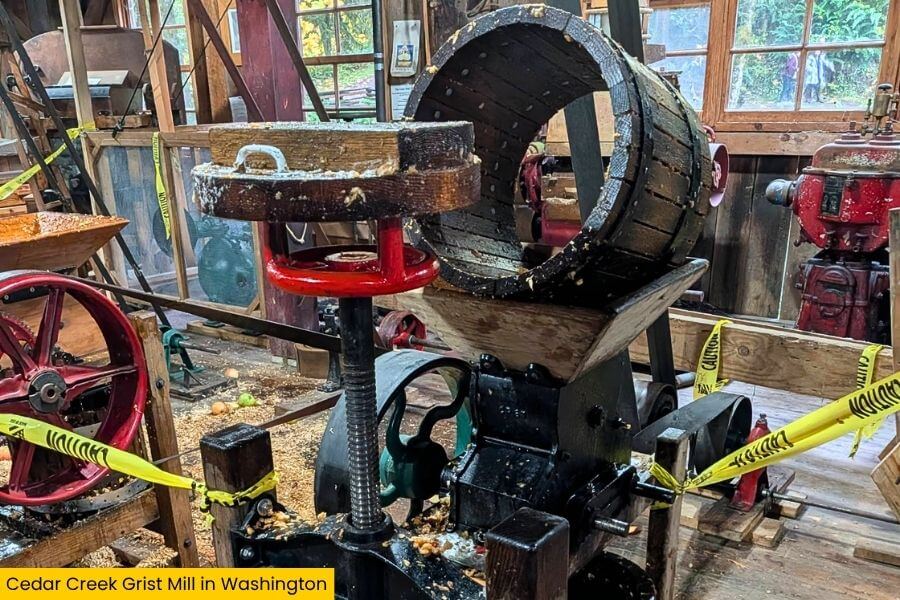
If you visit at the right time you’ll see water flowing through the mill system, driving the milling equipment inside that is still used today to grind grain into flour.
The setting is a huge part of the charm.
You’re surrounded by towering trees, mossy rocks, and the gentle sound of rushing water, which makes it feel quiet and tucked away even though it’s not far from the highway.
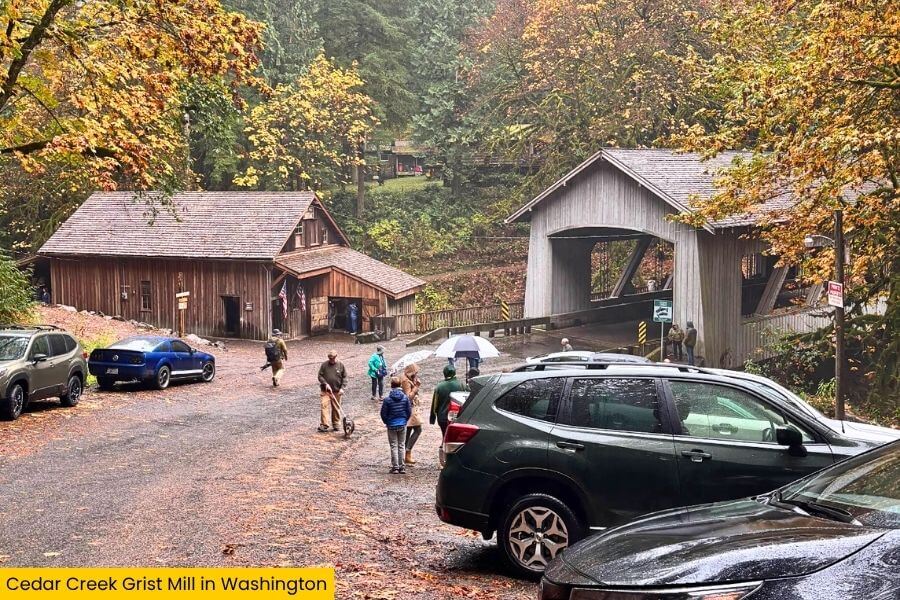
There’s also a beautiful wooden covered bridge that gives you a perfect view of the mill and the creek, and it’s easily one of the best photo spots here.
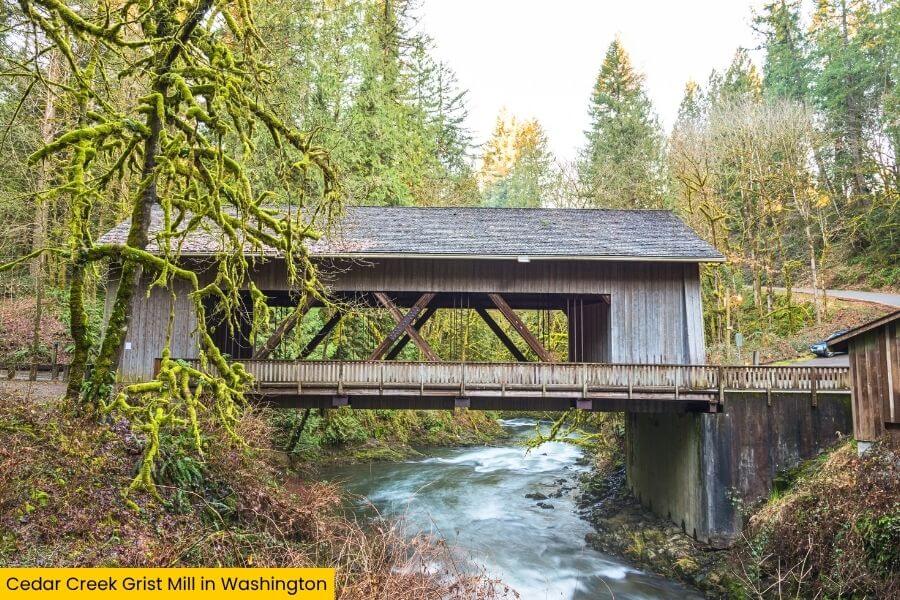
If you’re into photography, this place is gold, especially in the fall when the leaves turn bright shades of red, orange, and yellow.
You can walk right up to the mill during open days and step inside to see the original gears, belts, and grinding stones in action during demonstrations.
Volunteers often run the mill on select weekends, showing exactly how grain was processed back in the day, and you can even buy small bags of freshly ground cornmeal or flour.
It’s a hands-on way to see how early settlers turned simple crops into everyday staples.
The whole area is compact and easy to explore, so you don’t need to set aside a full day.
Plan for about 30 minutes to an hour if you’re just stopping by, or longer if you want to relax by the creek and soak in the scenery.
There are picnic tables nearby, so bringing snacks or lunch is a great idea if you want to hang out a bit longer.

Cedar Creek Grist Mill is typically open to visitors on most weekends year-round, with specific hours depending on the season, so it’s worth checking ahead before you go.
There’s no admission fee, but donations are encouraged to help maintain the mill and keep it running.
Parking is available and located just a short walk from the site, making this an easy, low-effort stop that feels way more special than it should for how simple it is.
History
The story of Cedar Creek Grist Mill goes all the way back to 1876, when it was built to serve the small farming communities scattered across this part of southwest Washington.
At the time, getting grain processed into flour or cornmeal wasn’t something you could easily just do at home, so local farmers relied on mills like this one to handle the job.
The mill was originally constructed by a man named George Woodham, who recognized that Cedar Creek’s steady flow made it the perfect power source for a water-driven operation.
Farmers would bring in wheat and corn, and the mill would grind it into usable products, often taking a portion as payment in a system known as “milling toll.”
For several decades, this place played a key role in daily life around Woodland.
It wasn’t just about food production either.
The mill became a natural gathering point where neighbors caught up, shared news, and traded goods while waiting for their grain to be processed.
As the 20th century rolled in, things started to change.
Modern milling operations and improved transportation made small local mills less essential, and Cedar Creek Grist Mill eventually stopped operating commercially in the early 20th century.
Like many historic structures from that era, it faced the very real possibility of being lost to time.
Things took a turn in the 1980s when a group of dedicated volunteers stepped in with a plan to save it.
The mill was carefully restored using original techniques and materials wherever possible, bringing the structure and its machinery back to working condition.
This wasn’t a quick fix either.
The restoration took years of effort, with volunteers tracking down historically accurate parts and rebuilding the inner workings piece by piece.
Today, the mill stands as one of the few remaining water-powered grist mills in Washington still operating for demonstrations, using a historic turbine system.
What you see now is the result of that long restoration effort, keeping a small but important piece of local history alive and running.
Know Before You Go
Cedar Creek Grist Mill is typically open year-round on Saturdays from 1:00 PM to 4:00 PM, though the exact schedule can shift depending on weather and volunteer availability.
It’s a good idea to check the official website or social media before you go so you don’t show up on a closed day.
There’s no admission fee to visit, which makes this one of the easiest low-cost stops you’ll find in southwest Washington.
Donations are encouraged, and they go directly toward maintaining the mill and keeping those historic gears turning.
Parking is available near the mill, but the lot is fairly small, so arriving earlier in the day gives you a better shot at snagging a spot without waiting.
If you want to see the mill actually running, plan your visit during open hours when volunteers are on site.
Watching the water-powered turbine system in action is easily the highlight, and it only happens during these scheduled times.
The grounds are simple but really pretty, so bringing a picnic is a great move.
There are a few tables nearby, plus plenty of spots along the creek where you can sit and relax while listening to the water.
If you’re up for exploring more, you’ve got some solid options close by.
Lewis River Golf Course is just a 25-minute drive away if you feel like hitting the greens.
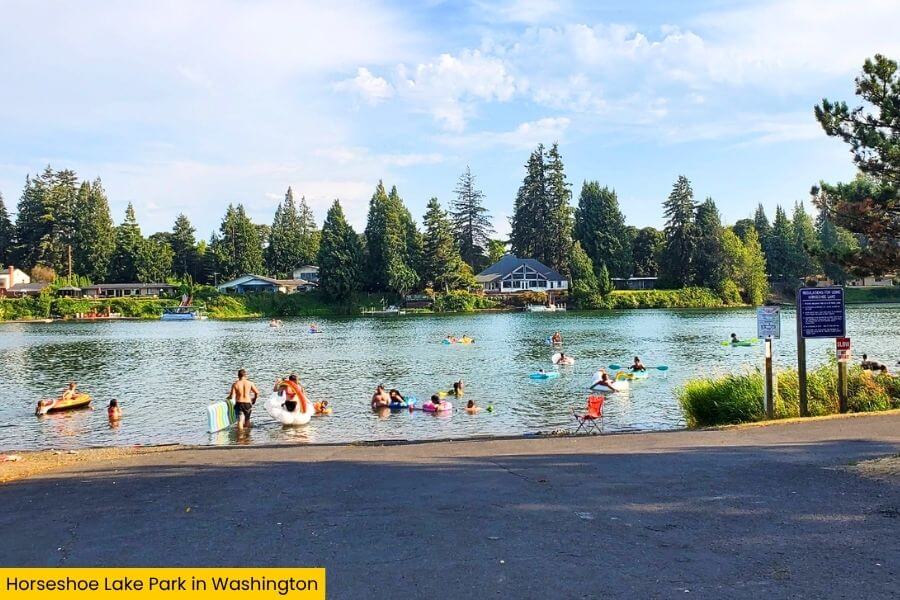
Horseshoe Lake Park in Woodland sits about 15 minutes away and has a paved loop trail that’s perfect for an easy walk along the water.
If you want something more adventurous, the south entrance of Mount St. Helens is just an hour away, with spots like Ape Cave offering a 2.5-mile lava tube hike.
Instead you can head to the north entrance (about 1 hour 45 minutes away) to visit the Johnston Ridge Observatory which serves up incredible volcano views.
Cell service can be a bit spotty around the mill, so download directions ahead of time if you’re relying on your phone.
Wear comfortable shoes since the ground near the creek can be uneven and a little damp, especially after rain.
This is a quick stop, but it’s one of those places that sticks with you, especially if you catch the water flowing strong through the mill system.
Related Posts