There’s something magical about an old mill.
The giant wooden wheels, the creaky timbers, the sound of rushing water—it’s like stepping straight into a time machine.
Tennessee is full of these incredible spots where grain was once ground, water wheels spun all day, and small towns grew up around the steady rhythm of the mill.
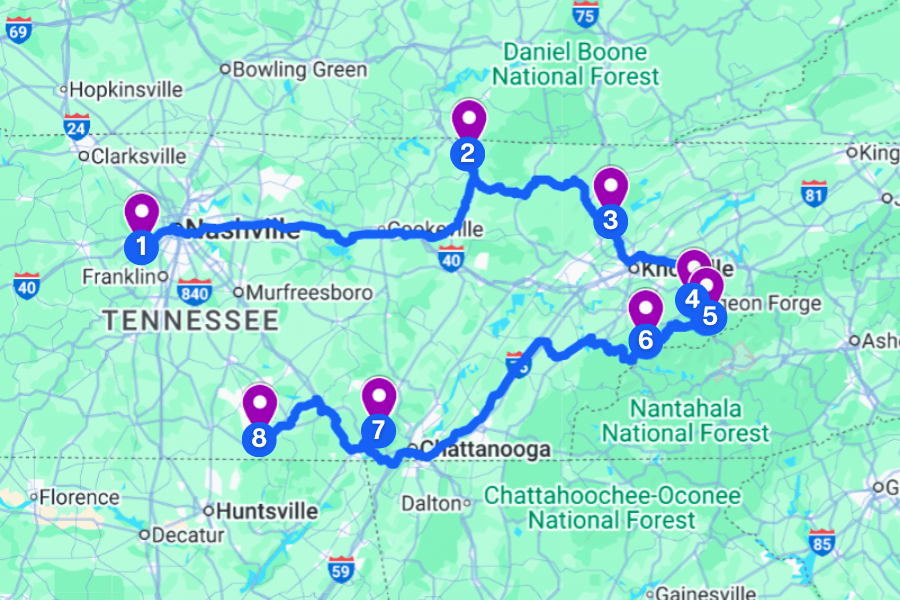
On this road trip, you’ll wander into forests, valleys, and riversides to find historic mills still standing tall after more than a hundred years.
Each one has its own story that’ll have you pulling over and grabbing your camera.
1. Newsom’s Mill, Nashville
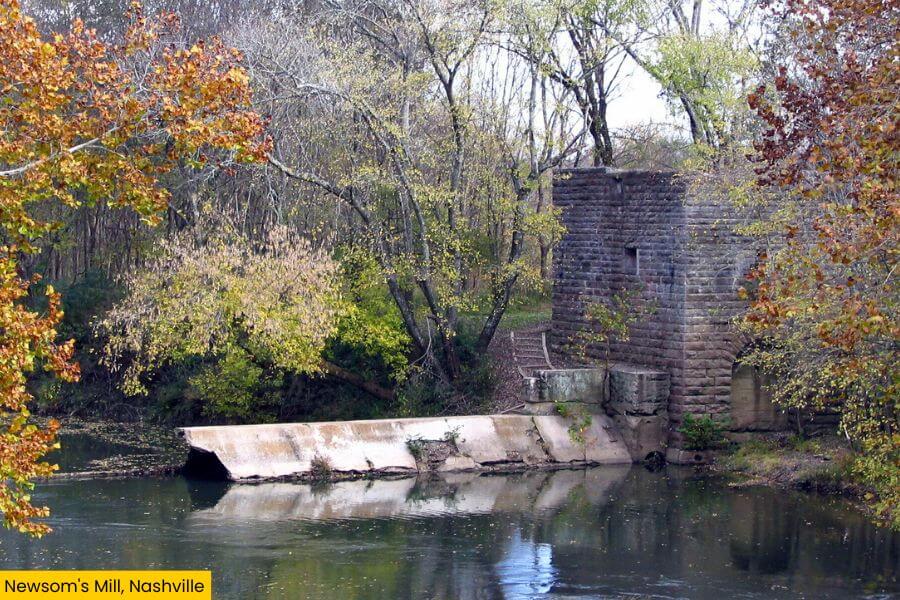
Newsom’s Mill is located near Bellevue, just a 20-minute drive from downtown Nashville.
It’s one of the oldest gristmills in Davidson County, dating all the way back to the early 1800s.
The mill is built from massive limestone blocks and originally ground corn and wheat using water power from the Harpeth River, which still flows nearby.
Today you can walk around the remains of the mill, spot the giant stone walls, and imagine the water wheel that once kept the whole place running.
Fun fact: this spot is part of the Harpeth River State Park, and after checking out the mill you can explore nearby trails and natural areas along the Harpeth.
2. Sergeant Alvin York Mill State Historic Area, Pall Mall
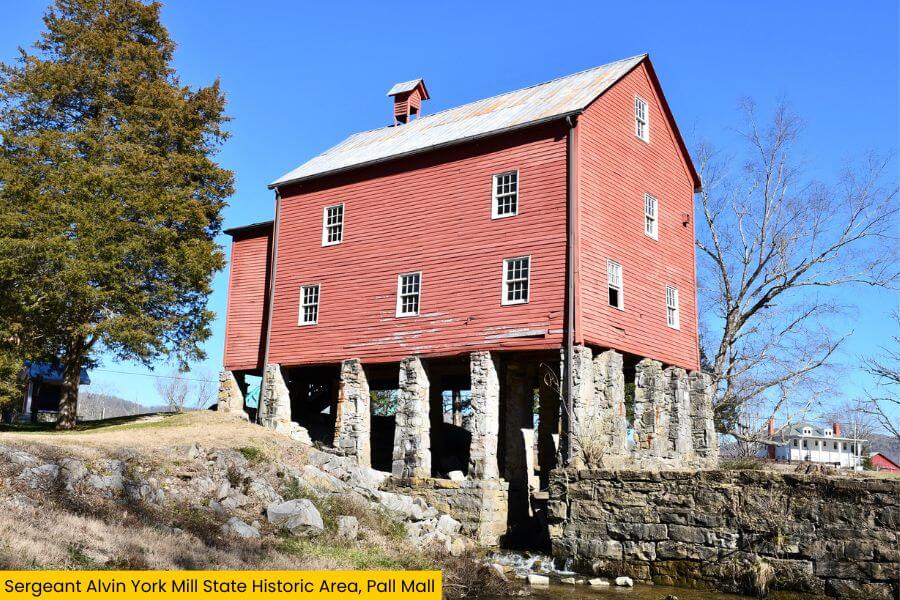
Next up is the Sergeant Alvin York Mill State Historic Area in Pall Mall, located in the Cumberland Mountains, a little over 2 hours from Nashville.
This place isn’t just about milling grain, it’s also the boyhood home of World War I hero Alvin C. York, and you can actually tour his 1920s farmhouse, gristmill, and general store.
The red, two-story mill sits right on the Wolf River, where you’ll hear the rush of water that once powered the machinery inside.
It feels like stepping into York’s world, with picnic spots, walking trails, and even the family cemetery where the legendary soldier himself is buried.
3. Rice Grist Mill, Norris

If you swing over to Norris, you’ll find the Rice Grist Mill, a historic wooden structure that captures the feel of early frontier life.
The mill was originally built in 1798 along Lost Creek in Union County, then moved piece by piece to its current spot near Norris Dam State Park in the 1930s.
Its hand-hewn timbers and huge stone foundation show off the kind of craftsmanship you just don’t see anymore.
You can peek inside to check out the original grinding stones, then wander over to the nearby Lenoir Museum to see even more pioneer-era artifacts.
4. The Old Mill, Pigeon Forge
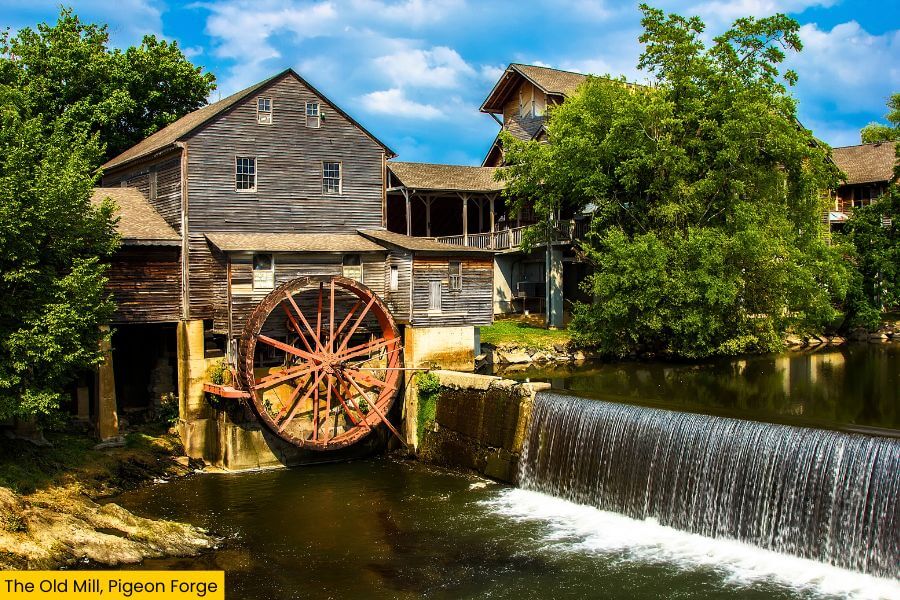
Down in Pigeon Forge, The Old Mill is hard to miss with its giant water wheel spinning right on the West Fork of the Little Pigeon River.
Built in 1830, this mill still operates today, grinding cornmeal and flour that you can actually taste at the Old Mill Restaurant next door.
It’s one of the most photographed spots in the Smokies, and once you see the rustic wooden frame against the rushing river, you’ll get why.
There’s also an entire Old Mill Square around it with candy shops, pottery studios, and bakeries that make the whole area smell like heaven.
5. Alfred Reagan Tub Mill, Gatlinburg
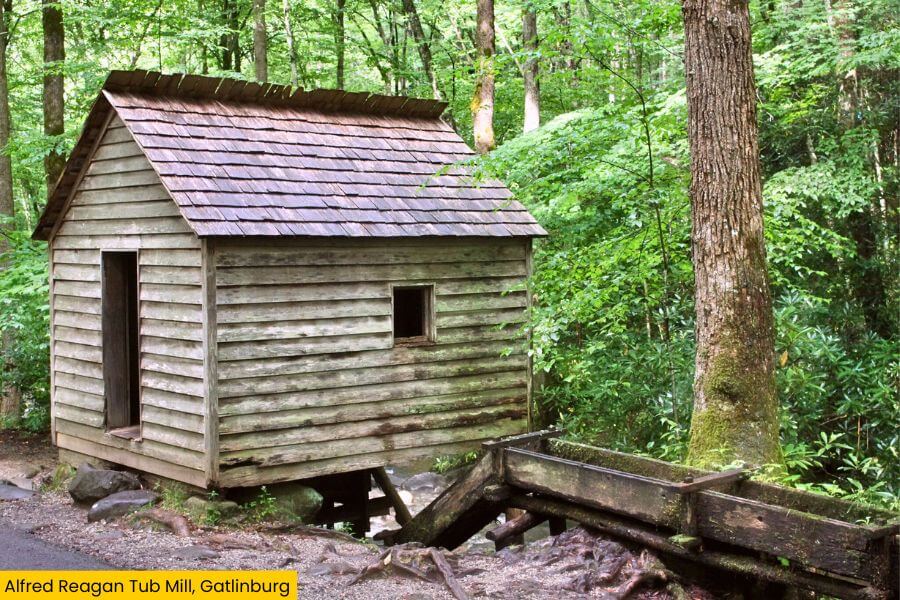
A short drive from Pigeon Forge into the Great Smoky Mountains brings you to the Alfred Reagan Tub Mill, a tiny log structure located right off Roaring Fork Motor Nature Trail in Gatlinburg.
Unlike the huge mills powered by rivers, this tub mill used a small wooden flume to channel water onto its wheel, a clever engineering trick from the 1890s.
The cabin next to it, a log structure that’s still partially standing, gives you a peek at mountain life over a century ago.
6. Cades Cove Historical Grist Mill, Townsend
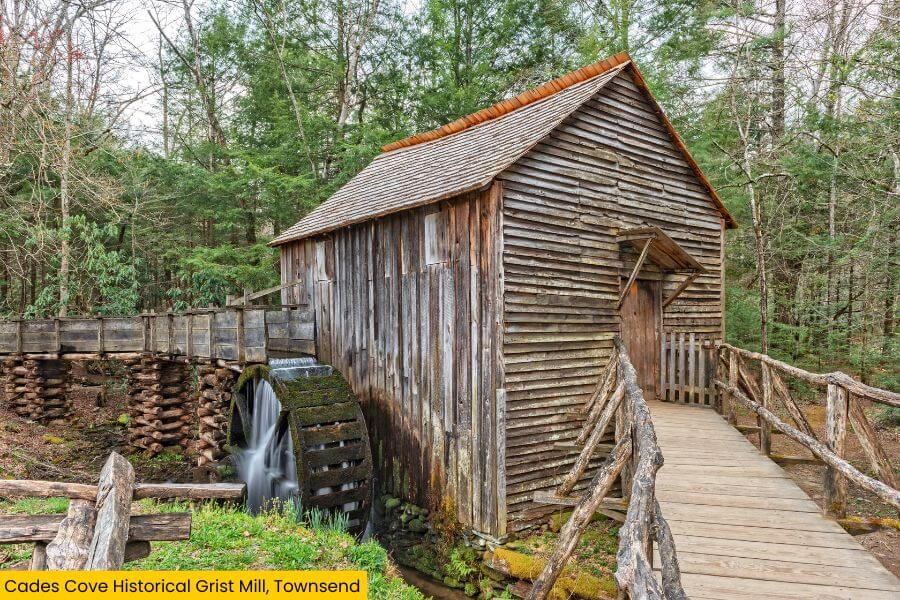
Keep cruising through the Smokies and you’ll land in Cades Cove, where the Cades Cove Historical Grist Mill (also known as the John P. Cable Grist Mill) has been grinding away since around 1870.
This mill sits in one of the most scenic valleys in Tennessee, surrounded by an 11-mile loop road where you’re almost guaranteed to spot deer, wild turkeys, and maybe even a black bear.
The mill still uses a waterwheel powered by Mill Creek, and you can watch demonstrations of corn being ground into meal much like it was 150 years ago.
Pair it with a stop at the Cable Mill Historic Area nearby, which has a blacksmith shop and other buildings, making the whole area feel like an open‑air museum.
7. Ketner’s Mill, Whitwell
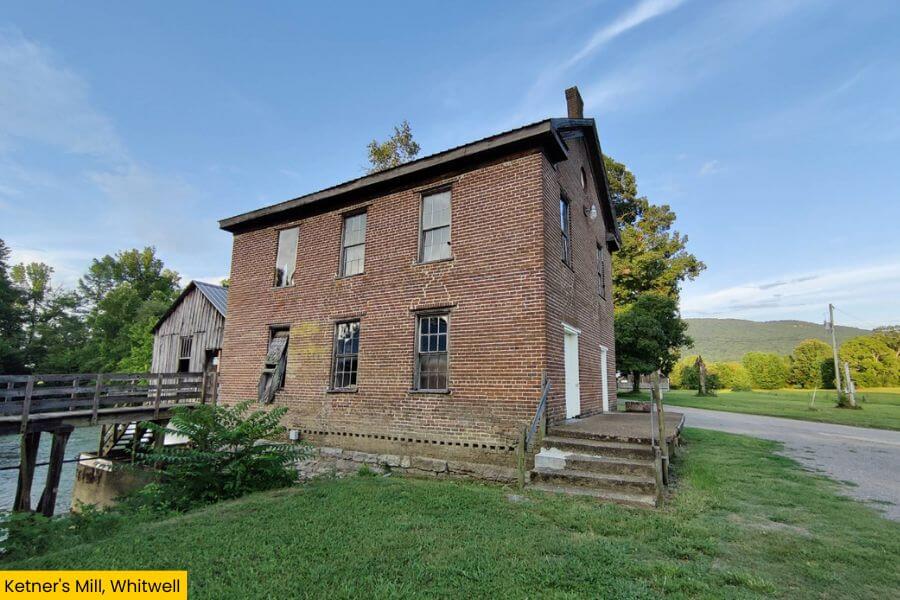
Just 3.5 hours from the Cades Cove, you’ll reach Ketner’s Mill.
It’s a historic stone-and-timber mill site near the Sequatchie River, with origins dating back to 1824.
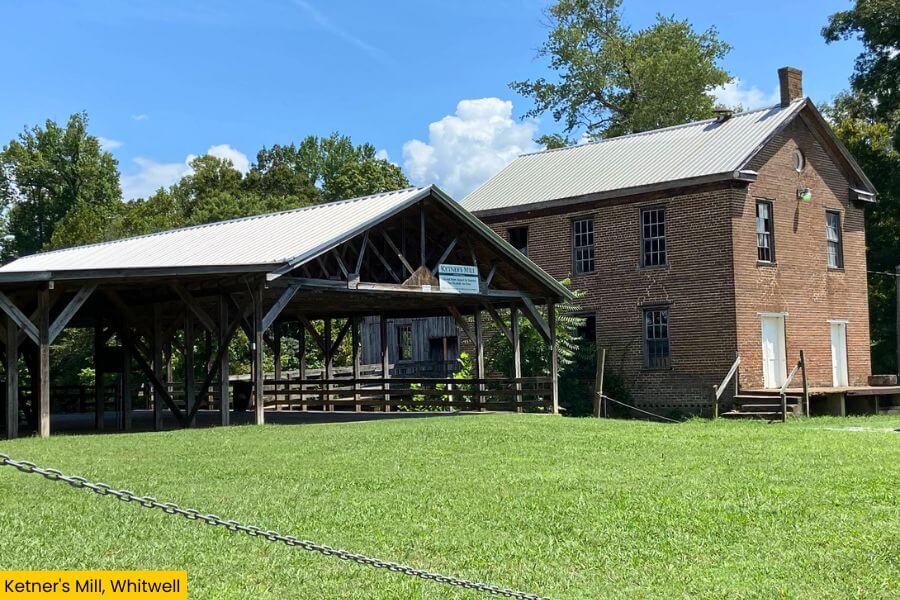
This mill was a community hub for over a century, with farmers hauling in their corn to be ground by its water-powered machinery, and parts of the historic wooden waterwheel can still be seen today.
These days the mill comes alive every October during the Ketner’s Mill Country Arts Fair, where you’ll find bluegrass music, local food, and crafts spread out across the riverside grounds.
This place is full of history, and you’ll leave with both cool memories and maybe a bag of stone-ground cornmeal.
8. Falls Mill and Museum, Belvidere

Finally, roll into Belvidere and check out Falls Mill, a 19th-century textile mill that now runs as a working museum with one seriously photogenic waterfall.
Built in 1873, the four-story mill features a massive 32-foot Fitz waterwheel, installed in 1906, which remains one of the largest still turning in the South.
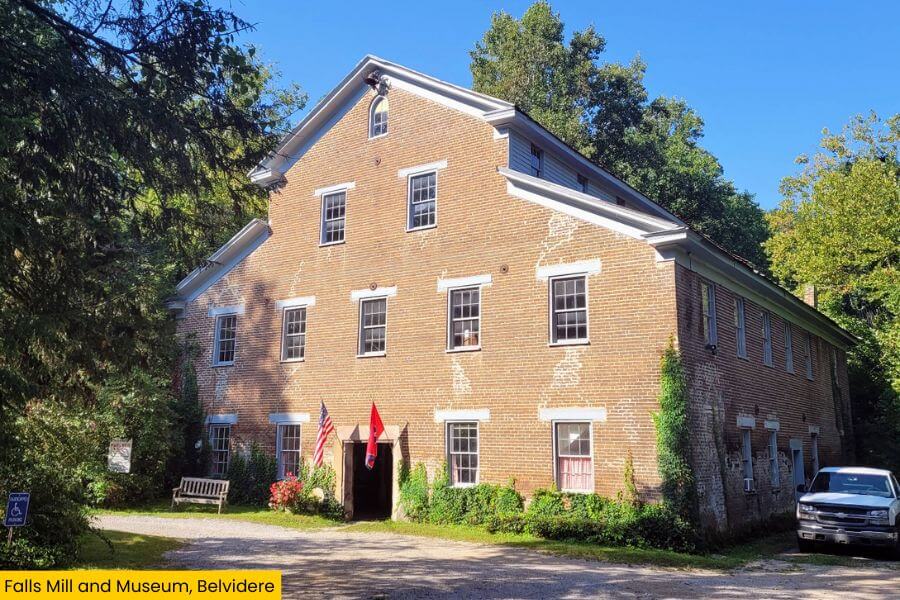
Inside, you’ll see antique looms, spinning wheels, and belt-driven machinery that clatter to life during demonstrations.
The best part? You can stay overnight in a charming log cabin on the grounds and fall asleep to the sound of rushing water from Factory Creek right outside your window.
Related Posts