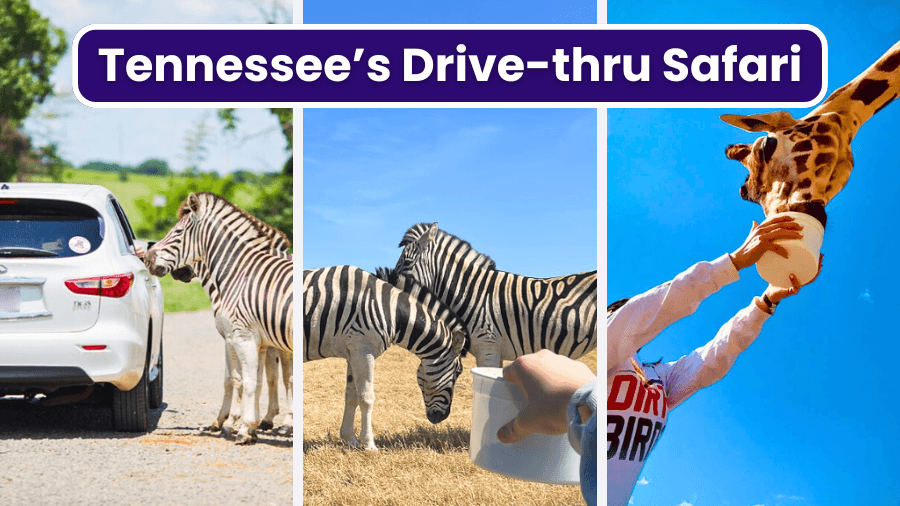
There’s a place in Tennessee where zebras stroll right up to your car window like they own the road.
You can drive past giraffes, camels, bison, and giant long-horned cattle without ever leaving your vehicle.
This isn’t your typical zoo with fences and crowded walkways.
Here, the animals roam freely through a massive safari park, and you’re the one driving straight through the middle of it all.
If you’ve ever wanted to feel like you accidentally drove into a real-life safari adventure without leaving Tennessee, this place delivers.
Grab some animal feed, keep your windows cracked, and get ready for one seriously wild road trip stop.
Where Is It?
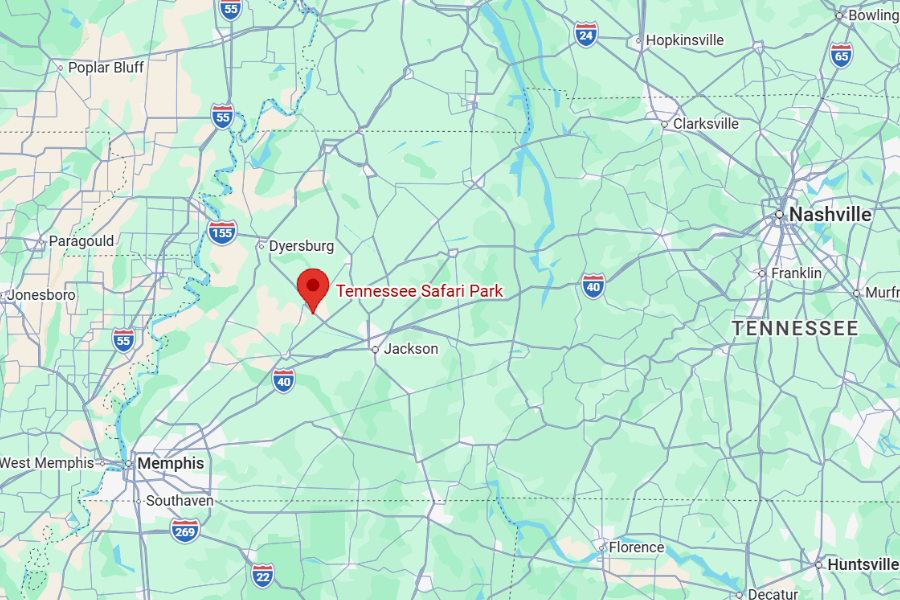
Tennessee Safari Park is located in the small town of Alamo in West Tennessee.
You’ll find it right off the U.S. Highway 412 at 618 Conley Road, making it an easy road trip stop if you’re driving across the western part of the state.
The park is about 1 hour and 35 minutes from Memphis and around 2.5 hours from Nashville.
If you’re heading from Jackson, Tennessee, you can get there in about 35 minutes.
About
Tennessee Safari Park is one of the only places in Tennessee where you can roll down your car window and hand-feed a zebra from the driver’s seat.
This drive-thru safari park in Alamo lets you get surprisingly close to animals from all over the world without ever leaving your vehicle.
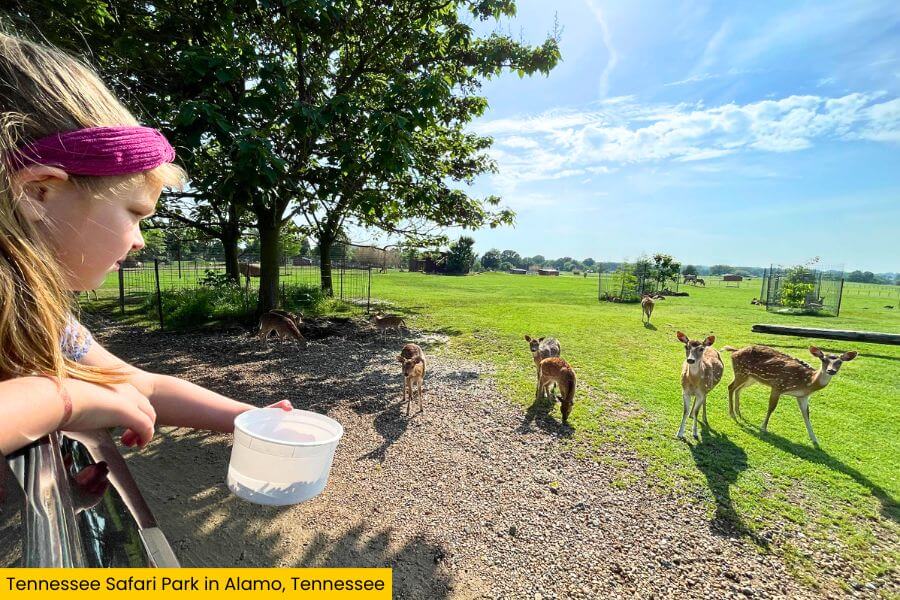
The main attraction is the 7.5-mile safari drive that winds through large open habitats packed with animals walking freely around the road.
As you slowly drive through the park, animals come right up to your car looking for snacks, and yes, some are very enthusiastic about it.
You can buy buckets of feed at the entrance, and you’ll definitely want at least one because the animals know exactly what those buckets look like.
Expect plenty of curious faces poking toward your windows within minutes of entering the safari.
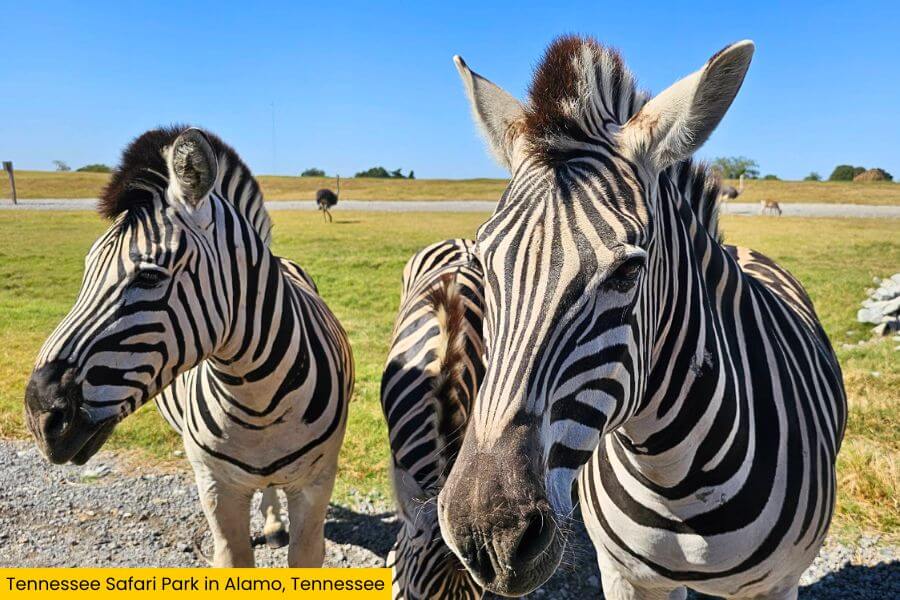
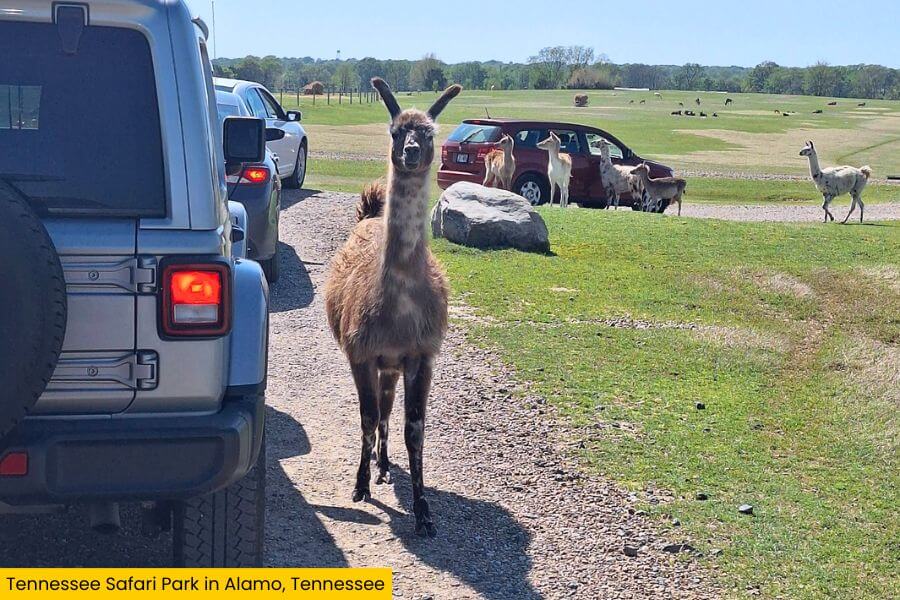
The park is especially known for its zebras, bison, ostriches, camels, llamas, and giraffes.
You might also spot antelope, water buffalo, emus, highland cattle, and giant Watusi cattle with horns that can stretch more than 6 feet from tip to tip.
One of the funniest parts of the experience is how different each animal acts around cars.
The zebras tend to confidently stroll right up to your window.
The ostriches are nosy and dramatic and may peck at the side mirrors if they spot food.
The llamas usually hang back until they realize you’re handing out snacks, then suddenly they’re everywhere.
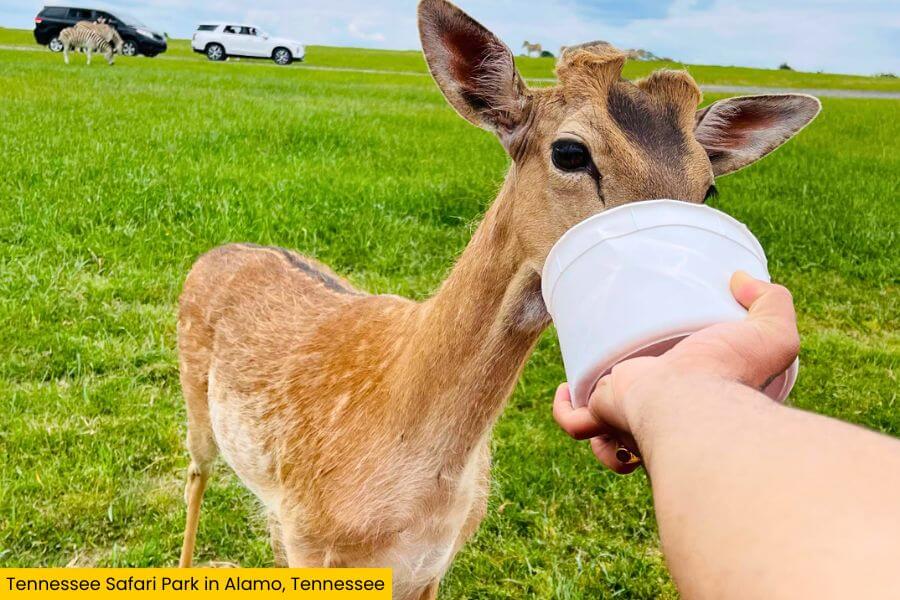
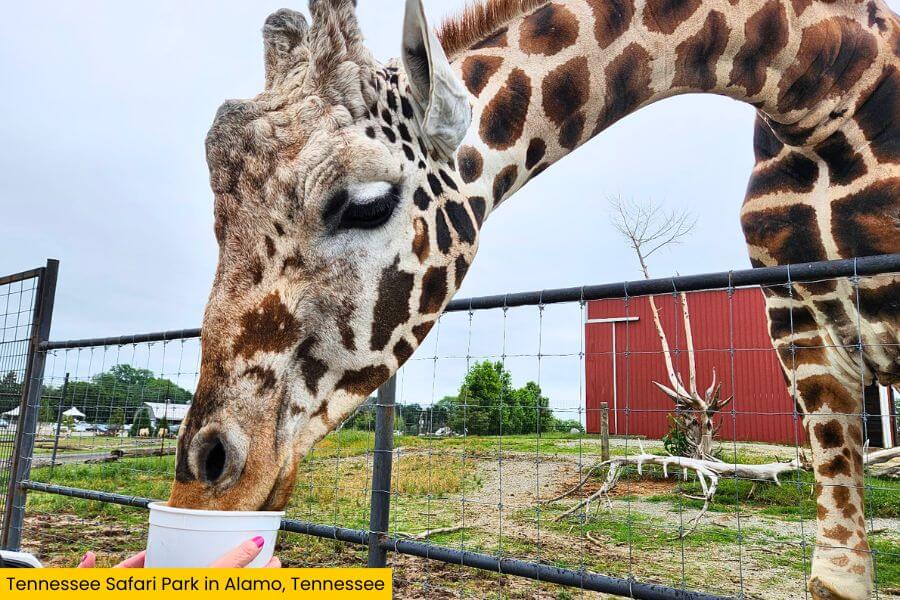
The giraffe section is a favorite for a lot of visitors because you get a chance to see these massive animals up close while they lean down toward vehicles for food.
Seeing a giraffe’s head appear next to your car window feels a little unreal the first time it happens.
After the drive-thru safari, you can park and explore the walk-through zoo area.
This section has smaller animal exhibits, shaded walking paths, and additional opportunities to feed animals.
You’ll find kangaroos, monkeys, reptiles, tropical birds, sloths, and petting zoo animals throughout the walk-through section.
There’s also a parakeet aviary where colorful birds land directly on feeding sticks if you buy bird food.

The park is designed to be slow-paced and family-friendly, so most people spend a few hours here between the drive-thru and walk-through areas.
You don’t need a guided tour or special reservation to enjoy the safari.
You simply follow the marked road at your own pace while animals wander around your vehicle the entire time.
Every visit ends up a little different because the animals move freely through the safari sections.
One trip might include bison blocking the road for five minutes.
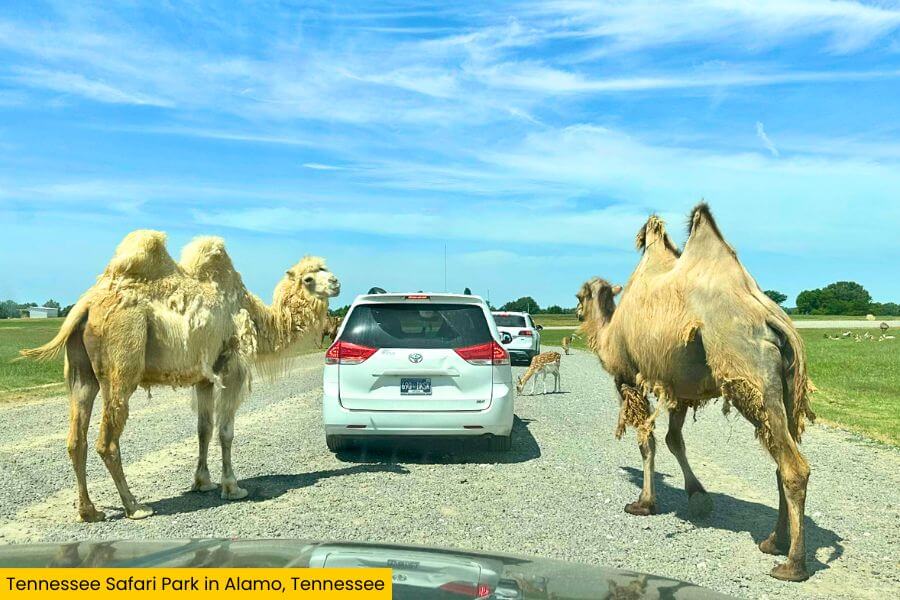
Another might involve an overly friendly camel trying to stick its head into your car for extra food.
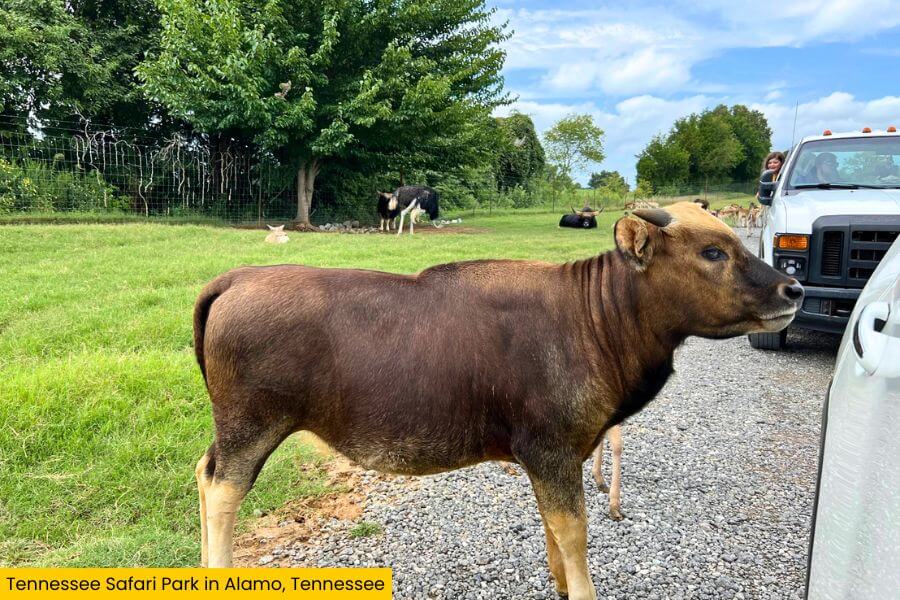
If you’ve never done a drive-thru safari before, this place turns an ordinary Tennessee road trip into something way more memorable than a standard zoo visit.
Know Before You Go
Tennessee Safari Park is open Monday through Saturday from 10 AM to 5 PM and Sundays from 12 PM to 5 PM.
Hours can change seasonally, especially during colder months, so it’s smart to check the park’s official website or Facebook page before making the drive.
The best time to visit is during spring and fall when temperatures are cooler and the animals tend to be more active.
Summer afternoons in West Tennessee can get seriously hot, and some animals spend more time resting in shaded areas during peak heat.
If you can, aim for a morning visit when the safari first opens because the animals are usually ready for breakfast and much more eager to approach vehicles.
Admission is $24 for adults and $16 for children ages 2 to 12, while children 1 and under get in free.
Animal feed cups cost extra, but skipping them would honestly take away a huge part of the experience.
Most cars end up buying multiple buckets once the animals start crowding around the windows.
You’ll want to drive slowly through the safari because animals freely roam across the roads at all times.
Speed limits are low for a reason, and sudden zebra traffic jams are absolutely a thing here.
Keep your windows only partially open around larger animals if you’re traveling with small kids.
Some animals get very close to the vehicles, especially camels and llamas that have clearly mastered the art of begging for snacks.
Do not bring outside animal food.
The park only allows approved feed purchased onsite to keep the animals healthy and safe.
A car wash afterward is not a terrible idea.
Between slobbery camels, dusty roads, and overly ambitious ostriches, your vehicle may leave looking a little different than when you arrived.
If you’re driving a convertible or riding a motorcycle, check the park rules ahead of time because certain vehicle types have restrictions in animal areas.
Wear comfortable shoes for the walk-through zoo section because there’s more to explore after the safari drive.
You’ll also want sunscreen, bottled water, and maybe a few paper towels for inevitable animal drool situations.
Weekends and holidays tend to be the busiest times, especially during spring break and summer vacation.
If you want a quieter experience with fewer cars stopping along the safari route, weekdays are your best bet.
Related Posts