This road trip starts in a big city by the water and slowly pulls you north through changing landscapes that never stop surprising you.
You’ll watch skylines fade into forests, warm valleys turn into steep mountain passes, and calm lakes give way to rushing rivers and ice-capped peaks.

The drive crosses borders, climates, and time zones, with each stretch of highway bringing a new reason to pull over and stare out the window.
If you love long drives, dramatic scenery, and that feeling of chasing something epic just over the next bend in the road, this journey is about to hook you fast.
1. Seattle, WA

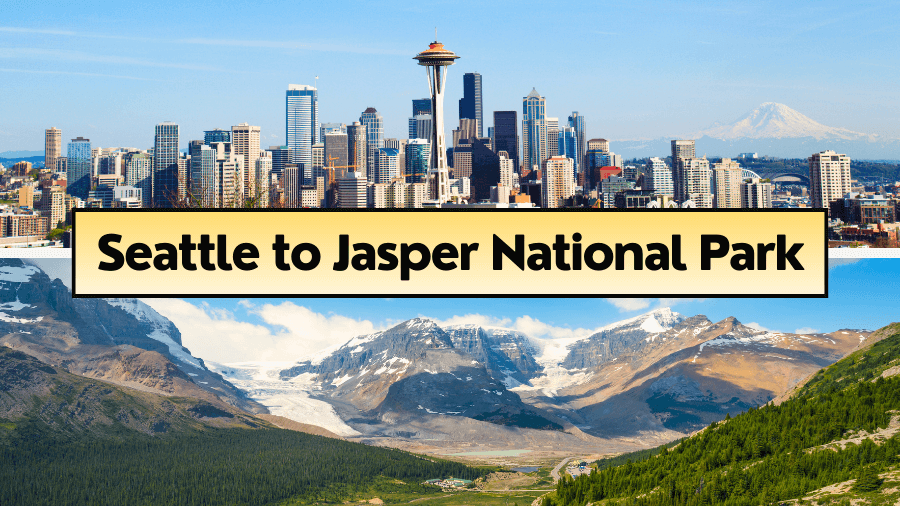
Seattle sits in the Pacific Northwest between Puget Sound and Lake Washington, with snowy Mount Rainier peeking into view on clear days.
It’s famous for the 605-foot Space Needle, Pike Place Market, which has operated since 1907, and the original Starbucks, which opened in 1971.
To explore, you can ride ferries across Puget Sound, wander neighborhoods like Capitol Hill and Ballard, and spot giant container ships, floatplanes, and sailboats.
Fun fact: Seattle gets about 37 inches of rain a year, is home to Amazon’s headquarters and Boeing’s roots, and is the perfect starting point for this road trip.
2. Snoqualmie Falls, WA

Just 30 minutes from Seattle is Snoqualmie Falls, crashing down 268 feet and ranking among the state’s most powerful and photographed waterfalls.
The falls sit along the Snoqualmie River and can be seen from an upper observation deck or by hiking the 1.4-mile round-trip trail to the misty lower viewpoint.
And if you think this spot looks familiar, it’s because it appeared in the TV show Twin Peaks and is home to the historic Salish Lodge overlooking the roaring water.
It’s the kind of place where your road trip officially shifts from big skyscrapers to mossy forests, rushing rivers, and full-on Pacific Northwest scenery.
3. Leavenworth, WA

After the roar of Snoqualmie Falls fades, the road winds toward Leavenworth, a Bavarian-style mountain town on the east side of the Cascade Mountains.
Known for its Alpine buildings, flower-filled balconies, and Front Street packed with bratwurst shops, bakeries, and beer halls, the town has that cozy, welcoming feel.
While you’re here, you can tour the Nutcracker Museum with 9,000+ nutcrackers, float the Wenatchee River in summer, or hike the trails nearby.
With snow-dusted peaks all around and frequent festivals, this place feels like a playful mountain stop before heading into bigger wilderness.
4. Osoyoos, British Columbia

Once you cross into Canada, the scenery shifts again as you roll into Osoyoos, a small town at the southern tip of the Okanagan Valley.
Set beside Osoyoos Lake, which stretches 14 miles and warms to around 75 degrees in summer, it’s one of the best swimming spots in the province.
It’s also known for its dry climate, sandy soil, and the Nk’Mip Desert Cultural Centre, where you can learn about Canada’s only true desert and the Osoyoos Indian Band.
Osoyoos feels sunny and wide open, with vineyards and lake views lining the road as you keep pushing north.
5. Penticton, British Columbia
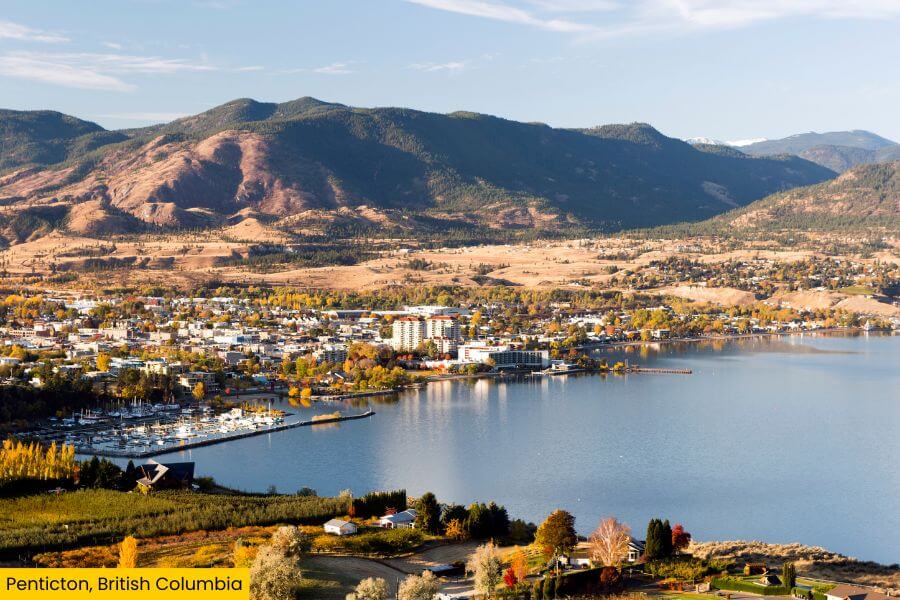
From Osoyoos, it’s about an hour’s drive through rolling hills to Penticton, a lively town wedged between two lakes.
With Okanagan Lake on one side and Skaha Lake on the other, it features waterfront and channel trails that run several miles, connecting beaches and parks.
That setting makes it perfect for summer fun like floating the Penticton Channel on inner tubes or sipping wine at nearby Naramata Bench wineries.
It really offers a change of pace, with its breathtaking blue water and easygoing energy.
6. Kelowna, British Columbia

Up next is Kelowna, the largest city in the Okanagan Valley.
Stretching along an 84-mile-long lake, you’ll find sandy spots like City Park, a busy marina, and a waterfront boardwalk running through downtown.
There’s also a ton of wineries like Mission Hill Family Estate, fruit stands stacked with cherries and peaches, and warm summers that regularly climb into the 80s.
Yep, this place definitely feels bigger and busier than the lake towns before it, with more city energy, food spots, and long lake views along the way.
7. Revelstoke, British Columbia
Leaving Kelowna, the road climbs into steeper terrain before reaching Revelstoke, a mountain town tucked between the Selkirk and Monashee ranges.
It’s known for deep snow and ski slopes, with Revelstoke Mountain Resort offering a 5,620-foot vertical drop and winters that often top 400 inches of snowfall.
There’s also plenty to do here, from riding the Revelation Gondola to exploring the Railway Museum.
If you’d rather stay in the car, follow the 26-kilometre Meadows in the Sky Parkway in Mount Revelstoke National Park for subalpine meadows.
8. Glacier National Park, British Columbia
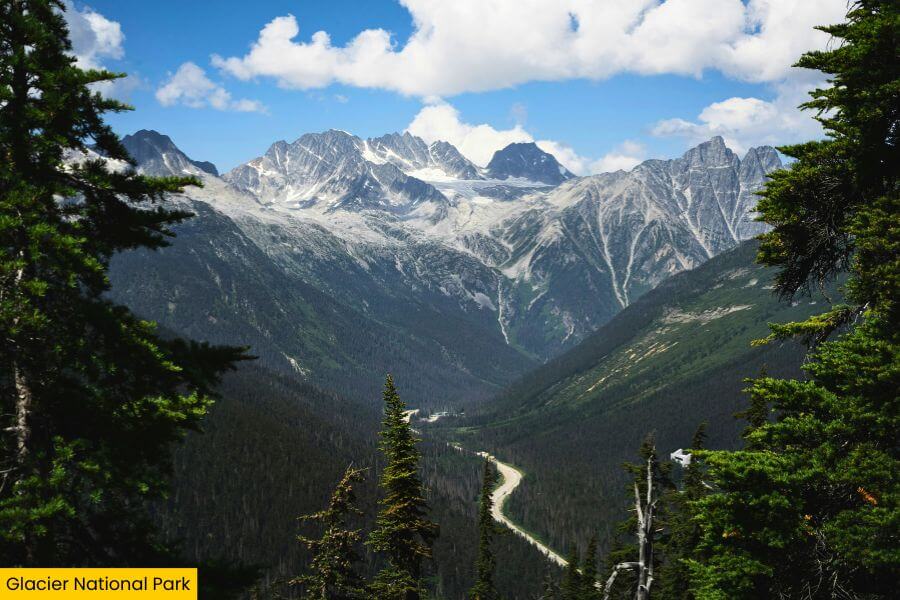
Then comes Glacier National Park, with sharp peaks and dense forest pressing in along the road.
This park protects over 1,300 square kilometers of glaciers, alpine meadows, and waterfalls, with Rogers Pass rising to 4,364 feet through the heart of it.
As you explore, you can stop at places like the Illecillewaet Glacier viewpoint or hike the 0.2-mile Hemlock Grove Boardwalk.
You can also walk through snow sheds built to protect the highway from avalanches.
9. Jasper National Park, Alberta

After winding through British Columbia’s mountain corridors, the road takes you to Jasper National Park in Alberta.
It’s the largest national park in the Canadian Rockies, covering 4,200 square miles.
Its highlights include the Icefields Parkway and the Athabasca Glacier, where you can walk right up to ancient ice.
You can also spot elk wandering around, paddle the blue waters of Pyramid Lake, or ride the seasonal Jasper SkyTram up to 7,425 feet for huge views.
Reaching this feels like the grand finale of the drive, with massive peaks, wide valleys, and wild spaces rewarding every mile of the journey.
Related Posts