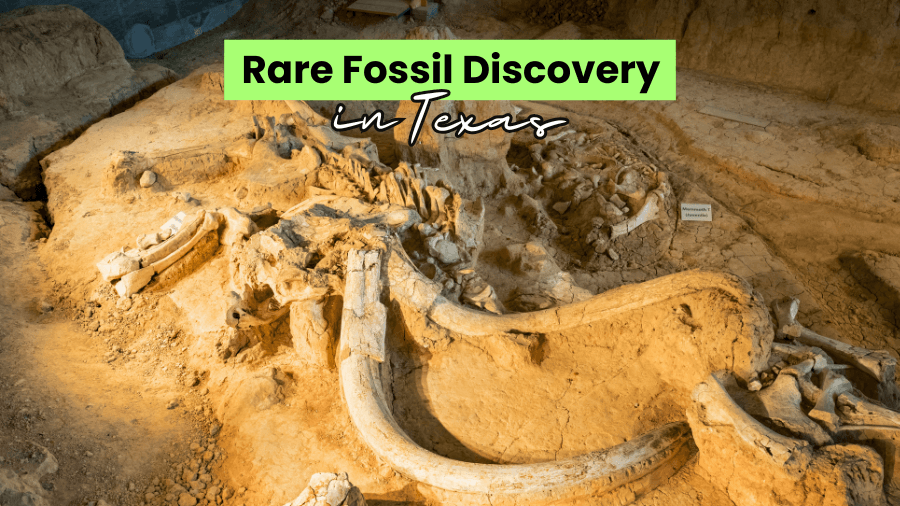
Right in the middle of Texas, there’s a place where massive Ice Age giants are still lying exactly where they fell tens of thousands of years ago.
Not scattered, not moved, but frozen in time in a way scientists rarely get to see.
We’re talking towering creatures that stood up to 14 feet tall, with bones so well preserved that researchers can piece together an entire moment from the past.
What’s wild is that this discovery didn’t happen in some remote corner of the world, but in a regular Texas city, hiding just beneath the surface.
If the idea of standing inches away from real mammoth fossils sounds even a little exciting, you’re going to want to keep reading.
Where Is It?

Waco Mammoth National Monument is located in Waco, Texas, right along the Bosque River.
It’s about a 1 hour 45 minute drive from Austin, 1.5 hours from Dallas, and roughly 3 hours from Houston and San Antonio.
If you’re already in downtown Waco, it’s just 15 minutes away, making it easy to pair with stops like Magnolia Market or Cameron Park.
About
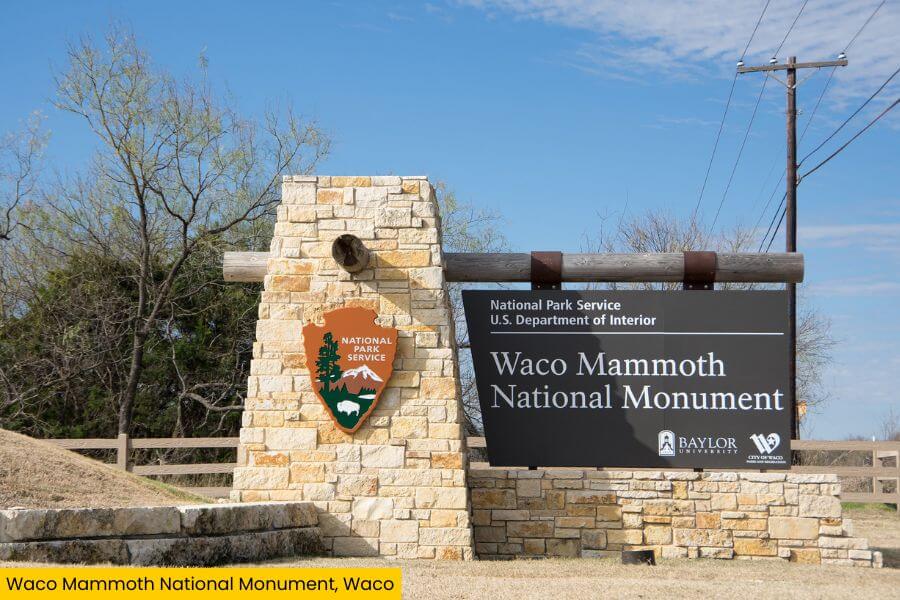
Waco Mammoth National Monument protects one of the most important Ice Age fossil sites in North America.
It’s also the only place in the country where a nursery herd of Columbian mammoths has been discovered and preserved together.
These massive creatures roamed Texas during the last Ice Age over 65,000 years ago, and scientists believe a sudden flash flood likely buried this group all at once.
All of this began in 1978, when two local men noticed a large bone sticking out of a ravine, which turned out to be a mammoth femur.
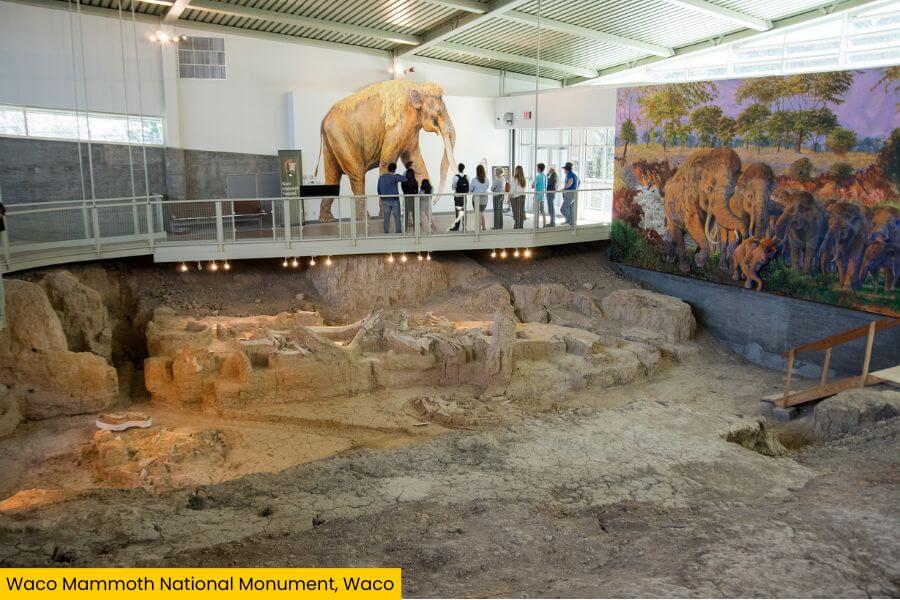
That discovery kicked off decades of excavation, eventually uncovering at least 24 Columbian mammoths, including females and juveniles.
Finding a full herd like this is extremely rare, which is why the site is considered significant worldwide.
To put that into perspective, Columbian mammoths were among the largest mammoth species, reaching up to 14 feet tall and weighing around 20,000 pounds.
Beyond that, fossils of other Ice Age animals have also been uncovered here, making the site even more fascinating.

These include a Western camel, an American alligator, a juvenile saber-toothed cat, a giant tortoise, and a dwarf antelope.
And because many of the bones were left in their original positions, scientists have been able to study how these animals lived and died with remarkable detail.
The site offers an amazing snapshot of prehistoric life, with fossils preserved together rather than scattered across different locations and time periods.
All of this led to the area being officially designated as a National Monument in 2015, helping protect it for ongoing research and preservation.
What To Expect

Once you arrive, the experience centers around a guided tour that takes you straight into the heart of the dig site.
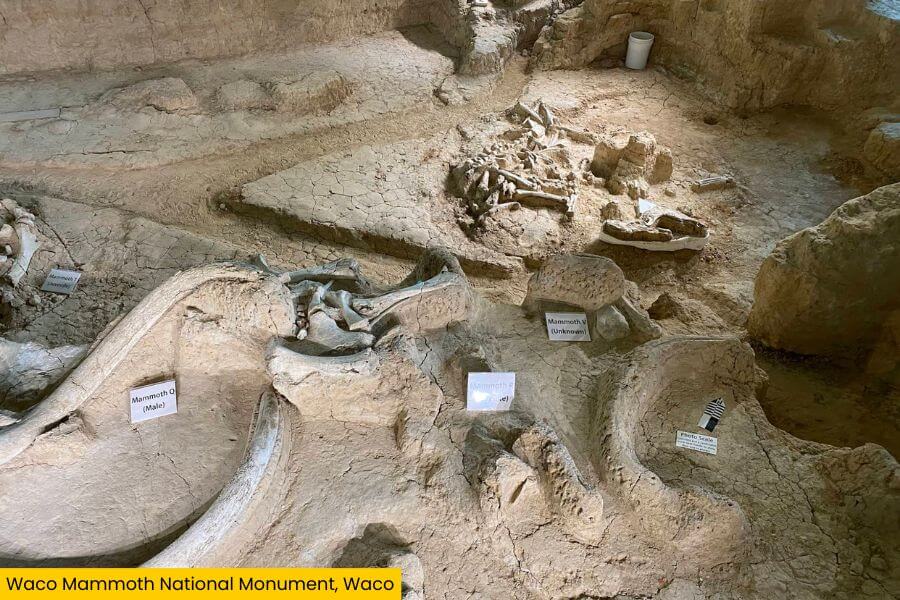
The main attraction is the Dig Shelter, a climate-controlled structure that covers the excavation area and preserves the fossils in place.
You’ll walk along a paved path first, then step onto an elevated walkway that gives you a clear view of the bones still embedded in the ground.
This isn’t a museum with fossils behind glass; you’re viewing real prehistoric skeletons up close, which makes the experience feel incredibly real.
Park rangers lead these tours, which typically last 45 minutes to 1 hour, and you’ll hear how the fossils were found and what scientists have learned from them.

Beyond the shelter, there’s a network of easy walking trails that wind through the surrounding parkland.
You can try the 1/2 mile Eagle Trail, which runs between the amphitheater and the Welcome Center.
It’s a nice way to stretch your legs before or after your tour without committing to a long hike.
And because it ends at the center, you can take some time to explore exhibits that help tie everything together.
If you’re visiting with kids, the Junior Ranger program adds a fun extra layer.

They can complete simple activities while exploring and earn a badge at the end, which keeps them engaged the whole time.
Another plus is that tours are limited in size and run every 30 minutes, so the whole visit feels organized and not overcrowded.
Most people spend about 1.5 to 2 hours here, which gives you enough time to take the tour, explore the exhibits, and enjoy the trails without feeling rushed.
Know Before You Go
Hours and Admission
They’re open daily from 9:00 AM until 5:00 PM, with the last tour usually starting around 4:15 PM.
The site is closed on Thanksgiving, Christmas Day, and New Year’s Day, so double-check the schedule if you’re visiting around the holidays.
Admission to the park is free, but guided tours cost $6 for adults, $5 for kids ages 4 to 17, and are free for children 3 and under.

Best Time to Visit
Spring and fall are great times to visit if you want milder weather, with daytime temperatures usually ranging from the mid 60s to the upper 80s.
Summer is still doable, just expect heat and plan for an earlier visit in the day to stay comfortable.
What to Wear
Wear comfortable shoes because even though the trails are short, you’ll still be walking on natural surfaces like dirt and gravel.

Pets and Parking
Pets aren’t allowed inside the Dig Shelter or visitor center, but they are welcome on the trails as long as they’re on a leash.
Parking is free, but the lot is fairly small and can fill up on weekends, so it’s a good idea to arrive early.
Things to Do Nearby
If you want to turn this into a full day in Waco, you’ve got some fun options nearby.

Magnolia Market is just 15 minutes away and is packed with food trucks, shops, and a huge lawn for hanging out.
You can also visit Cameron Park, about 7 minutes away, where you’ll find over 400 acres of trails, scenic overlooks, and playgrounds.
For something different, the Dr Pepper Museum in downtown Waco lets you explore the history of the iconic soda and even grab a classic fountain drink.
Related Posts