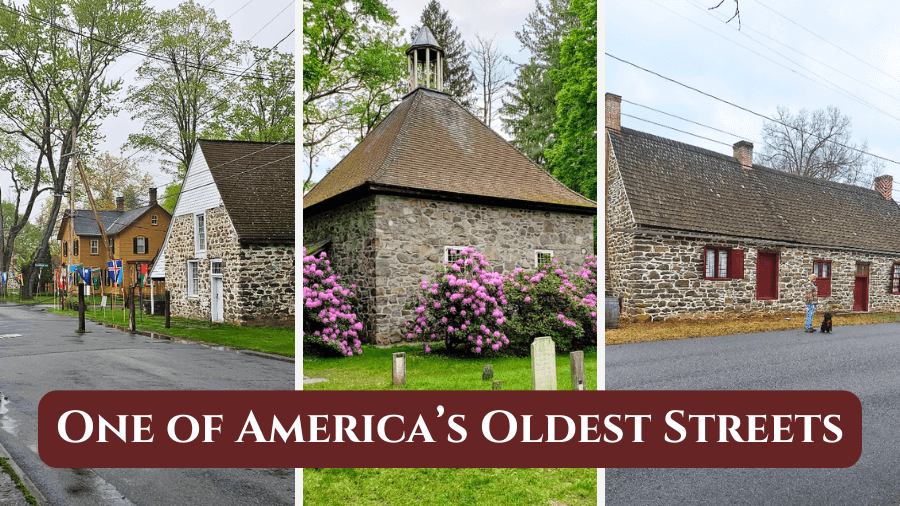
Tucked away in New York is a quiet little street where time basically hit pause more than 300 years ago.
We’re talking stone houses from the early 1700s and a road that has been lived on since 1678.
Not rebuilt. Not recreated. The real thing.
This place is one of the oldest continuously inhabited streets in America, and you can actually walk right down it.
It’s calm, compact, and it’s packed with stories.
If you love places where history feels close enough to touch, you’re going to want to keep reading.
Where Is It?
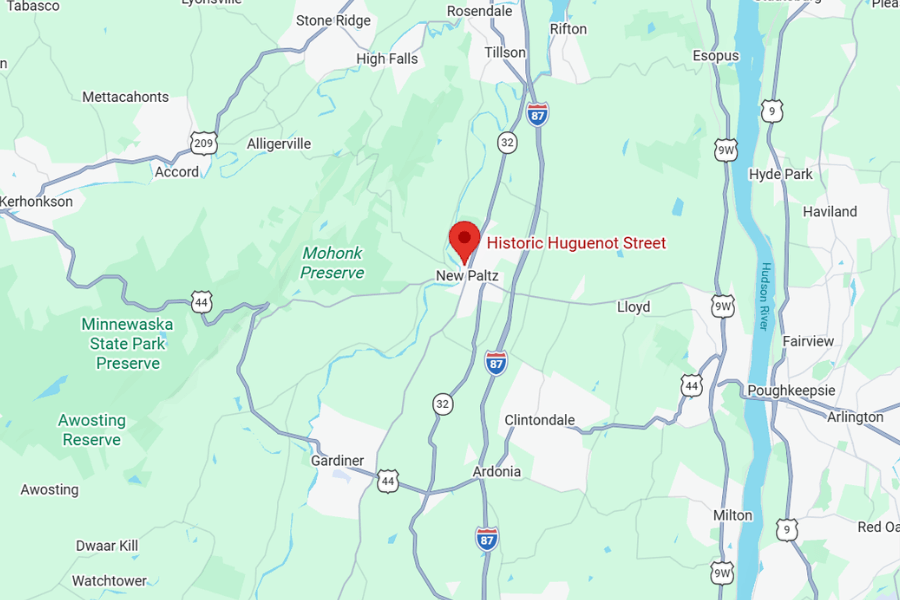
Historic Huguenot Street is located in New Paltz, New York, right in the heart of the Hudson Valley.
To get there, use this address: 81 Huguenot Street, New Paltz.
It’s roughly a 1-hour-and-40-minute to 2-hour drive from New York City, depending on traffic.
It’s about 25 minutes from Kingston, 20 minutes from Poughkeepsie, and about 1 hour and 15 minutes from Albany.
If you’re road-tripping through the Hudson Valley or heading toward the Catskills, this spot is an easy and super worthwhile stop.
About
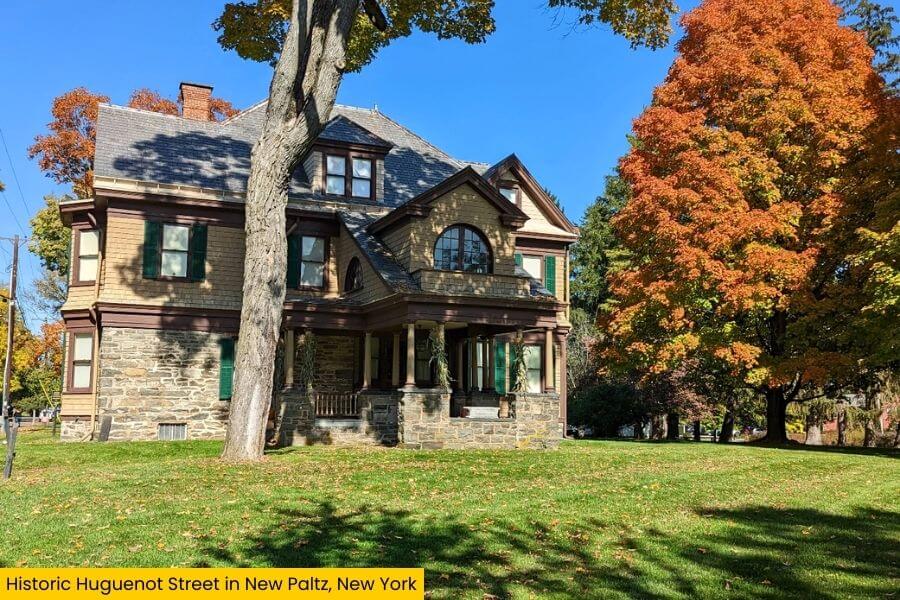
Historic Huguenot Street in New Paltz is one of the oldest continuously inhabited streets in the United States, and walking here honestly feels like stepping straight into the 1700s.
This 10-acre National Historic Landmark District was settled in 1678 by French Huguenots who fled religious persecution in France, and many of their original stone houses are still standing today.
The street is famous for its seven stone houses, each one built in classic Dutch Colonial style with thick fieldstone walls, steep roofs, and wooden shutters that have seen centuries of Hudson Valley winters.
It’s quiet, peaceful, and surprisingly compact, which makes it easy to explore on foot in an hour or two.
The Seven Stone Houses

DuBois House (Dubois Fort Visitor Center)
The DuBois Fort, built around 1705, is the oldest surviving structure on the street.
According to community tradition, the home also acted as a fort for the community, with three “portholes” still visible on the east and north walls.
However, recent analysis has questioned this story.
No records survive indicating the home was used for community defense, and the holes in the east and north walls were likely created during the 19th century.
Over the years, it’s been everything from a private residence to a tearoom to a restaurant, and now it serves as the Visitor Center for Historic Huguenot Street.
Jean Hasbrouck House
The Jean Hasbrouck House, built in 1721, is another standout.
It has that classic low, sloping roofline and massive stone chimney that screams early colonial architecture.
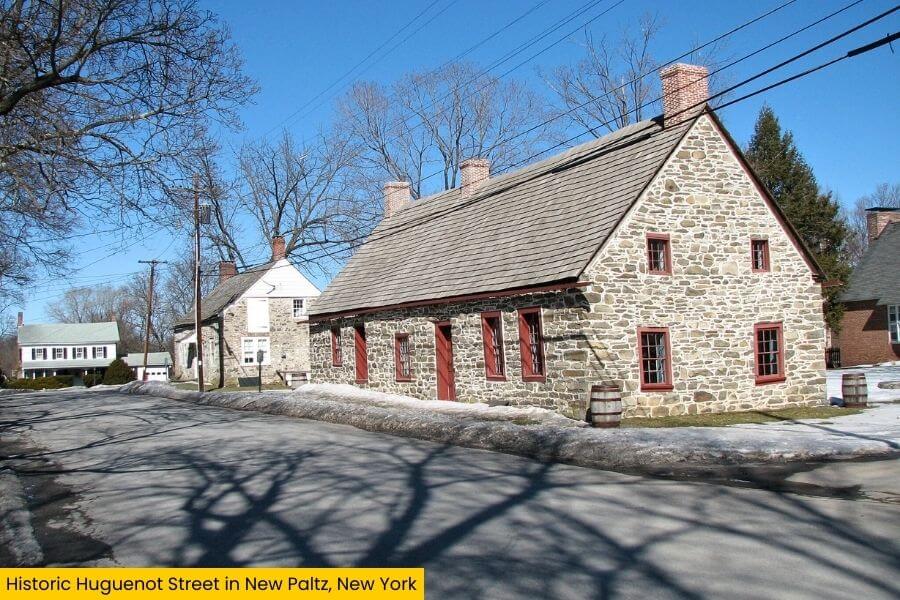
Inside, you can see period furniture, tools, and household items that show what daily life looked like in the 18th century.
Abraham Hasbrouck House
The Abraham Hasbrouck House was built in phases between 1721 and 1734 and was once home to a prominent local family.
Bevier-Elting House
The Bevier-Elting House, believed to have been built between 1694 and 1696 by Louis Bevier, gives you a glimpse into life just before the American Revolution.
This stone house has large windows, a side porch, and a long well-sweep.

The Remaining Buildings
The Freer House, Deyo House, and Crispell Memorial French Church round out the historic lineup.
Each one tells a slightly different story about how the community evolved from a small settlement into a thriving Hudson Valley town.
The Crispell Memorial French Church
The Crispell Memorial French Church, a 1972 reconstruction of the original 1717 stone church, is one of the most meaningful sites on the street.
This is where the original French-speaking Protestant settlers gathered for worship.
Today, it serves as a space for special programs and as a reminder of the community’s religious roots.
You can step inside and see how faith played a central role in shaping daily life for the early settlers.
The Huguenot Burying Ground

Just beyond the houses, you will find the Huguenot Burying Ground.
This cemetery dates back to the late 17th century and contains the graves and memorials honoring early Huguenot settler families.
Some of the headstones are simple and weathered, while others have detailed carvings and inscriptions.’
Walking through it feels quiet and reflective, and it adds another layer of depth to the experience.
What to Expect When You Visit
When you visit Historic Huguenot Street, you are not just strolling down a pretty old road.
You are exploring over 300 years of American history in one compact area.
Guided tours are available and highly recommended if you want the full story.
Knowledgeable guides explain how the land was originally purchased from the Esopus Munsee people and how the French settlers adapted to life in the Hudson Valley.

You can tour the interiors of several houses, see rotating exhibits, and learn about everything from colonial cooking to early medicine.
The setting itself is beautiful, with the Shawangunk Ridge rising in the background and the Wallkill River flowing nearby.
On a sunny day, it feels calm and open, with grassy lawns stretching between the stone houses.
It’s not a theme park or a flashy attraction. It’s real, preserved history.
If you’re into early American history, architecture, genealogy, or just love seeing places that have truly stood the test of time, this street absolutely delivers.
And the fact that many of these stone houses have been here since the early 1700s makes every step feel pretty special.
Know Before You Go

Historic Huguenot Street is open seasonally, and the best time to visit is late spring through fall when the gardens are green and the Hudson Valley weather is at its best.
September and October are especially beautiful thanks to fall foliage, with fiery red and orange leaves lighting up the Shawangunk Ridge behind the stone houses.
Most guided tours and house interiors are open from around May through October, typically Thursday through Tuesday, with tours running between 10:00 am and 5:00 pm.
Hours can vary by season, so it is smart to check the official Historic Huguenot Street website before you go.
If you want to step inside the homes, you will need to book a guided tour.

The grounds are free to explore, but to go inside the historic buildings you’ll need to join a guided tour.
General admission for adults is typically around $15, and discounted tickets are $12 for seniors, students, and kids aged 7-12.
There’s also free admission for HHS Members, Veterans, Active Military members and their families, SUNY New Paltz Students, Library Pass Partnership Members and Children 6 and under.
Sometimes they hold special tours that can vary in price from the standard ticket price and can cost around $20-$25, depending on the tour type.
If you are visiting in winter, the grounds are still open for self-guided exploration.
It is peaceful and quiet that time of year, especially after a fresh snowfall.
Parking is easy and free in the designated lot on Broadhead Avenue near Historic Huguenot Street.
From there, follow the signs along the carriage path to the DuBois Fort Visitor Center.

Plan to spend at least 1 to 2 hours here, especially if you are taking a guided tour.
Wear comfortable walking shoes because you will be strolling along gravel paths and grassy areas.
The street itself is short and flat, so it is manageable for most visitors.
If you are making a day of it, you have plenty to explore nearby.
Mohonk Preserve is a short drive away and offers over 70 miles of carriage roads and trails.
Minnewaska State Park Preserve is about 20 minutes away and is home to Lake Minnewaska, a 36-acre glacial lake, and waterfalls like the 60-foot-tall Awosting Falls.

If you prefer something low-key, walk into downtown New Paltz, which is just a few blocks away.
You’ll find local favorites like The Bakery for pastries, Main Street Bistro for brunch, and Jar’d Wine Pub for small plates and wine flights.
One more tip.
Arrive earlier in the day if you want great photos without crowds.
Historic Huguenot Street is small, easy to explore, and packed with real colonial history.
With a little planning, you can turn your visit into a full Hudson Valley adventure.
Related Posts