If you’ve ever dreamed of exploring a ghost town where the buildings are crumbling, stories are wild, and the land feels untouched for over 150 years, this is for you.
We’re talking about an abandoned Texas settlement that once buzzed with cowboys, soldiers, gamblers, and outlaws.
It is now quiet, mysterious, and full of ruins, with broken stone walls, dusty trails, and a heavy silence that makes you wonder what really went down here.
Ready to walk through a real-deal Wild West ruin with stories hiding around every corner?
Let’s go.
Where Is It?
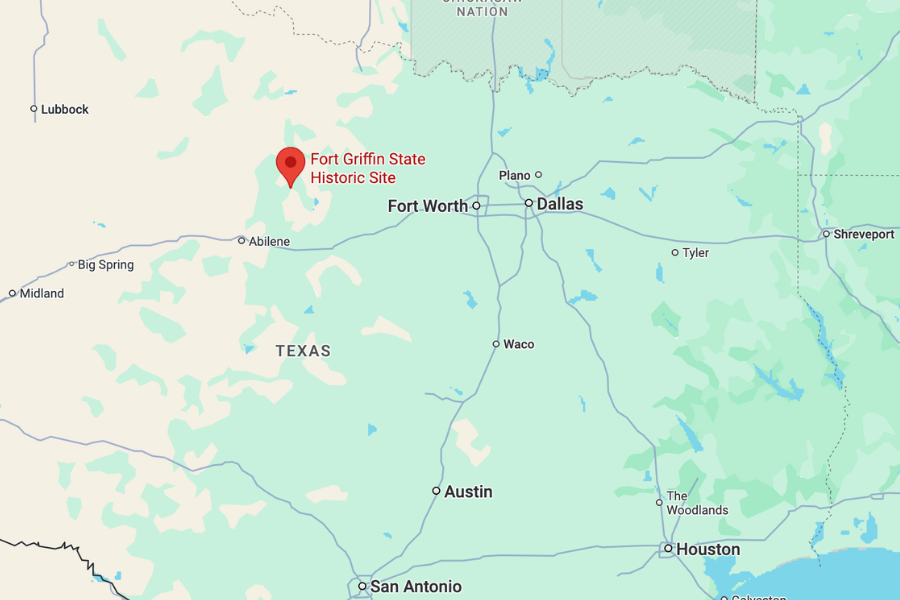
Fort Griffin sits just outside Albany, a small town in Shackelford County.
The drive takes around 50 minutes from Abilene, or a little over 2 hours from Fort Worth if you’re coming from the DFW area.
Coming from Austin? Plan on a four-hour drive and know that it’s totally worth it.
Either way you go, you’ll end up in a spot that feels far from the city.
About
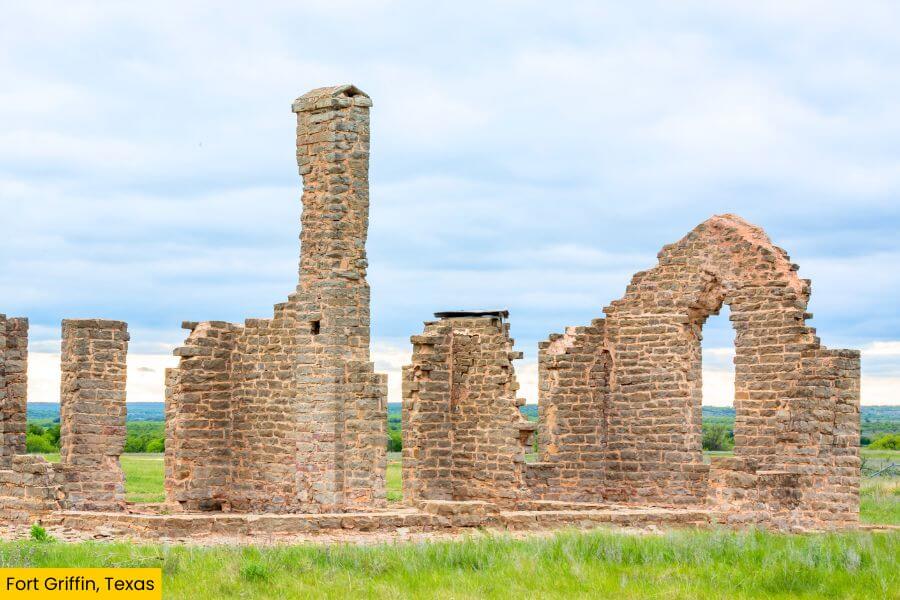
Visiting Fort Griffin is like walking straight into a forgotten chapter of the Old West, only without the cheesy tourist traps or overpriced souvenirs.
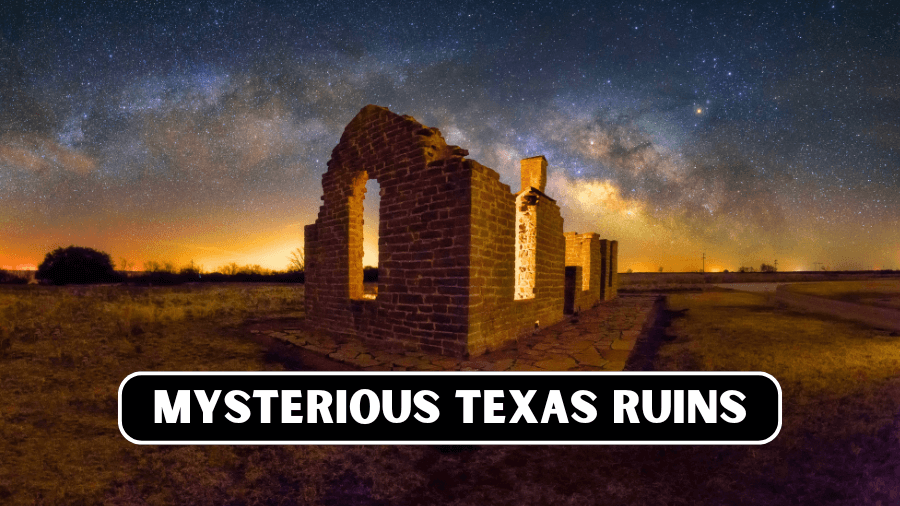
It’s known for the eerie remains of a 19th-century U.S. Army fort and a wild boomtown that once stood just outside its gates.
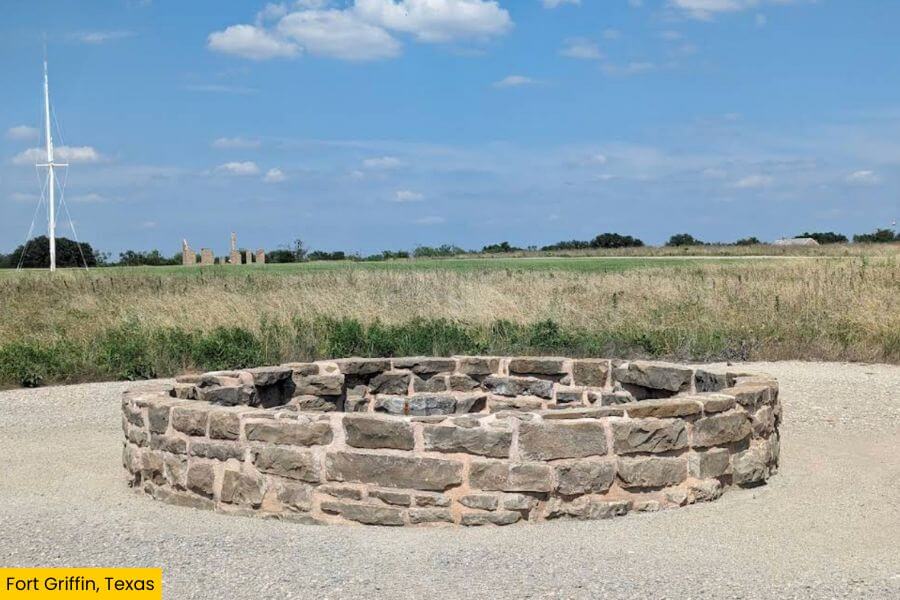
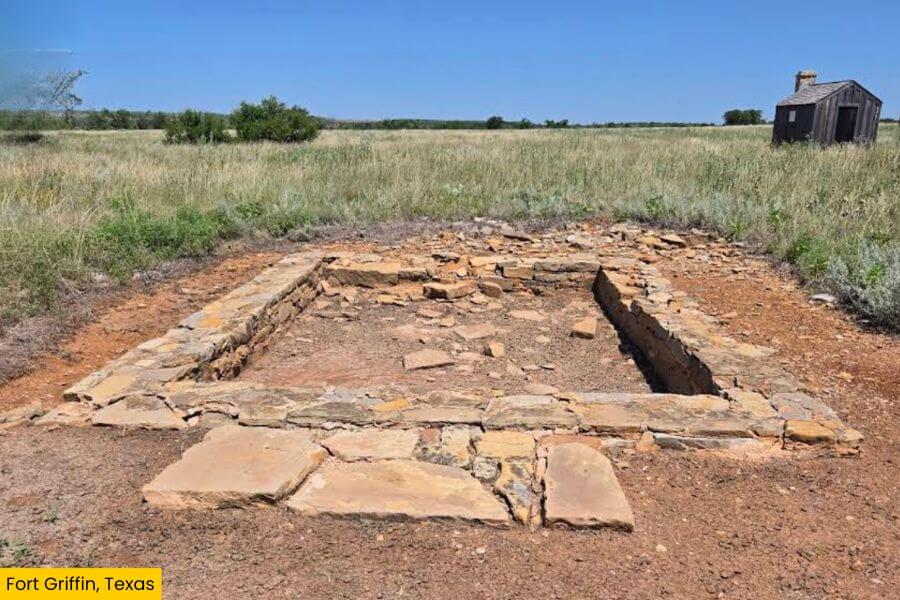
You’ll find old barracks, a mess hall, a bakery, and the ruins of a first sergeant’s quarters, all super photogenic in their beautifully decayed way.
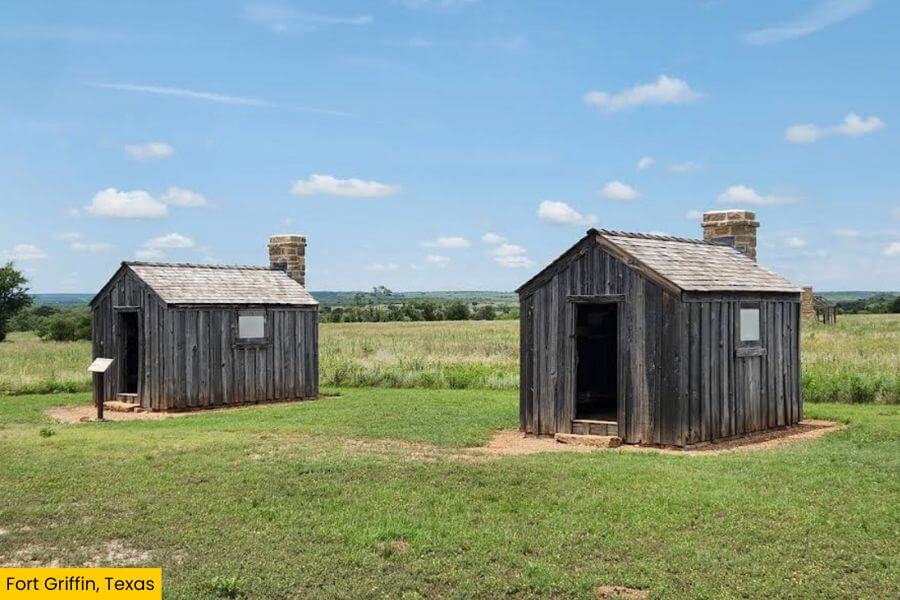
Even cooler, the fort’s original layout is still visible, with trails winding through the ruins and interpretative signs explaining what was originally there.
There’s also a small but solid visitor center, which features exhibits and interpretive displays tracing the fort’s role in Texas frontier life.
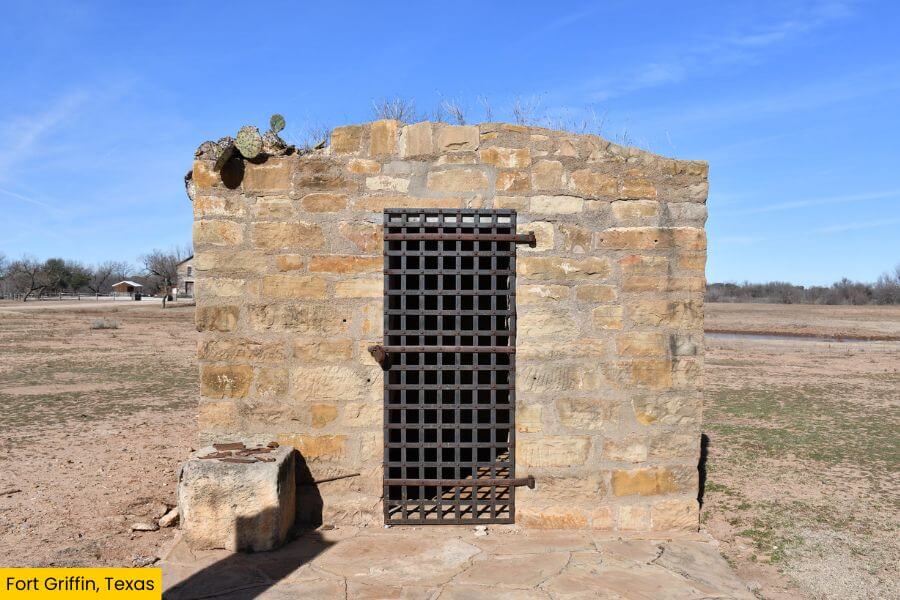
If you want to see those stories come to life, you can catch reenactments and annual living history events.
One highlight is the famous Fort Griffin Fandangle in nearby Albany every June, the oldest outdoor musical in Texas (it’s a total blast!).
And if you want to extend your trip, you’re in luck, because there’s a campground right on site with tent spots, RV hookups, and a few enclosed shelters with AC.
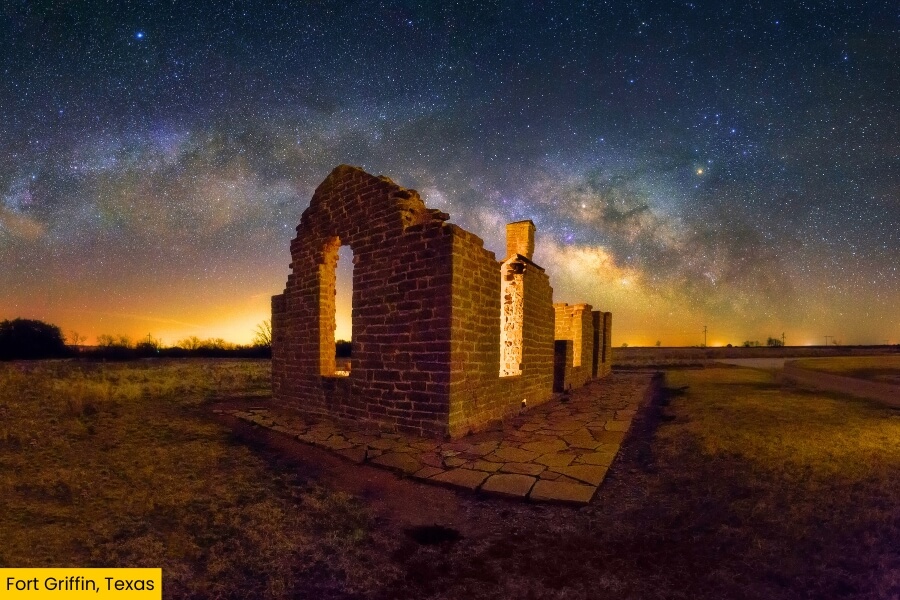
It’s a perfect place to camp under the stars.
The fort is also home to the official Texas State Longhorn Herd, with real-life longhorns grazing just beyond the ruins.
So whether you’re in it for the old stone walls, the ghost town feels, or the longhorn selfies, Fort Griffin delivers big time.
History
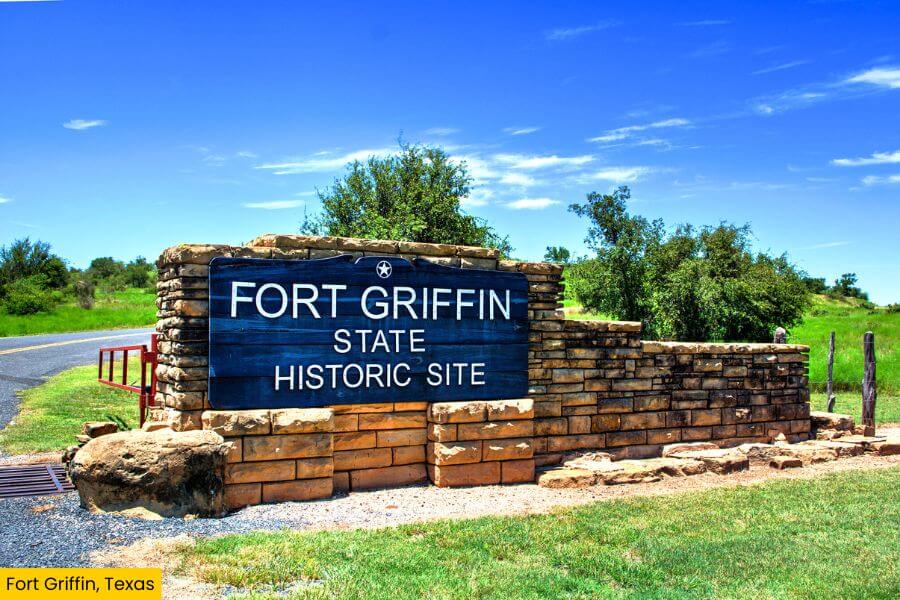
Fort Griffin was established in 1867 during the post–Civil War Indian Wars as part of a line of frontier forts.
Its main role was to protect settlers from Comanche and Kiowa raids while securing the edge of the Texas frontier for expansion.
The location wasn’t exactly ideal, sitting high above the Clear Fork of the Brazos River on land that was dry and hard to defend.
Even so, Fort Griffin became a key military post that hosted multiple companies, including the legendary Buffalo Soldiers of the 9th and 10th Cavalry.
Outside the fort’s walls, a wild boomtown called “The Flat” popped up almost overnight and quickly became one of the rowdiest spots on the frontier.
At its peak in the 1870s, it was packed with saloons, gambling halls, dance houses, and all the classic Old West chaos.
Outlaws, cowboys, buffalo hunters, and drifters all came through town, and it wasn’t exactly quiet in the dusty streets.
Legend has it that Doc Holliday stopped by before heading to Tombstone, and outlaw John Wesley Hardin also made a visit.
The Flats’ heyday ended in the early 1880s, as the railroad bypassed the region, the buffalo were nearly gone, and tensions with Native tribes eased.
As for Fort Griffin, the Army shut it down in 1881 once its mission was complete.
With the buildings left abandoned and the town gone quiet, the prairie slowly began to reclaim the land.
What remains today is a mix of stone foundations, ruins, and a whole lot of stories buried in the dust.
They serve as proof that this little spot in Texas played a big role in shaping the wild and unpredictable history of the American West.
Know Before You Go
Best time to visit:
Fort Griffin gets brutally hot in the summer, the kind of heat that can melt your snacks in the car.
Spring (March to May) and fall (September to November) are the most ideal, with cooler temps and the prairie showing wildflowers or golden grass.
Getting there:
Plug 1701 N US Hwy 283, Albany, TX 76430 into your GPS.
The roads are mostly paved, but cell service can drop out, so it’s smart to download your maps ahead of time.
Hours and admission:
The historic site is open daily from 8 AM to 4:30 PM, weekends included.
Admission is super reasonable: $5 for adults, $2 for youth (6 to 17), and free for ages five and under.
You can pay right at the visitor center, and there’s no need to book in advance unless you plan to camp or join one of the guided tours.
How much time to spend:
Give yourself at least one to two hours to explore the ruins and check out the visitor center.
Plan on more if you want to hike, have a picnic, or just relax while watching the longhorns graze.
Amenities:
There are picnic tables, restrooms, and a small gift shop stocked with books, postcards, and a few fun souvenirs.
If you’re camping, you can reserve a spot online through the Texas State Parks system.
Family and pets:
Traveling with kids? They’ll love spotting the longhorns and even the cannons near the barracks.
Dogs are welcome too, as long as they’re leashed, and there’s plenty of open space for them to stretch their legs.
Things to do Nearby:
If you’re making a weekend of it, don’t miss Albany, which is just 15 minutes away.
It’s got a charming courthouse square, a few cute shops and cafes, and the Old Jail Art Center, which is way cooler than the name suggests.
Bottom line: Bring sunscreen, water, good walking shoes, and your sense of adventure, because this Fort Griffin isn’t a flashy theme park—it’s raw, real Texas history.
Related Posts