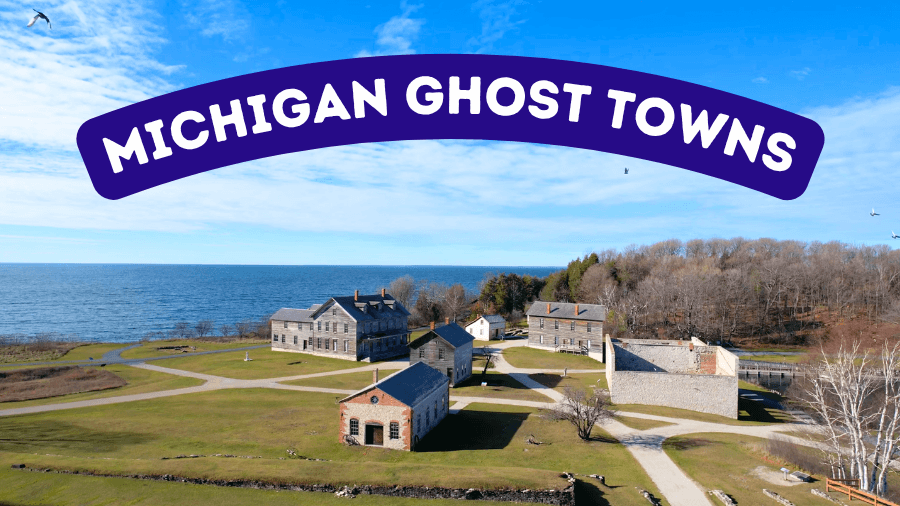
Michigan is packed with places where time just… stopped, and some of them come with stories that might make you think twice before visiting.
Across the state, you’ll find abandoned towns where mines collapsed, industries failed, or communities quickly vanished, leaving crumbling buildings and empty streets.
Some sit deep in thick forests, others hide along windy shorelines, and a few are known for strange sounds and stories that locals still whisper about today.
If you’re up for exploring places that feel frozen in time and a bit eerie, these ghost towns are waiting, but don’t be surprised if you leave with more than just photos.
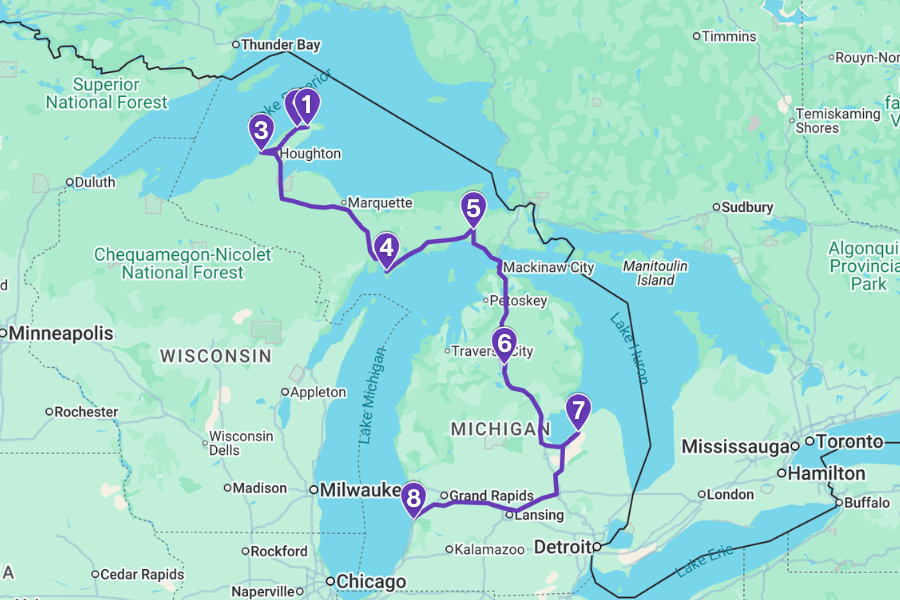
1. Mandan
Mandan is a long-abandoned copper mining town located on the remote Keweenaw Peninsula, roughly 12 miles south of Copper Harbor.
Back in the 1860s, the Mandan Mine extracted copper from underground shafts but was finally abandoned in 1909 after output stayed too low to sustain operations.
Today, you can still spot old stone walls, a weathered house, and the remains of other buildings slowly being swallowed by thick forest just off the roadside.
The area feels extra spooky thanks to its isolation, with nothing but a rough wooden sign at the entrance to mark the way.
2. Central Mine
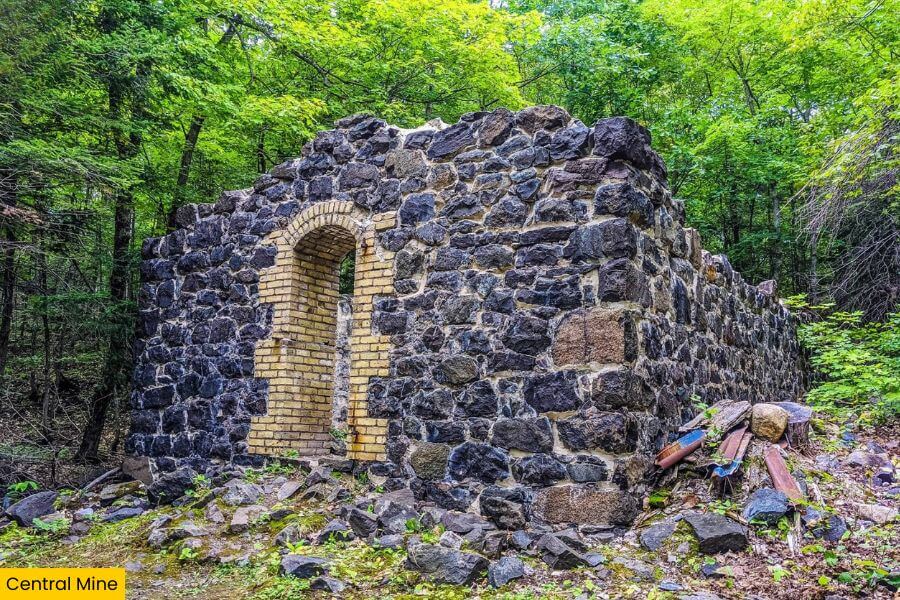
Next up is Central Mine, about 15 minutes from Mandan, where one of the Keweenaw’s most successful copper operations thrived in the mid-1800s.
At its peak, this site had over 1,200 residents, supported by the Central Mining Company, which pulled millions of pounds of copper from the ground.
Unlike Mandan, several structures still stand here, including the Central Mine Methodist Church, a miner’s residence, and powderhouse ruins.
It’s the kind of place where you can take your time, soak in the quiet, and imagine what it once looked like.
3. Freda
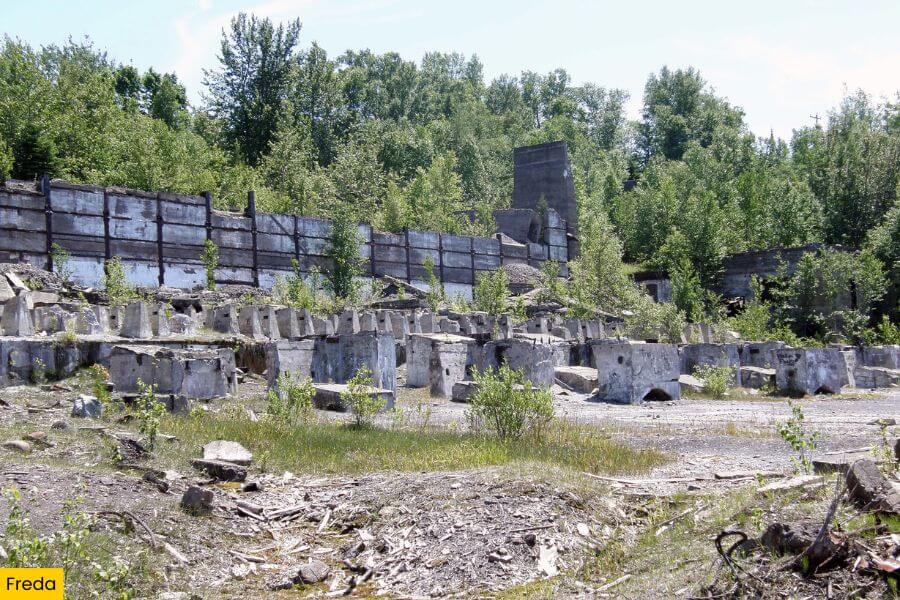
About an hour’s drive from Central Mine brings you to Freda, a once-bustling company town just 15 miles west of Houghton, built to serve the Champion Copper Mill.
In the early 1900s, this mill handled up to 3,500 tons of copper rock daily, making it one of the region’s largest stamping operations before closing in 1967.
Today, the most striking sight is the crumbling smokestack that rises above the shoreline of Lake Superior and can be seen from miles away.
Compared to the others, this place gives off a grittier, more abandoned feel, with a rougher, industrial edge.
4. Fayette Historic Townsite
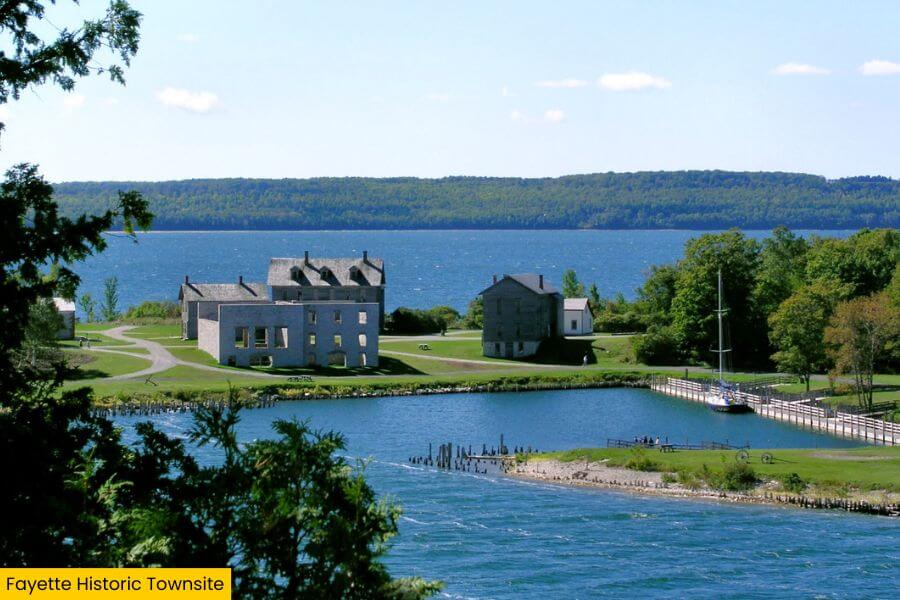
Now, head over to Fayette Historic Townsite, set within Fayette Historic State Park on the Garden Peninsula.
This place was a busy iron smelting town from 1867 to 1891, where blast furnaces turned iron ore into charcoal pig iron, producing 229,288 tons over its operation.
What makes this one stand out is how well it’s preserved, with over 20 original buildings still in place, including the town hall and superintendent’s house.
With calm water on one side and thick limestone cliffs on the other, the whole area feels quiet, eerie, and completely cut off from the modern world.
5. Fiborn Quarry
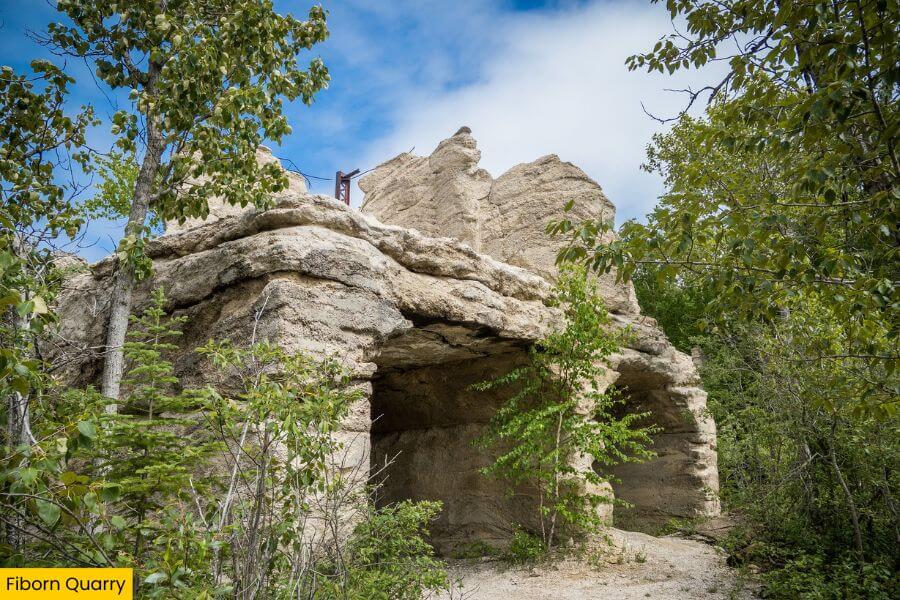
From Fayette, it’s about 2 hours drive to Fiborn Quarry, hidden deep in the woods in the Upper Peninsula, not far from Trout Lake.
It opened in 1905 and supplied limestone for steelmaking, with a small company town nearby that included homes, a school, and a store before closing in 1936.
Today, the site feels like a rocky, open landscape scattered with crumbling structures, with the surrounding forest slowly reclaiming what’s left of the old settlement.
The silence out here feels heavy, broken only by wind through the trees, making it easy to feel completely alone as you explore what’s left of this forgotten place.
6. Pere Cheney
Then there’s Pere Cheney, tucked away in Crawford County about 2.5 hours from the Fiborn Quarry, known for some of the creepiest legends in the state.
Founded in 1874 as a lumber town along the Jackson, Lansing, and Saginaw Railroad, it quickly grew to around 1,500 residents.
However, a diphtheria outbreak in the 1890s wiped out much of the population.
Today, almost nothing remains except the Pere Cheney Cemetery, where old gravestones lie scattered across a grassy clearing framed by thick forest.
What makes this place extra unsettling is the local lore, which says a banished witch cursed the town and that her grave may still lie in the cemetery.
7. Kilmanagh
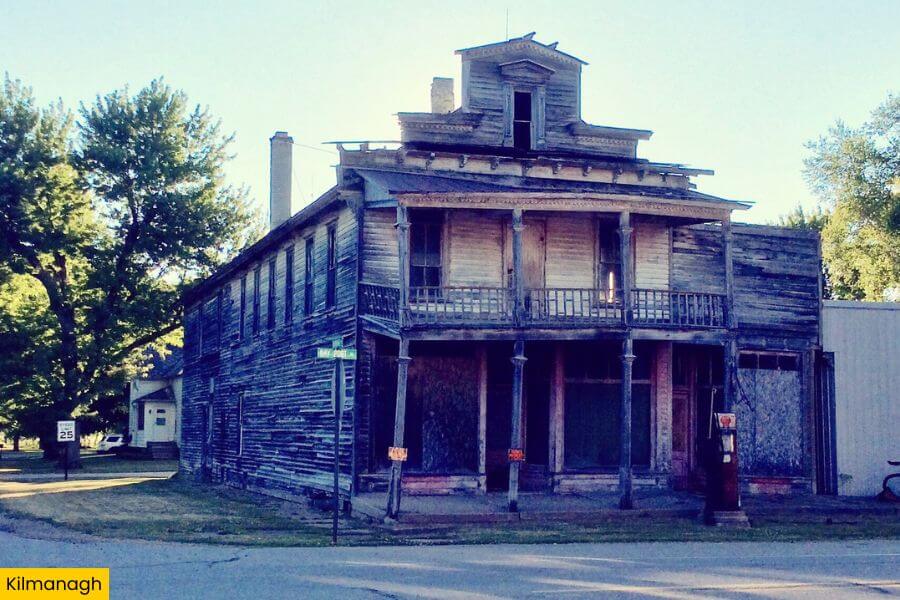
Up next is Kilmanagh, a tiny former farming community in Huron County’s Thumb region.
Established in the late 1800s, it was originally known as Thompson’s Corners and had mills, shops, and homes serving the surrounding area.
Today, a few buildings remain, including a church, an old general store, and a gas station, weathered and quiet after decades of decline.
With little to mark it on the map, it’s the kind of place you could pass through without even realizing it was once a thriving town.
8. Singapore
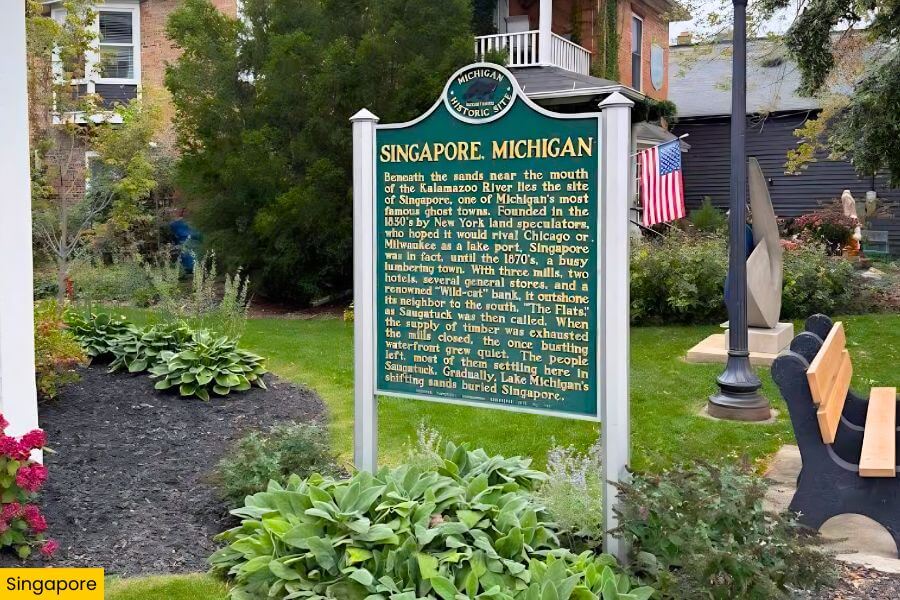
Finally, head over to Singapore, once a lumber town near the mouth of the Kalamazoo River along the Lake Michigan shoreline.
Founded in 1836, it quickly grew into a port with mills, hotels, and a small but busy population before disaster struck in the 1870s.
The Great Chicago Fire of 1871 meant that there was a lot of deforestation in the area around Singapore, as the timber was used to help rebuild Chicago.
This meant that the trees that were protecting the town from the blowing sand dunes were no longer there.
Over time, sand dunes from the Lake Michigan shoreline buried the town, covering homes and streets until it was abandoned by 1875.
Today, no original buildings remain, but you can explore the dunes near the river, where a historic marker reminds you that an entire town lies buried beneath your feet.
Related Posts