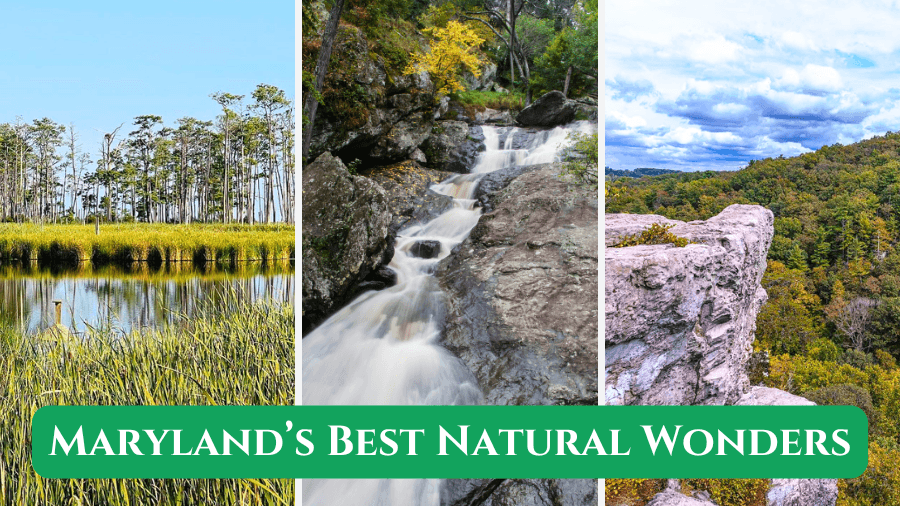
Think Maryland is all about crab cakes and Chesapeake Bay views? This road trip might change your mind.
Along the way, you’ll discover wild stretches of coastline, towering rock formations, rushing waterfalls, ancient landscapes, and some of the most impressive wildlife habitats on the East Coast.
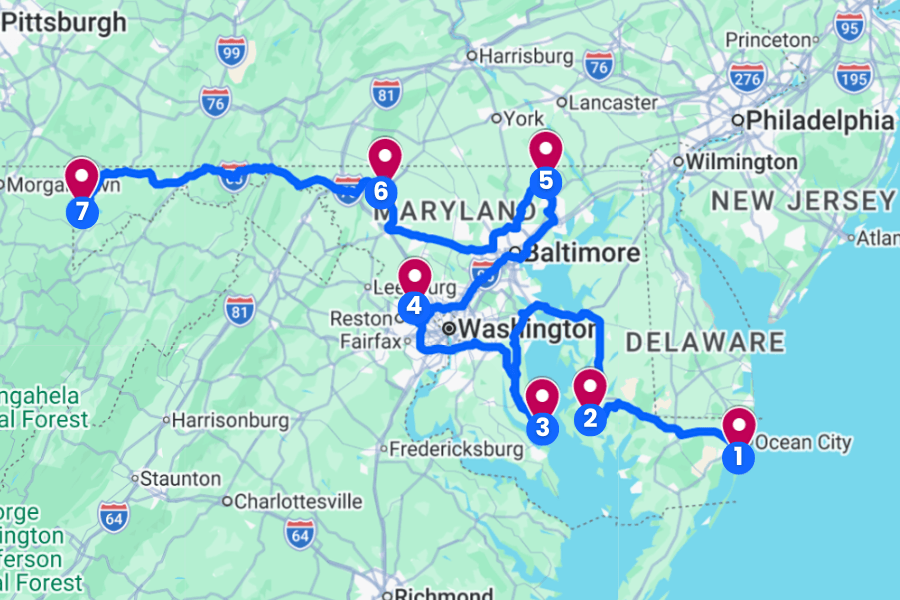
One stop puts you face-to-face with a natural wonder shaped millions of years ago, while another offers the chance to spot animals that have become legendary across the region.
The best part is that each destination feels completely different from the last, turning an ordinary drive into a journey through some of Maryland’s most remarkable scenery.
If you’re ready for dramatic views, fascinating natural history, and a few surprises you may not expect to find in the Old Line State, these seven natural wonders deserve a spot on your bucket list.
1. Assateague Island, Assateague Island National Seashore
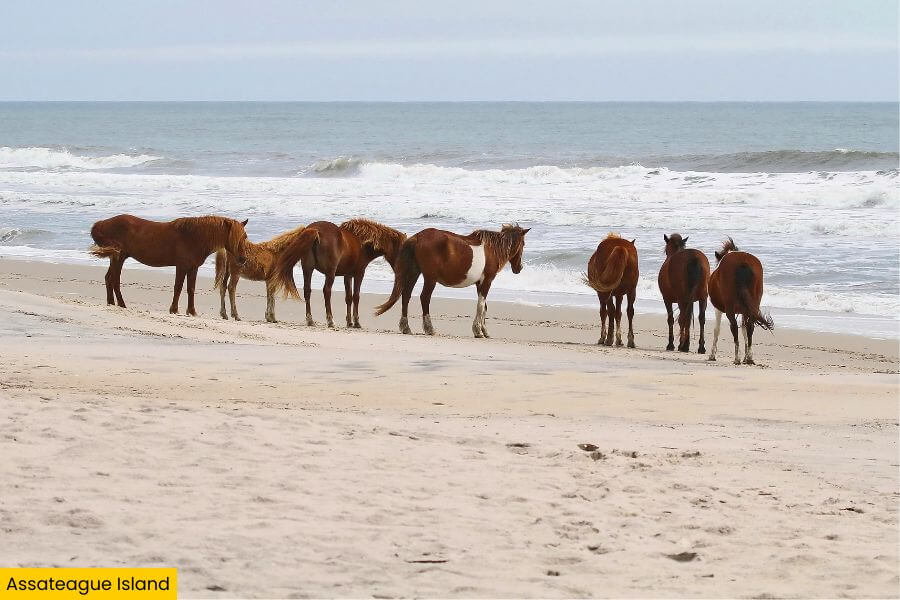
Assateague Island National Seashore stretches along a 37-mile barrier island on the Maryland–Virginia coast, where sandy beaches, rolling dunes, and coastal bays create one of the state’s most unforgettable landscapes.
The island is famous for its wild horses, with more than 80 roaming freely across Assateague, and spotting them grazing near the beach or marshes is one of the biggest highlights of any visit.
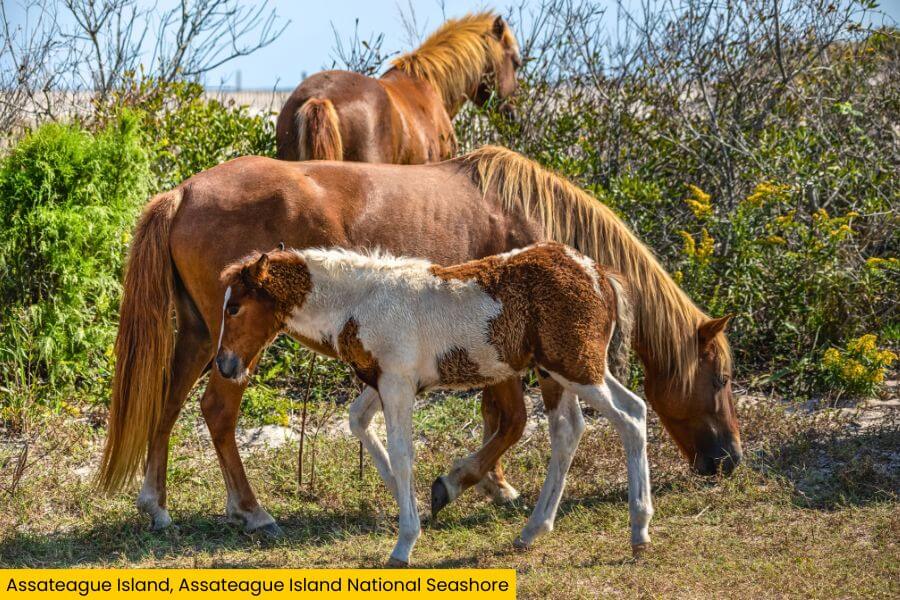
You can swim, surf, kayak through calm bays, fish for striped bass, or explore trails like the 0.5-mile Life of the Forest Trail that winds through rare maritime forest habitat.
Assateague also protects important nesting areas for shorebirds and sea turtles, and its dark skies, crashing waves, and miles of undeveloped shoreline make it feel wonderfully removed from the busy resort crowds nearby.
2. Blackwater Marshes, Blackwater National Wildlife Refuge
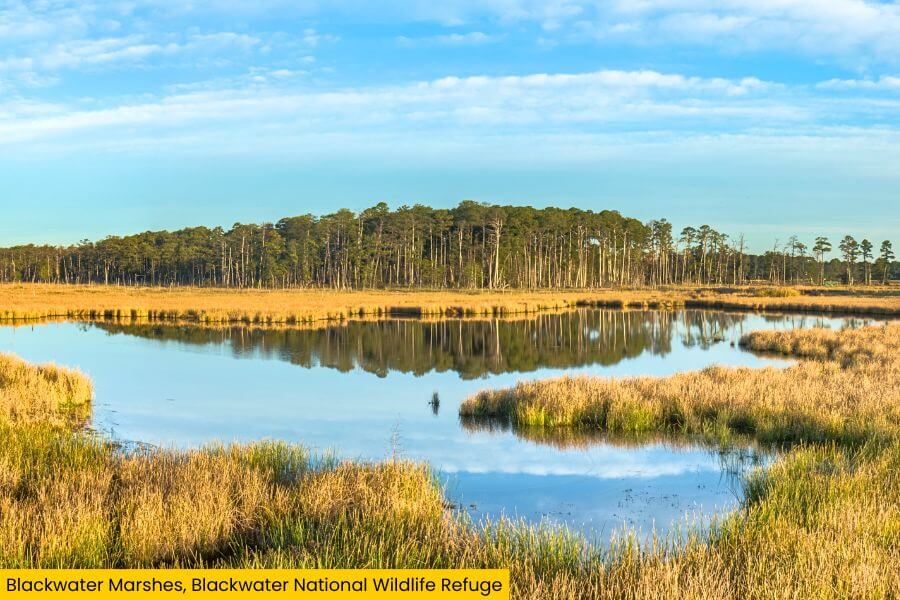
Next up is Blackwater National Wildlife Refuge near Cambridge, where more than 30,000 acres of tidal marshes, shallow ponds, and waterways spread across the lower Chesapeake Bay region.
This refuge is one of the best places on the East Coast to see wildlife, especially bald eagles, with one of the highest concentrations of nesting bald eagles on the Atlantic Coast.
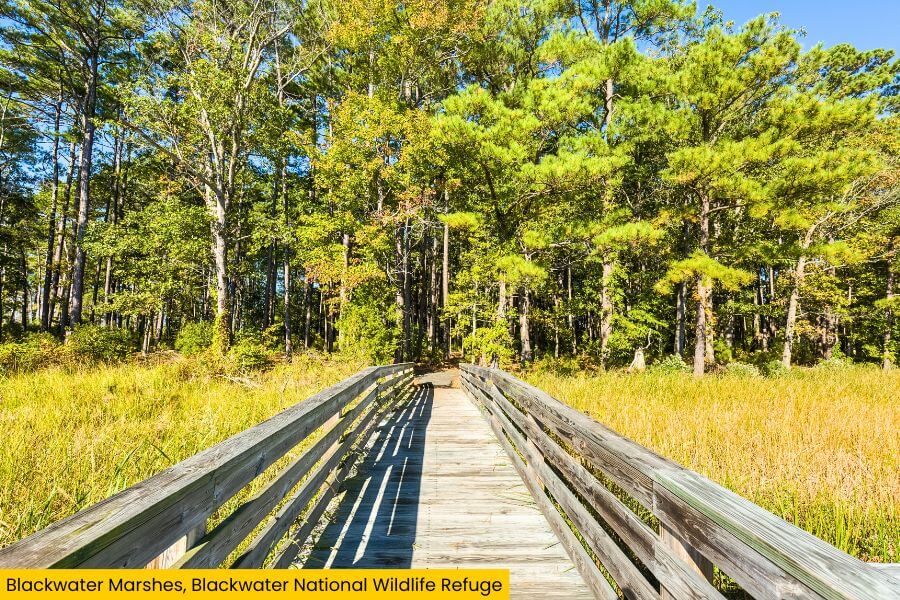
You can drive the nearly 4-mile Wildlife Drive, paddle through winding marsh channels, or watch thousands of migrating ducks, geese, and tundra swans fill the skies during fall and winter.
The refuge also protects critical habitat for Delmarva fox squirrels, one of the largest tree squirrel species in North America, and its wide-open wetlands create spectacular sunrise and sunset views.
3. Calvert Cliffs, Calvert Cliffs State Park
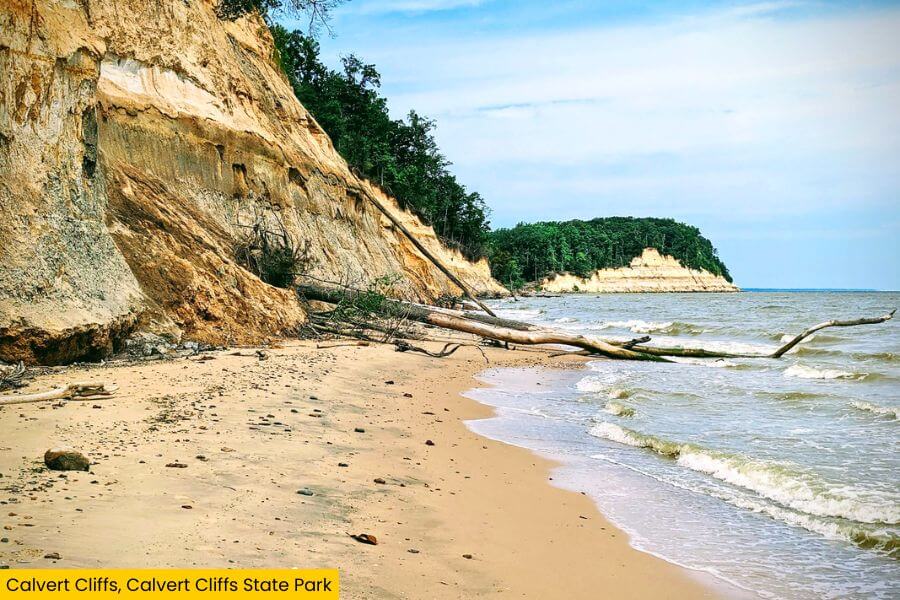
The journey continues around 2 hours along the Chesapeake Bay to Calvert Cliffs State Park in Lusby, where towering cliffs rising up above the shoreline reveal layers of history dating back 10 to 20 million years.
The park is best known for its fossil-filled cliffs, and you can search the beach for ancient shark teeth, whale bones, and other prehistoric treasures that regularly wash out of the eroding cliff faces.
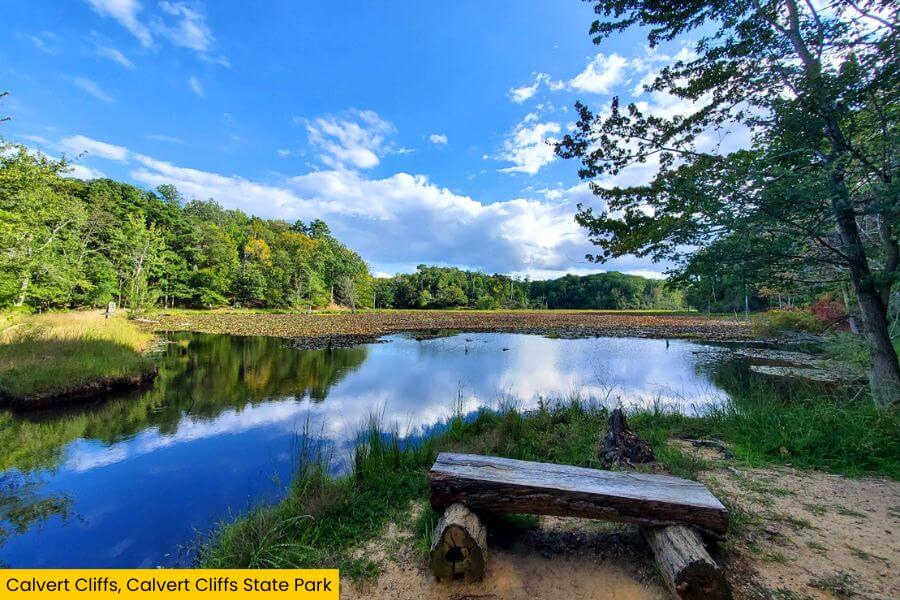
The 1.8-mile Red Trail leads through forests and wetlands to the beach, giving you a chance to spot herons, ospreys, and other wildlife before reaching the bay.
Scientists have identified more than 600 fossil species from the Calvert Cliffs formation, making this one of the most important fossil-hunting destinations on the entire Atlantic Coast.
4. Great Falls, Chesapeake & Ohio Canal National Historical Park
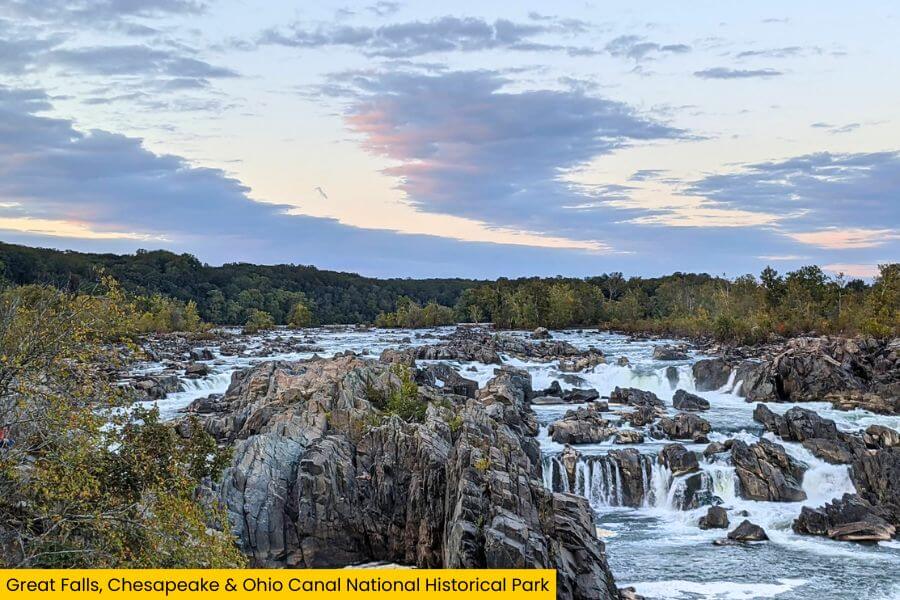
The next stop is Great Falls in Chesapeake & Ohio Canal National Historical Park, where the Potomac River drops nearly 76 feet over less than a mile through a dramatic series of cascades and rocky channels.
The park’s famous overlooks place you right above the rushing whitewater, offering some of the most powerful river views anywhere in the Mid-Atlantic region.
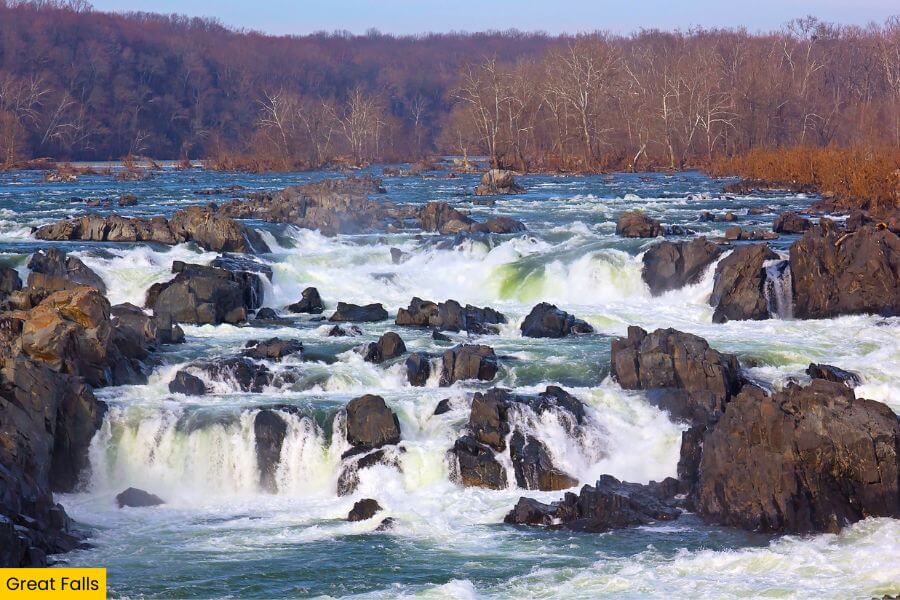
You can walk the easy path to the overlooks, explore sections of the historic C&O Canal towpath, or hike parts of the Billy Goat Trail, a challenging route known for its rock scrambling and river scenery.
Built in the 1800s, the nearby canal lock system helped boats bypass the falls, and today the combination of engineering history and thundering water makes Great Falls one of Maryland’s most impressive natural sights.
5. King And Queen Seat, Rocks State Park
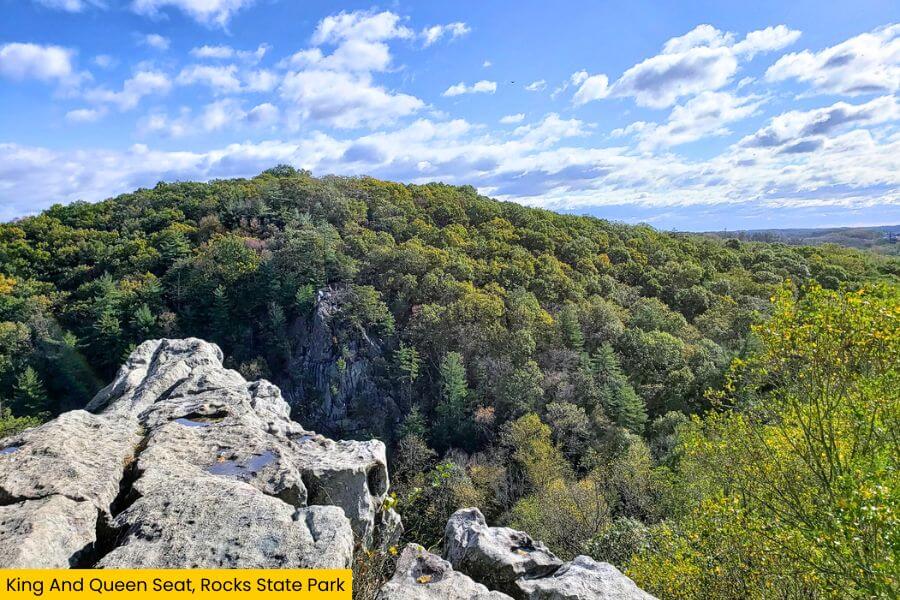
The road trip continues about 1.5 hours to Rocks State Park near Jarrettsville, where the King and Queen Seat rises 190 feet above Deer Creek on a massive block of quartzite formed hundreds of millions of years ago.
This striking rock outcrop is one of Maryland’s most recognizable natural landmarks and is believed to have been used by Susquehannock people as a lookout point overlooking the surrounding countryside.
You can reach it via a steep but rewarding hike through forests and rocky terrain, then enjoy sweeping views across the Deer Creek Valley from the fenced overlook at the summit.
The park also features the 17-foot Kilgore Falls, Maryland’s second-highest free-falling waterfall, making this destination a two-for-one stop packed with dramatic scenery and outdoor adventure.
6. Cunningham Falls, Cunningham Falls State Park
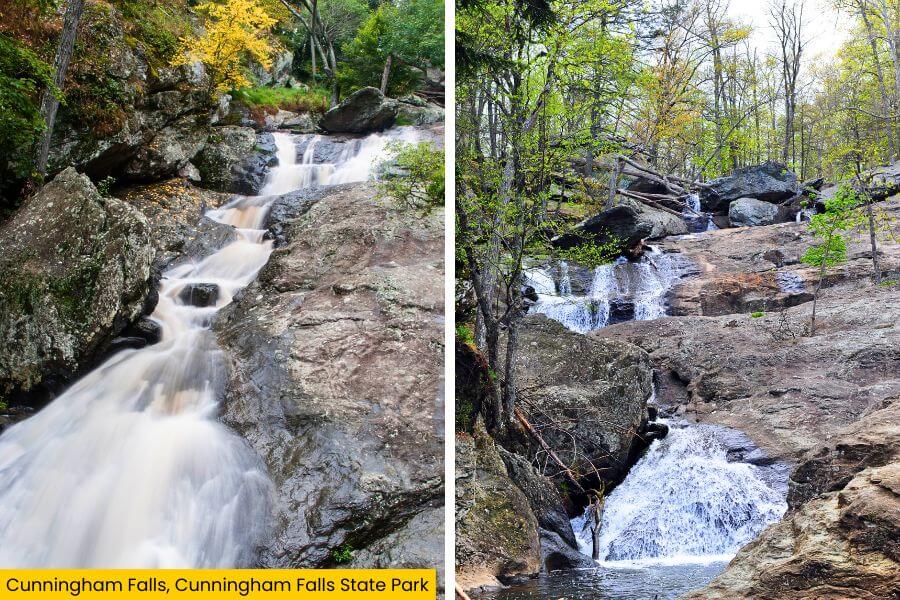
The route continues into the Catoctin Mountains at Cunningham Falls State Park, home to Maryland’s tallest cascading waterfall at 78 feet.
A short hike along the Lower Trail leads to Cunningham Falls, where water tumbles down a series of rocky ledges surrounded by hemlocks, hardwood forest, and massive boulders.
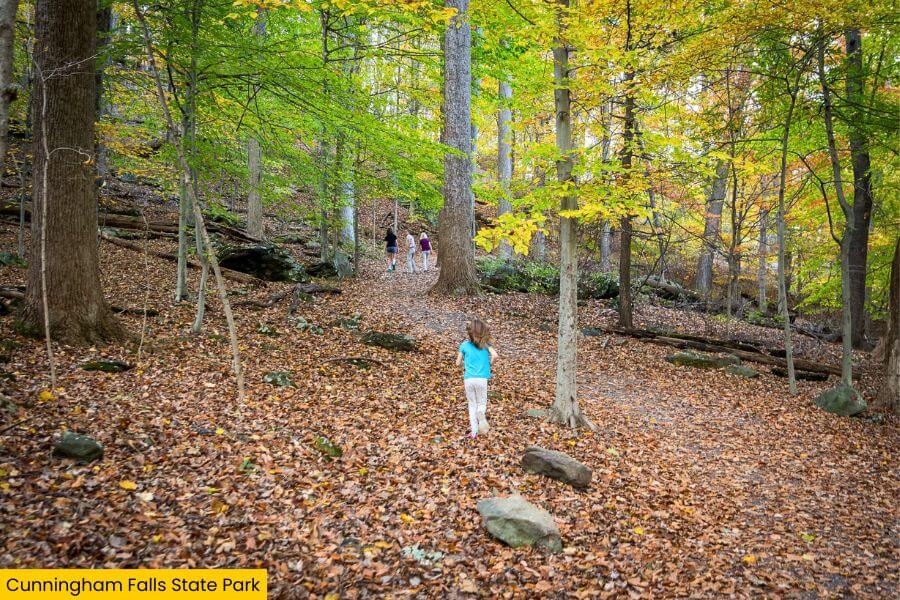
Beyond the waterfall, you can explore more than 25 miles of hiking trails, including connections to the famous Catoctin Trail that winds through the mountain ridges of western Maryland.
The park also features Hunting Creek Lake, a 42-acre lake with a sandy swimming beach, making Cunningham Falls one of the few places in Maryland where you can combine mountain scenery, waterfall views, and lakeside fun in a single stop.
7. Muddy Creek Falls, Swallow Falls State Park
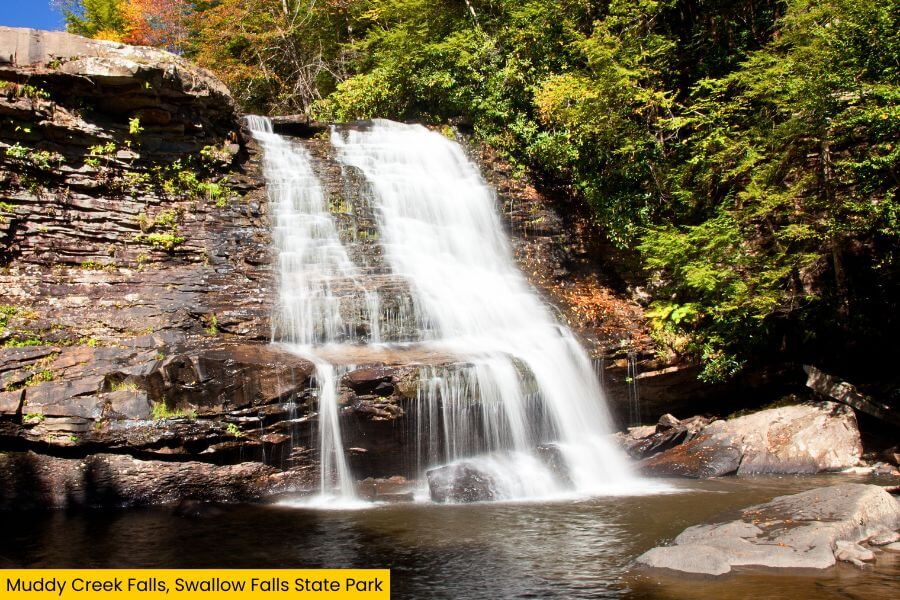
For the grand finale, the journey reaches Swallow Falls State Park in western Maryland, where Muddy Creek Falls plunges 54 feet, making it the tallest free-falling waterfall in the state.
The waterfall crashes over a dramatic rock ledge into a gorge, creating a powerful scene that feels completely different from the beaches, marshes, cliffs, and mountains found earlier on this road trip.
A short, easy trail leads to several overlooks, and you can continue along paths that pass additional waterfalls like Upper Swallow Falls and Tolliver Falls while following the Youghiogheny River.
The park is also famous for its towering old-growth eastern hemlocks, some more than 300 years old and over 100 feet tall.
Related Posts