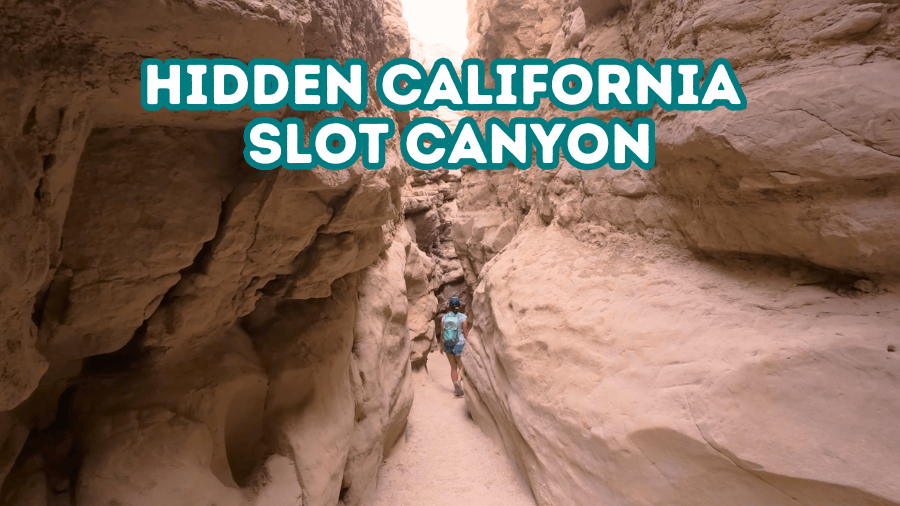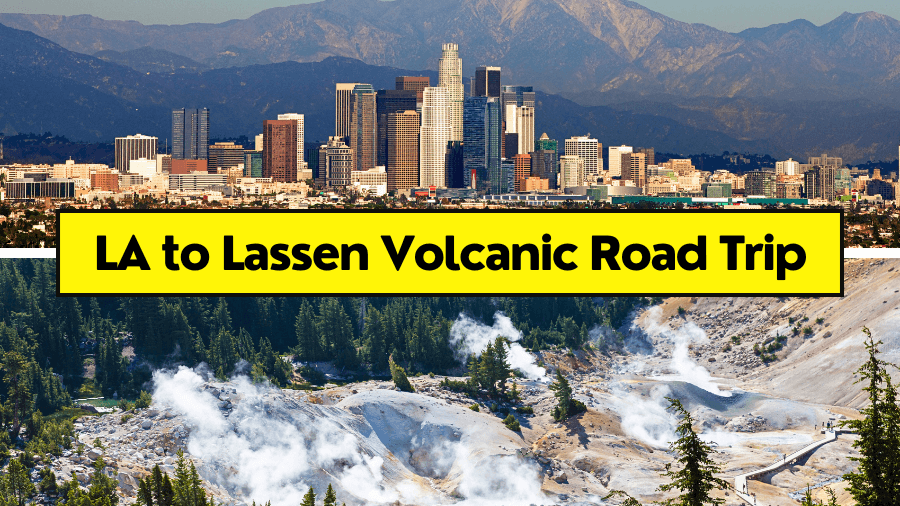
Get ready for an unforgettable California road trip that takes you from the state’s biggest city to a landscape filled with steaming geothermal features, volcanic peaks, and wild mountain scenery.
This route covers hundreds of miles and packs in an incredible variety of sights, from towering rock formations and crystal-clear lakes to snow-capped mountains and some of the most unique natural wonders in the state.
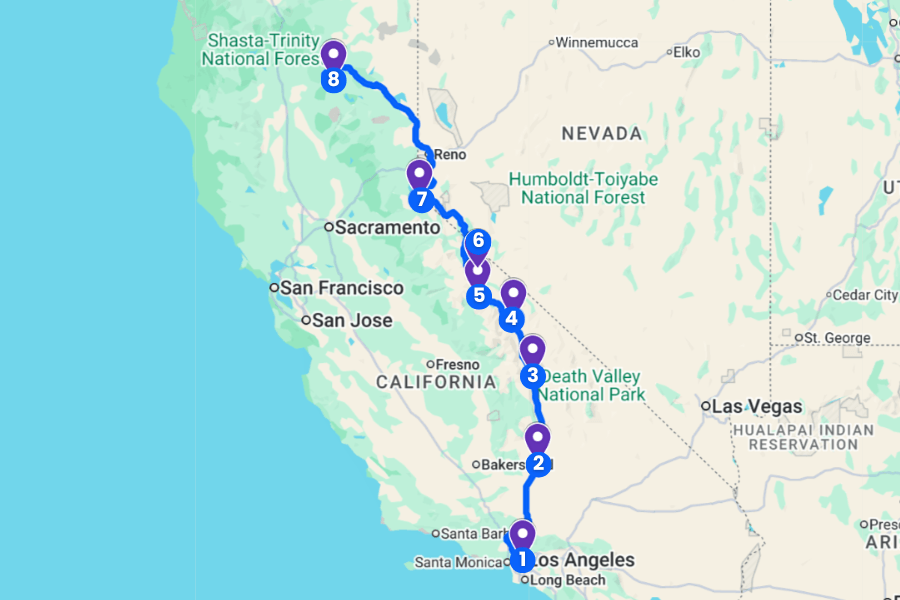
Along the way, you’ll discover famous filming locations, ancient geological formations, and scenic mountain towns that make every stretch of highway feel different from the last.
If you’re looking for a road trip loaded with epic views and plenty of memorable stops, keep reading because this journey only gets more impressive with every mile.
1. Los Angeles

We’re starting our road trip in the second largest city in the United States, Los Angeles.
It’s best known as the heart of the film and television industry, where you can spot the Hollywood Sign, walk the Hollywood Walk of Fame with more than 2,800 stars, and tour famous studios like Warner Bros.
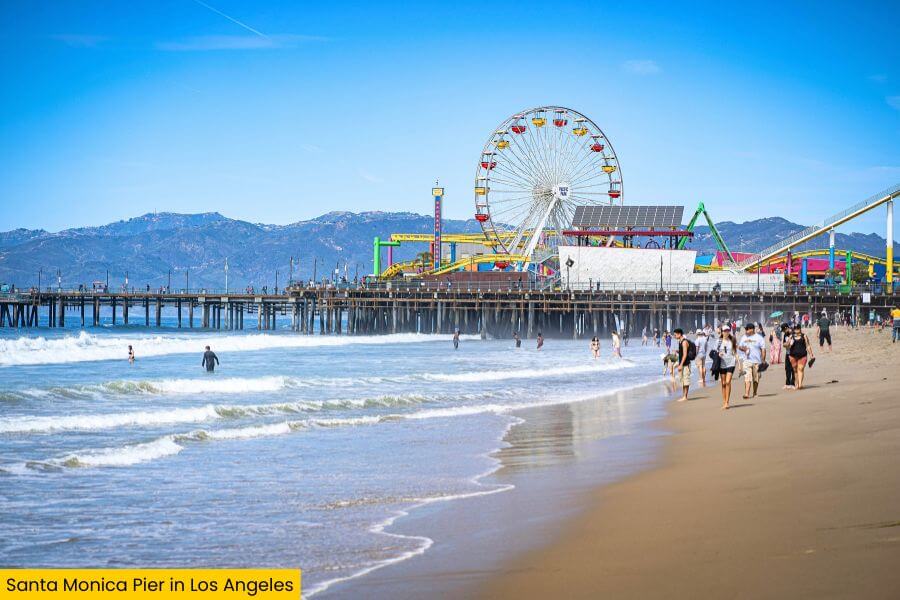
You can spend the day at Santa Monica Pier, ride bikes along the 22 mile Marvin Braude Bike Trail, explore Griffith Observatory, or check out world class collections at the Getty Center perched above the city.
As the starting point for this road trip, Los Angeles packs in famous beaches, palm lined streets, major sports teams, and food from around the world.
2. Red Rock Canyon State Park
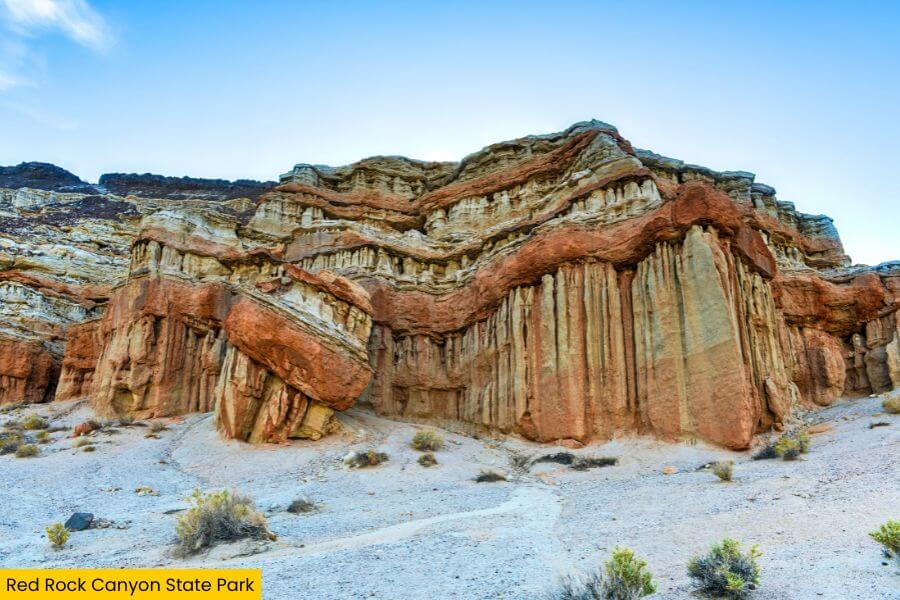
After leaving Los Angeles behind, Red Rock Canyon State Park brings a dramatic change of scenery with towering red cliffs, colorful rock formations, and desert landscapes located along Highway 14 in the Mojave Desert.
The park is famous for its striking geological layers, including the bright red and white bands of the Hagen Canyon area, which were shaped by millions of years of erosion and tectonic activity.
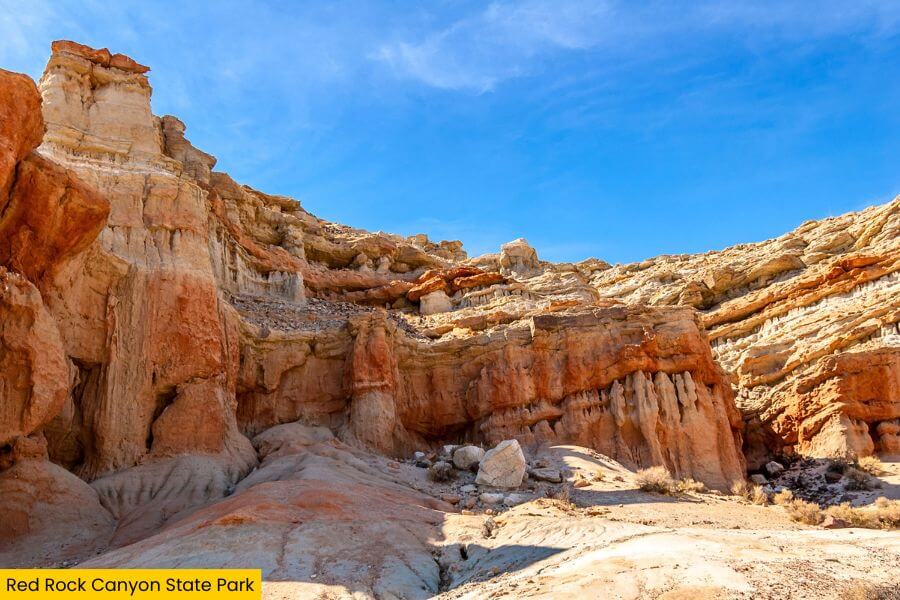
You can stretch your legs on trails like the 1-mile round-trip Desert View Nature Trail, wander through narrow canyons, and photograph the massive cliffs that glow orange and crimson during sunrise and sunset.
Movie fans may recognize the area from classic westerns and science fiction films, while road trippers will love the wide-open views, unusual rock shapes, and star-filled night skies that feel a world away from the busy streets of Los Angeles.
3. Lone Pine
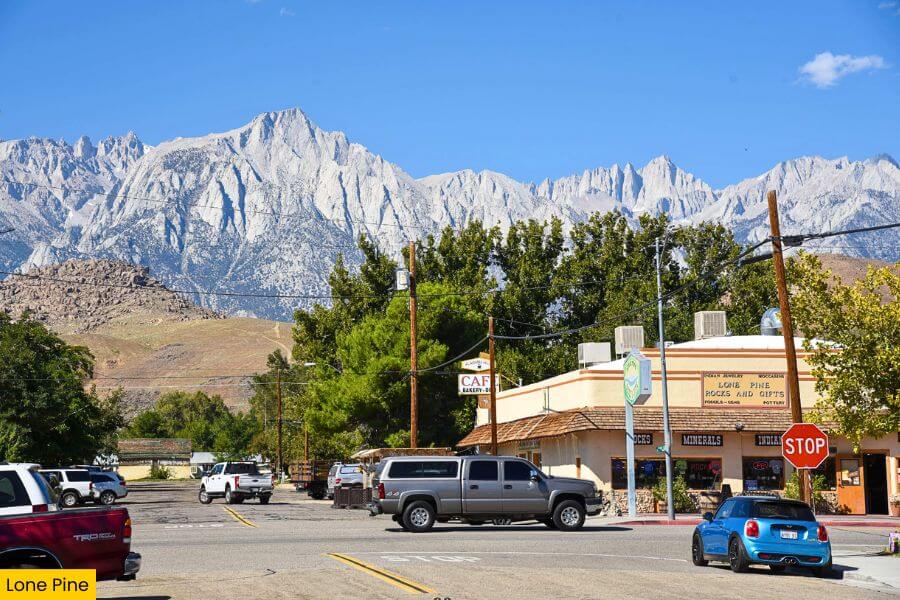
Next, Lone Pine welcomes you with jaw-dropping views of the Sierra Nevada, including Mount Whitney, which rises to 14,505 feet as the highest peak in the contiguous United States.
This small town in the Owens Valley is best known for the Alabama Hills, a maze of rounded granite boulders and natural arches that has appeared in hundreds of movies, TV shows and commercials.
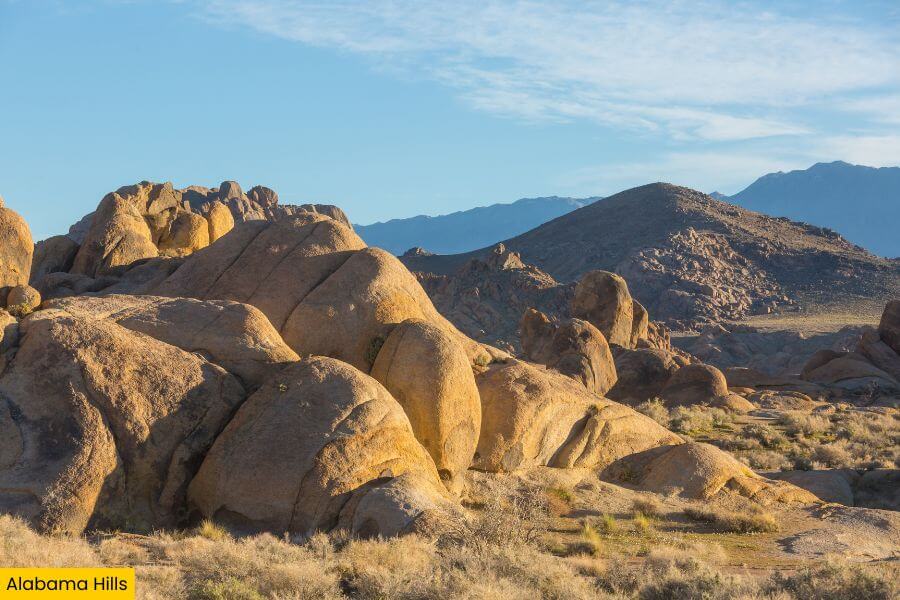
You can drive the scenic Movie Road, hike to the famous Mobius Arch, or explore the Museum of Western Film History, which highlights the area’s long connection to Hollywood productions.
Lone Pine also serves as a gateway to Mount Whitney Portal and nearby hiking trails, making it one of the best stops on the route for incredible mountain scenery.
4. Bishop
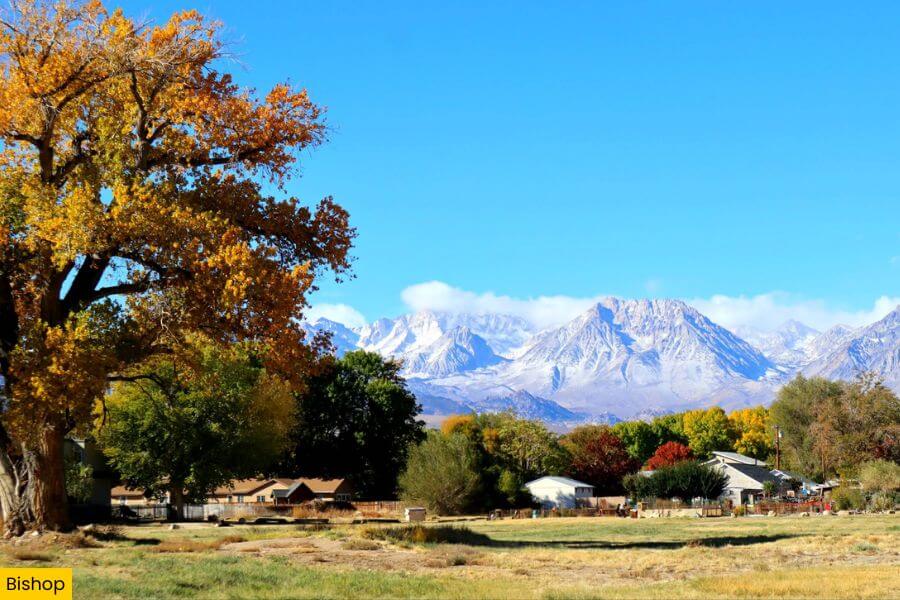
Just an hour away, Bishop swaps Lone Pine’s movie-famous rock formations for a lively mountain town surrounded by the Sierra Nevada to the west and the White Mountains to the east.
Bishop is known for world-class rock climbing at the Buttermilks, trout fishing in the Owens River, and easy access to outdoor spots like South Lake, Lake Sabrina, and the Ancient Bristlecone Pine Forest, home to trees that are more than 4,000 years old.
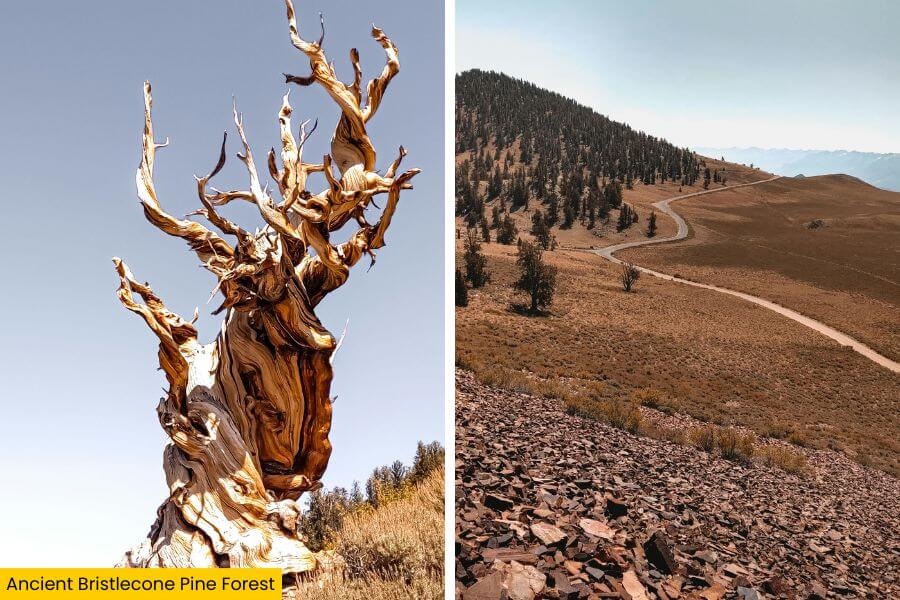
You can grab a famous pastry from Erick Schat’s Bakkerÿ, browse local shops downtown, or take a short drive to see the striking stone columns at nearby Crowley Lake.
With snow-capped peaks, clear alpine lakes, and some of California’s best hiking, fishing, and climbing opportunities packed into one area, Bishop is the kind of place that makes you want to stay much longer than planned.
5. Mammoth Lakes
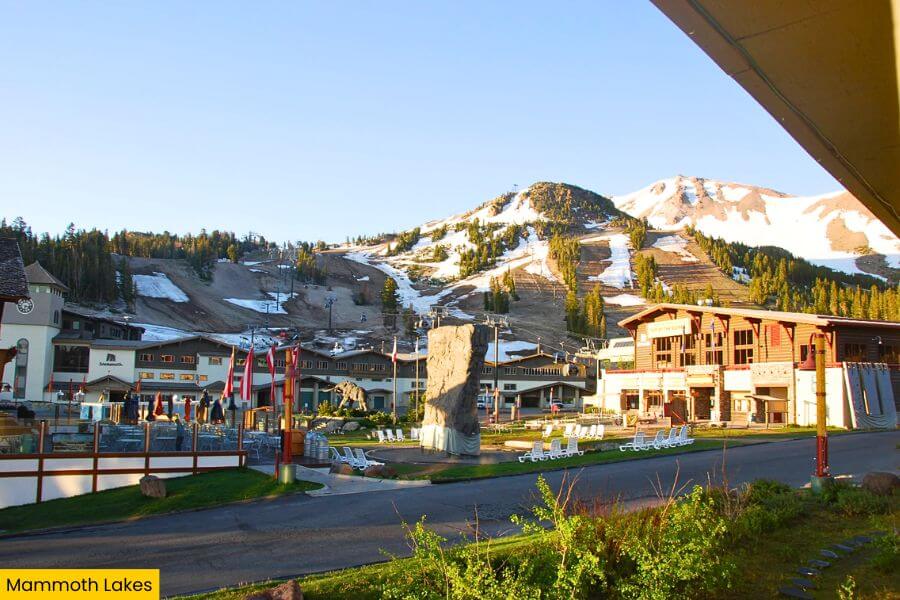
Leaving Bishop behind, the road climbs into higher elevations as Mammoth Lakes appears beneath the towering peaks of the Eastern Sierra, offering some of the most impressive mountain scenery on the entire journey.
The town is best known for Mammoth Mountain, a 11,053-foot volcanic peak with 3,500 skiable acres in winter and miles of hiking and mountain biking trails during the warmer months.
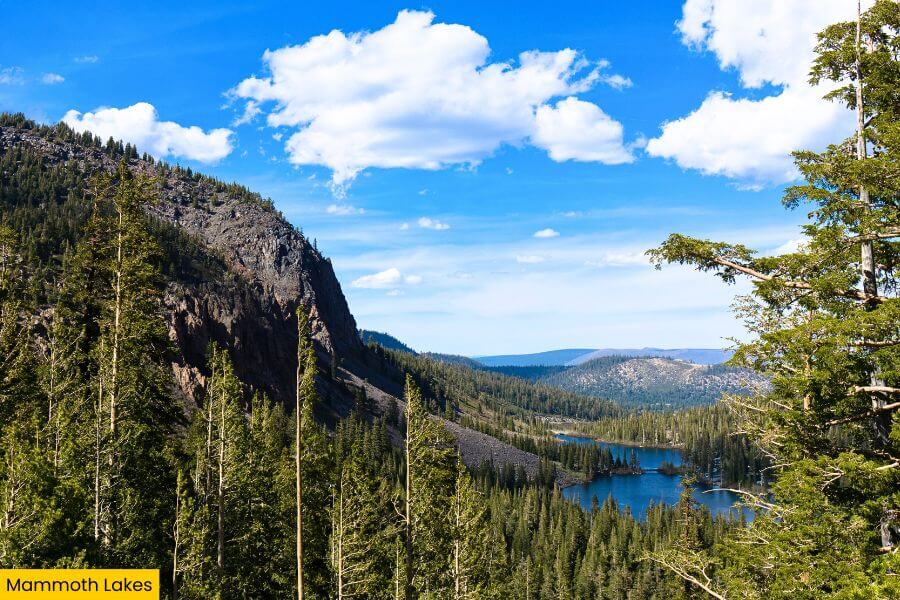
You can ride the Panorama Gondola for sweeping views, walk to the 101-foot Rainbow Falls, or visit the crystal-clear waters of Convict Lake, a stunning 170-acre lake surrounded by dramatic granite walls.
Mammoth Lakes also sits within a landscape shaped by ancient volcanic activity, and nearby spots like Devils Postpile National Monument showcase remarkable basalt columns that look almost perfectly carved by hand.
6. Mono Lake
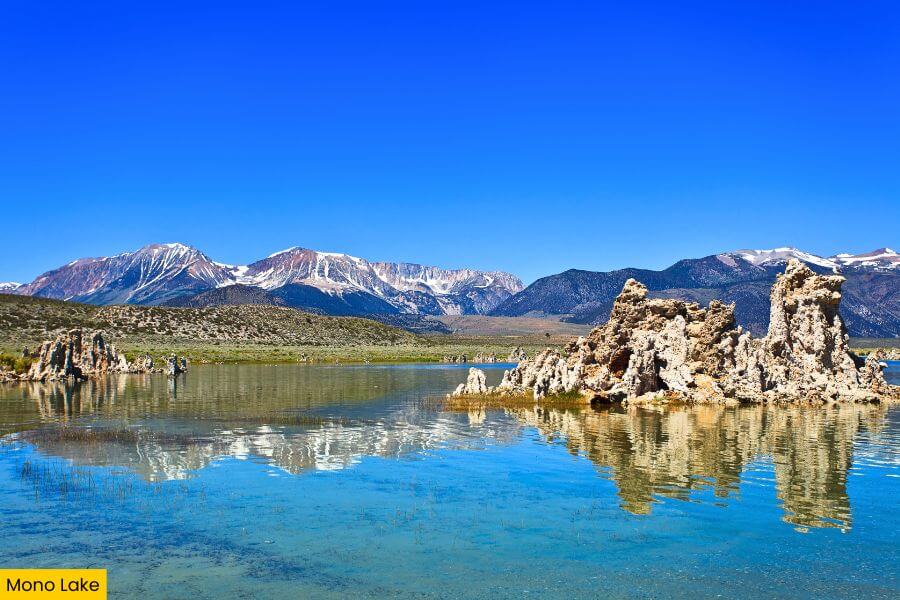
As you continue north from Mammoth Lakes, the forests and mountain peaks give way to the otherworldly shoreline of Mono Lake, an ancient lake located on the eastern side of the Sierra Nevada that is more than 760,000 years old.
Unlike most lakes in California, Mono Lake has no outlet, making it nearly three times saltier than the ocean and creating the famous limestone tufa towers that rise from the water.
You can walk the easy boardwalk trails, photograph the bizarre rock formations, and watch thousands of birds that depend on the lake’s unique ecosystem each year.
Covering about 65 square miles, Mono Lake stands out as one of the most unusual natural landmarks in the state, with shimmering blue water, snow-capped mountain backdrops, and landscapes that look completely different from anywhere else on this road trip.
7. South Lake Tahoe
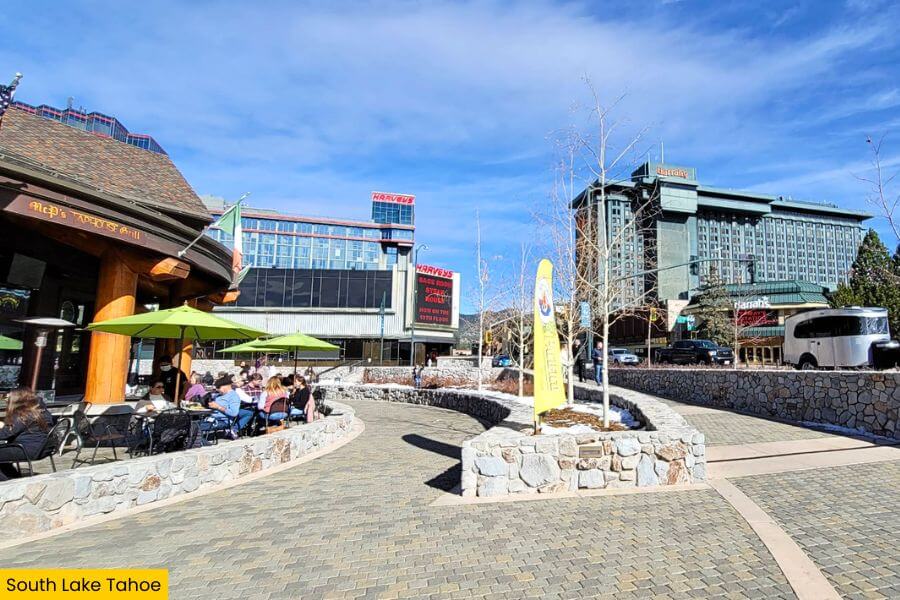
Make a stop at South Lake Tahoe, where towering pine forests surround the dazzling blue waters of North America’s largest alpine lake.
Lake Tahoe stretches for 191 square miles and reaches an incredible depth of 1,645 feet, making it the second-deepest lake in the United States and one of the clearest lakes in the world.
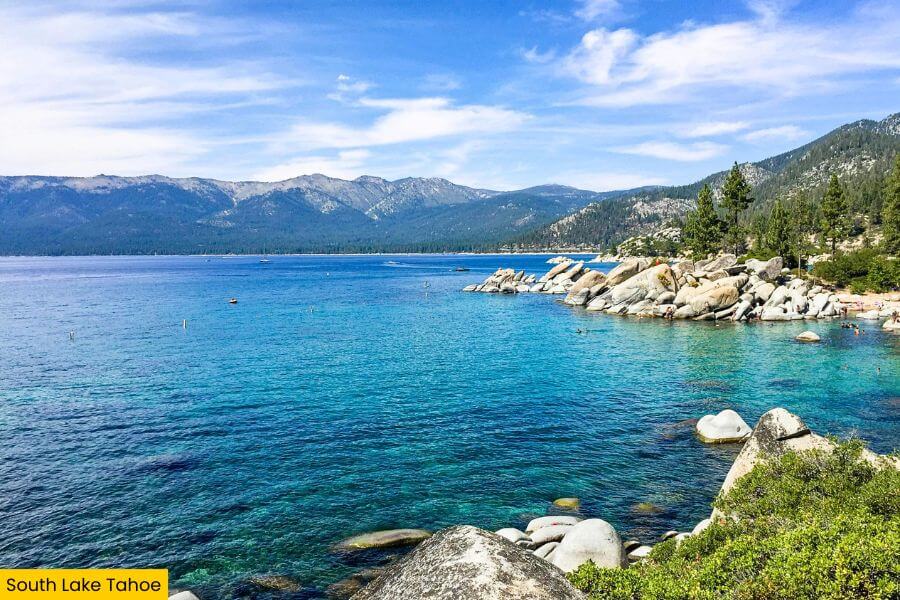
You can stroll along the sandy shoreline at Pope Beach, take in panoramic views from Emerald Bay State Park, ride the Heavenly Gondola, or hike sections of the famous Tahoe Rim Trail, which circles the lake for roughly 165 miles.
South Lake Tahoe offers outdoor adventure with lively restaurants, shops, and entertainment, giving you a chance to enjoy beaches, mountain scenery, and crystal-clear water before continuing toward the volcanic landscapes waiting farther north.
8. Lassen Volcanic National Park
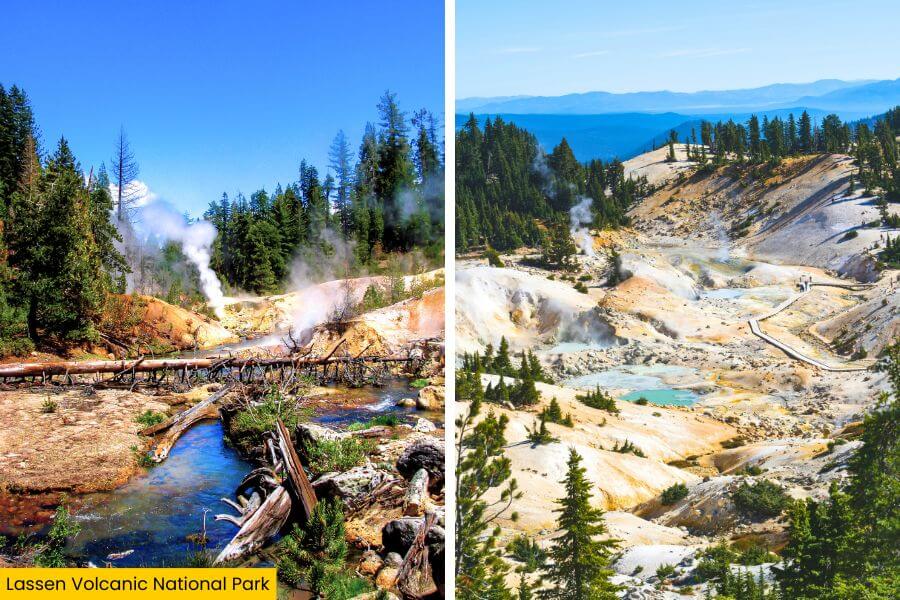
Head deeper into Northern California until you reach Lassen Volcanic National Park, which delivers a dramatic finale with steaming fumaroles, bubbling mud pots, clear mountain lakes, and one of the largest plug dome volcanoes on Earth.
The park is home to the 10,457-foot Lassen Peak, which erupted between 1914 and 1917, making it one of the most recent volcanic eruption sites in the contiguous United States.
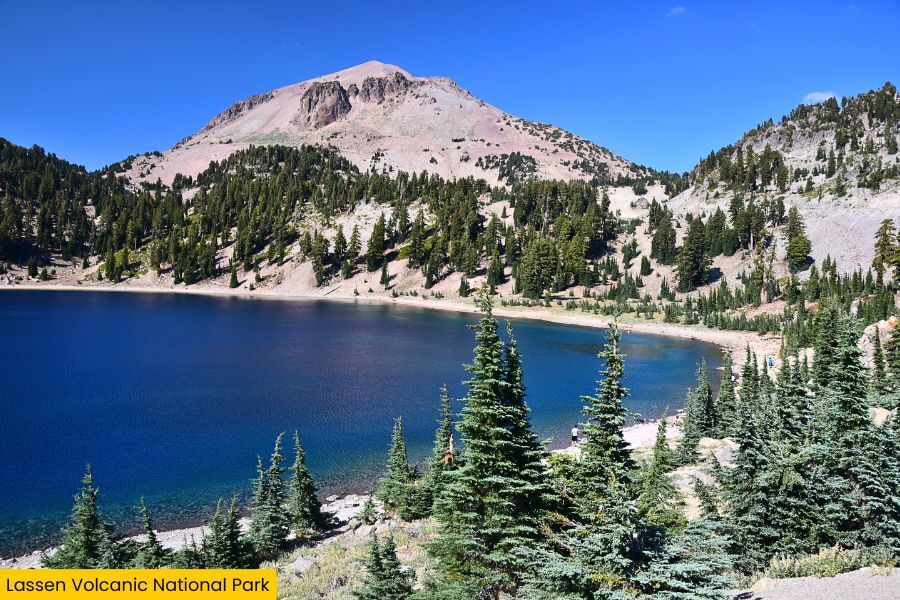
You can hike the 5-mile round-trip Lassen Peak Trail for sweeping views, walk the boardwalks through the hydrothermal area at Bumpass Hell, or paddle across the crystal-clear waters of Manzanita Lake.
Covering more than 106,000 acres, Lassen is one of the few places in the world where you can see all four major volcano types in one park, creating an unforgettable finish packed with fascinating geology and incredible scenery.
Related Posts