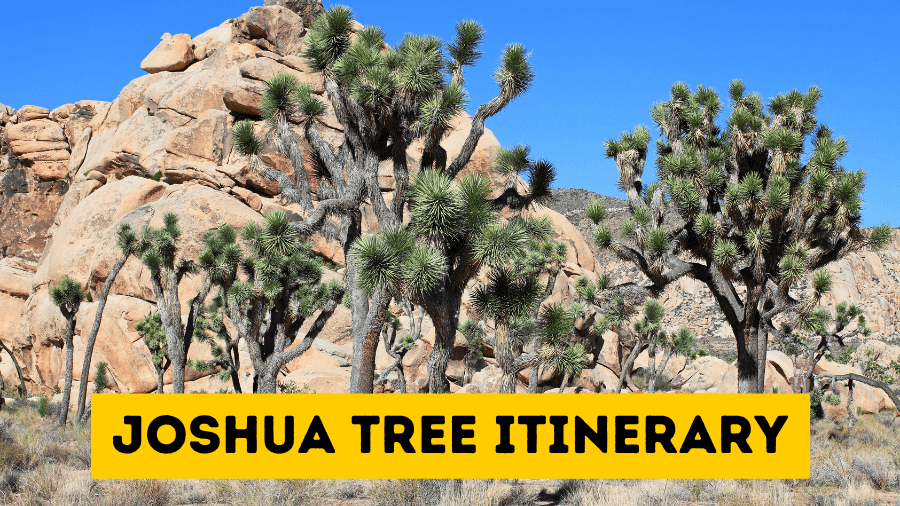
Joshua Tree National Park feels like stepping onto another planet, with giant twisted trees, massive boulder piles and hidden desert trails.
This road trip itinerary takes you through incredible viewpoints, strange rock formations, peaceful desert oases and scenic drives.
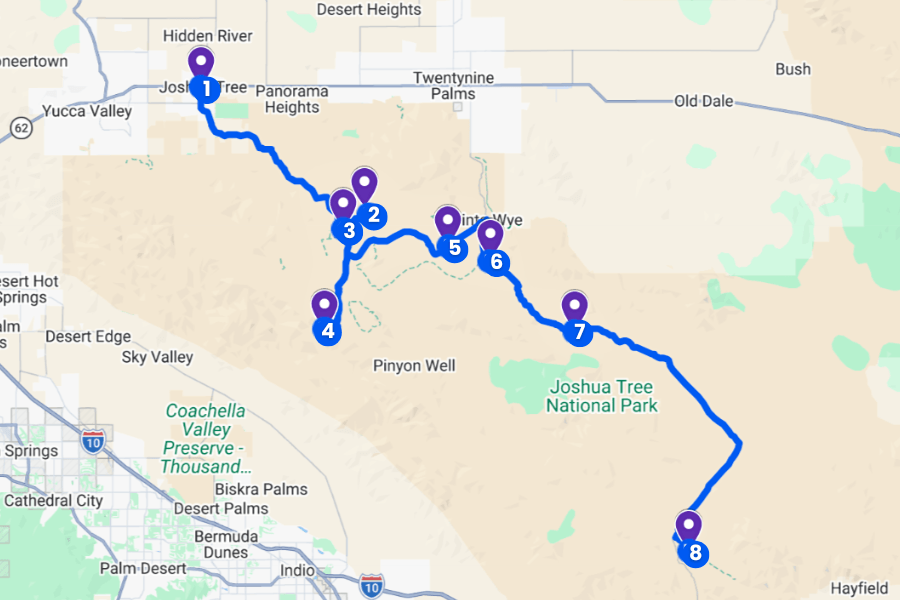
You’ll find easy walks, photo spots that look unreal at sunset, fascinating history, and plenty of places where you can pull over and just stare at the scenery for a while.
Get ready for a road trip packed with desert views, fun stops, and some of the most unique landscapes anywhere in the American Southwest.
1. Joshua Tree Visitor Center
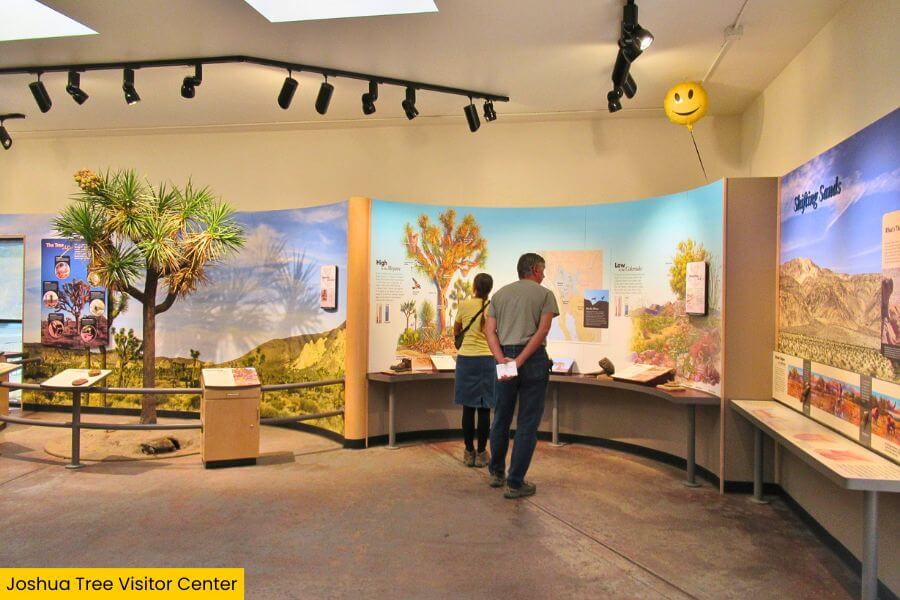
Joshua Tree Visitor Center is located in downtown Joshua Tree, about an 8-minute drive from the park’s West Entrance Station.
Inside the center, you’ll find giant park maps, detailed hiking guides, campground updates and exhibits about desert wildlife.
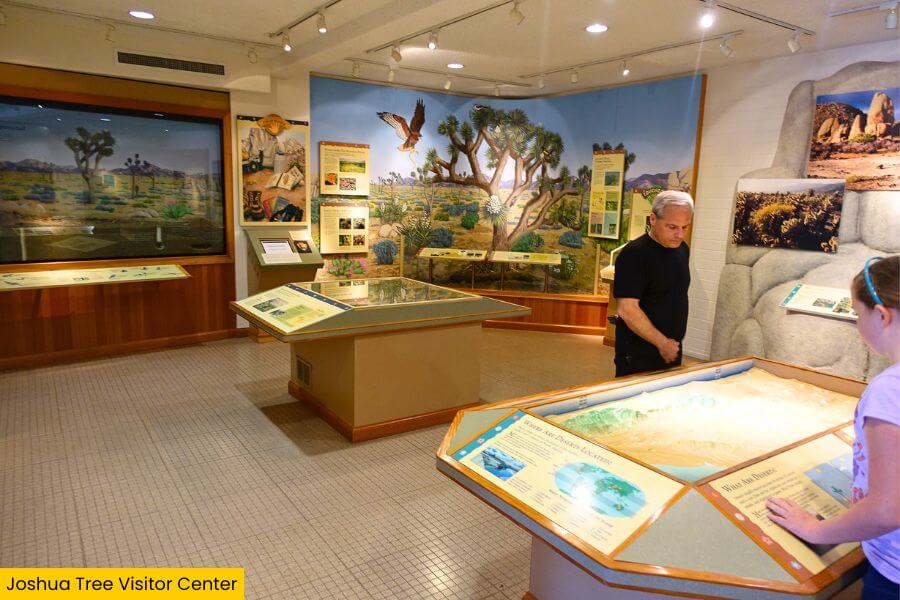
The building is also home to a bookstore, where you can grab field guides, postcards, junior ranger books, and fun souvenirs featuring the park’s famous twisted Joshua trees, which can grow over 40 feet tall and live for around 150 years.
The visitor center sits just minutes from local cafes, vintage shops, and the famous Joshua Tree Saloon, making it an easy place to kick off your road trip adventure.
2. Barker Dam
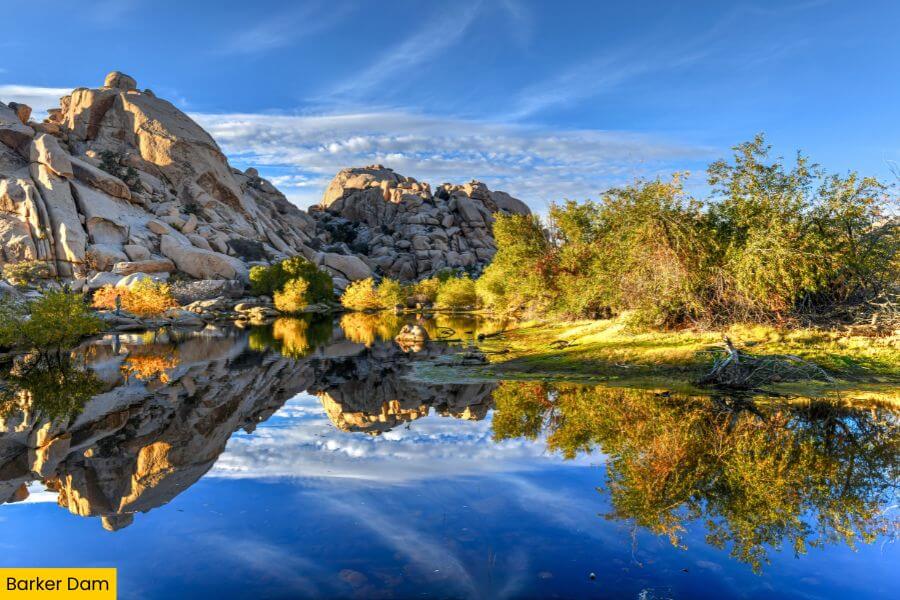
Next, head to Barker Dam, a 1.1-mile loop trail packed with giant boulder piles, desert scenery, and one of the most surprising water spots in the park.
The dam was originally built by cattle ranchers in the early 1900s to collect rainwater for livestock, and if you visit after a good storm, you might see a wide pool reflecting the massive rock formations and scraggly Joshua trees around it.
The trail starts near the Hidden Valley Campground area and stays fairly easy with only 50 feet of elevation gain, making it a great choice if you want a laid-back hike.
Along the route, keep an eye out for desert bighorn sheep, ancient petroglyphs left by Native Americans, and gigantic monzogranite boulders that look like someone stacked them into impossible balancing towers across the desert floor.
3. Hidden Valley Nature Trail
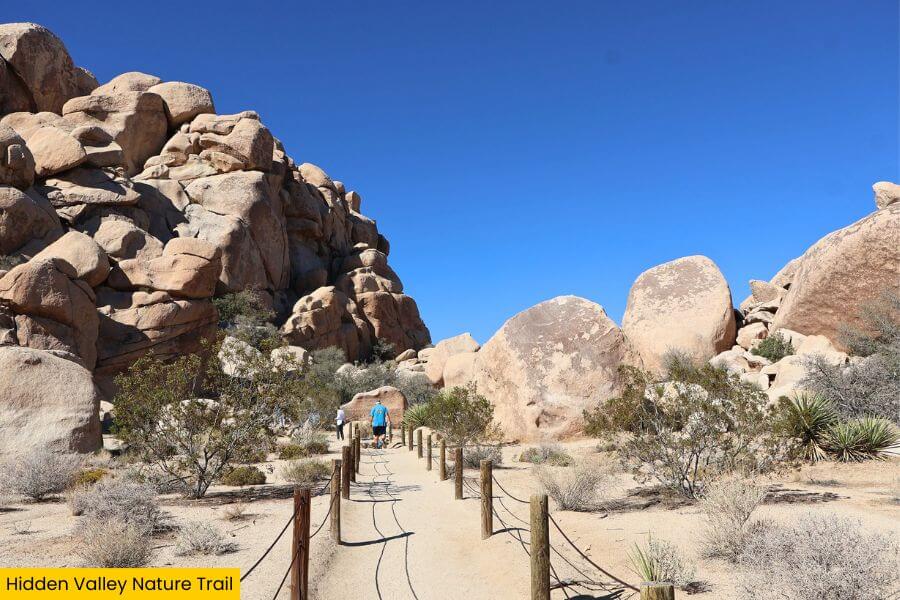
Hidden Valley Nature Trail delivers one of the park’s most famous walks with a 1-mile loop winding through enormous rock formations, thick Joshua tree groves, and a valley once rumored to be used by cattle rustlers hiding stolen livestock in the late 1800s.
The trail sits inside a natural basin created by giant piles of monzogranite boulders, and the scenery changes around every corner with narrow rock passages, towering cactus patches, and smooth climbing rocks.
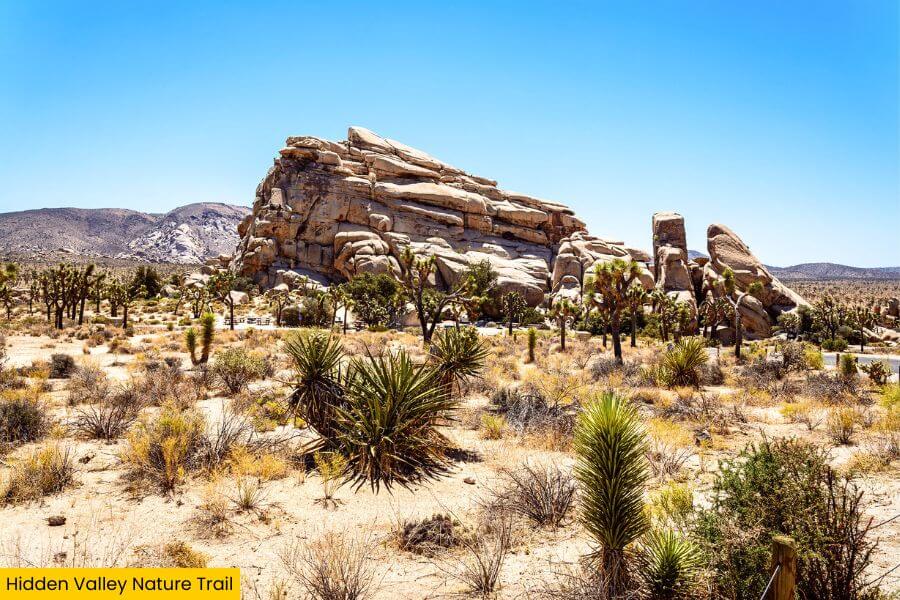
You’ll only gain about 100 feet of elevation along the route, but the views feel massive, especially at sunrise and sunset when the golden light hits the boulders and turns the entire valley bright orange and pink.
Hidden Valley is one of the best places to spot climbers scaling the massive rock formations surrounding the valley, plus springtime often brings colorful wildflowers like desert dandelions and purple lupines scattered across the sandy trail edges.
4. Keys View
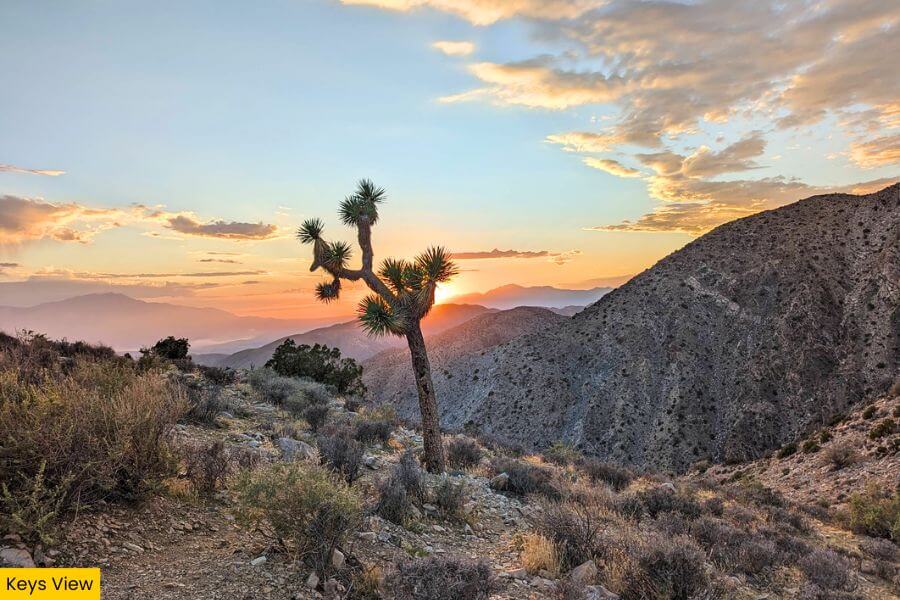
Drive 15-minutes to Keys View, a mountain overlook sitting at 5,185 feet with one of the biggest panoramic views in all of Southern California.
From the viewing area, you can see the Coachella Valley, the San Andreas Fault, the Salton Sea, and even Signal Mountain in Mexico on clear days, all stretching out more than 5,000 feet below the edge of the overlook.
The stop is incredibly easy to access since the parking lot sits right next to the viewpoint, making it one of the best spots in Joshua Tree National Park if you want huge scenery without a long hike or steep climb.
Sunset is the big show here, when the desert floor glows orange, pink, and deep purple while strong winds whip across the mountain ridge, so bring a jacket because temperatures often drop to 10 to 15 degrees cooler than the lower parts of the park.
5. Skull Rock
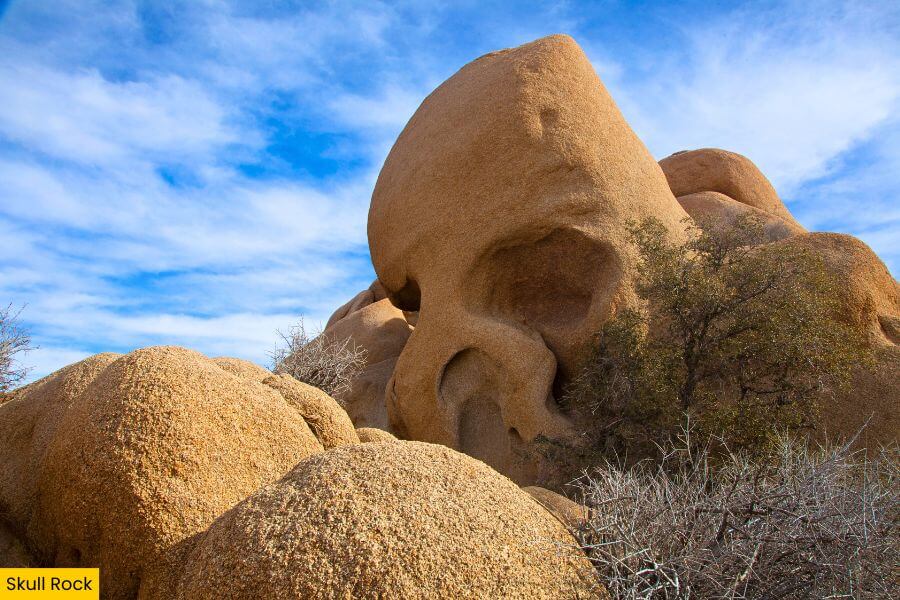
After soaking in the massive views from Keys View, cruise about 20 minutes along Park Boulevard to Skull Rock, one of Joshua Tree National Park’s weirdest and most photographed roadside landmarks.
This giant granite boulder got its spooky skull shape from thousands of years of rainwater carving two hollow “eye sockets” into the rock, and the formation sits right beside the road near Jumbo Rocks Campground.
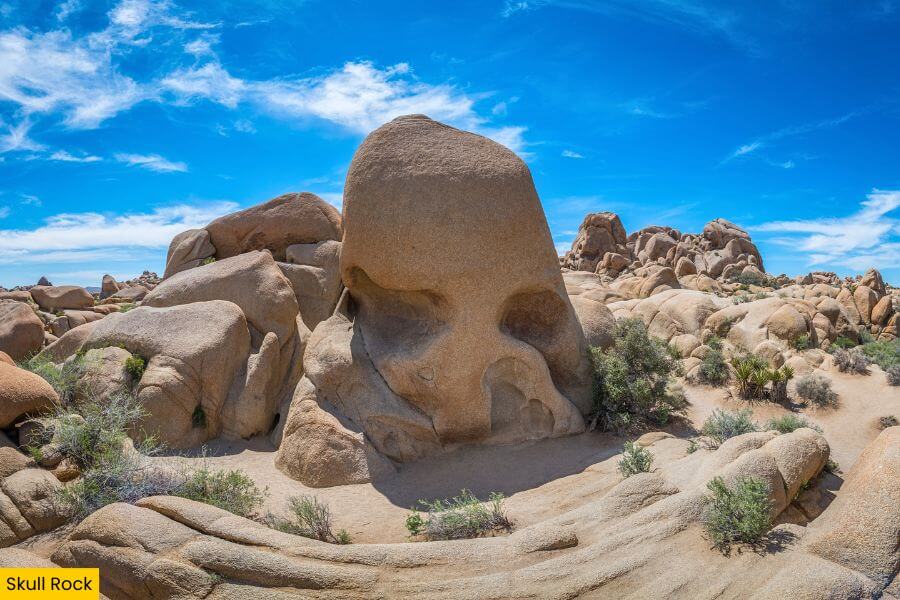
You can simply pull into the parking area for a quick photo, or turn it into a longer adventure by hiking the 1.8-mile Skull Rock Nature Trail, which winds through huge boulder fields, sandy washes, and thick clusters of Joshua trees.
The area is especially fun at sunset when the rocks glow deep gold, plus if you stay after dark, this section of the park is famous for incredible stargazing thanks to Joshua Tree’s International Dark Sky Park status.
6. Arch Rock & Heart Rock
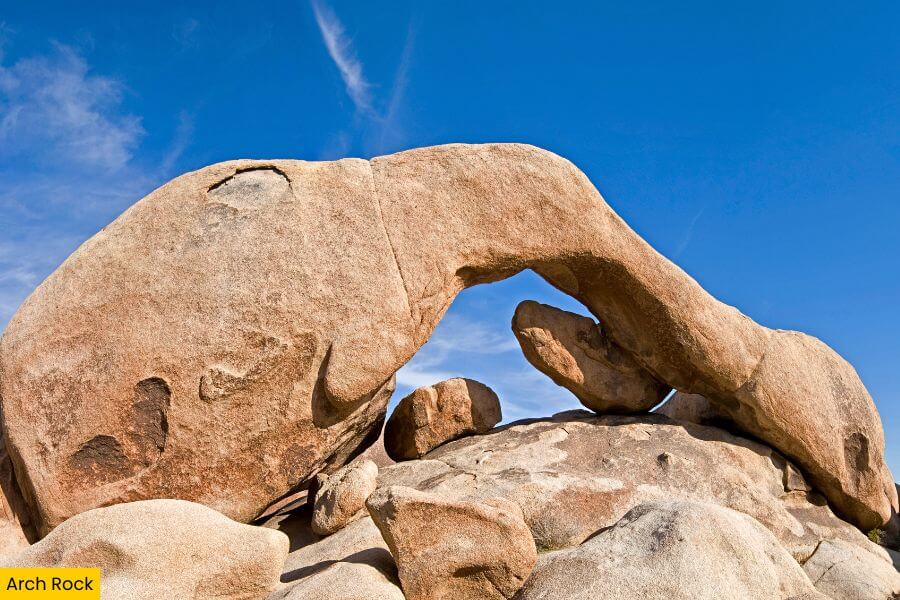
As you continue through the park’s maze of giant boulders, make a stop at Arch Rock and Heart Rock, two natural stone formations hidden inside the White Tank Campground area near the park’s North Entrance.
Arch Rock is a massive granite arch standing about 30 feet wide and 15 feet tall, and you can reach it on an easy 1.4-mile round-trip trail.
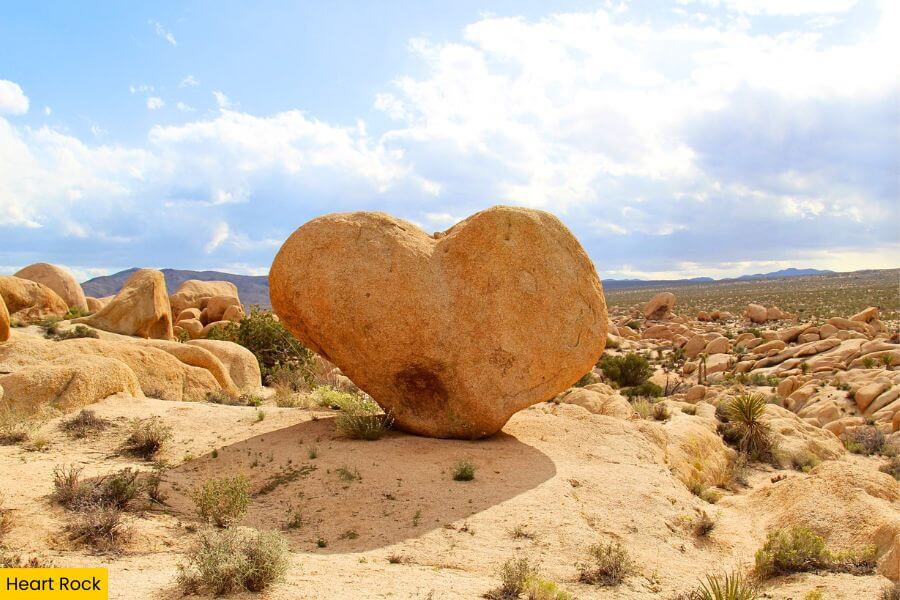
Just a short walk farther, Heart Rock surprises hikers with a naturally shaped heart, making it one of the park’s favorite hidden photo spots.
This area becomes especially magical after sunset when the smooth white rocks glow under the moonlight, and it’s also one of the best places in Joshua Tree National Park to spread out a blanket and watch the Milky Way stretch across the sky.
7. Cholla Cactus Garden
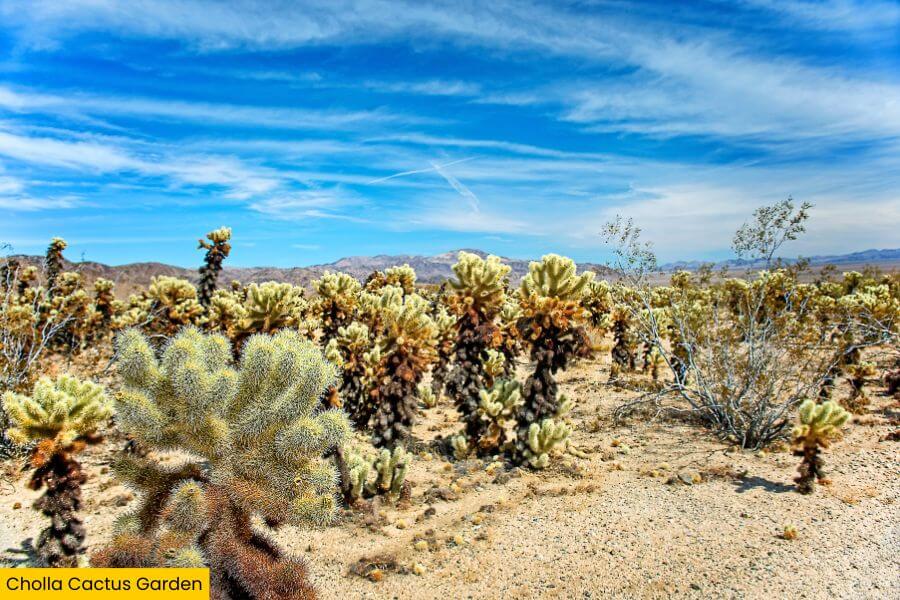
The landscape suddenly changes at Cholla Cactus Garden, where thousands of fuzzy-looking teddy bear cholla cacti cover the desert floor.
A short 0.25-mile loop trail lets you wander through the dense cactus garden up close, but don’t let the soft-looking spines fool you because these chollas are famous for their sharp barbed needles that can stick to clothing and skin with barely any contact.
The best time to visit the garden is during sunrise or sunset when the low light makes the cactus spines glow bright gold and creates one of the park’s most incredible photo spots.
Keep an eye out for kangaroo rats, jackrabbits, and roadrunners darting between the cacti, and if you visit in spring, you might catch the chollas blooming with pale green and yellow flowers spread across the desert like tiny glowing lanterns.
8. Cottonwood Spring
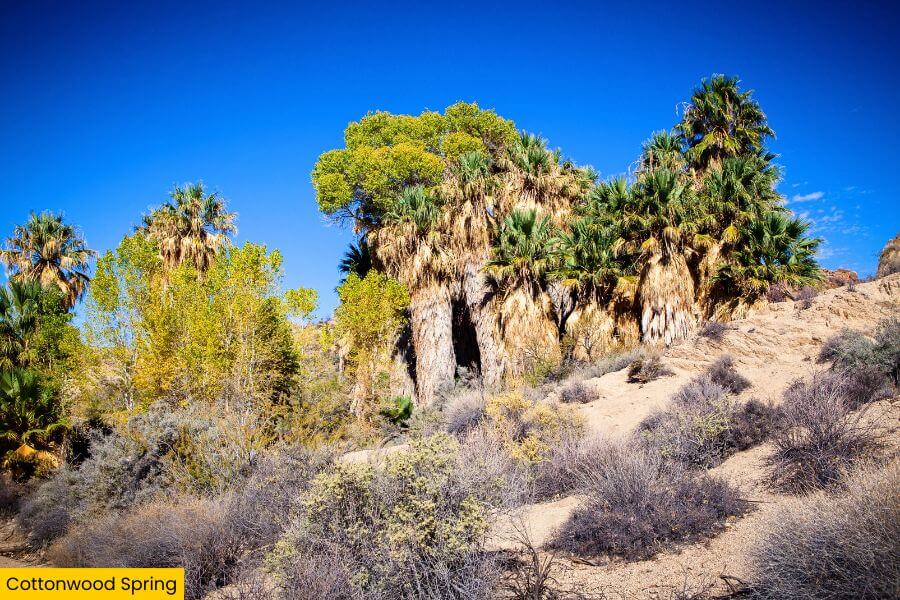
Continue driving for about 30 minutes to reach Cottonwood Spring, a lush desert oasis filled with towering fan palms, natural spring water, and some of the greenest scenery in Joshua Tree.
The spring became an important water source for the Cahuilla people long before miners and travelers passed through the area, and today you can still see remnants of old mining operations scattered near the trailheads.
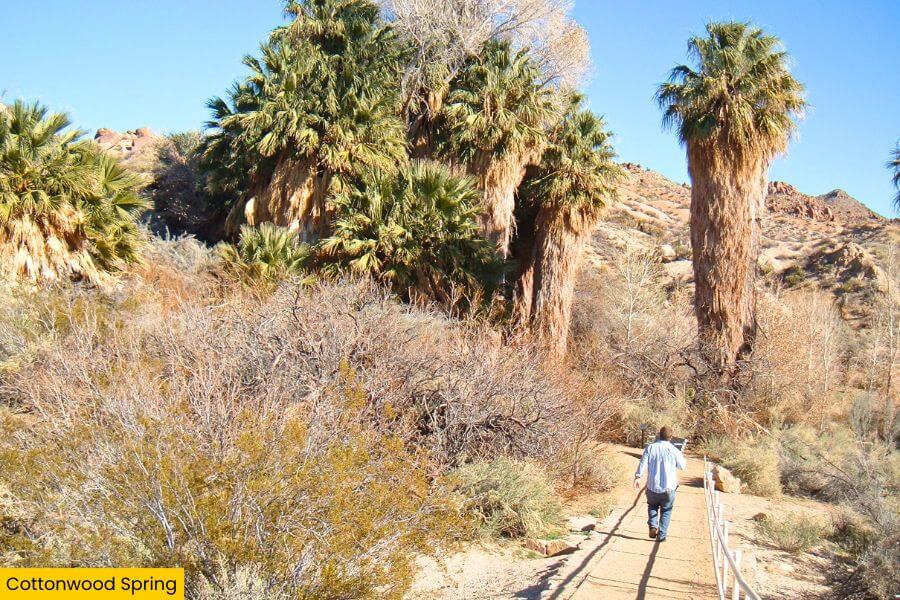
Cottonwood Spring also serves as the starting point for several hikes, including the 3-mile Mastodon Peak Loop and the 7.5-mile round-trip trail to Lost Palms Oasis, where more than 100 California fan palms rise from a rocky desert canyon.
Because this area sits at a lower elevation, temperatures here are often warmer so bring extra water and keep an eye out for desert birds, blooming ocotillo plants, and possibly even bighorn sheep in the nearby hills.
Related Posts