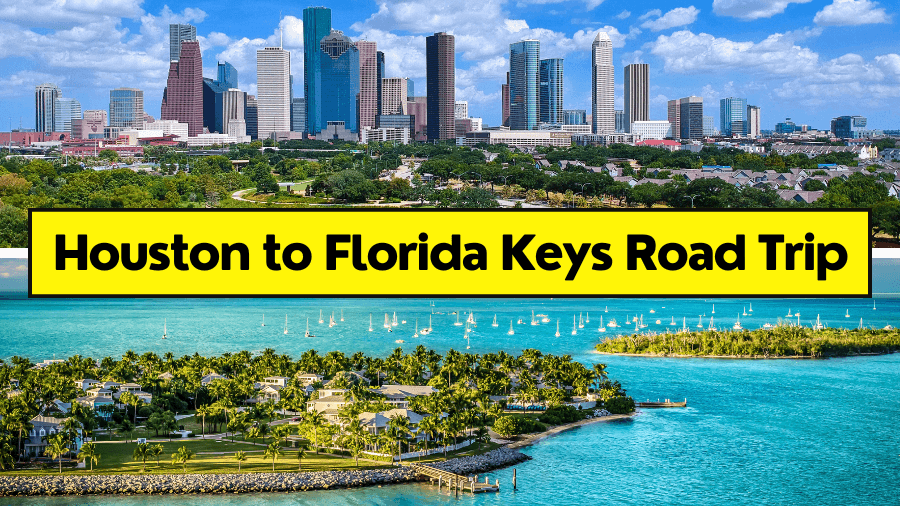
This road trip kicks off in Houston and winds all the way down to the edge of the United States, where the road quite literally runs out.
Along the way, you’ll cross multiple states, shifting from big-city streets to quiet coastal highways, and watching the landscape slowly turn more tropical with every hour.
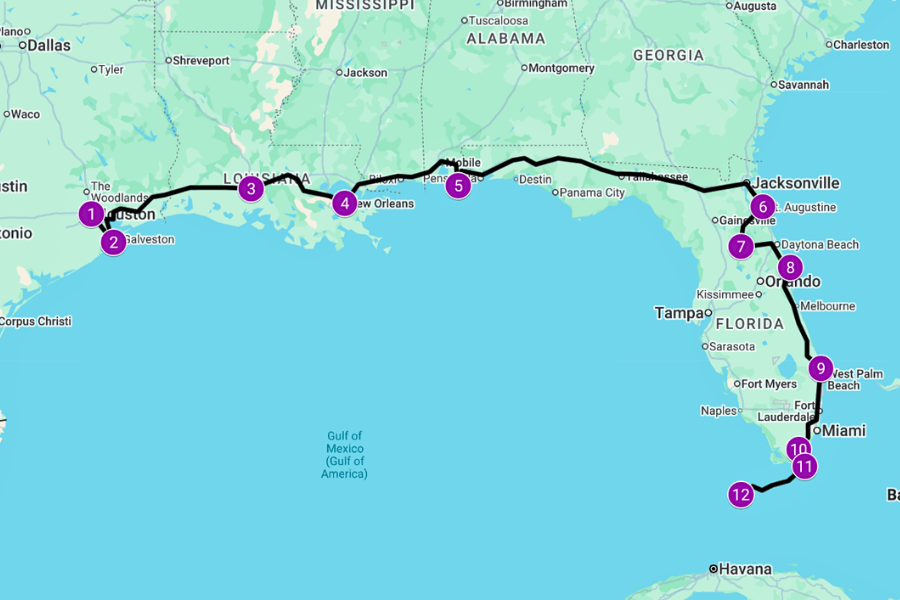
Expect everything from white-sand beaches and wildlife-filled wetlands to historic streets, fresh seafood stops, and stretches of road where the ocean sits on both sides of you.
If you’re ready for warm weather, epic views, and a drive that just keeps getting better the farther you go, this is the kind of trip you’ll be talking about long after it’s over.
1. Houston, TX
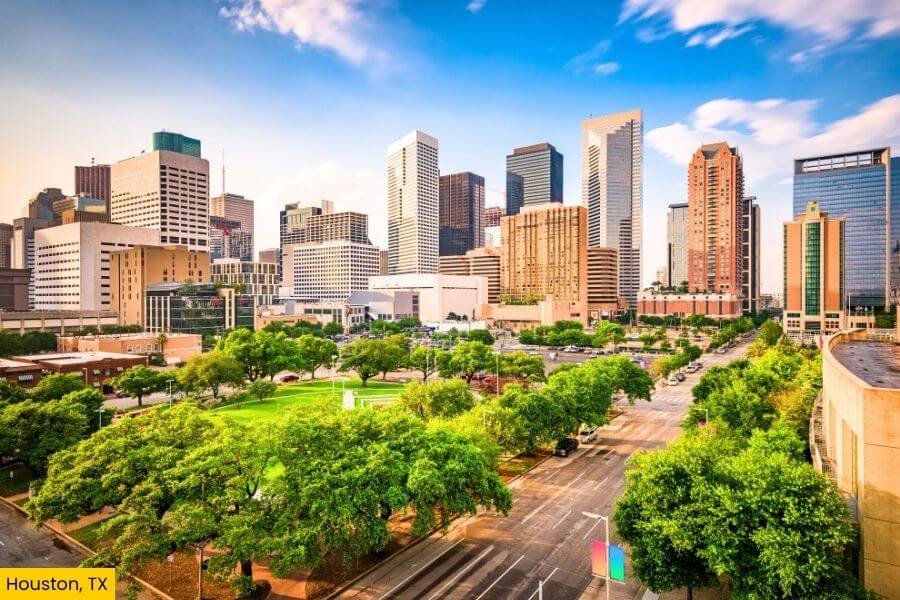
We’re starting our road trip in Houston, the largest city in the state with over 2.3 million people packed into its 640 square miles.
If you’re from Houston, then grab a coffee and hit the road!
However, if you’re from out of town, take some time to check out what Houston has to offer.
This place is famous for NASA’s Johnson Space Center, where you can see real spacecraft at Space Center Houston and hear the iconic phrase “Houston, we have a problem” come to life.

You’ve also got one of the most diverse food scenes in the country, with over 13,000 restaurants serving everything from Texas barbecue to Vietnamese pho.
If you want something outdoorsy, stroll Hermann Park, visit the Houston Zoo with over 6,000 animals, or walk the Buffalo Bayou Park trail for skyline views.
2. Galveston Island, TX
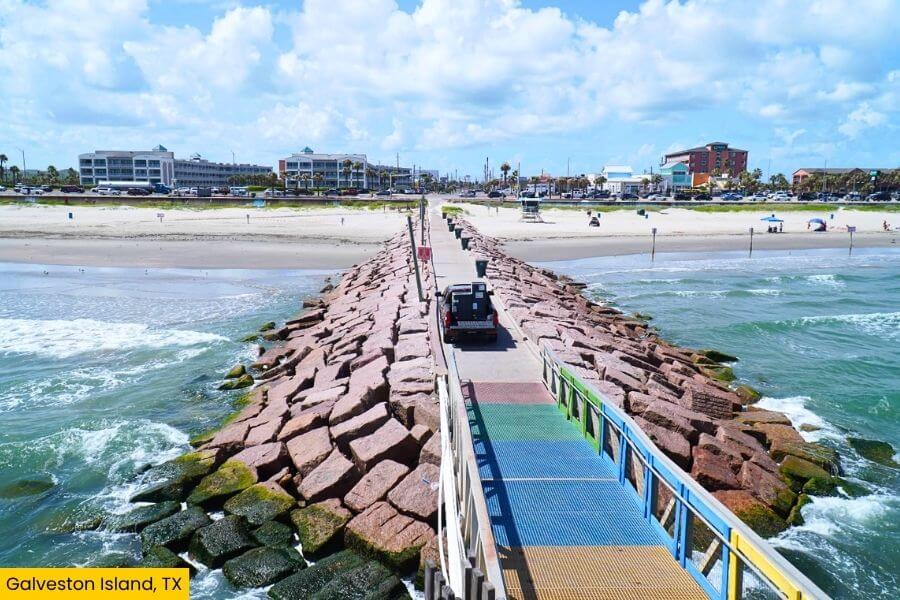
Just an hour from Houston, Galveston Island sits right by the ocean and swaps city traffic for salty air, sandy beaches, and historic coastal charm.
The island is best known for its 32 miles of shoreline and the Galveston Seawall, which stretches over 10 miles and stands 17 feet tall to protect the city from storm surges.
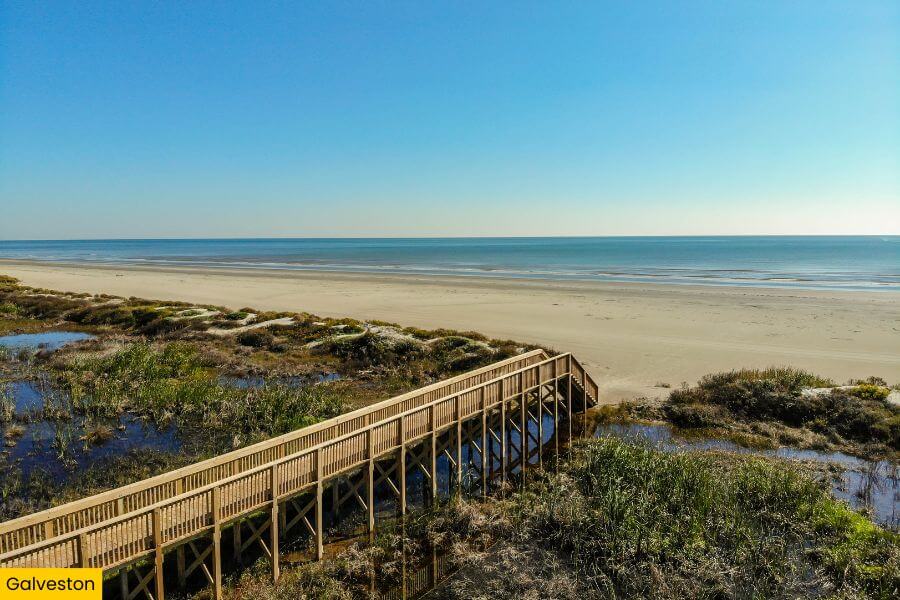
You can wander The Strand Historic District, where 19th-century buildings now hold candy shops, museums, and spots like La King’s Confectionery that’s been serving saltwater taffy since the 1920s.
Before heading farther down the coast, ride the free Bolivar Ferry for a 2.7-mile trip across Galveston Bay where you might spot dolphins swimming alongside the boat.
3. Lafayette, LA
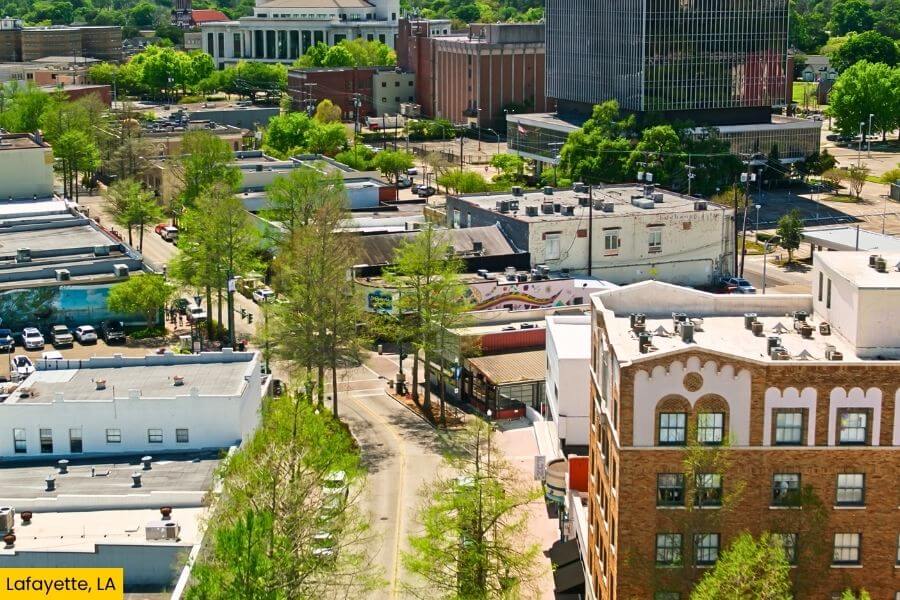
Keep rolling east for about 4 hours and you’ll land in Lafayette, right in the heart of Louisiana’s Cajun Country where French roots, zydeco music, and bold flavors show up everywhere you go.
This city has been ranked among the happiest cities in America and once you dig into a plate of crawfish at Prejean’s or boudin from Billy’s Boudin & Cracklins, you’ll understand why.
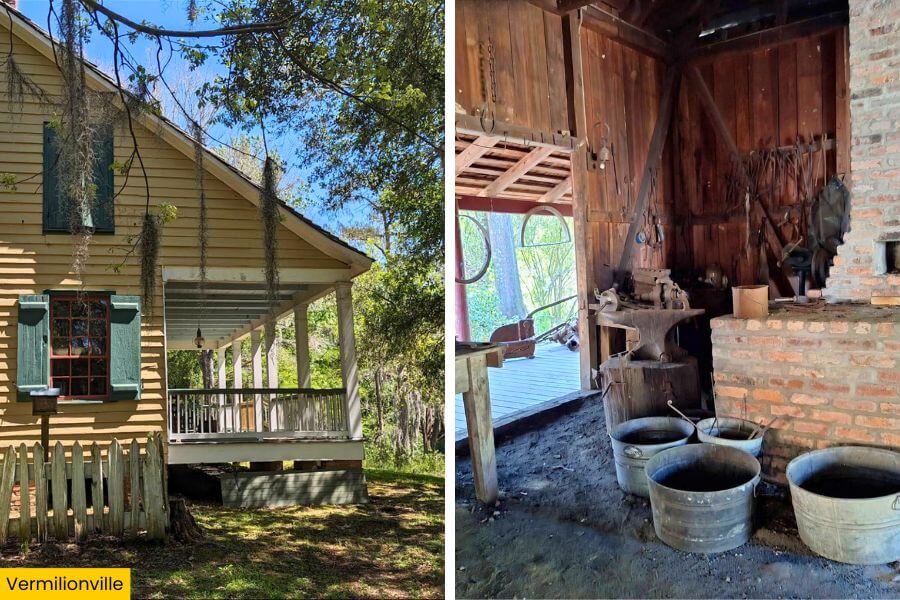
Spend some time at Vermilionville, a huge living history museum where restored homes from the late 1700s and 1800s show how Acadian settlers lived.
You can also catch live music at Blue Moon Saloon, a tiny venue famous for its high-energy Cajun jam sessions.
If you want a quick nature break, Lake Martin sits just 25 minutes away and is one of the best spots in Louisiana to see alligators, herons, and cypress trees rising straight out of the water.
4. New Orleans, LA
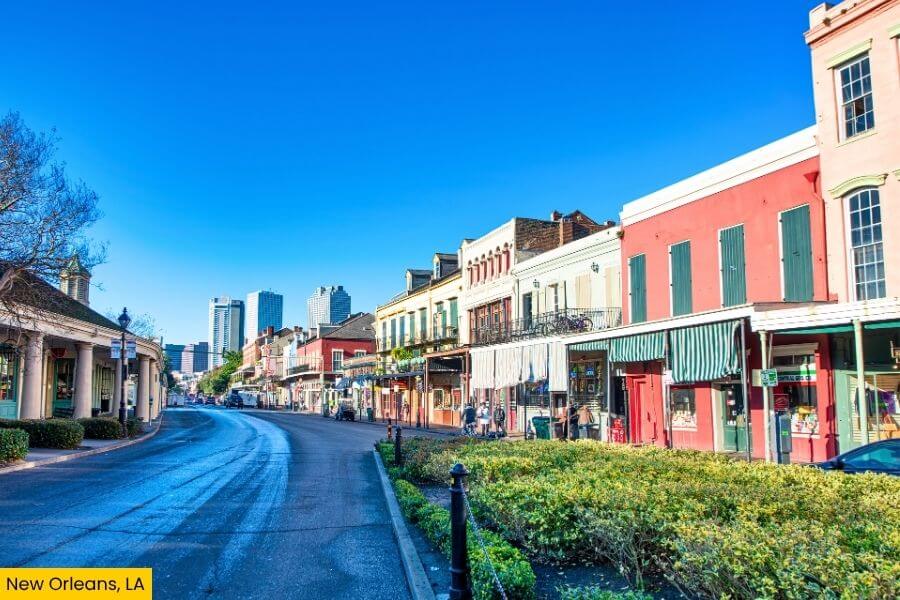
About a 2-hour drive from Lafayette, New Orleans brings a whole new level of energy with brass bands on street corners, historic streets, and food that you’ll be thinking about long after you leave.
The French Quarter is the heart of it all, where Bourbon Street stays lively late into the night and Jackson Square sits in front of St. Louis Cathedral, the oldest continuously active cathedral in America.
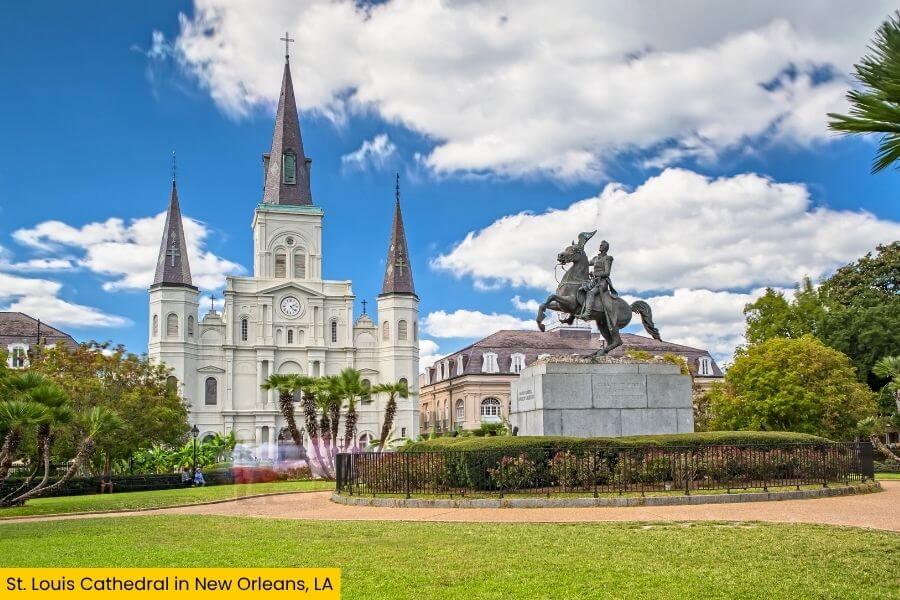
Food is a big deal here, so grab beignets covered in powdered sugar at Café du Monde, try a po’boy from Parkway Bakery, or go all in on gumbo packed with chicken and sausage.
If you want a break from the crowds, hop on the St. Charles Streetcar, the oldest continuously operating streetcar line in the world, originally launched in 1835, and enjoy a ride past oak-lined streets and historic mansions.
5. Gulf Shores, AL
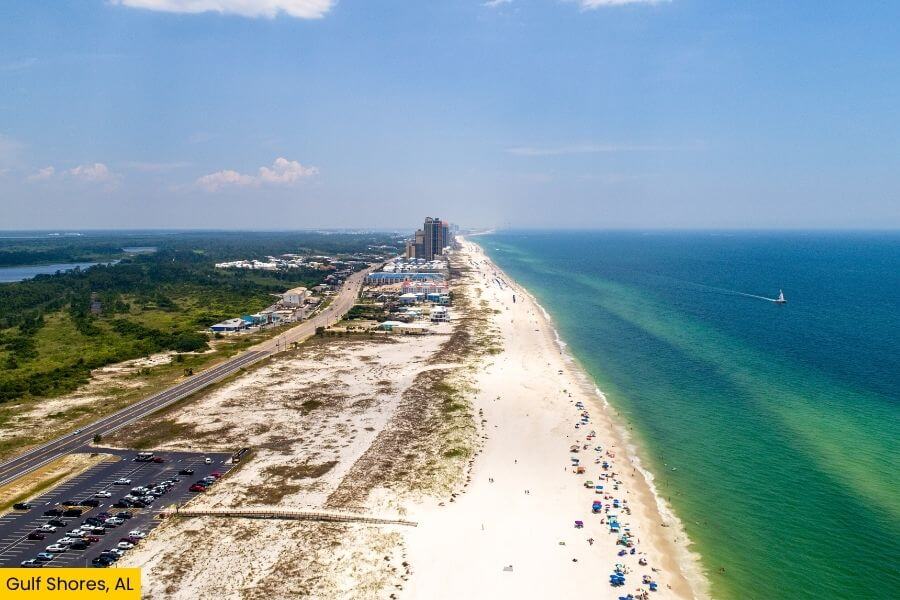
Keep cruising for about 3 hours and you’ll hit Gulf Shores, where bright white sand and warm Gulf water make it an easy spot to slow things down for a bit.
Gulf State Park is the star here with 6,150 acres of space, a 1,540 feet fishing pier, and over 28 miles of paved trails that are perfect for biking or a laid-back walk near the coast.
The beaches are known for their soft quartz sand that stays cool under your feet, and spots like Gulf Shores Public Beach give you easy access to the water plus volleyball courts and beachfront restaurants.
For something a little different, swing by The Hangout for live music and games right by the shore, or take a quick 15-minute drive to Orange Beach for dolphin cruises that head out into the Gulf.
6. St. Augustine, FL
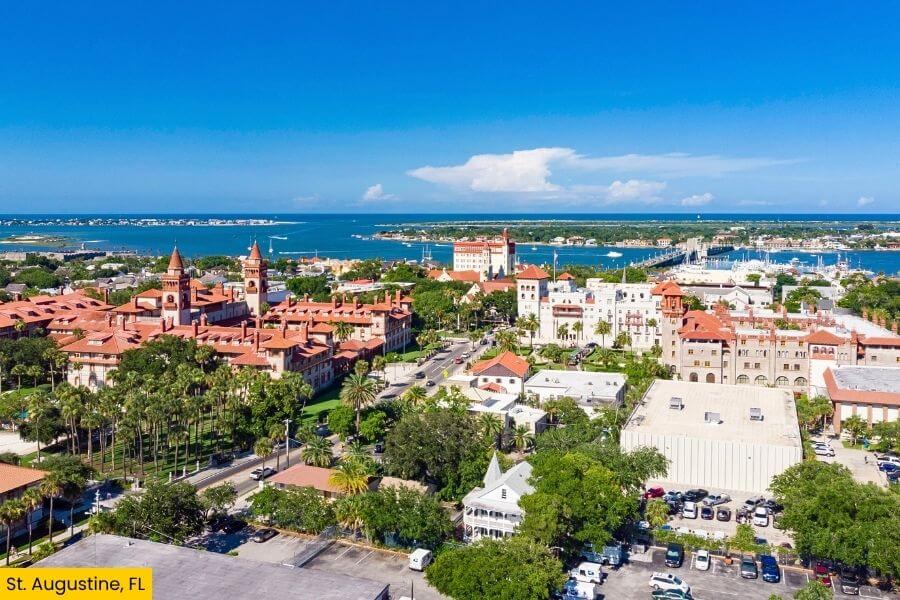
After crossing into Florida and driving about 7 hours, you’ll arrive in St. Augustine, the oldest continuously inhabited European-established city in the U.S., founded in 1565.
The standout here is Castillo de San Marcos, a massive stone fortress built in the late 1600s using coquina rock that has survived centuries of attacks and still overlooks Matanzas Bay.
St. George Street is where you’ll want to wander, a stretch packed with spots like the Colonial Quarter, unique shops, and easy snack stops like The Hyppo for gourmet popsicles.
For a coastal break, head to St. Augustine Beach just 10 minutes away for wide sandy shores, or climb the 219 steps of the St. Augustine Lighthouse for sweeping views of the Atlantic Ocean.
7. Ocala National Forest, FL
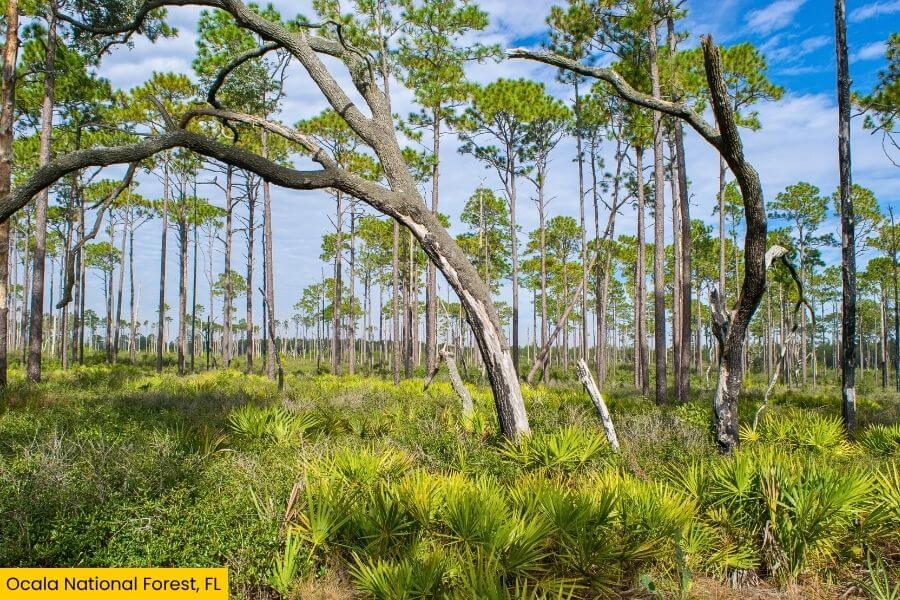
About 1.5 hours from St. Augustine, Ocala National Forest flips the scene from coastal views to thick Florida wilderness filled with pine forests, crystal-clear springs, and quiet backroads.
This massive forest covers over 600 square miles and is home to more than 600 natural lakes, plus famous springs like Silver Glen Springs where the water stays a refreshing 72 degrees year-round.
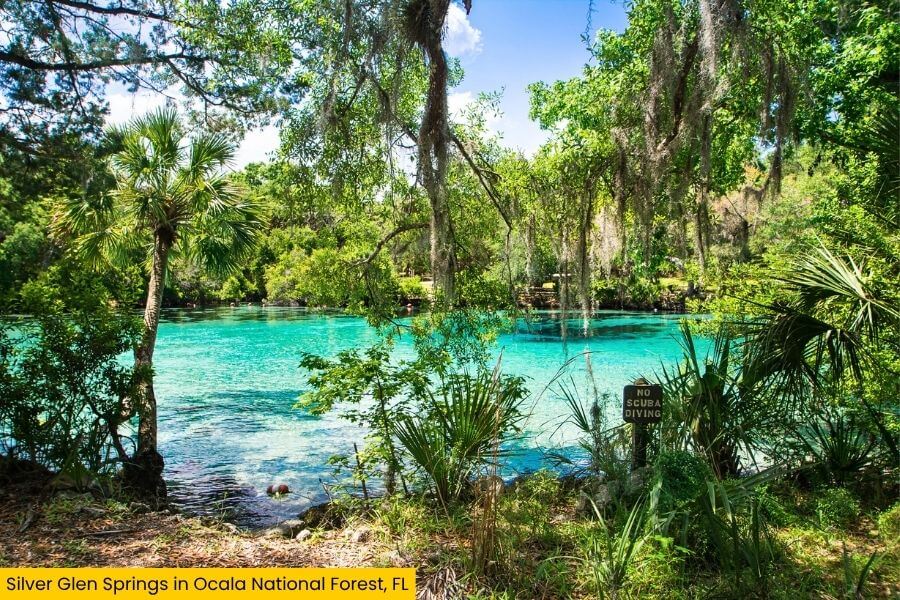
You can paddle Juniper Run, a 7-mile winding water trail that twists through palms and cypress trees, or hike sections of the Florida Trail, which stretches 1,500 miles across the state.
Keep an eye out for wildlife like black bears, deer, and even the rare Florida scrub-jay, especially if you take a slow drive along the Ocala North OHV Trail system.
8. Canaveral National Seashore, FL
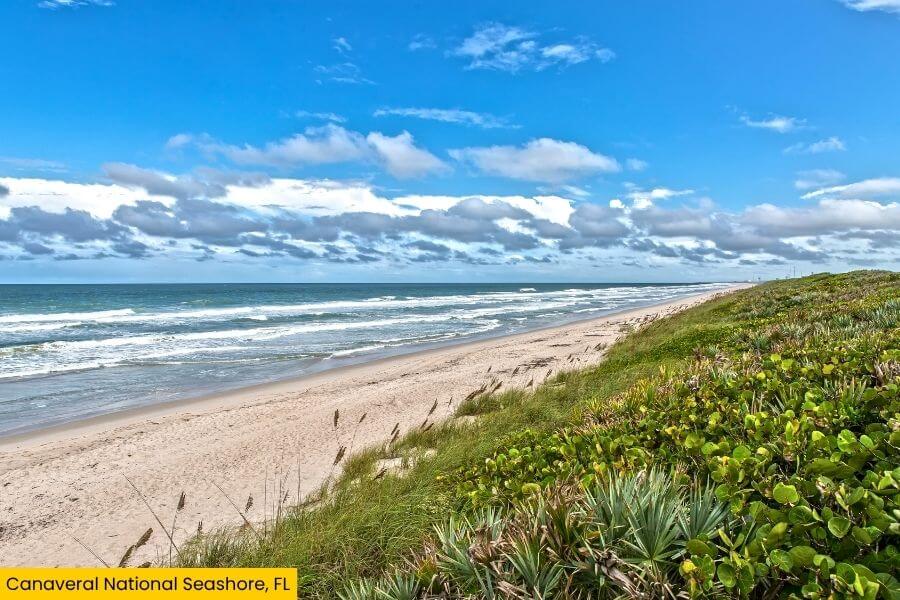
About 1.5 hours from Ocala National Forest, Canaveral National Seashore brings you back to the coast with 24 miles of completely undeveloped shoreline along the Atlantic Ocean.
This protected stretch covers 58,000 acres and is one of the longest untouched beaches in Florida, with no high-rise buildings in sight and some of the darkest night skies on the east coast.
You can swim, fish, or walk the shoreline at spots like Playalinda Beach, and if you visit between May and October, you might catch sea turtles nesting along the sand.
A short drive away is Kennedy Space Center, so if the timing works out, you could be relaxing on the beach one minute and watching a rocket launch into space the next.
9. Jupiter, FL
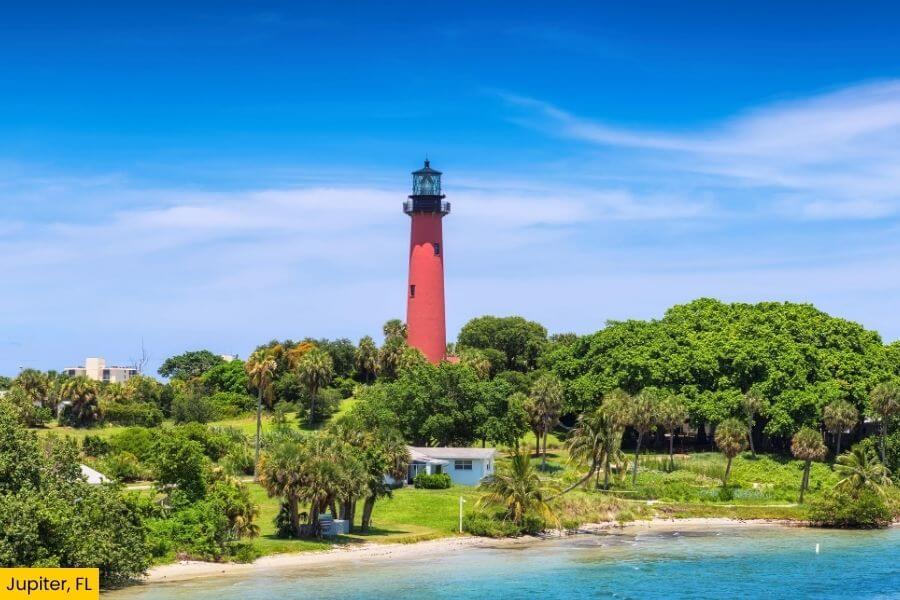
Keep heading south for another couple of hours and you’ll reach Jupiter, where clear blue water, swaying palms, and a laid-back beach scene feel worlds away from the busier stops up the coast.
The standout landmark here is the Jupiter Inlet Lighthouse, built in 1860, and you can climb all 105 steps for sweeping views of the inlet, the Loxahatchee River, and the Atlantic Ocean.
If you’re into wildlife, head to nearby John D. MacArthur Beach State Park, a 436-acre barrier island where you can kayak through mangroves or spot manatees drifting through the water.
For an easy beach day, Jupiter Beach Park gives you wide sandy shoreline, picnic areas, and some of the clearest water in South Florida.
Related Post: The Ultimate Jupiter Lighthouse & Beaches Day Out In Florida
10. Everglades National Park, FL
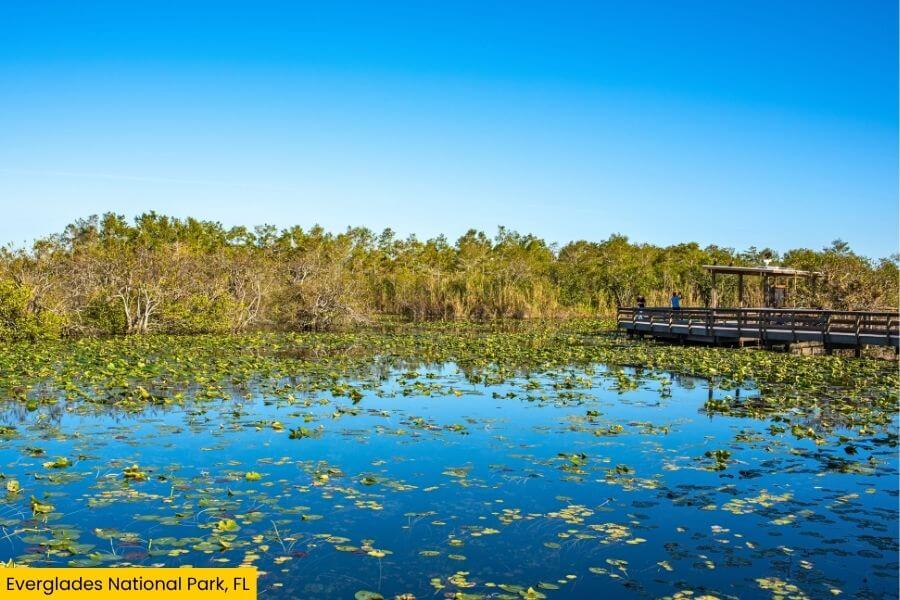
Continue south for another 2 hours and you’ll roll into Everglades National Park, a massive 1.5 million-acre wilderness that protects the largest subtropical ecosystem in the United States.
This place is all about slow-moving “river of grass” wetlands, where sawgrass stretches for miles and wildlife like alligators, crocodiles, and over 360 bird species show up daily.
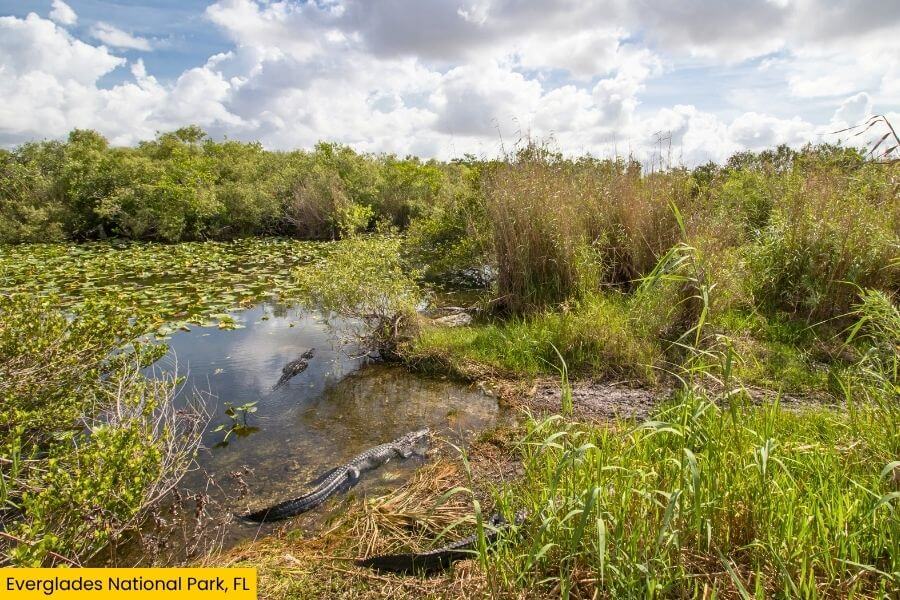
You can hop on the 15-mile Shark Valley Tram Road for a bike ride, walk to an observation tower, or take an airboat tour near Everglades City to glide across the water at high speed.
If you’ve got a little extra time, head to Flamingo to spot manatees and turtles before the road trip pushes on toward the Keys.
11. Key Largo, FL
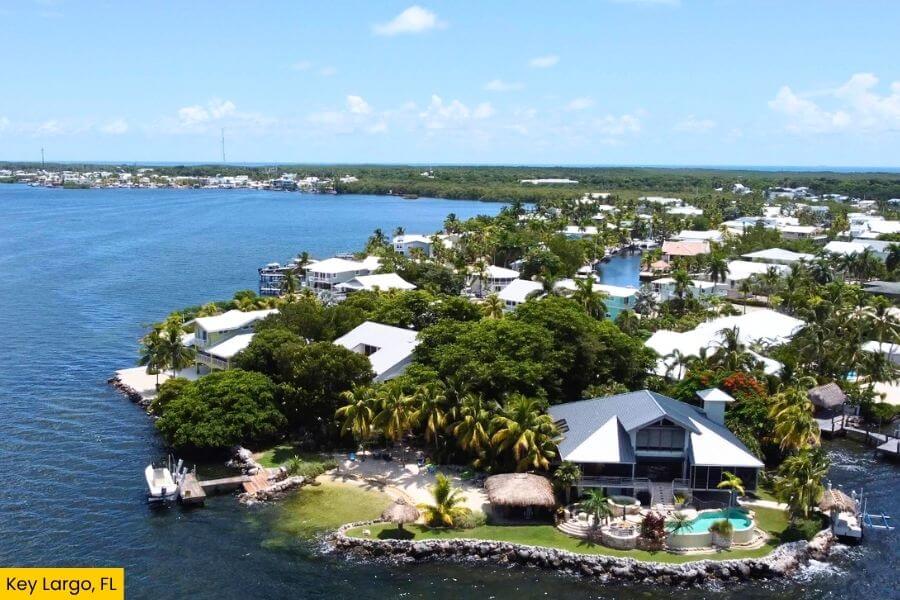
From the Everglades, it’s about a 45-minute drive along the Overseas Highway to Key Largo, the first island in the Florida Keys and where that classic turquoise water finally takes over the view.
Key Largo is known as the “Diving Capital of the World,” thanks to John Pennekamp Coral Reef State Park, which covers 70 nautical square miles and protects the only living coral reef in the continental U.S.
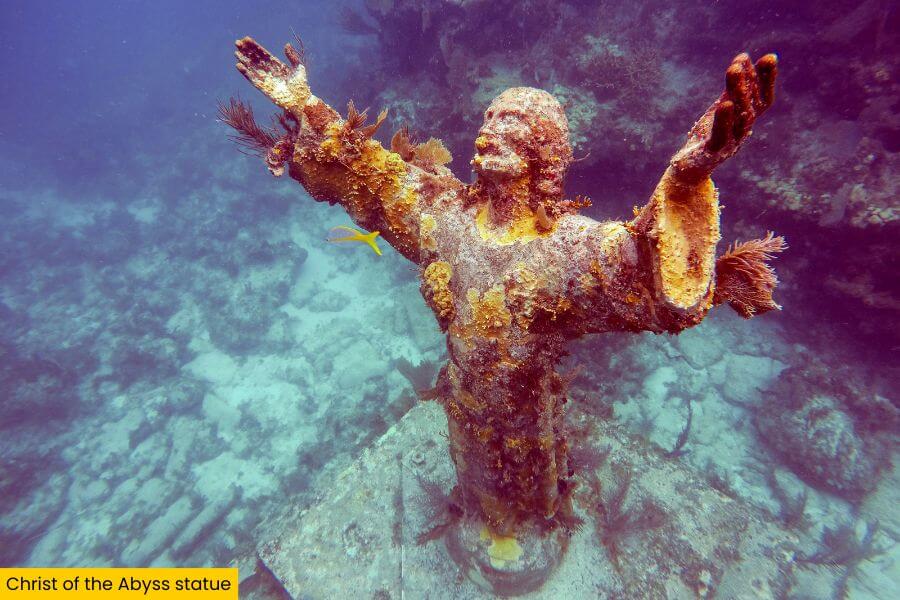
You can snorkel or dive at spots like Molasses Reef or the famous Christ of the Abyss statue, which sits in about 25 feet of water and is one of the most unique underwater sights in Florida.
If you’d rather stay dry, take a glass-bottom boat tour or paddle through the mangrove tunnels before continuing the drive deeper into the Keys.
Related Post: The Perfect Key Largo Weekend Itinerary
12. Key West, FL
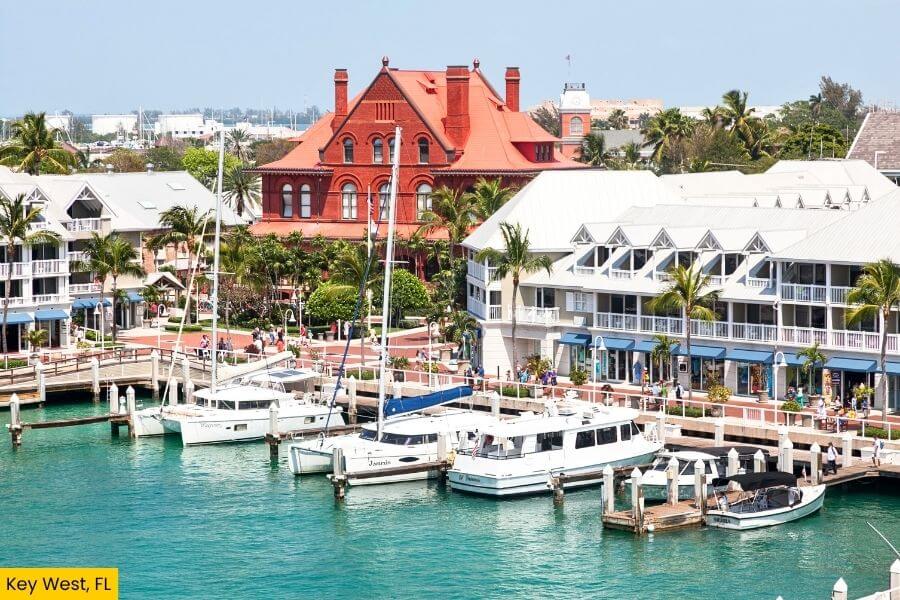
Keep cruising down the Overseas Highway, and after around 2 hours you’ll hit Key West, the southernmost point in the continental U.S.
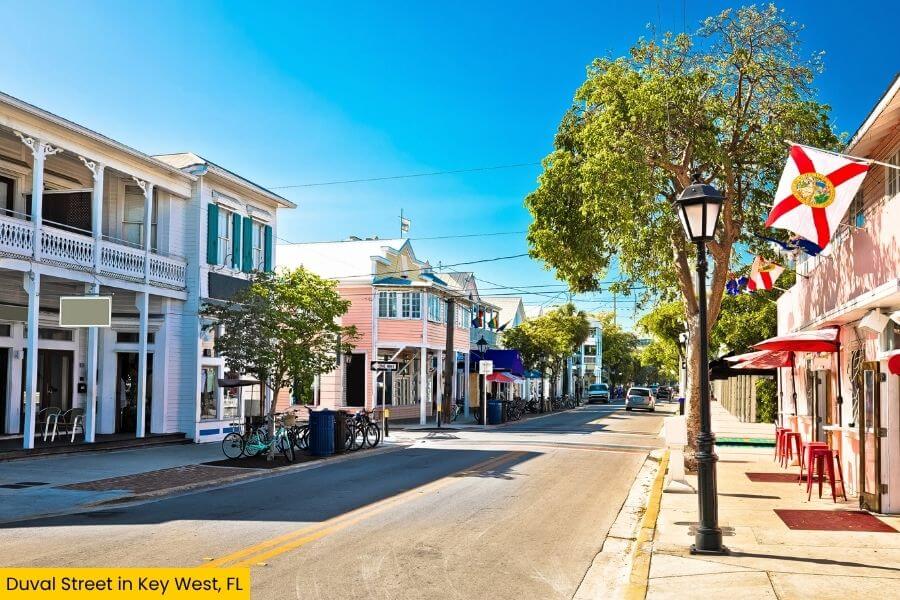
Duval Street is the main strip where you’ll find live music, bars, and stops like Sloppy Joe’s, plus the famous Southernmost Point Buoy that everyone lines up to snap a photo with.
History pops up everywhere here, from Ernest Hemingway’s Home and Museum with its six-toed cats to Fort Zachary Taylor Historic State Park, which also doubles as one of the best beaches in Key West.
End your road trip at Mallory Square, where the nightly Sunset Celebration brings street performers, food carts, and a front-row seat to one of the most colorful sunsets you’ll see anywhere in Florida.
Please note that at the time of writing, the Southernmost Point Buoy site is closed for seawall and roadway repairs, and a temporary replica buoy has been set up at 1499 Duval Street.
Related Post: The Perfect Key West Weekend Itinerary
Related Posts