When you think of Washington, you probably picture evergreen trees, rainy days, and snow-capped mountains, right? Same.
But what if we told you there’s a wild desert hiding out in the middle of it all, and that it’s far more than just a dry patch of land?
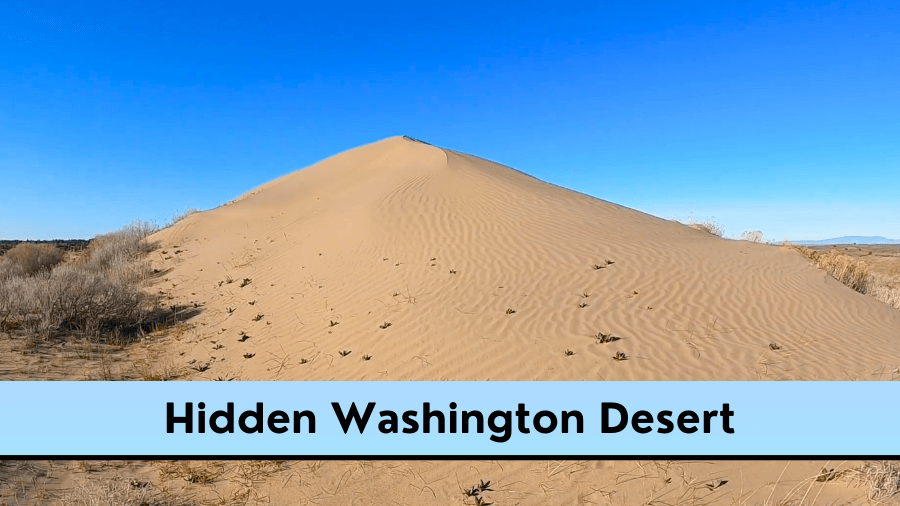
We’re talking real sand dunes, twisted little trees, and miles of wide-open space that feels like something straight out of a movie.
If you’re into secret spots, off-the-map adventures, and weirdly incredible landscapes, this place is about to blow your mind.
So grab your water bottle and some sturdy shoes because we’re heading into one of Washington’s most unexpected places.
Where Is It?
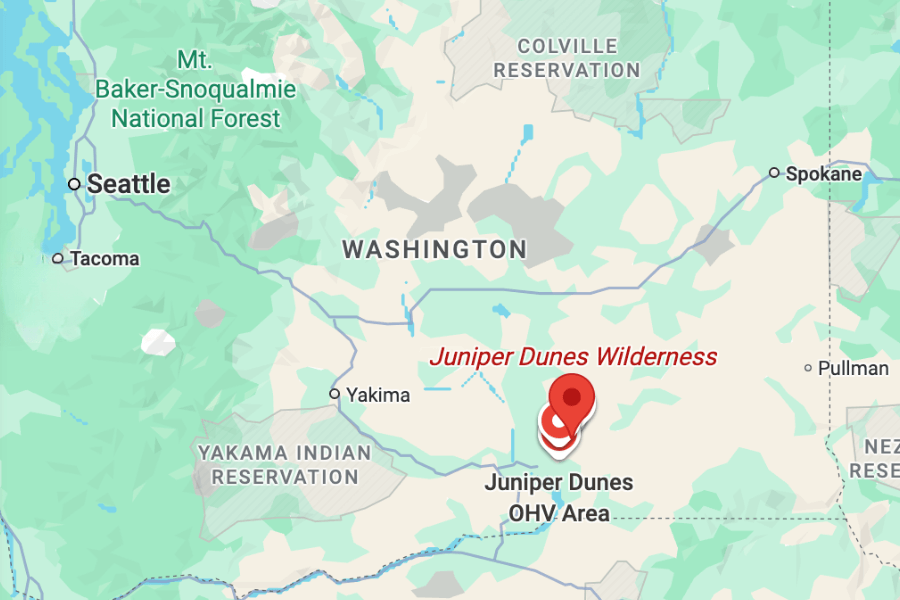
Juniper Dunes Wilderness lies in southeastern Washington, within Franklin County.
It’s located near the Columbia River, only 25 minutes from Eltopia, and you can expect about a 2-hour drive from Spokane and around 3.5 hours from Seattle.
You’ll definitely need a car, and maybe even some solid directions, because this place feels like it’s in the middle of nowhere.
About
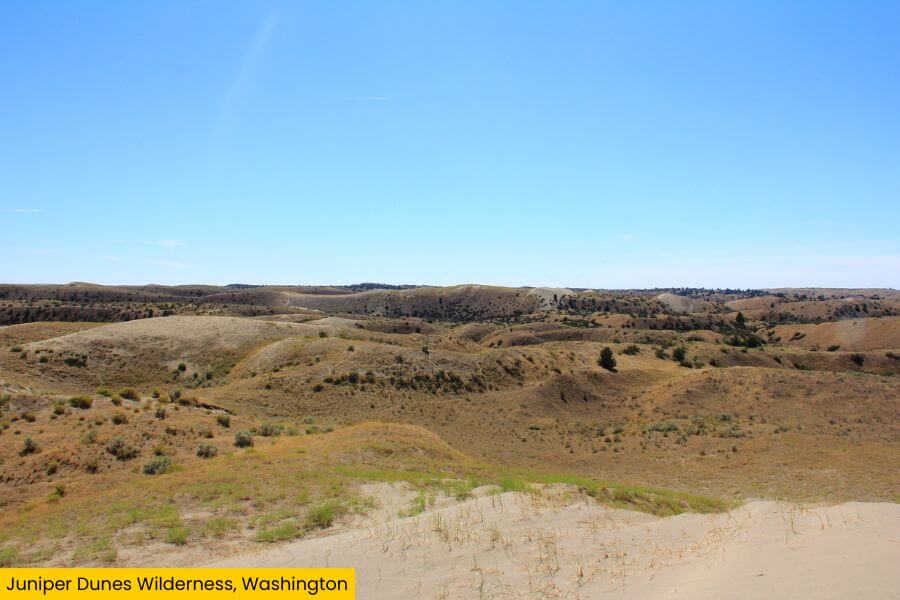
Juniper Dunes Wilderness is a legit desert in Washington, with towering sand dunes, windswept sagebrush, and wide-open skies that seem to stretch on forever.
This wild stretch of land covers over 7,140 acres and is part of the larger 19,600-acre Juniper Dunes area managed by the Bureau of Land Management.
It’s also one of the few Wilderness Areas created with juniper habitat in mind, and it protects the northernmost stand of western juniper trees in the state.
These scrappy little trees aren’t your typical forest giants because they’re short, twisty, and tough as nails, with some estimated to be over 150 years old.
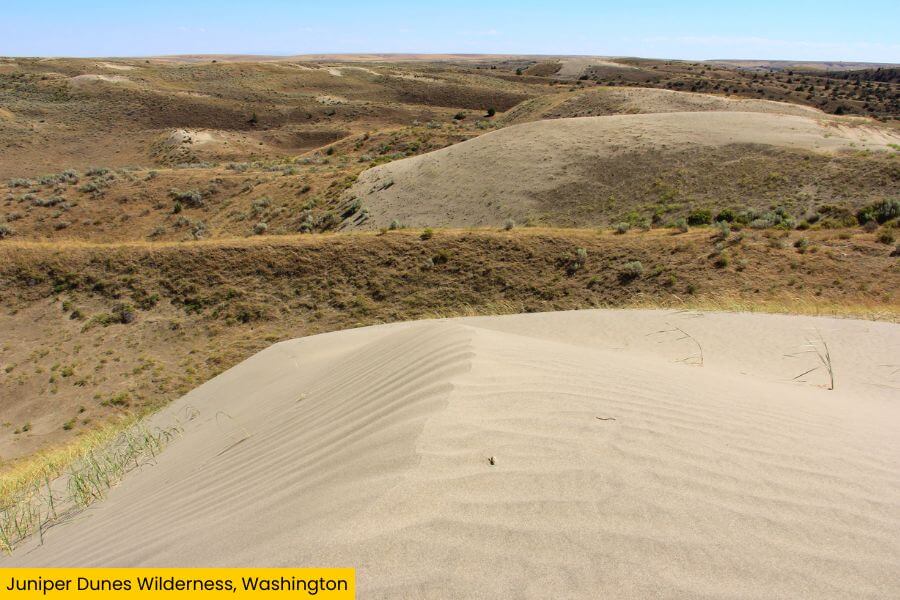
As for the landscape, it’s dry, sandy, and constantly shifting thanks to strong winds that reshape the dunes all year long.
Some of the dunes even reach up to 130 feet, and the contrast between the soft sand and the hardy desert vegetation makes the whole place feel otherworldly.
And once you’re inside the wilderness boundary, you won’t find any paved roads or facilities.
This is raw, undeveloped land where you won’t find crowds or noise, only the dunes, the wind, and the occasional jackrabbit, bobcats, or hawk.
Things To Do
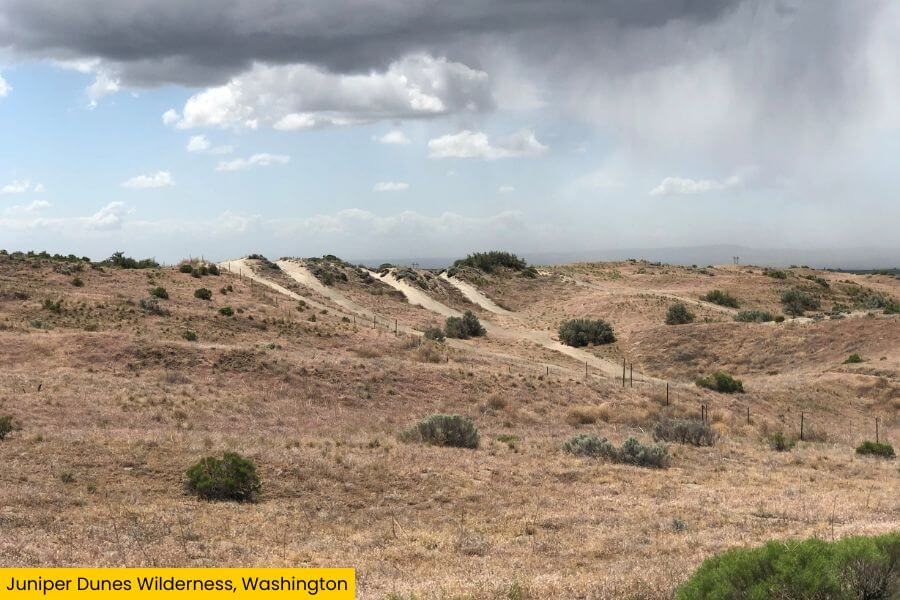
When you finally reach Juniper Dunes Wilderness, it’s time to explore because this place has a lot more going on than just pretty sand.
First up is hiking, and since there are no officially maintained trails here, you can wander wherever your legs or your GPS take you.
You can trek through open sand dunes, scramble up ridgelines, and dip into sandy valleys that feel like you’re walking on another planet.
It’s all cross-country hiking with uneven terrain and no signs to guide you, and that’s part of what makes it fun.
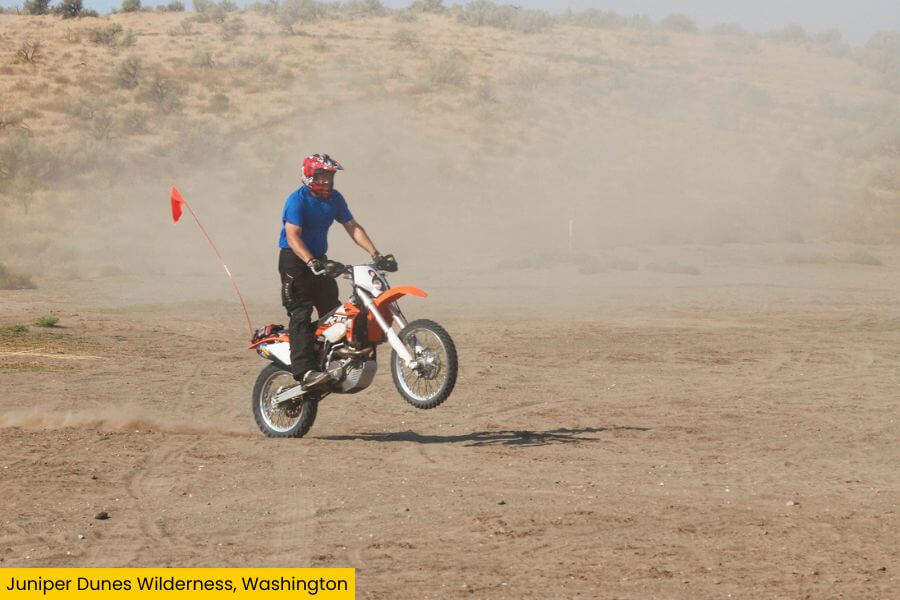
For something more defined, head over to the Juniper Dunes Off-Road Vehicle Area, which sits just outside the wilderness boundary.
This spot is a total playground for ATVs, dirt bikes, and dune buggies, with 3,920 acres of open sand to zip around on.
Just remember that motorized vehicles aren’t allowed inside the Wilderness Area, so make sure you stay in the designated OHV zone if you’re riding.
Not into hiking or riding? No problem, because Juniper Dunes is a great spot to watch for wildlife.
You might see mule deer, pocket gophers, badgers, owls, or even some rattlesnakes.
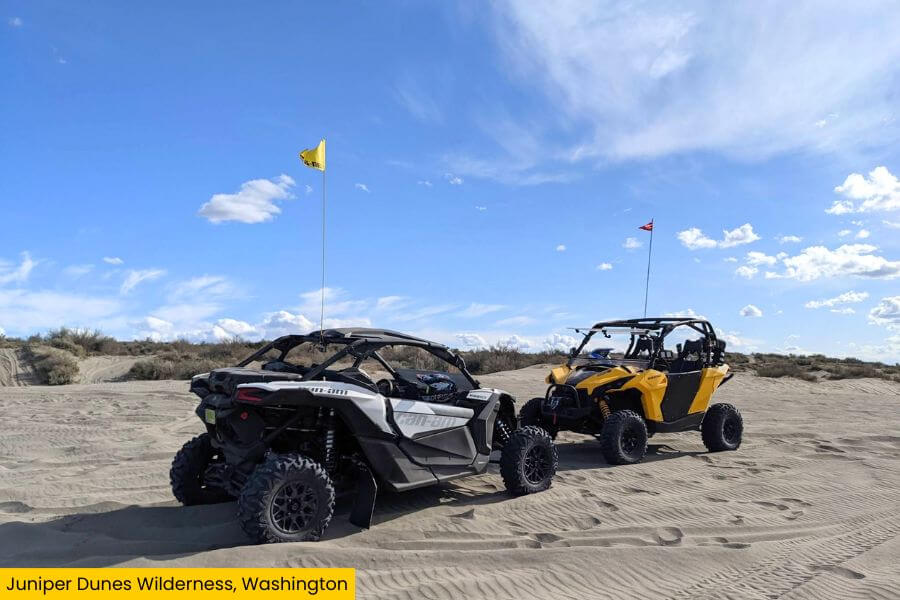
If you’re into photography, this place is a jackpot because you can capture crazy sand textures, gnarled juniper trees, wildflowers, and warm golden light at sunset.
And of course, there’s stargazing, because the minimal light pollution and remote location make the night sky look next level.
For the best views, bring a blanket, lie back in the sand, and get ready to see the stars.
Keep in mind that overnight stays inside the wilderness boundary are allowed only with a free BLM permit, and there are no developed camping facilities.
Know Before You Go
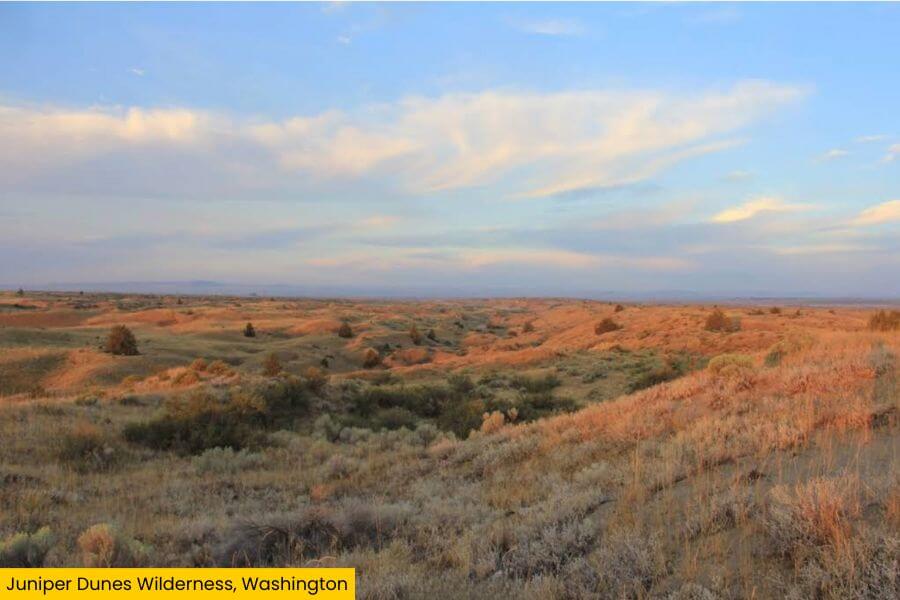
Best Time to Visit
Spring and fall are hands down the best times to go because the temps are cooler, the sand isn’t scorching, and spring can bring wildflowers.
Summer gets brutally hot, with no shade and heat that drains you fast, so plan to go early in the morning and carry far more water than you think you’ll need.
Winter is doable, but it can get cold, windy, and muddy when rain or snow hits.
Getting There
The drive to Juniper Dunes requires a bit of effort.
You’ll start on Pasco-Kahlotus Road, turn onto Juniper Road, and follow it north for a few miles until it meets the rough OHV access road to the Wilderness Gate.
The final stretch is rough, narrow, and often sandy or muddy, so high clearance and ideally 4WD are recommended.
Cell service is unreliable, so download your directions ahead of time and bring a map just in case.
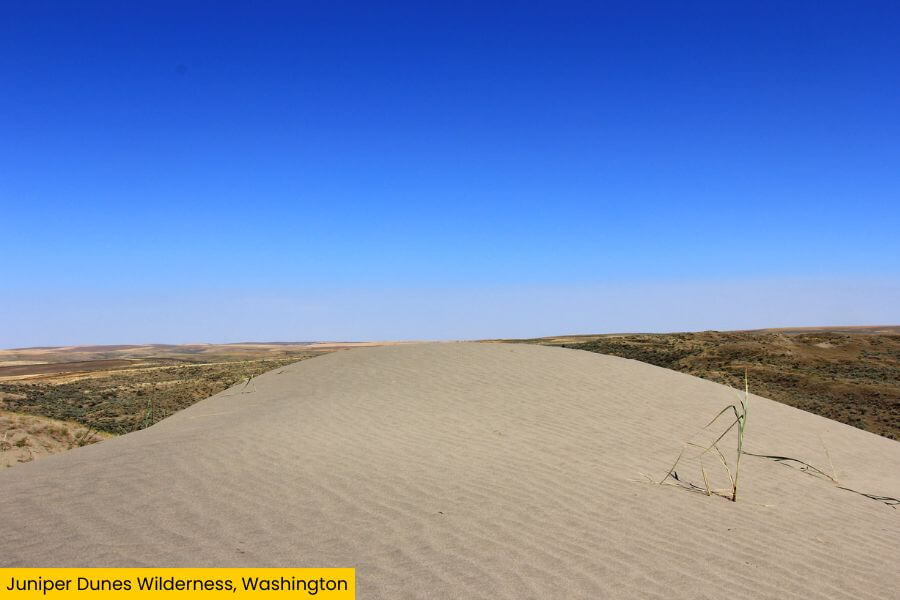
What to Bring and Reminders
There’s no water, no restrooms, and no trash bins, which means you’ll need plenty of water, sun protection, snacks, a hat, and a GPS or map.
A good pair of hiking shoes or trail runners is essential since the sand makes every step a workout.
Dogs are allowed, but the afternoon sand gets hot enough to burn paws, so be careful.
And please pack out everything, as Leave No Trace really matters in this area.
Lastly, you don’t need permits or fees for day visits to Juniper Dunes Wilderness, but overnight stays require a free BLM permit.
If you’re using the OHV area, your vehicle must be properly licensed and follow all BLM rules.
Related Posts