If you think you’ve seen all the best spots in Pennsylvania, think again.
Tucked away in a quiet corner of the state is a place that’s wild, unbelievably beautiful, and still surprisingly overlooked.
It’s perfect if you love hiking, biking, paddling, or just being surrounded by nature that isn’t overrun with snack stands and selfie sticks.
Whether you’re chasing waterfalls or just want a peaceful trail with nonstop views, this is for you.
Curious yet? Keep reading, because this hidden gorge might just become your new favorite place in Pennsylvania.
Where Is It?
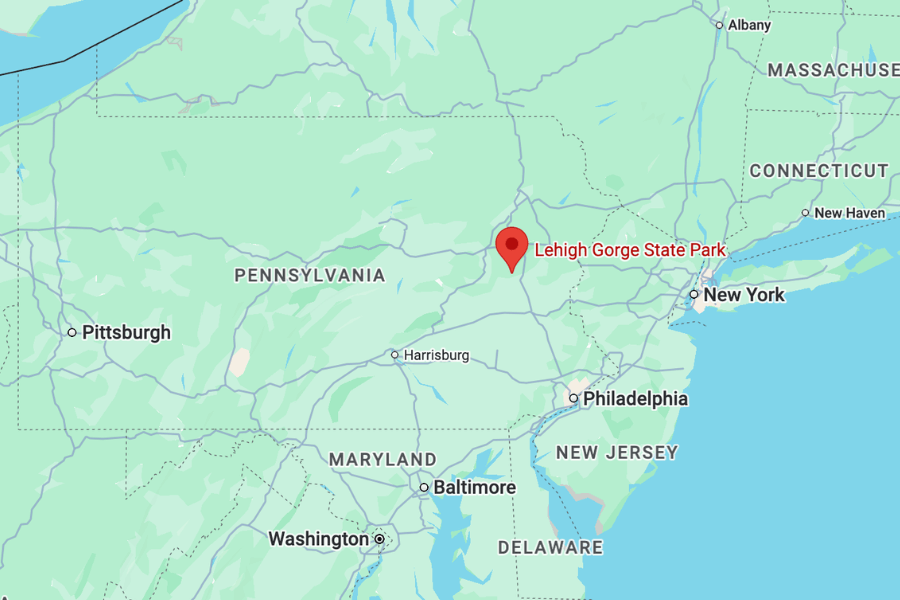
Lehigh Gorge State Park is located in northeastern Pennsylvania, spanning Luzerne and Carbon Counties.
The drive is about 1 hour and 45 minutes from Philadelphia, 2 hours and 20 minutes from New York City, and just an hour if you’re coming from Scranton.
If you’re coming from Allentown, it’s only a 55-minute trip, close enough for a day visit but packed with enough adventure to make you want to stay all weekend.
About
Lehigh Gorge State Park is one of those under-the-radar spots that feels like a total surprise in the best possible way.
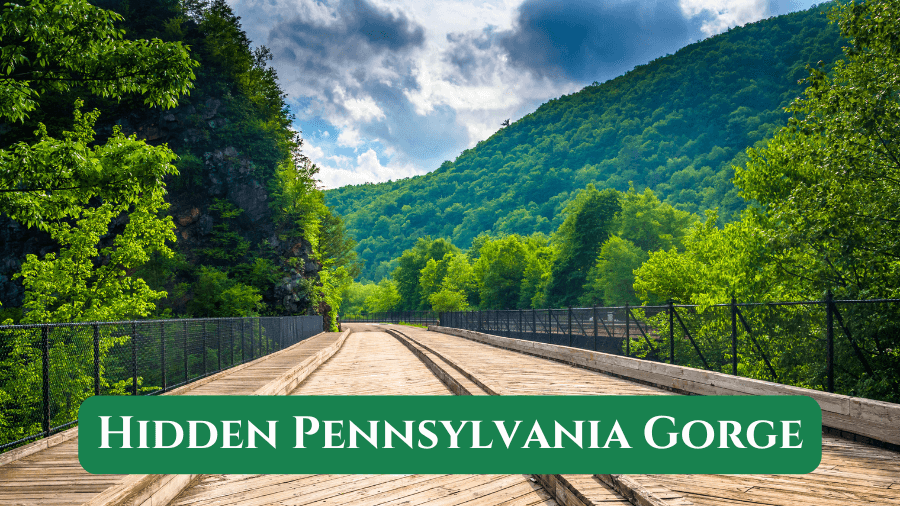
It follows the Lehigh River through a steep, rocky gorge carved by the water, with forested cliffs on both sides and a rushing current below.
As you explore, the path connects to the old canal and railroad corridor, where you can still see traces of old canal locks and an abandoned rail line.
That stretch is just one part of the park’s industrial history, which still shapes much of the landscape.
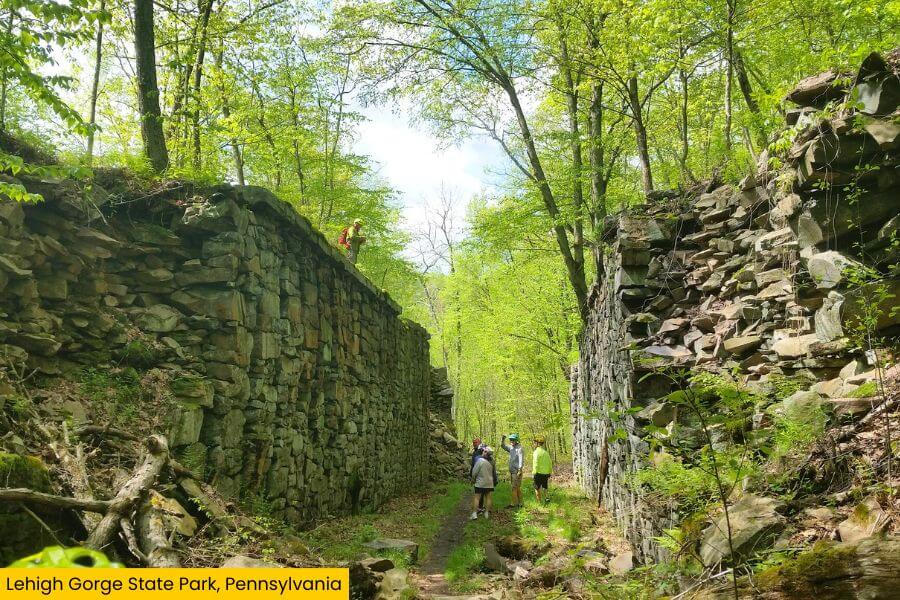
In the 1800s, this area was actually a big deal for coal transport, so you’ll spot old railroad bridges, tunnel remains, and stone foundations along the trails.
Today, the park covers over 6,100 acres, and while it’s mostly wild and untamed, there are a few access points with parking areas and restrooms.
And come fall, the whole place turns into a leaf-peeper’s dream as the leaves go wild with color.
So what should you expect when visiting? Picture peaceful woods, nonstop river views, and that perfect mix of nature and history.
Things To Do
Now that you have a sense of the place, let’s look at what you can actually do at Lehigh Gorge State Park, because there’s plenty to choose from.
Hiking or biking is an easy place to start, and the Lehigh Gorge Trail (part of the larger Delaware & Lehigh Trail) is an absolute must.
It’s a crushed-stone path that follows the river for 26 miles from White Haven to Jim Thorpe, with river views, old railroad bridges, and waterfalls the whole way.
For bikers, rentals are available in Jim Thorpe and White Haven, and shuttles can drop you at one end so you can just cruise back one-way.
And even in winter, the trail stays open for cross-country skiing and snowshoeing, so the fun doesn’t slow down.

Next is whitewater rafting, which is a big deal here.
Thanks to controlled water releases from the Francis E. Walter Dam, the Lehigh River has regular Class II and III rapids that make it a blast.
Several outfitters offer half-day and full-day rafting trips, and some even include gear so you can just show up and paddle.
But if you’re more of a chill-on-the-shore kind of person, fishing is solid too (don’t forget your Pennsylvania fishing license if you’re 16 or older).
The northern section of the river is stocked with trout, and you might also find smallmouth bass and other warm-water species depending on the season.

Into photography? Bring your camera because between the cascades, mossy boulders, and dramatic cliffs, there’s no shortage of Instagram-worthy shots here.
Aim for early morning or late afternoon light, when the entire park looks extra dreamy.
And for a bonus, hop aboard the Lehigh Gorge Scenic Railway in Jim Thorpe.
It’s not inside the park itself, but it travels along the edge of the gorge and gives you a classic train ride with beautiful scenery of the cliffs, river, and forest.
Trains run seasonally and offer special fall foliage and holiday rides, all departing from the historic Jim Thorpe train station.
Know Before You Go
Hours and Best Time to Visit
Lehigh Gorge State Park is open every day of the year from sunrise to sunset, so you’ve got plenty of flexibility.
If you’re all about fall colors, aim for mid to late October, when the park turns into an explosion of red, orange, and gold.
For whitewater rafting, spring through early fall is the prime time, especially during scheduled dam-release weekends (check with outfitters for exact dates).
Summer is the most popular season, so if you want fewer crowds, try visiting on a weekday or early in the morning.
Winter is quieter but just as gorgeous, so be sure to bring extra layers and keep an eye out for icy spots on the trail.

Fees and Amenities
The park is free to enter, which is a nice perk, but the facilities are pretty minimal.
You’ll find parking areas at key access points like White Haven, Rockport, and Glen Onoko, but you won’t find visitor centers and food vendors inside the park.
Pets and Safety Notes
- Dogs are allowed on the trails, but make sure they’re leashed and have plenty of water.
- Cell service is also spotty in the gorge, so download maps ahead of time, especially if you’re planning a long hike or bike ride.
- Wear sturdy shoes since a lot of the trails have rocky, uneven terrain that’s easier to manage with solid traction.
- Pack smart, plan ahead, and get ready for some serious outdoor fun.
Related Posts