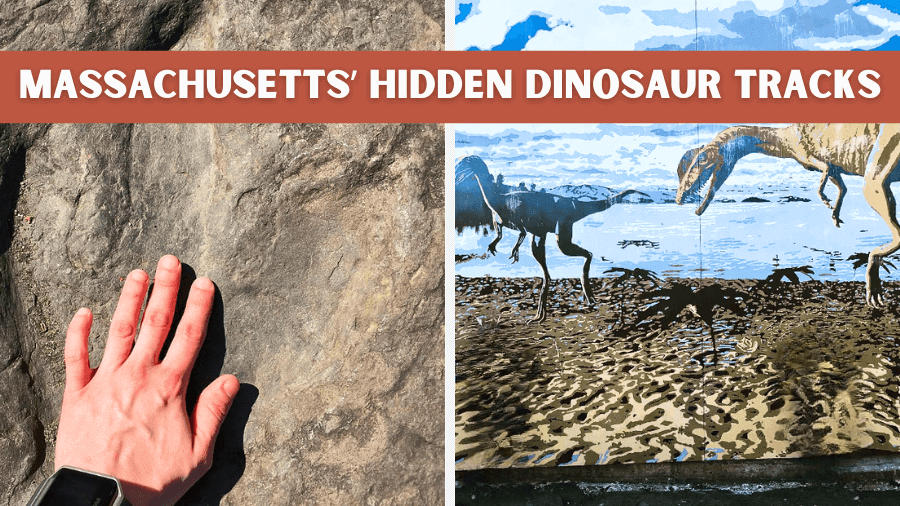
Imagine walking along a quiet trail, looking down, and spotting a three-toed footprint pressed into stone.
Now imagine that footprint was made by a real dinosaur over 200 million years ago.
Yep, that’s a thing you can actually do in Massachusetts.
There’s a hidden trail where fossilized dino tracks are still sitting out in the open.
No fences, no glass, no museum walls. Just footprints from the Jurassic era, right under your feet.
It’s one of the oldest dinosaur track sites ever discovered in the U.S., and you don’t need a ticket or a tour guide to check it out.
Here’s everything you need to know to visit this hidden prehistoric gem.
Where Is It?
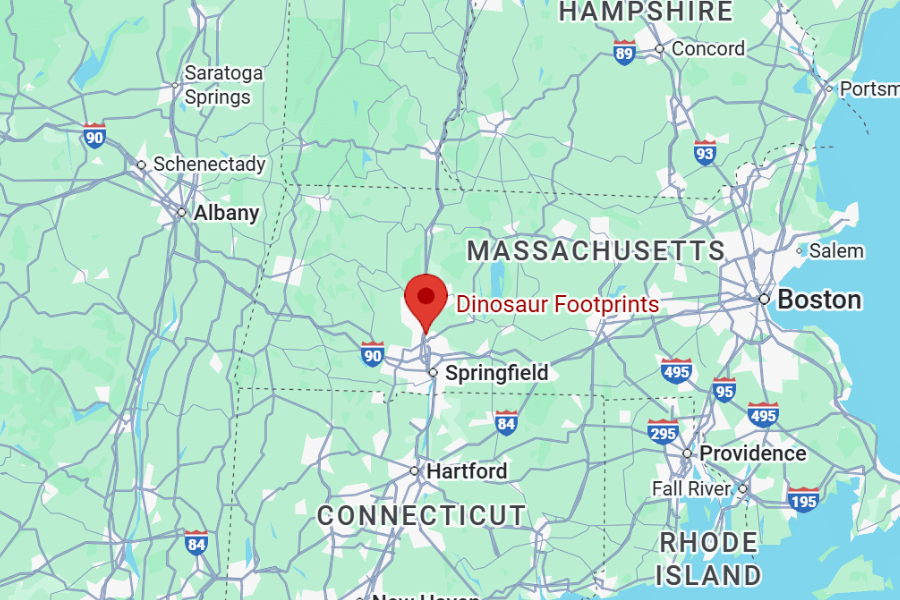
Dinosaur Footprints is located in Holyoke, Massachusetts, right off Route 5 along the Connecticut River.
It’s about 15 minutes from Springfield, just a 45-minute drive from Hartford, Connecticut, and around 1 hour and 40 minutes from Boston.
If you’re driving from Worcester, plan for 1 hour on the road.
Parking is super easy as there’s a small lot right at the trailhead.
About
If you’ve ever dreamed of standing where dinosaurs once stomped around, you’re gonna love this spot.
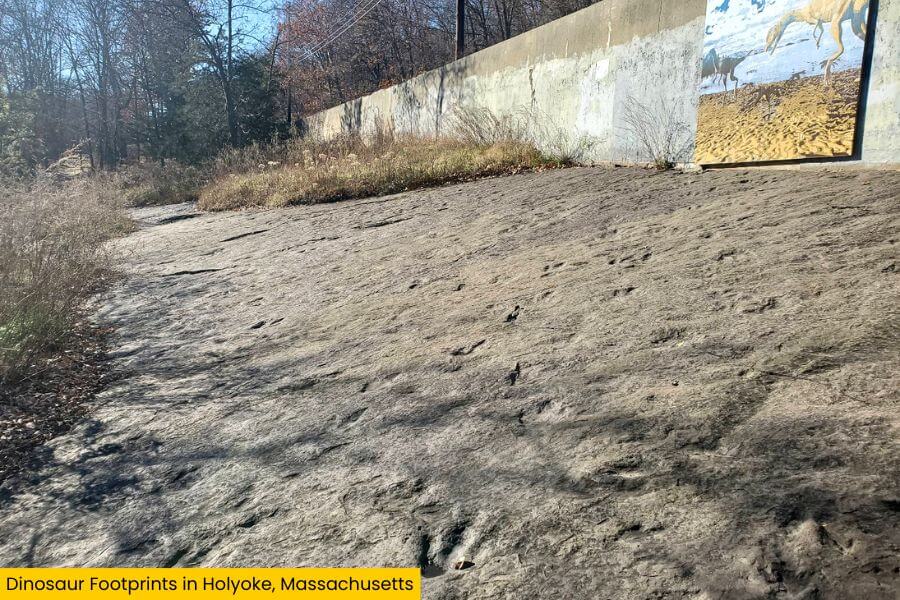
Dinosaur Footprints in Holyoke is a small but seriously cool site that’s home to real fossilized dino tracks dating back over 200 million years.
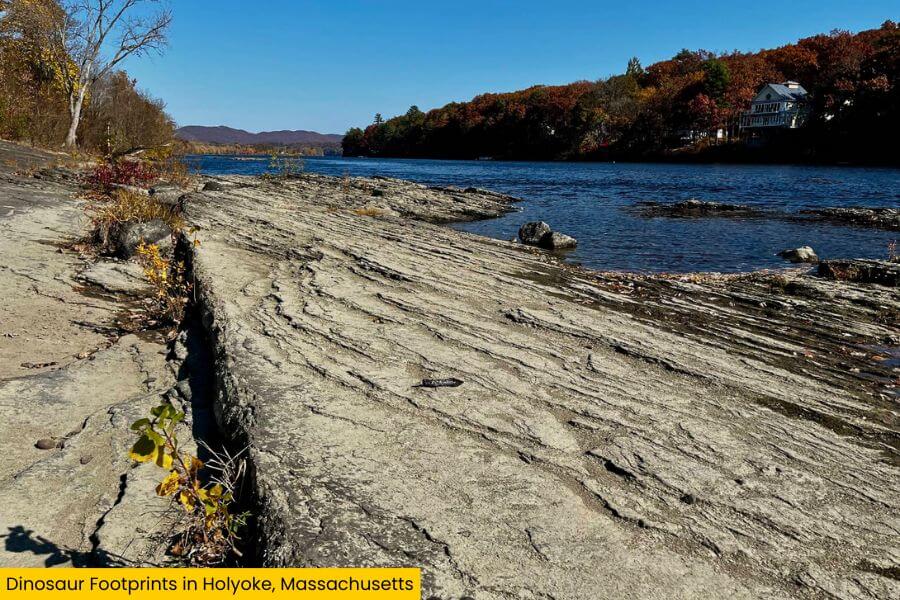
Yep, actual Jurassic-era footprints just chilling along the banks of the Connecticut River.
This spot is part of a preserved area managed by The Trustees of Reservations, and it’s totally free to visit.
The site was first discovered in the 1800s, and it’s one of the earliest dinosaur track sites ever studied in North America.
Scientists believe the tracks were made during the early Jurassic period, when this area was part of a massive rift valley dotted with lakes and mudflats.
The footprints here were left by several different types of dinosaurs, most likely small to medium-sized theropods.
The most famous prints belong to a three-toed dino called Grallator, likely made by a small, meat-eating dinosaur that walked on two legs, somewhat resembling early theropods.
These prints are about 4 to 8 inches long, and they’re scattered all over the sandstone slabs along the trail.
What’s wild is how clear some of these tracks are. You can literally see where a dinosaur stepped, slipped, or even dragged its toes.
There are hundreds of individual footprints at the site, many of them still in the exact spot where they were discovered.
The whole area sits on a rocky outcrop above the river, and everything is out in the open so no museum cases, no ropes, no glass.
Things To Do
Once you’ve wrapped your head around the fact that you’re literally walking where dinosaurs once did, there’s still plenty more to explore at this spot.
First up: the short hiking trail.
It’s an easy, short out-and-back walk that takes you along the riverbank and right past the fossilized tracks.
The path is mostly flat with a few rocky sections, but nothing too tricky. You’ll want to watch your step though, since some of the best prints are right on the trail itself.
There are signs near the footprint slabs that explain what you’re seeing, from different types of footprints to how they were formed.
If you’re visiting with kids, this place is a hit.
You can spot the tracks together, make guesses about how the dinosaurs moved, and even take turns pretending to be a dinosaur running through the mud.
Just don’t try to take any fossils home. It’s protected land, and touching is cool, but removal is a no-go.
There aren’t picnic tables or anything fancy, but the views toward Connecticut River are pretty peaceful, and there are a few big flat rocks that make great sitting spots.
Photography here is super fun, especially if you want to get creative with angles.
Try snapping your foot next to a dino print for scale, or catch the shadows in late afternoon when the tracks really pop.
And if you’re into birdwatching, bring your binoculars. The area around the river is full of songbirds, hawks, and the occasional heron swooping in for a snack.
Know Before You Go
Before you head out to stomp around with the dinos, here’s everything you’ll want to know to make your visit smooth and stress-free.
First things first: Dinosaur Footprints is open daily from sunrise to sunset during the official season (typically April through November).
It’s also completely free. No tickets, no entrance fees, just pull into the lot and start exploring.
There are no restrooms on-site, so plan accordingly.
This place is not a full-day destination, so it’s best paired with other nearby adventures.
If you’re hungry afterward, downtown Northampton is just 10 minutes away and packed with cute cafes, restaurants, and ice cream shops.
Try Herrell’s for a scoop or two, or grab a slice at Joe’s Spaghetti & Pizza.
Looking for more outdoorsy stuff?
Mount Tom State Reservation is right nearby and has tons of hiking trails with great views.
The Universal Access Trail is a good pick — it’s a half-mile loop around Lake Bray with plenty of shade.
If you’re into museums, the Beneski Museum of Natural History at Amherst College is about 25 minutes away and has one of the largest collections of dinosaur footprints in the world.
It’s indoors, free, and a perfect follow-up if you want to keep the Jurassic vibes going.
Also, keep in mind the rocks can be slippery after rain, and some of the prints are easiest to spot when the light hits them just right, usually early morning or late afternoon.
Dogs must be kept on leash at all times at Dinosaur Footprints, but keep an eye out so they don’t trample any fossils.
And yep, bug spray is a good idea in warmer months as the riverbank can get buggy.
Don’t forget to bring water. There’s no fountain, and you’ll definitely want a sip while you’re out dino tracking.
Related Posts