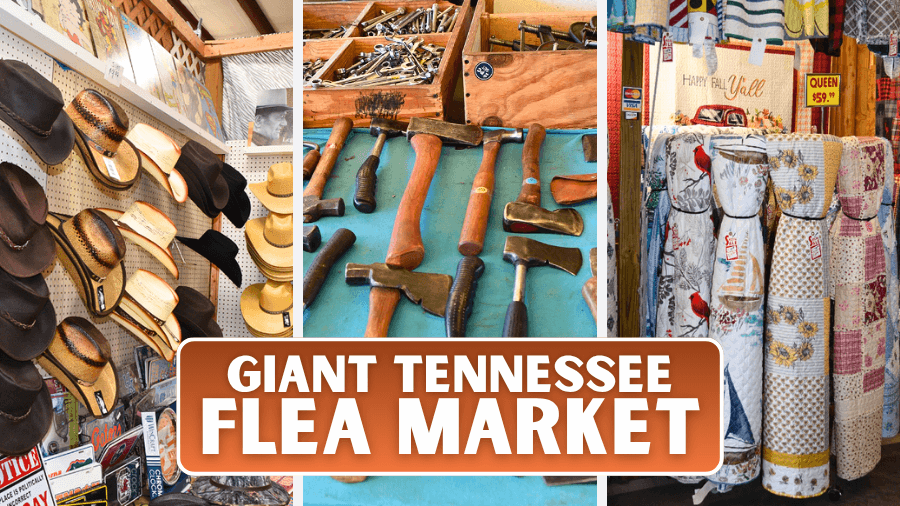
Tennessee is packed with roadside attractions, fun shops, and Smoky Mountain souvenir stops, but this gigantic flea market takes things to a whole different level.
We’re talking more than 1,000 vendors, endless rows of booths, homemade food, vintage treasures, bargain finds, and enough random collectibles to keep you wandering for hours.
This massive market has become a must-stop destination for road trippers, bargain hunters, antique lovers, and anyone who enjoys the thrill of finding something unexpected.
And honestly, half the fun is not knowing what you’ll discover around the next corner.
If you love giant flea markets, hidden gems, and places packed with personality, you’re going to want this spot on your Tennessee bucket list.
Where Is It?
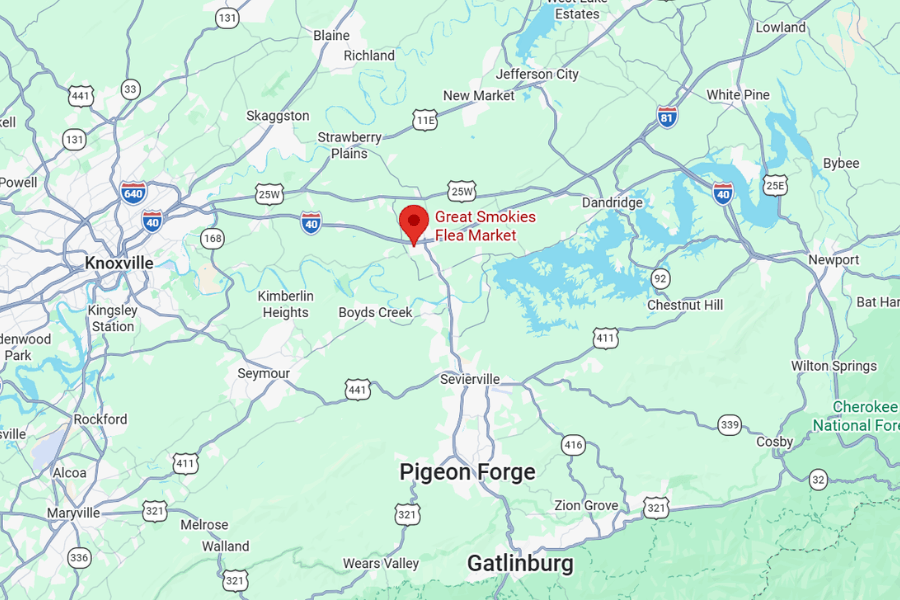
The Great Smokies Flea Market is located in Kodak, Tennessee, near Sevierville, right off Exit 407 on Interstate 40 at 220 W Dumplin Valley Road.
You’ll find it in the foothills of the Great Smoky Mountains, about 25 minutes from downtown Knoxville, 3 hours from Nashville, and roughly 2 hours from Chattanooga.
If you’re already exploring Pigeon Forge or Gatlinburg, you’re in luck because the flea market is only about 30 minutes from Pigeon Forge and around 40 minutes from Gatlinburg.
About
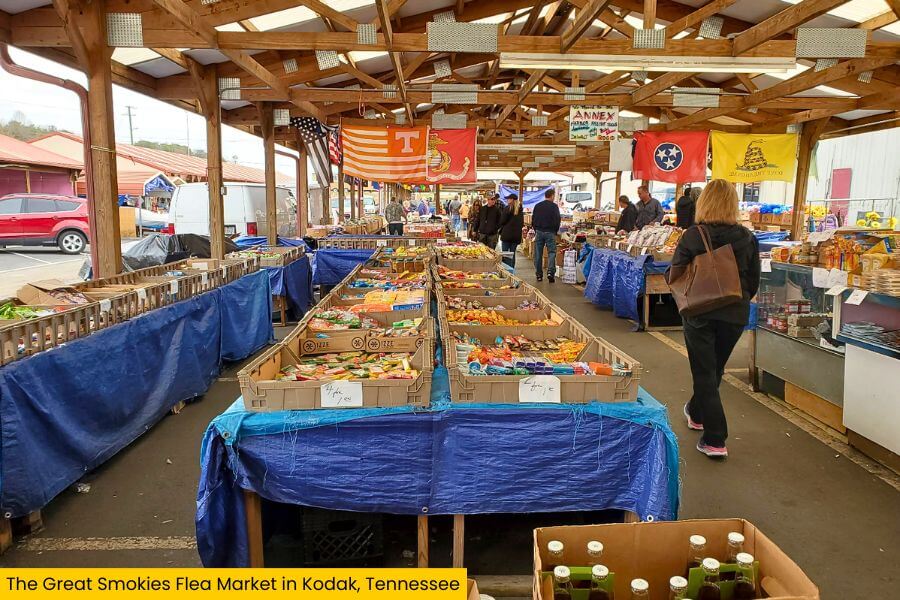
The Great Smokies Flea Market is one of the biggest flea markets in Tennessee, with more than 1,000 vendors spread across a massive indoor and outdoor space in Kodak.
This place has been a Smoky Mountain road trip staple since 1990, pulling in shoppers from all over the Southeast looking for antiques, collectibles, handmade goods, fresh food, and bargain finds.
The flea market covers 200,000 square feet indoors, so you can browse year-round without worrying about Tennessee heat, surprise rainstorms, or freezing winter mornings.
Outside, rows of open-air vendor spaces stretch across the property, especially during busy weekends and holiday events.
One of the biggest reasons people love this flea market is the sheer variety.
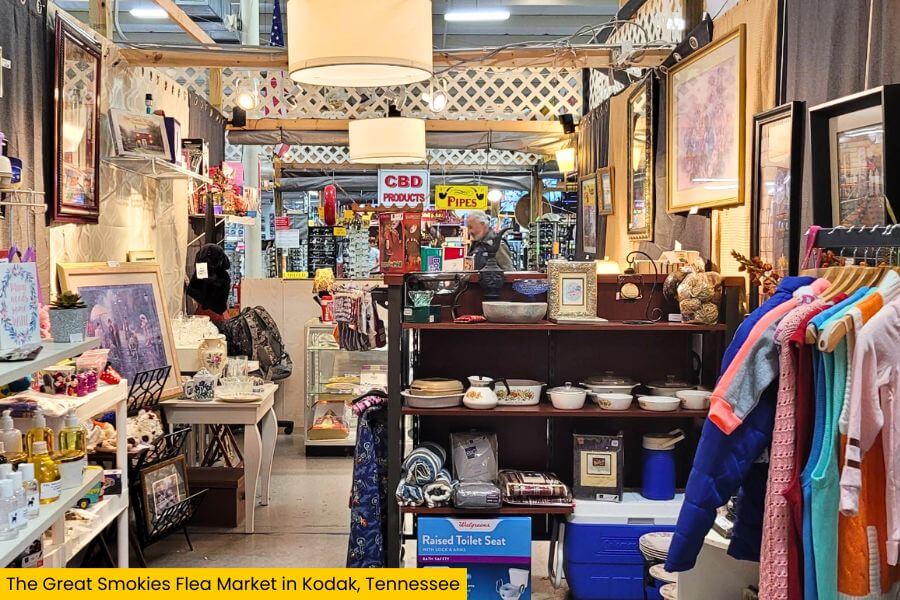
You’ll find everything from old-school vinyl records and vintage Coca-Cola signs to handmade candles, locally made jams, fishing gear, boutique clothing, sports memorabilia, tools, and farmhouse-style furniture.
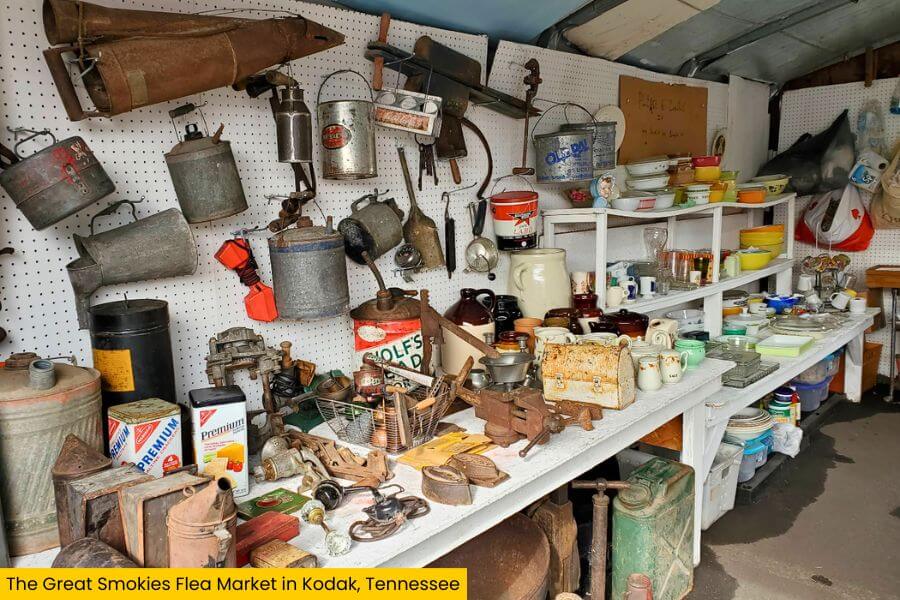
Some booths feel like mini antique stores, while others are packed floor-to-ceiling with unusual collectibles and random treasures you didn’t know you needed until five seconds ago.
The market is also known for spotlighting local Tennessee vendors and Smoky Mountain artisans.
You’ll run into sellers offering homemade fudge, hand-poured soaps, leather goods, knives, wood carvings, and all kinds of crafts tied to Appalachian traditions.
If you love hunting for one-of-a-kind souvenirs instead of grabbing something from a chain gift shop, this is your spot.
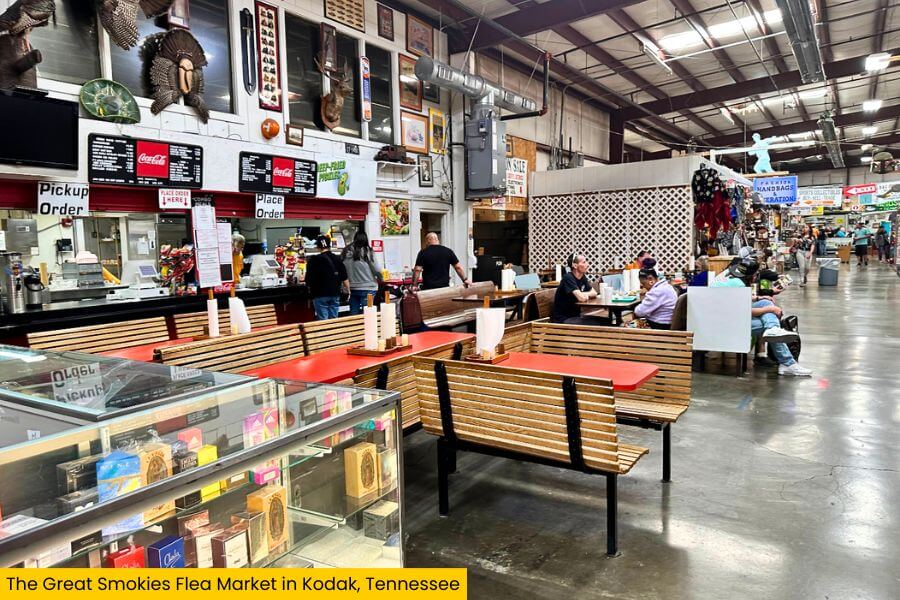
Food is a big part of the experience too.
The flea market has snack stands and food vendors serving everything from burgers and barbecue to funnel cakes and fresh-squeezed lemonade.
During busy weekends, the smell of smoked meat and fried food basically follows you through the aisles in the best possible way.
Its location near Interstate 40 also makes it a super popular stop for travelers heading to Pigeon Forge, Gatlinburg, and Great Smoky Mountains National Park.
A lot of people swing by for “just a quick stop” and end up spending half the day wandering around because there’s always another aisle, another booth, or another weird collectible waiting around the corner.
What To Expect
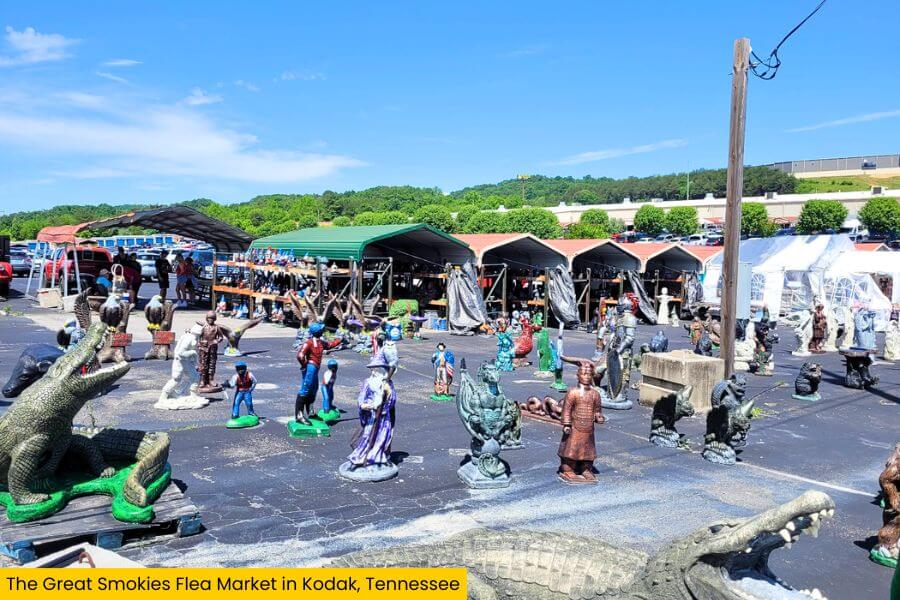
Walking into The Great Smokies Flea Market feels a little like stepping into a giant maze where every turn leads to something completely different.
One minute you’re flipping through boxes of vintage comic books, and five minutes later you’re staring at a booth filled with rustic wood décor and Appalachian-style crafts.
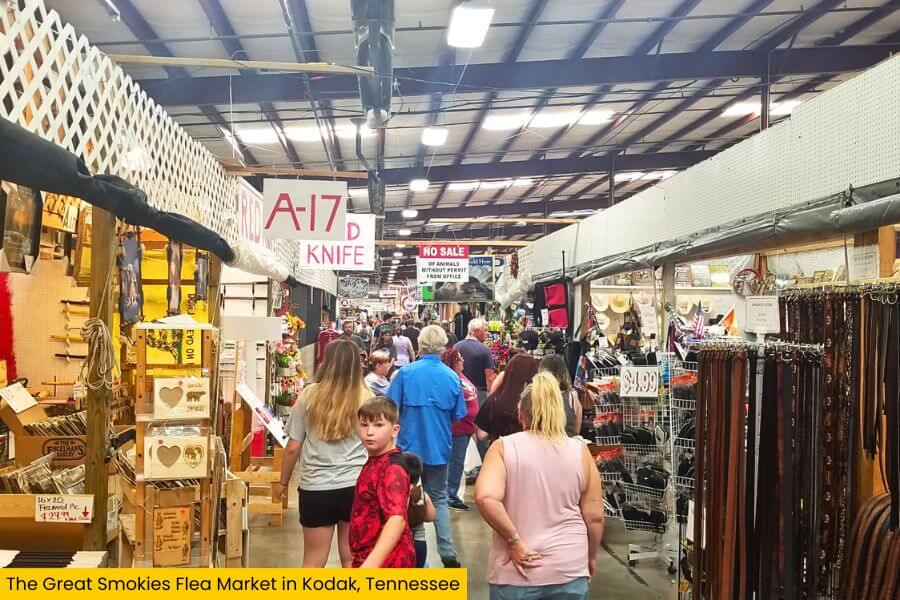
The indoor section is huge, with long aisles packed with vendor booths that stay open year-round.
You’ll see colorful signs hanging above each section, but it’s still easy to lose track of time once you start wandering.
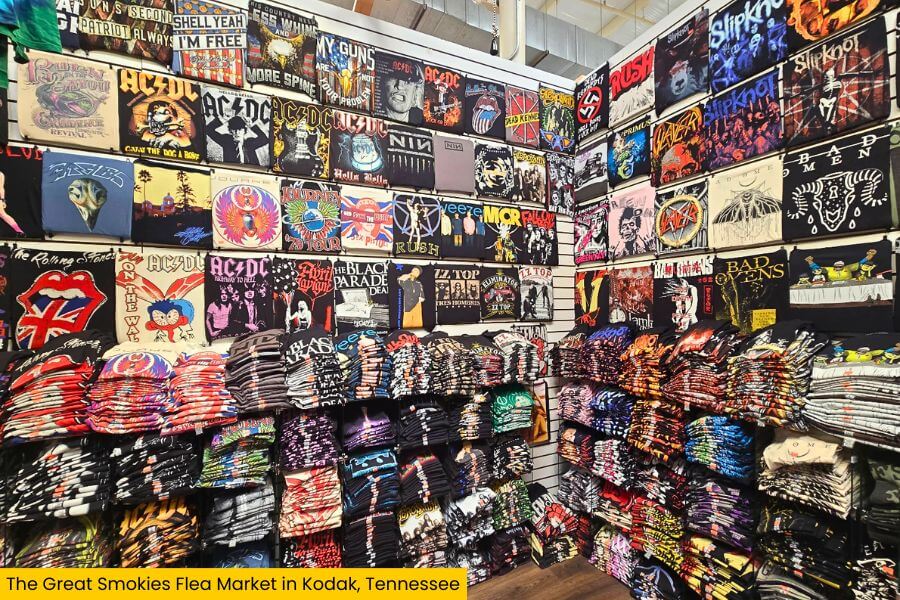
If you’re into antiques or collectibles, plan to spend a while here.
You can dig through old coins, baseball cards, vintage toys, glassware, old tools, retro kitchen signs, and classic vinyl records from artists like Johnny Cash and Elvis Presley.
A lot of booths carry Appalachian-style décor too, including rustic lanterns, cabin-style décor, and farmhouse furniture built from reclaimed wood.
Clothing booths are everywhere, especially near the center aisles.
You’ll find Smoky Mountains souvenir shirts, western wear, boutique-style outfits, cowboy boots, leather belts, and racks of affordable fashion pieces that rotate constantly.
There are also booths selling handmade jewelry, crystals, and customized accessories, so if you love browsing for unique gifts, you’ll probably leave with a bag or two.
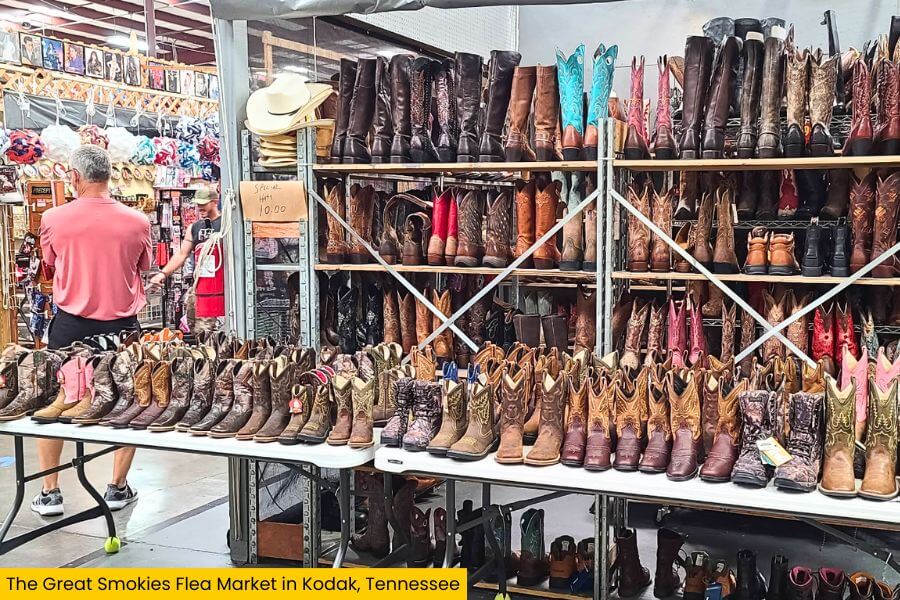
Food vendors are scattered throughout the market, so you’re never far from a snack break.
You can grab classic flea market favorites like burgers, popcorn, and funnel cakes while shopping.
Some vendors also sell homemade jams, hot sauces, locally harvested honey, fresh-roasted nuts, and baked goods you can take home.
The outdoor vendor area has a totally different energy.
On busy weekends, rows of tents and tables fill the property with sellers offering produce, discounted tools, plants, outdoor gear, and secondhand finds.
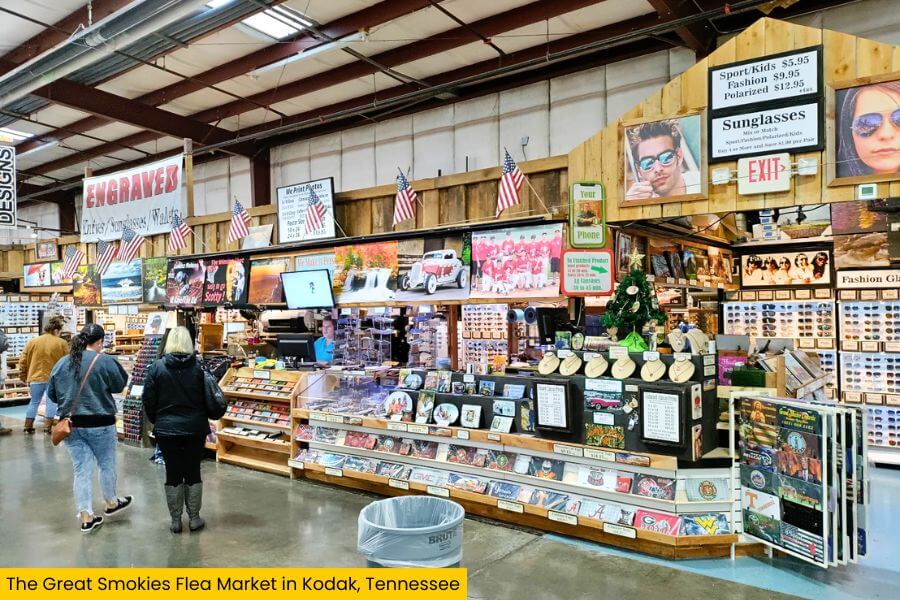
This is where you’ll spot people hauling wagons, carrying armfuls of bargain buys, and negotiating prices like pros.
If you enjoy garage sales or thrift stores, the outdoor section is easily one of the most fun parts of the market.
Weekends are by far the busiest time to visit.
The parking lots fill up quickly, especially during summer, fall foliage season, and holiday weekends when tourists flood the Smokies.
One thing that surprises a lot of first-time visitors is just how mixed the inventory is.
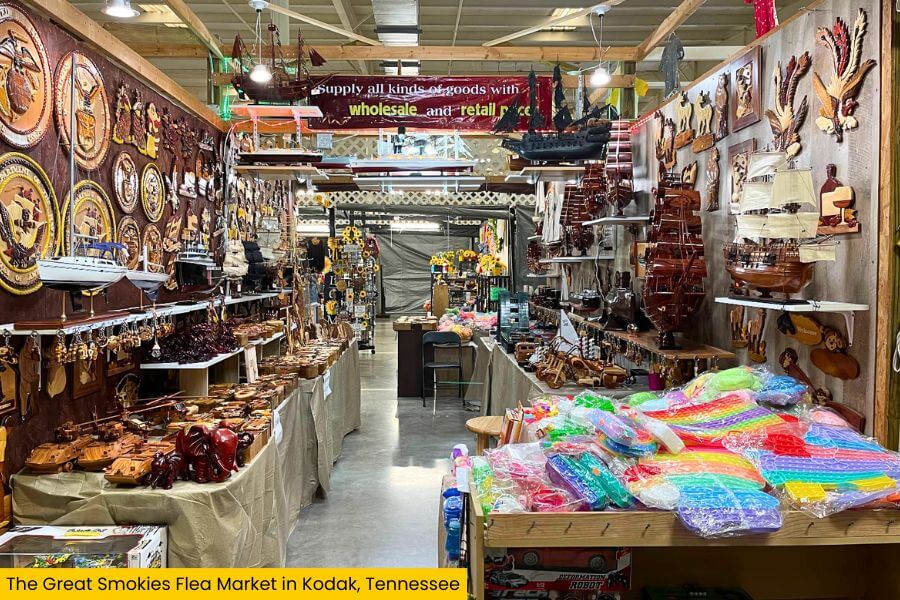
You might see handmade quilts beside brand-new electronics, old fishing lures next to imported sunglasses, or a booth selling collectible knives across from a stand packed with homemade fudge.
Part of the fun is that you truly never know what you’ll stumble across next.
You should also expect a lot of walking.
Comfortable shoes are a very good idea because covering the indoor and outdoor sections can easily take several hours.
Know Before You Go
The Great Smokies Flea Market is open year-round, which makes it an easy stop no matter when you’re visiting the Smokies.
The market is typically open Friday through Sunday from 8 a.m. to 5 p.m.
Hours can occasionally change during holidays or special events, so it’s smart to double-check the official website before making the drive.
If you want the biggest selection and the liveliest atmosphere, go on a Saturday morning.
That’s when the most vendors are set up, especially in the outdoor section.
The downside is that Saturdays are also the busiest, particularly during summer vacation months and fall foliage season when tourists pack Sevierville, Pigeon Forge, and Gatlinburg.
For a more relaxed experience, Friday mornings are usually your best bet.
The crowds are smaller, parking is easier, and you’ll have more room to browse without squeezing through packed aisles.
Sunday afternoons can also be quieter, although some vendors start packing up earlier in the day.
Parking is free, and the lot is massive, but it can still fill up surprisingly fast during peak weekends.
Arriving early gives you the best shot at parking close to the entrance and beating the heaviest crowds.
Bring comfortable walking shoes because this place is huge.
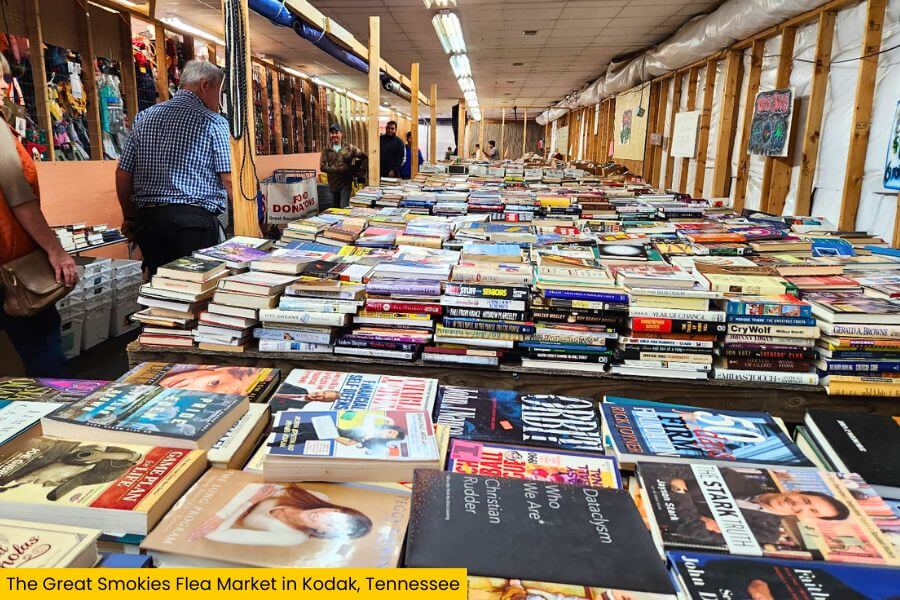
You’ll be covering hundreds of booths across indoor aisles and outdoor vendor areas, and it’s easy to spend three to five hours here without realizing it.
A rolling cart or reusable shopping bag also comes in handy if you plan on buying antiques, collectibles, or bulky items.
Cash is a good idea even though many vendors accept cards now.
Some smaller booths are still cash-only, especially outside.
There are ATMs on-site, but lines can get long during busy weekends.
Don’t be afraid to chat with vendors or ask questions about prices.
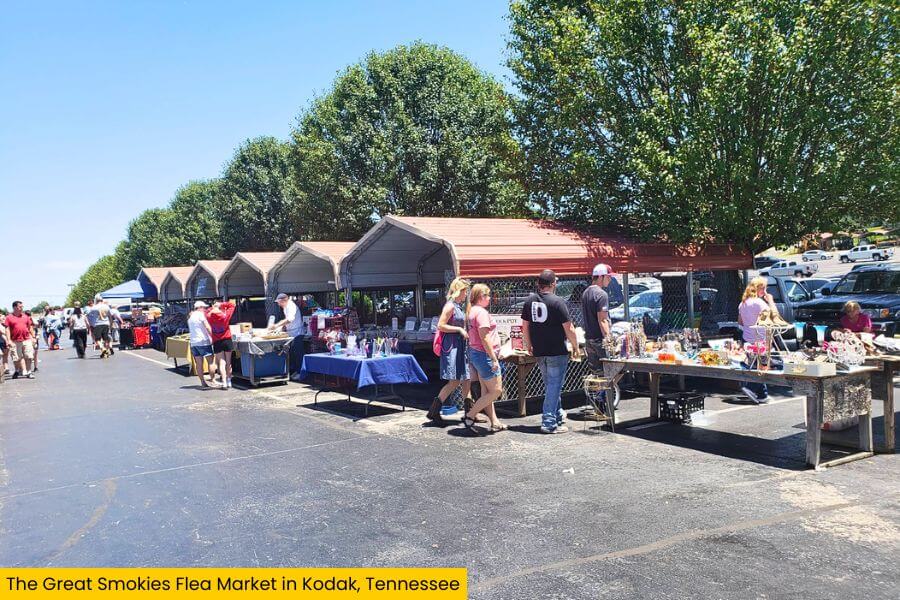
Many sellers are happy to negotiate a little, especially if you’re buying multiple items.
If you’re visiting during summer, the outdoor areas can get hot by midday.
East Tennessee temperatures regularly climb into the upper 80s and low 90s between June and August, so bringing water is a smart move.
The indoor section is climate-controlled, which makes it a nice break from the heat.
One final tip: leave extra space in your car.
Even people who swear they’re “just looking” somehow end up leaving with homemade fudge, vintage signs, old records, handmade crafts, and at least one thing they absolutely did not plan to buy.
Related Posts