Ready to see wild horses in real life that are not in a zoo, not behind a fence, but actually running free?
Georgia has a few magical places where these amazing animals still roam like they own the land (because honestly, they kind of do).
We’re talking sandy trails, hidden ruins, and wide open beaches where hooves leave tracks in the sand.

If you’ve ever dreamed of spotting a wild horse just chilling under a mossy oak tree, you’re in for a serious treat.
Stick around, because we’re about to show you the most unforgettable wild horse spots in Georgia.
Wild Horses In Georgia

Let’s talk about the stars of Cumberland Island—the wild horses.
Yep, totally free-roaming horses living their best lives on a giant barrier island off the coast of Georgia.
There are about 150 of them roaming the island’s beaches, forests, and even the ruins of an old mansion.
These horses aren’t fenced in or fed by people, instead they graze on sea oats, marsh grasses, and whatever else they can find.
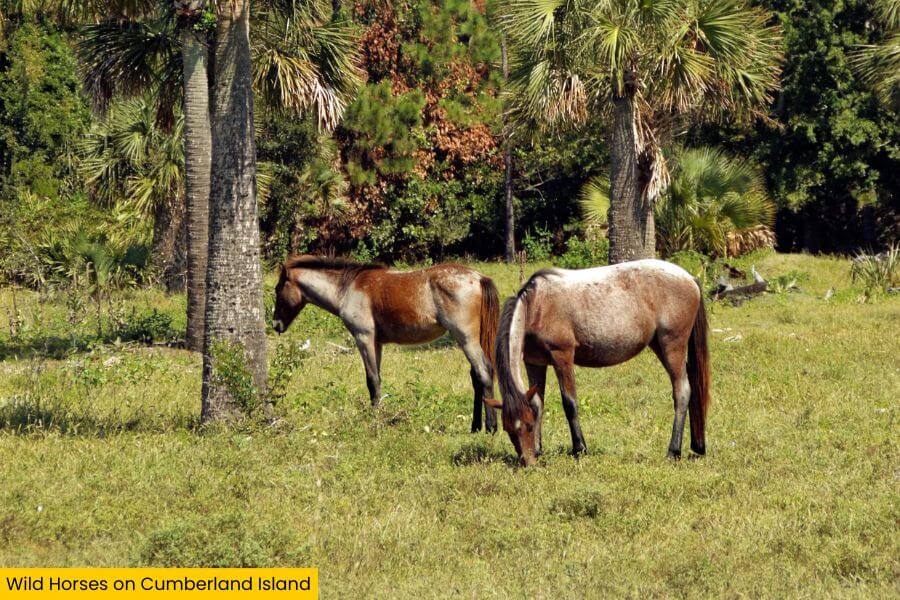
You might spot one trotting along the shoreline or hanging out in the dunes like it owns the place.
Cumberland Island is the only place in Georgia where wild horses still run totally free.
They’ve been here for centuries, and while they look pretty chill, they’re tough enough to handle the island’s heat, storms, and swarms of mosquitoes.

You can only get to the island by ferry, and once you’re there, it’s just you, the trails, and the horses.
No public cars, no traffic—just nature and hooves in the sand.
Where Did The Horses Come From?

So where did the wild horses of Cumberland Island actually come from?
It’s kind of a mystery, but here’s what we know.
The first horses likely showed up way back in the 1500s when Spanish explorers brought them over by ship.
Yep, we’re talking centuries ago, before the U.S. was even a thing.
Later on, English settlers, farmers, and plantation owners added more horses to the island herd.
Over time, some of those horses escaped or were left behind, and they just…stayed.
They learned to survive without barns, fences, or humans feeding them hay.

And after generations of doing their own thing, they’re totally wild now.
They aren’t a single breed either—it’s kind of a mix of Spanish, domestic, and who-knows-what genes all jumbled together.
Now let’s find out exactly where you can find the horses…
1. Cumberland Island Beaches

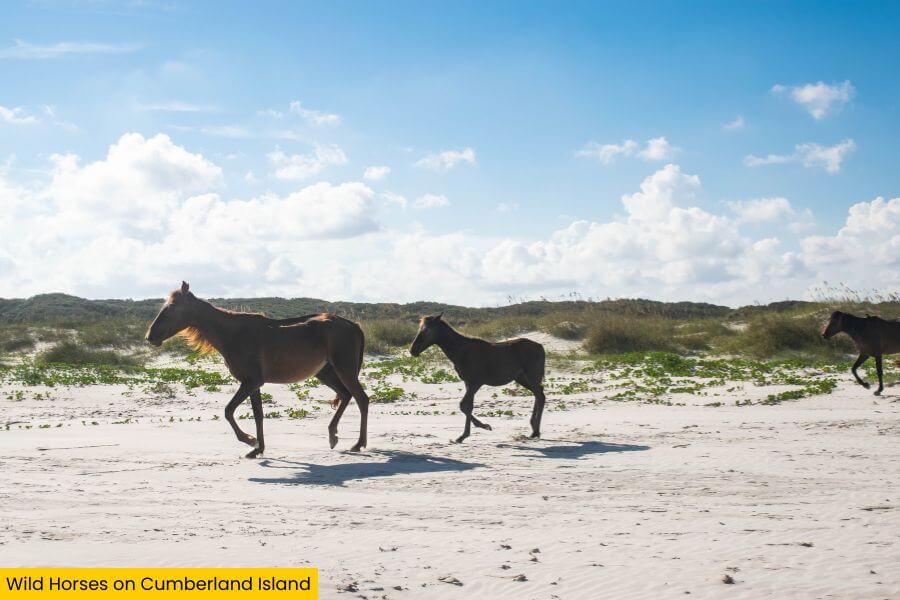
The beaches on Cumberland Island are wide, flat, and totally wild, stretching for 17 miles along Georgia’s coast with soft white sand and barely a building in sight.
You’ll often spot wild horses walking right by the water, leaving hoofprints in the sand and sometimes even splashing in the waves like it’s no big deal.

Because the island is part of Cumberland Island National Seashore, the beaches stay quiet and natural—no cars, no crowds, just sea oats, dunes, and the sound of waves.
It’s the kind of place where you can walk for hours, see wild horses grazing near the dunes, and feel like you’re on your own private island.
2. Stafford Plantation

Next head over to Stafford Plantation, one of the island’s oldest and quietest spots, which you can reach either by walking or biking along the island’s trails.
This place used to be a huge cotton plantation owned by Robert Stafford in the early 1800s, and parts of it are still standing.
It’s got a spooky, overgrown feel with old tabby buildings, giant trees, and horses casually wandering through like it’s no big deal.
You can’t go inside the main house (it’s private), but the trails around it are perfect for spotting wildlife and catching those wild horses in action.
3. Grand Avenue

From Stafford, follow the sandy path known as Grand Avenue which is the island’s main “road,” but don’t expect pavement or street signs.
This 13-mile-long stretch runs straight through the middle of Cumberland Island, cutting through forests thick with palmettos and towering oaks.
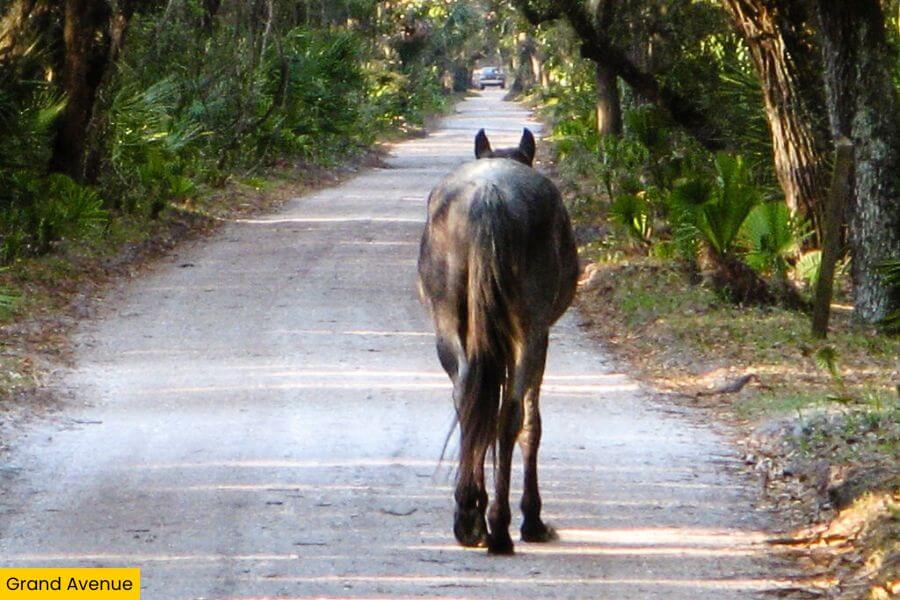
You might see horses trotting alongside you, wild turkeys crossing the trail, or even a deer darting through the trees.
It’s the kind of place where you’ll want to take it slow, breathe in the fresh air, and just soak up the magic of being completely off the grid.
4. Dungeness Ruins

Keep going down Grand Avenue and you’ll hit one of the island’s most jaw-dropping sights, the Dungeness Ruins.
These giant stone remains are what’s left of a mansion built by Thomas Carnegie back in the 1880s.

Fire took down the house in 1959, but the shell still stands, and it looks straight out of a movie with wild horses grazing in the front yard.
It’s eerie, beautiful, and totally unforgettable.
Related Posts