There’s so much history in Georgia, and these are the historic sites that you need to visit to uncover the story of its past.
Think ancient hand-built mounds, battlefields that shook the nation, tiny print shops that preserved languages, and neighborhoods that raised legends.
Some spots go back over a thousand years, while others bring you right into the heart of the Civil Rights Movement or the early days of the American colonies.
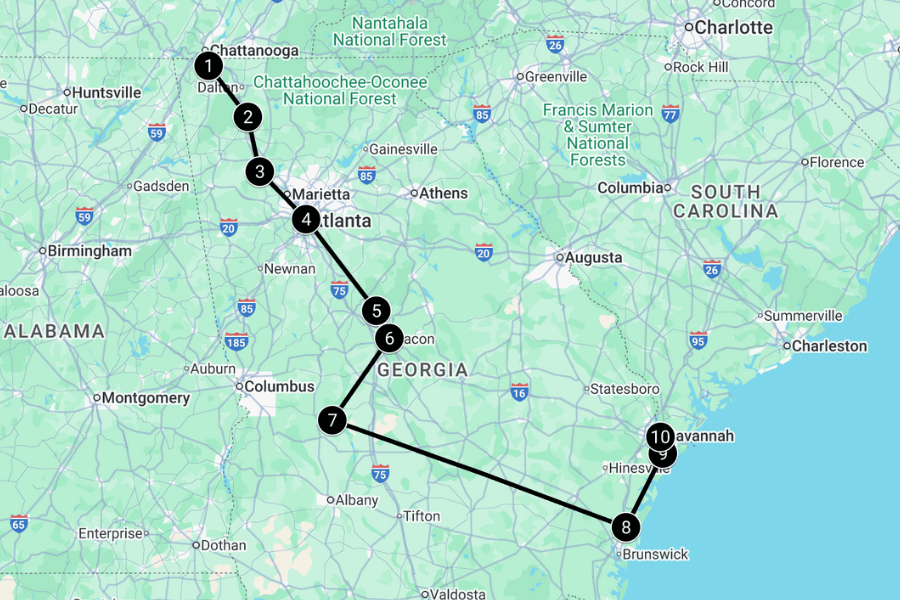
Whether you’re into forts, farms, old cemeteries, or hidden ruins, these 10 historic sites will take you on a road trip through Georgia’s real story.
1. Chickamauga And Chattanooga National Military Park
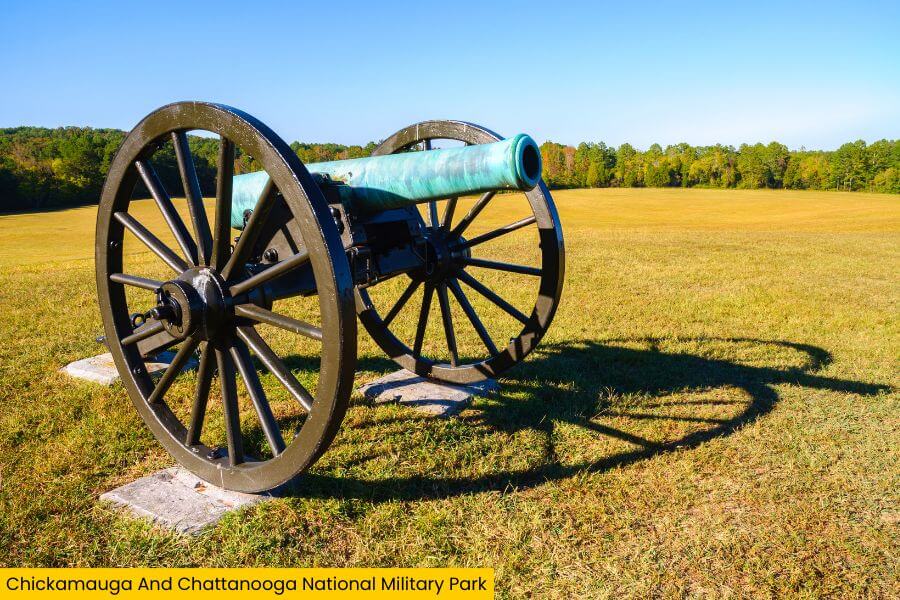
Chickamauga and Chattanooga National Military Park spans over 9,000 acres of battlefield land, with the main Chickamauga section located in Fort Oglethorpe.
It’s the oldest Civil War park in the U.S., created in 1890 to honor the fierce 1863 battles for control of Chattanooga (aka the “Gateway to the Deep South”).
You can explore miles of trails, climb the Wilder Tower for epic views, see real cannons, and even signs marking where Union and Confederate troops stood.
This park is a big part of Georgia’s history because the Battle of Chickamauga was one of the Civil War’s bloodiest, resulting in over 34,000 casualties.
It helped shape the outcome of the war and turned this quiet stretch of land into a place where history is honored to this day.
2. New Echota State Historic Site
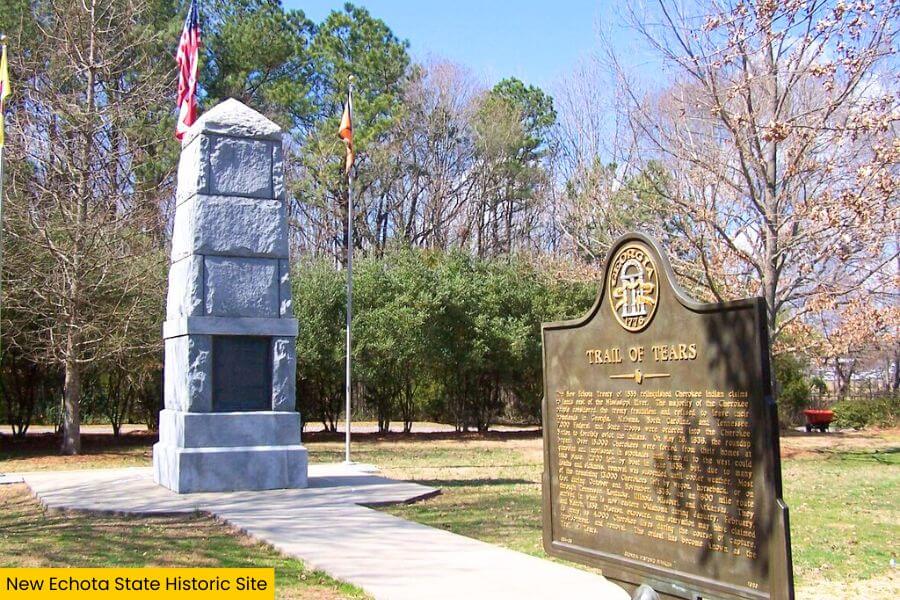
About a 45-50 minute drive from Chickamauga, you’ll find New Echota State Historic Site in Calhoun which was once the capital of the Cherokee Nation.
This is where the Cherokee built a government, published the bilingual Cherokee Phoenix newspaper, and used Sequoyah’s alphabet to write in their own language.
You can walk through 12 original and reconstructed buildings, including the Supreme Court, Council House, and a print shop.
It’s a powerful place to learn about the Cherokees’ struggle to stay on their land before the forced removal known as the Trail of Tears began.
3. Etowah Indian Mounds State Historic Site
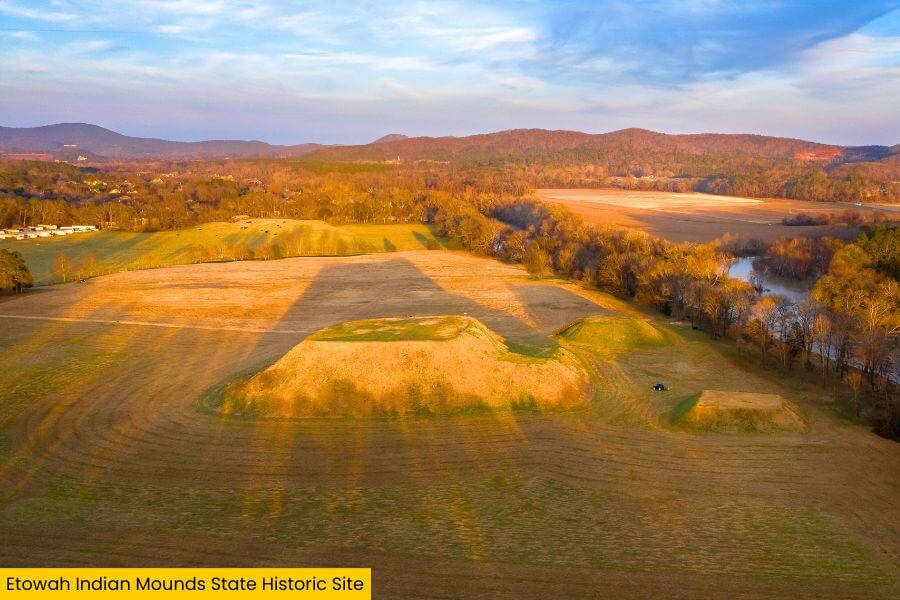
About a 40-minute drive away from New Echota is Etowah Indian Mounds State Historic Site in Cartersville, where things go back even further in time.
This ancient site was once home to a powerful Mississippian culture, and you can still climb the 63-foot Temple Mound they built entirely by hand.
There’s also a small museum that features incredible artifacts, reflecting the skill, creativity, and complexity of this community.
It’s one of the best places in the Southeast to see what life looked like long before Europeans arrived.
4. Martin Luther King, Jr. National Historical Park
Next is Martin Luther King, Jr. National Historical Park in Atlanta, which brings modern history to life in the neighborhood where Dr. King was born.
You can tour his childhood home at 501 Auburn Avenue, visit Ebenezer Baptist Church where he preached, and see powerful exhibits at the visitor center nearby.
The park also includes the King Center, where Dr. King and Coretta Scott King are buried side by side in a reflecting pool that’s both peaceful and moving.
It’s one of the state’s most important places, showing how a boy from Atlanta grew up to change the world with his words, his marches, and his dream.
(At the time of writing, the Birth Home of Martin Luther King, Jr. is temporarily closed for rehabilitation work, so check online before planning your visit.)
5. Jarrell Plantation State Historic Site
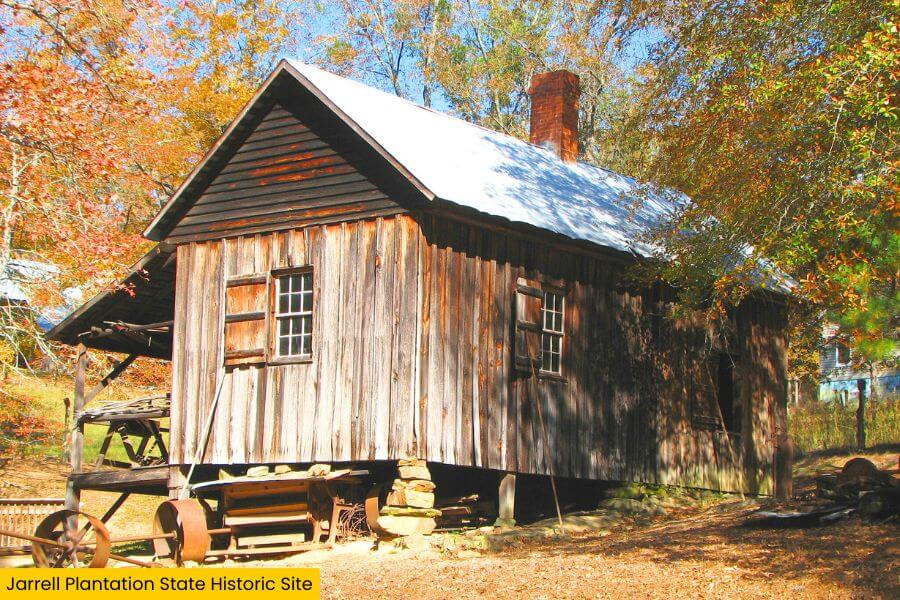
From the busy streets of Atlanta, things slow way down at Jarrell Plantation State Historic Site in Juliette.
It’s where one family ran a working cotton plantation for generations, starting in 1847.
This place is packed with over 20 original buildings, including the farmhouse, a sawmill, a cotton gin, and even a syrup evaporator.
Unlike grand plantations with columns, Jarrell shows what life was really like for middle-class white farmers and the enslaved people who built their wealth.
It’s an eye-opening stop where you can walk through creaky porches and see how Georgia’s farming roots shaped the state for generations.
6. Ocmulgee Mounds National Historical Park
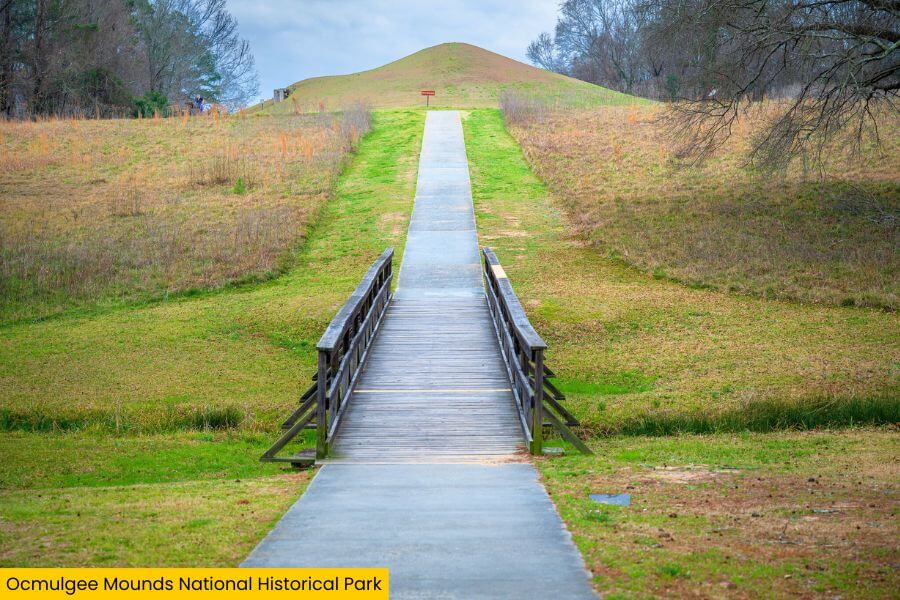
A 30-minute drive from Jarrell Plantation leads to Ocmulgee Mounds National Historical Park in Macon, where Georgia’s ancient history runs even deeper.
This site was a major gathering place for Native peoples, and you can still step inside a 1,000-year-old Earth Lodge with its original clay floor intact.
You’ll also find massive temple mounds, ceremonial grounds, and a museum that showcases everything from arrowheads to hand-crafted pottery.
And when you stand on top of the Great Temple Mound, you’re in the exact spot where leaders once watched over the entire Ocmulgee River valley.
7. Andersonville National Historic Site
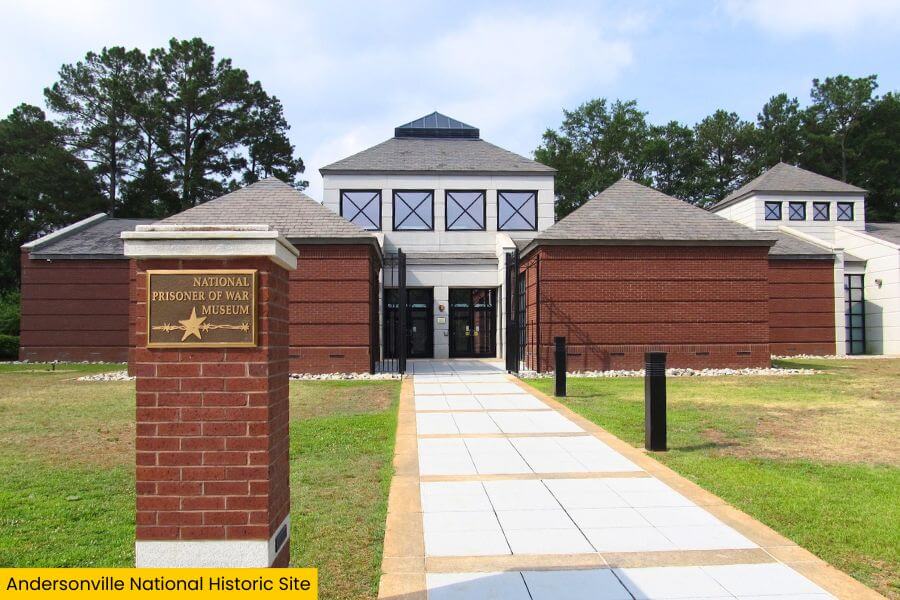
Up next is the Andersonville National Historic Site, a place that tells one of the most brutal chapters in Georgia’s Civil War story.
This was the site of Camp Sumter, a Confederate prison where over 45,000 Union soldiers were held, and nearly 13,000 died from disease, starvation, and exposure.
Today, you can walk the former prison grounds, visit the National POW Museum, and see rows of white headstones in Andersonville National Cemetery.
It’s a somber place, but a powerful one, honoring prisoners of war from all conflicts (not just the Civil War) and ensuring their stories aren’t forgotten.
8. Fort King George Historic Site
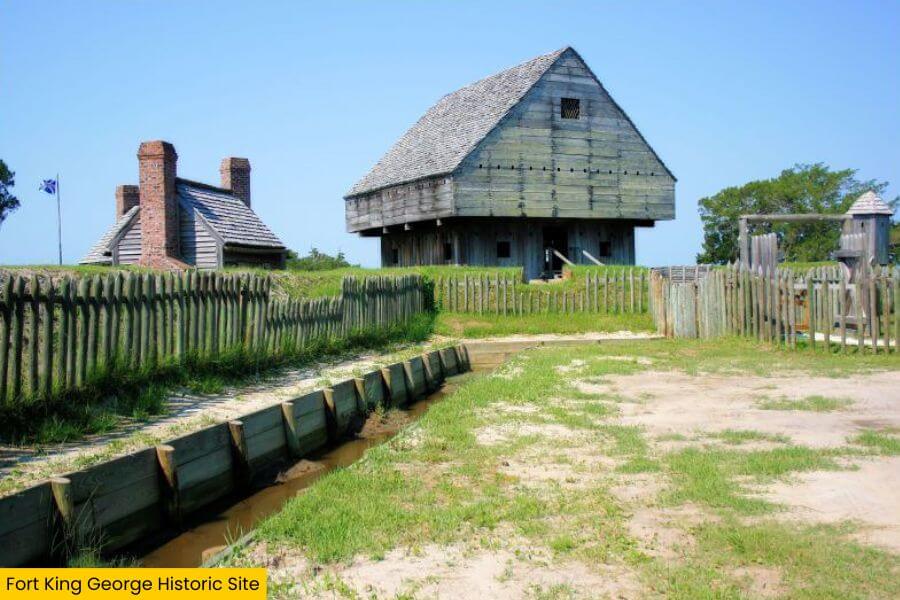
From central Georgia to the coast, Fort King George Historic Site in Darien gives you a peek into life before the state even existed.
Built by the British in 1721, this was the southernmost outpost of their South Carolina colony and the first fort on what would later become Georgia soil.
You can explore the reconstructed blockhouse, sawmill, barracks, and even the old tabby ruins as you picture brave soldiers enduring swamps and Spanish threats.
It’s a place that shows just how rough and risky life was on the edge of the British Empire.
9. Wormsloe State Historic Site
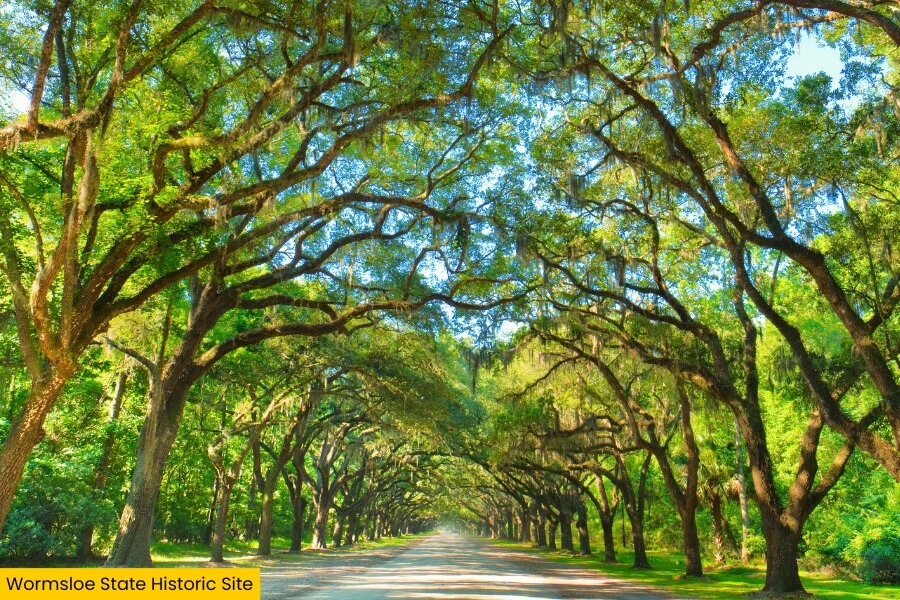
Wormsloe Historic Site in Savannah offers a whole different kind of wow, starting with its iconic 1.5-mile drive beneath a canopy of oaks.
This was the colonial estate of Noble Jones, one of Georgia’s first settlers.
Today, you can still see the tabby ruins of his home, which was completed in 1745, and is the oldest standing structure in Savannah.
There’s a walking trail through salt marshes and forests, and on some days, costumed interpreters demonstrate colonial life with musket drills.
10. Savannah Historic District
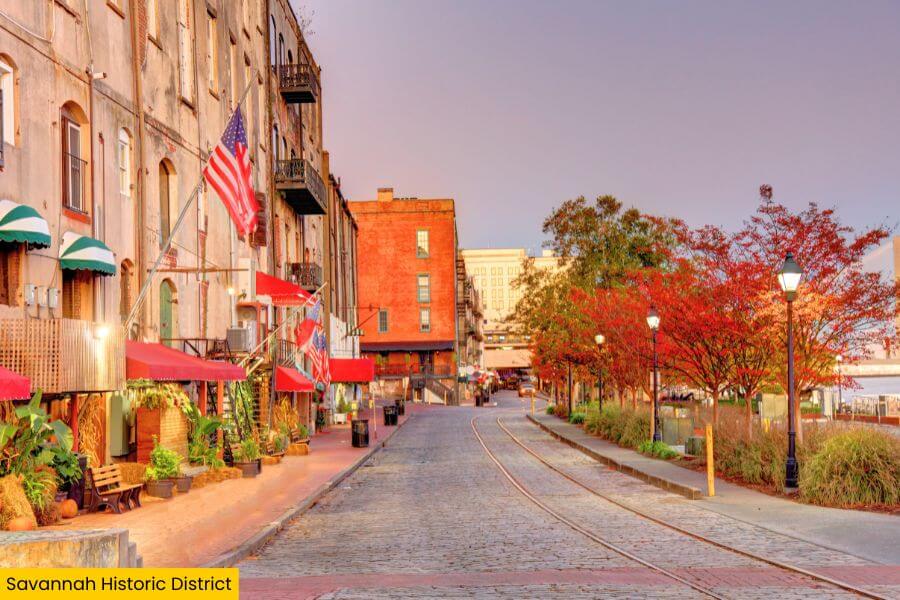
End your road trip in the Savannah Historic District, where rich history meets haunted tours and amazing coffee shops.
This area is lined with 22 leafy historic squares, cobblestone streets, and more than 1,000 historic buildings from the 1700s and 1800s.
You can visit spots like the Owens-Thomas House, stroll along River Street, or just sit on a bench in Chippewa Square (yes, the one from Forrest Gump).
It’s the perfect place to wrap up Georgia’s story, with old mansions, shady oaks, and stories hiding in every corner.
Related Posts