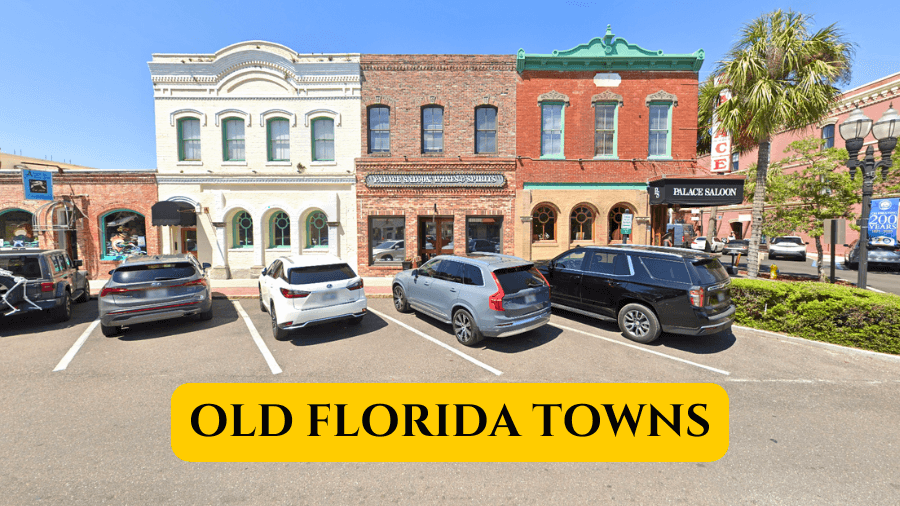
Florida might be famous for theme parks and beaches, but did you know there’s also plenty of towns where it feels like the clock hit pause a hundred years ago?
We’re talking cobblestone streets, wooden saloons, courthouses that look straight out of an old movie, and oak trees so massive they practically create their own ceiling.
Some spots were once booming ports, others were built on citrus groves or cigar smoke, and a few still carry legends of pirates and Spanish explorers.
If you’ve ever wanted to swap palm trees and roller coasters for cannons, lighthouses, and ghost stories, these 11 old towns will take you on a trip straight through time.
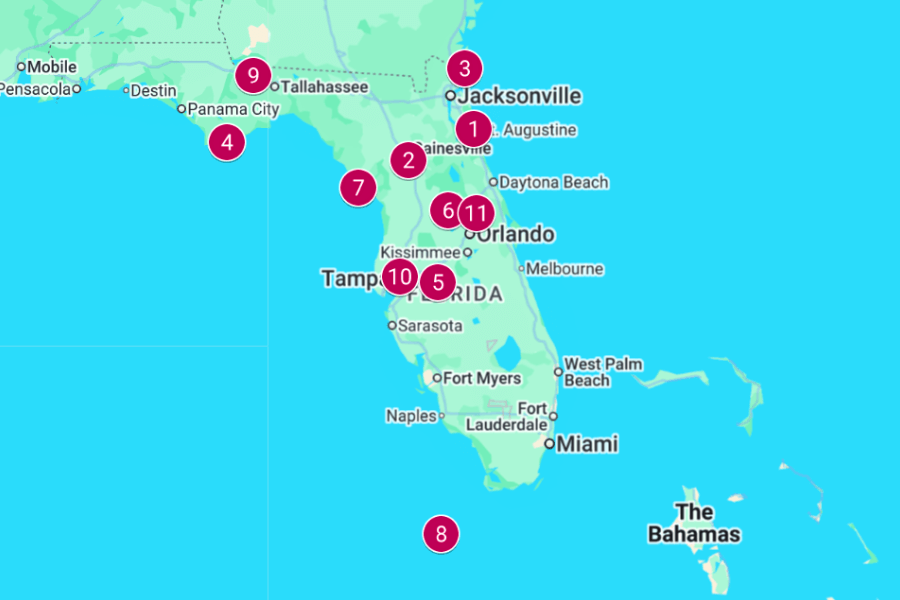
1. St. Augustine
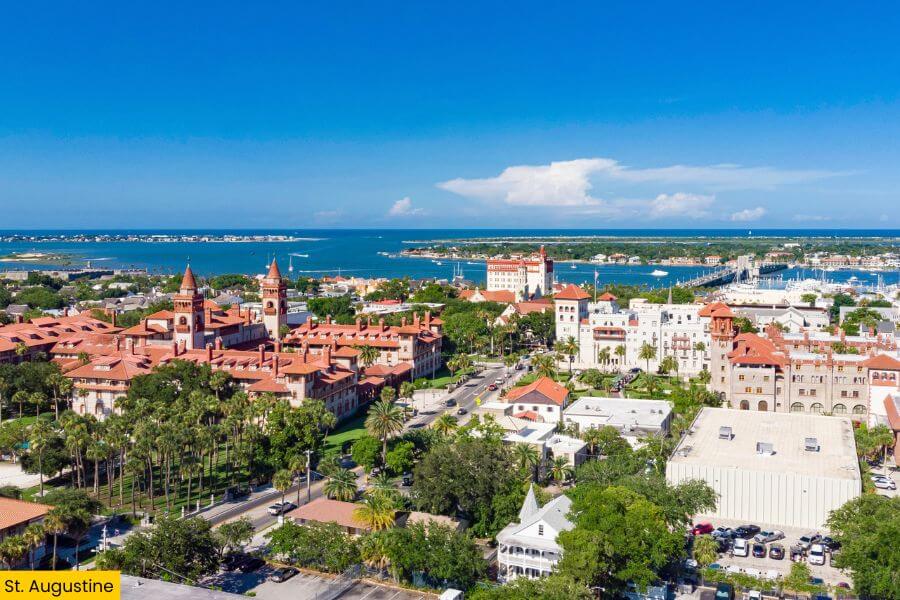
St. Augustine sits on Florida’s northeast coast, about 1 hour from Jacksonville.
It’s officially the oldest continuously inhabited European-established city in the United States, founded way back in 1565.
You can wander down St. George Street, packed with 1700s-style Spanish Colonial buildings, unique shops, and even the Oldest Wooden Schoolhouse (promoted as the nation’s oldest).
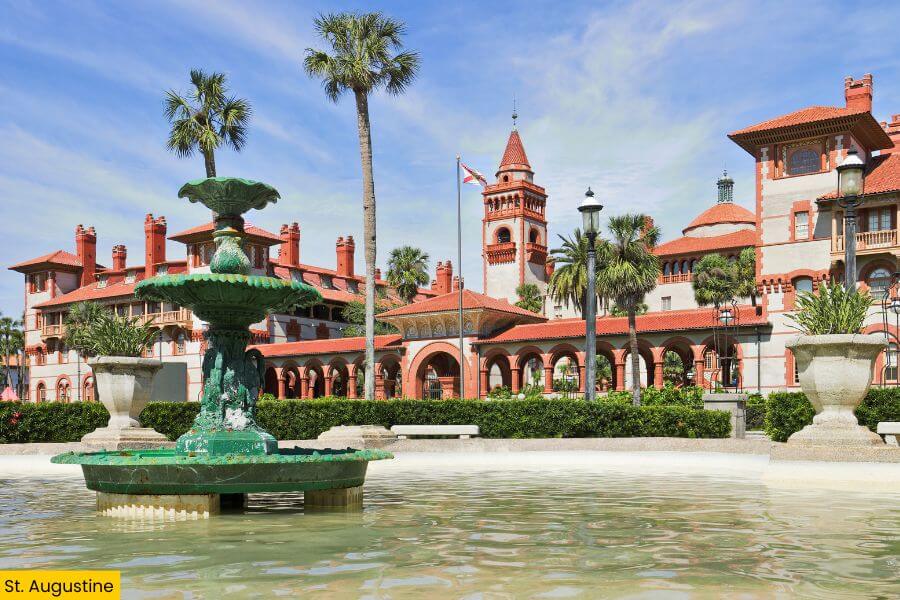
The giant Castillo de San Marcos, a stone fortress completed in 1695 with walls made of coquina (a rock full of seashells), is the star of the city and still has cannons pointing out over Matanzas Bay.
For extra fun, you can climb the 219 steps up the striped St. Augustine Lighthouse for amazing views or search for ghosts on one of the city’s famous nighttime tours.
2. Micanopy
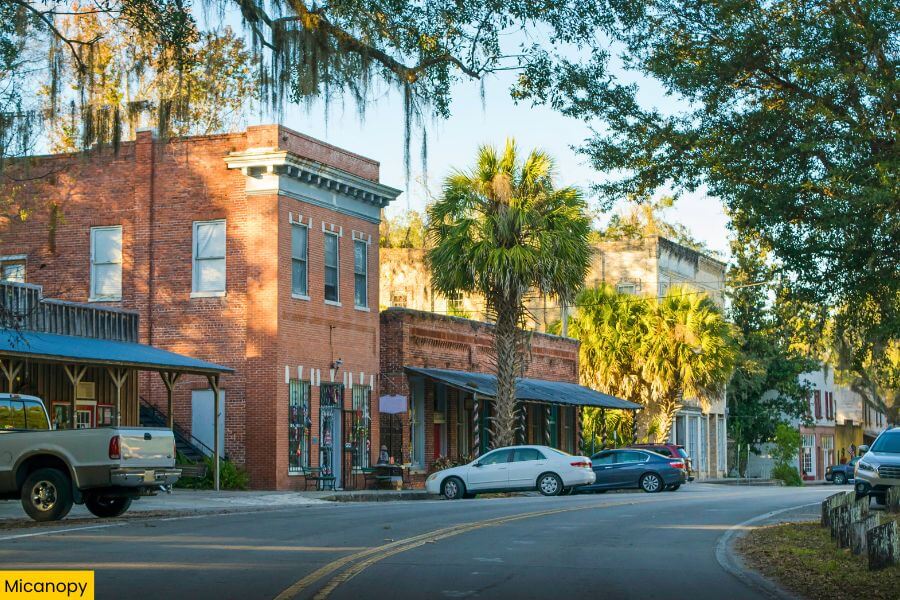
Micanopy, just 20 minutes from Gainesville, is a tiny town that feels like you’ve wandered straight into the 1800s, with oak trees dripping in Spanish moss shading its sleepy streets.
It’s often called the “antiques capital of Florida,” and you’ll find shops stuffed with vintage treasures inside old brick storefronts.
The town is named after a Seminole chief, and its roots date back to the early 1800s, making it one of the oldest inland towns in the state.
Movie buffs might recognize Micanopy too, since scenes from Doc Hollywood and Cross Creek were filmed here, adding a bit of Hollywood history to this sleepy town.
3. Fernandina Beach
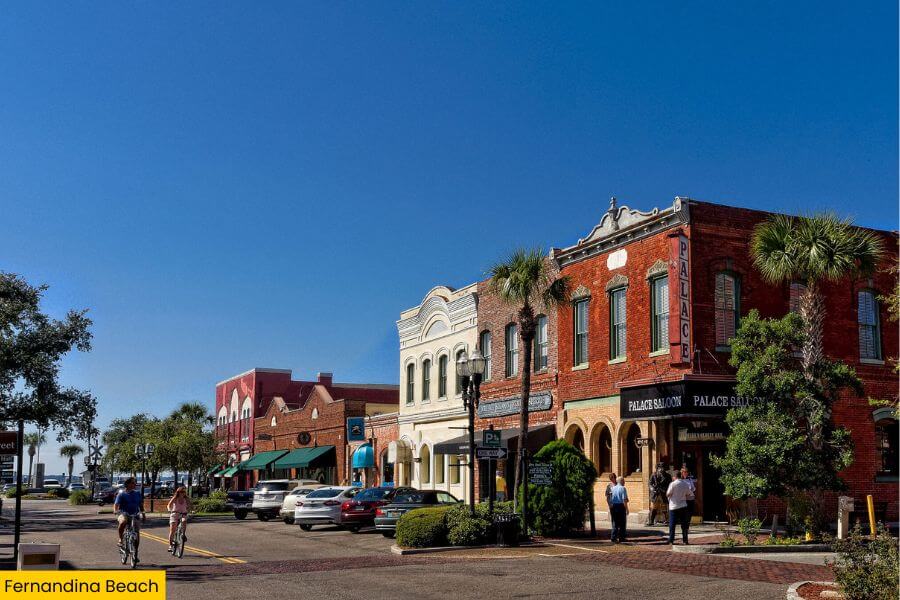
Fernandina Beach, located on Amelia Island, is a lively little port town with roots going all the way back to the 1500s.
Its downtown is packed with over 50 blocks of Victorian-era homes, brick saloons, and old storefronts that make you feel like you’ve stepped into a 19th-century boomtown.
The town’s unusual claim to fame is that it’s the only place in the U.S. that’s flown under eight different flags, earning it the nickname “Isle of Eight Flags.”
If you’re into festivals, the annual Isle of Eight Flags Shrimp Festival in May takes over the streets with parades, costumes, and more shrimp than you could possibly eat in one weekend.
4. Apalachicola
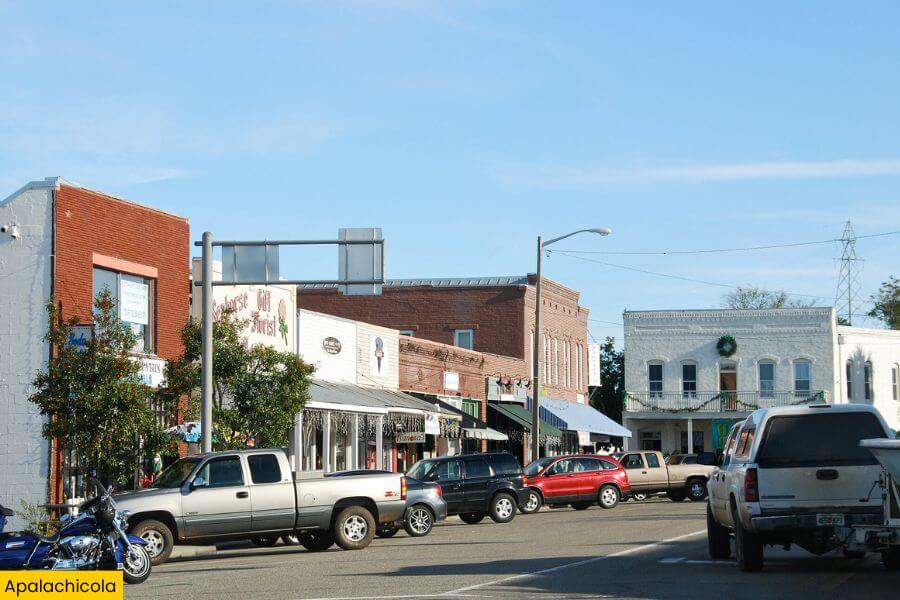
Apalachicola sits on Florida’s Panhandle along the Gulf of Mexico, and this little fishing town is all about oysters, boats, and salty sea breezes.
Back in the 1800s it was one of the busiest cotton ports in the South, and you can still see grand old brick warehouses and antebellum homes that hint at its glory days.
Historically it was famous for harvesting up to 90% of Florida’s oysters, so grabbing a dozen on the half shell at a dockside bar is a must-do activity.
The streets are dotted with unique shops, maritime museums, and seafood joints where time feels like it’s been running a little slower for the past hundred years.
5. Bartow
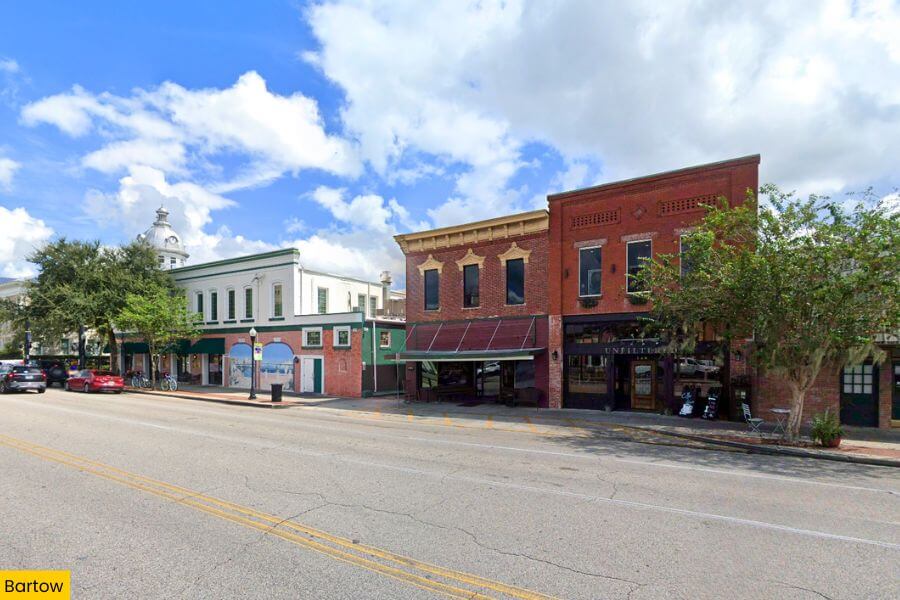
Bartow, located right in the heart of Polk County, has been around since 1851 and still shows off its small-town Southern charm.
The streets are lined with massive oak trees and historic homes, plus the Polk County History Center sits inside a gorgeous 1908 neoclassical courthouse.
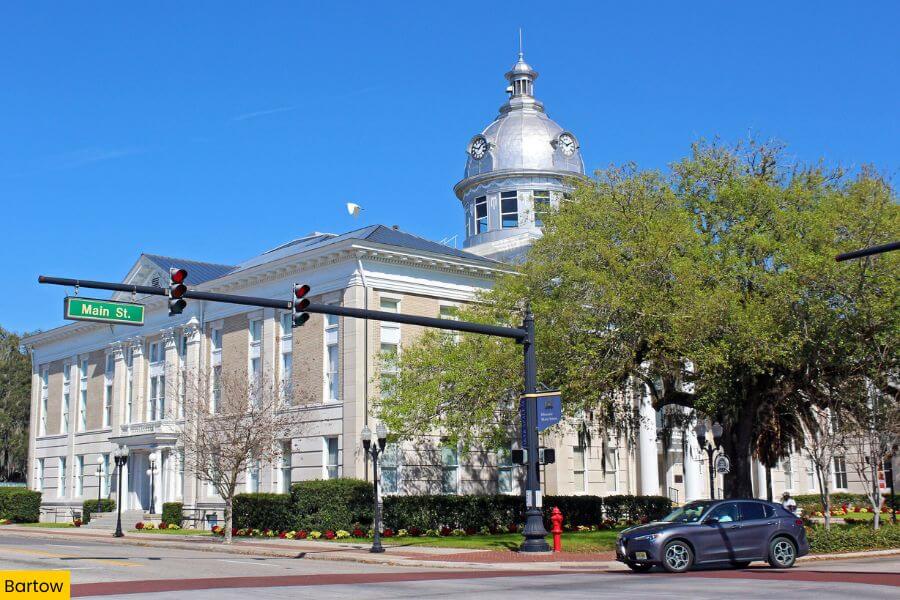
Bartow played a big role in Florida’s early phosphate mining boom, and you’ll spot nods to that past all over town.
If you swing by in March, the whole place comes alive for the Bloomin’ Arts Festival, where downtown fills with art, food, and live music.
6. Eustis
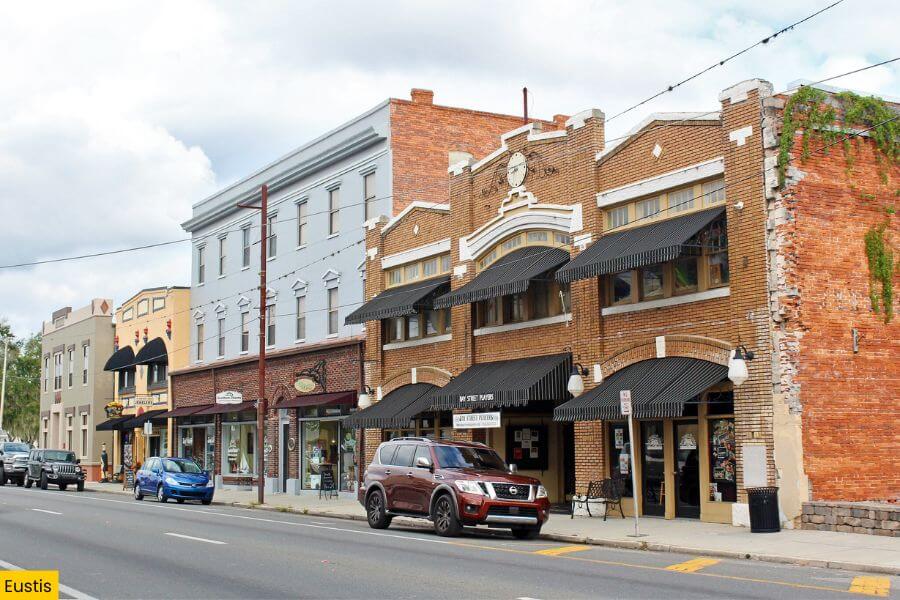
Eustis sits on the edge of Lake Eustis in central Florida, and the water pretty much sets the stage for everything here.
You can stroll along the lakefront Ferran Park with its big old 1926 bandshell or enjoy the views of Lake Eustis, where herons and other water birds are often spotted.
The town got its start in the late 1800s as a hub for citrus growers, and you’ll still find traces of that history tucked into its historic downtown.
Every February, Eustis throws a huge GeorgeFest celebration, which has been running since 1902 and is one of the oldest annual festivals in the entire state.
7. Cedar Key
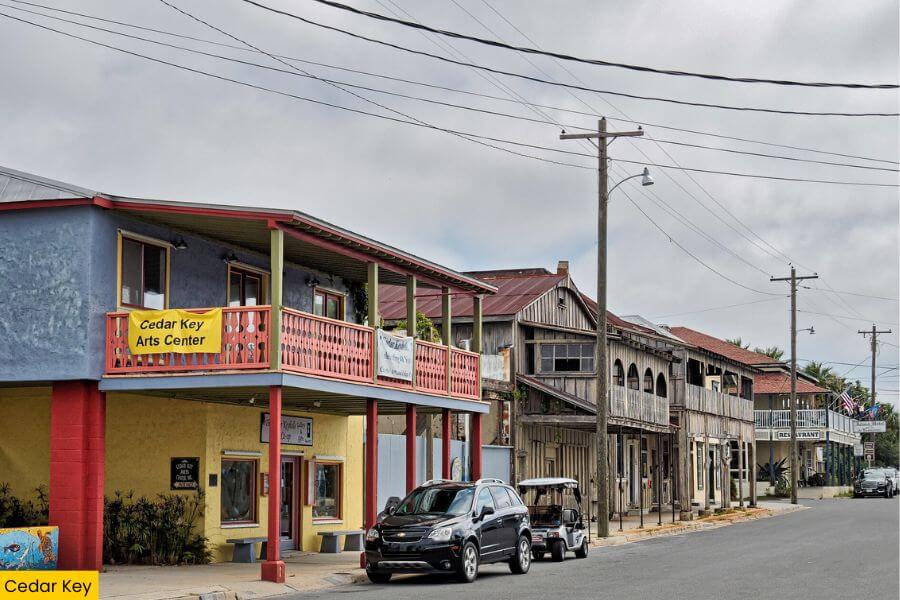
Cedar Key, located on Florida’s Gulf Coast a little over an hour from Gainesville, feels like a little island frozen in time.
In the 1800s, it was a busy port and the country’s top supplier of cedar pencils, and you can still see old relics of that history at the Cedar Key Historical Museum.
These days the town is all about fishing, clamming, and kayaking, with calm waters that are perfect for paddling out to the tiny surrounding islands.
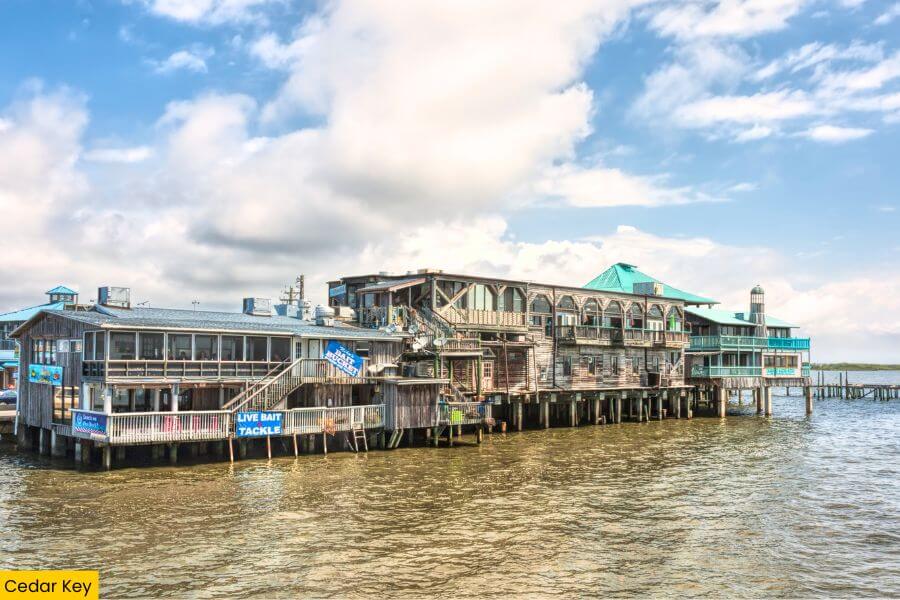
Seafood shacks on stilts line the waterfront, and every October the town throws a two-day Seafood Festival where blue crabs, clam chowder, and oysters take center stage.
Note: This little island community was hit hard by Hurricane Idalia in 2023 and Hurricane Helene in 2024, both of which damaged homes and businesses.
Locals are working hard to rebuild the town and tourism is welcome to help support the town.
8. Key West (Old Town)

Key West’s Old Town is located at the very tip of the Florida Keys.
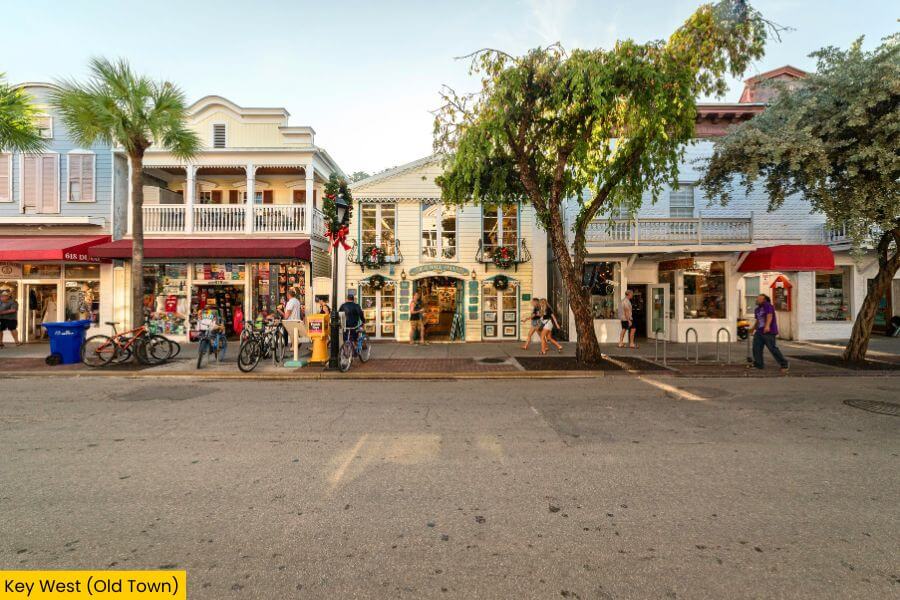
It’s packed with pastel conch houses, hidden courtyards, and streets that look straight out of the 1800s.
Duval Street is the main drag, buzzing with open-air bars, live music, and unique shops, and just 5 minutes away, you’ll find Ernest Hemingway’s old house complete with its famous six-toed cats.
The neighborhood is also home to the 1847 Key West Lighthouse, where you can climb 88 steps for sweeping views over the island and turquoise water.
Stick around for the nightly sunset celebration at Mallory Square, where jugglers, musicians, and street performers turn the waterfront into one giant street party.
9. Quincy
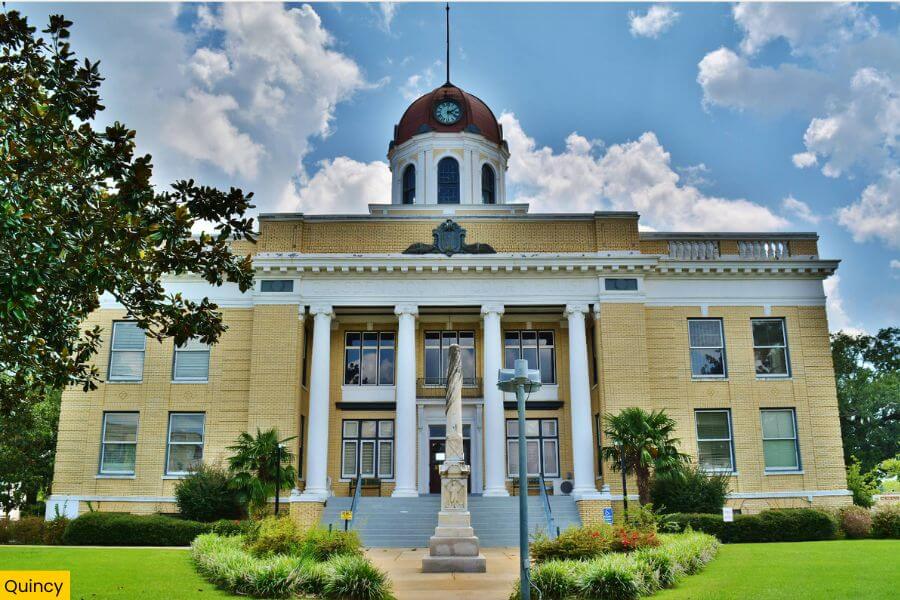
Quincy, just 30 minutes from Tallahassee, is a small town with big character and a courthouse square that feels like you’ve time-traveled straight into the 1800s.
The streets are lined with restored Victorian homes and grand old mansions, many built with wealth from the town’s surprising claim to fame—Coca-Cola stock.
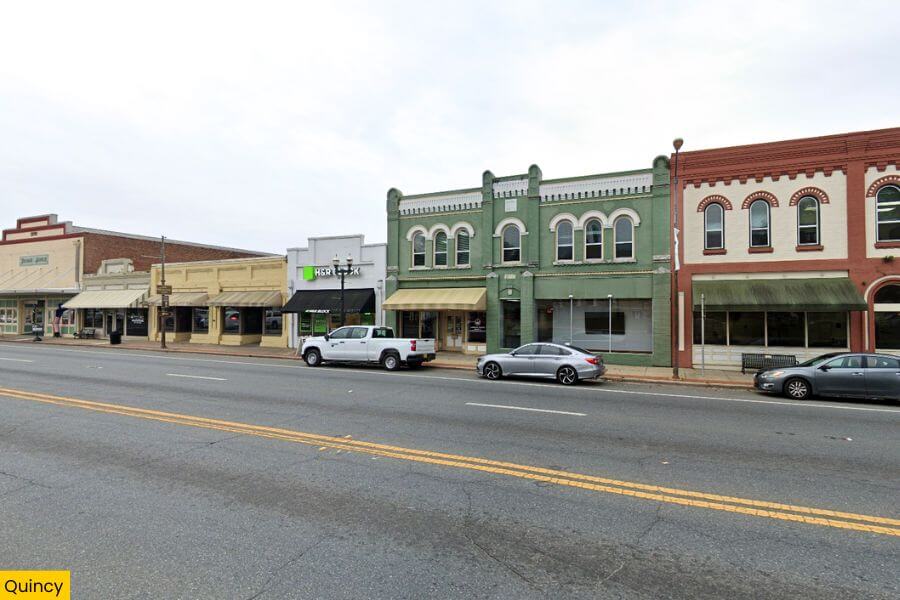
Back in the early 1900s, a local banker encouraged residents to invest in the soda company, and Quincy is widely reputed to have ended up with more “Coca-Cola millionaires” per capita than anywhere else in the country.
Today you can stroll through its historic district, check out the Gadsden Arts Center & Museum, and see why this little town is one of Florida’s most unexpected gems.
10. Ybor City
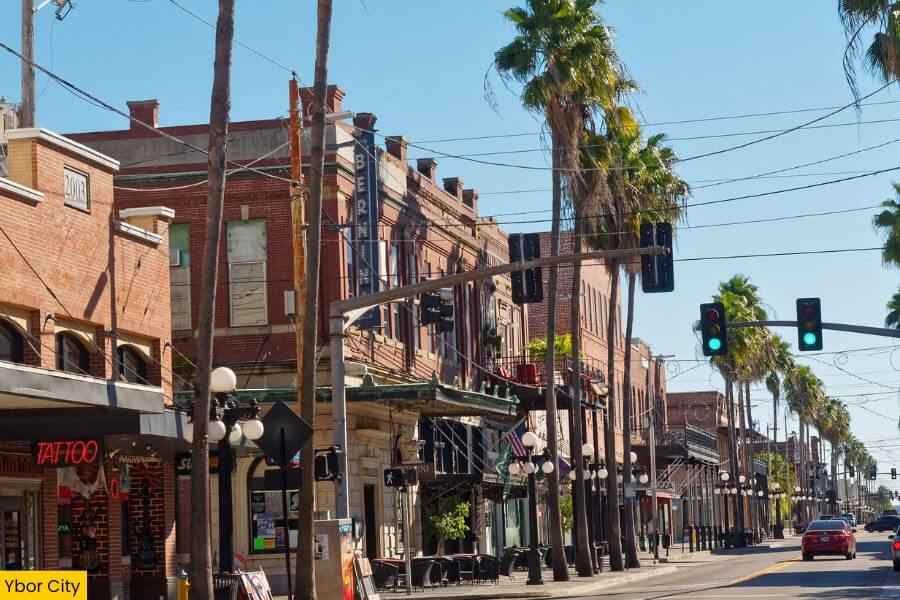
Ybor City, located just outside downtown Tampa, was founded in the 1880s as the cigar-making capital of the world, and that flavor still lingers everywhere you go.
Streets are lined with historic red-brick factories where millions of hand-rolled cigars were once produced, and you can still watch the craft up close at spots like Tabanero Cigars.
The neighborhood’s Latin roots run deep, with Cuban sandwiches, Spanish cafés, and Italian bakeries that keep the old immigrant traditions alive.
At night, 7th Avenue lights up with music, bars, and vintage theaters, making it one of Florida’s most colorful historic districts to explore.
11. Sanford
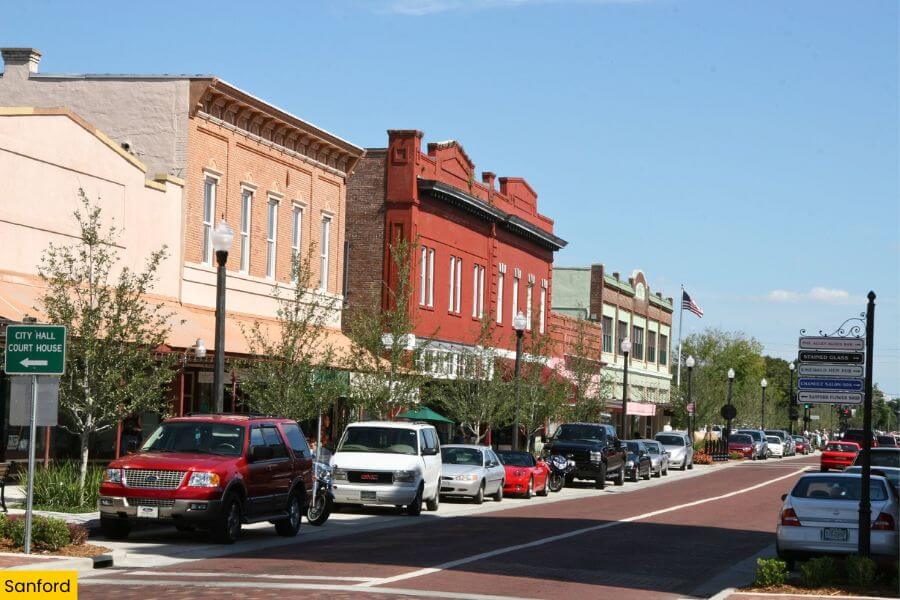
Sanford, sitting on the southern shore of Lake Monroe, mixes old Florida charm with waterfront fun in a way that feels totally different from anywhere else.
Its historic downtown is filled with 19th-century brick buildings now housing breweries, indie shops, and cafés that spill out onto brick-paved streets.
The Sanford Museum dives into the town’s past, while the Central Florida Zoo & Botanical Gardens on the city’s outskirts keeps things lively with giraffes, rhinos, and a splash pad.
For the best views, grab a spot on the RiverWalk which is a lakeside trail along Lake Monroe where you might catch a sunset so good it’ll stop you in your tracks.
Related Posts