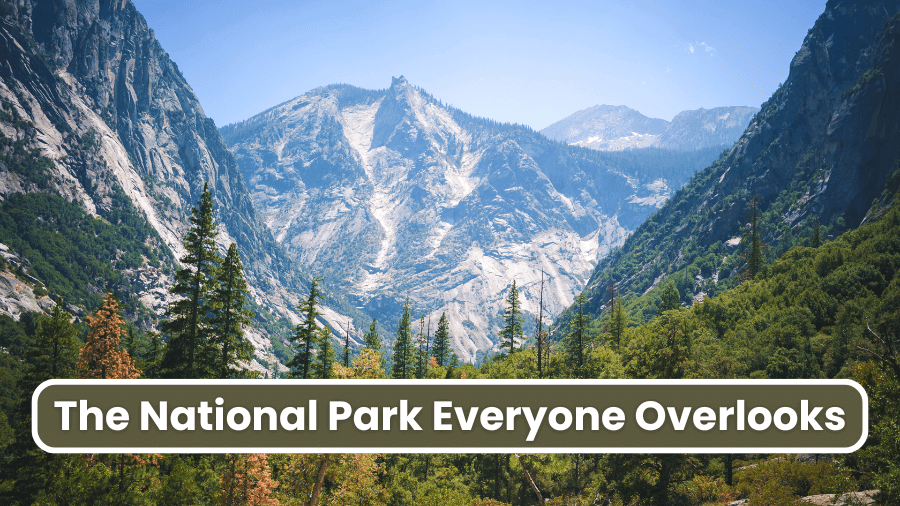
California gets all the hype for places like Yosemite and Joshua Tree, but there’s another national park that quietly blows people away.
This is a place where cliffs tower thousands of feet above a rushing river and where winding mountain roads make you pull over every five minutes just to stare.
You can spend the day surrounded by granite peaks that scrape the sky, then end it under a night sky so clear you can see the Milky Way stretching overhead.
It doesn’t come with the shoulder-to-shoulder crowds you might expect from scenery this epic.
If you’re craving huge views and wild landscapes but don’t want to fight for parking, you’re going to want to keep reading.
Where Is It?

Kings Canyon National Park is located in east-central California, tucked into the southern Sierra Nevada mountains, neighboring Sequoia National Park.
It’s roughly an hour from Fresno, about 4 hours from San Francisco, and around 4 hours and 20 minutes from Los Angeles, depending on traffic.
Basically, if you can get yourself to California’s Central Valley, those massive granite peaks are waiting just beyond it.
About

Kings Canyon National Park spans 461,901 acres of dramatic mountain landscape.
It was established in 1940, and it protects one of the deepest river-carved canyons in North America.
From rim to river, Kings Canyon plunges more than 8,200 feet, which means you’re looking at elevation changes that rival the Grand Canyon.
The park is also famous for its enormous sequoia trees, especially around Grant Grove.
One standout is the General Grant Tree, which stands about 267.4 feet tall and is estimated to be around 1,650 years old.

It’s officially known as the Nation’s Christmas Tree, and seeing it in person feels like standing next to a living skyscraper made of bark.
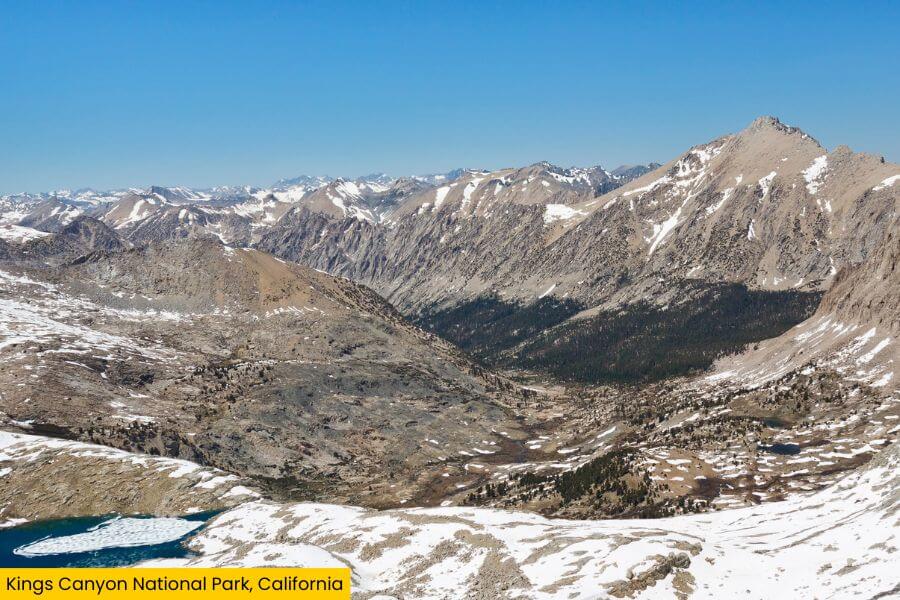
Beyond the sequoias, the terrain expands into glacier-carved valleys, alpine lakes, and rugged granite peaks.
The Sierra Nevada crest runs through the eastern portion of the park, where summits rise above 14,000 feet.
All that elevation plays a big role in the park’s ecosystems, with lower elevations filled with thick mixed forests and pockets of willows and sycamores.
Higher up, open meadows bloom with wildflowers in late spring and early summer before giving way to rocky alpine terrain where snow can linger.
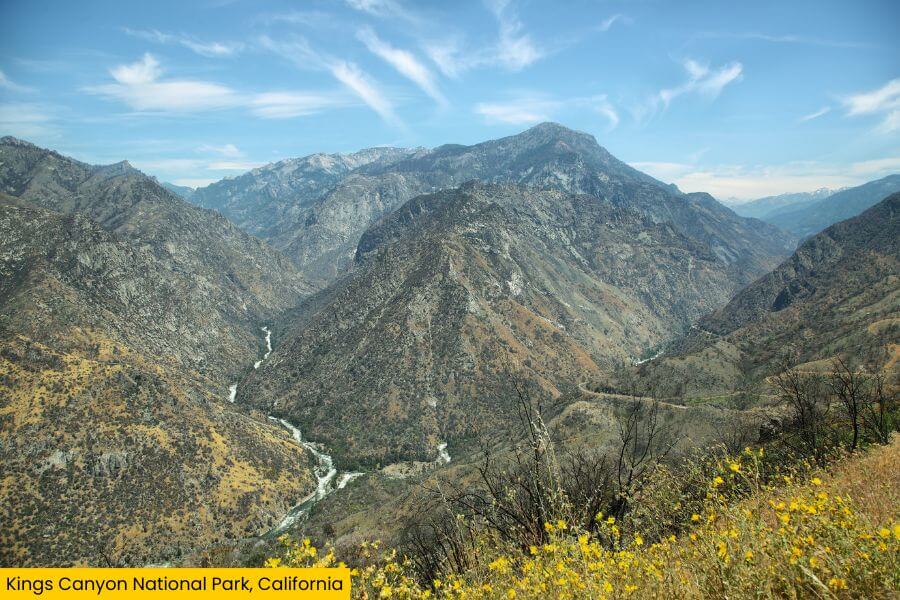
The best part is that even with all this variety, it still feels surprisingly uncrowded compared to Yosemite.
While Yosemite sees millions more visitors each year, Kings Canyon stays relatively quiet, especially once you leave the main roads.
So why should you visit?
Because you get towering sequoias, a canyon deeper than you expect, and massive granite peaks without the Yosemite-level crowds.
It’s the kind of scenery that makes you pull over every few miles just to stare.
Things To Do

Now for the fun part, here’s how you’ll want to spend your time in Kings Canyon National Park.
Start with the Kings Canyon Scenic Byway, which follows Highway 180.
This 50-mile stretch runs from Grant Grove down into Cedar Grove, passing waterfalls, granite cliffs, and scenic river pullouts along the way.
Eventually, you’ll reach Road’s End, which marks the literal end of the highway and serves as the jumping-off point for some of the park’s best backcountry trails.

The Mist Falls Trail is a highlight, an 8-mile round-trip hike that follows the South Fork of the Kings River.
You’ll climb about 800 feet before reaching Mist Falls, a powerful 100-foot waterfall that roars in late spring when snowmelt is at its peak.
If you want something shorter, check out the Zumwalt Meadow trail.
This 1.5-mile mostly flat trail offers close-up views of granite domes that surround Cedar Grove, making it an easy stroll with stunning scenery.

Over in the Grant Grove area, take the General Grant Tree Trail.
This 0.6-mile paved loop winds through a dense sequoia forest filled with some of the largest trees on the planet.
The Big Stump Loop is another good one at 1.7 miles, and it walks you past massive fallen sequoias that were logged in the late 1800s.
Seeing these enormous stumps really drives home just how gigantic these trees were before protection kicked in.

Craving serious adventure? Kings Canyon is your gateway to the John Muir Wilderness and the High Sierra.
If you want to go all-in, the Rae Lakes Loop is one of the best-known backpacking trips in California.
It’s about 41.4 miles long and typically takes 3 to 5 days, climbing over Glen Pass at 11,978 feet.
You’ll hike past alpine lakes so clear you can see the bottom, postcard-worthy granite peaks, and quiet backcountry campsites under star-filled skies.

If you’re looking to mix it up, you can swing by Boyden Cavern along Highway 180 for a guided tour through marble caverns packed with stalactites and flowstone.
The tour lasts about 45 to 60 minutes, with departures offered seasonally from late April or May into mid-November.
For summer trips, the Kings River steals the show, roaring through the canyon nonstop.
You can wade in calmer sections near Cedar Grove, but keep your guard up because the snow-fed current can be stronger than it looks.

Fishing is popular here too, especially for rainbow trout, though you’ll need a valid California fishing license if you’re 16 or older.
And while you’re out by the water, keep an eye out for black bears, mule deer, marmots, and over 200 species of birds that call this park home.
Visiting in winter? You can trade your hiking boots for cross-country skis or snowshoes once the higher elevations are covered in snow.
Grant Grove often turns into a quiet snowy forest scene, and snowshoe trails let you wander through sequoias dusted in white.
No matter the season, make time for sunset.
Pull into an overlook along the Scenic Byway or find a calm riverbank and watch the granite walls glow pink and orange as the light fades.
And when the sun drops completely, stick around.
With hardly any light pollution, the stars put on a show, and the Milky Way stretches clearly across the sky on clear nights.
Know Before You Go
Before you load up the car and point it toward Kings Canyon National Park, here’s what you need to know.

Best Time to Visit
Since timing matters here, the best time to visit is late May through October when most roads and trails are open.
Highway 180 usually opens in late April or May, depending on snow, and it typically closes in November after the first big storms.
If you want roaring waterfalls and wildflowers, aim for late May to early July when snowmelt is at its peak.
Winter is beautiful but limited, as heavy snow can close roads, especially into Cedar Grove, and tire chains are often required.
Always check current road conditions on the National Park Service website before you go.

Entrance Fees and Park Passes
Kings Canyon and Sequoia National Parks share one entrance fee, which is $35 per vehicle and valid for up to seven days.
If you plan to visit multiple national parks in a year, the America the Beautiful Pass is $80 and covers entrance fees at all U.S. national parks for 12 months.
Hiking into the backcountry overnight? You’ll need a wilderness permit.
Permits are required year-round for overnight trips, and from late May through September, they’re limited and should be reserved ahead of time through Recreation.gov.

Tips
- Cell service is extremely limited inside the park, so download offline maps, screenshot reservations, and bring a paper map if you have one.
- Gas stations are not widely available either, so fill up in Fresno, Clovis, or Visalia before heading into the mountains.
- Altitude matters here, so pace yourself, stay hydrated, and plan for cooler temperatures at higher elevations even if the Central Valley is sitting at 95 degrees.
Nearby Places to Visit
As for nearby spots, you’re in a prime location for more Sierra adventures.

Sequoia National Park is directly connected to Kings Canyon, so you can easily visit both in one trip (depending on seasonal road access).
That means you can drive the Generals Highway and see the General Sherman Tree, which stands 274.9 feet tall and is considered the largest tree on Earth by volume.
If you want a city break before or after your park visit, Fresno is an hour away and has restaurants, breweries, and grocery stores for stocking up.
For a California road trip, Yosemite National Park is roughly 2.5 hours away and fits perfectly into a longer Sierra Nevada loop.
Related Posts