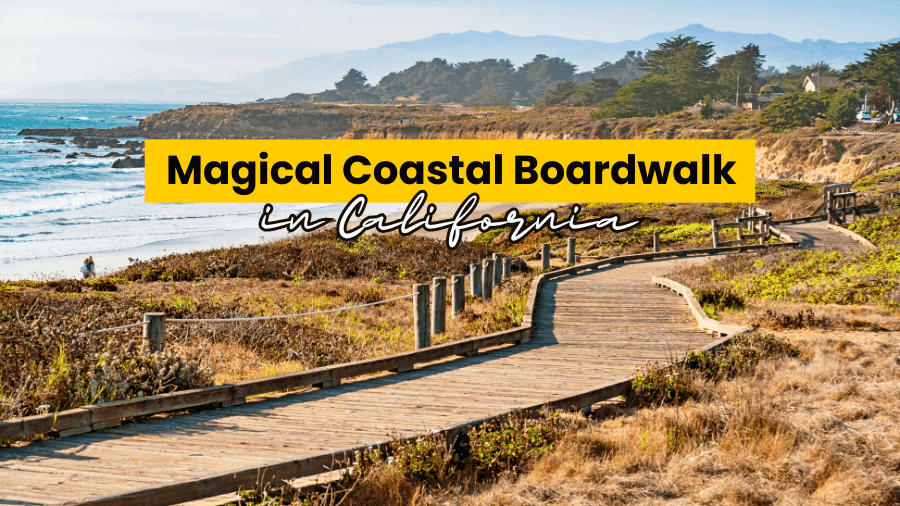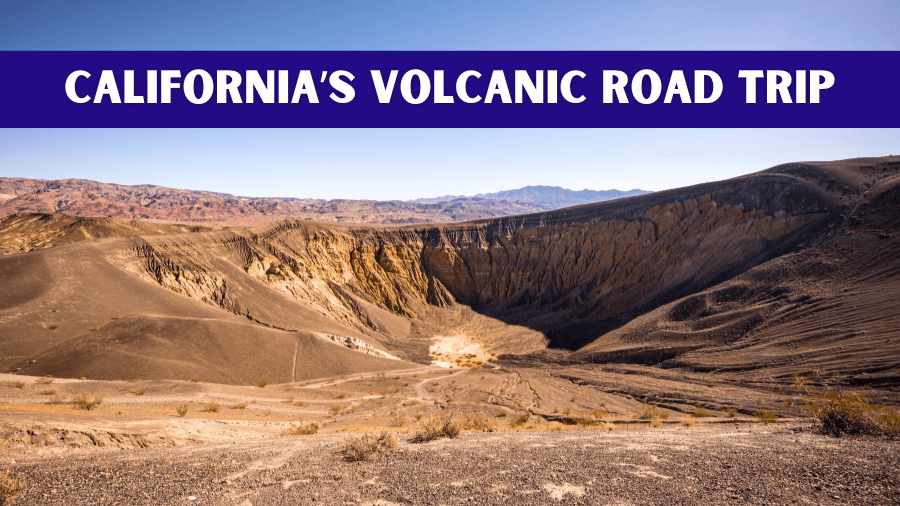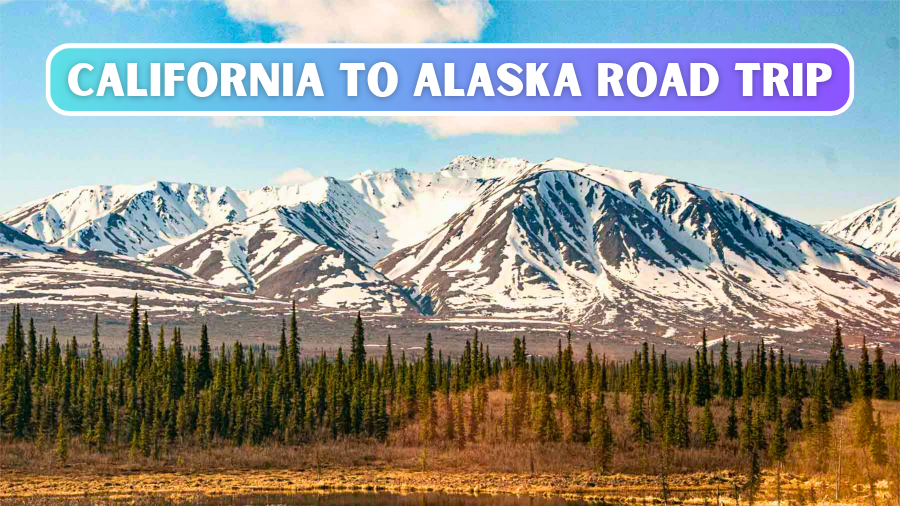
There’s something wild about starting on a sunny coastline and ending in a land of glaciers, midnight sun, and roaming wildlife.
This road trip covers thousands of miles, crossing borders, climbing through mountain passes, and rolling past rivers and wide-open stretches that seem to go on forever.
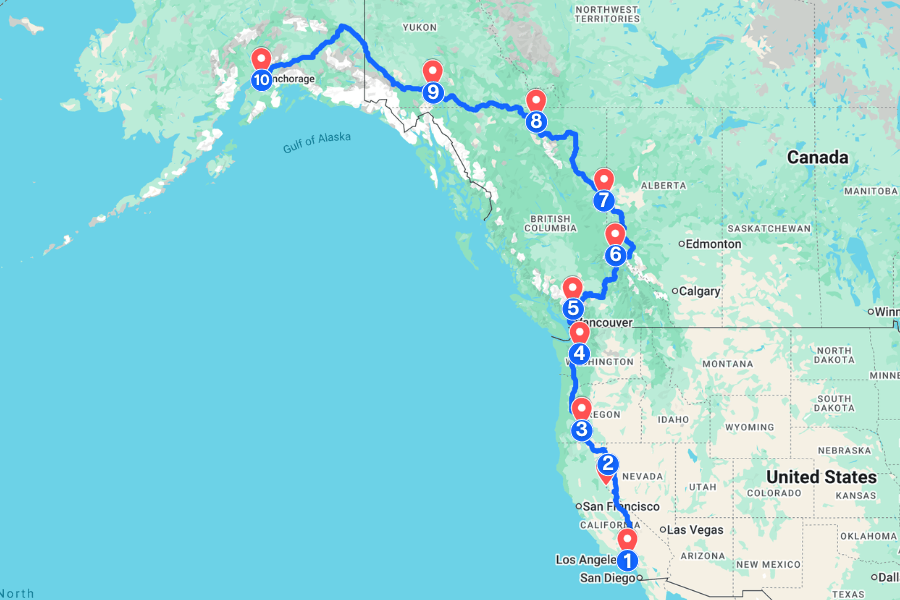
Along the way, you’ll hit jaw-dropping viewpoints, soak in natural hot springs, and tackle drives that are just as exciting as the stops themselves.
If you’re ready for a trip that feels big, bold, and a little bit unpredictable in the best way, you’re in the right place.
1. Los Angeles, California
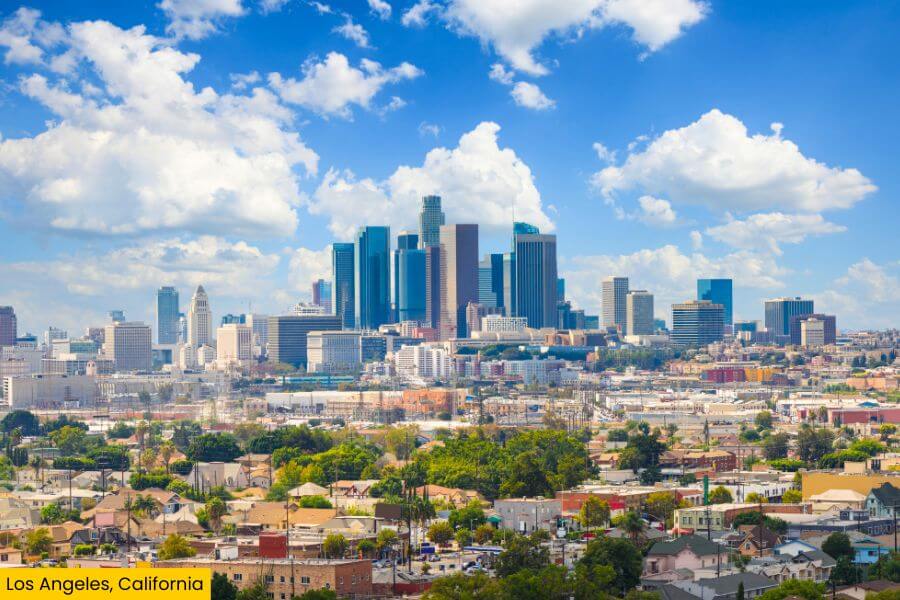
Set between the Pacific Ocean and the surrounding mountain ranges, our road trip begins in Los Angeles.
If you’re from LA, then grab a coffee and hit the road!
However, if you’re from out of town, take some time to visit spots like the Hollywood Sign, the Walk of Fame, and the Santa Monica Pier.
You can also visit iconic neighborhoods like Venice with its 2.5-mile Ocean Front Walk, plus Griffith Park, which covers 4,310 acres and holds the Griffith Observatory.
2. Lake Tahoe, California/Nevada
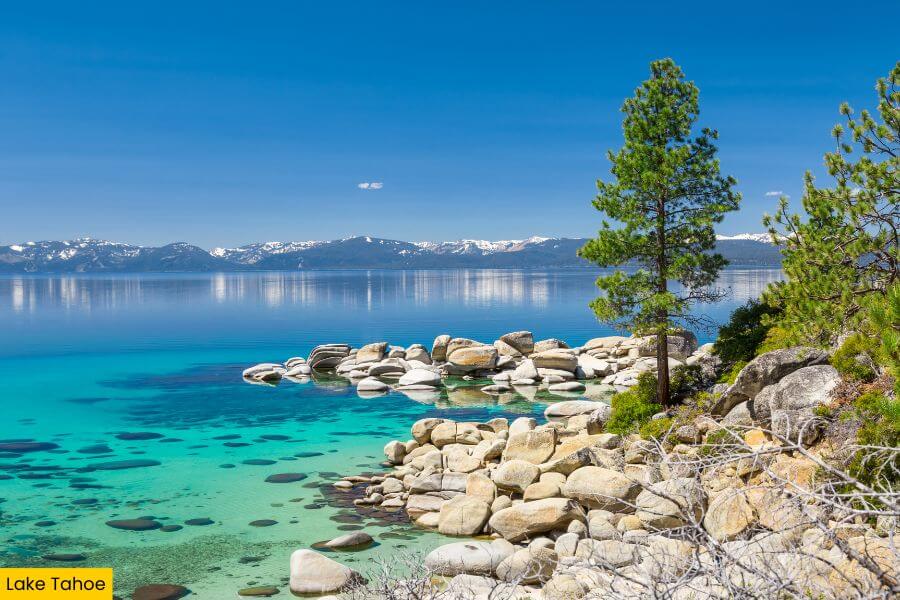
Next up is Lake Tahoe, set on the California–Nevada border high in the Sierra Nevada at 6,225 feet, with some of the clearest water you’ll see.
It covers 191 square miles and reaches a jaw-dropping depth of 1,645 feet, making it the largest alpine lake in North America.
You’ve got 72 miles of shoreline to explore, with options like kayaking, hiking the 165-mile Tahoe Rim Trail, and relaxing at popular beaches like Kings Beach.
Then in winter, you can hit the slopes at Heavenly Mountain Resort, which spans 4,800 acres of terrain with stunning views over Lake Tahoe.
3. Crater Lake National Park, Oregon
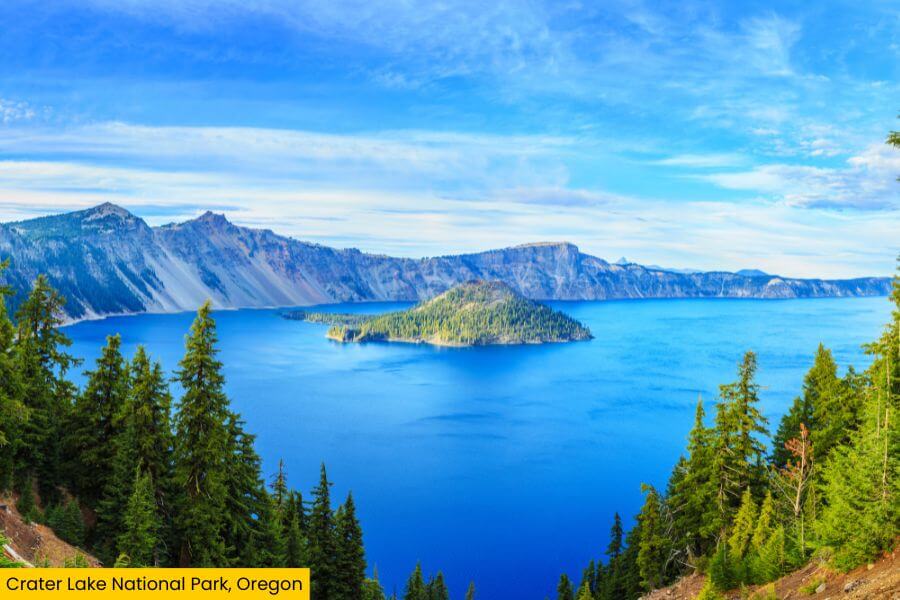
Then there’s Crater Lake National Park, where a collapsed volcano formed the deepest lake in the United States, reaching 1,943 feet.
The water here is known for its deep blue color and clarity, fed only by rain and snow, and it looks unreal on a sunny day as you drive the 33-mile Rim Drive.
If you’re up for a short hike, try the 2-mile round-trip Plaikni Falls Trail, an easy stroll through the forest with wildflowers leading to a snowmelt-fed waterfall.
For summer visits, you’ll want to check out Wizard Island, a cinder cone rising about 755 feet above the lake’s surface, which you can reach by boat tour.
4. Seattle, Washington
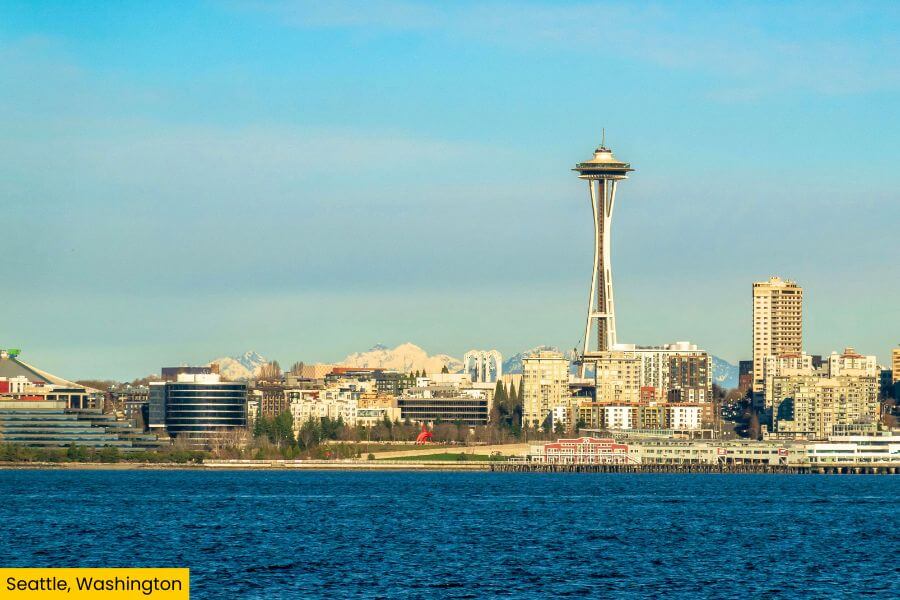
After a 6.5-hour drive from the national park, you’ll reach Seattle, Washington, a waterfront city set between Puget Sound and Lake Washington.
Its skyline is anchored by the 605-foot Space Needle from the 1962 World’s Fair, with Pike Place Market nearby, one of the oldest public markets in the U.S.
To explore, you can wander through the 560-acre Discovery Park for coastal trails and lighthouse views, or ride a ferry across Elliott Bay toward Bainbridge Island.
Cool fact: Seattle gets over 39 inches of rain a year, which helps places like the Washington Park Arboretum stay green with gardens and a wide variety of plants.
5. Whistler, British Columbia
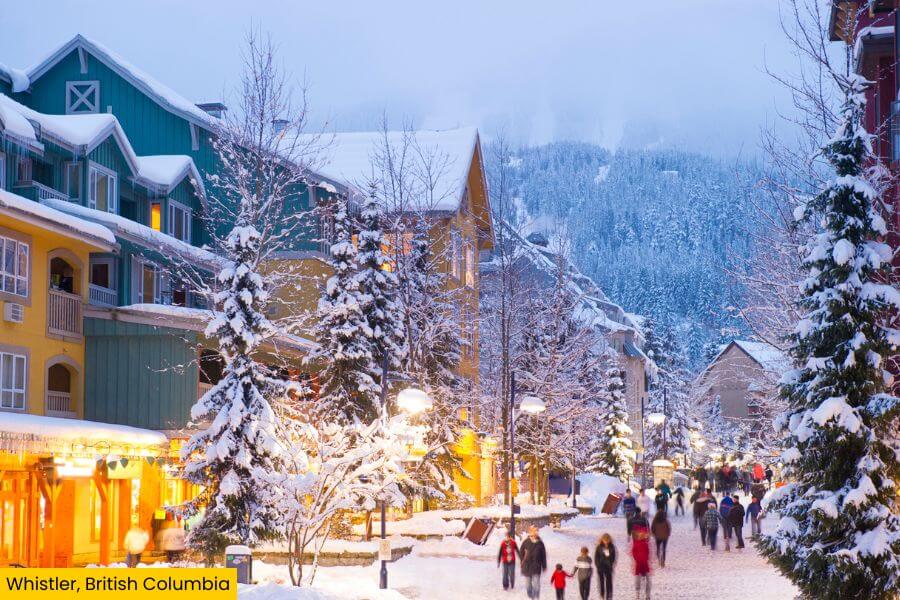
Crossing into Canada, you’ll roll into Whistler, British Columbia, a charming mountain town that sits along the scenic Sea-to-Sky Corridor.
It’s home to Whistler Blackcomb, North America’s largest ski resort with over 8,100 acres of terrain, plus the PEAK 2 PEAK Gondola at 1,427 feet.
To explore it all, you can hike the High Note Trail for scenic views, or bike the 4,900 vertical feet of trails at Whistler Mountain Bike Park from mid-May through fall.
For a change of pace, the pedestrian-only Whistler Village keeps things lively with shops, cafes, restaurants, street food, and great people watching.
6. Mount Robson Provincial Park, British Columbia
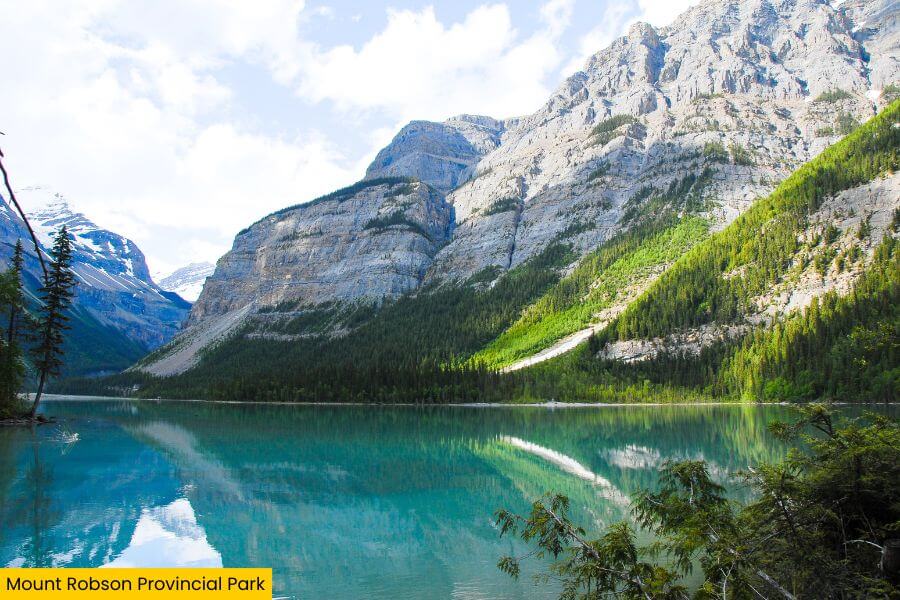
Up next is Mount Robson Provincial Park, where you’ll find Mount Robson, the highest peak in the Canadian Rockies at 12,972 feet.
This place packs in glacier views, waterfalls, and canyons, with Berg Lake as the star attraction just below the mountain’s massive north face.
If you’re up for a challenge, take on the 26-mile Berg Lake Trail, passing spots like Kinney Lake, White Falls, Falls-of-the-Pool, and the beautiful Emperor Falls.
Wildlife is part of the experience here too, so keep an eye out for moose, black bears, and mule deer as you explore one of British Columbia’s most dramatic landscapes.
7. Dawson Creek, British Columbia
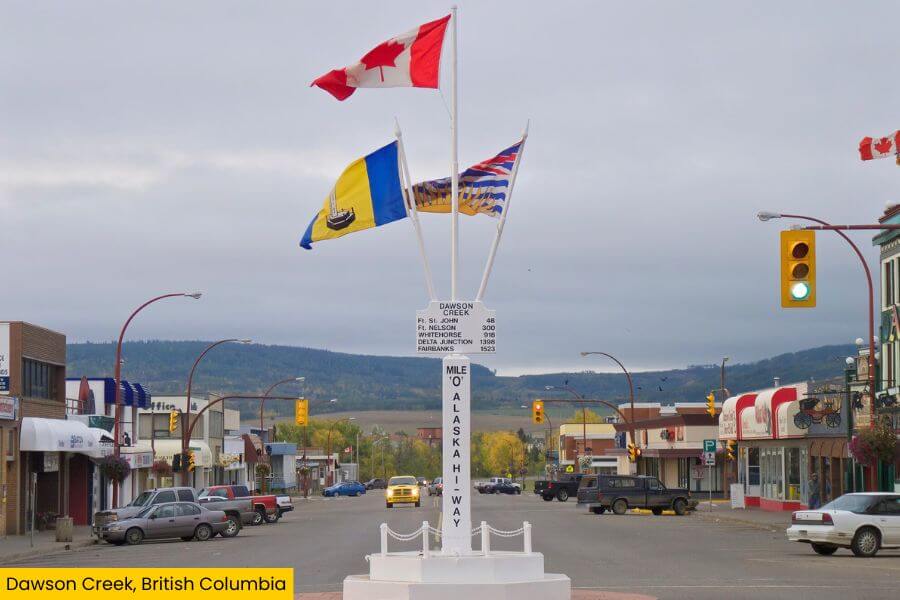
Afterward, make your way to Dawson Creek, British Columbia, the official starting point of the Alaska Highway, where the journey really kicks into high gear.
Right in the center of town, you can snap a photo at the Mile 0 Post and just imagine how this 1,387-mile road was built in just eight months back in 1942.
Set in the Peace River Country, the landscape opens up to wide farmland and big prairie skies that feel totally different from the mountains you just drove through.
It’s the kind of place where you can slow down, fuel up, grab supplies, and gear up for one of North America’s most legendary drives.
8. Liard River Hot Springs, British Columbia
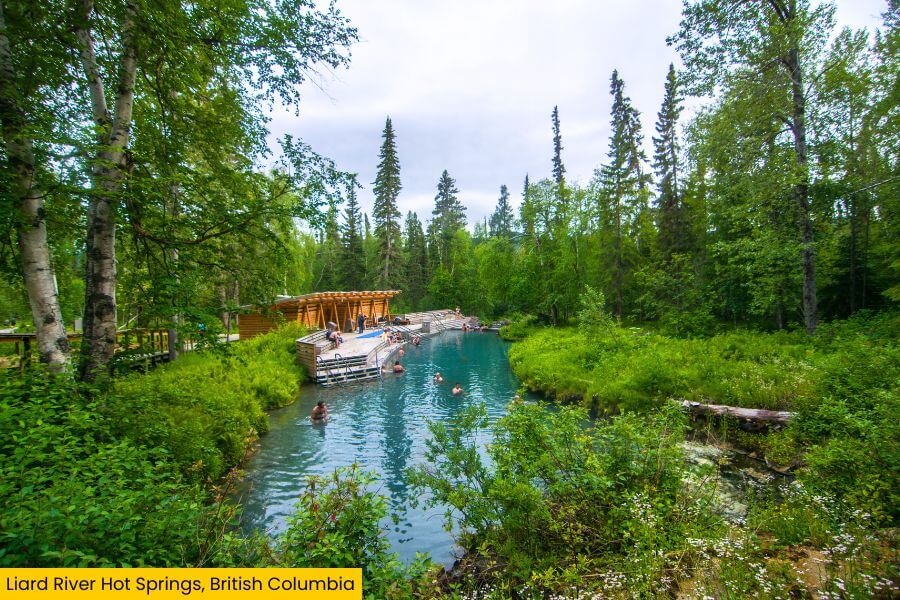
Pushing farther along the Alaska Highway, you’ll reach Liard River Hot Springs Provincial Park at Mile 496, where steam rises through the trees.
There’s a short boardwalk here through a boreal spruce forest that leads to Alpha Pool, a natural hot spring with temperatures between 107 and 125 degrees.
The pool itself is surrounded by thick greenery, making it feel completely hidden from the road.
It’s one of the best places on the entire drive to relax your muscles after long hours behind the wheel, and you might even spot bison or moose grazing nearby.
9. Whitehorse, Yukon
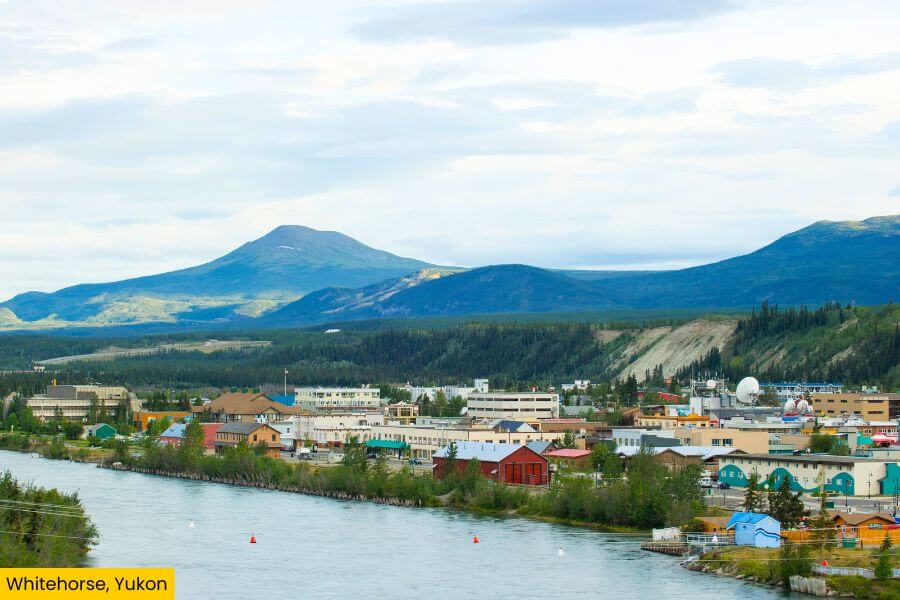
As you continue into the Yukon, Whitehorse pops up along the banks of the Yukon River, surrounded by rolling mountains and lakes.
This small capital city packs in some cool stops like the MacBride Museum of Yukon History and Miles Canyon, where the river cuts through basalt cliffs.
When you’re ready to explore, you can hike the 3.1-mile Millennium Trail, soak in Eclipse Nordic Hot Springs, or visit the nearby Yukon Wildlife Preserve.
Fun fact: In summer, Whitehorse gets up to 19 hours of daylight, which means you can stay out late and still have daylight to spare.
10. Anchorage, Alaska
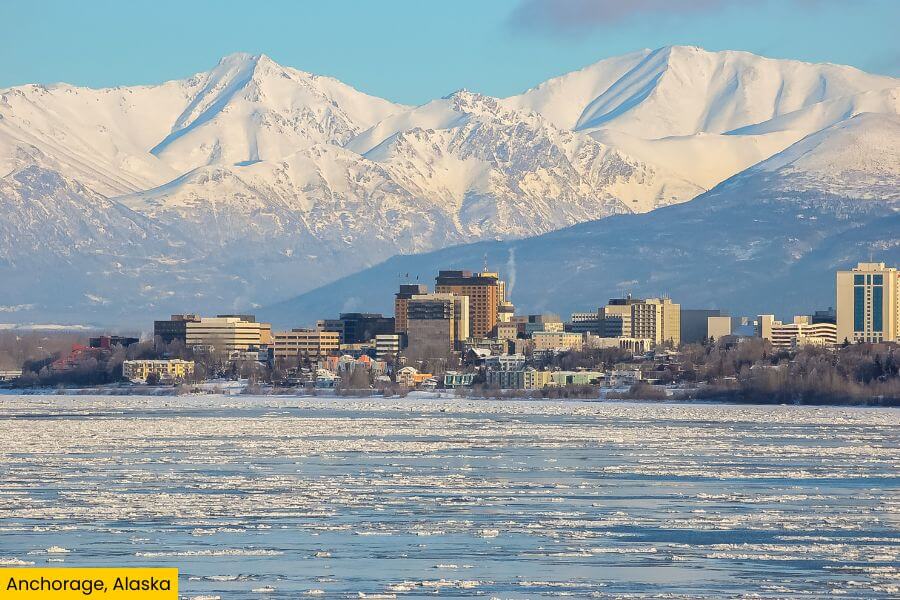
At last, you’ll roll into Anchorage, Alaska, the largest city in the state, set at the end of Cook Inlet with the Chugach Mountains rising just to the east.
This is where city life meets raw wilderness, with 250 miles of trails, including the 11-mile Tony Knowles Coastal Trail, where you might spot moose and beluga whales.
Top must-visit spots here include the Alaska Native Heritage Center, the Anchorage Museum, and Chugach State Park, which spans 495,204 acres.
And from late August through April, you’ve got a chance to see the northern lights, making Anchorage an unforgettable final stop on this epic road trip.
Related Posts