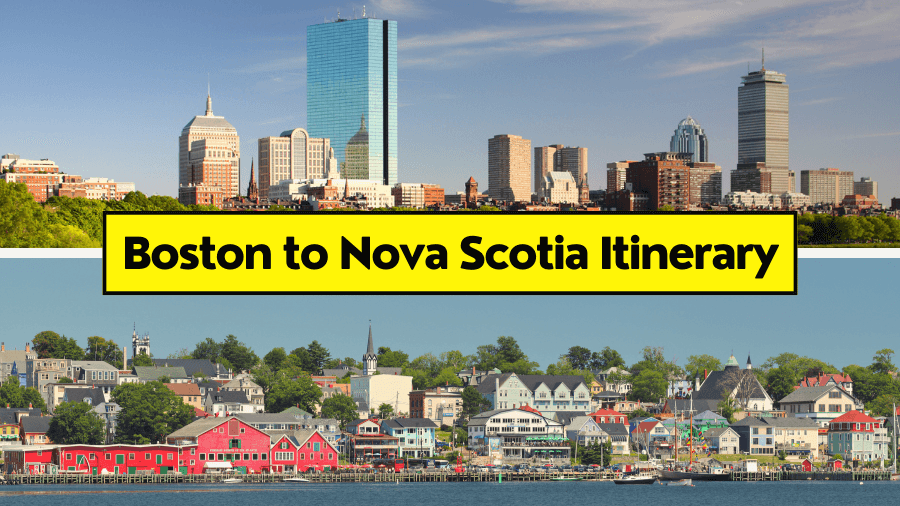
If you’ve been dreaming about a road trip packed with ocean views, cute coastal towns, fresh seafood, and jaw-dropping nature, this one’s for you.
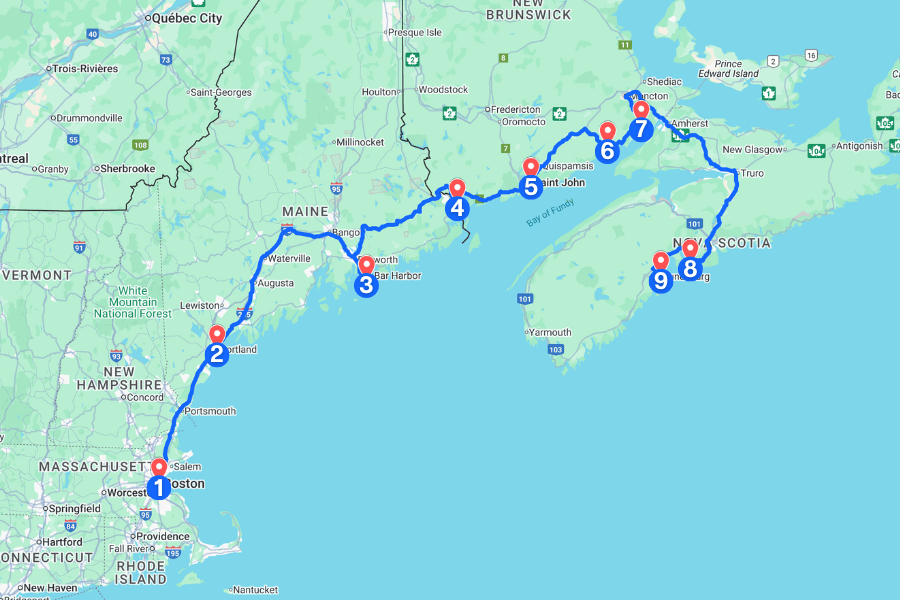
This Boston to Nova Scotia road trip route takes you from a big-city buzz to peaceful fishing villages, through two countries, and across some of the most stunning coastline in North America.
You’ll see tide tricks that don’t even seem real, walk along the ocean floor, hike to crazy-good views, and eat way too many lobster rolls (no regrets).
It’s the kind of trip that mixes just the right amount of adventure, chill time, and “whoa, I can’t believe this is real” moments.
1. Boston, Massachusetts
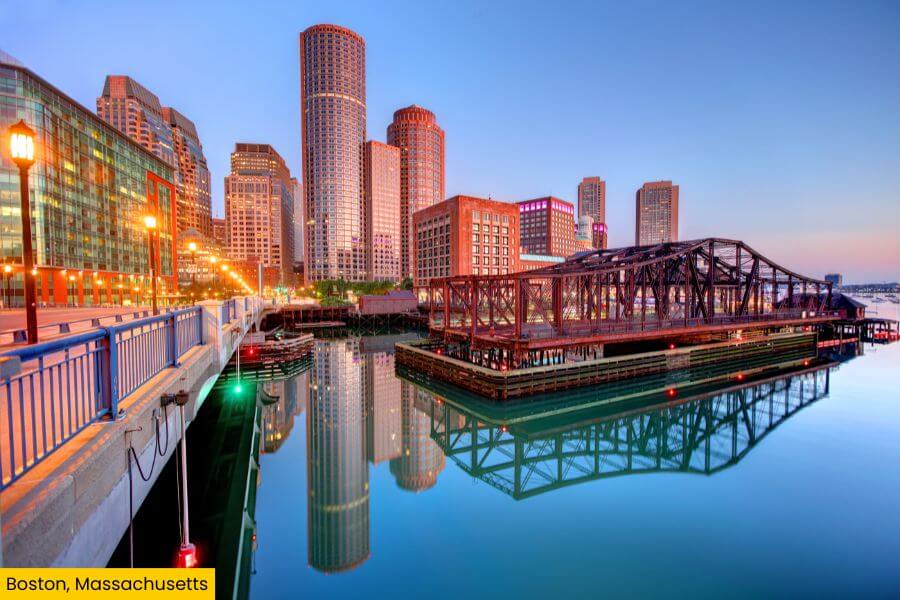
Boston is the capital and largest city in Massachusetts and ranks among the oldest cities in the U.S., featuring cobblestone streets and historic landmarks.
It’s famous for the Freedom Trail, a 2.5-mile path that hits 16 major spots from the American Revolution, like Paul Revere’s House and the Old North Church.
Another highlight is Fenway Park, home of the Red Sox since 1912 and one of the coolest baseball stadiums in the country.
You’ll also find world-class museums like the Museum of Fine Arts, tons of fresh seafood, and a mix of historic neighborhoods and modern city life.
2. Portland, Maine
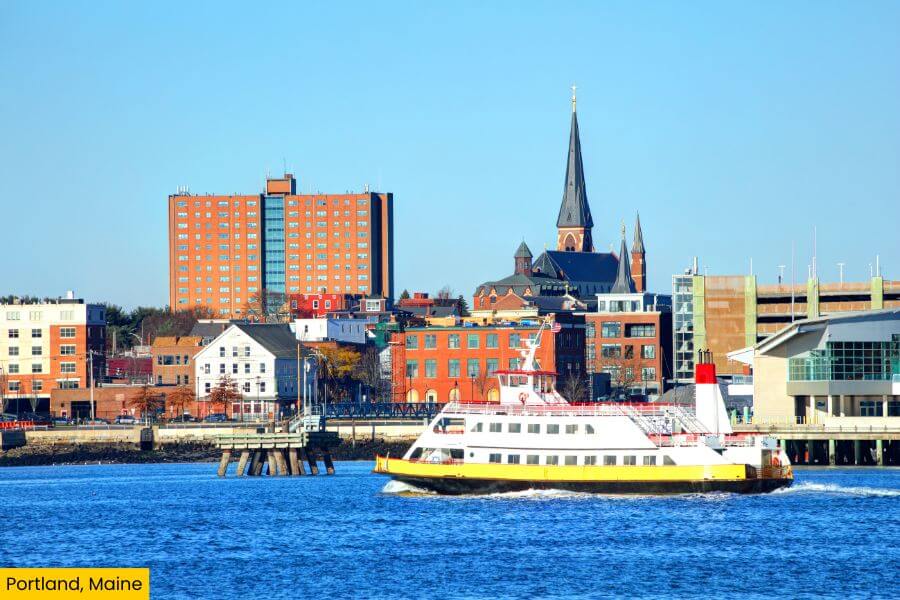
About an hour and 45 minutes from Boston is Portland, Maine, a super walkable city that mixes salty sea air with great food.
It’s known for its working harbor, historic Old Port district with cobblestone streets, and more seafood shacks than you can count.
There’s also Congress Street, which is lined with funky galleries, shops, and local art spaces.
Along the way, be sure to stop at the Holy Donut (potato donuts!) or grab a craft beer from The King’s Head.
3. Acadia National Park, Maine
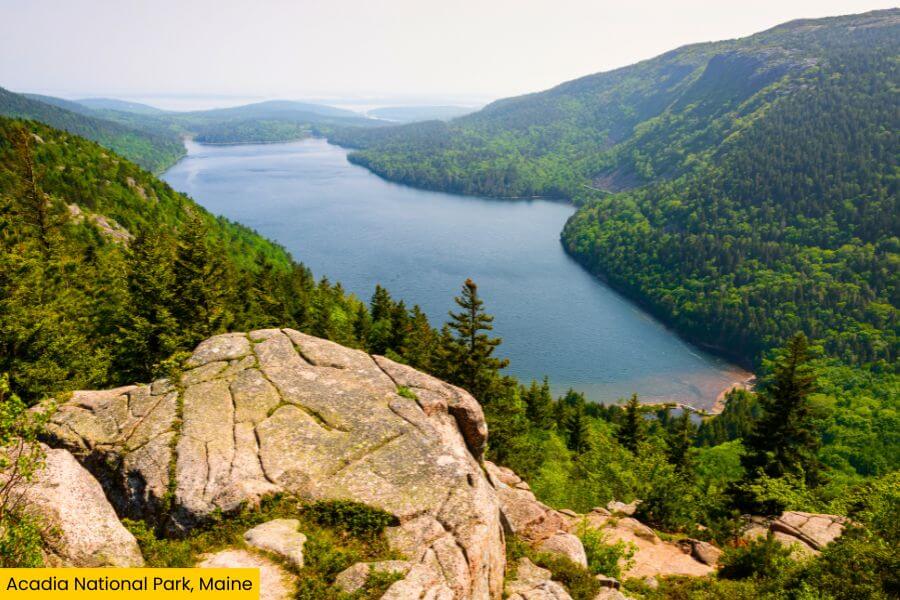
From Portland, it’s roughly a three-hour drive to Acadia National Park, where Maine’s wild coastline really steals the show.
This park covers nearly 50,000 acres on Mount Desert Island, with granite peaks, pine forests, and over 150 miles of hiking trails.
To explore, you can drive up Cadillac Mountain, the tallest point on the North Atlantic coast at 1,530 feet, or hike the steep and fun Beehive Trail for epic views.
And if you’re into sunrises, get up early because Cadillac Mountain is one of the first places in the country to catch the morning light (October through early March).
4. St. Andrews, New Brunswick
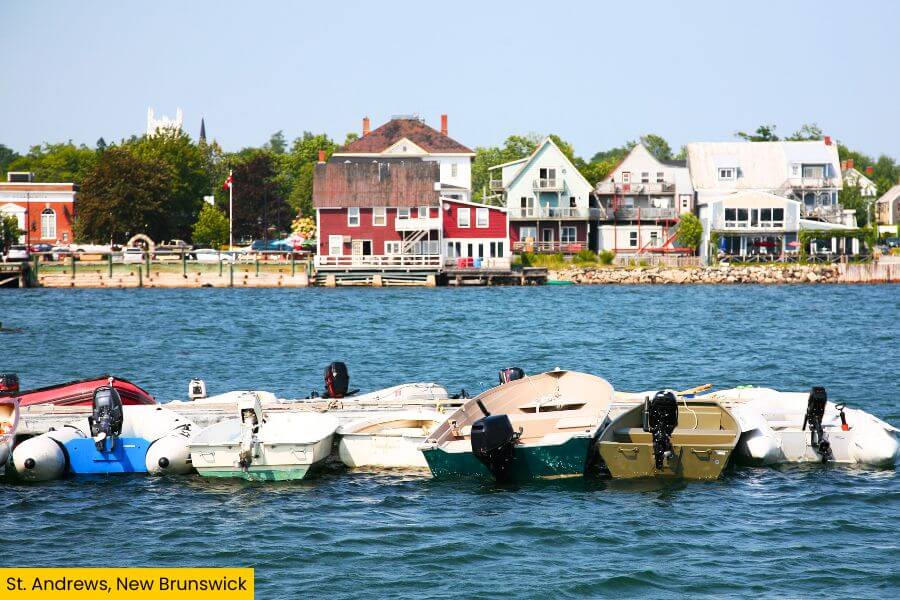
Crossing into Canada, your first stop is St. Andrews in New Brunswick, a charming little seaside town that feels straight out of a postcard.
It’s famous for whale watching in the Bay of Fundy, where you can spot humpbacks, minkes, and even the rare North Atlantic right whale.
While you’re here, you can walk along Water Street for cute shops and ice cream, or explore the lovely Kingsbrae Garden with 27 acres of flowers, art, and alpacas.
Fun fact: At low tide, it’s possible to walk from town to Ministers Island across the ocean floor (just don’t forget to check the tide times or you might get stuck!).
5. Saint John, New Brunswick
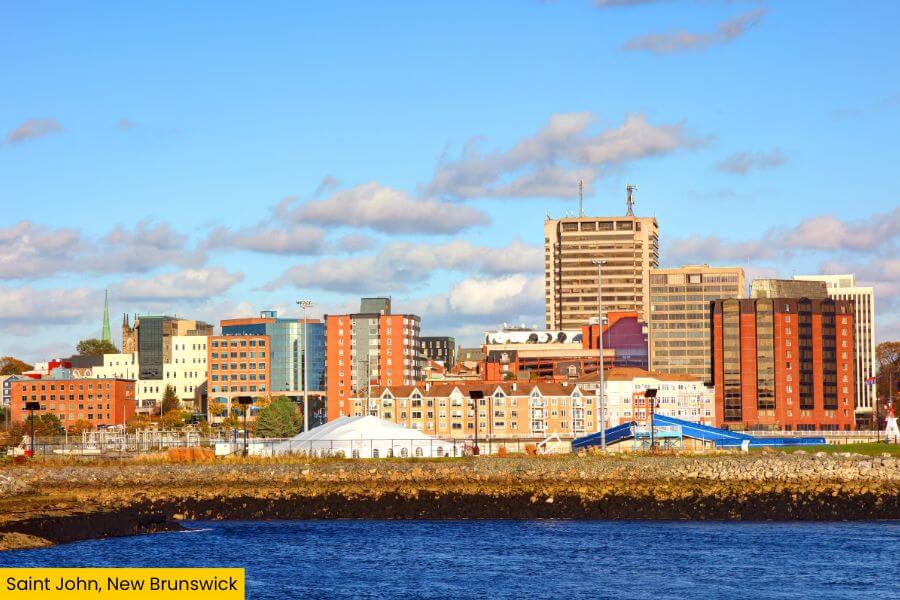
An hour’s drive up the coast from St. Andrews brings you to Saint John, a port city with big energy, cool history, and the wildest river trick you’ll ever see.
It’s home to the Reversing Falls, where the Saint John River literally changes direction thanks to the powerful tides of the Bay of Fundy.
You can watch it all happen from the Skywalk Saint John, a glass-bottom platform right above the river.
After that, head to the Saint John City Market (the oldest market in Canada) for snacks, souvenirs, and the smell of freshly baked bread.
6. Fundy National Park, New Brunswick
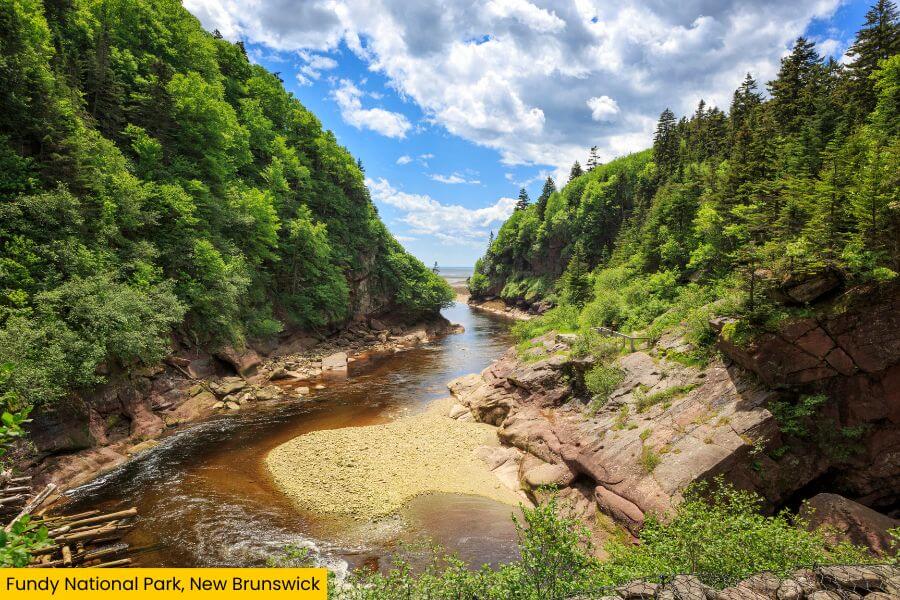
Up next is Fundy National Park, about 1 hour 15 minutes from Saint John, where forests, waterfalls, and sky-high tides all come together in one epic spot.
This park has over 60 miles of hiking trails, including the 0.9-mile Dickson Falls loop with mossy paths and a boardwalk leading to a dreamy cascade.
Also, the tides here are wild, as roughly 100 billion tons of water move in and out of the Bay of Fundy during a single tidal cycle.
If you’re up for it, you can kayak at high tide, walk on the ocean floor at low tide, or stick around for camping and swimming.
7. Hopewell Rocks, New Brunswick
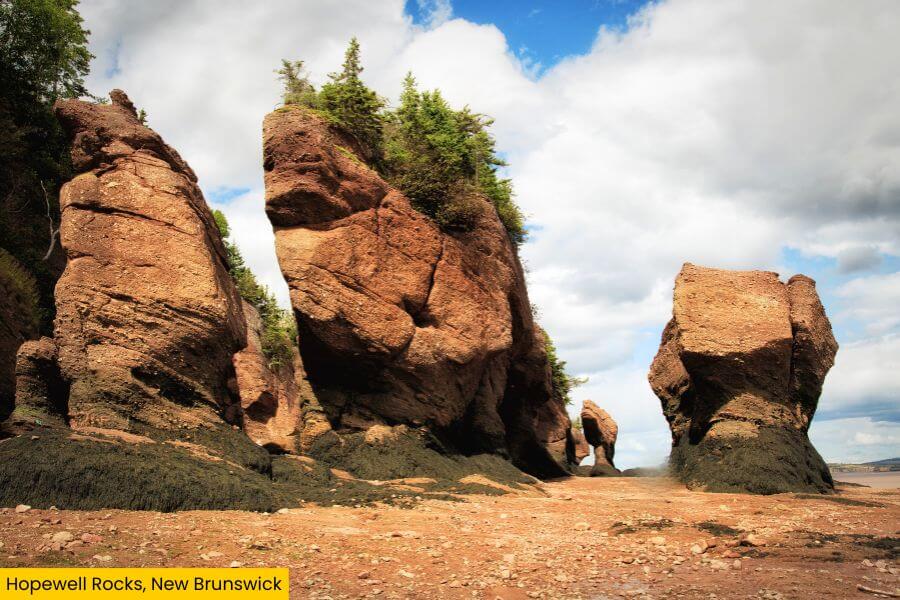
Then there’s Hopewell Rocks, one of the most famous places in the world to watch the tides.
The highlight here is giant, flowerpot-shaped rock formations carved by the ocean and standing up to 70 feet tall along the coast.
In fact, you can stroll the ocean floor at low tide and then come back later to kayak around those same rocks when the tide rolls in.
To experience it safely, there are easy trails down to the beach, plus a big visitor center with tide charts to help you time it right.
8. Peggy’s Cove, Nova Scotia
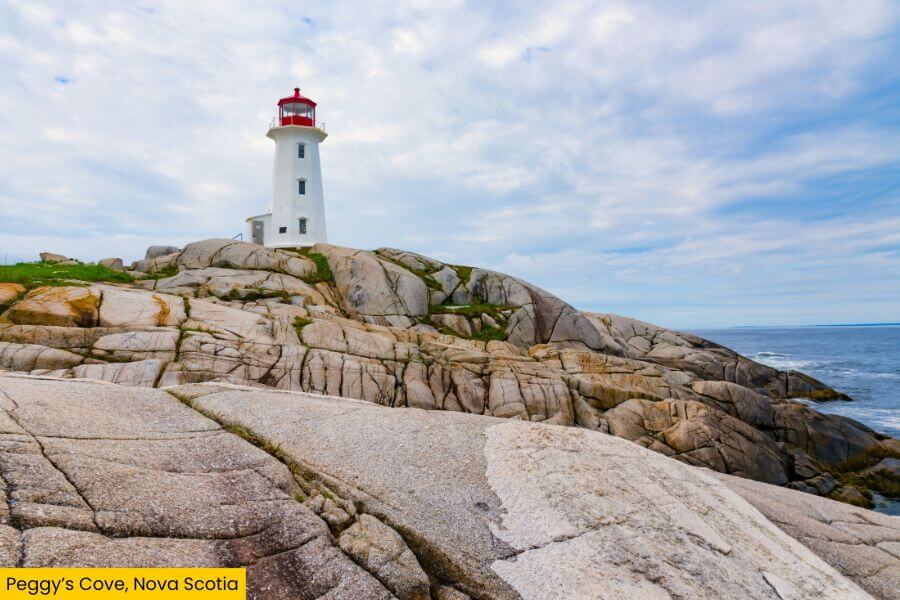
After crossing into Nova Scotia, make your way to Peggy’s Cove, a tiny fishing village that’s all about big waves and even bigger photo ops.
The main attraction is the Peggy’s Point Lighthouse, one of the most photographed lighthouses in the world, set on smooth granite rocks right by the ocean.
Waves crash like crazy here, so avoid the dark rocks while soaking in endless views and that salty Atlantic breeze.
Once you’re ready to refuel, grab chowder or a lobster roll at the Sou’Wester Restaurant, then wander through the nearby art shops and fishing shacks.
9. Lunenburg, Nova Scotia
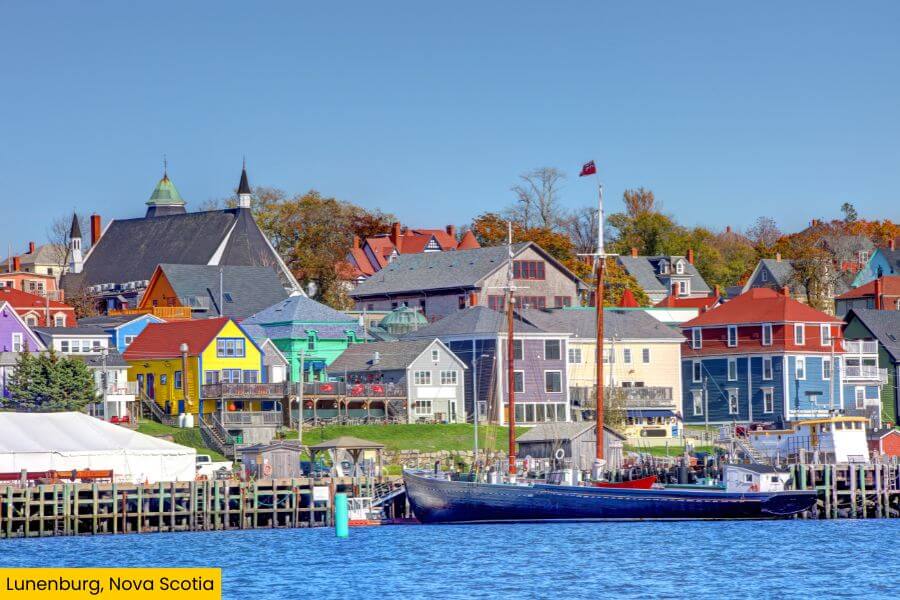
Your final stop is Lunenburg, a colorful harbor town that looks like someone dropped a box of crayons on the waterfront.
It’s a UNESCO World Heritage Site filled with 18th-century buildings and home to the iconic Bluenose II schooner, which you can tour when it’s in port.
You’ll also find the Fisheries Museum of the Atlantic right on the waterfront, with hands-on exhibits and interpreters telling sea stories.
If you prefer to wander, stroll the steep streets, snap pics of the red buildings reflected in the harbor, and grab fresh scallops at the Salt Shaker Deli.
(The Fisheries Museum of the Atlantic operates seasonally, closing in October and reopening in May.)
Related Posts