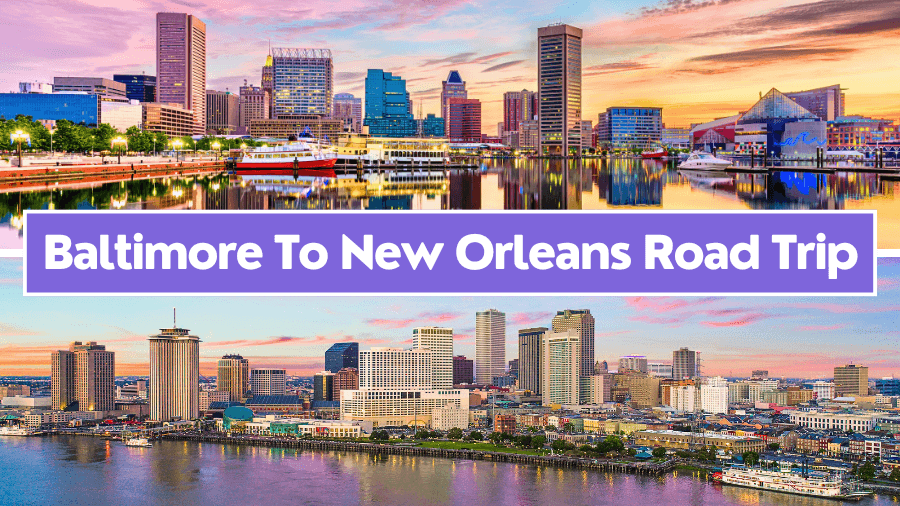
Looking for a road trip that combines historic landmarks, mountain scenery, famous music destinations, exciting cities, and unforgettable food all in one adventure?
This Baltimore to New Orleans road trip takes you through a remarkable stretch of the United States, where every few hours brings a completely different landscape, culture, and story.
One day you’ll be exploring centuries-old sites that helped shape American history, and the next you might be winding through mountain roads and standing at breathtaking overlooks.
With charming small towns, iconic attractions, outdoor adventures, and plenty of surprising stops along the way, this route turns the journey itself into the main event.
Get ready for an epic drive packed with memorable experiences from start to finish.
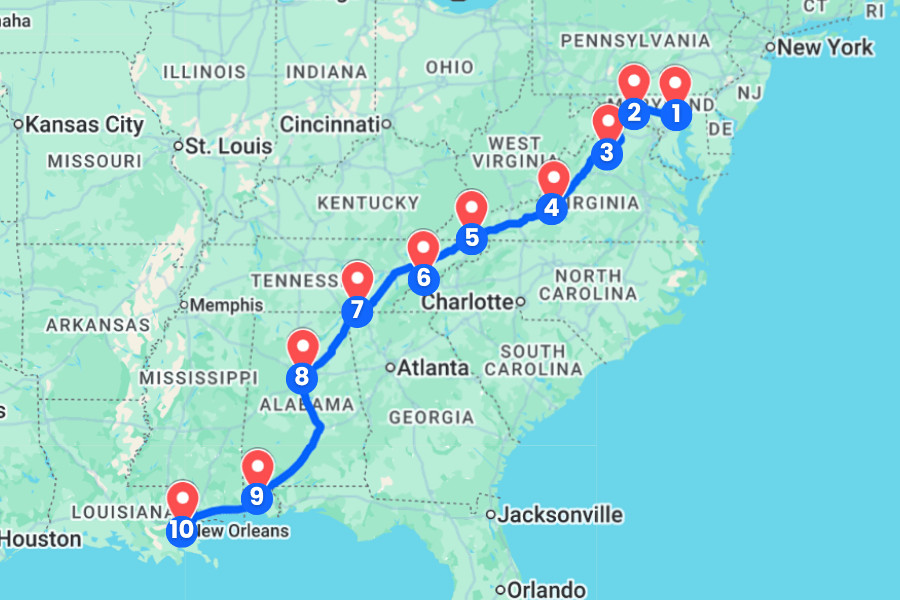
1. Baltimore, Maryland
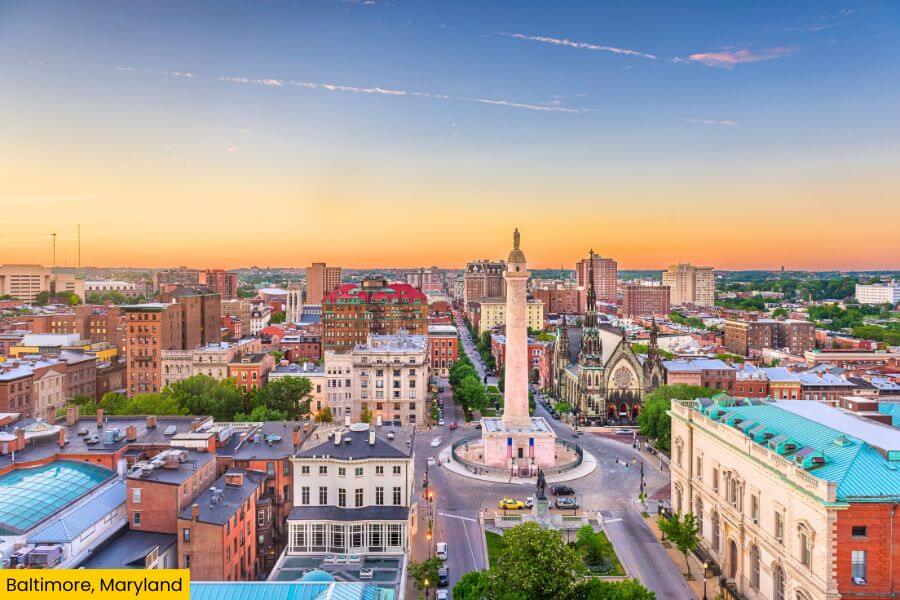
Baltimore is one of the largest ports on the East Coast and it’s where we’ll be beginning this road trip.
The city’s biggest draw is the Inner Harbor, where you can explore the National Aquarium with more than 20,000 animals, tour historic ships like the USS Constellation, and stroll along the waterfront lined with restaurants and museums.
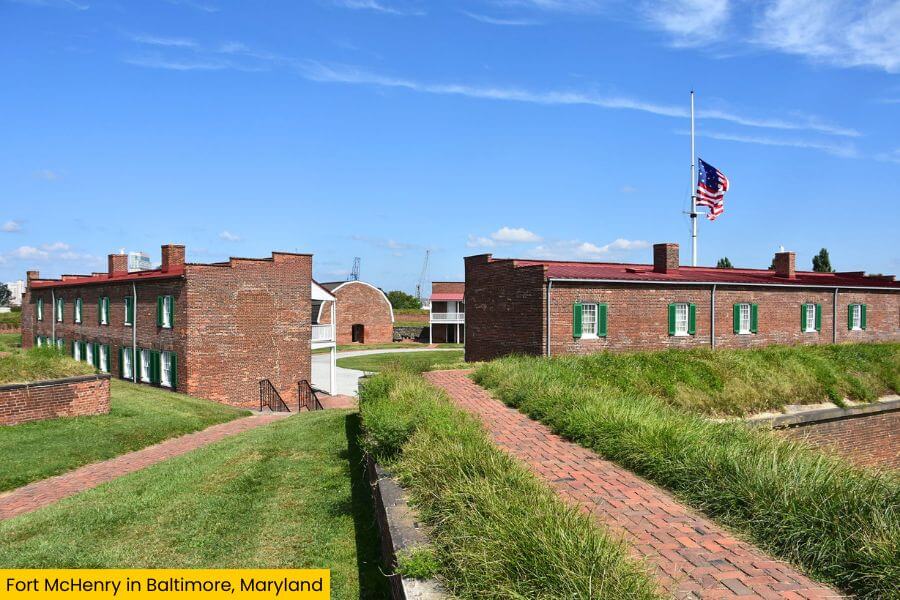
History is everywhere here, especially at Fort McHenry, the 18th-century fort that inspired Francis Scott Key to write “The Star-Spangled Banner” during the War of 1812.
You can also visit the American Visionary Art Museum, feast on Maryland blue crabs, and snap photos of the colorful rowhouses that give Baltimore its unmistakable character.
2. Harpers Ferry, West Virginia
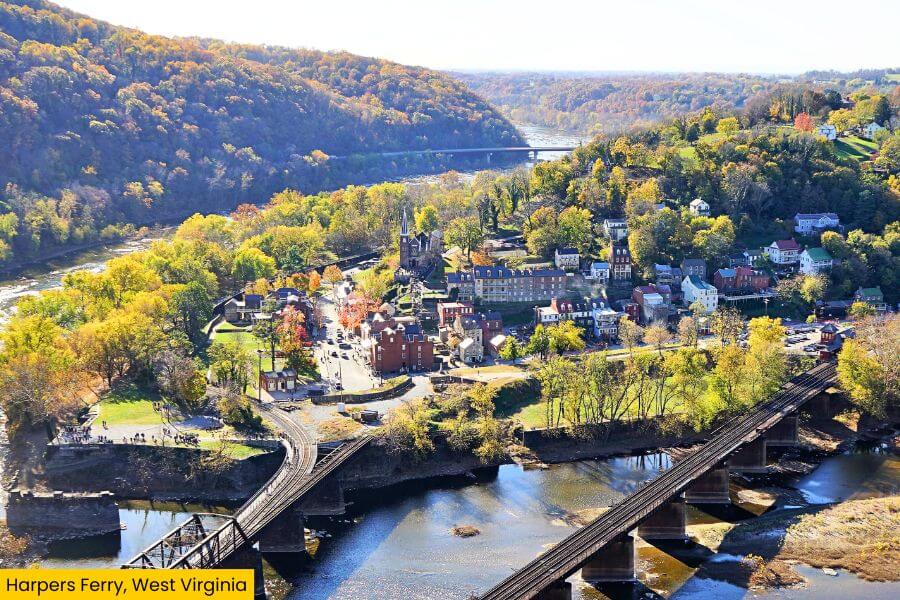
Just over an hour from Baltimore, Harpers Ferry sits at the meeting point of the Potomac and Shenandoah Rivers, where West Virginia, Maryland, and Virginia come together in one remarkably scenic spot.
This small town played a major role in American history as the site of John Brown’s 1859 raid, and you can explore that story through Harpers Ferry National Historical Park, which preserves dozens of historic buildings, museums, and exhibits.
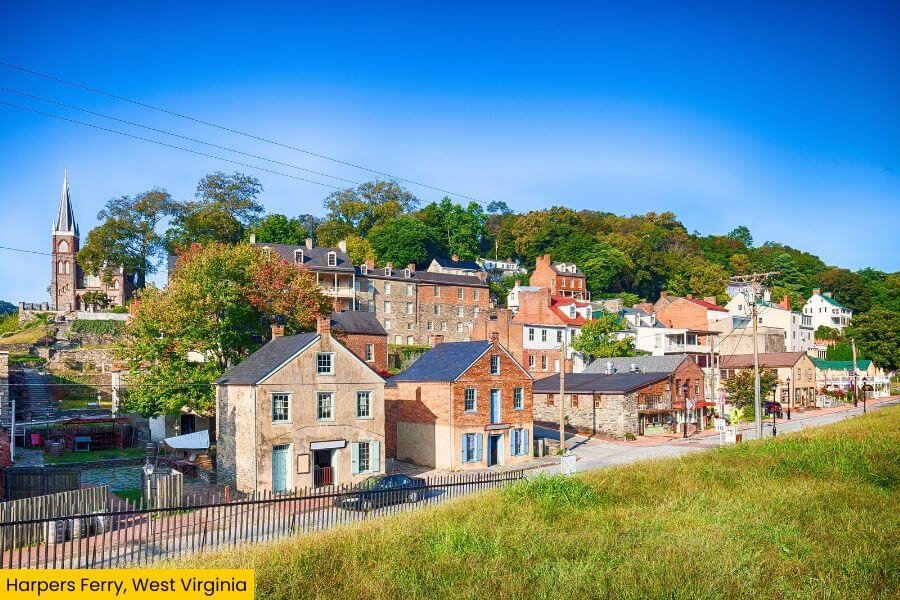
If you want some time outdoors, hike the Maryland Heights Trail for sweeping views over the rivers and town, or walk a section of the famous Appalachian Trail as it passes directly through Harpers Ferry.
Brick streets, 19th-century storefronts, railroad bridges, and dramatic river overlooks make every corner photo-worthy, giving you a completely different experience from the busy waterfront energy of Baltimore.
3. Shenandoah National Park, Virginia
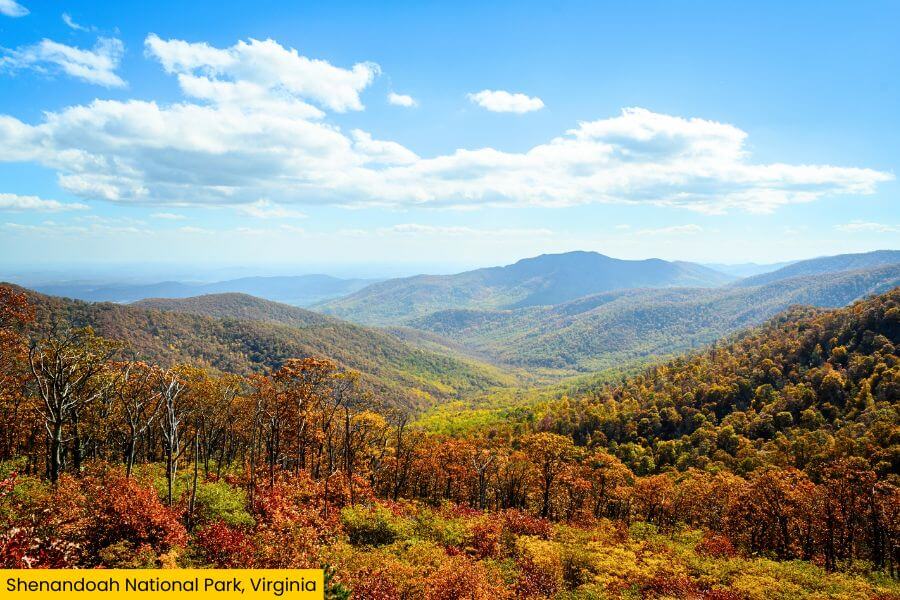
From the historic streets of Harpers Ferry, the road soon climbs into Shenandoah National Park, a nearly 200,000-acre stretch of the Blue Ridge Mountains that runs for 105 miles across northern and central Virginia.
The park is famous for Skyline Drive, a scenic road with 75 overlooks where you can stop for sweeping mountain views, wildlife spotting, and some of the best fall foliage displays on the East Coast.
More than 500 miles of trails crisscross the park, including the Appalachian Trail and popular hikes like the 1.6-mile round-trip Stony Man Trail and the 1.4-mile Dark Hollow Falls Trail, which leads to a series of cascades.
Keep an eye out for black bears, white-tailed deer, and wild turkeys, and don’t miss the chance to watch the sun set from overlooks such as Big Meadows or Crescent Rock, where ridge after ridge stretches to the horizon.
4. Roanoke, Virginia
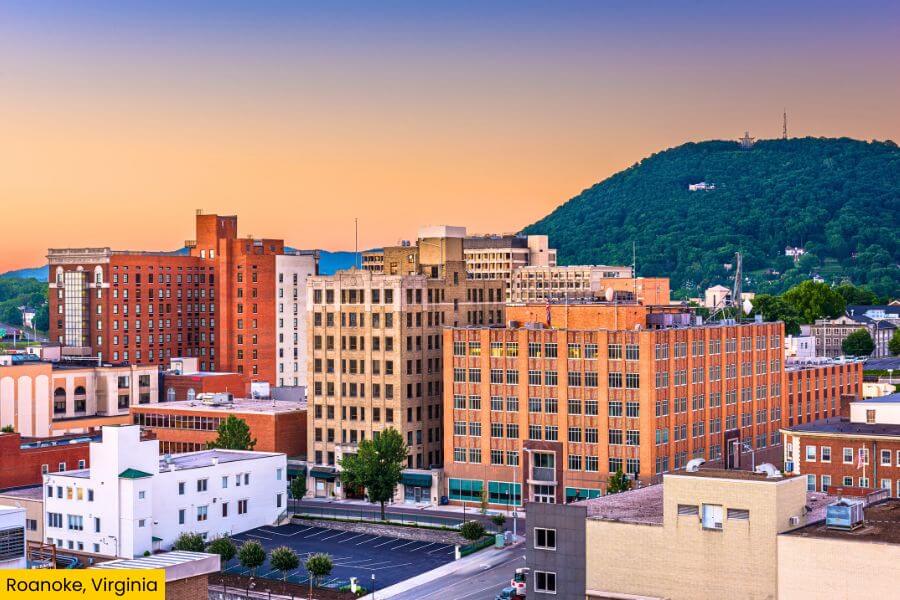
After soaking up mountain views in Shenandoah, continue driving for 2 hours to Roanoke, a city in Virginia’s Blue Ridge Mountains that blends outdoor adventure with a fascinating railroad heritage.
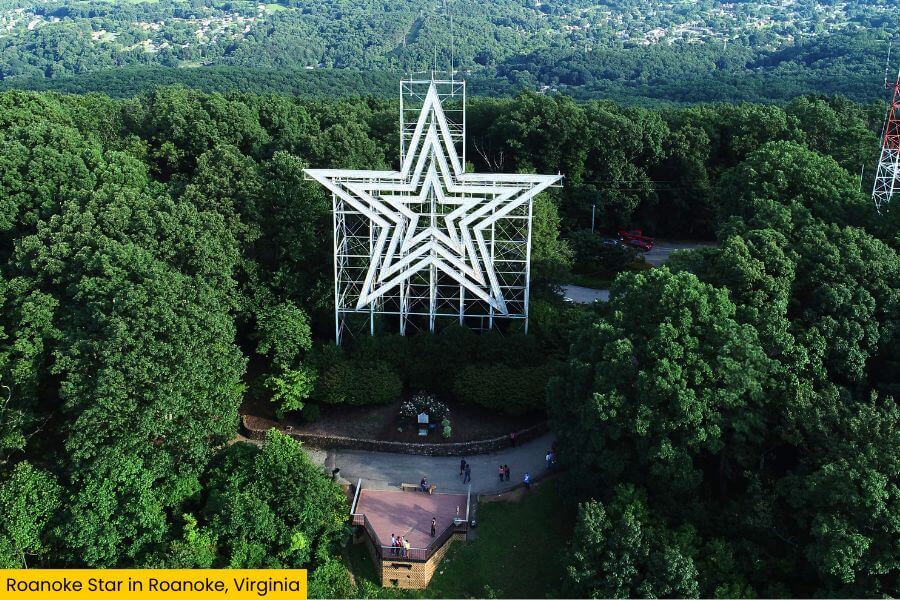
The city’s most famous landmark is the Roanoke Star, an 88.5-foot-tall illuminated star perched on Mill Mountain that has overlooked the valley since 1949 and offers fantastic views from its overlook.
If you want to stretch your legs, explore part of the Blue Ridge Parkway, hike the trail to McAfee Knob, or visit the 1,100-acre Explore Park for biking, paddling, and walking trails.
Back downtown, you can browse the City Market, one of the oldest continuously operating open-air markets in Virginia, visit the Virginia Museum of Transportation to see historic locomotives, and enjoy the lively restaurants filling the city’s restored warehouse district.
5. Bristol, Virginia/Tennessee
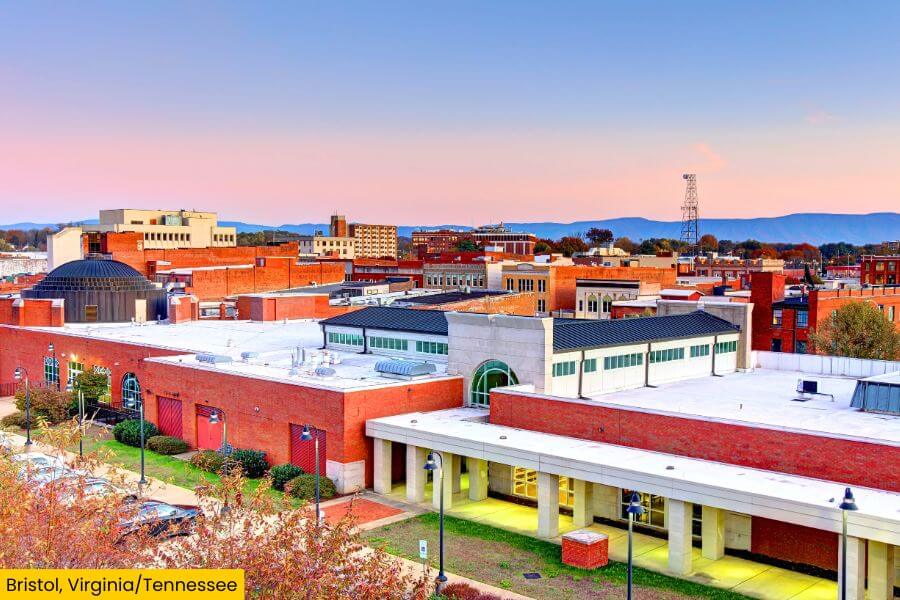
Leaving the Blue Ridge Mountains behind, you’ll roll into Bristol, a one-of-a-kind city that sits directly on the Virginia-Tennessee state line, with State Street marking the boundary between the two states.
Bristol is celebrated as the “Birthplace of Country Music” thanks to the famous 1927 Bristol Sessions, recordings that launched the careers of legends like the Carter Family and Jimmie Rodgers and helped shape modern country music.
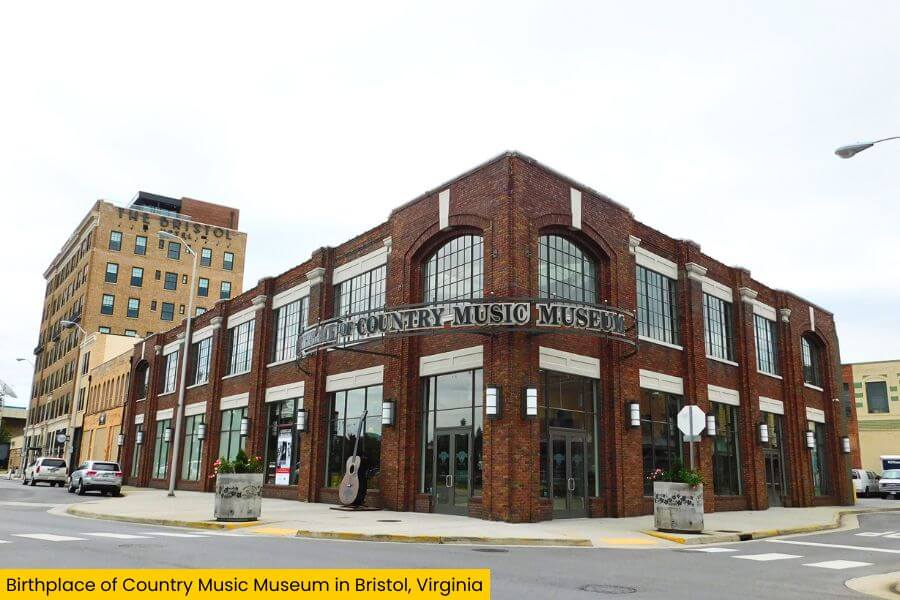
You can dive into that story at the interactive Birthplace of Country Music Museum, a Smithsonian Affiliate packed with exhibits, rare recordings, and memorabilia from the genre’s earliest stars.
The city also features the Bristol Motor Speedway, a major NASCAR venue, while its walkable downtown is filled with restaurants, murals, live music venues, and photo spots where you can stand in two states at the same time.
6. Gatlinburg, Tennessee
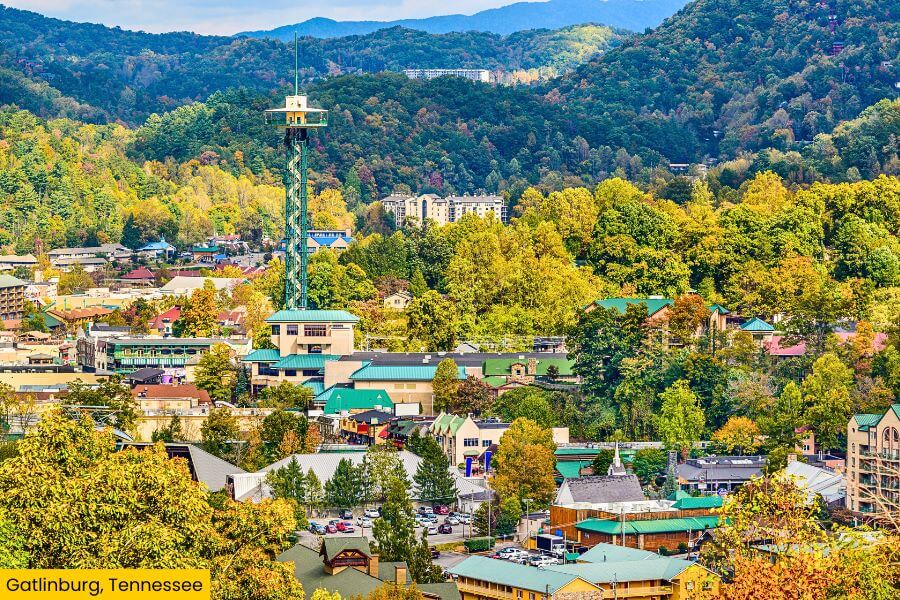
The route swings back into the mountains and arrives in Gatlinburg, a bustling gateway town at the doorstep of Great Smoky Mountains National Park, the most visited national park in the United States.
Outdoor adventures are the main attraction here, with easy access to popular spots like Clingmans Dome, the park’s highest point at 6,643 feet.
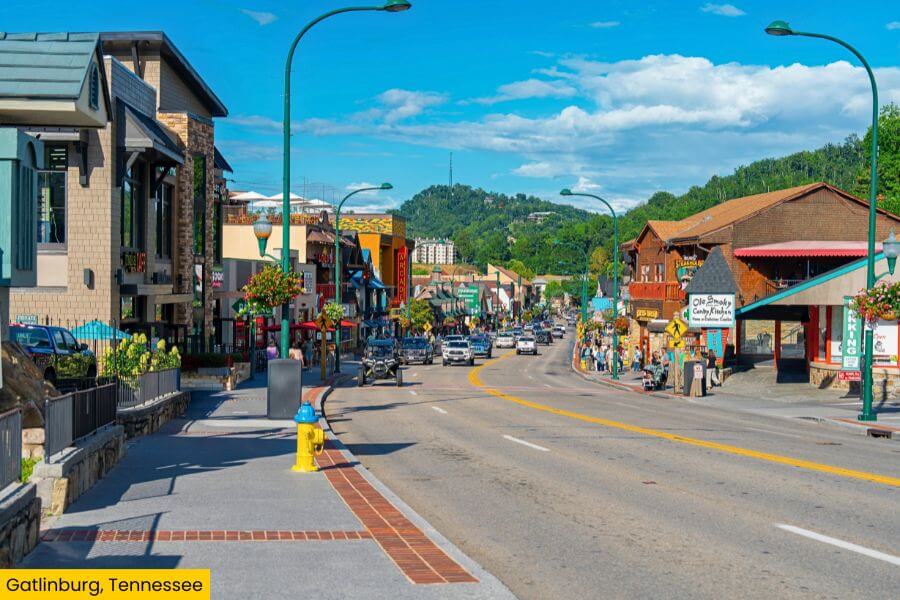
In town, you can ride the 407-foot-tall Gatlinburg Space Needle, stroll the lively Parkway packed with shops and attractions, or cross the nearly 700-foot SkyBridge, the longest pedestrian cable bridge in North America.
Black bears are frequently spotted in the area, mountain views surround every turn, and the mix of scenic drives, hiking trails, and family-friendly attractions makes Gatlinburg one of the most exciting stops on the journey.
7. Chattanooga, Tennessee
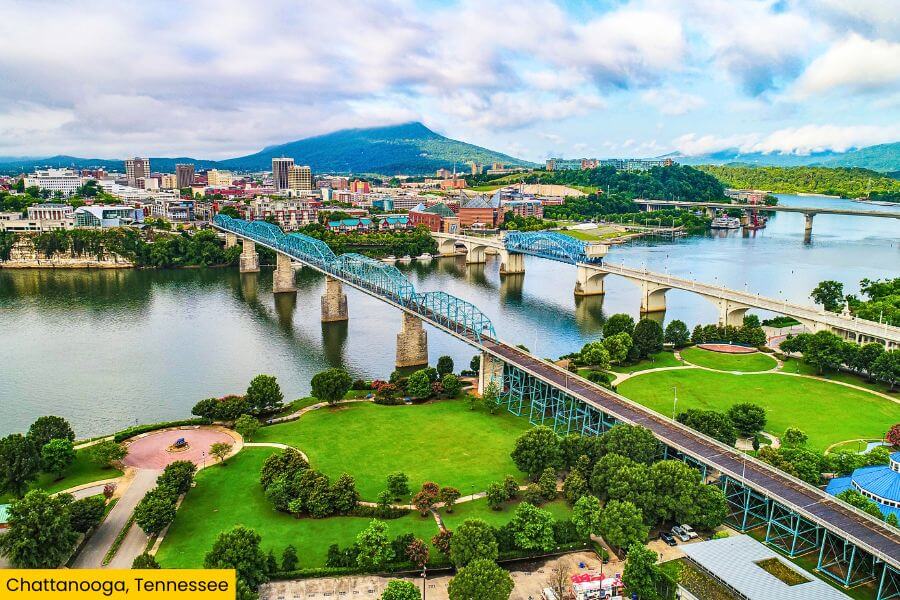
About 2 hours and 40 minutes from Gatlinburg, the drive heads to Chattanooga, a riverfront city along the Tennessee River that is packed with outdoor attractions, fascinating history, and dramatic scenery.
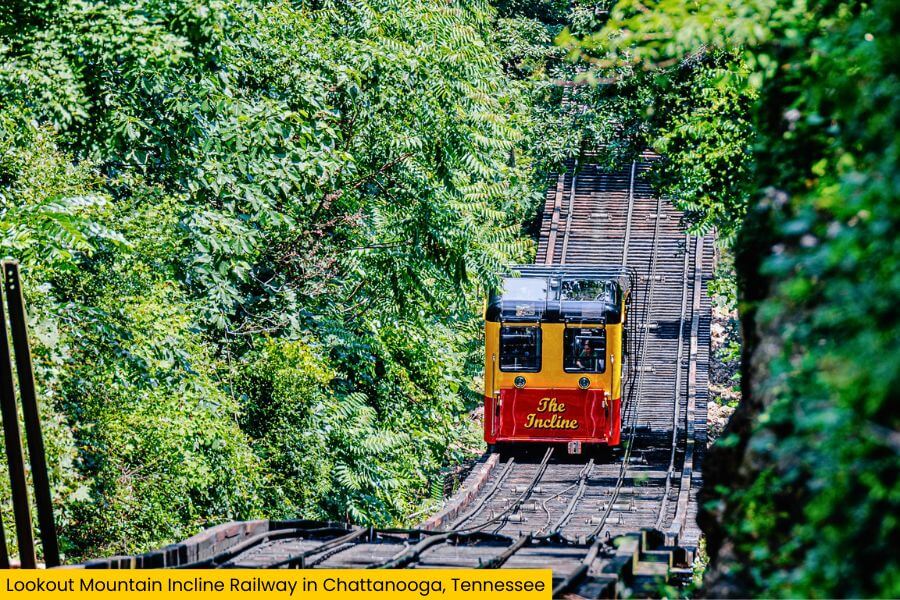
One of the biggest highlights is Lookout Mountain, where you can ride the Incline Railway, one of the world’s steepest passenger railways, explore the massive underground formations at Ruby Falls, and enjoy panoramic views from Rock City.
The city is also home to the Tennessee Aquarium, one of the largest freshwater aquariums in the world, featuring thousands of animals spread across two waterfront buildings.
Back downtown, walk across the Walnut Street Bridge, stroll the lively Tennessee Riverwalk, or visit the Chickamauga and Chattanooga National Military Park, the nation’s first national military park, which preserves key Civil War battlefields across the region.
8. Birmingham, Alabama
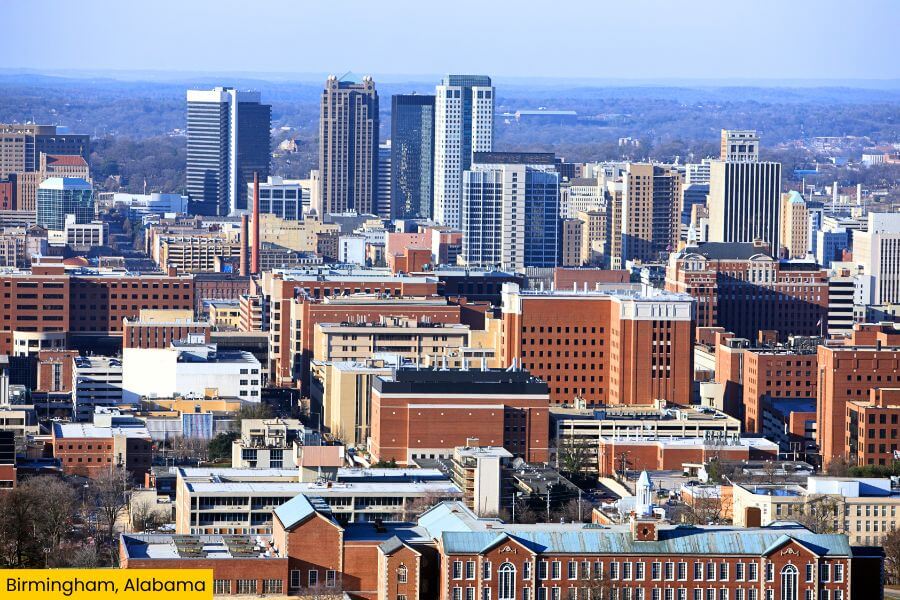
Leaving the Tennessee River behind, you’ll arrive in Birmingham, Alabama’s largest city, a place that played a major role in both the steel industry and the American Civil Rights Movement.
One of the most important historic sites in the city is the Birmingham Civil Rights Institute, where exhibits tell the story of the protests and events that helped change the nation during the 1960s.
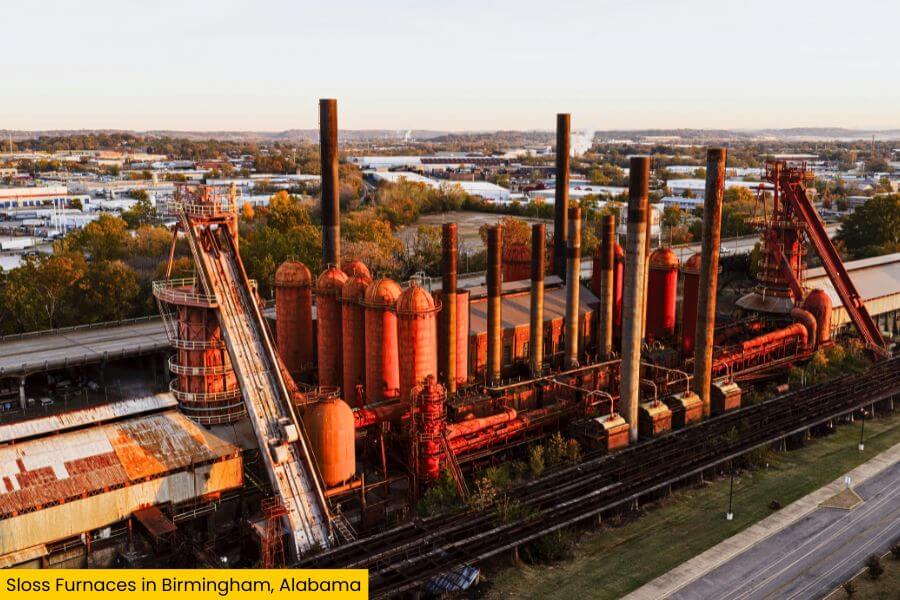
For a different perspective on Birmingham’s past, head to Sloss Furnaces, a National Historic Landmark where massive blast furnaces once produced iron that earned the city the nickname “The Pittsburgh of the South.”
You can also take an elevator to the observation deck in the pedestal beneath the 56-foot-tall Vulcan statue, the largest cast-iron statue in the world, explore Railroad Park’s 19 acres of green space, and sample some of Alabama’s best barbecue at local favorites scattered across the city.
9. Mobile, Alabama
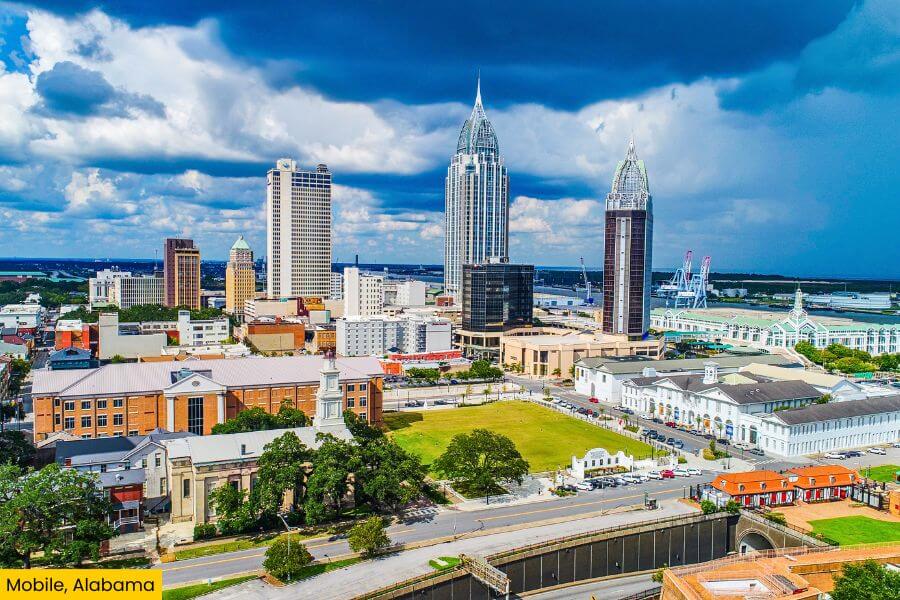
Continuing toward the Gulf Coast, Mobile brings a completely different flavor to the trip with oak-lined streets, historic districts, and a waterfront location on Mobile Bay in southwestern Alabama.
Founded in 1702, Mobile is the oldest city in Alabama, and it proudly claims America’s first Mardi Gras celebration, which took place more than a decade before New Orleans was even founded.
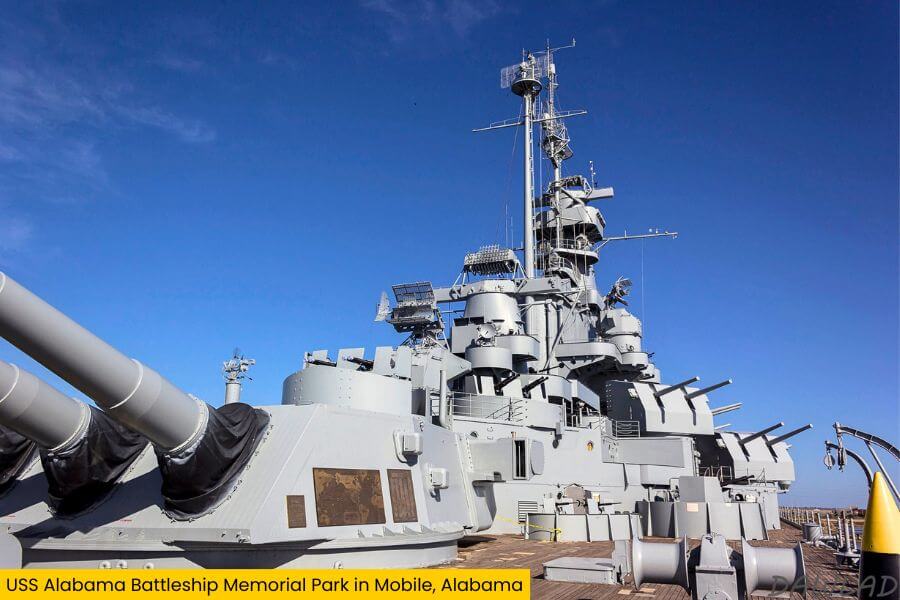
You can tour the USS Alabama Battleship Memorial Park, step aboard the massive World War II battleship USS Alabama, and explore the submarine USS Drum, one of the oldest surviving U.S. fleet submarines.
Downtown, you’ll find colorful architecture, the History Museum of Mobile, and Dauphin Street’s restaurants and music venues, while nearby Gulf Coast beaches and fresh Gulf seafood offer a perfect preview of the coastal culture waiting farther down the road.
10. New Orleans, Louisiana
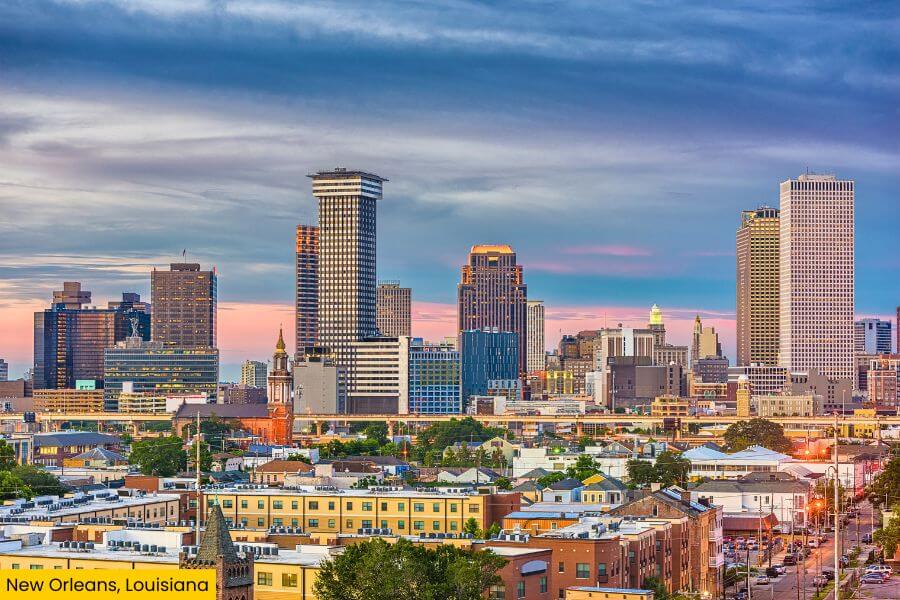
After tracing the Gulf Coast from Mobile, the journey reaches its grand finale in New Orleans, Louisiana, a city on the Mississippi River famous for its food, music, festivals, and one-of-a-kind culture.
The French Quarter is the heart of the action, where you’ll find Jackson Square, St. Louis Cathedral, and the lively bars and jazz clubs of Bourbon Street, all surrounded by historic buildings dating back hundreds of years.
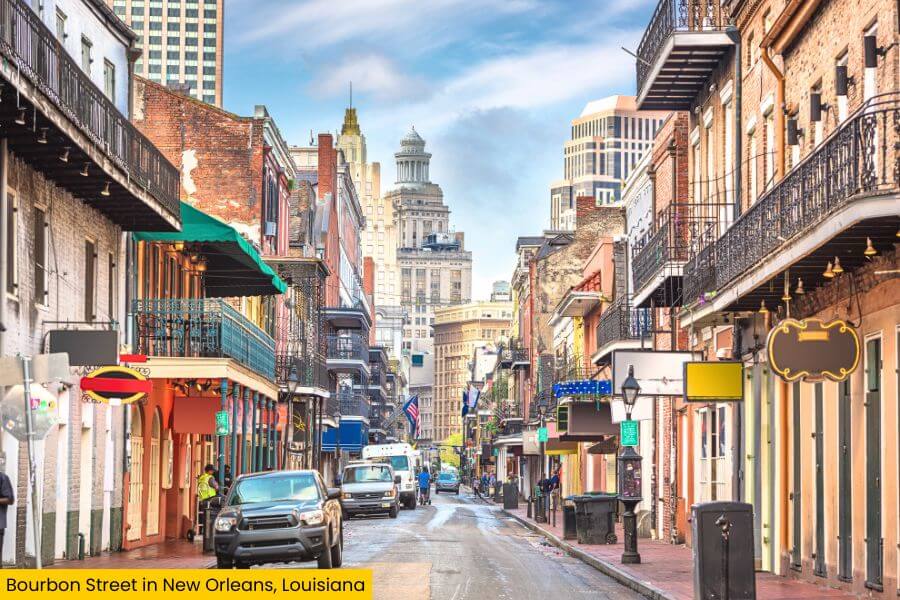
Food is a major attraction here, so come hungry for beignets at Café du Monde, po’boys stuffed with seafood, rich bowls of gumbo, and plates of jambalaya that showcase the city’s blend of French, Spanish, African, and Creole influences.
You can ride the historic St. Charles Avenue streetcar, explore the sprawling 1,300-acre City Park, listen to live jazz on Frenchmen Street, and celebrate the end of your road trip in a city that knows how to throw a party better than almost anywhere else in America.
Related Posts