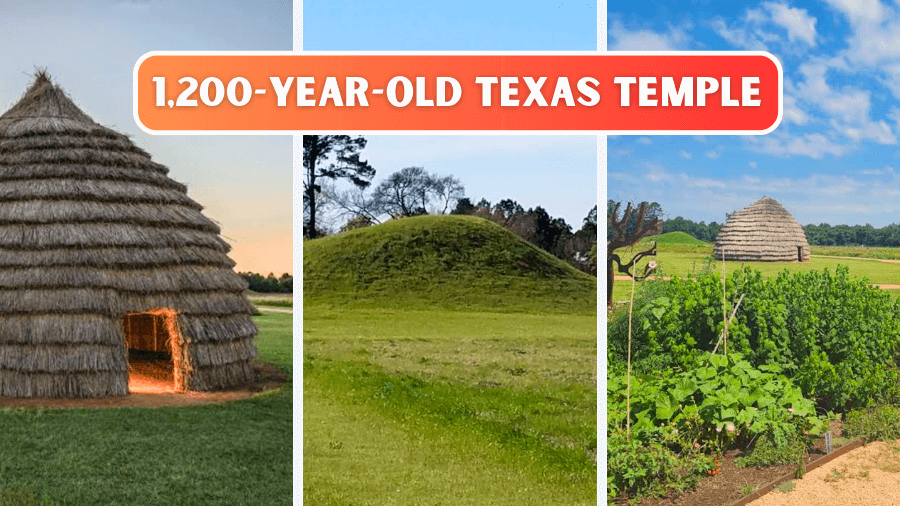
Somewhere in Texas, grassy hills rise from the ground in a way that feels quiet but powerful.
At first glance, they look natural, but they were shaped by human hands more than a thousand years ago.
This place was once a major gathering spot where leaders met, ceremonies happened, and an entire community came together.
Walking here today feels like peeling back layers of time without needing a map or a guidebook full of big words.
If you love places that make you stop, look closer, and rethink what you know about Texas history, this site delivers.
Keep reading because what’s hidden here is one of the oldest and most fascinating stories in the state.
Where Is It?
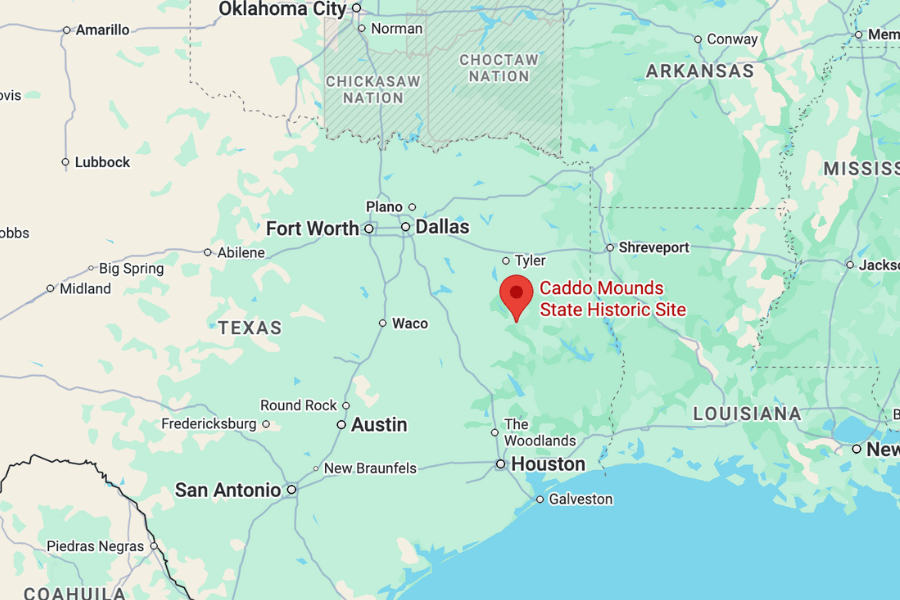
Caddo Mounds State Historic Site is located in East Texas near the tiny town of Alto.
You can expect about a 2.5-hour drive from Dallas, around 2 hours and 15 minutes from Houston, and about 3.5 hours from Austin.
It sits just off Highway 21, surrounded by pine trees and quiet country roads that make the drive feel like part of the adventure.
About
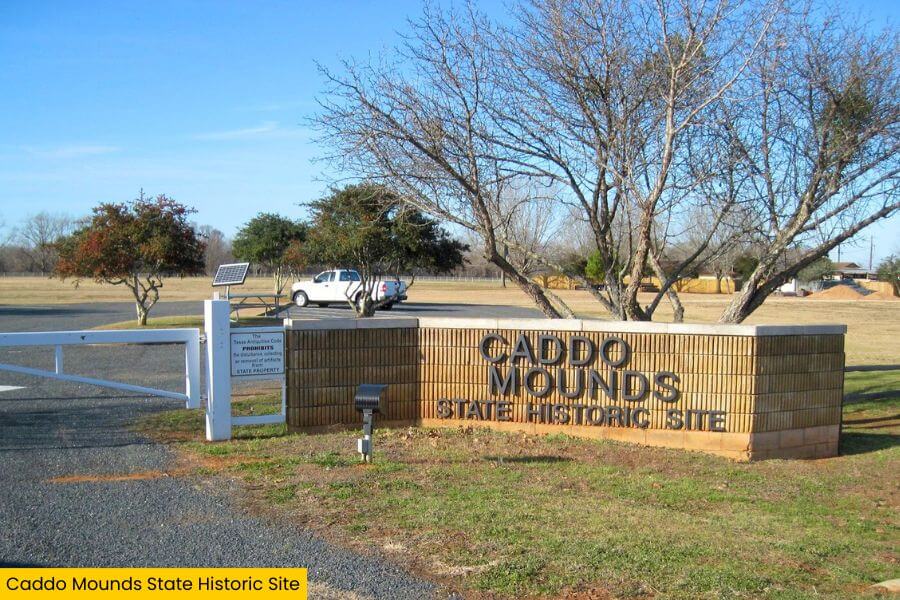
Caddo Mounds State Historic Site protects one of the most important Native American sites in the state.
Here, you’ll come face to face with a ceremonial landscape shaped by the Caddo more than 1,200 years ago.
What Makes Caddo Mounds Special
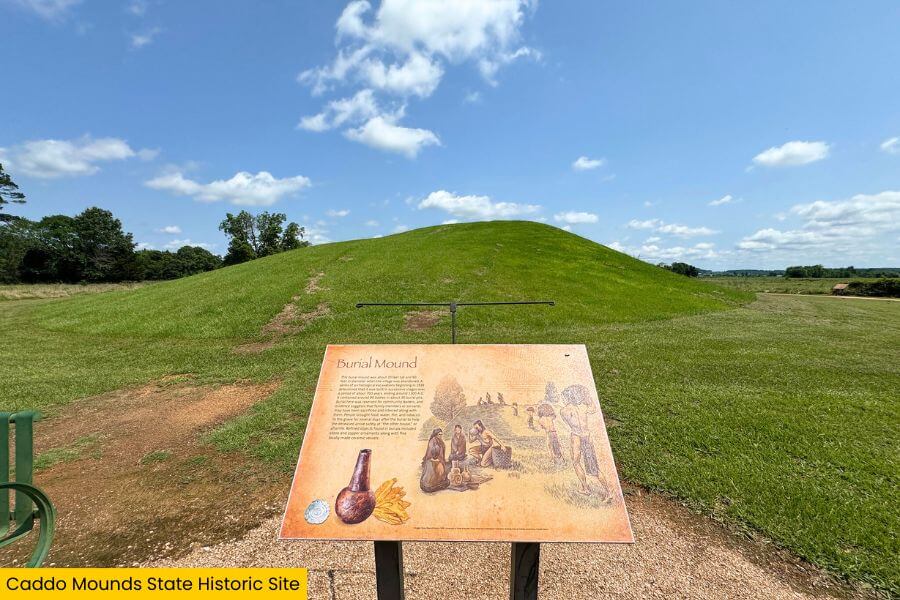
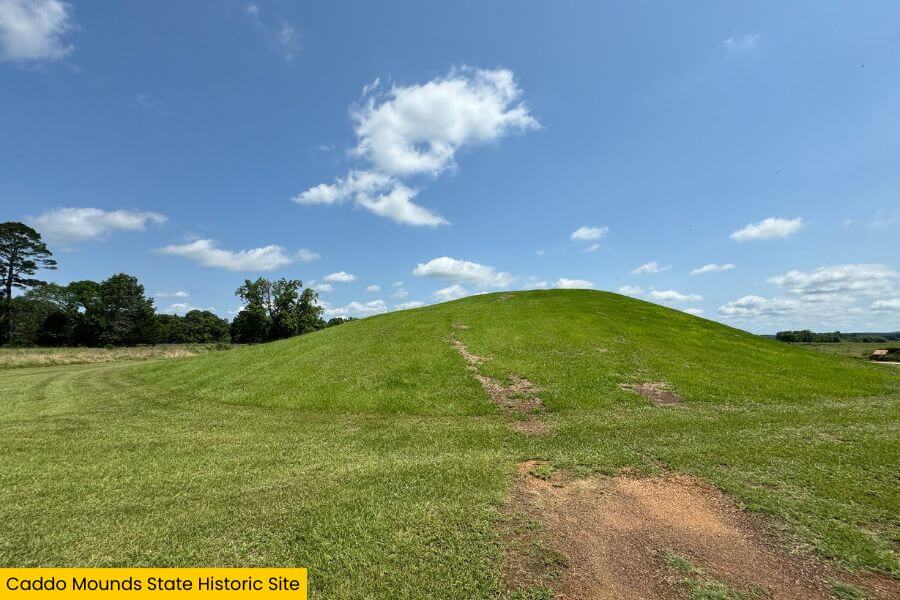
The site is best known for its large earthen mounds, built between about 800 and 1300 CE and carefully constructed by hand using baskets of soil.
They served as platforms for important structures used for ceremonies, leadership gatherings, and community life.
Today, you can still clearly see the shape and scale of these mounds rising from the grassy landscape.
Who Were the Caddo People
The Caddo were skilled farmers, traders, and builders who lived throughout Texas, Louisiana, Arkansas, and Oklahoma.
They grew crops like corn, beans, and squash, and traded pottery, tools, and food over long distances.
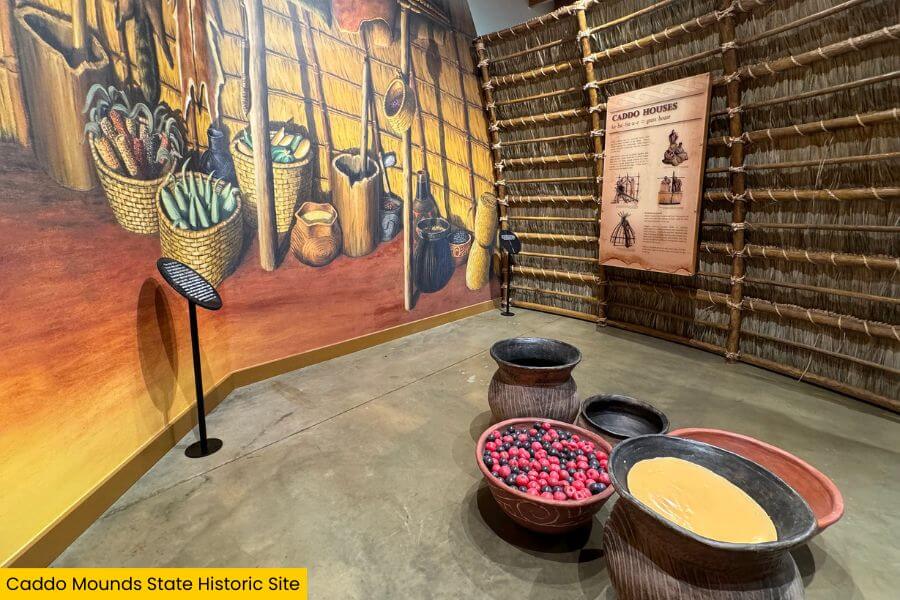
One of the coolest things they’re known for today is their pottery, famous for its detailed designs, and some pieces are displayed at the visitor center.
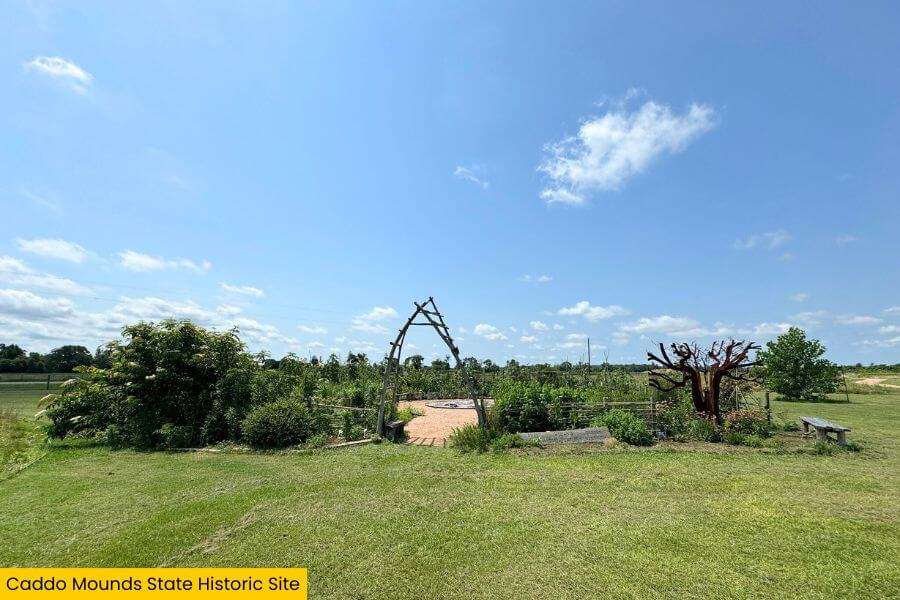
A Site With Layers of History
Archaeologists believe hundreds of people lived and gathered here during its peak.
After the site was abandoned in the 13th century, the land slowly returned to forest and farmland.
It wasn’t until the 1930s that the area was excavated and its importance became clear.
Eventually, the state stepped in to preserve the land as a historic site, protecting the mounds and helping visitors connect with the story of the Caddo Nation.
What Visiting Feels Like
It’s a calm, quiet, and surprisingly powerful experience, where the landscape itself tells the story.
It feels more like stepping into a living classroom than visiting a traditional museum.
If you like places that make you slow down, look closely, and think about the people who came before, this spot sticks with you long after you leave.
Things To Do
Walk the Mound Trails
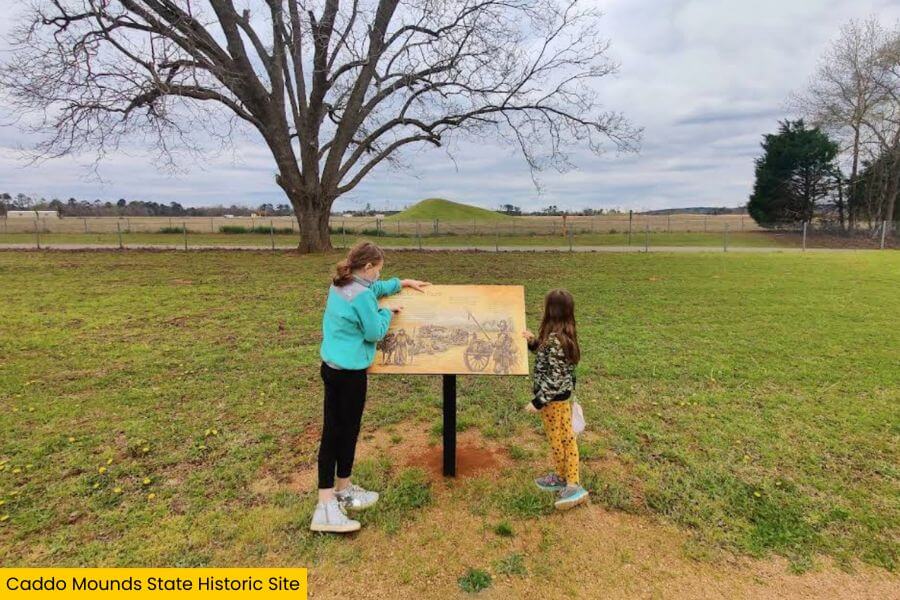
Start with the 0.7-mile self-guided interpretive trail that loops around the main mounds.
Along the way, informational signs explain what once stood on each mound and how the site was laid out.
Explore the Visitor Center
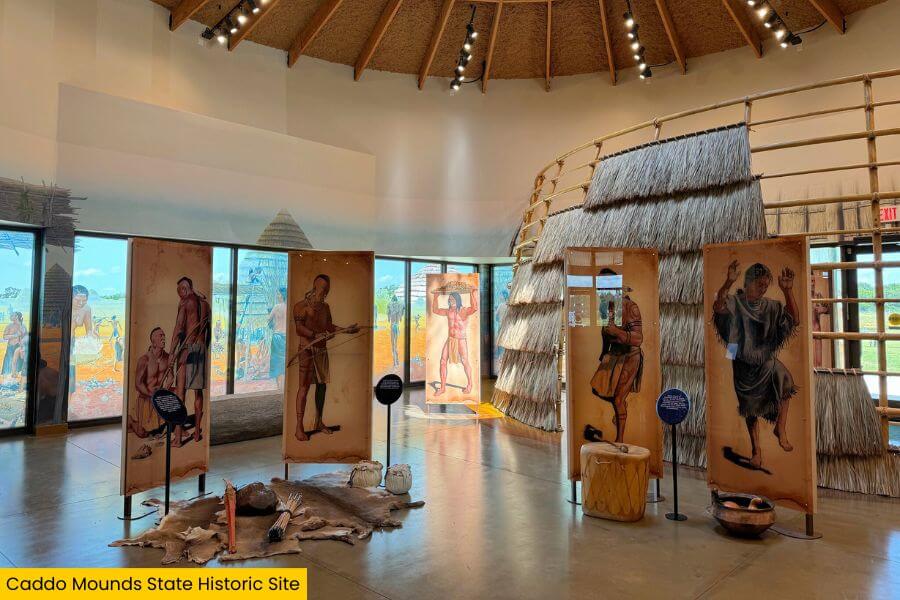
The visitor center is small but packed with helpful context, featuring artifacts on display and exhibits that explain how the Caddo lived.
There’s also a short video that gives you a quick intro to the site’s history before you continue exploring.
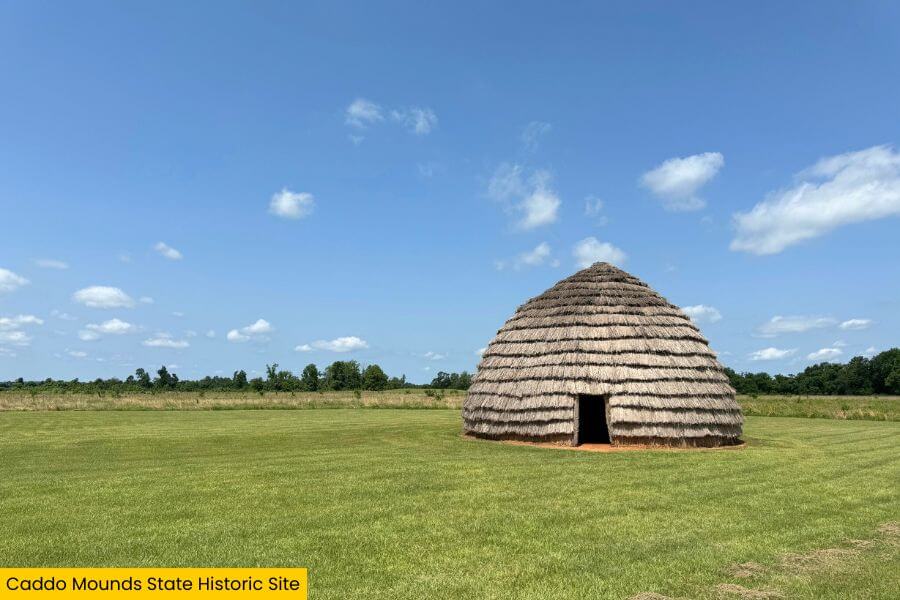
See a Reconstructed Grass House
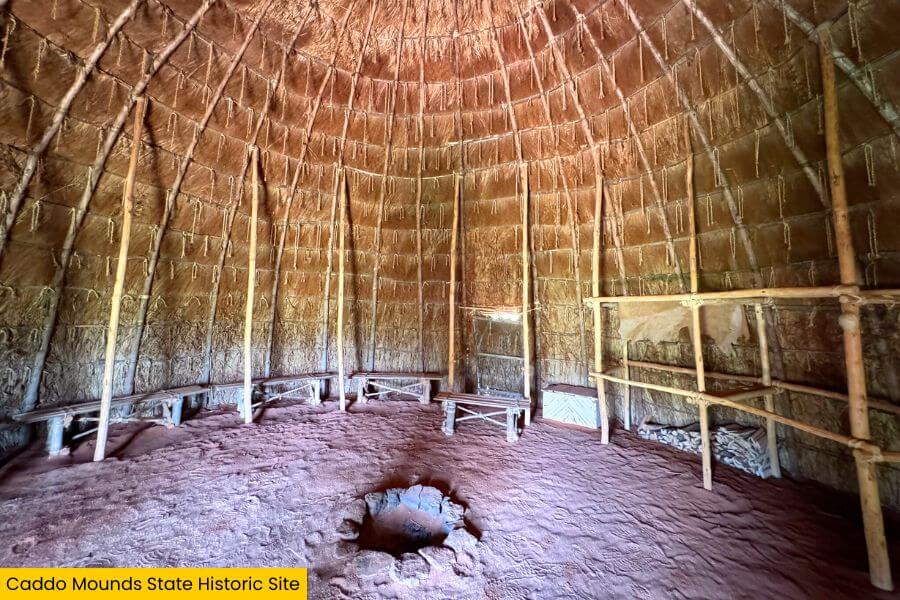
Just near the visitor center, you can walk through a traditional Caddo grass house.
It makes it so much easier to picture what everyday life may have looked like beyond the mounds.
This is super helpful if you’re visiting with kids or anyone who learns best by seeing things up close.
Join a Guided Tour
On certain days, rangers and interpreters lead guided tours and educational walks that take a closer look at Caddo culture and archaeology.
Some programs include hands-on demonstrations or storytelling that make the history feel alive, so it’s a good idea to check the schedule ahead of time.
Picnic and Slow Down
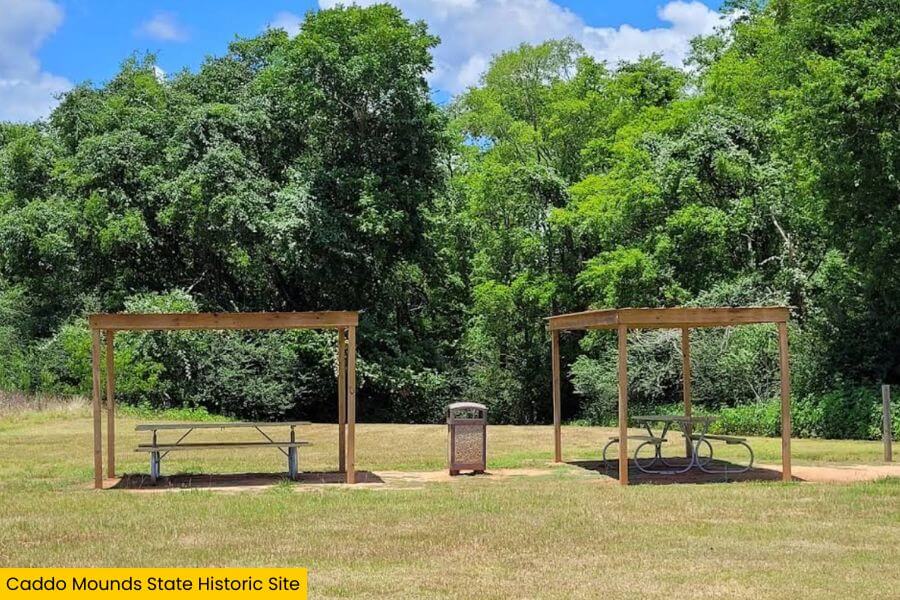
If you need a breather, there’s a designated picnic area where you can sit, eat, and recharge.
The quiet setting makes it easy to slow down and appreciate how peaceful the area still feels.
Know Before You Go
Hours and Admission
Caddo Mounds State Historic Site is open Tuesday through Sunday from 8:30 am to 4:30 pm.
Admission is $5 for adults, $2 for ages 6–17, and free for kids 5 and under.
Prices can change, so it’s smart to check the Texas Historical Commission website before you go.
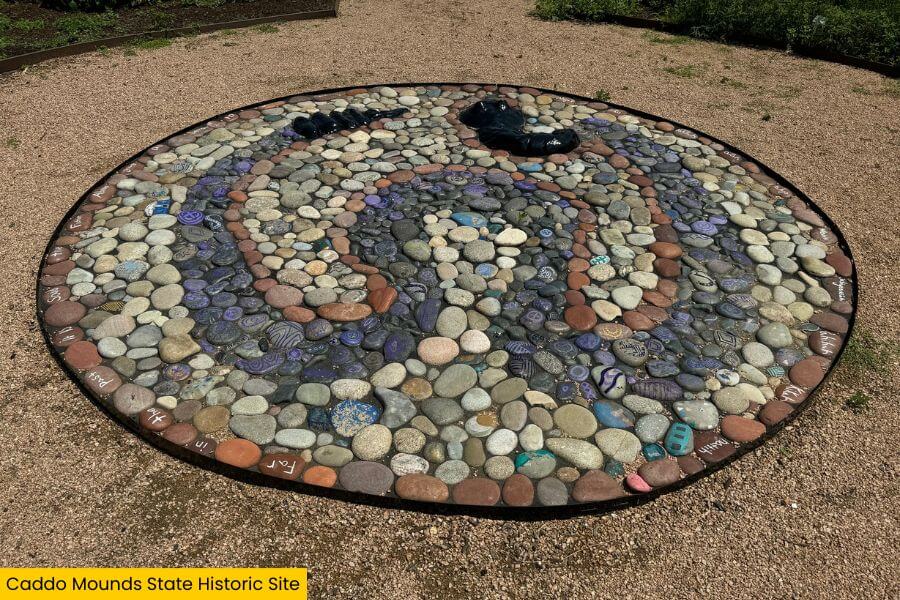
Best Time To Visit
Spring and fall are the best times to visit, with mild temperatures and fewer bugs.
Summer can be hot and humid, and there is limited shade along the trails, so plan for an early morning visit if you go then.
Tips and What To Bring
- Wear comfortable walking shoes since you’ll be on grassy and dirt paths.
- Bring water, sunscreen, and bug spray, especially in warmer months.
- There are restrooms on-site, but services are limited beyond that.
- Photography is allowed, but climbing on the mounds is not permitted.
- Give yourself at least 1 to 2 hours to explore without rushing.
- Check the weather forecast since heavy rain can make trails muddy and limit access to some areas.
Things To Do Nearby
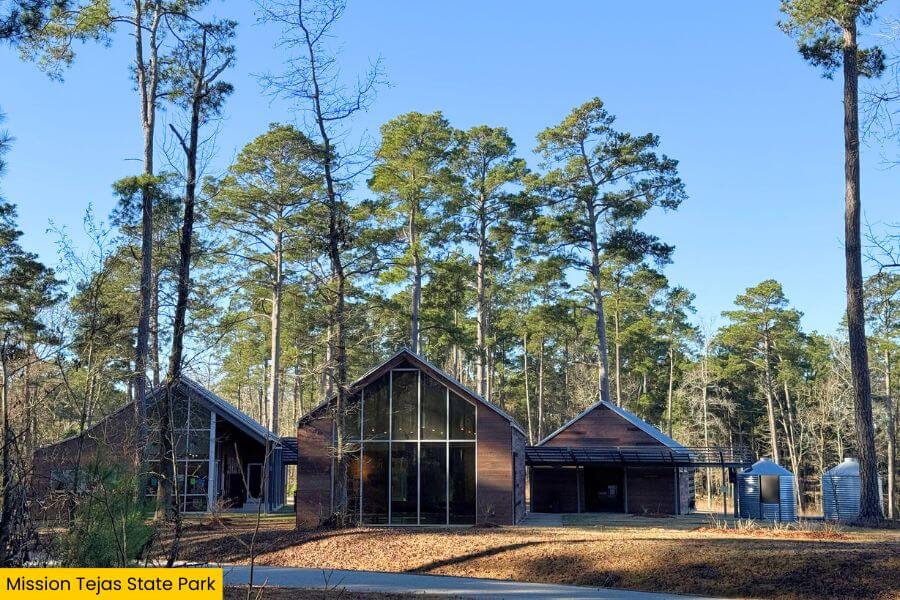
If you want to make a full day of it, Mission Tejas State Park is about 10 minutes away and offers hiking trails and a replica Spanish mission.
Another great stop is the Texas State Railroad in Rusk, just 25 minutes away, where you can ride a historic train through the Piney Woods.
You can also head to Nacogdoches, about 35 minutes away, for restaurants, shops, and historic sites if you want to explore more of East Texas.
Related Posts