Think Arizona is all scorching deserts, giant cacti, and red rock canyons? Think again!
Tucked away in the eastern part of the state, the White Mountains are packed with towering pine forests, sparkling alpine lakes, winding mountain roads, and some of the prettiest scenery in Arizona.
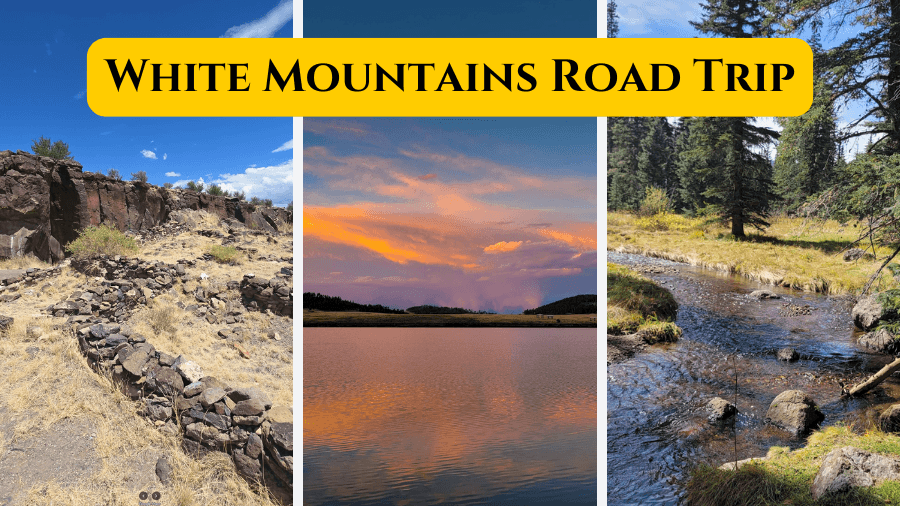
Here, you can hike through forests at over 9,000 feet, paddle across crystal-clear lakes, spot elk grazing in open meadows, and explore ancient ruins that date back hundreds of years.
And the best part? Summer temperatures here are often around 30 degrees cooler than in Phoenix, making this the perfect escape when the desert heat gets unbearable.
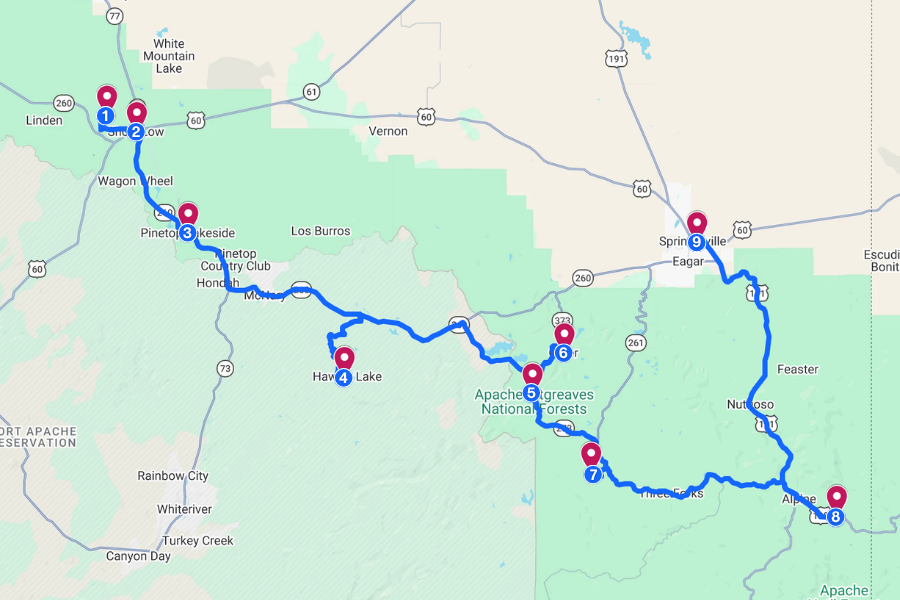
Whether you’re planning a weekend getaway or a longer mountain adventure, this ultimate White Mountains road trip itinerary covers the best scenic stops, underrated adventures, and must-see attractions to help you plan an unforgettable trip!
1. Fool Hollow Lake Recreation Area
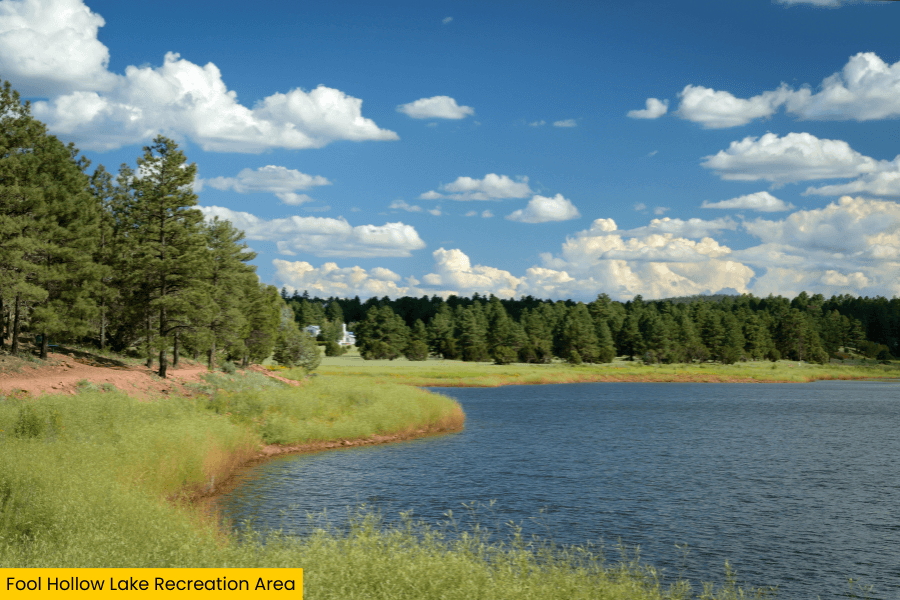
Located in Show Low, Fool Hollow Lake Recreation Area is a gorgeous state park in the White Mountains, famous for its almost 150-acre lake surrounded by towering ponderosa pines and rocky shorelines.
You can spend the day kayaking, canoeing, paddleboarding, or fishing for rainbow trout, largemouth bass, smallmouth bass, and channel catfish, with boat ramps making it easy to get out on the water.
If you prefer exploring on foot, check out the 3-mile Fool Hollow Lake Trail, which follows parts of the shoreline and offers beautiful lake views, wildlife sightings, and plenty of spots to snap photos.
The park also has over 30 basic campsites, over 90 RV sites, picnic areas, playgrounds, and fishing platforms, making it a fantastic stop for a lakeside lunch or overnight camping adventure!
2. Show Low
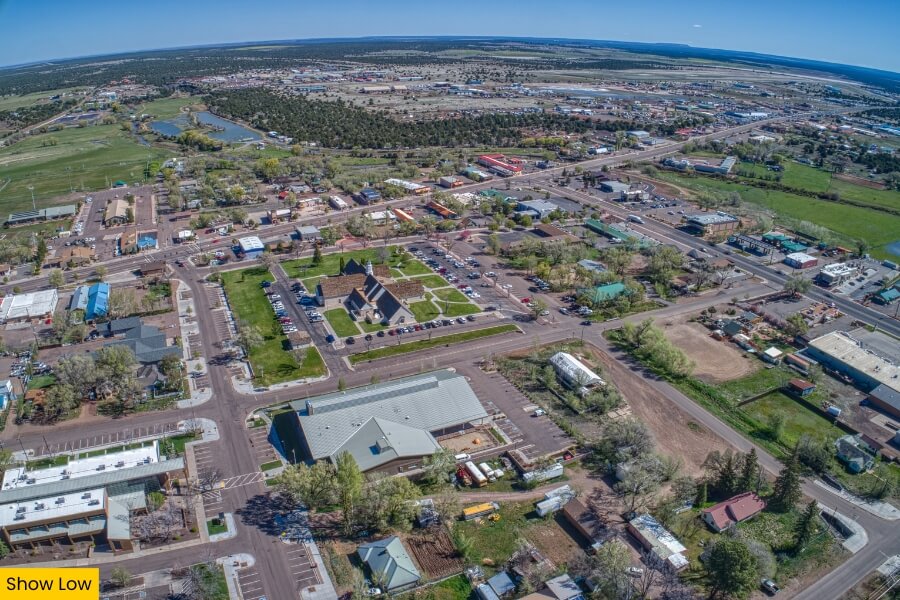
After enjoying the lake, head into downtown Show Low, a mountain town sitting at an elevation of 6,345 feet along Arizona’s famous Mogollon Rim, where you’ll find local restaurants, historic landmarks, and some seriously cool Wild West stories.
For starters, the town got its unusual name from a game of poker between two ranchers in the 1870s, with the winner reportedly claiming the land after saying, “If you can show low, you win,” and drawing the deuce of clubs.
You can learn more about the town’s past at the Show Low Historical Society Museum, which features exhibits on historical items, Native American artifacts, and art inspired by the White Mountains.
Before hitting the road again, stroll along Deuce of Clubs, the town’s main street, where you can grab a bite at a local restaurant and browse small shops.
3. Pinetop-Lakeside
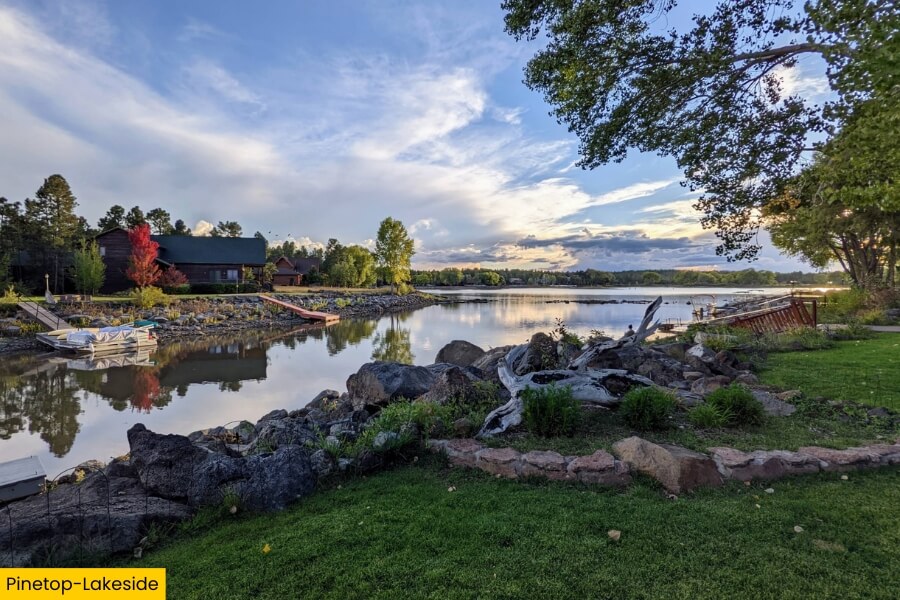
Just a 20-minute drive from Show Low, Pinetop-Lakeside is your next stop, a mountain town surrounded by thick ponderosa pine forests, with beautiful lakes, scenic hiking trails, and some of the best outdoor adventures in Arizona’s White Mountains.
Walk the scenic paths around Woodland Lake and watch for birds and other wildlife, or enjoy a picnic or barbecue in the public ramadas (sheltered porches).
If you’re up for more exploring, head to the nearby Mogollon Rim Interpretive Trail, a short, easy walk with incredible views of the surrounding forests and mountains, or visit the White Mountain Nature Center to learn about local wildlife.
As for sports lovers, you can drop by Mountain Meadow Recreation Complex and check out the facilities for playing baseball, softball, soccer, and more!
4. Hawley Lake
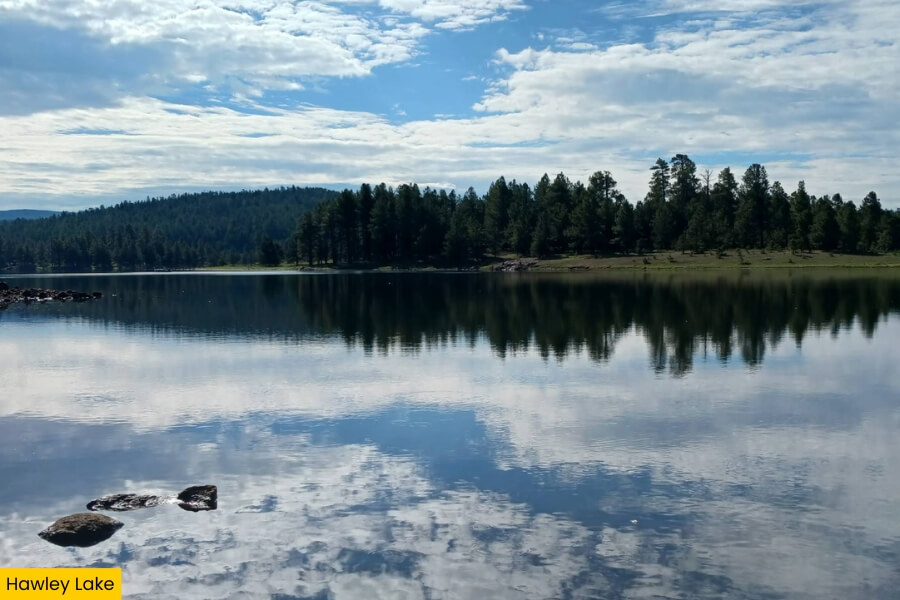
Continue deeper into the White Mountains to Hawley Lake, a beautiful high-elevation lake located at around 8,200 feet on the Fort Apache Indian Reservation, surrounded by thick forests, grassy meadows, and mountain peaks.
The lake is especially famous for its excellent trout fishing, with rainbow, brown, and brook trout among the species found in its chilly waters, making it a favorite spot for anglers looking to cast a line.
You can also enjoy boating or paddling across the water, have a picnic along the shoreline, or spend the night in one of the rustic cabins near Hawley Lake. (Note: Boat rental services and cabin availability should be confirmed before visiting.)
Since the lake sits on White Mountain Apache tribal land, you’ll need the appropriate tribal permits for activities like fishing, boating, camping, and general recreation, so be sure to check the latest rules and access conditions before visiting.
5. West Baldy Trail
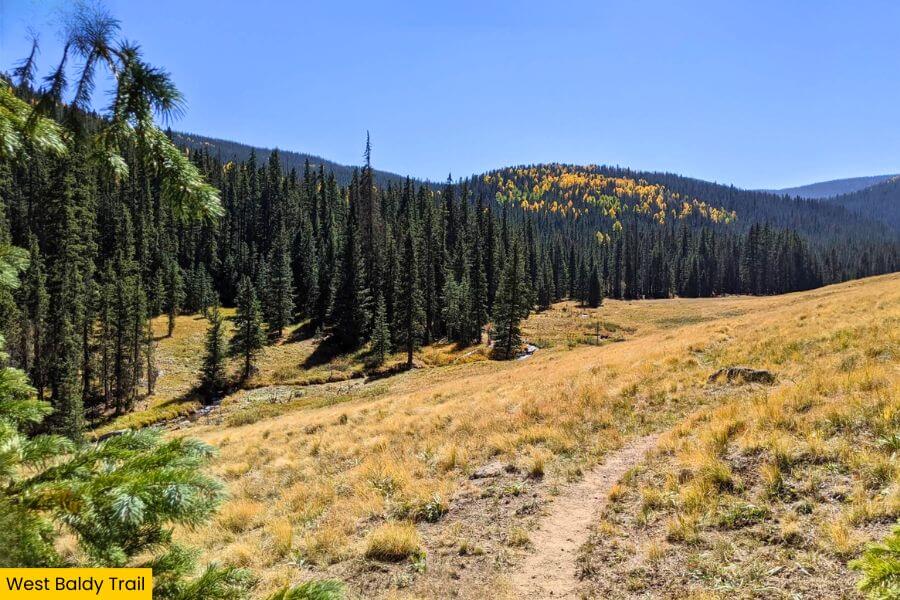
Next, lace up your hiking boots and head to the West Baldy Trail (#94), one of the most beautiful hikes in Arizona’s White Mountains, located near Greer in the Mount Baldy Wilderness of Apache-Sitgreaves National Forests.
This 14-mile round-trip trail follows the West Fork of the Little Colorado River before climbing through thick spruce and fir forests, passing grassy meadows, bubbling streams, and colorful wildflowers during the summer months.
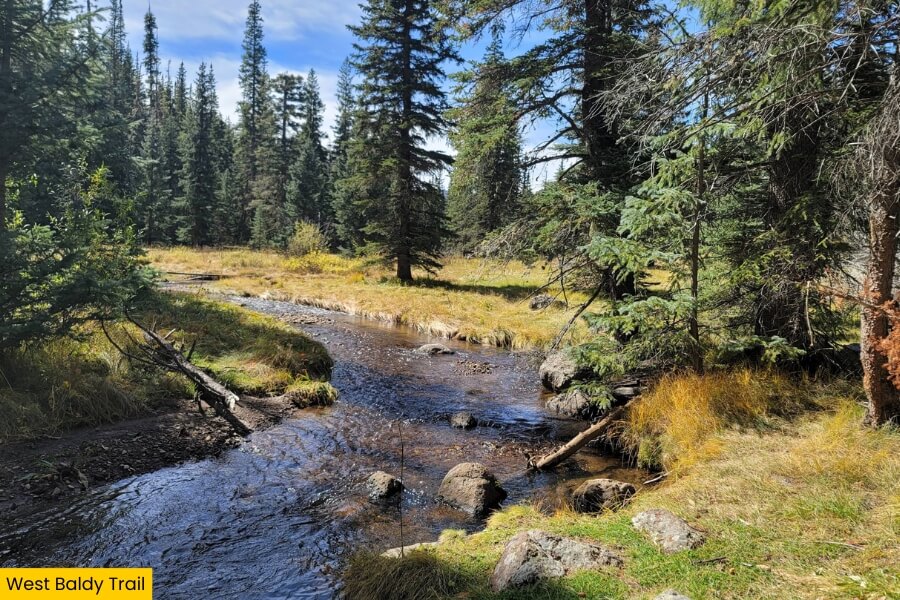
Starting at around 9,300 feet, the trail climbs toward Mount Baldy, the highest mountain in Arizona’s White Mountains at approximately 11,400 feet, promising plenty of chances to spot elk, deer, and other mountain wildlife along the way.
Keep in mind that Mount Baldy’s actual summit is on sacred White Mountain Apache tribal land and is closed to non-tribal members, but the trail still offers incredible alpine scenery even without reaching the peak.
6. Greer
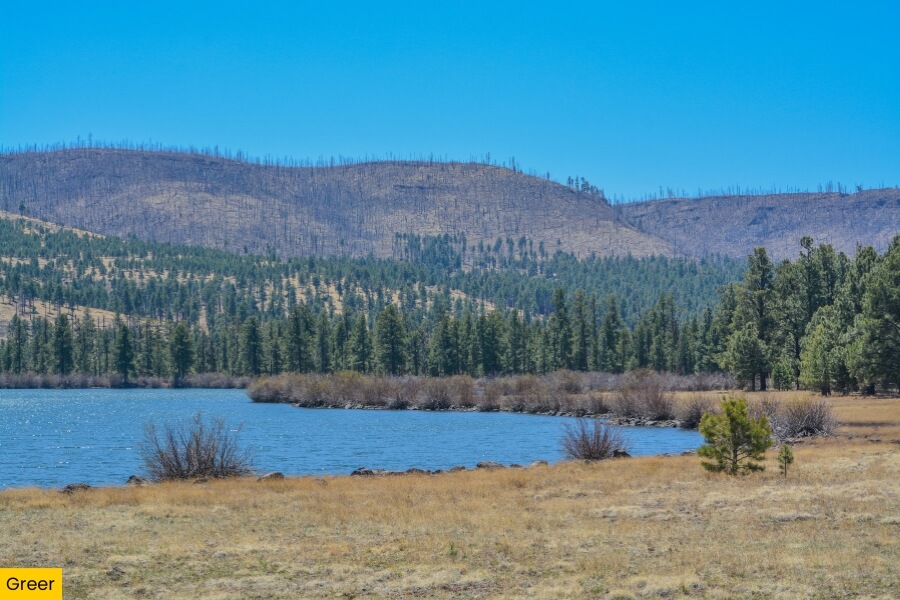
Once you’re done hiking the West Baldy Trail, make your way to Greer, a tiny mountain village sitting at over 8,000 feet along the Little Colorado River, where log cabins, open meadows, and towering pine trees create one of the prettiest settings in Arizona’s White Mountains.
With only a handful of restaurants and shops, such as Molly Butler Lodge, Greer is the perfect place to slow down, grab a hearty meal, and explore the village’s charming historic buildings.
For more outdoor fun, head to the nearby Greer Lakes, a group of three reservoirs named Bunch, Tunnel, and River, where you can fish for trout, kayak, or simply enjoy a peaceful afternoon by the water.
In winter, Greer becomes a popular getaway for snow lovers, thanks to its snowy landscapes and easy access to Sunrise Park Resort, about 30 minutes away.
7. Big Lake
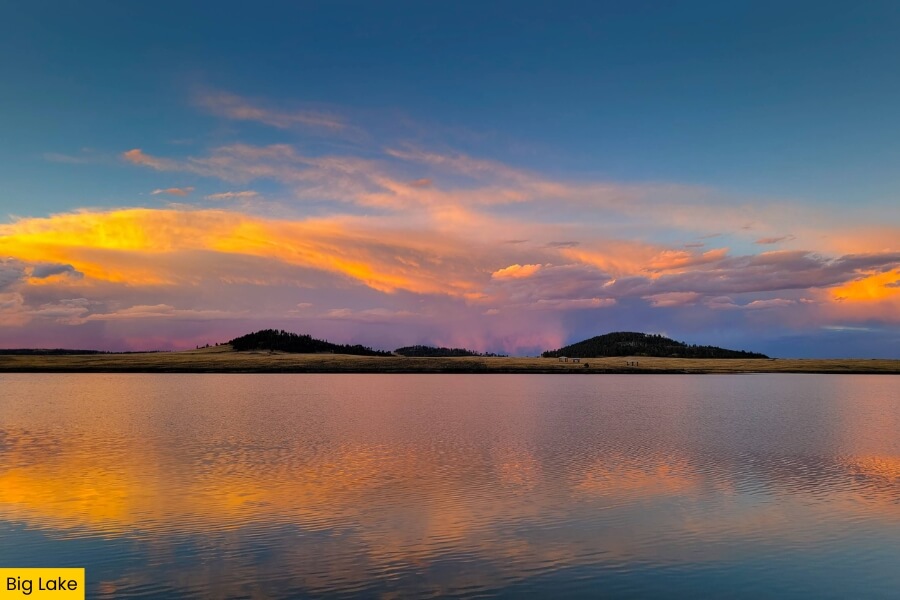
Leaving the cozy cabins of Greer behind, continue your White Mountains road trip to Big Lake, a stunning 450-acre reservoir sitting at around 9,000 feet in elevation in Arizona’s Apache-Sitgreaves National Forests.
Big Lake is one of Arizona’s top trout fishing destinations, with rainbow, brook, and cutthroat trout swimming in its cold waters, plus seasonal boat rentals and several fishing spots along the shoreline.
If fishing isn’t your thing, bring a kayak to explore the lake’s quiet coves, or hike toward the former Big Lake Lookout site for scenic views of the surrounding landscape, though do check the trail’s current conditions before setting out.
You can also spend the night at one of several nearby campgrounds, including Rainbow Campground and Cutthroat Campground, where cool mountain temperatures make summer camping especially enjoyable.
(Note: Campground operations are seasonal, so confirm availability before visiting.)
8. Luna Lake
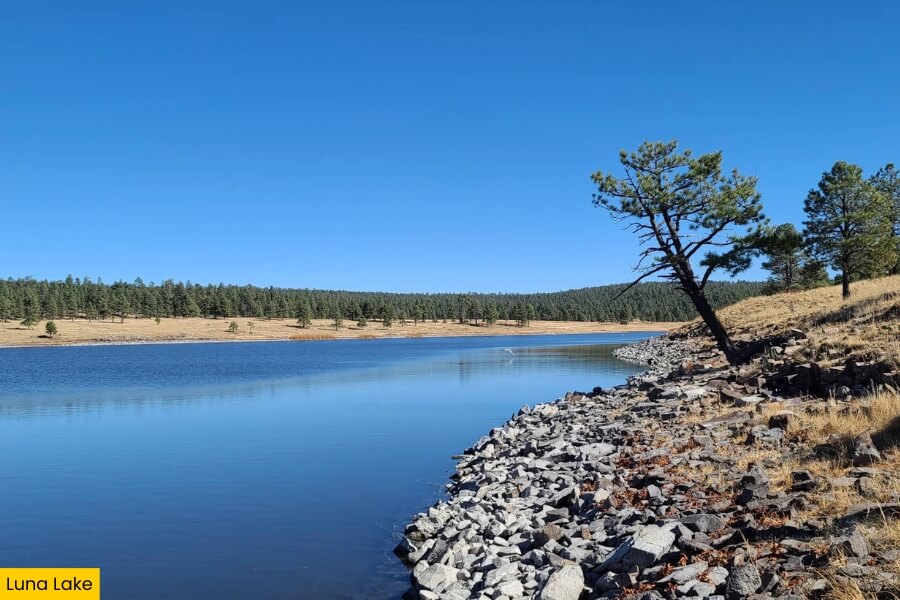
After exploring Big Lake, continue east toward Luna Lake, a beautiful 75-acre reservoir located just four minutes from Alpine at an elevation of around 7,900 feet, where wide meadows and rolling hills replace the thick forests of your earlier stops.
Unlike many mountain lakes surrounded by dense trees, Luna Lake has open shorelines that offer fantastic views of the surrounding grasslands, especially during sunrise and sunset.
The lake is a popular spot for fishing, with rainbow trout and cutthroat trout among the main catches, and you can also enjoy kayaking, canoeing, or watching waterfowl along the shore.
For an overnight stay, check out Luna Lake Campground, which offers campsites close to the water and easy access to nearby hiking trails.
9. Casa Malpais Archaeological Park
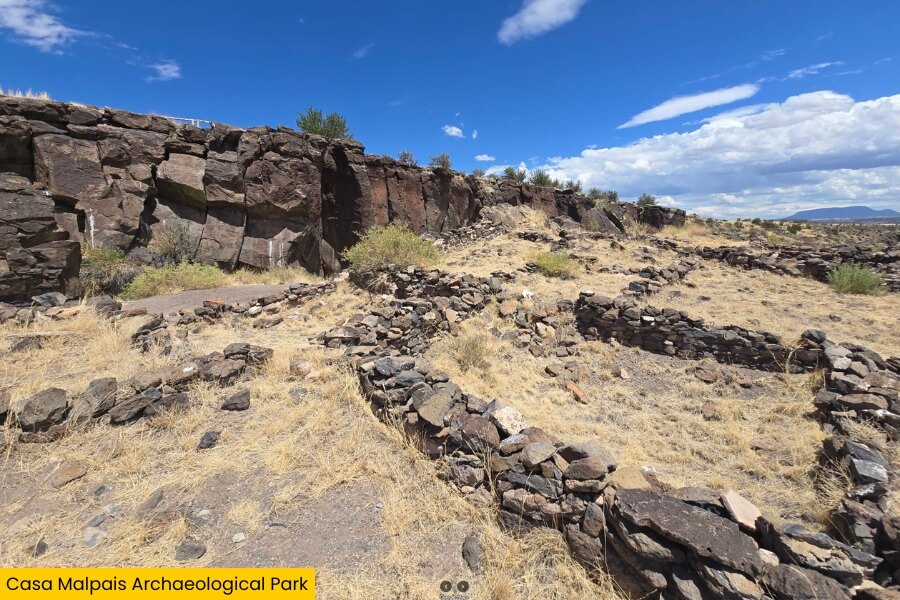
Last but not least, head north to Casa Malpais Archaeological Park in Springerville, where you can explore the remains of an ancient Native American village built on a volcanic lava flow almost 800 years ago.
This fascinating archaeological site was occupied by the Mogollon people during the 13th and 14th centuries and features around 60 rooms, a ceremonial Great Kiva, and an ancient astronomical observatory.
One of its coolest features is a series of underground burial chambers and passageways built into the volcanic rock, their discovery offering a glimpse into how people lived in this landscape centuries ago.
You can learn about the ruins at the Casa Malpais Museum, where guided tours of the archaeological site may be available depending on current conditions.
Related Posts