
You don’t have to travel deep into the mountains to find roaring waterfalls, rocky cliffs, and rushing whitewater.
Just outside Washington, D.C., a powerful river squeezes through a narrow gorge, crashing over jagged rocks and dropping 76 feet in less than a mile.
Several overlooks put you surprisingly close to the action, while miles of hiking trails follow the river past steep cliffs, forest, and historic ruins.
If you had no idea a place this dramatic was hiding so close to the nation’s capital, you’re going to want to see what’s waiting here.
Where Is It?
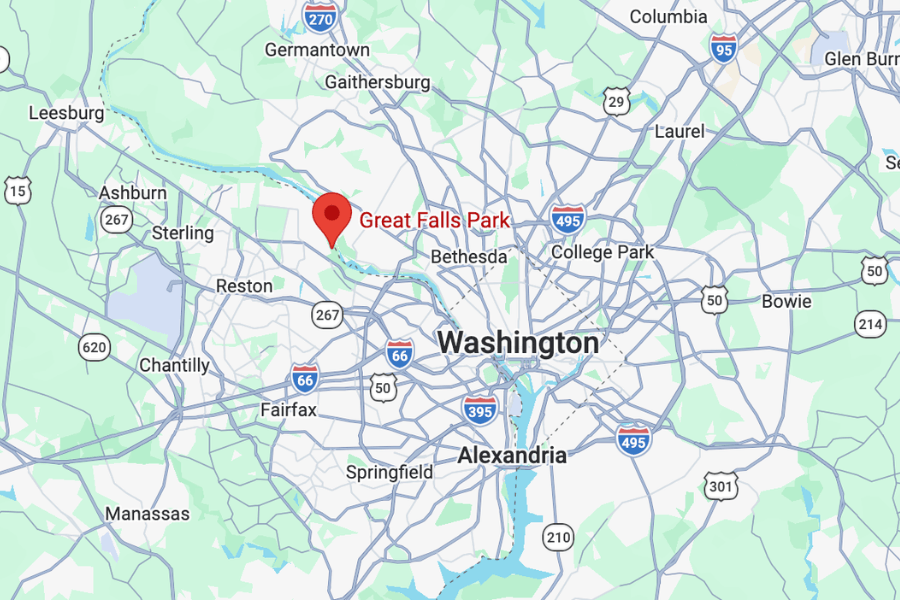
Great Falls Park is located in McLean, Virginia, along the Potomac River and directly across from Maryland’s C&O Canal National Historical Park.
It’s about a 30-minute drive from downtown Washington, D.C., making this dramatic waterfall-filled gorge an easy escape from the capital.
From Arlington, Virginia, the drive takes about 25 minutes, while Baltimore is roughly an hour away.
About
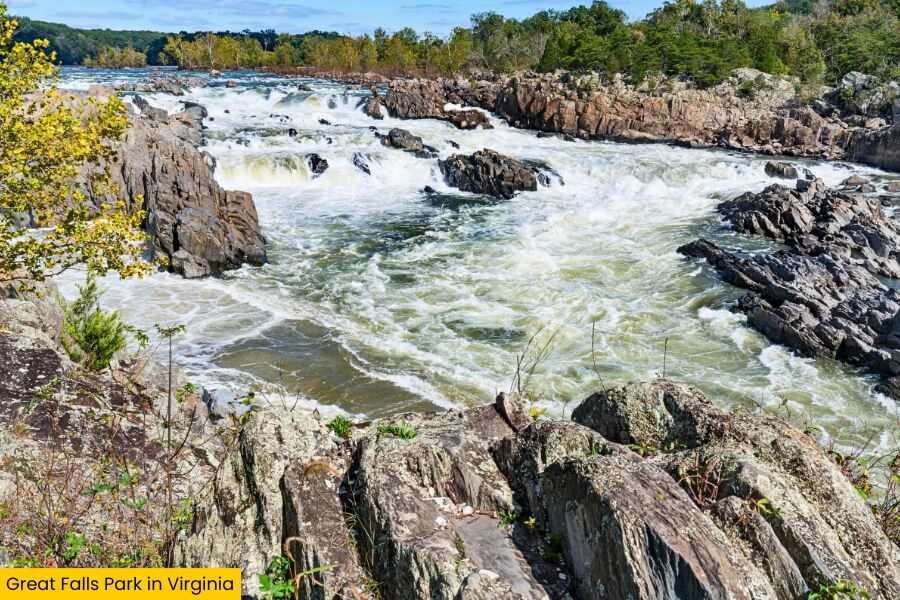
Great Falls Park packs some seriously dramatic scenery into its 800 acres along the Potomac River.
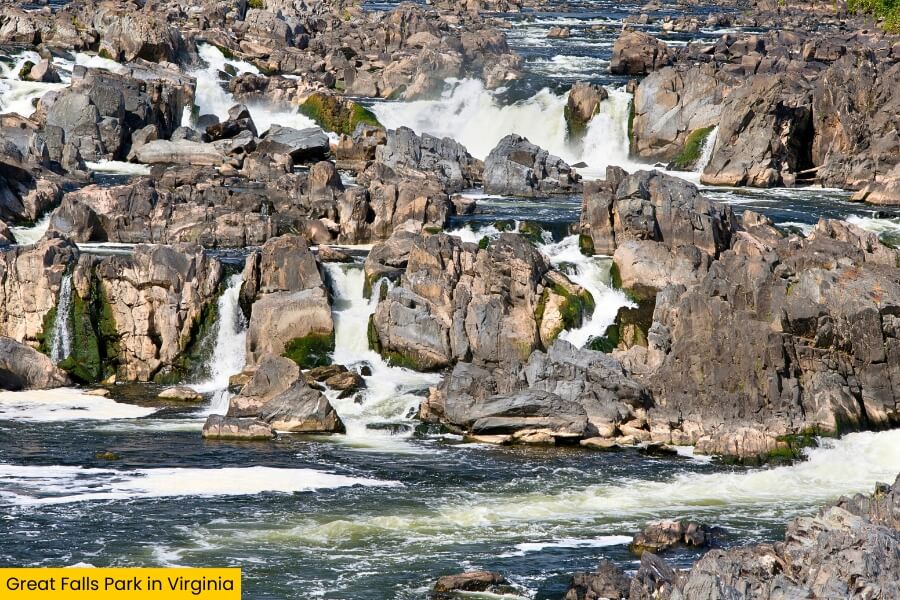
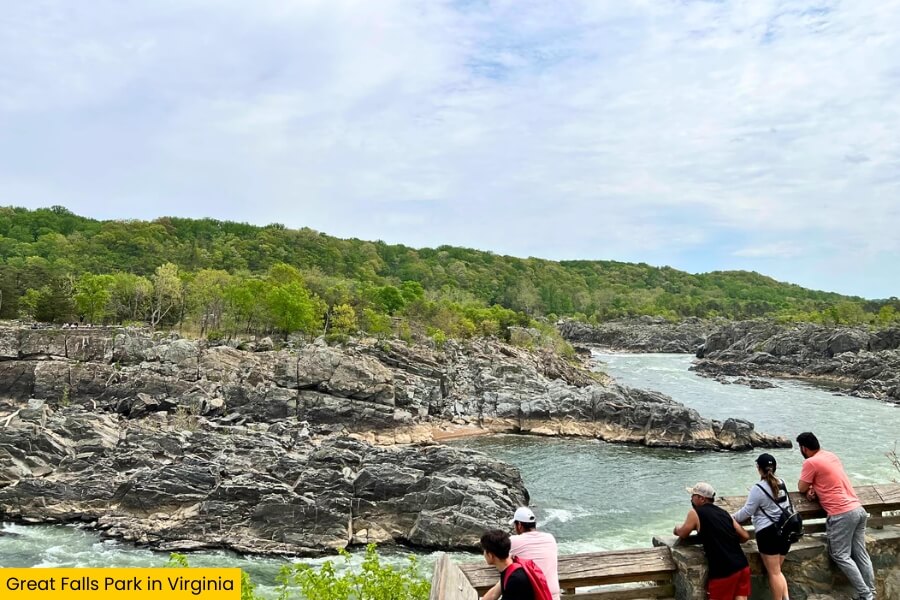
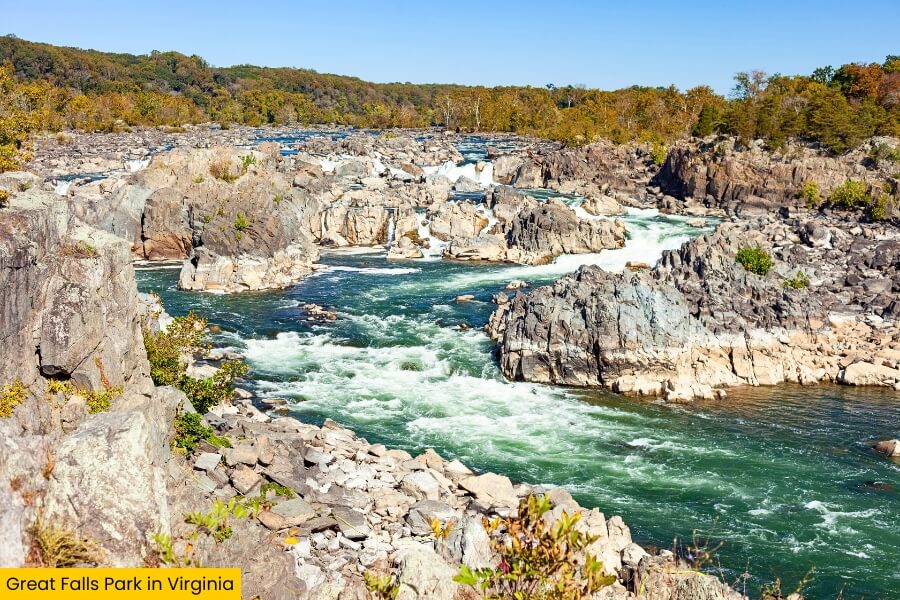
The star of the show is Great Falls, where the Potomac squeezes through the narrow Mather Gorge and tumbles over steep, jagged rocks.
Over a stretch of less than a mile, the river drops 76 feet through a series of powerful cascades and rapids.
It’s a surprisingly wild sight considering downtown Washington, D.C. is only about 30 minutes away.
You don’t need to tackle a long hike to see the main attraction either.
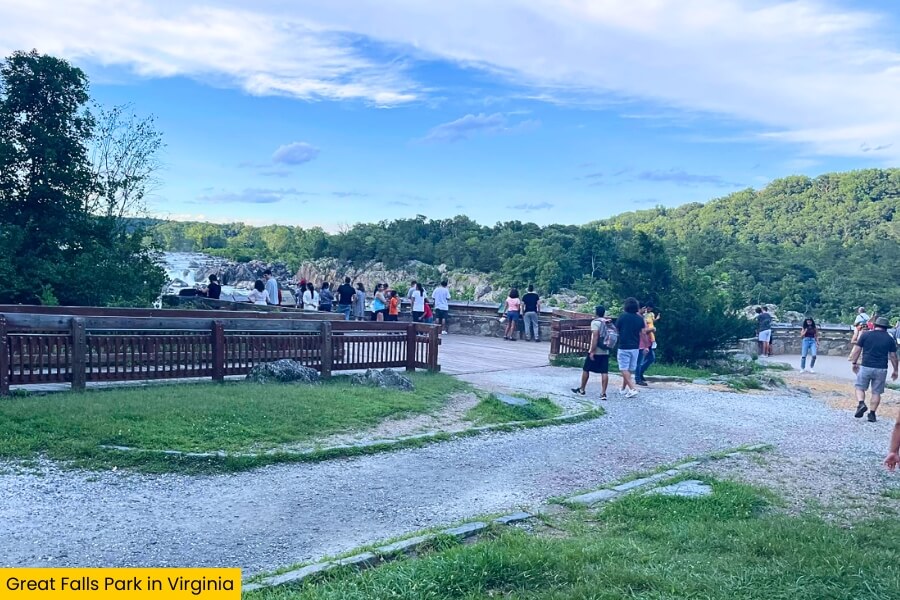
Three overlooks sit near the Great Falls Visitor Center area, and each gives you a different look at the rushing water and rocky gorge.
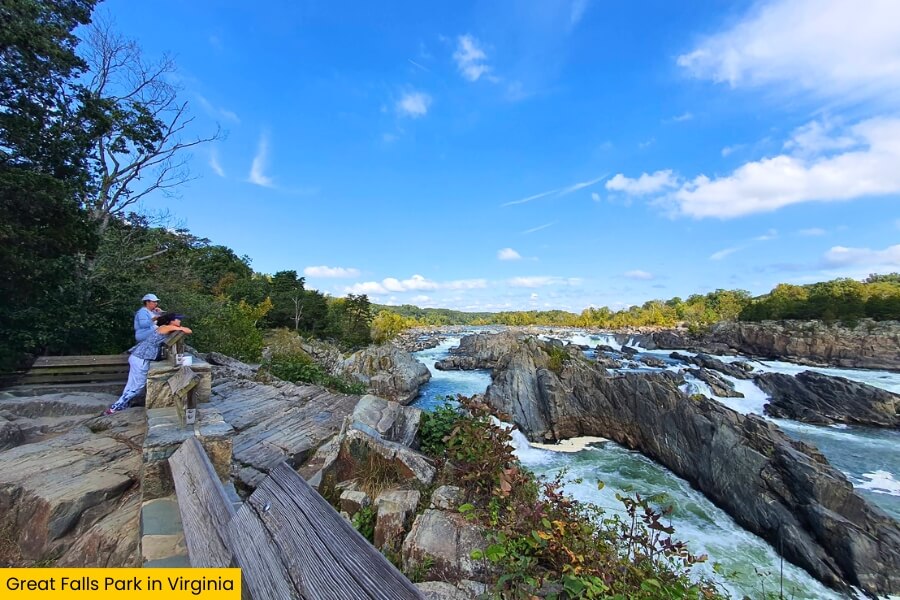
Overlook 1 gets you especially close to the falls, but reaching it requires walking over uneven rocks.
Overlooks 2 and 3 are easier to reach and offer wide views across the river toward Maryland.
Water levels can completely change what you see.
After periods of heavy rain, the Potomac can turn into a huge mass of fast-moving brown water crashing between the rocks.
During lower water levels, you can see more of the exposed rock formations and individual channels cutting through the gorge.
Once you’ve checked out the overlooks, there’s much more to explore on foot.
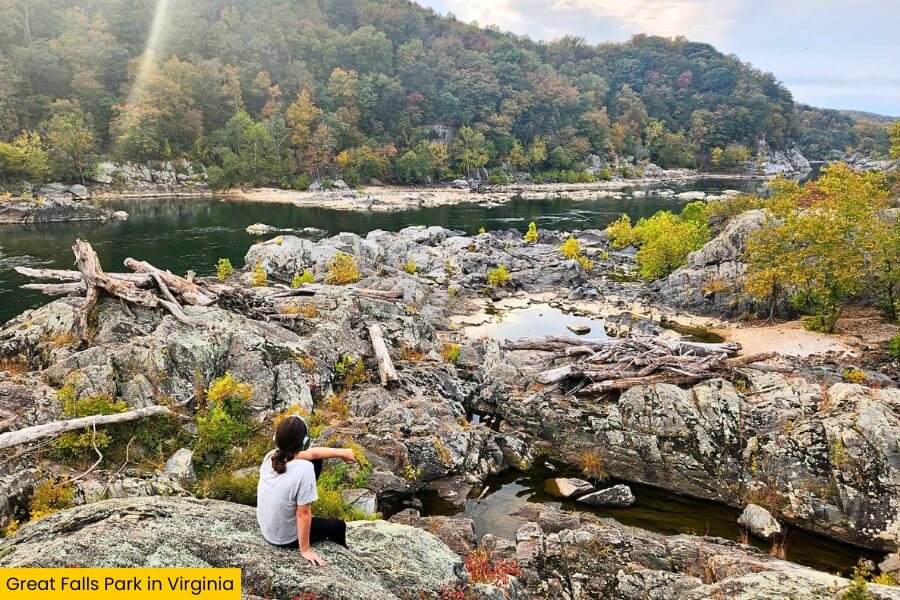
Great Falls Park has about 15 miles of hiking trails, ranging from easy walks beside the river to rocky routes with some scrambling.
The River Trail is one of the best choices if you want to keep the scenery coming.
It follows the top of Mather Gorge for roughly 1.5 miles and gives you several chances to look down at the Potomac between the cliffs.
For something much more challenging, check out the Billy Goat Trail across the river in Maryland.
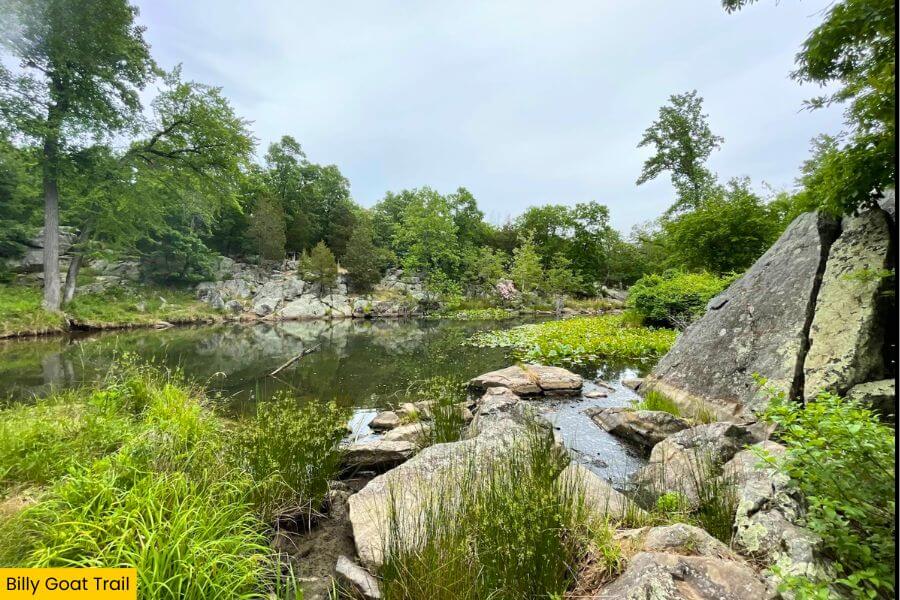
That trail is part of the Chesapeake & Ohio Canal National Historical Park rather than Great Falls Park itself, so you’ll need to drive to the Maryland side to access it.
Back in Virginia, the Patowmack Canal Trail gives you a look at one of the park’s coolest historical features.
George Washington helped organize the Patowmack Company in the 1780s with the goal of improving navigation along the Potomac River.
Workers constructed a series of canals to help boats bypass sections of dangerous rapids, including a canal at Great Falls.
You can still see remains of the canal and locks while exploring the park today.
Mather Gorge adds another layer of drama beyond the waterfalls.
Below Great Falls, the Potomac flows between steep rock walls before continuing toward Washington, D.C.
You might spot experienced whitewater kayakers taking on the river, but swimming and wading are prohibited because of powerful currents, hidden underwater hazards, and sudden drop-offs.
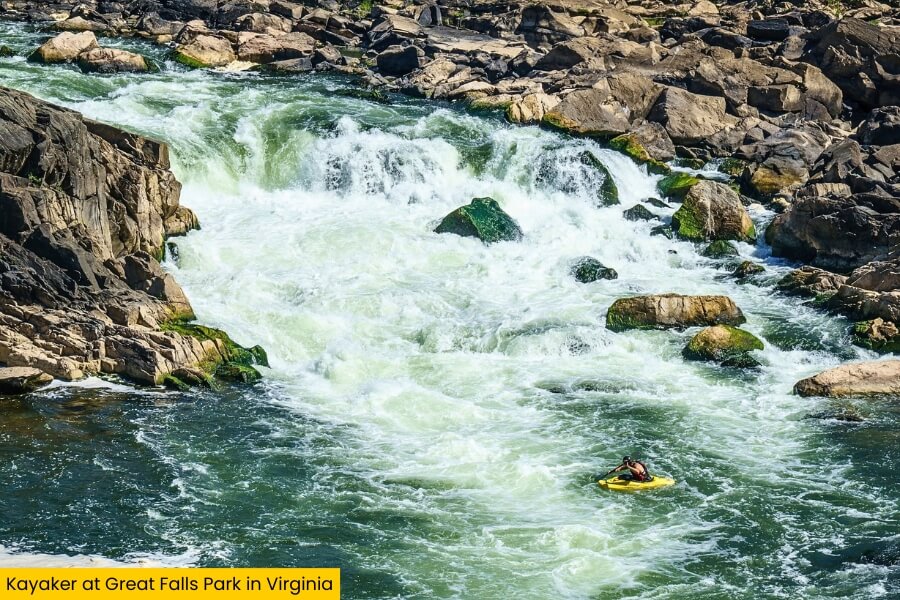
This is definitely a look-at-the-water kind of place, not a jump-in-the-water kind of place.
Keep your eyes open away from the river, too.
The park’s forests and rocky areas are home to white-tailed deer, foxes, turtles, snakes, and dozens of bird species.
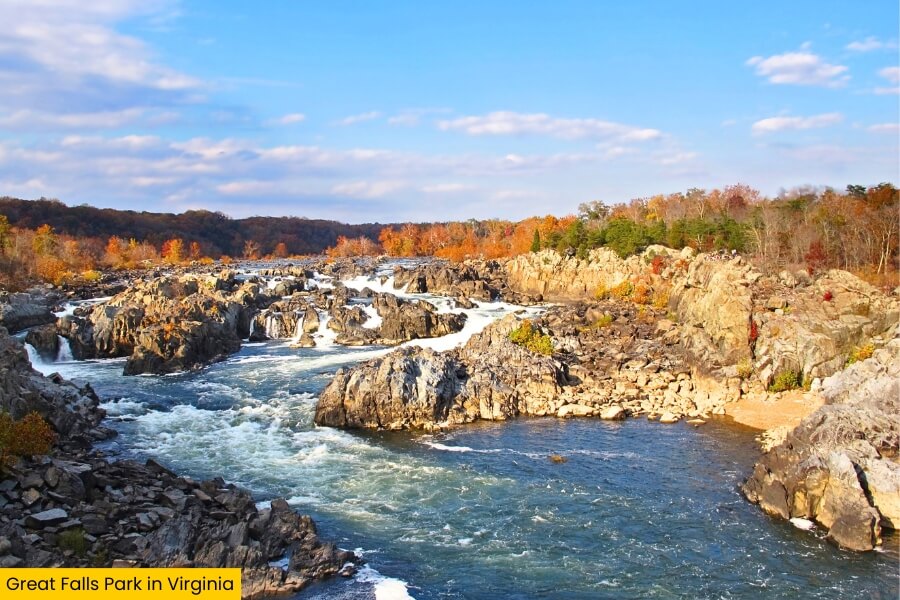
Spring brings wildflowers along the trails, while fall covers the surrounding forest in red, orange, and yellow leaves.
You can easily spend an hour hitting the three overlooks, but give yourself several hours if you want to hike along Mather Gorge, explore the old canal ruins, and see more of the Potomac beyond the main falls.
Know Before You Go
Great Falls Park is open throughout the year except Christmas Day, and the park grounds are generally open from 7 a.m. until 30 minutes after sunset.
Hours for the visitor center and other facilities can change by season, so check the National Park Service website before you leave.
There is an entrance fee to visit Great Falls Park.
The standard private vehicle pass costs $20 and covers everyone inside the vehicle for seven consecutive days.
If you arrive on foot or bicycle, the fee is $10 per person, while a motorcycle pass costs $15.
America the Beautiful annual and lifetime passes are also accepted.
Spring and fall are two of the best times to visit.
April and May usually bring comfortable hiking temperatures and spring greenery, while October is a great bet if you want colorful leaves surrounding the Potomac Gorge.
Summer can be hot and humid, especially on exposed sections of trail, and weekends can get busy.
Winter is quieter and gives you clearer views through the leafless trees, although ice can make rocks and trails slippery.
Try to arrive early in the morning if you’re visiting on a weekend or holiday.
The parking lot can fill during busy periods, and arriving early also gives you more room to enjoy the overlooks before the biggest crowds show up.
Wear sturdy shoes even if you’re only planning to see the main overlooks.
Some viewpoints and trails cross uneven rock, and surfaces can become slick after rain.
Bring water, sunscreen, and snacks if you plan to hike for a few hours.
Most importantly, stay out of the Potomac River.
Swimming and wading are prohibited at Great Falls Park, and the river contains powerful currents, rapids, underwater hazards, and sudden changes in depth.
Stay on marked trails and behind barriers at the overlooks, especially when rocks are wet.
Dogs are welcome in many areas of Great Falls Park, but they must be kept on a leash no longer than 6 feet.
If you have extra time, you can turn your Great Falls visit into a full day of exploring northern Virginia.
Riverbend Park is just upstream from Great Falls and has wooded trails and access to the Potomac River.
Wolf Trap National Park for the Performing Arts is about a 10-minute drive away and hosts outdoor concerts and performances.
You can also head to Tysons, roughly 15 minutes away, for restaurants and shopping after your hike.
There is no bridge connecting the Virginia and Maryland sections of Great Falls, so you’ll need to drive around the river if you want to experience both sides.
If you want to hike along Mather Gorge, explore the Patowmack Canal ruins, and stop at several river viewpoints, three to four hours gives you much more breathing room.
Related Posts