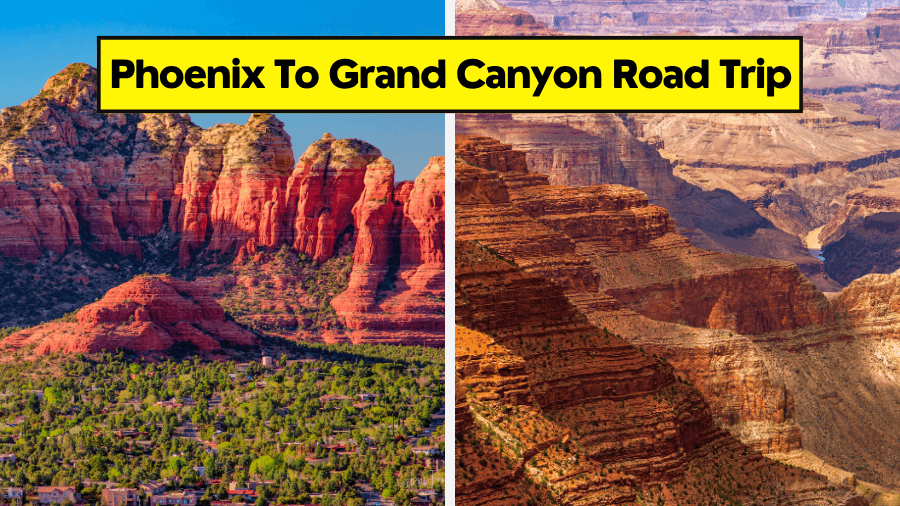
Planning a road trip from Phoenix to the Grand Canyon? You’re in for one seriously unforgettable adventure through some of Arizona’s most incredible landscapes!
This road trip takes you from Phoenix’s towering saguaro cacti and scenic desert trails to the Grand Canyon’s massive cliffs, colorful rock layers, and breathtaking viewpoints, with plenty of incredible stops along the way!
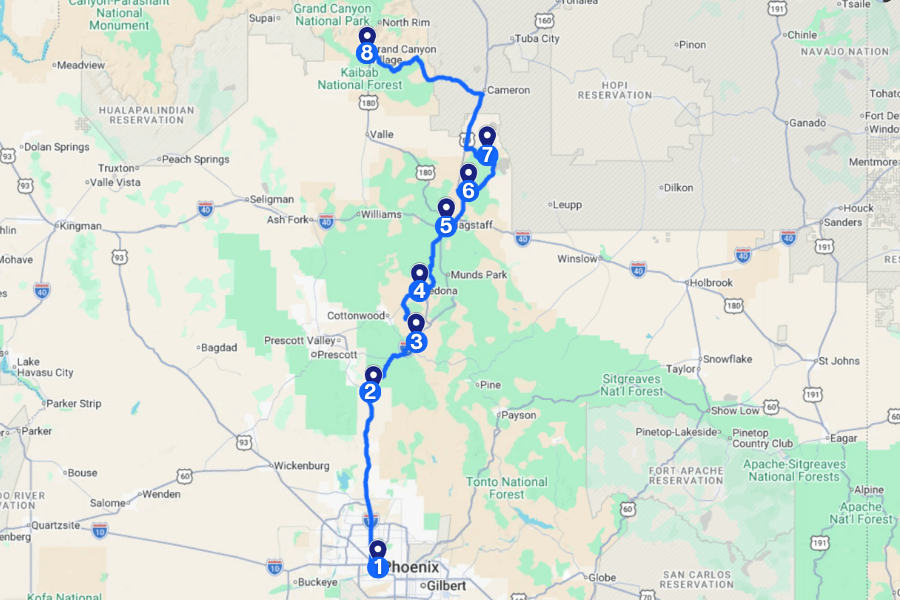
And the best part? The drive is packed with incredible stops, including historic sites, scenic trails, and landscapes that look like they belong on another planet, so getting to the Grand Canyon is just as exciting as the destination itself!
In this ultimate Phoenix to Grand Canyon road trip itinerary, we’ll share the best places to stop, must-see attractions, scenic detours, and helpful tips to make the most of your epic Arizona road trip.
1. Phoenix

Phoenix sits in the heart of the Sonoran Desert, surrounded by mountains, saguaro cacti, and incredible desert scenery, making it the perfect starting point for your Grand Canyon road trip!
Known as the Valley of the Sun, Phoenix enjoys over 300 days of sunshine each year and is famous for its luxury resorts, desert hiking trails, Mexican-inspired food, and incredible sunsets.
For outdoor adventures, hike the 1.23-mile Echo Canyon Trail to the 2,704-foot summit of Camelback Mountain, explore the 140-acre Desert Botanical Garden, or tackle the trails at South Mountain Park and Preserve.
You can also admire over 20,000 artworks at the Phoenix Art Museum, explore Native American art at the Heard Museum, or catch a baseball game at Chase Field.
2. Arcosanti
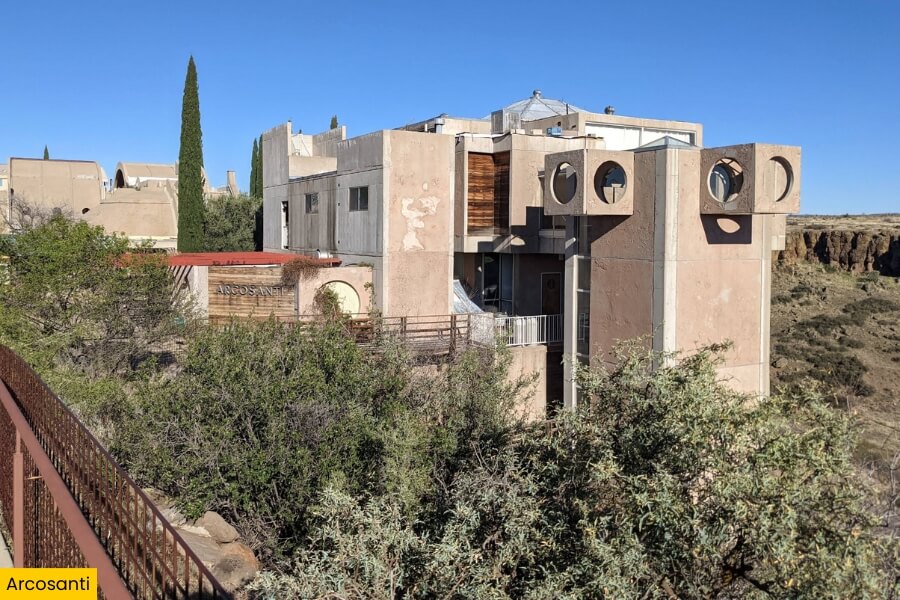
Over an hour away from Phoenix, just off Interstate 17 near Mayer, Arcosanti is one of Arizona’s quirkiest stops, featuring a futuristic experimental town built into the desert hills with massive concrete arches, curved buildings, and unusual architecture.
Founded in 1970 by Italian architect Paolo Soleri, this one-of-a-kind community was designed around “arcology,” a concept that combines architecture and ecology to create compact, environmentally friendly cities where people can exist while connected with nature.
You can join a guided tour to explore its unusual buildings, gain insight into Soleri’s ambitious vision, and see the famous bronze windbells and ceramic tiles (or even purchase and bring some home!)
Speaking of the latter, don’t miss a visit to the open-air Arcosanti Foundry Apse and Ceramic Apse, where you can learn about how the town’s signature Cosanti Originals Bronze Windbells and ceramic tiles are crafted using traditional techniques!
3. Montezuma Castle National Monument
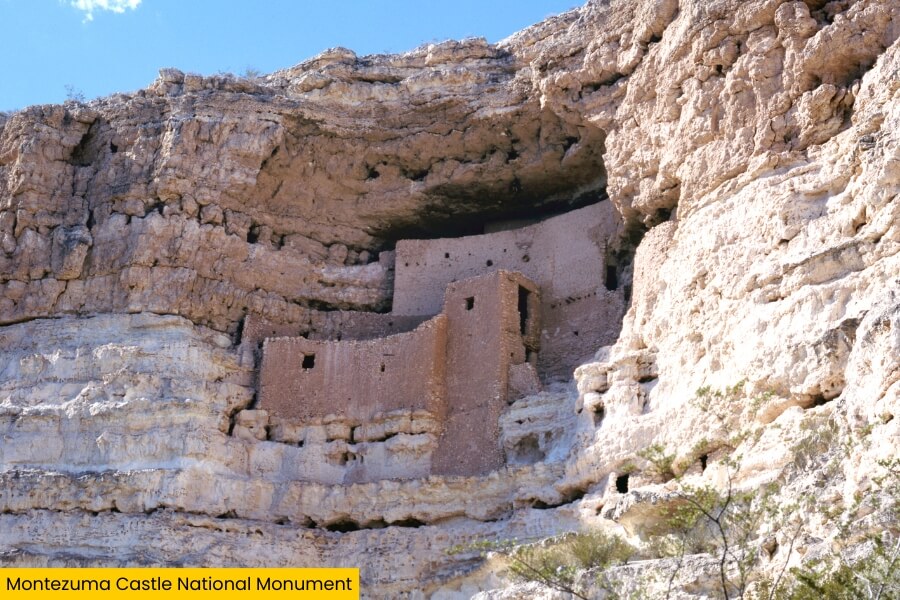
Continuing along Interstate 17, your next stop is Montezuma Castle National Monument near Camp Verde, where an incredible five-story cliff dwelling sits 90 feet above the ground, tucked into a limestone cliff overlooking Beaver Creek.
Despite its name, Montezuma Castle has no connection to the Aztec emperor Montezuma, and it was never actually a castle!
Built by the Sinagua people around the 12th century, this 20-room structure is one of the best-preserved ancient cliff dwellings in North America, giving you a fascinating look at how people lived in Arizona many centuries ago.
You can follow the easy, paved 0.3-mile loop trail to see fantastic views of the castle, read exhibits about Sinagua life, and spot the remains of another ancient dwelling called Castle A.
4. Sedona
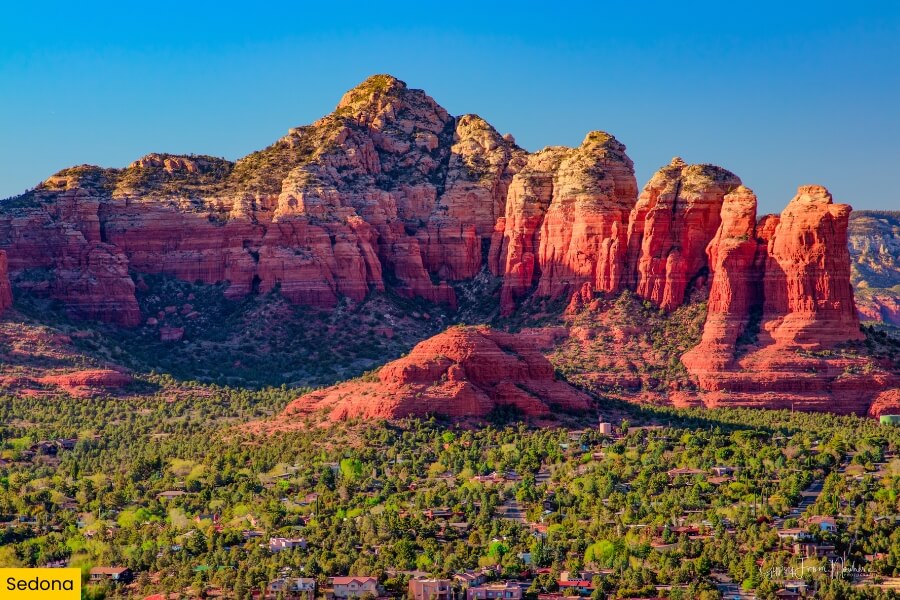
From Montezuma Castle, drive a little over 30 minutes to Sedona, one of Arizona’s most beautiful towns, famous for its towering red sandstone formations, scenic hiking trails, and dramatic desert landscapes that look especially incredible at sunset.
One of the best things to do here is hike the 1.1-mile Cathedral Rock Trail, which climbs steep sandstone slopes to a stunning viewpoint, or explore the 4.6-mile Devil’s Bridge Trail to see Sedona’s largest natural sandstone arch.
For something different, visit the Chapel of the Holy Cross, a striking church built into the red rocks in 1956, or explore the shops, galleries, and restaurants along Uptown Sedona.
Sedona is also famous for its four main energy vortex sites, including Bell Rock and Airport Mesa, which attract people interested in meditation and spiritual healing!
5. Flagstaff
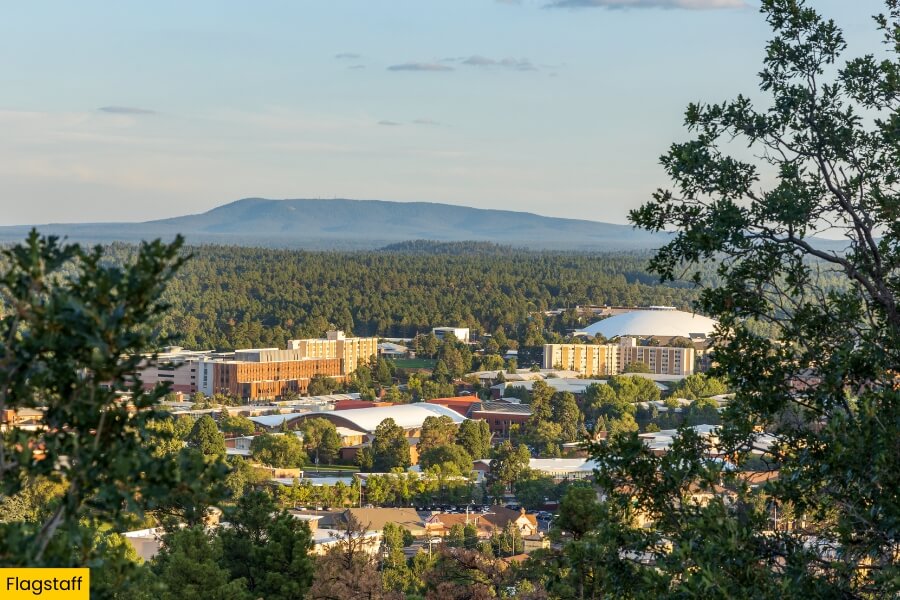
Once you’re ready to leave Sedona, follow the winding 15-mile Oak Creek Canyon Scenic Drive north to Flagstaff, a mountain town sitting at 7,000 feet above sea level, surrounded by ponderosa pine forests and the volcanic San Francisco Peaks.
Unlike Arizona’s scorching desert cities, Flagstaff enjoys cooler temperatures, snowy winters, and even skiing at Arizona Snowbowl, where you can ride a scenic gondola up to 11,500 feet for incredible mountain views.
You can explore the historic downtown along Route 66, visit Lowell Observatory where Pluto was discovered in 1930, or hike the 2.5-mile Fatmans Loop Trail for beautiful views of the surrounding mountains.
Flagstaff is also the world’s first International Dark Sky City, earning this title in 2001 thanks to its efforts to protect the night sky from light pollution!
6. Sunset Crater Volcano National Monument
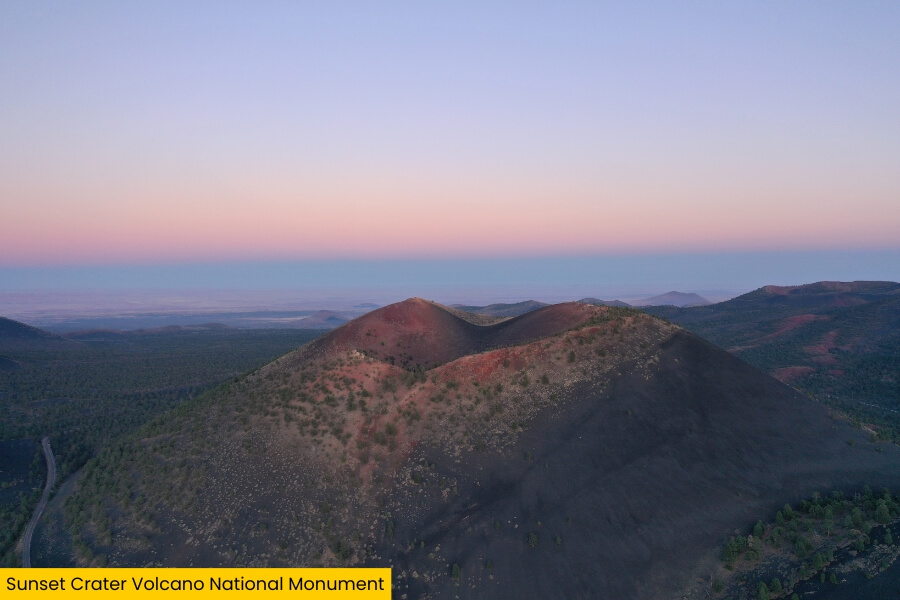
Around 40 minutes away from Flagstaff, Sunset Crater Volcano National Monument takes you into a landscape of black lava fields, jagged volcanic rocks, and a 1,000-foot-tall cinder cone that looks completely different from Arizona’s famous red rock scenery.
The volcano erupted around 1085 AD, covering the surrounding area in ash and lava, while its summit gets its name from the bright red and orange colors that resemble a fiery sunset.
You can walk the easy, 1-mile Lava Flow Trail for the best way to explore the landmark’s ancient lava formations, and to get fantastic views of the crater.
For an extra adventure, drive the 35-mile scenic route connecting Sunset Crater to Wupatki National Monument, where ancient pueblo ruins stand against the desert landscape. (Note: Check current road conditions before visiting, in case of temporary closures.)
7. Wupatki National Monument
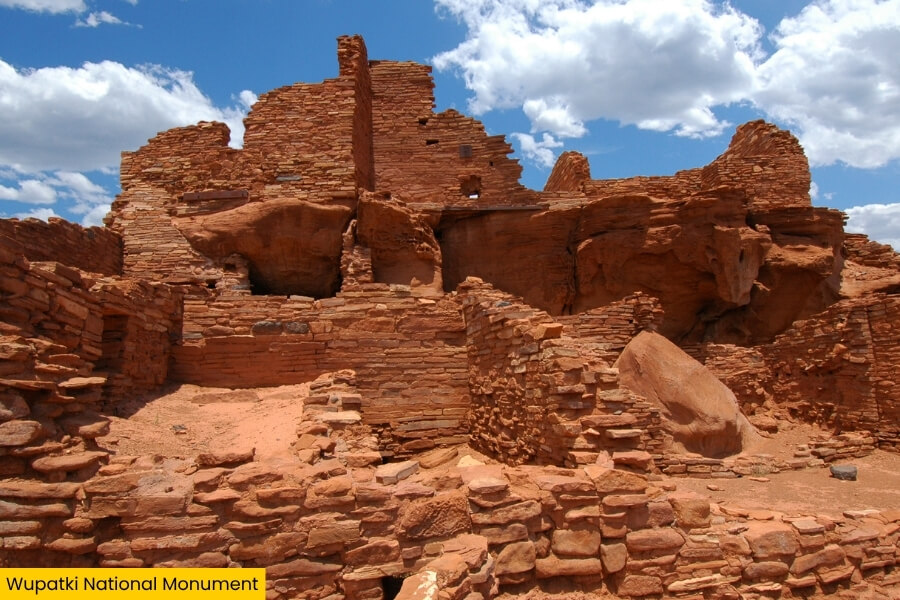
Following the scenic road from Sunset Crater Volcano, you’ll reach Wupatki National Monument, where ancient stone pueblos rise from the desert floor, surrounded by wide-open grasslands, red sandstone cliffs, and distant views of the Painted Desert.
This fascinating archaeological site protects more than 2,600 ancient structures built by Indigenous communities, with many settlements growing after Sunset Crater erupted around 1085 AD and volcanic ash made the surrounding soil better for farming.
The main attraction is Wupatki Pueblo, a massive 100-room dwelling that once housed around 85 to 100 people, which you can explore along an easy 0.5-mile walking trail.
Don’t miss a visit to the nearby ballcourt, one of the northernmost examples in North America, or the unusual blowhole, a natural opening in the ground that blows or sucks air depending on changes in atmospheric pressure!
8. Grand Canyon South Rim
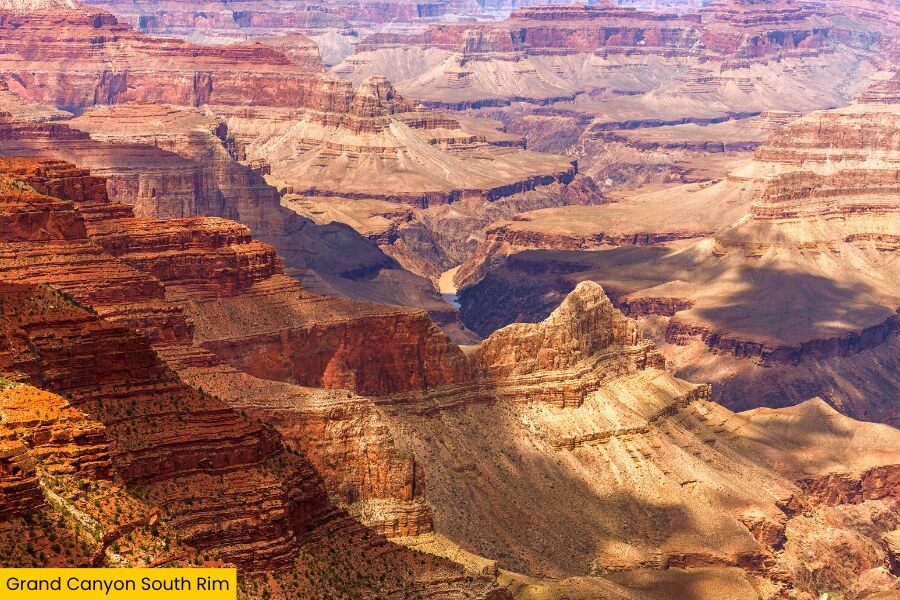
After exploring Wupatki, continue to the Grand Canyon South Rim, where the Colorado River has carved a massive canyon stretching 277 miles long, up to 18 miles wide, and around a mile deep into Arizona’s colorful rock layers.
Start at Mather Point for jaw-dropping views, then follow the 1.7-mile (round-trip) Rim Trail section to Yavapai Point, where you can peer into the canyon and learn about its nearly two-billion-year-old rocks at the Yavapai Geology Museum.
For a quick adventure, hike 0.1 miles round trip down the Bright Angel Trail to its first tunnel, or for a longer trip, drive the 23-mile Desert View Drive to stop at Grandview Point, Moran Point, and the historic Desert View Watchtower.
Lastly, the South Rim is open year-round, and catching sunrise or sunset here is an absolute must as the canyon walls turn brilliant shades of orange, pink, and red!
Related Posts