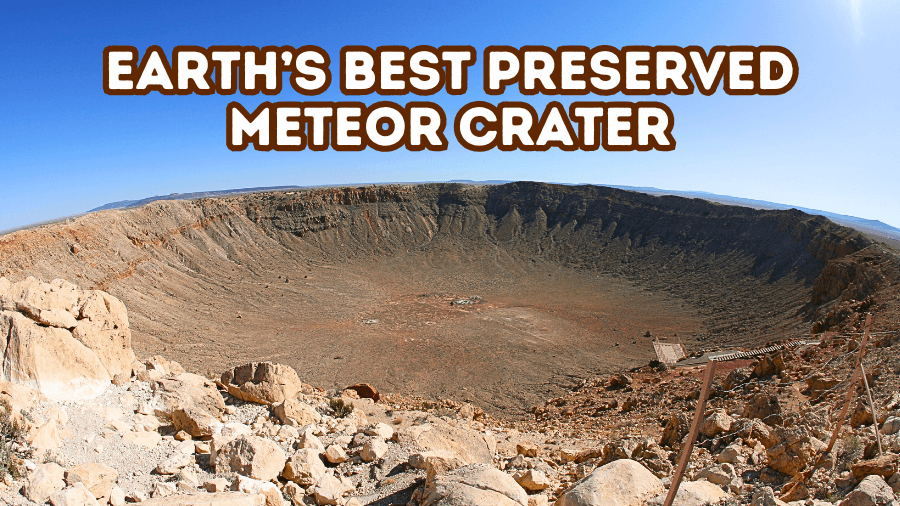
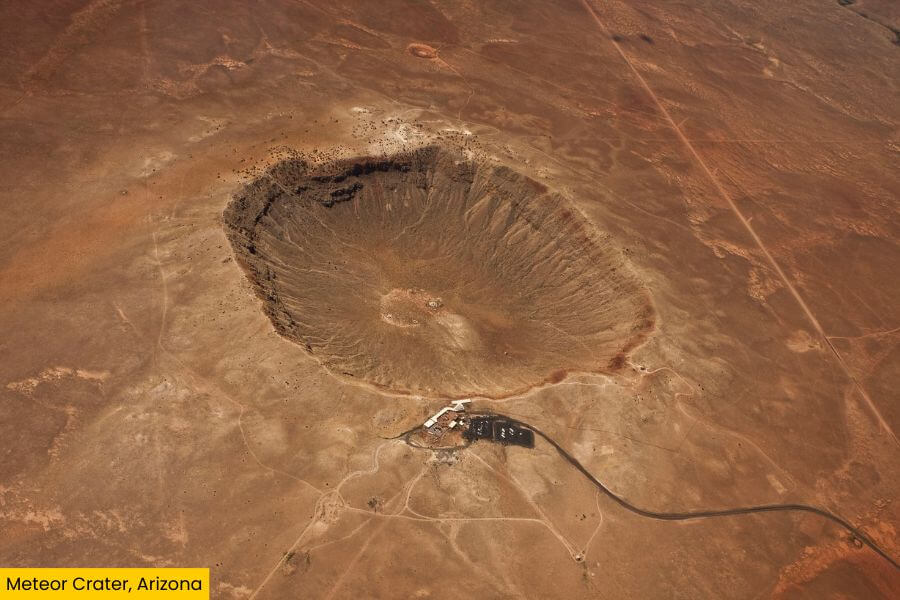
Imagine standing on the edge of a massive hole in the ground that’s nearly 4,000 feet wide and deep enough to fit a 50-story building!
Now imagine finding out that this enormous crater was created when a giant space rock slammed into Earth at thousands of miles per hour.
As unbelievable as that sounds, this incredible place is real and is considered Earth’s best-preserved meteorite impact crater.
And the craziest part?
This giant hole has been here for thousands of years, hiding an incredible story that’s worth discovering, so keep reading to find out what makes it so special.
Where Is It?
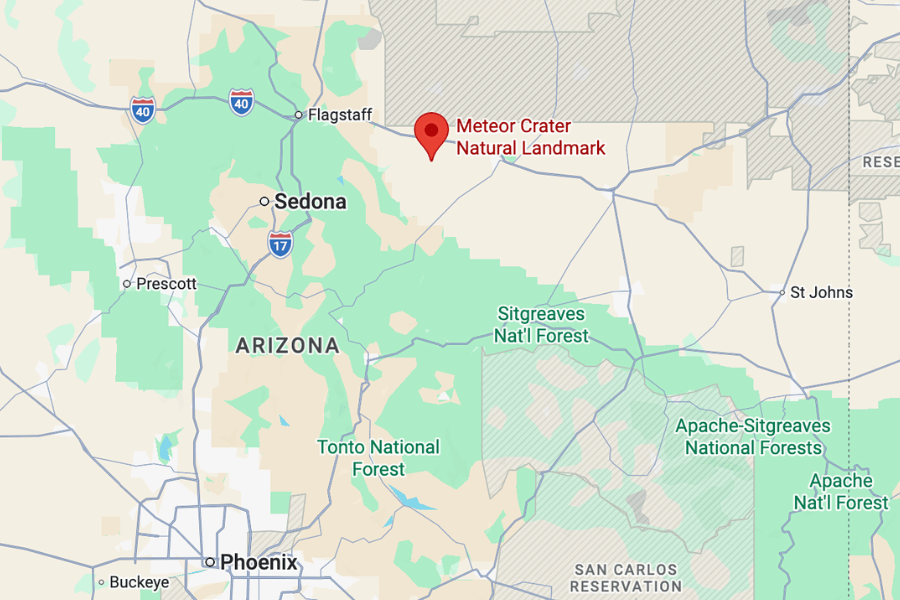
Meteor Crater is located near Winslow in northern Arizona and is accessible via Exit 233 off I-40.
It’s only a 45-minute drive from Flagstaff, about 1 hour and 25 minutes from Sedona, or roughly 2 hours and 50 minutes from Phoenix, making it a convenient stop.
About
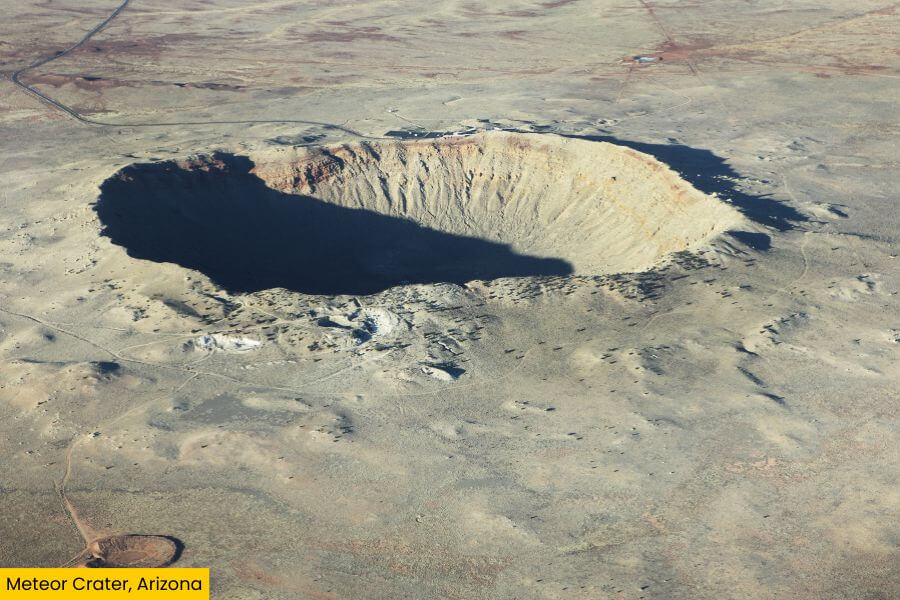
Meteor Crater, also known as Barringer Crater, is one of Arizona’s most incredible natural landmarks and is considered the best-preserved meteorite impact crater on Earth.
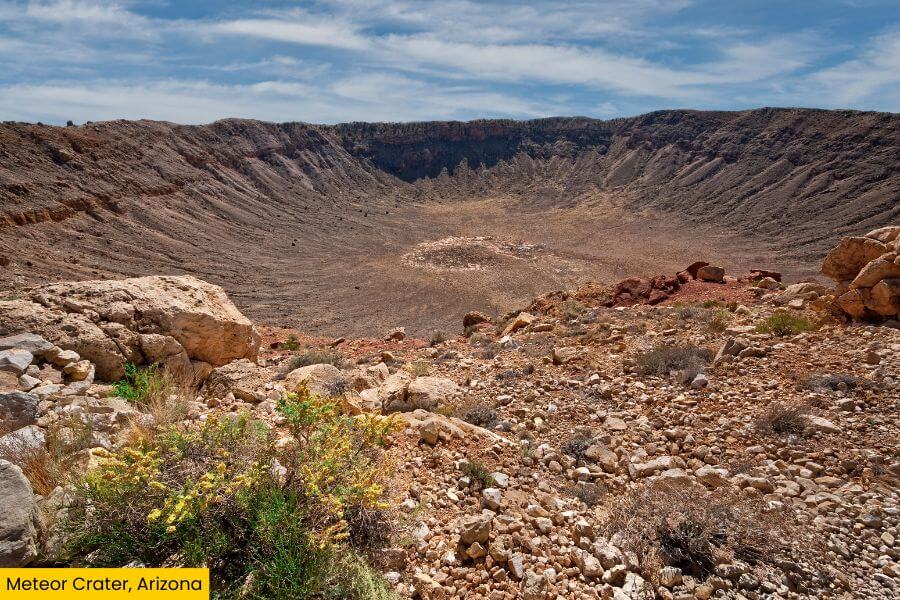
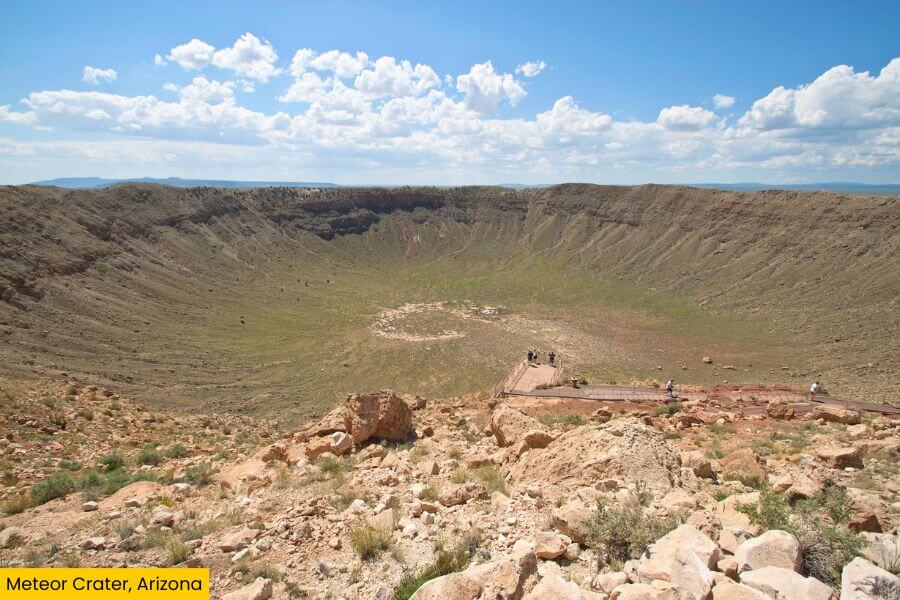
It measures a whopping 3,900 feet across and 560 feet deep, with a rim rising 148 feet above the surrounding plains.
To put that into perspective, you could fit about 11 football fields across the crater, and its depth is roughly equivalent to the height of a 50-story building.
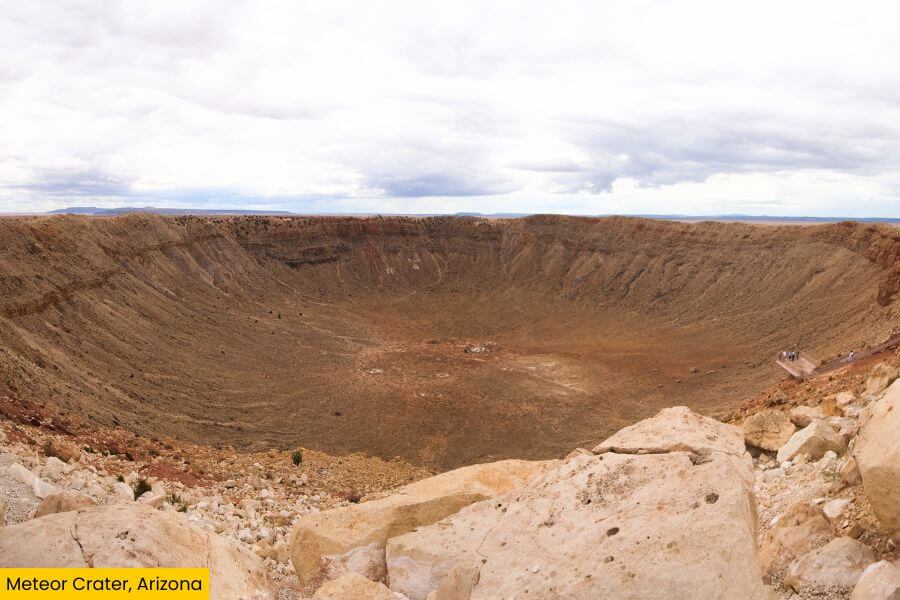
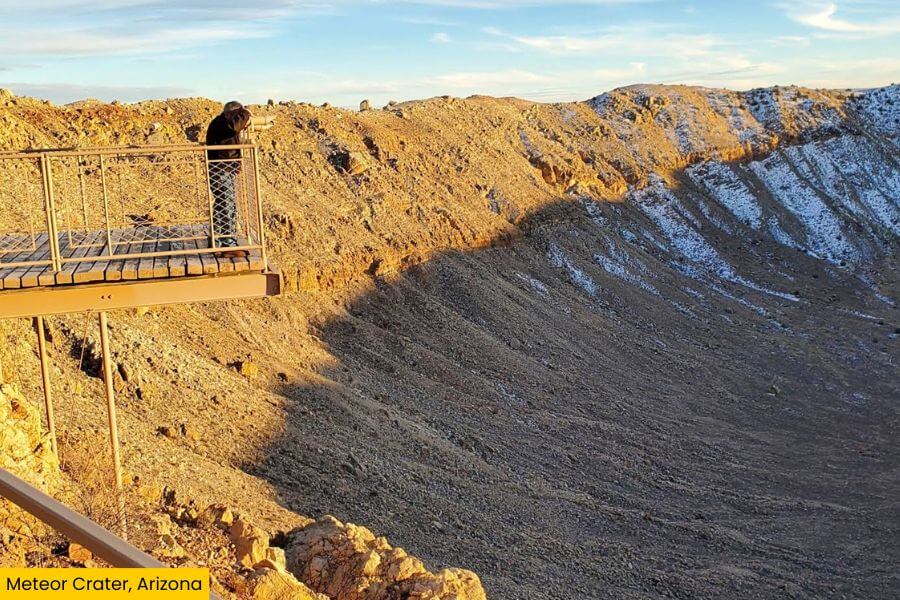
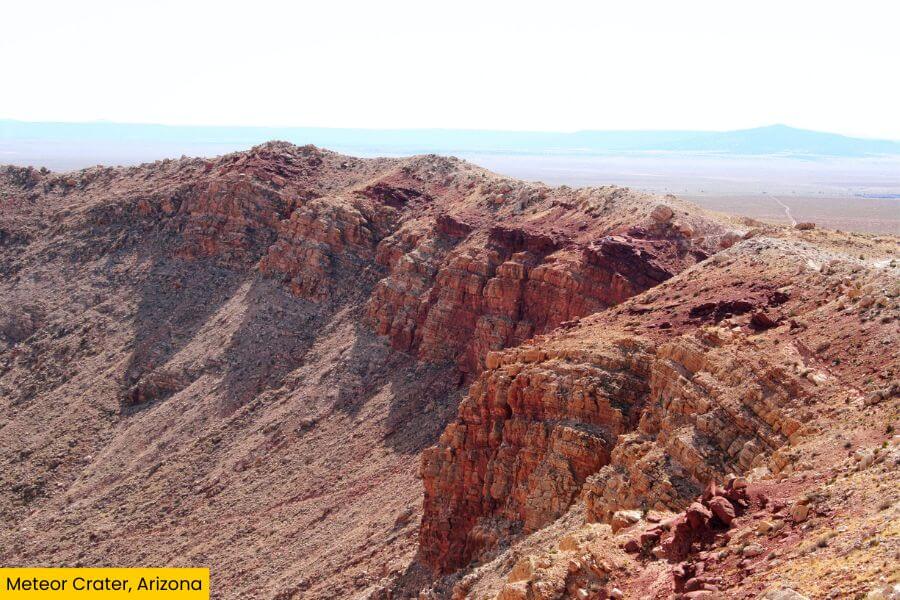
You can see just how impressive it is by standing along the rim, looking down into its enormous bowl-shaped interior, and spotting rock layers exposed by the impact.
If you want to learn more as you explore, take a guided rim tour for a 30- to 40-minute hike filled with cool facts about the crater’s history and geology.
For adventurous hikers, the exclusive guided floor tour is worth registering for, taking you 550 feet down to see historic artifacts and astronaut training sites.
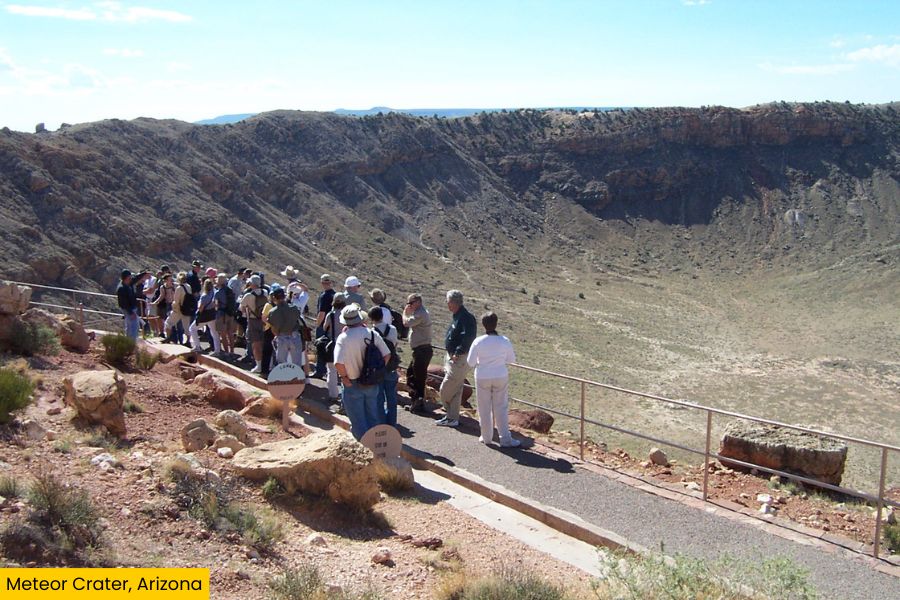
Afterward, visit one or all four observation areas, including Moon Mountain, where you can use telescopes to admire the surrounding desert landscape.
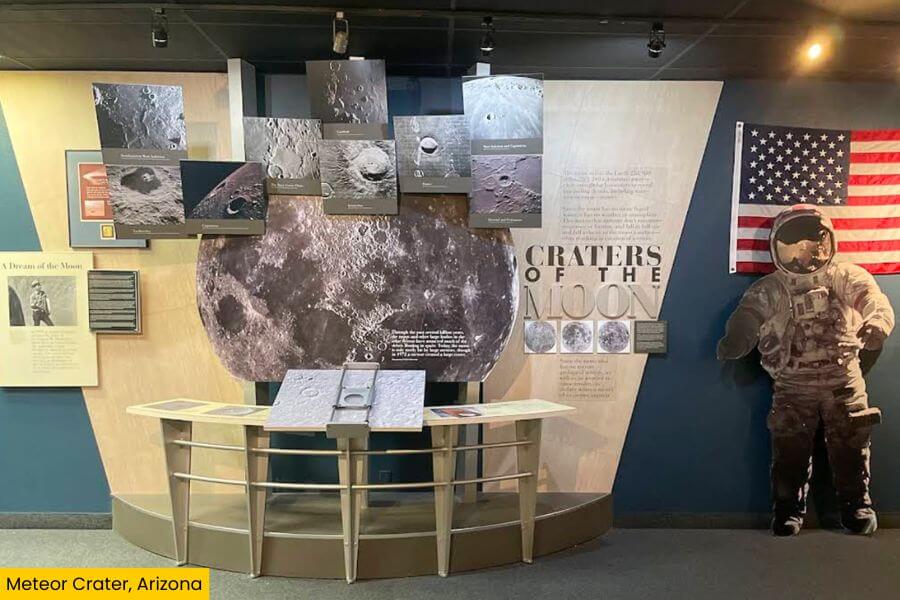
Beyond the crater, you’ll find the Discovery Center & Space Museum, which is packed with hands-on exhibits about meteorites, asteroids, comets, and more.
You can also watch the short film IMPACT! The Mystery of Meteor Crater, which explains how this remarkable landmark formed and the science behind it.
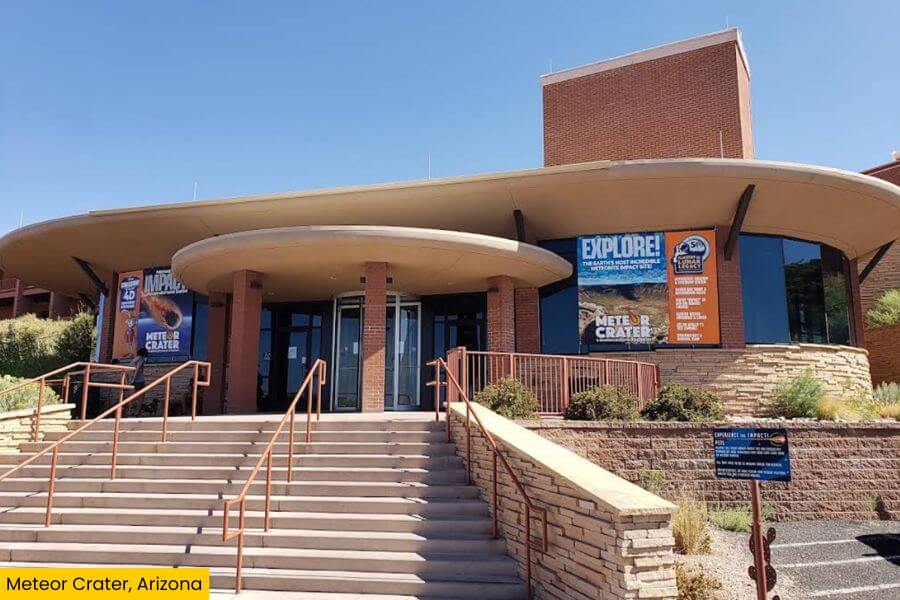
Another highlight is the COLLISION! 4D Theater, where motion seats and special effects take you on a space mission to save Earth from an approaching asteroid.
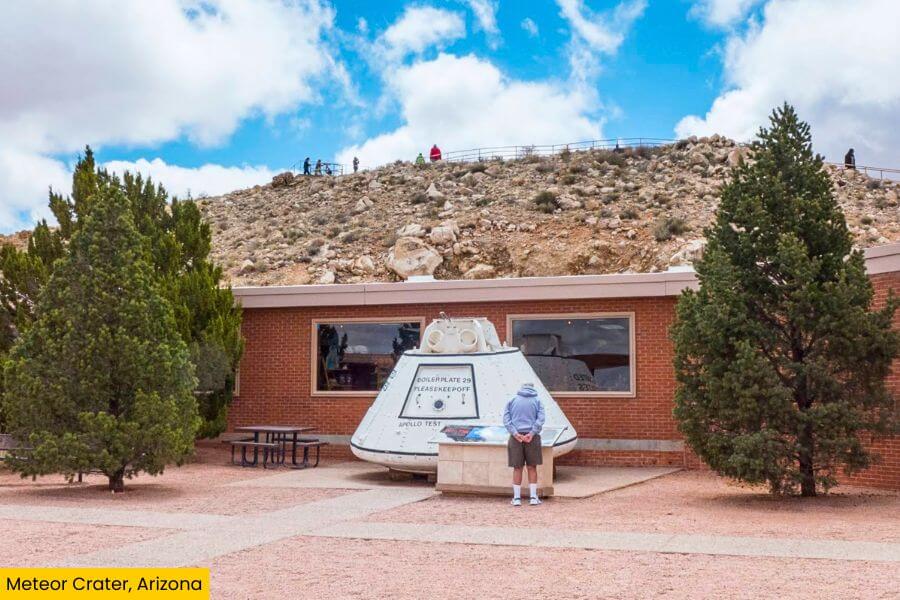
Next, stop by the Apollo 11 training capsule outside the Discovery Center and imagine what it was like for astronauts preparing for their journey to the Moon.
When you’re ready for a break, browse the Gift & Mineral Shop, filled with souvenirs, space-themed toys, clothing, books, gems, and minerals.
And if you work up an appetite after all that exploring, head to the Meteor Crater Mining Company for sandwiches, snacks, sweet treats, and specialty drinks.
History
The story of Meteor Crater begins around 50,000 years ago, when a massive nickel-iron asteroid came crashing into what is now northern Arizona.
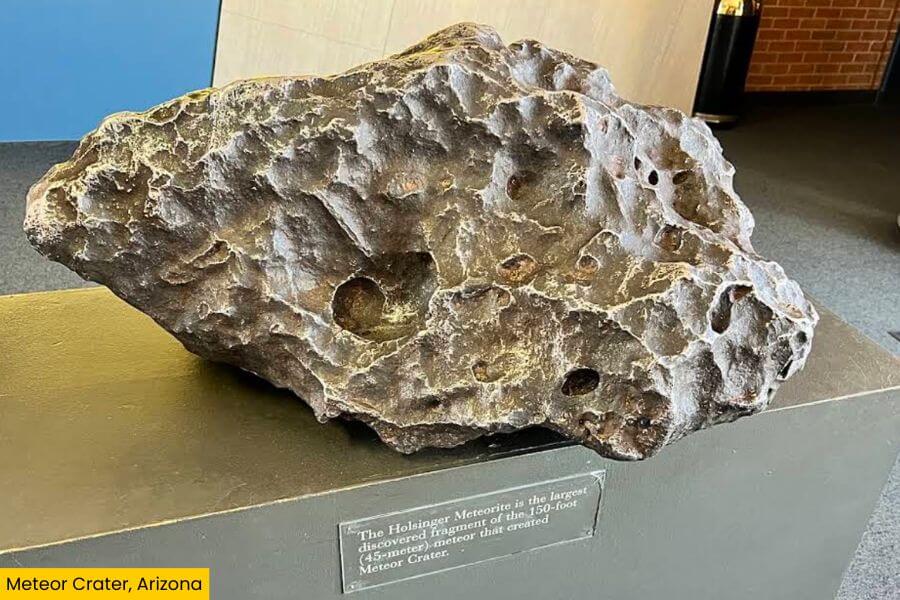
The space rock, called the Canyon Diablo meteorite, was estimated to be about 160 feet (50 meters) across and weighed several hundred thousand tons.
When it struck Earth, the collision released energy equal to about 10 megatons of TNT, blasting rocks into the air and creating the massive crater you see today.
The intense force destroyed much of the meteorite, but some fragments survived and scattered across the surrounding desert.
During the 19th century, the crater caught scientists’ attention after American settlers reported its existence, leading to questions about how it formed.
In November 1891, geologist Grove Karl Gilbert examined the site and concluded that a volcanic steam explosion, not a meteorite, had created it.
That began to change in the early 1900s when mining engineer Daniel M. Barringer became convinced that a meteorite had created the massive crater.
Believing a huge deposit of valuable iron was buried beneath it, he spent 27 years drilling and searching, but never found what he was looking for.
Although his search was unsuccessful, his research helped scientists understand how the crater formed, and it was later named Barringer Crater in his honor.
In the 1960s, geologist Eugene Shoemaker studied the crater and found important evidence, including shocked quartz, that helped confirm its true origins.
And during the 1960s and 1970s, NASA astronauts also trained at Meteor Crater to prepare for the Apollo missions to the Moon.
Today, the crater remains protected, welcoming visitors while helping scientists better understand meteorite collisions and their effects on Earth and other planets.
Know Before You Go
Hours and Best Time to Visit
Meteor Crater is open from 8:00 a.m. to 5:00 p.m. every day, although it has shorter hours on Thanksgiving Day and is closed on Christmas Day.
Spring and fall are generally the best times to visit, when temperatures are more comfortable for exploring the outdoor observation decks.
Summer can bring hot afternoons and thunderstorms, while winter often brings freezing temperatures, so pack accordingly if you’re visiting during these seasons.
For the best views and photos, visit in the morning or late afternoon when the sunlight highlights the crater’s rock layers and creates dramatic shadows.
Admission Prices
General admission tickets cost $29 for adults, $27 for seniors aged 60 and older, $25 for children aged 6 to 12, and are free for children aged 5 and younger.
Your ticket includes access to the outdoor observation areas, the Discovery Center & Space Museum, the short film, the 4D theater, and the guided rim tour.
How Much Time Do You Need?
If you want to join a guided rim tour, arrive early to give yourself plenty of time, as tours follow a set schedule and can fill up during busy periods.
Plan to spend at least 1.5 to 2 hours here, or closer to 3 hours if you want to explore every exhibit, watch the presentations, and take plenty of photos.
Parking and What to Bring
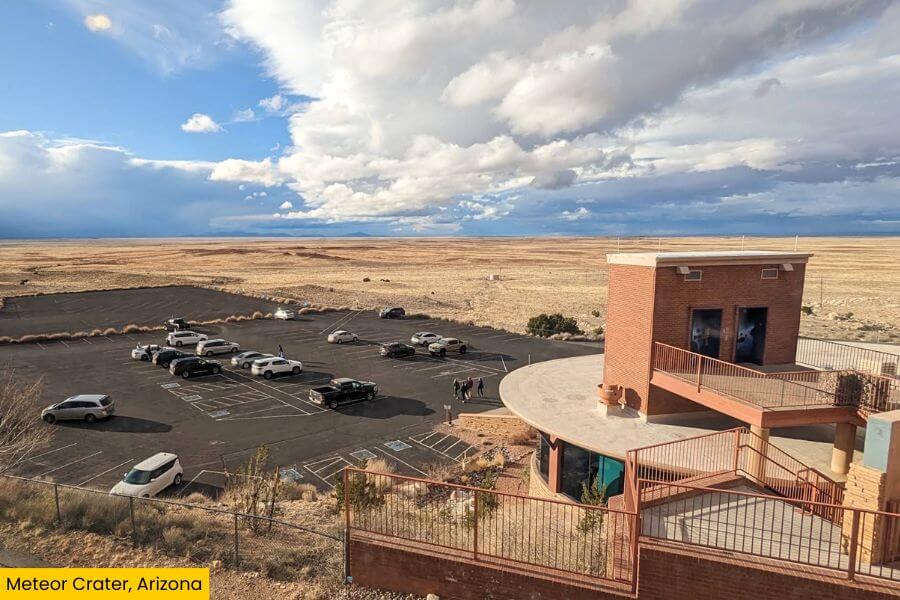
You’ll find free parking on-site, including space for RVs and larger vehicles, which is handy if you’re traveling along historic Route 66 or Interstate 40.
While the Discovery Center has restrooms, a gift shop, and food available, it’s best to come prepared with water, sunscreen, sunglasses, and a hat.
Related Posts