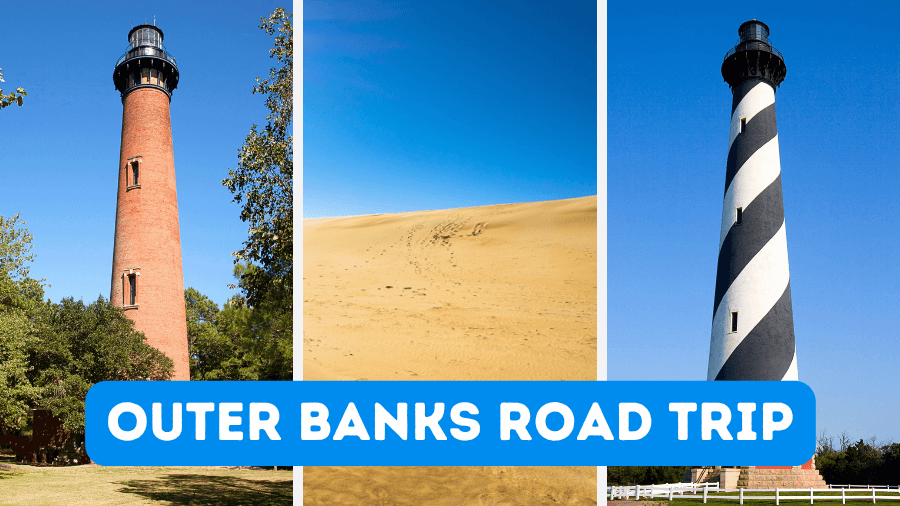
The Outer Banks were practically made for a road trip, with more than 100 miles of narrow barrier islands stretching along the North Carolina coast.
One minute you’re cruising along sandy dunes, and the next you’re passing historic lighthouses, wild horses, and places that played a big role in American history.
The best part is how much you can pack into one trip, from exploring huge dunes to riding a ferry across open water and hunting for seashells along the beach.
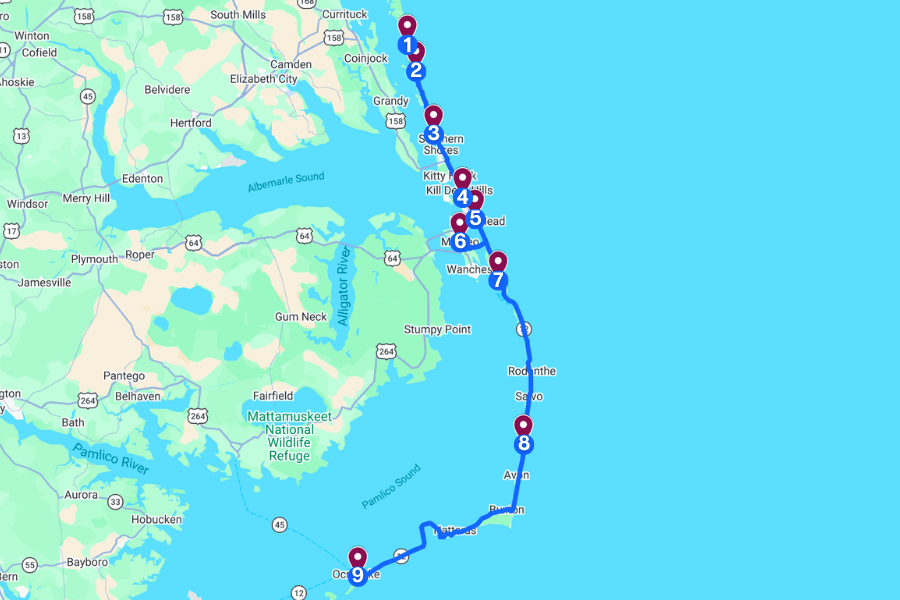
This Outer Banks road trip itinerary takes you down the coast in an easy-to-follow order, with plenty of fun stops and cool facts along the way, so keep reading.
1. Currituck Beach Lighthouse
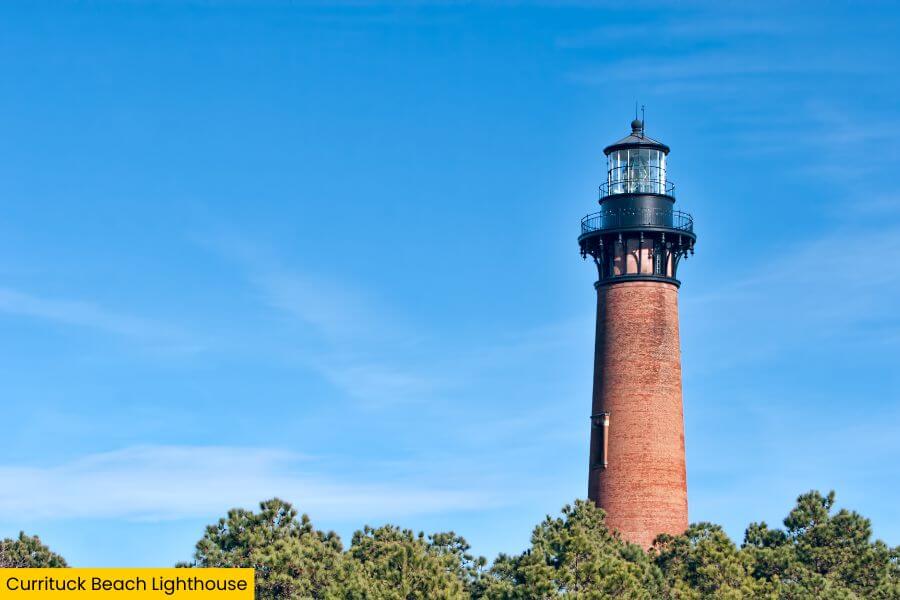
Currituck Beach Lighthouse stands in Corolla at the northern tip of the Outer Banks, an unpainted red brick tower that has guided ships since 1875.
It’s 158 feet tall, and you can climb 220 steps to the top for incredible views of Currituck Sound, the Atlantic Ocean, and the rooftops of Corolla below.
You’ll also see its original first-order Fresnel lens, which still flashes every 20 seconds after dark, so keep your camera handy for a few photos.
After your climb, check out the old Keeper’s Quarters, where you’ll find a small museum filled with lighthouse artifacts and photos, plus a gift shop for souvenirs.
2. Corolla Beach
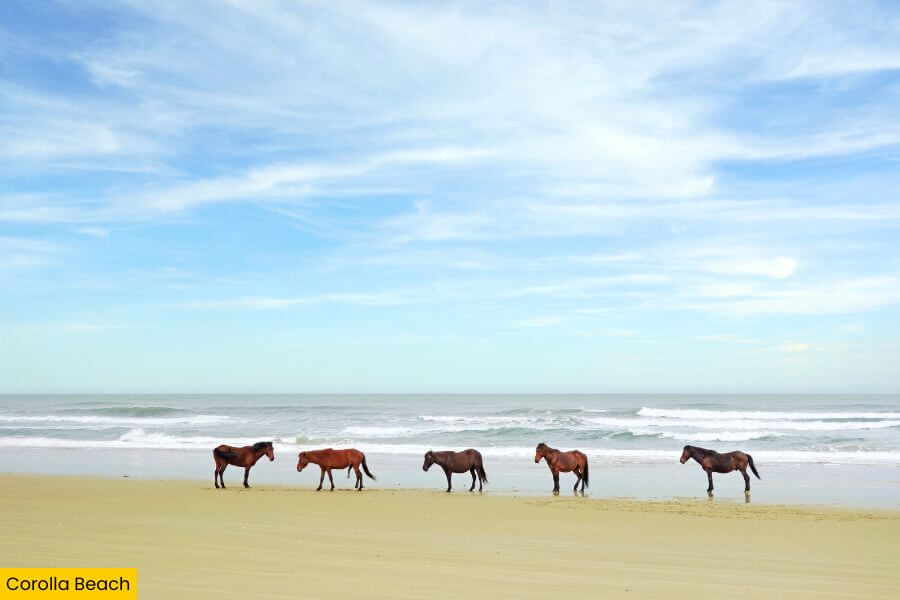
About a 10-minute drive from the lighthouse is Corolla Beach, where a wide Atlantic shoreline, rolling dunes, and warm summer water make it a great next stop.
It is best known for its wild Colonial Spanish mustangs, which roam the 4×4 beaches north of town and descend from horses brought here centuries ago.
To see them, you can join a guided tour that takes you to some of the best viewing spots while keeping a safe and respectful distance from the herd.
Once you’re back, you can spend some time swimming, beachcombing, relaxing in the sun, or taking a walk along the shore while enjoying the quiet surroundings.
3. Duck Town Park Boardwalk
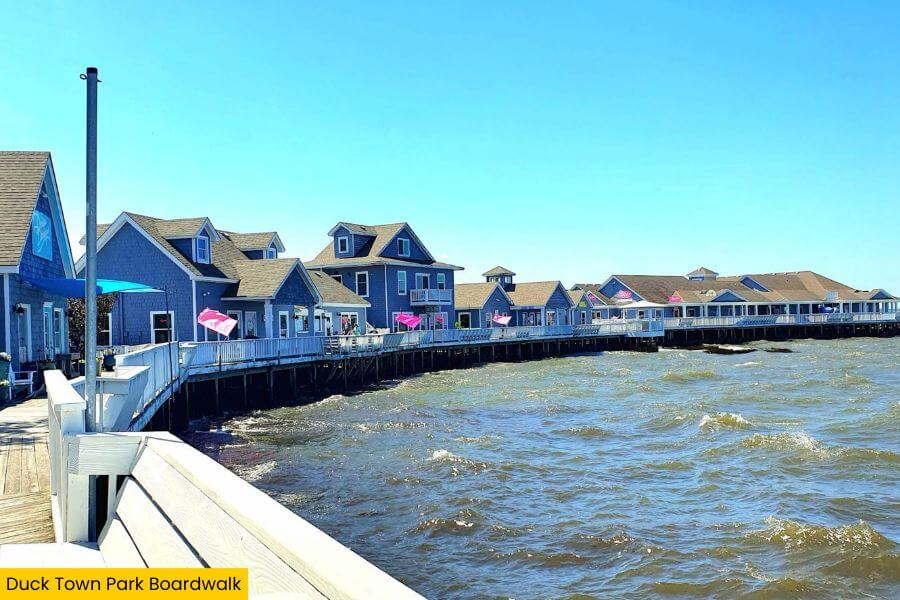
After brushing the Corolla sand off your feet, drive 20 minutes to Duck Town Park Boardwalk, a scenic walkway that stretches nearly a mile along Currituck Sound.
This boardwalk connects Duck Town Park with waterfront shops and restaurants, giving you plenty of spots to browse local stores or stop for photos over the water.
The park itself covers 11 acres and includes walking trails, a playground, picnic areas, a kayak launch, and an amphitheater that hosts seasonal concerts.
For the best views, time your visit for sunset, when you can watch the sky change colors and reflect on the water while boats pass by in the distance.
4. Wright Brothers National Memorial
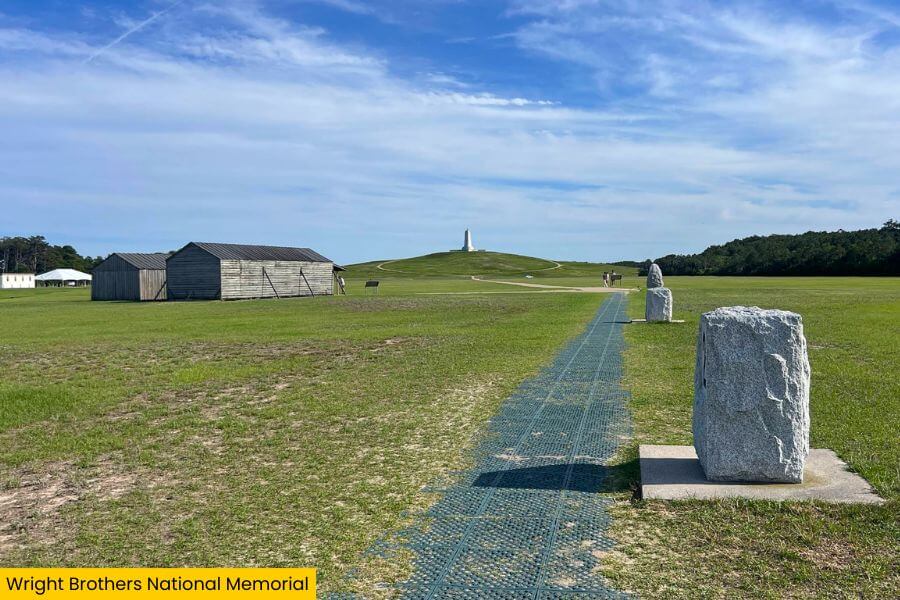
Now continue for 20 minutes to the Wright Brothers National Memorial, which marks the site where Wilbur and Orville Wright changed travel forever on December 17, 1903.
Start at the First Flight Boulder, then follow the granite markers that trace all four flights, including the brothers’ longest at 852 feet in 59 seconds.
You can then climb Big Kill Devil Hill to the 60-foot granite monument honoring their experiments with gliders and powered flight.
Before leaving, explore the visitor center’s exhibits and full-size 1903 Flyer replica, then swing by the reconstructed workshop and living quarters to get a glimpse of their daily life.
5. Jockey’s Ridge State Park
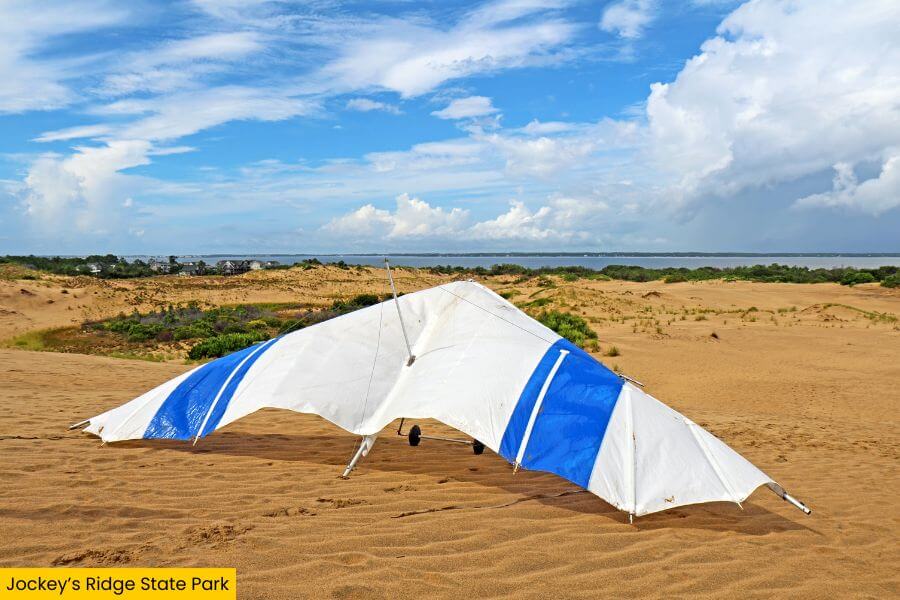
From the memorial, drive about 10 minutes to Jockey’s Ridge State Park in Nags Head, home to the tallest living dune system on the Atlantic Coast.
The dunes constantly shift with the wind, creating giant sandy slopes where you can hike, fly a kite, or try hang gliding with Kitty Hawk Kites.
For a closer look, follow the 1.2-mile Tracks in the Sand Trail past live oaks, pine trees, and beachgrass before making your way down to Roanoke Sound.
If you’re looking for even more fun, rent a sandboard inside the park and spend some time racing down the sandy slopes before climbing back up for another run.
6. Manteo
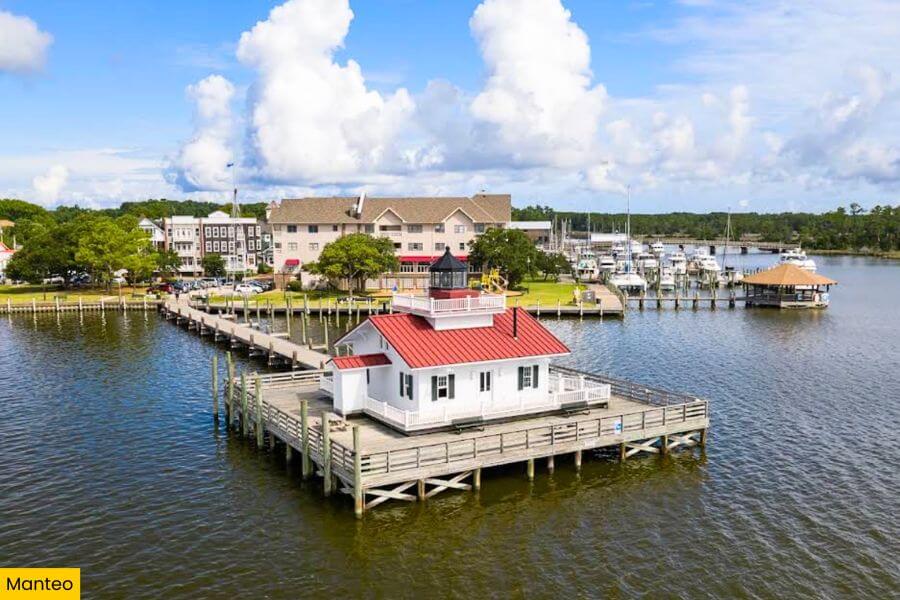
Just 15 minutes from the giant dunes is Manteo on Roanoke Island, where you can swap sandy trails for a walkable waterfront packed with local history.
Here, you can stroll along the downtown boardwalk to the Roanoke Marshes Lighthouse, a small white tower that has stood over Shallowbag Bay since 2004.
Afterwards, browse the shops along Queen Elizabeth Avenue or head over to Roanoke Island Festival Park to climb aboard the Elizabeth II, a replica 16th-century sailing ship.
If you have extra time, visit the North Carolina Aquarium on Roanoke Island to see sharks, river otters, and other marine life, plus a touch tank filled with stingrays.
7. Bodie Island Lighthouse
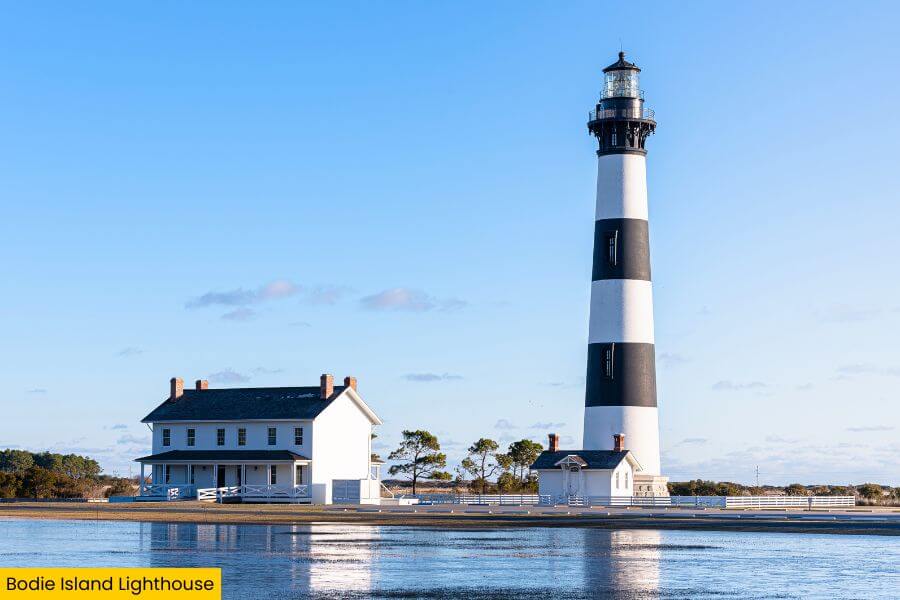
Leaving Manteo behind, drive 20 minutes to Bodie Island Lighthouse, a striking 156-foot tower surrounded by marshes and pine trees near Oregon Inlet.
Completed in 1872, it stands out with bold horizontal black-and-white stripes, while its first-order Fresnel lens still flashes twice every 30 seconds.
If the tower is open for climbing during your visit, take on the 219 steps to the top for sweeping views of Pamlico Sound and the surrounding barrier islands.
Back on the ground, walk the short boardwalk through the marsh, keeping an eye out for herons, egrets, and other birds along the way.
8. Cape Hatteras National Seashore & Lighthouse
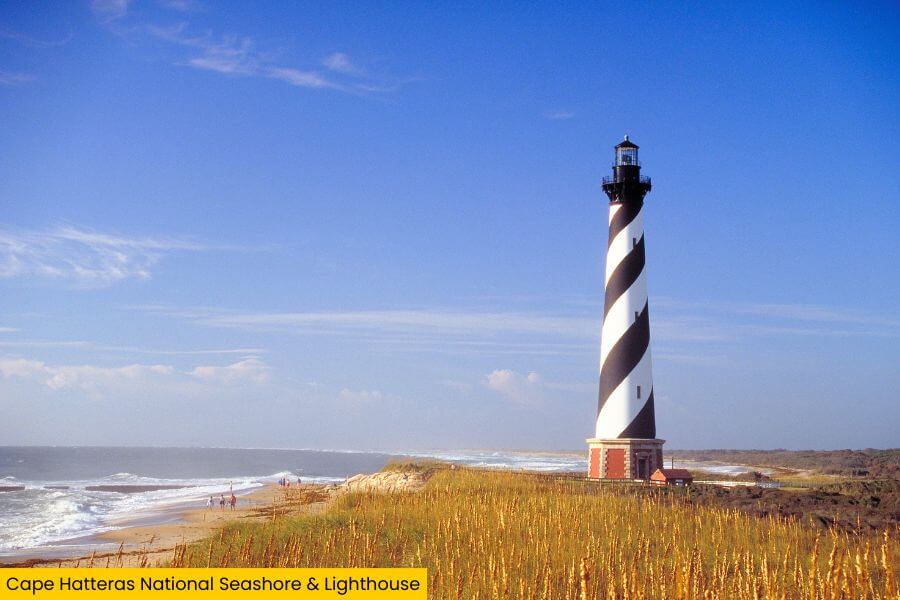
Up next is Cape Hatteras National Seashore, a protected 70-mile stretch of the Outer Banks filled with sandy beaches, salt marshes, and centuries of shipwreck history.
Its superstar landmark is the 198-foot Cape Hatteras Lighthouse in Buxton, the tallest brick lighthouse in the U.S., famous for its spiraling black-and-white stripes.
Built in 1870, the lighthouse was actually moved 2,900 feet inland in 1999 to protect it from shoreline erosion, an incredible 23-day engineering project.
While the lighthouse is closed for restoration, there’s still plenty to do nearby, including exploring the grounds, walking the beach, and fishing at famous Cape Point.
9. Ocracoke Island
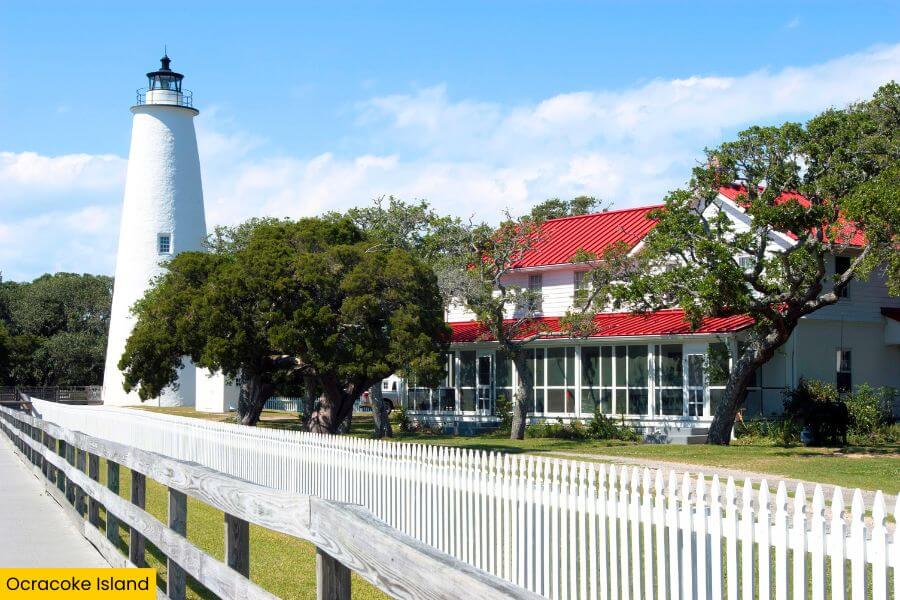
From Hatteras, roll your car onto the free ferry for a 45-minute ride across Hatteras Inlet to Ocracoke Island, a remote finale to this stretch of the Outer Banks.
Once ashore, follow Highway 12 toward Ocracoke Village, stopping along the island’s 16 miles of undeveloped beaches for swimming and shell hunting.
In town, visit the 75-foot Ocracoke Lighthouse, built in 1823 and still operating as North Carolina’s oldest active light station, although you cannot climb its tower.
Save time for Springer’s Point Preserve, where a 0.8-mile nature trail leads toward Pamlico Sound near the waters where the pirate Blackbeard was killed in 1718.
Related Posts