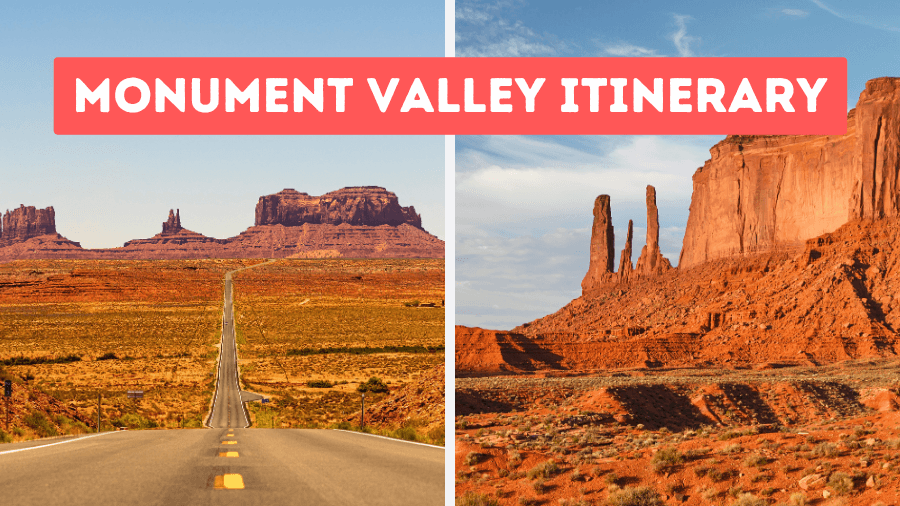
Towering red sandstone buttes, endless desert roads, and some of the most famous views in the American Southwest make Monument Valley one of the coolest places to explore on a weekend road trip.
Located along the Utah-Arizona border, this incredible desert landscape is famous for its massive rock formations, classic Western movie scenes, and scenic drives that look straight out of a postcard.
But there’s so much more to Monument Valley than snapping a few photos of those iconic red rocks.
From driving along dusty desert roads and hiking beneath giant sandstone towers to discovering fascinating Navajo history and hidden viewpoints, you can pack a surprising amount of adventure into just two days.
This ultimate Monument Valley weekend itinerary covers the best things to see and do, plus helpful tips for planning your route, avoiding common mistakes, and making the most of your time in this unforgettable corner of the Southwest.
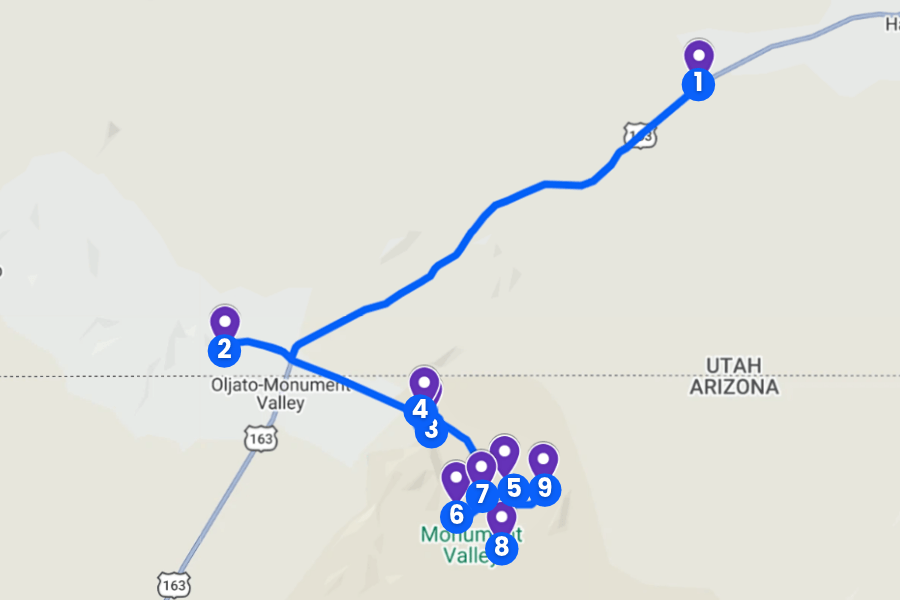
1. Forrest Gump Point
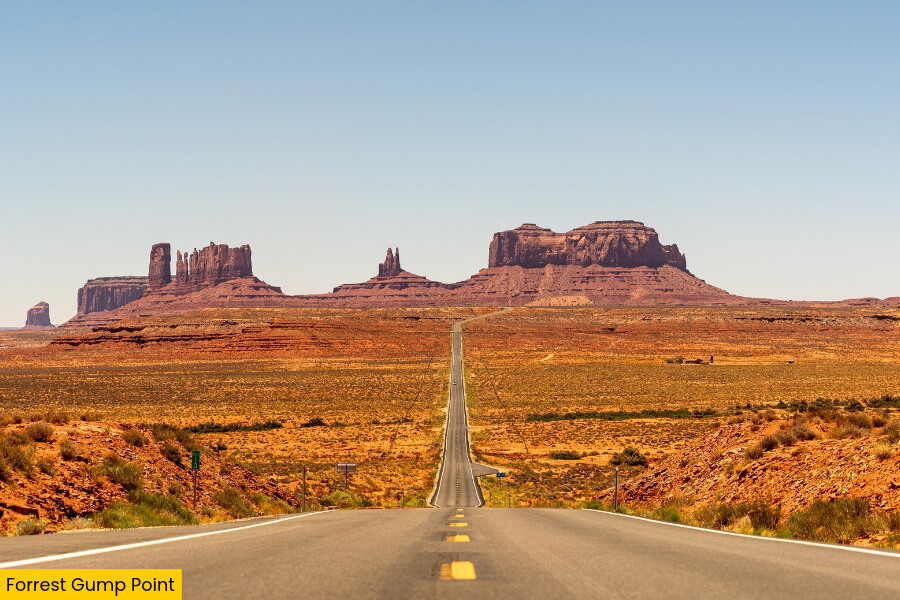
Forrest Gump Point is one of the most famous photo spots in Utah, located along US Highway 163 near Mexican Hat, and close to the Arizona border, where a long, straight road leads toward the massive red sandstone buttes of Monument Valley.
This iconic stretch of highway became famous in the 1994 movie Forrest Gump, when Tom Hanks’ character suddenly stopped running after crossing America for more than three years and announced, “I’m pretty tired… I think I’ll go home now.”
The main attraction here is the incredible view of the highway stretching toward Monument Valley’s towering rock formations, including the famous East and West Mitten Buttes in the distance.
You’ll find the famous filming location near mile marker 13, but watch out for traffic, stay off the road, and take your photos from a safe roadside spot.
2. Goulding’s Museum
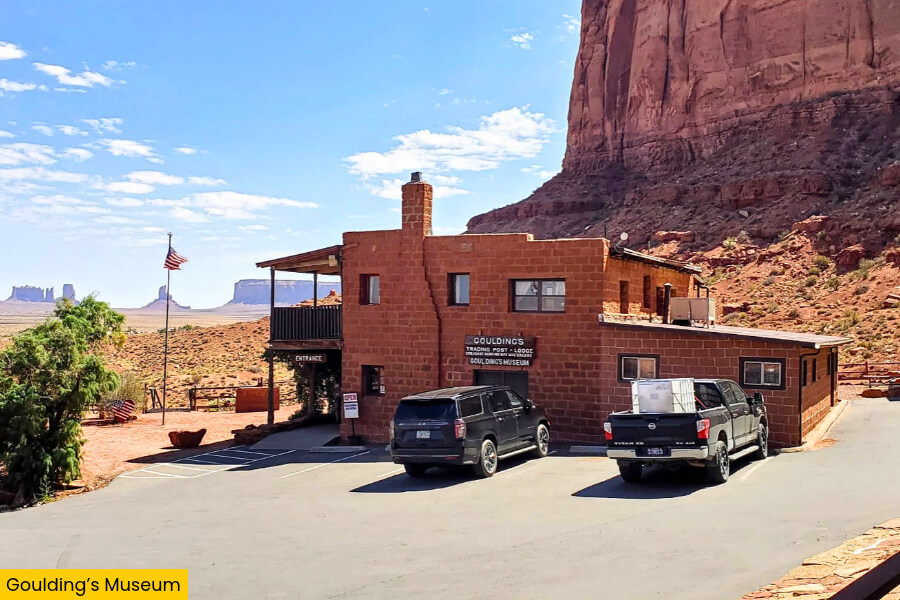
Continue on Highway 163 for about 20 minutes to Goulding’s Museum, a small but fascinating museum packed with old photographs, movie memorabilia, and stories from Monument Valley’s early tourism days.
The museum is located inside the original stone trading post built by Harry and Leone Goulding in the 1920s, where you can see Navajo artifacts, vintage furniture, and personal items from the couple who helped put Monument Valley on Hollywood’s map.
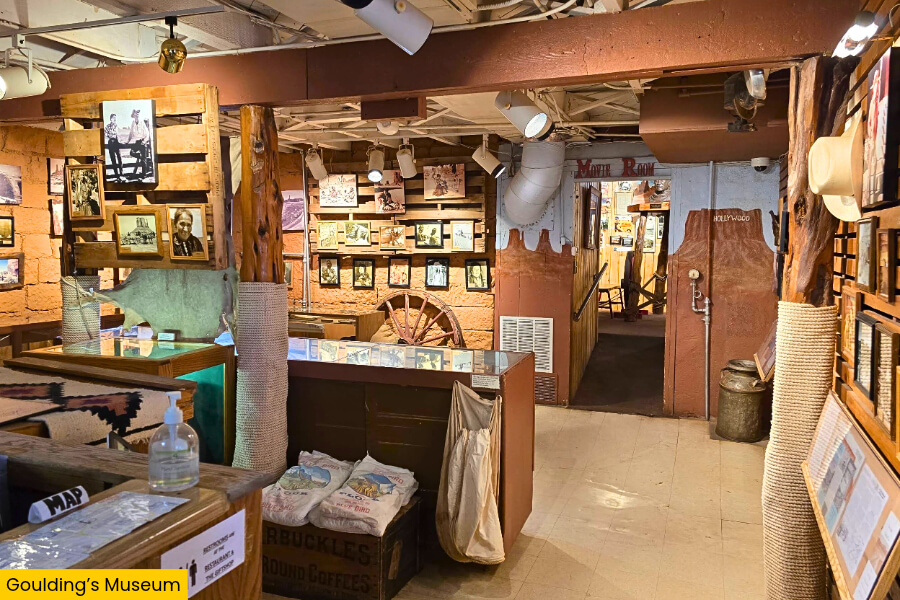
One of the coolest exhibits is the Movie Room, filled with photos, posters, and memorabilia celebrating classic Western films shot in Monument Valley, including productions associated with director John Ford and actor John Wayne.
You can also peek inside the former living quarters upstairs and learn how the Gouldings helped bring filmmakers to this incredible corner of the Southwest.
3. Monument Valley Visitor Center
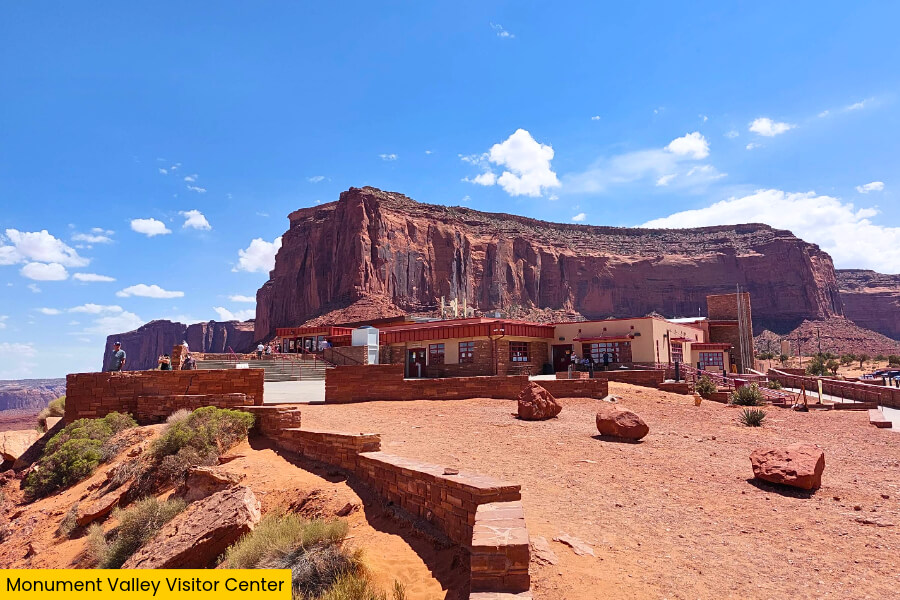
Just a short drive from Goulding’s Museum, the Monument Valley Visitor Center is your next stop, located inside Monument Valley Navajo Tribal Park on the Arizona side, with jaw-dropping views of the famous sandstone buttes.
Head straight to the outdoor viewing patio, where you can see the West Mitten Butte, East Mitten Butte, and Merrick Butte rising hundreds of feet above the red desert floor, creating one of the most photographed scenes in the American Southwest.
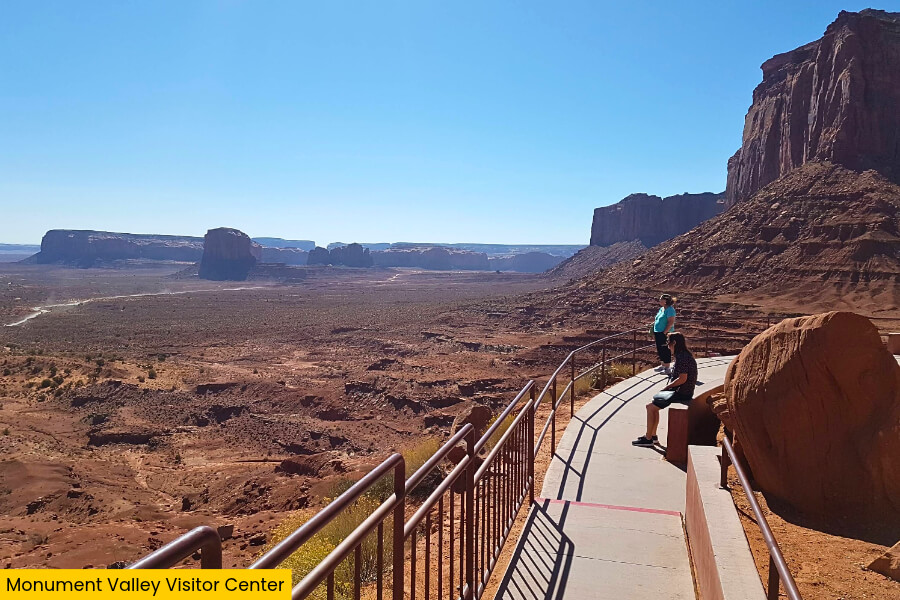
Inside, you can explore the visitor center’s museum area and learn more about Monument Valley and its Navajo heritage.
Nearby the center, you can browse arts, crafts, native food, and souvenirs sold by Navajo vendors at roadside stands.
This is also where the 17-mile Valley Drive begins, a bumpy dirt road that takes you past famous rock formations like Elephant Butte, Three Sisters, and John Ford’s Point.
Please Note: At the time of writing, Monument Valley’s 17-mile Loop Drive is temporarily closed due to flooding, although the visitor center is open. Be sure to check the official Navajo Parks and Recreation Department website for the latest updates before your visit.
4. Wildcat Trail
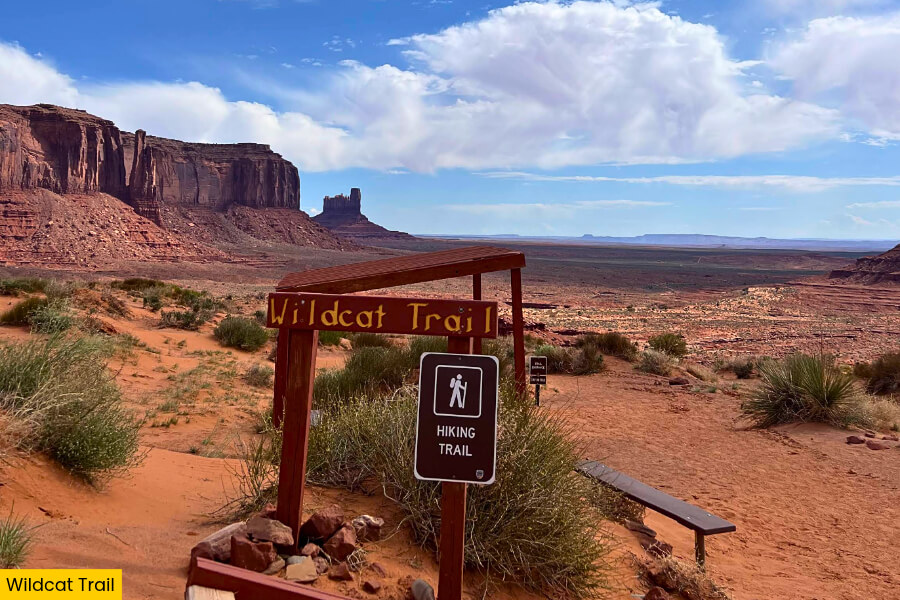
It’s time to stretch your legs on the Wildcat Trail, a roughly 4-mile hike that includes a 3.2-mile loop around the massive West Mitten Butte inside Monument Valley Navajo Tribal Park in Arizona.
This is the park’s only hiking trail you can explore without a Navajo guide, taking you across sandy desert paths surrounded by towering red sandstone cliffs and desert plants.
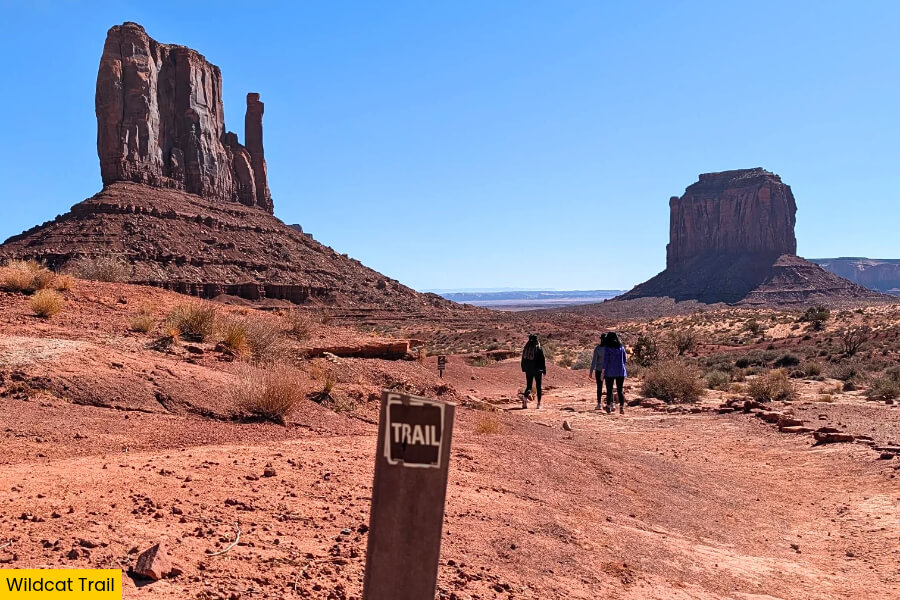
The trail starts near the visitor center and descends toward the valley floor, giving you a completely different view of the famous Mittens as you walk around the base of West Mitten Butte.
Allow around 2 to 3 hours to complete the loop, bring plenty of water, and wear sturdy shoes because the deep sand makes some sections surprisingly tiring.
5. Elephant Butte
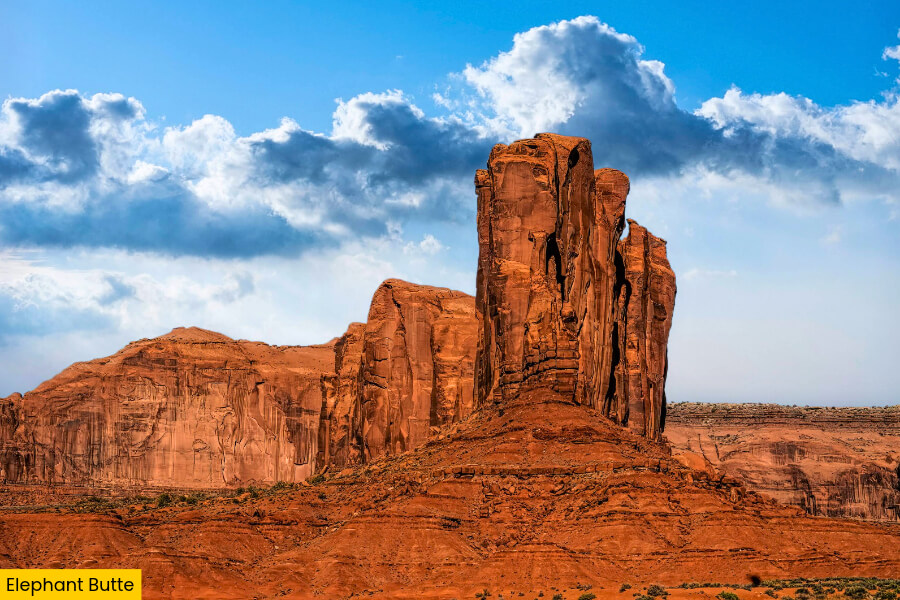
Once you’ve finished hiking the Wildcat Trail, hop back in your car and head farther into Monument Valley Navajo Tribal Park, where Elephant Butte is one of the first major rock formations you’ll encounter.
This enormous red sandstone formation gets its name from its elephant-like shape, with a little imagination helping you spot the animal’s massive body and long trunk in the rocky outline.
Elephant Butte rises hundreds of feet above the desert floor, with layers of reddish sandstone shaped by millions of years of wind and water erosion.
You can admire this impressive formation from designated roadside pullouts along Valley Drive, where the surrounding red dirt, scattered desert plants, and towering cliffs make for some seriously cool photos, especially in the softer morning light.
6. Three Sisters
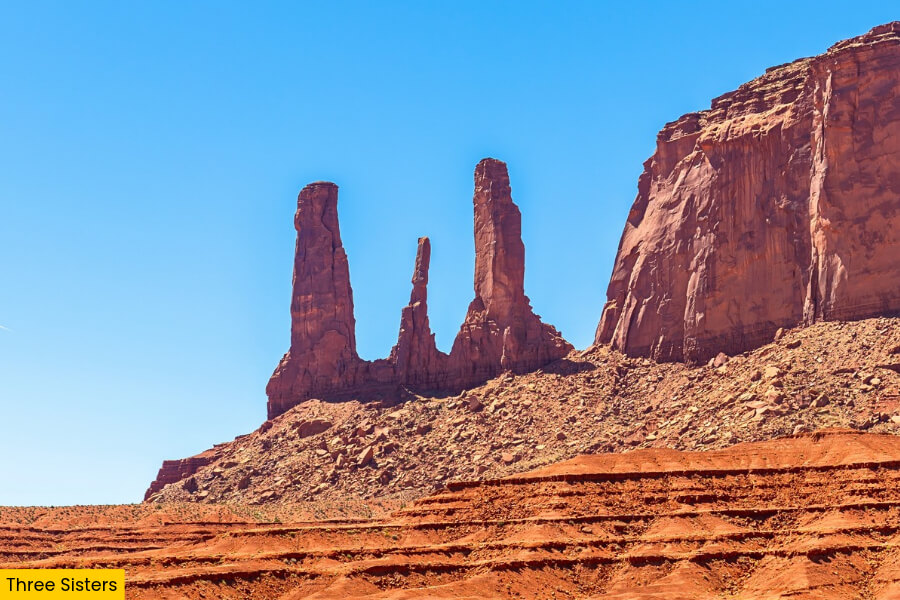
About 10 minutes from Elephant Butte, you’ll soon spot Three Sisters, a striking group of three tall, narrow sandstone spires standing side by side near the massive Mitchell Mesa in Monument Valley Navajo Tribal Park.
These unusual rock towers get their name from their resemblance to three figures standing together, with some people saying they look like a nun facing her students, dressed in long robes.
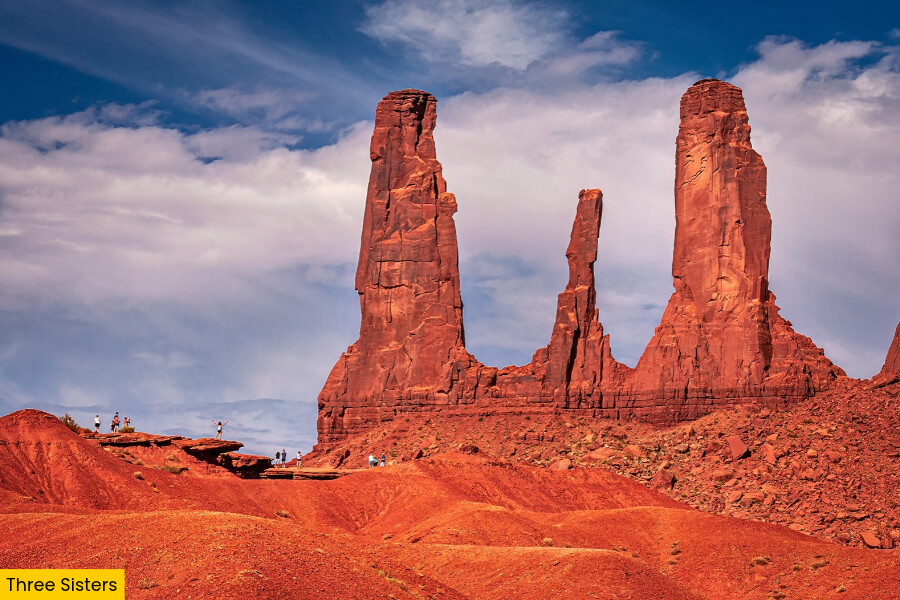
The spires were formed over millions of years as wind, rain, and erosion slowly wore away the surrounding sandstone, leaving behind three slender columns rising dramatically above the red desert floor.
Pull over at a designated viewing area to snap some photos of the spires against Mitchell Mesa, and look closely at their different heights and shapes.
7. John Ford Point
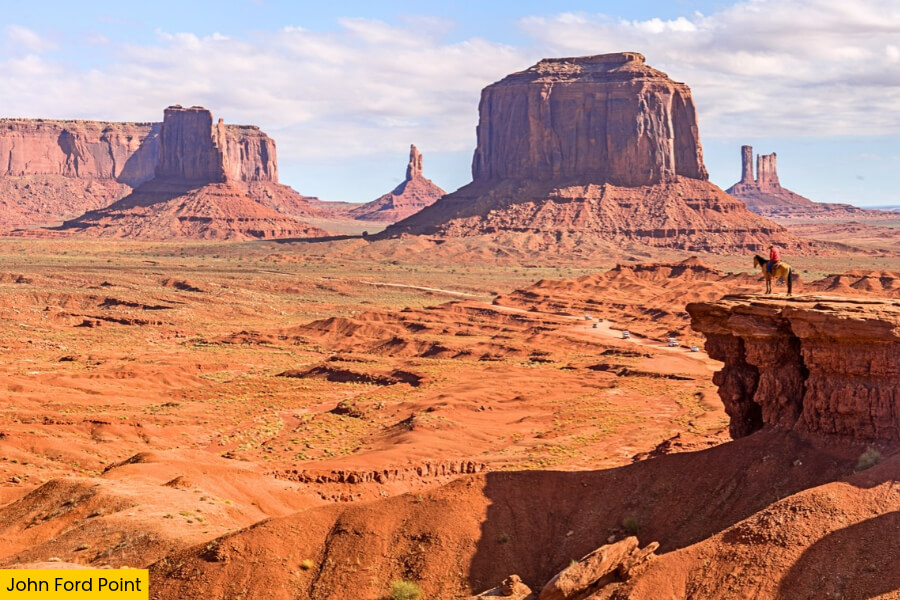
From Three Sisters, continue along the dusty Valley Drive to John Ford Point, one of Monument Valley’s most famous viewpoints, where a rocky sandstone ledge sticks out over the vast desert floor with towering red buttes in the distance.
This iconic spot is named after Hollywood director John Ford, who filmed several classic Western movies in Monument Valley, including Stagecoach (1939), Fort Apache (1948), and The Searchers (1956), all starring John Wayne.
The biggest attraction here is the chance to photograph a horse and rider standing on the edge of the overlook, recreating a classic Western movie scene with the massive sandstone formations behind them, an experience offered by local Navajo operators for a fee.
You may also find Navajo vendors selling handmade jewelry and souvenirs nearby, making this a great stop for photos and local crafts.
8. The Hub Point
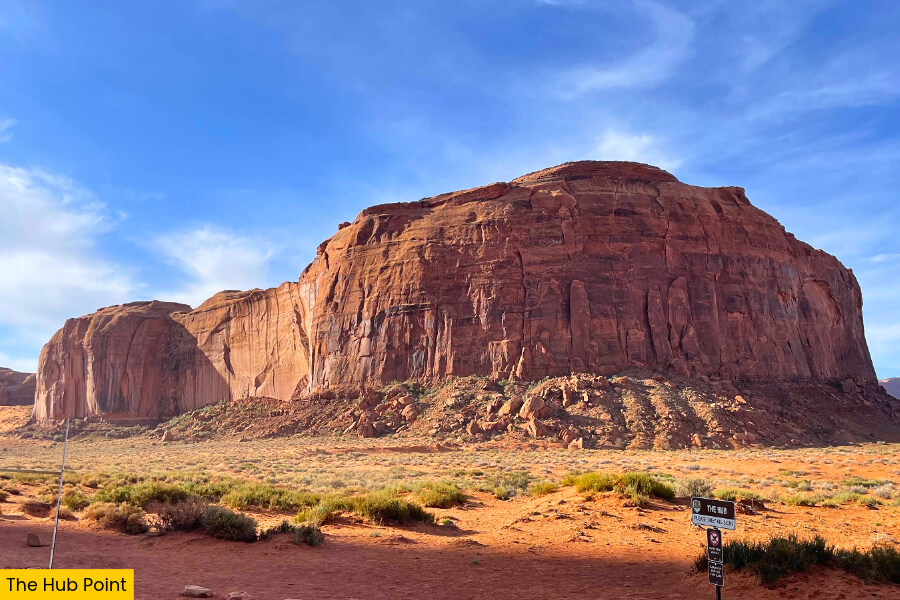
Continue along Monument Valley’s 17-mile Valley Drive to The Hub Point, a scenic stop overlooking a massive sandstone formation called The Hub, which rises from the red desert floor inside Monument Valley Navajo Tribal Park.
This unusual rock formation gets its name from its central position among the surrounding buttes and mesas, with its tall, narrow shape standing out against the wide-open desert landscape.
From the designated viewing area, you can admire The Hub alongside nearby rock formations, including the towering Thunderbird Mesa, while spotting layers of red sandstone shaped by millions of years of erosion.
It’s a great place to take a few photos, enjoy the sweeping desert views, and appreciate just how enormous Monument Valley’s rock formations are before continuing deeper into the valley.
9. Artist’s Point
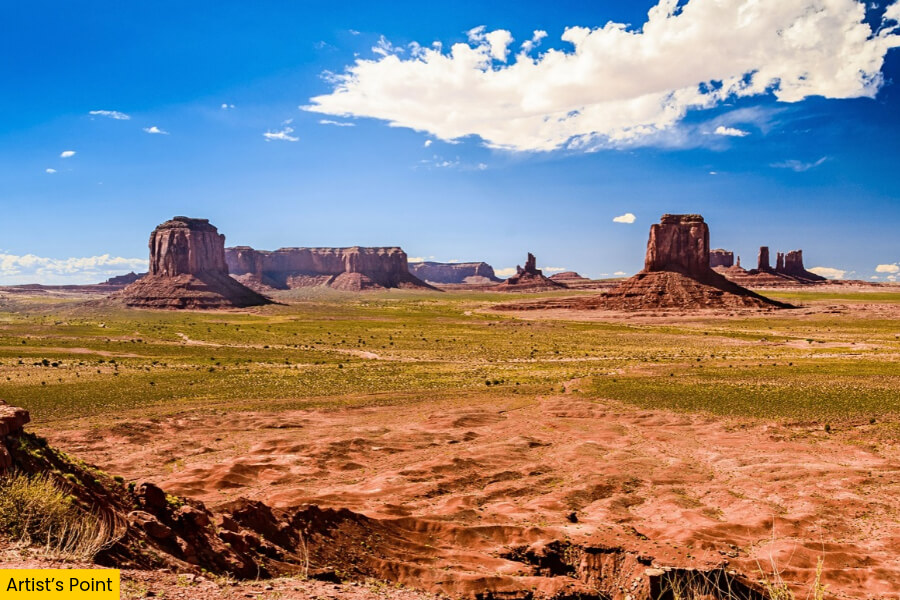
To wrap up your Monument Valley road trip, continue farther along the 17-mile Valley Drive to Artist’s Point, a spectacular overlook offering sweeping views of the red desert, towering sandstone buttes, and distant mesas inside Monument Valley Navajo Tribal Park.
Unlike the closer views at The Hub Point, this viewpoint gives you a much wider look across the valley, with famous formations like East Mitten Butte and Merrick Butte rising above the flat desert floor.
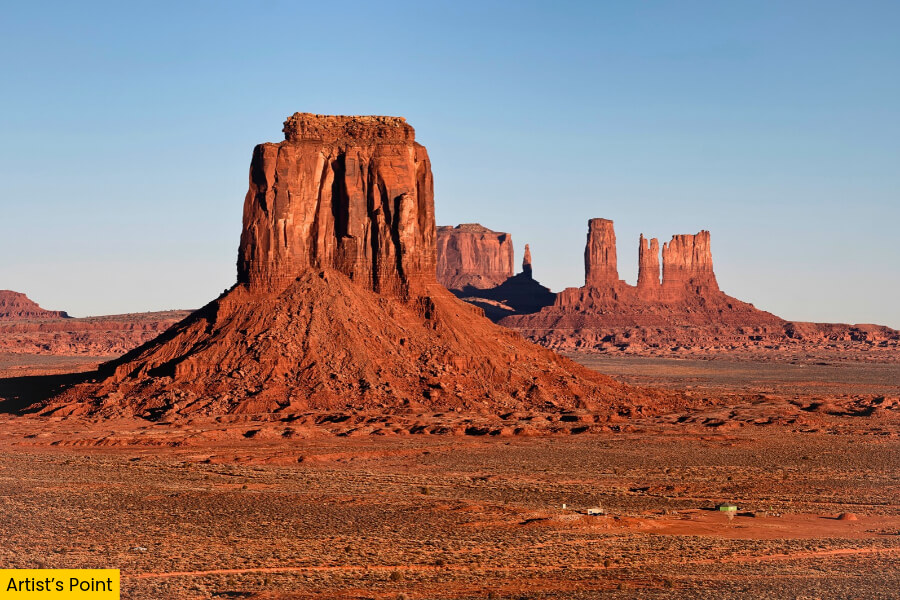
True to its name, Artist’s Point offers picture-perfect scenery, with sweeping views that make it a favorite stop for landscape photography.
Park at the designated pullout and spend a few minutes soaking up the incredible views before following the dirt road back toward the visitor center to finish your adventure.
Related Posts