The Great Smoky Mountains are packed with winding mountain roads, incredible overlooks and unforgettable hiking trails, making them one of the best road trip destinations in the Southeast.
Along the way, you’ll discover breathtaking mountain views, hidden gems, and plenty of chances to spot wildlife in one of America’s most visited national parks.
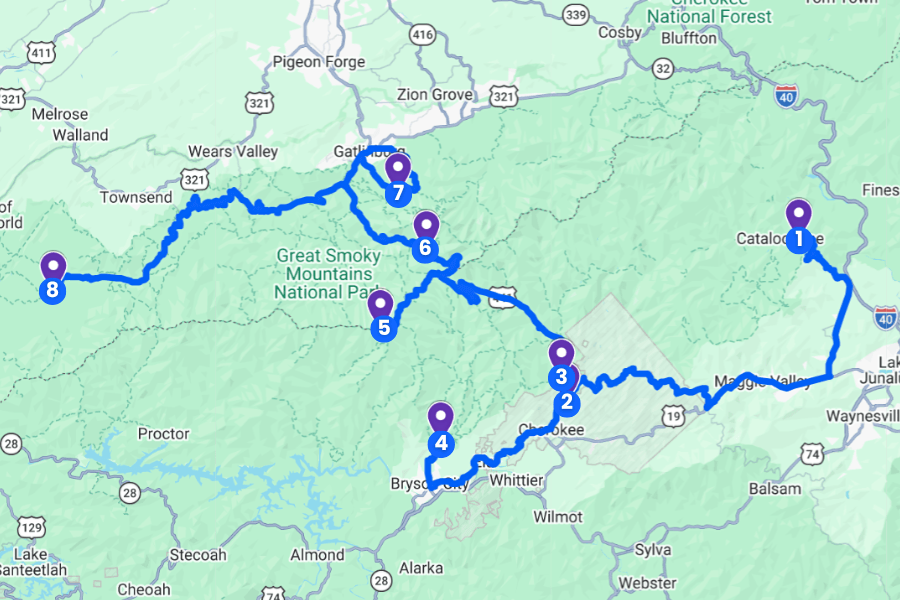
Whether you have one day or a long weekend, this route is filled with memorable stops that are easy to combine into one amazing adventure.
Grab your camera, fill up the gas tank, and get ready for a road trip that shows off some of the very best scenery and experiences the Great Smoky Mountains have to offer.
1. Cataloochee Valley Overlook
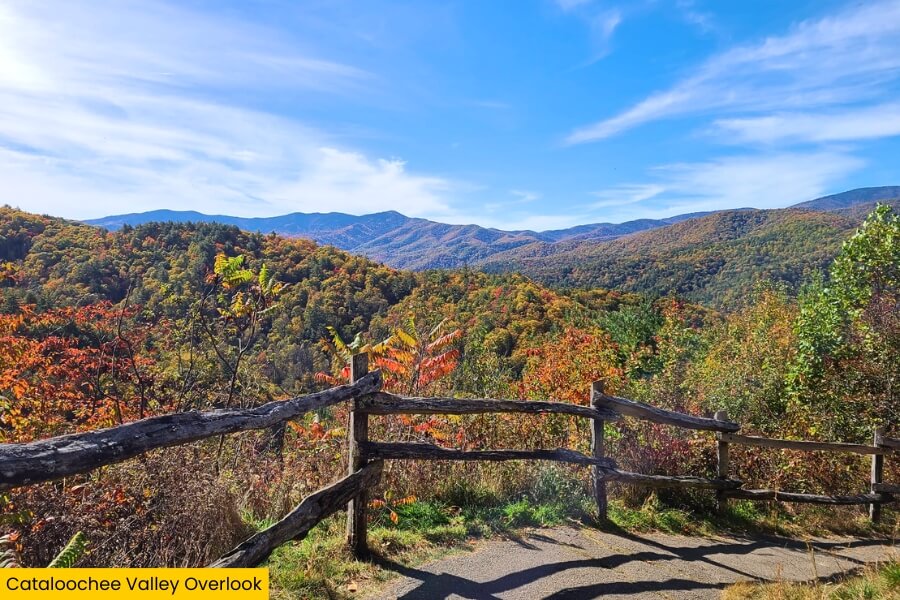
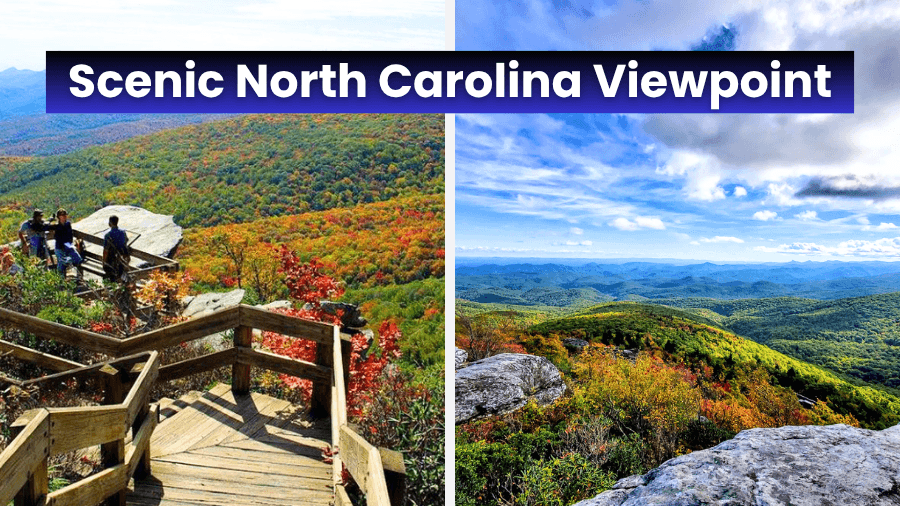
Cataloochee Valley Overlook sits along the Blue Ridge Parkway in western North Carolina, giving you a wide view across the Great Smoky Mountains toward the historic Cataloochee Valley below.
From this high viewpoint, you can spot layer after layer of forested ridges, especially on clear mornings or at sunset when the mountains glow with changing shades of blue, purple, and gold.
The overlook is famous for views of Cataloochee Valley, where elk were successfully reintroduced in 2001, and you may even spot them grazing in the open fields if you later drive into the valley.
Take your time and enjoy one of the easiest scenic stops on the parkway before continuing your Great Smoky Mountains road trip.
2. Oconaluftee River Trail
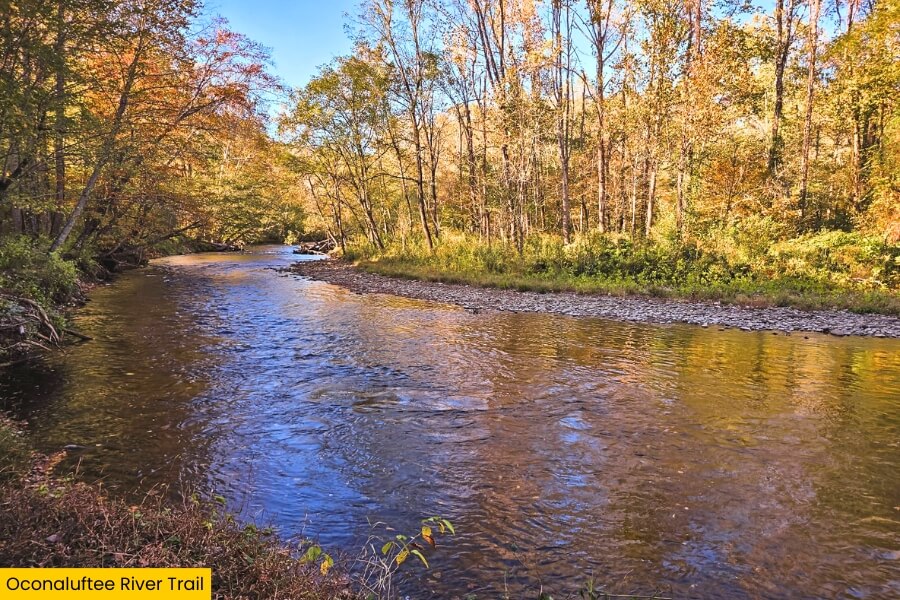
After soaking in the mountain views, head to the Oconaluftee River Trail near the Oconaluftee Visitor Center on Newfound Gap Road for one of the easiest walks in Great Smoky Mountains National Park.
This mostly flat 3-mile round trip trail follows the clear Oconaluftee River through towering hardwood trees, crosses several small bridges, and is one of only two trails in the park where bicycles are allowed.
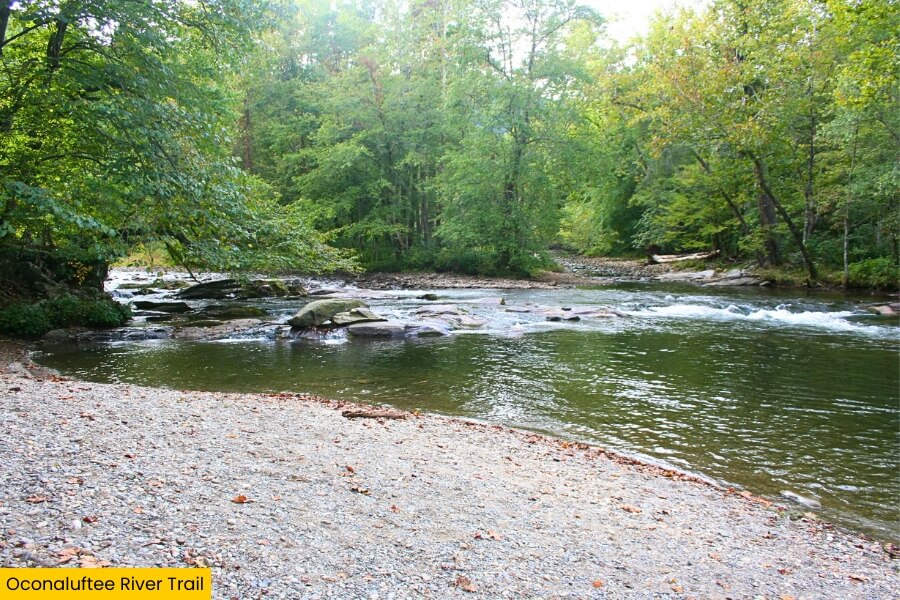
Keep an eye out for wildflowers in spring, colorful leaves in fall, and elk grazing in the nearby Oconaluftee fields, especially during the early morning or just before sunset.
You can also explore the nearby Mountain Farm Museum, where historic log cabins, a historic blacksmith shop, and old farm buildings show what daily life in the Smokies looked like more than 100 years ago.
3. Mingus Mill
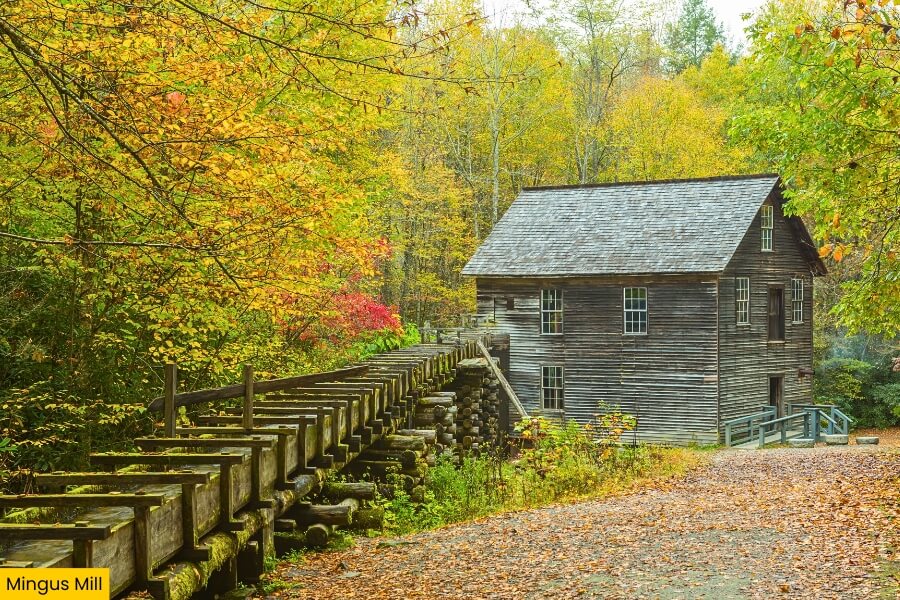
Just a few minutes from the Oconaluftee Visitor Center, Mingus Mill is one of the best preserved historic gristmills in Great Smoky Mountains National Park and an easy stop along your drive.
Built in 1886, the mill still features its original turbine-powered system, which used water from a 200-foot wooden flume instead of a traditional waterwheel to grind corn into meal.
A short, paved path leads from the parking area to the mill, where you can watch milling demonstrations during the operating season and see the massive wooden gears and machinery in action.
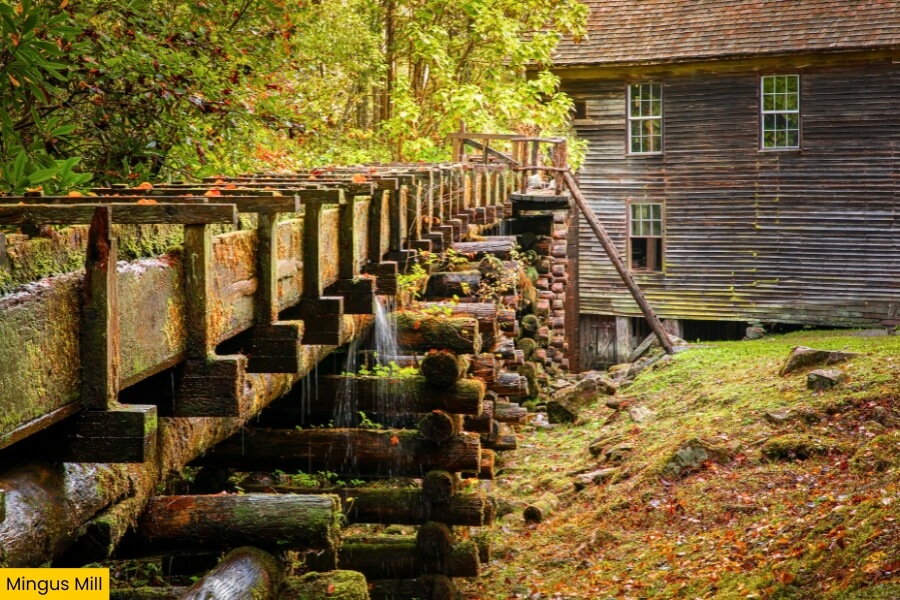
Take a few extra minutes to stroll the nearby Mingus Creek Trail, where rushing water, moss-covered rocks, and towering hardwood trees make this peaceful corner of the Smokies even more memorable.
Please note: At the time of writing, the interior of Mingus Mill is temporarily closed for preservation and rehabilitation work. However, you can still explore the surrounding area and enjoy views of the historic mill from the outside. Be sure to check online for the latest updates before heading over.
4. Juney Whank Falls
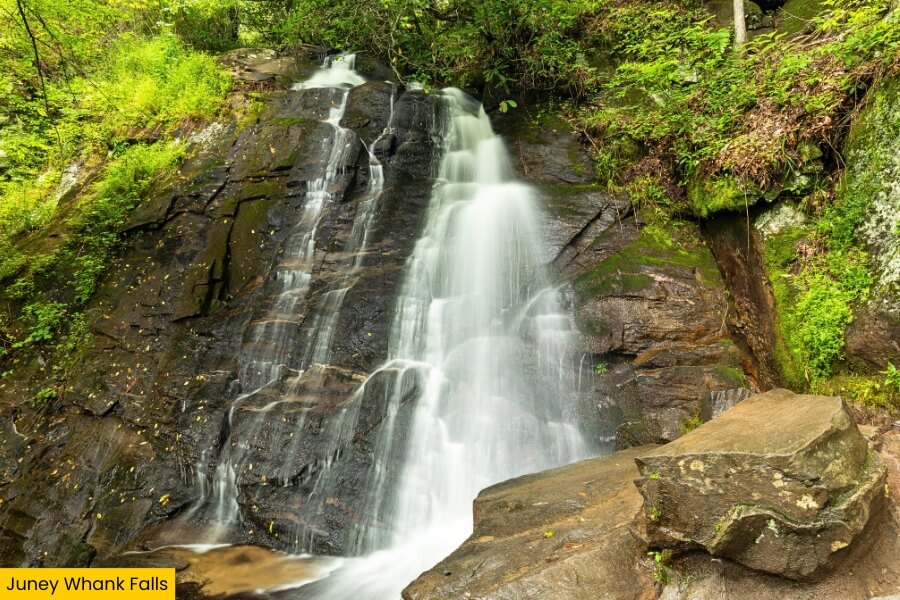
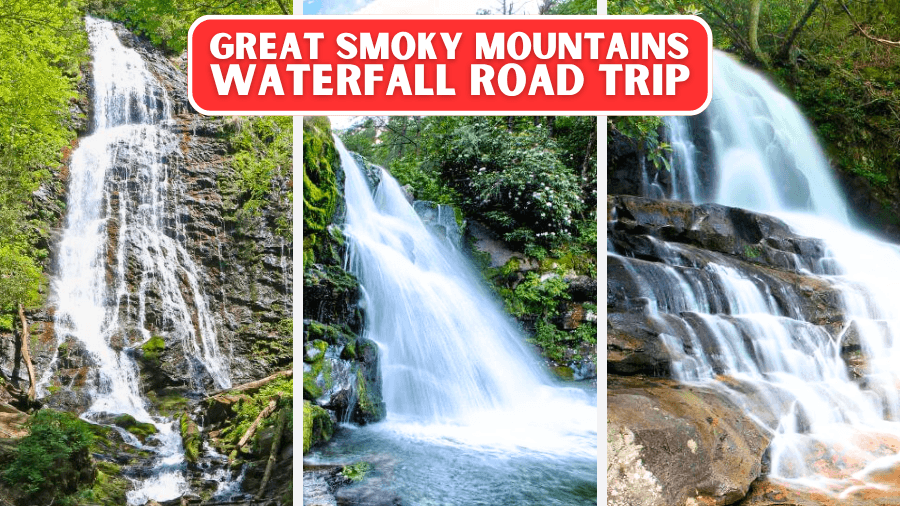
Keep following Newfound Gap Road, and you’ll soon reach Juney Whank Falls, a beautiful 80-foot waterfall near the Deep Creek area of the park, just outside Bryson City.
The hike is only about 0.6 miles round trip, but the short climb includes several sets of stairs before reaching a wooden footbridge that gives you an excellent view of the two-tiered cascade rushing through the forest.
After snapping a few photos, continue exploring the Deep Creek area, where you’ll also find Indian Creek Falls and Tom Branch Falls, making it easy to see three waterfalls in one stop with only a few miles of walking.
Spring brings colorful wildflowers along the trail, while fall fills the surrounding hardwood trees with brilliant shades of red, orange, and yellow that make this quick adventure even more rewarding.
5. Kuwohi
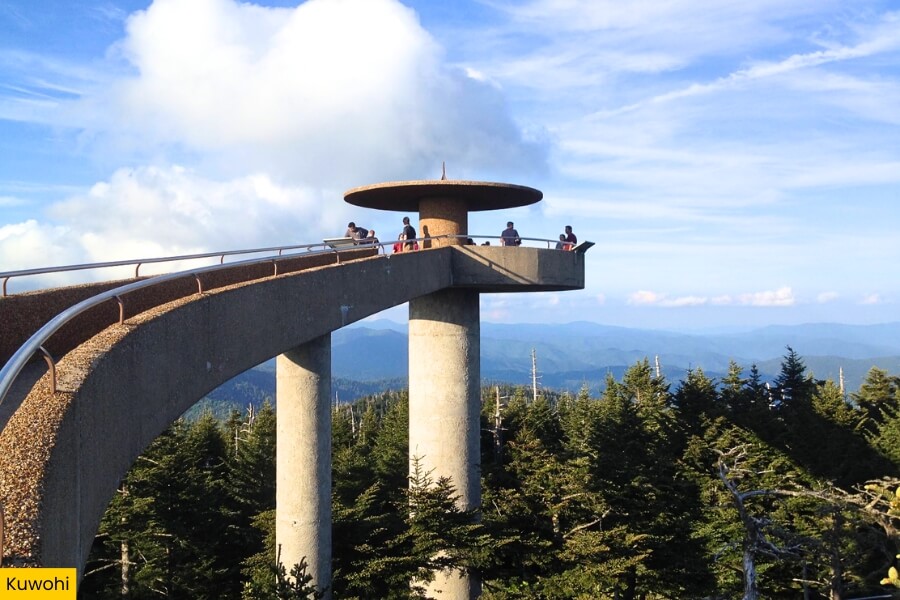
Continue driving into the mountains until you reach Kuwohi, the highest peak in Great Smoky Mountains National Park at 6,643 feet and the highest point in Tennessee.
A steep but paved 0.5-mile walk leads from the parking area to the circular observation tower, where clear days can reveal views stretching nearly 100 miles across Tennessee, North Carolina, and beyond.
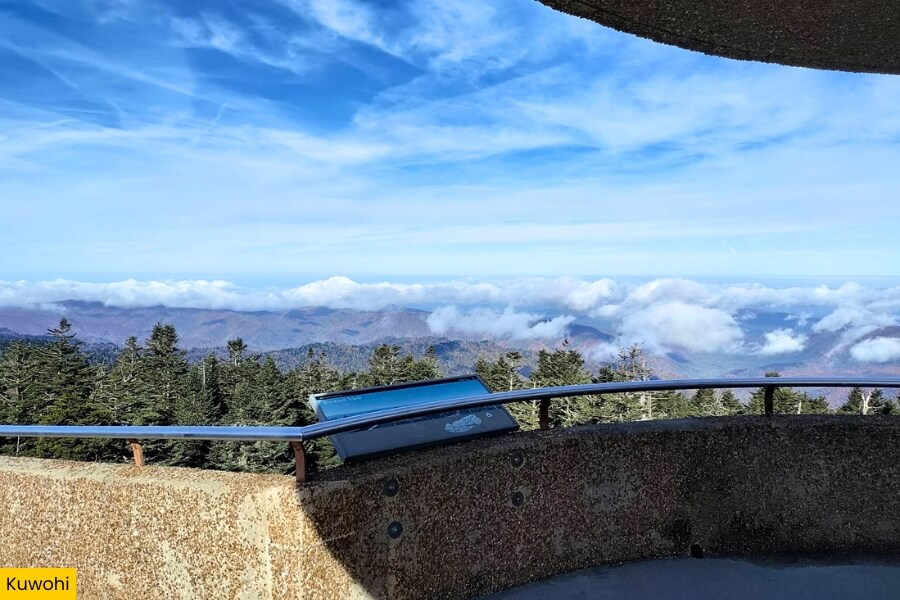
The summit is especially popular at sunrise and sunset, when layers of blue mountains fill the horizon, and cool temperatures make this spot a refreshing escape even during the middle of summer.
Kuwohi means “mulberry place” in the Cherokee language, and the mountain officially regained its original Cherokee name in 2024, making this stop just as meaningful for its cultural importance as its unforgettable scenery.
6. Alum Cave Trail
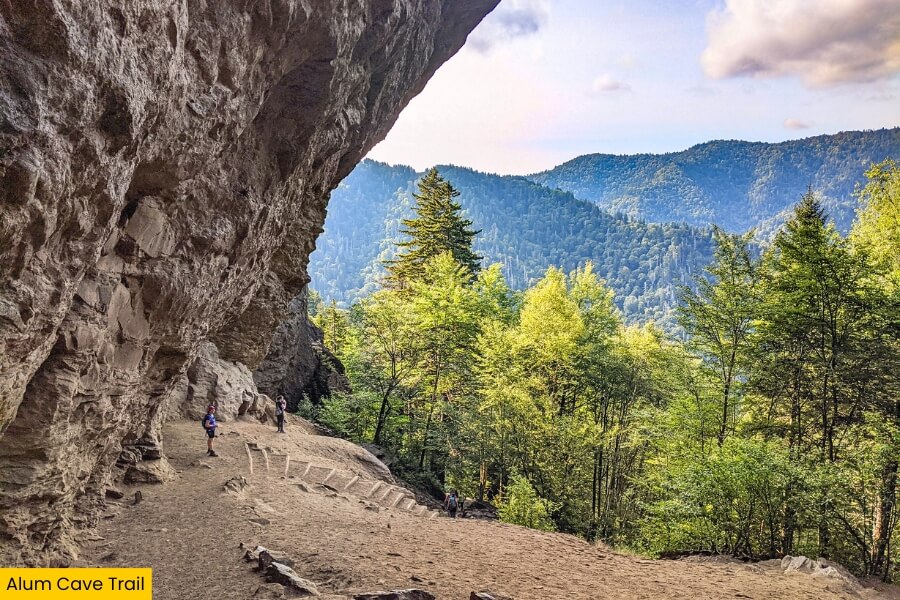
After taking in the sweeping mountaintop views, lace up your hiking boots for the Alum Cave Trail, one of the most popular and rewarding hikes in Great Smoky Mountains National Park.
The trail is 4.6 miles round-trip to Alum Cave Bluff, gaining about 1,300 feet in elevation as it passes Arch Rock, a natural stone tunnel, and Inspiration Point, where incredible mountain views open up along the climb.
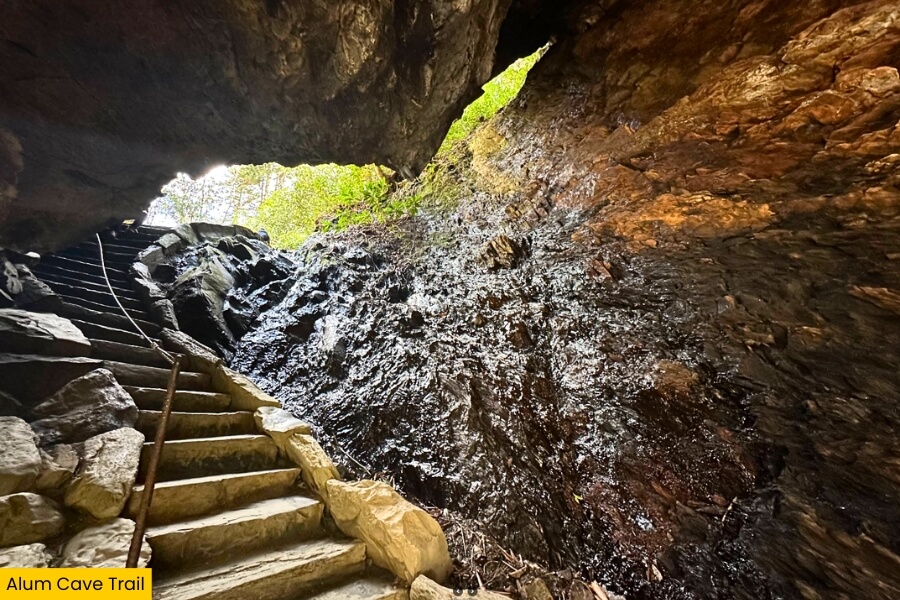
Alum Cave is actually a massive concave rock bluff about 75 feet high, not a true cave, and it once supplied miners with alum, Epsom salts, and saltpeter during the 1800s.
If you’re looking for an even bigger challenge, this trail continues another 5.4 miles to the summit of Mount LeConte, making it a favorite route for hikers chasing one of the highest peaks in the Smokies.
7. Roaring Fork Motor Nature Trail
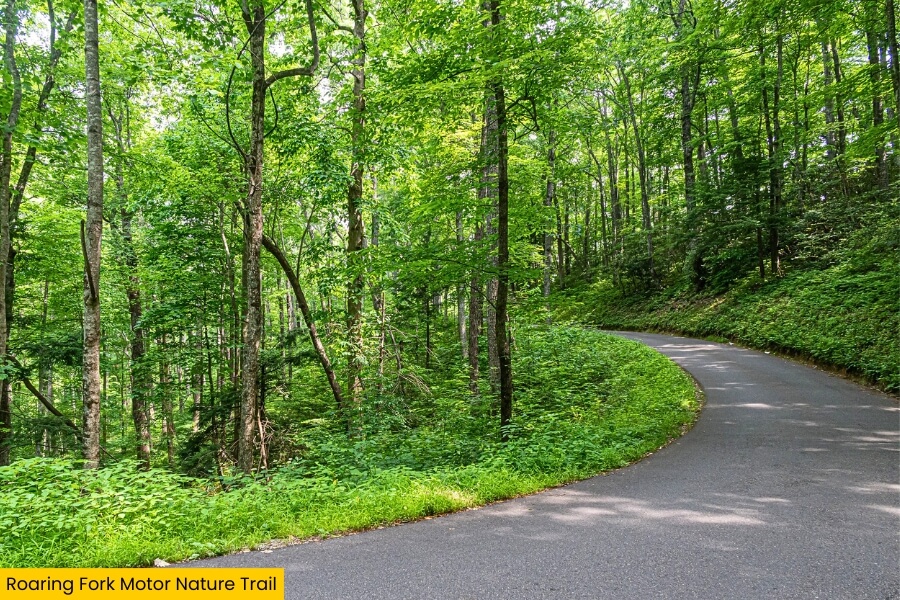
Give your legs a well-earned break and hop in the car for the Roaring Fork Motor Nature Trail, a beautiful 5.5-mile one-way loop just outside Gatlinburg that winds through rushing streams, towering forests, and historic mountain communities.
Along the drive, you’ll pass preserved log cabins, old barns, and gristmills that tell the story of families who once called these mountains home, with plenty of pullouts for photos along the way.
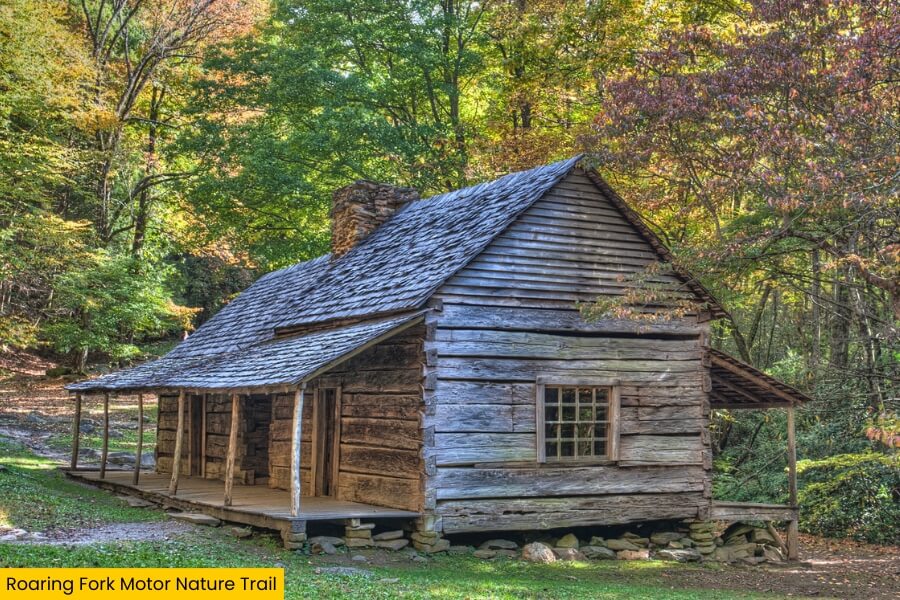
Don’t miss roadside favorites like the Noah “Bud” Ogle Cabin, Place of a Thousand Drips, and the trailheads for Rainbow Falls and Grotto Falls, where you can walk behind a 25-foot waterfall.
The road is typically open from spring through late fall, and its narrow curves, fast-flowing creeks, and thick canopy of hardwood trees make it one of the most memorable scenic drives in Great Smoky Mountains National Park.
8. Cades Cove
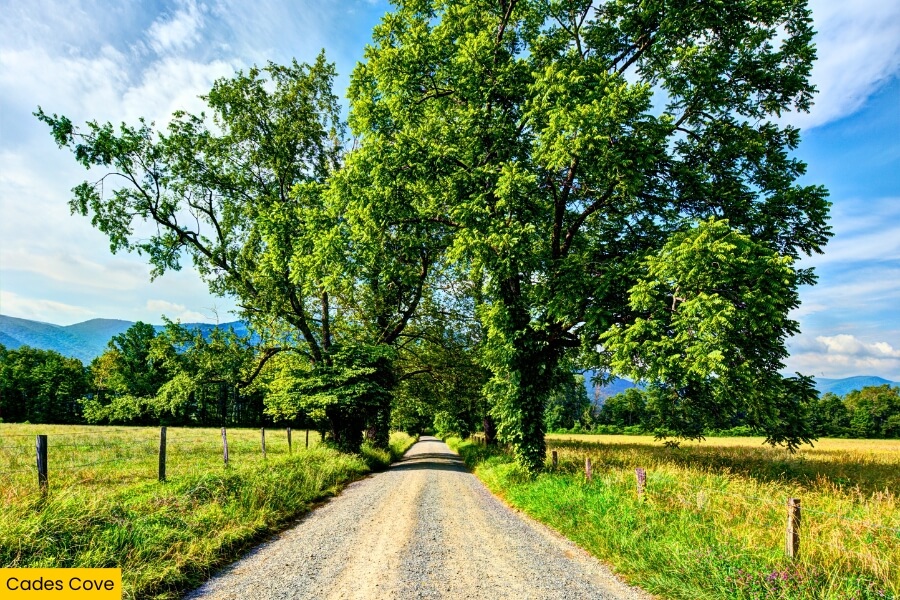
Finish your Great Smoky Mountains adventure with a drive through Cades Cove, a spectacular 11-mile one-way scenic loop located just across the North Carolina border in Tennessee.
This broad mountain valley is one of the best places in the park to spot white-tailed deer, black bears, wild turkeys, and coyotes, especially during the early morning or late evening when wildlife is most active.
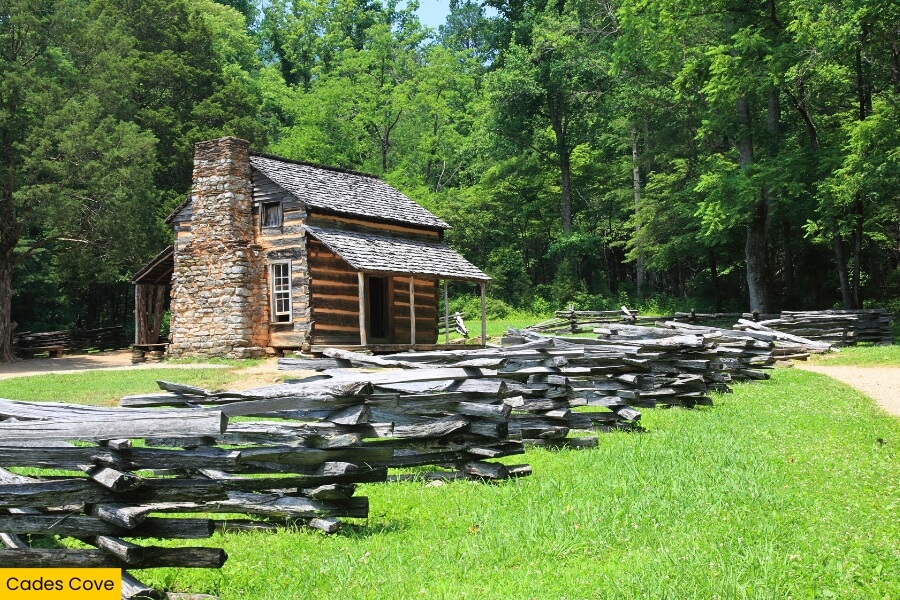
Along the loop, you can stop at preserved log cabins, churches, a working gristmill, and the historic John Oliver Cabin, which dates back to the early 1820s and is the oldest standing structure in the cove.
Plan to spend at least two to four hours exploring the loop, enjoying the mountain views, and taking short walks to highlights like Abrams Falls, a 5-mile round trip hike leading to a powerful 25-foot waterfall.
Related Posts