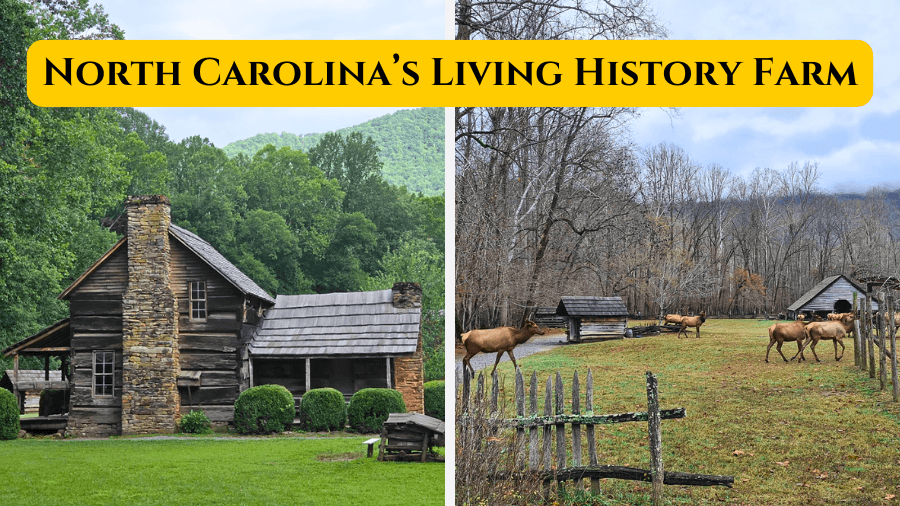
If you’ve ever wondered what life was really like in the North Carolina mountains before electricity, cars, and paved roads, there’s a place where you can see it for yourself.
You’ll wander through original log cabins, peek inside old farm buildings, watch traditional skills come to life, and discover how mountain families worked, cooked, and survived more than 100 years ago.
The best part is that this isn’t a recreated village built to look old.
Every building has its own story, and together they paint a fascinating picture of everyday life in the Appalachian Mountains during the late 1800s.
If you’re looking for a place that’s packed with history, beautiful mountain scenery, and a chance to slow down, this hidden piece of the past deserves a visit.
Where Is It?
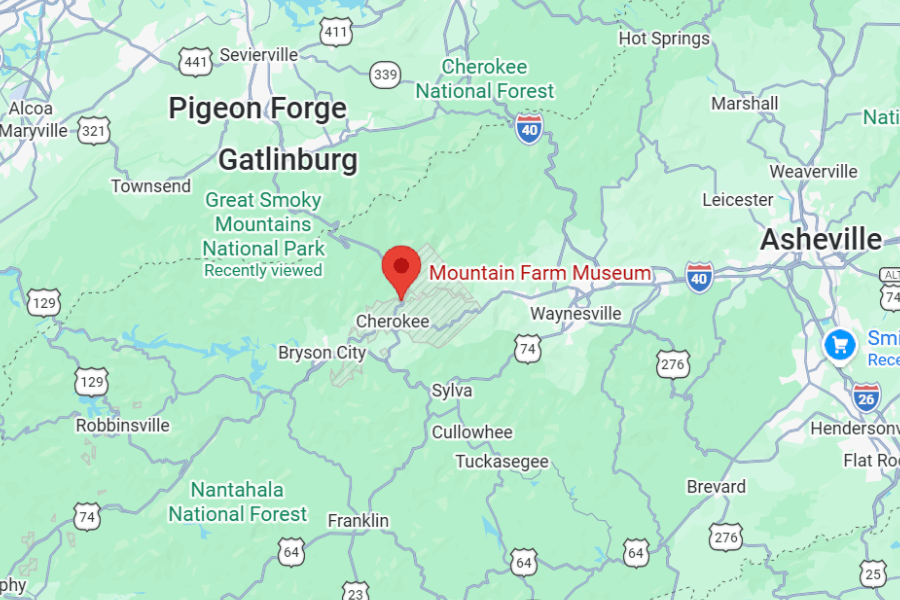
The Mountain Farm Museum is located inside Great Smoky Mountains National Park in Cherokee, North Carolina, just off Newfound Gap Road (U.S. Highway 441) beside the Oconaluftee Visitor Center.
You’ll find it about 1 hour from Asheville, around 1 hour 45 minutes from Knoxville, Tennessee, and about 3 hours from Charlotte.
Because it sits right at the southern entrance to Great Smoky Mountains National Park, it’s an easy stop before heading deeper into the park or while exploring Cherokee’s other attractions.
About
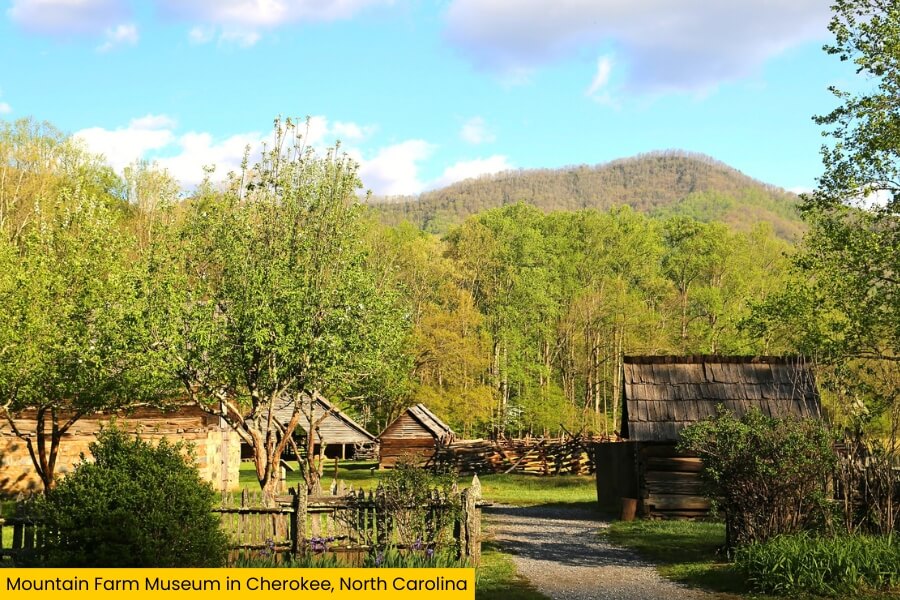
The Mountain Farm Museum gives you a chance to see what daily life looked like in the southern Appalachian Mountains during the late 1800s.
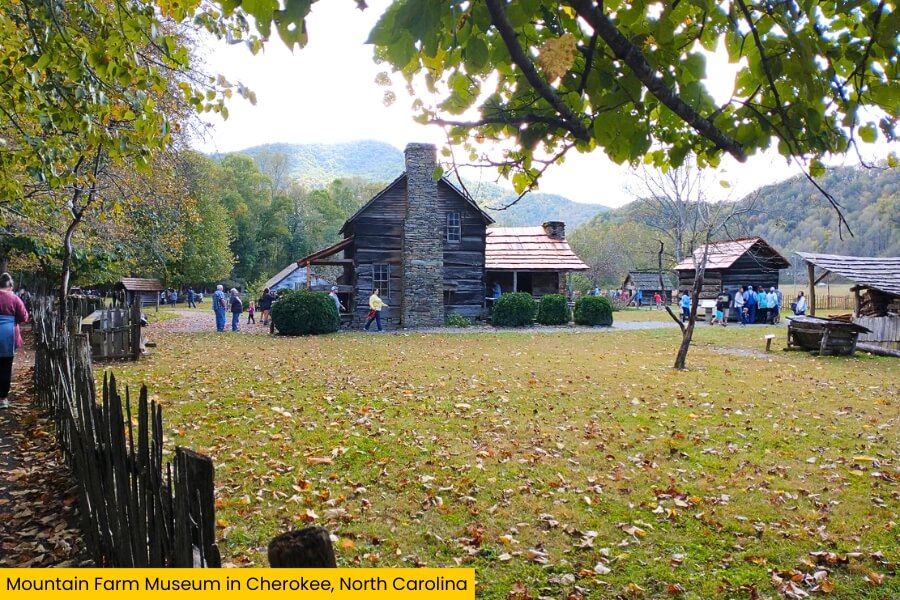
Instead of looking at displays behind glass, you can walk through a real collection of historic log buildings that were moved here from different parts of Great Smoky Mountains National Park to preserve them.
The museum sits on a working farm where heritage crops are still planted, old-fashioned fences surround the fields, and farm animals often graze in the pastures just as they would have more than a century ago.
The collection includes a farmhouse, barn, apple house, springhouse, blacksmith shop, and several smaller outbuildings that each played an important role in everyday mountain life.
The centerpiece is the Davis House, a two-story log farmhouse built around 1902 by John Davis in the Indian Creek community, which once stood several miles away before being relocated to the museum.
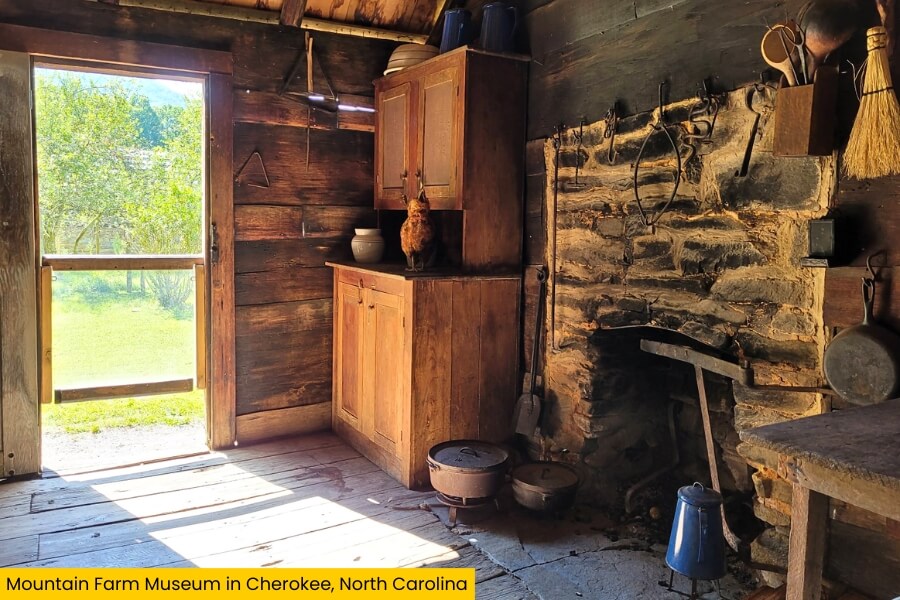
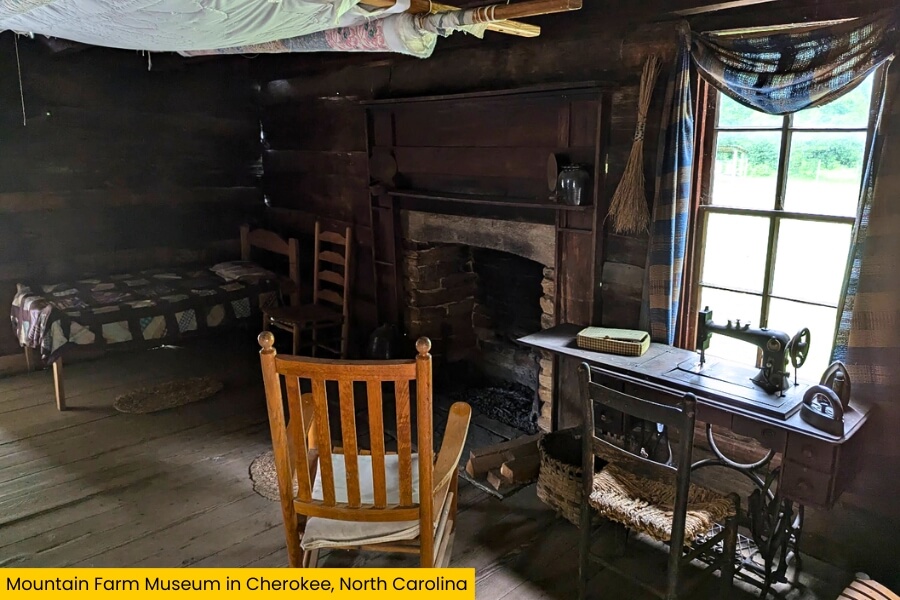
As you step inside, you’ll find simple handmade furniture, cast iron cookware, woven textiles, and everyday household items that show how families lived before electricity and modern conveniences reached these mountain communities.
The blacksmith shop demonstrates one of the most important trades of the era, where tools, horseshoes, nails, and farming equipment were made and repaired by hand.
The meat house highlights how families preserved pork and other meats long before refrigerators existed, while the springhouse shows how cold mountain water helped keep milk, butter, and other foods fresh.
The barn and surrounding farm buildings tell the story of how nearly every family depended on farming to survive.
Corn was one of the most important crops, and much of it was ground into meal for everyday cooking.
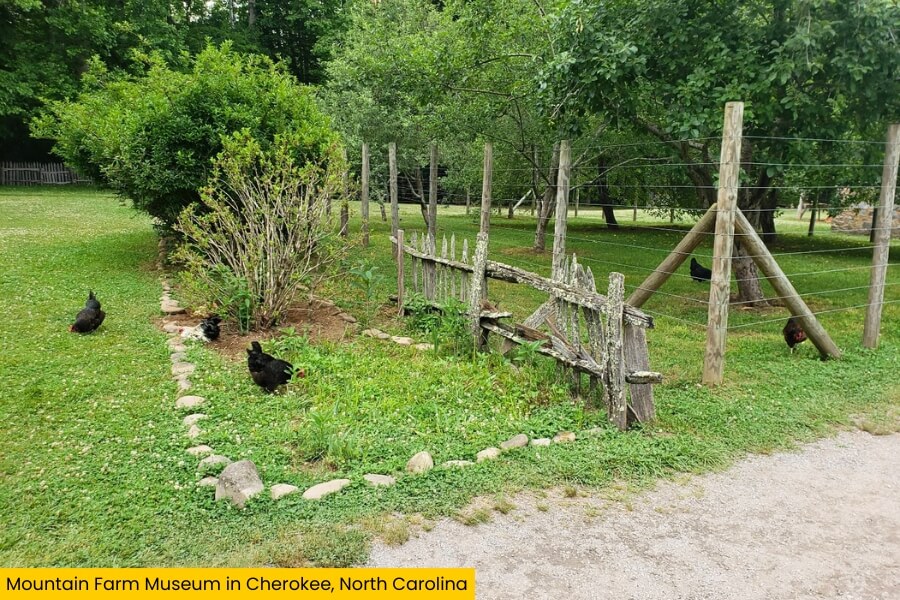
You’ll also see gardens growing heirloom vegetables and heritage varieties of corn and other traditional crops that would have been common throughout the region during the 1800s.
Depending on when you visit, you may spot heritage breeds of livestock including chickens and pigs roaming the farm.
One of the best parts of visiting is watching history come to life through live demonstrations.
From spring through fall, costumed interpreters often demonstrate blacksmithing, woodworking, apple butter making, open hearth cooking, and other traditional skills that helped mountain families become almost completely self-sufficient.
These demonstrations change throughout the year, so every visit can be a little different.
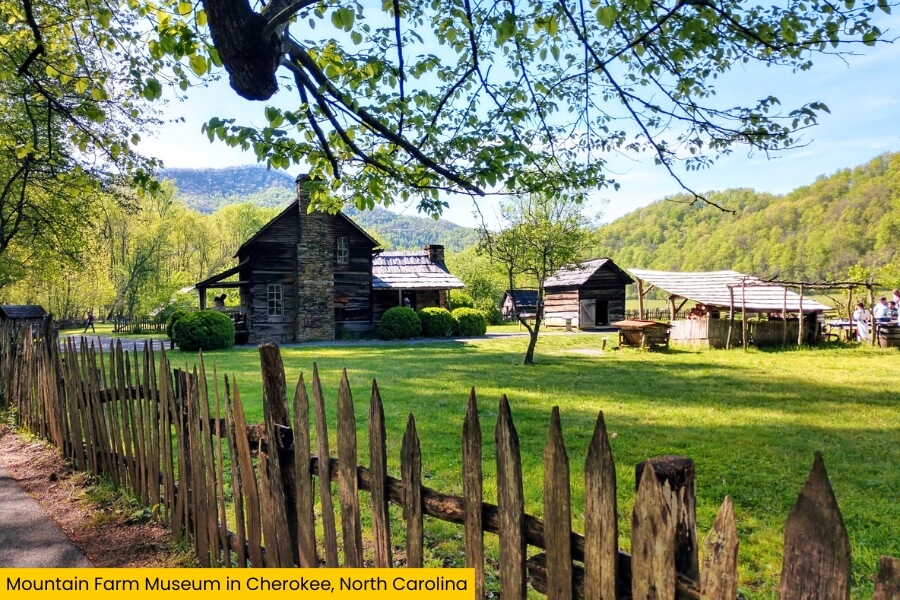
Even if no demonstrations are taking place, the peaceful setting makes it easy to imagine what life was like before electricity and modern technology transformed the Smoky Mountains.
One of the biggest reasons this museum exists is to preserve the history of families who once lived throughout the valleys and hollows that became Great Smoky Mountains National Park.
When the park was established during the 1930s, thousands of residents left their homes as the land was acquired for the new national park.
Rather than allowing many historic structures to disappear, the National Park Service relocated several of them to this site, creating an outdoor museum where their stories could continue to be shared.
Today, the Mountain Farm Museum stands as one of the best places in the Smokies to experience Appalachian history up close.
You can explore every building at your own pace, chat with park rangers or living history volunteers, and photograph the beautiful log cabins against the mountain backdrop.
Afterward, continue your day by walking the nearby Oconaluftee River Trail or visiting the Oconaluftee Visitor Center just a few steps away.
Know Before You Go
The Mountain Farm Museum is open year round and there is no admission fee to explore the grounds or historic buildings.
The museum is located beside the Oconaluftee Visitor Center, which is typically open daily from 9:00 a.m. to 5:00 p.m., although hours may vary slightly by season.
Most of the historic buildings can be viewed throughout the year, but living history demonstrations are generally offered from spring through fall and are less common during the winter months.
If you want to see blacksmithing, open hearth cooking, or other traditional demonstrations, check the Great Smoky Mountains National Park calendar before your visit to see what’s scheduled that day.
Plan to spend about 30 minutes to 1 hour exploring the museum, or a little longer if demonstrations are taking place.
Wear comfortable walking shoes since you’ll be strolling along gravel paths and grassy areas between the buildings.
Restrooms, maps, and park information are available at the Oconaluftee Visitor Center just a short walk away.
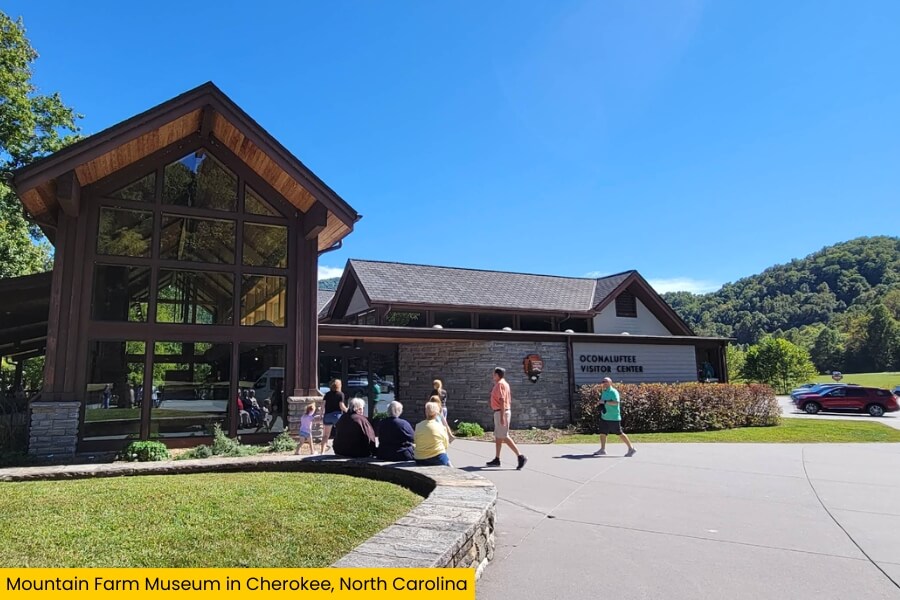
Parking is available in the visitor center parking lot, but it can fill up quickly during weekends, holidays, and the fall color season, so arriving early in the day is your best bet.
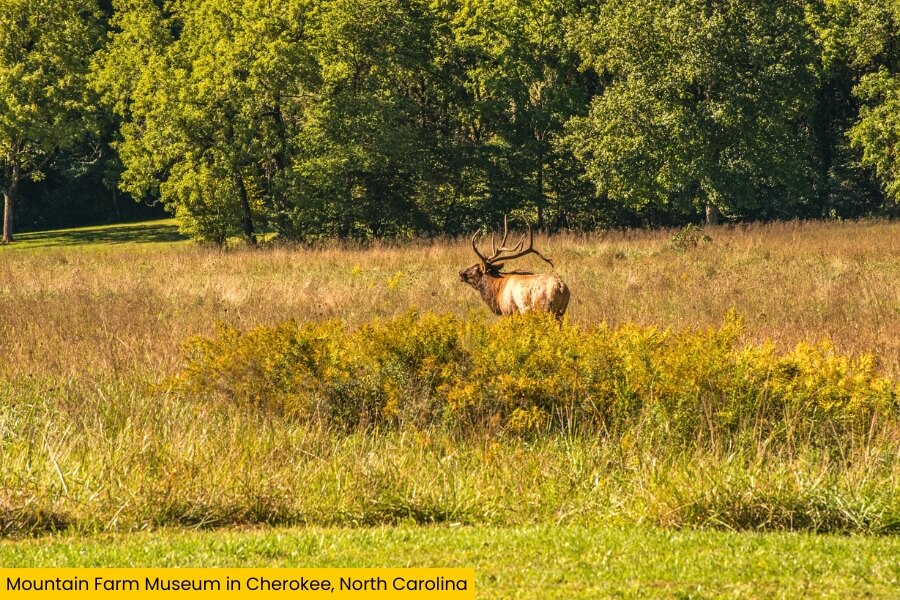
The museum is one of the best places in Great Smoky Mountains National Park to spot elk.
The elk are often seen grazing in the nearby fields during the early morning and late evening, especially in spring and fall.
Always stay at least 50 yards away from elk and other large wildlife, even if they appear calm.
Pets are allowed in the surrounding area if they remain on a leash no longer than 6 feet, but they are not permitted inside the historic buildings.
The museum sits just inside the southern entrance to Great Smoky Mountains National Park on U.S. Highway 441, making it an easy first stop if you’re driving into the park from Cherokee.
Cell service can be limited in parts of the national park, so it’s a good idea to download maps or directions before you arrive if you’re planning to continue deeper into the Smokies after your visit.
Related Posts