Picture yourself driving down an open desert highway, surrounded by towering red cliffs, giant cacti, colorful rock formations, and some of the most jaw-dropping landscapes in America.
That’s exactly what you’ll experience on this epic road trip of desert national parks in the Southwest, with every stop promising something completely different!
Along the way, you’ll hike through narrow canyons, discover incredible viewpoints, explore winding scenic roads, and catch unforgettable sunsets over landscapes millions of years in the making.
If you’re dreaming of an adventure packed with incredible hikes, bucket-list sights, and endless photo opportunities, this Southwest road trip has your name written all over it.
Here’s everything you need to know to plan the ultimate desert Southwest national parks road trip, including the best stops, must-see attractions, and helpful tips to make the most of your adventure.
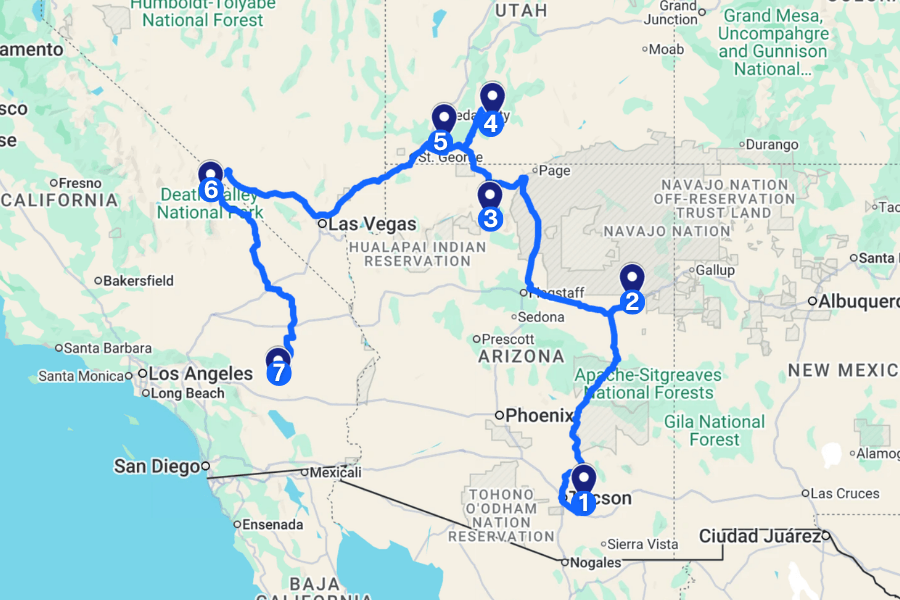
1. Saguaro National Park, Arizona
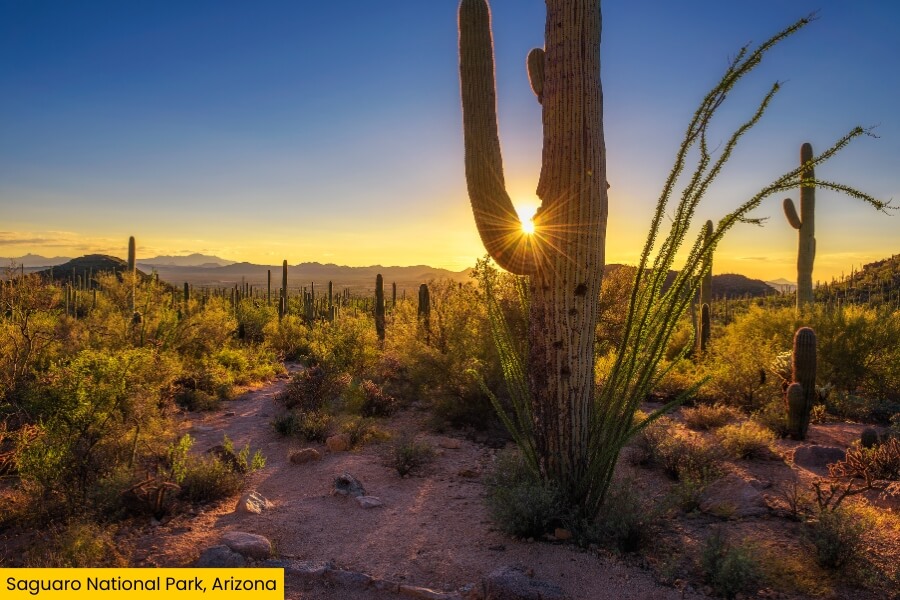
Located just on the edge of Tucson, Arizona, Saguaro National Park is famous for its giant saguaro cacti, which can grow around 50 feet tall, live for more than 200 years, and look like they’re waving at you with their enormous arms!
The park covers almost 92,000 acres of Sonoran Desert and is split into two districts: the Tucson Mountain District to the west and the Rincon Mountain District to the east, with Tucson sitting between them.
Drive the scenic 6-mile Bajada Loop Drive, hike the 0.8-mile Valley View Overlook Nature Trail, or explore the 0.2-mile Signal Hill Trail to see ancient petroglyphs carved into desert rocks.
For incredible sunset views, head to the Gates Pass Trailhead in the west district, where unobstructed towering cacti create unforgettable desert silhouettes.
2. Petrified Forest National Park, Arizona
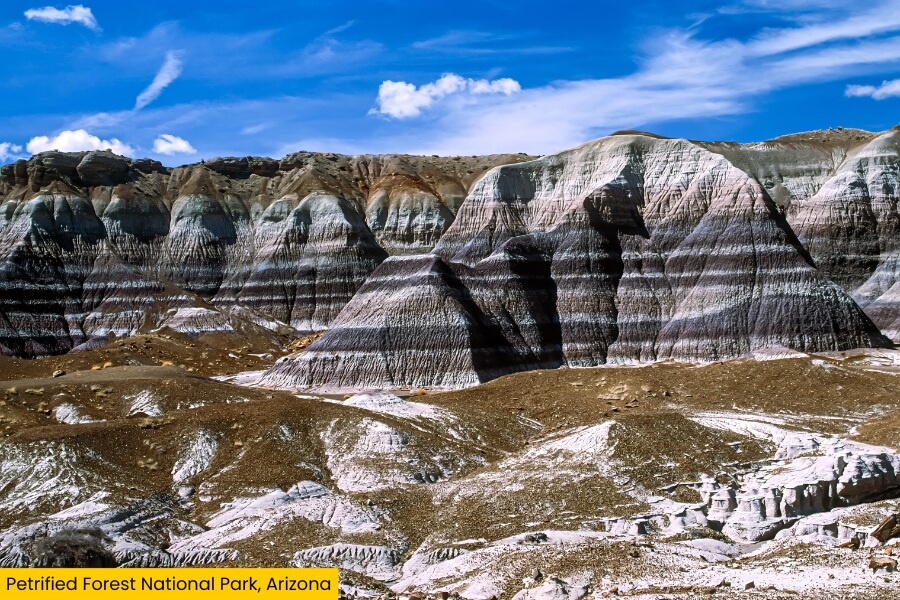
After exploring Arizona’s giant cacti, head to Petrified Forest National Park, about five hours from Saguaro National Park, where 200-million-year-old fossilized trees, colorful badlands, and ancient ruins create one of the most unique landscapes in the Southwest.
The park encompasses over 221,000 acres and is famous for its massive petrified logs, which turned into colorful stone such as quartz, amethyst, and citrine over millions of years as minerals replaced the original wood inside.
Drive the 28-mile scenic main park road, stop at Blue Mesa to hike the 1-mile loop through blue badland hills, and explore Crystal Forest’s 0.75-mile trail to see fossilized logs scattered across the desert.
Don’t miss a stop at Newspaper Rock’s hundreds of ancient petroglyphs and the historic Painted Desert Inn, a National Historic Landmark that boasts Pueblo Revival-style structures.
3. Grand Canyon National Park, Arizona
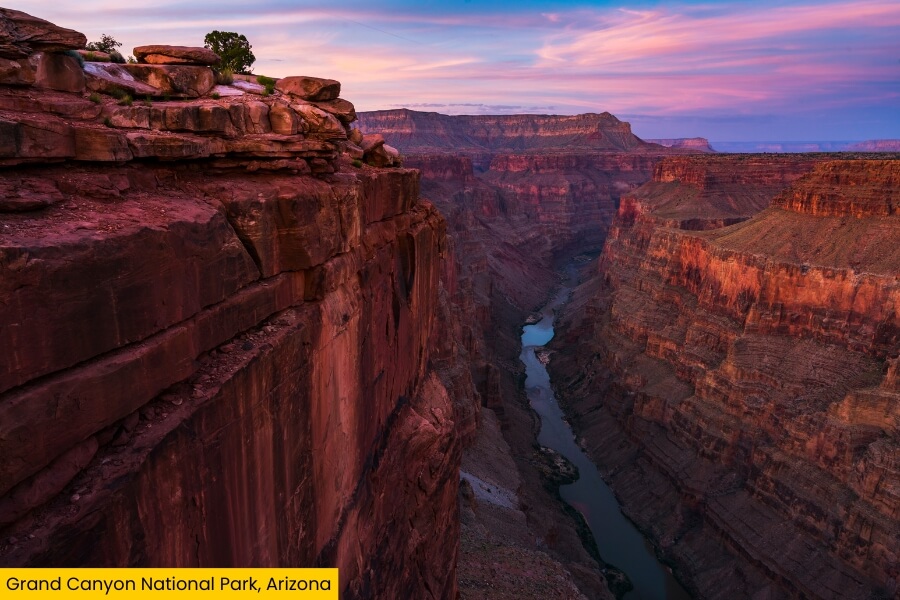
Arizona’s colorful desert landscapes only become even more jaw-dropping at Grand Canyon National Park, where the mighty Colorado River has carved a massive canyon stretching almost 277 miles long, up to 18 miles wide, and around 6,000 feet at its deepest!
Located in northwestern Arizona, this UNESCO World Heritage Site is famous for its spectacle of a gorge, with layers of rock dating back to two billion years.
Start at Mather Point for sweeping canyon views, drive along the 23-mile Desert View Drive with a stop at the historic Desert View Watchtower, or hike the 1.8-mile round-trip South Kaibab Trail to Ooh Aah Point for a breath-stealing look into the canyon.
If you want to follow the most popular trail in the park, walk the Bright Angel Trail, and if you want to catch a spectacular sunset, you can do so at Hopi Point, where the canyon walls glow orange, pink, and red.
4. Bryce Canyon National Park, Utah
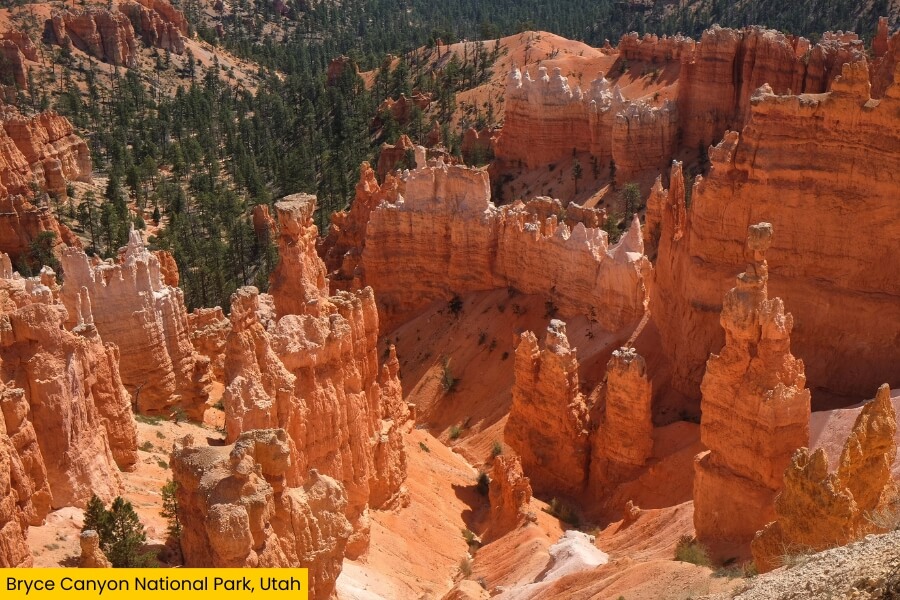
Trade the Grand Canyon’s massive cliffs for a sea of white, orange, and pink rock spires at Bryce Canyon National Park, located in southern Utah, about a three-hour drive from Grand Canyon National Park.
Famous for its hoodoos, Bryce Canyon has the largest concentration of these bizarre rock formations on Earth, home to thousands of them, some towering over 150 feet tall.
Start at Sunrise Point and hike the 1.8-mile Queen’s Garden Trail to walk among tall rock formations, or do the reverse and end at Sunrise Point via the Navajo Loop and Queen Victoria combination trail.
Don’t miss dropping by Inspiration Point and Bryce Point for incredible views of the Bryce Amphitheater, or driving the scenic park road to Rainbow Point, one of the park’s two highest overlooks at 9,115 feet.
5. Zion National Park, Utah
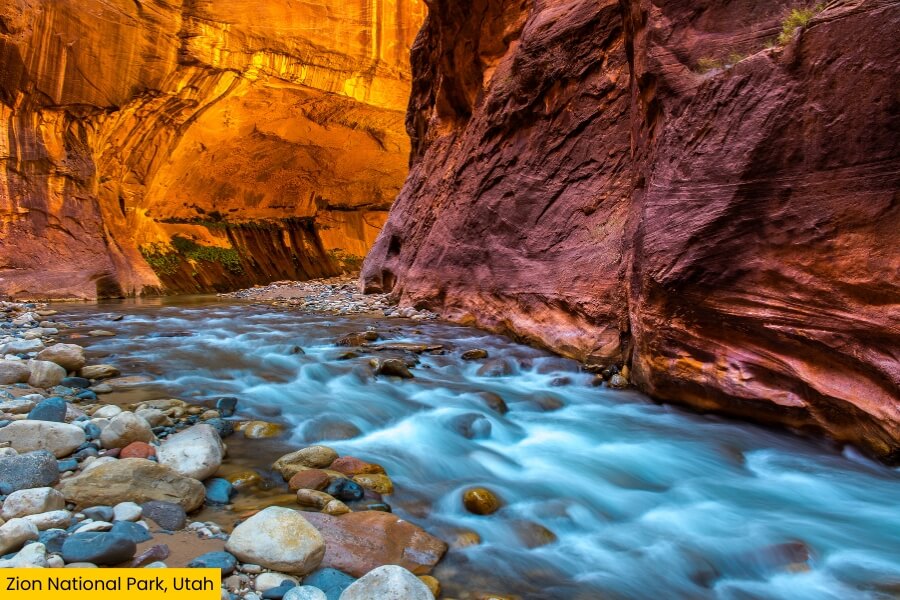
Less than a two-hour drive from Bryce Canyon, Zion National Park swaps the former’s hoodoos for massive sandstone cliffs, narrow slot canyons, and the Virgin River winding through a spectacular desert landscape.
Covering nearly 150,000 acres, Zion is famous for its pink, red, and cream-colored cliffs, some rising over 2,000 feet above the canyon floor, plus its incredible hiking trails that attract all types of hikers.
Take on the famous 5.4-mile round-trip Angels Landing Trail for breathtaking canyon views, experience the Narrows by wading through the Virgin River between 1,000-foot canyon walls, or explore any of the 1- to 3-mile Emerald Pools hiking trails to see waterfalls, steams, and pools.
For an easier adventure, drive the scenic Zion-Mount Carmel Highway through its historic tunnel, or ride the park shuttle along Zion Canyon Scenic Drive to reach famous landmarks and viewpoints.
6. Death Valley National Park, California
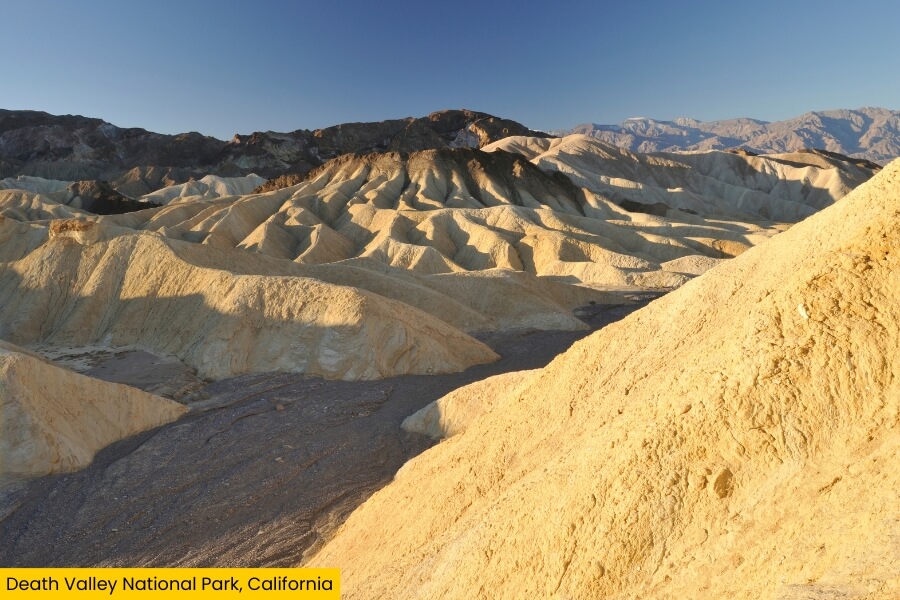
Things are about to get seriously hot as your road trip heads to Death Valley National Park, a vast desert wilderness stretching across eastern California and Nevada that’s famous for being the hottest, driest, and lowest national park in the United States.
Covering roughly 3.4 million acres, Death Valley features everything from sand dunes to vast salt flats, plus it holds the world record for the highest recorded air temperature of 134°F.
Visit Badwater Basin, the lowest point in North America at 282 feet below sea level, witness the famous views of the badlands from Zabriskie Point, or drive the 9-mile Artists Drive to see the rainbow hills of Artists Palette, made colorful by volcanic deposits.
Of course, you won’t want to miss the Mesquite Flat Sand Dunes near Stovepipe Wells Village, where you can wander across rolling sand dunes with a highest elevation gain of 185 feet.
7. Joshua Tree National Park, California
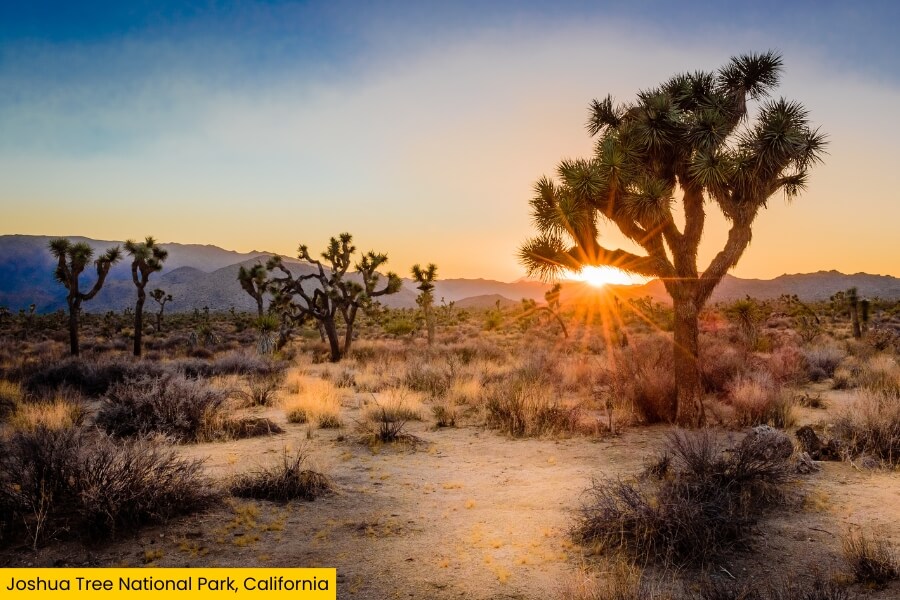
From Death Valley’s scorching salt flats, your desert adventure ends at Joshua Tree National Park in Southern California, where thousands of twisted Joshua trees, monzogranite rock piles, and two distinct deserts create a captivating landscape.
Covering around 800,000 acres, the park is famous for its spiky Joshua trees, which can grow over 40 feet tall and live for more than 150 years, living alongside wildlife such as desert bighorn sheep and coyotes.
Hike the 1-mile Hidden Valley Nature Trail loop through giant rock formations, explore the 1.8-mile Skull Rock Nature Trail, or wander through the Cholla Cactus Garden, where you’ll find an array of fuzzy-looking cacti covering the desert floor.
Also take some time to visit Keys View, offering an elevation gain of 25 feet, for sweeping views of the famous Coachella Valley and San Andreas Fault, especially at sunset!
Related Posts