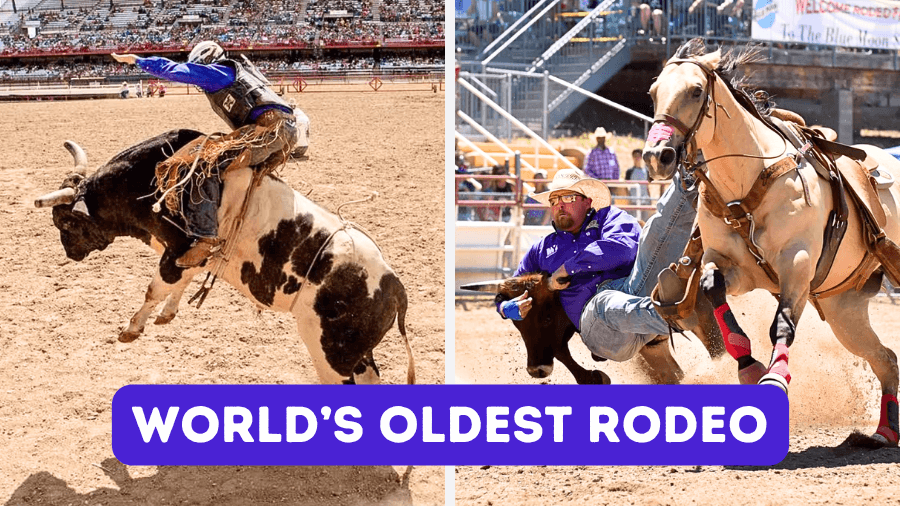
Every summer in Arizona, cowboys take on bucking broncos and powerful bulls as thousands of spectators gather for a Western tradition that dates back to 1888.
This legendary rodeo began during the days of the Wild West and has kept its cowboy spirit alive for more than a century.
Today, it still draws huge crowds with thrilling competitions, colorful parades, and plenty of cowboy hats.
Keep reading to discover the Arizona town where this incredible tradition began and why it’s still one of the most exciting celebrations of the Old West!
Where Is It?
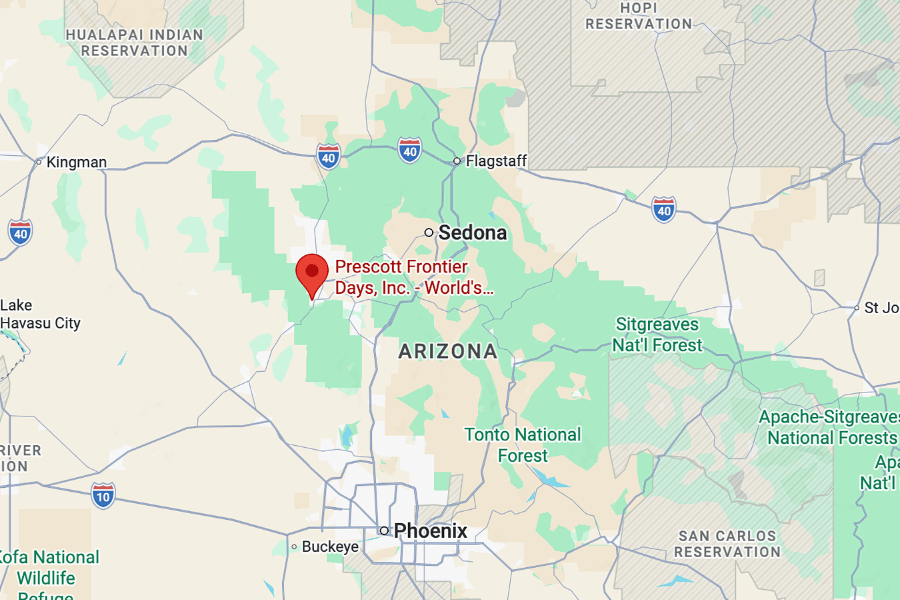
Prescott Frontier Days takes place in Prescott, a historic town in north-central Arizona.
You’ll find the rodeo at the Prescott Rodeo Grounds, 840 Rodeo Drive, Mackin Building # D, just a 5-minute drive from the famous Whiskey Row.
It’s also easy to reach from nearby cities, sitting about 1 hour and 25 minutes from Sedona, 1 hour and 45 minutes from Phoenix and Flagstaff, and 2 hours from Gilbert.
About
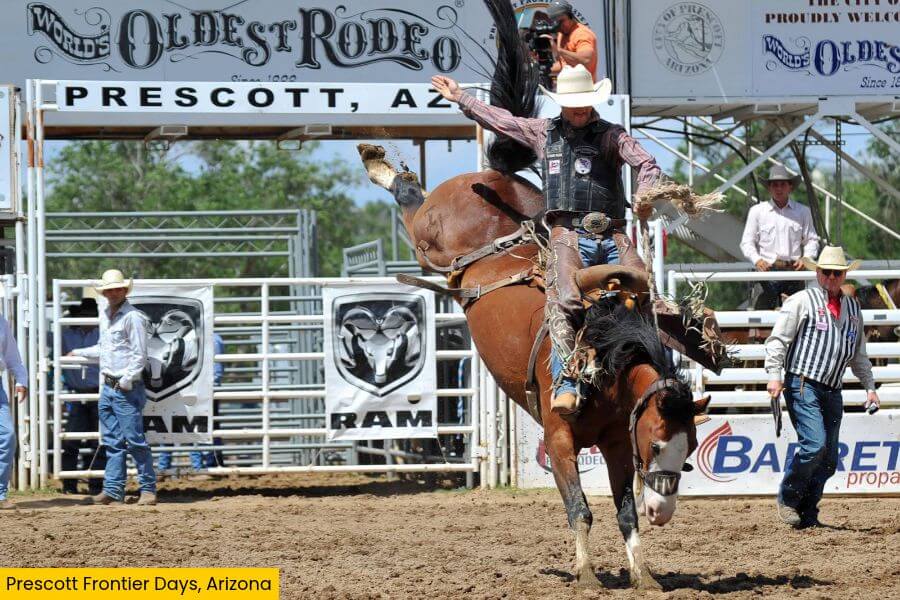
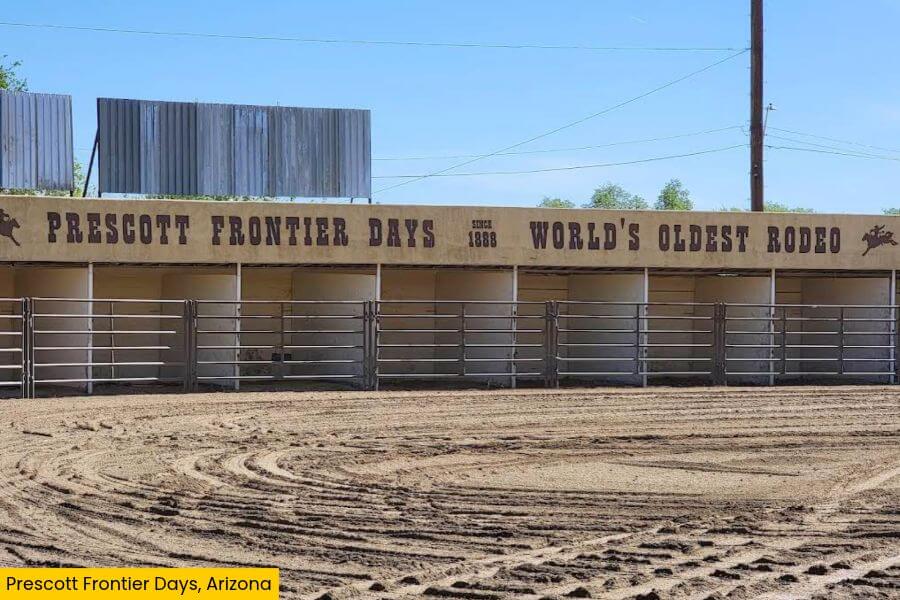
Prescott Frontier Days is home to the World’s Oldest Rodeo, a legendary event that brings together professional cowboys, cowgirls, bucking broncos, and thousands of fans every summer.
Held annually around the Fourth of July, this weeklong celebration features eight rodeo performances, a downtown parade, rodeo dances, and plenty of Western traditions.
And as a Professional Rodeo Cowboys Association (PRCA) event, it brings together some of the country’s top athletes to compete for prizes and championship points.
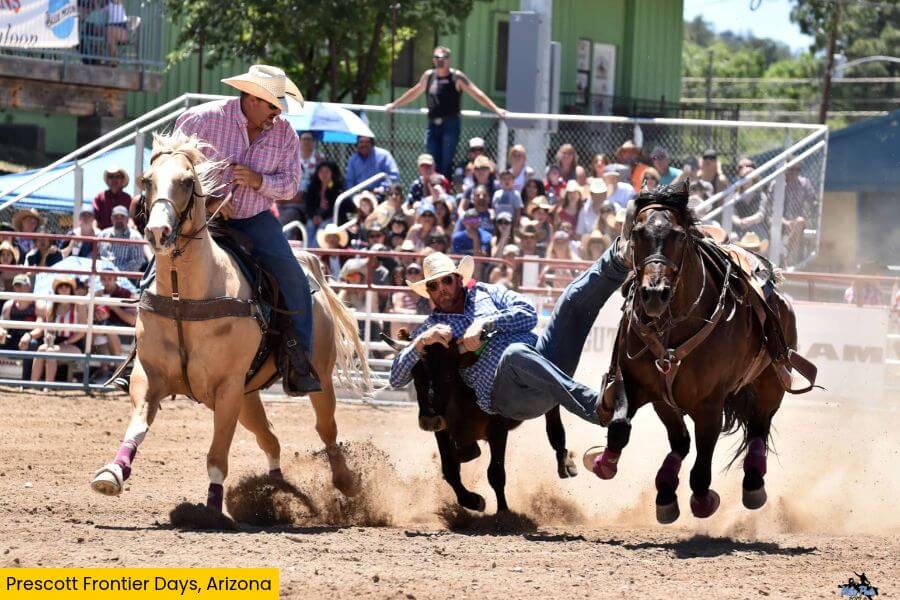
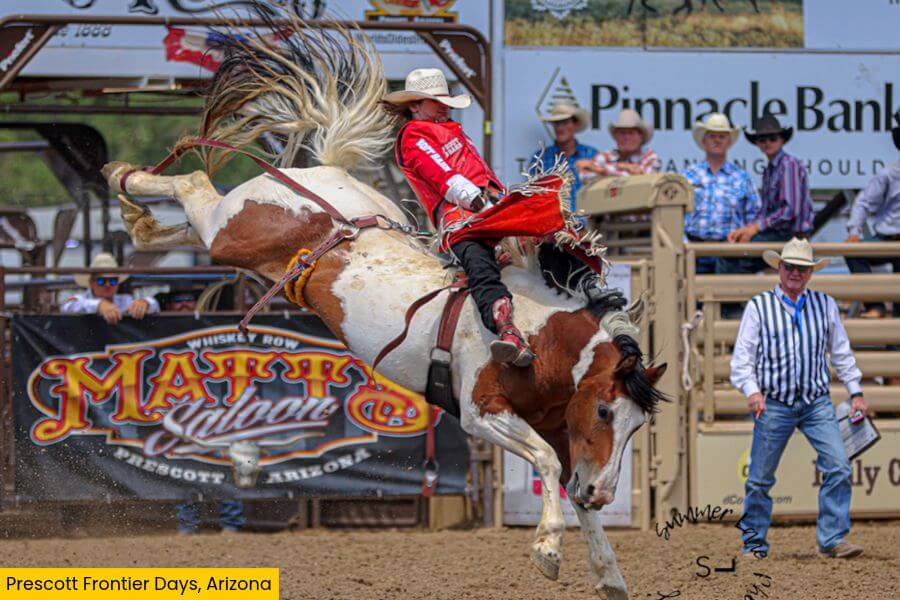
When you visit, expect plenty of action, from bareback riding and saddle bronc riding to team roping and tie-down roping.
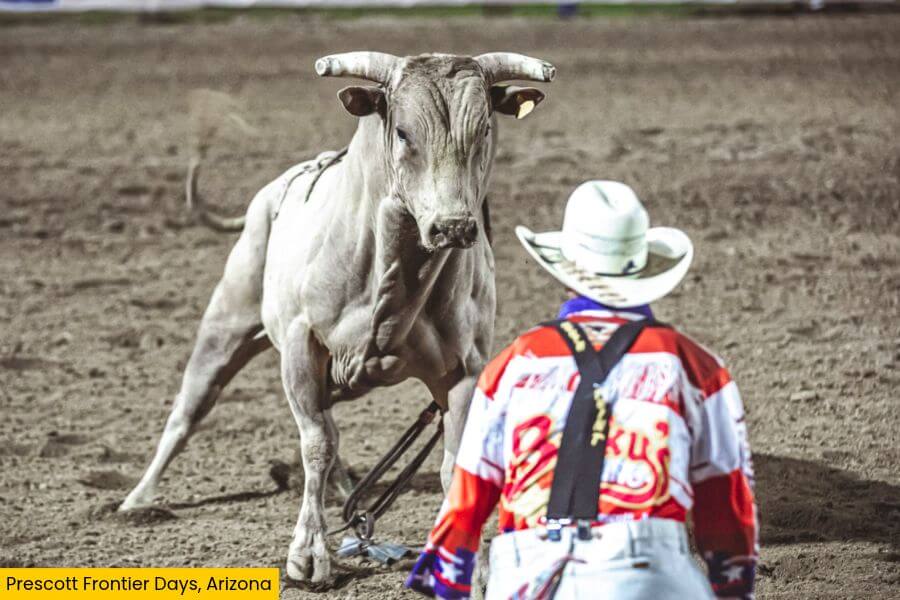
Bull riding is one of the biggest crowd-pleasers, with cowboys attempting to stay aboard a bucking bull for eight seconds while holding on with just one hand.
There’s also breakaway roping, where cowgirls show off their speed and skill by roping a calf on horseback, with the clock stopping as soon as the rope breaks free.
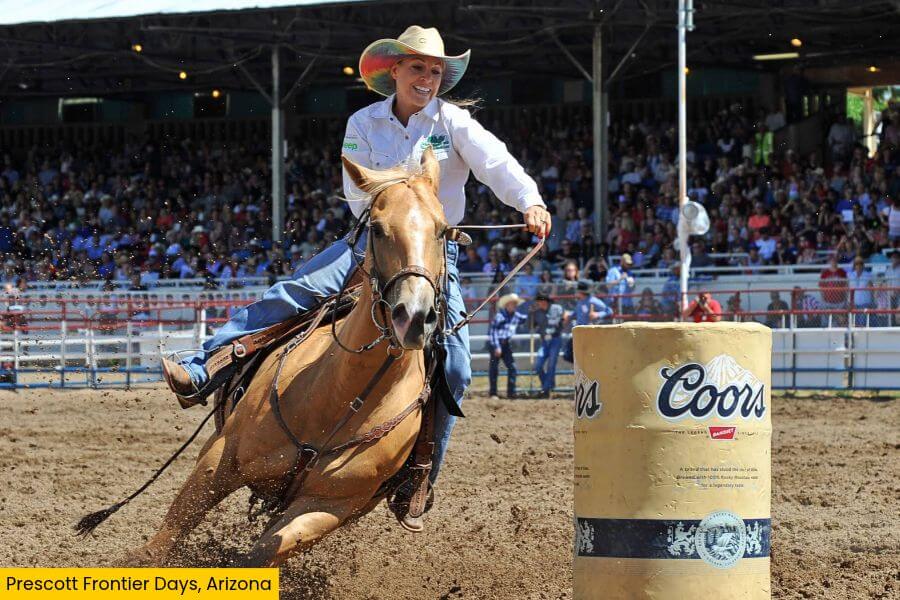
If you’re into fast-paced competition, don’t miss barrel racing, where cowgirls race their horses around three barrels arranged in a cloverleaf pattern.
Another must-watch is steer wrestling, which tests a cowboy’s speed and strength as he leaps from his horse to wrestle a running steer to the ground.
You can also arrive early to watch Mutton Bustin’, where brave young children try to stay aboard sheep as they race across the arena.
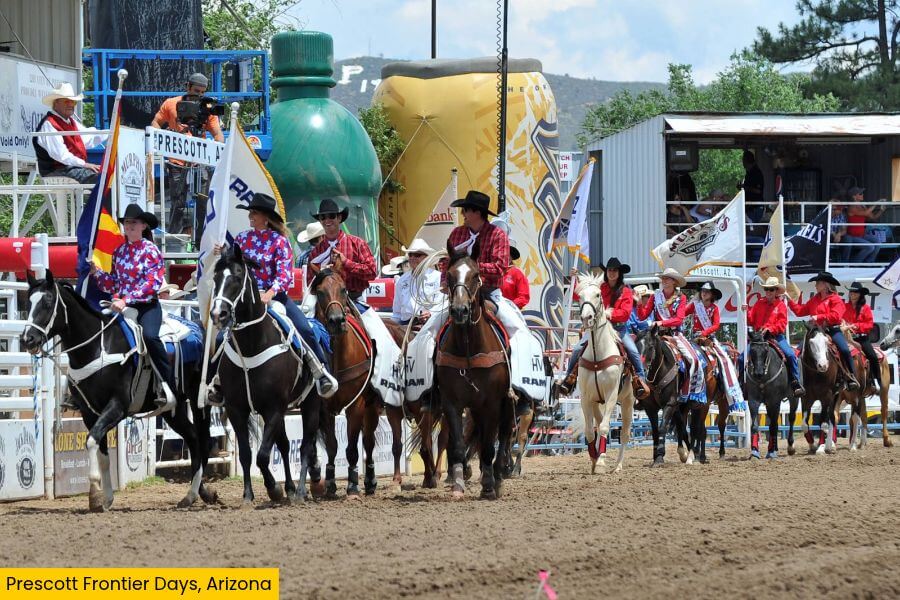
Each performance lasts about two and a half hours and includes a grand entry with horseback riders carrying flags into the arena, along with entertaining specialty acts.
The fun isn’t limited to the arena either, as food vendors around the grounds offer everything from barbecue and tacos to pizza, kettle corn, and doughnuts.
Whether you’re a longtime rodeo fan or attending for the first time, Prescott Frontier Days offers a fun way to experience Arizona’s cowboy culture and Fourth of July traditions.
History
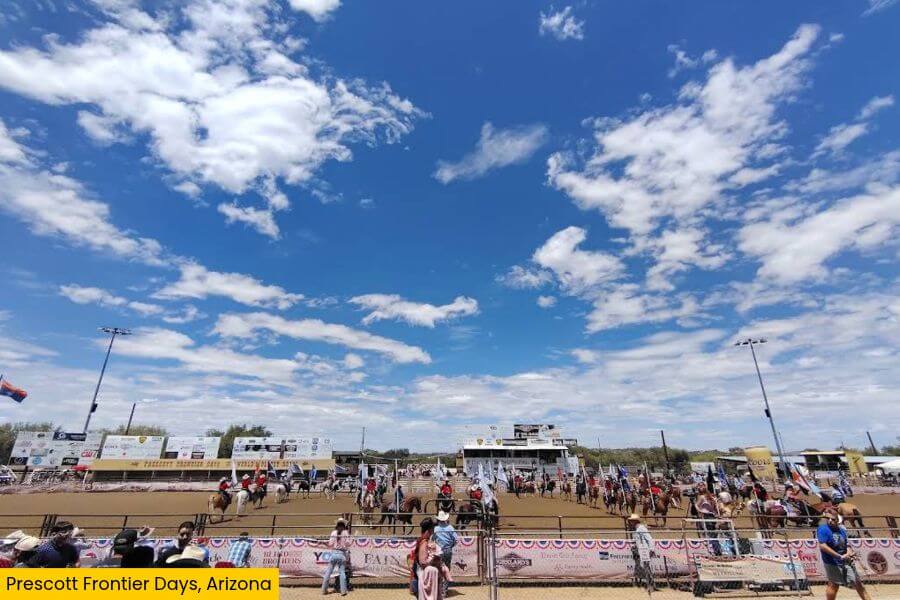
Prescott Frontier Days began on July 4, 1888, when businessmen and local merchants organized a cowboy competition as part of the town’s Independence Day celebrations.
Arizona was still a territory back then, and it wouldn’t become a state until 1912.
At the time, ranching played a big role in the region, and the competition gave local cowboys a chance to show off the skills they used every day.
Unlike today’s large arenas, the early competitions took place on a simple stretch of land at Forbing Park, near what is now Iron Springs Road.
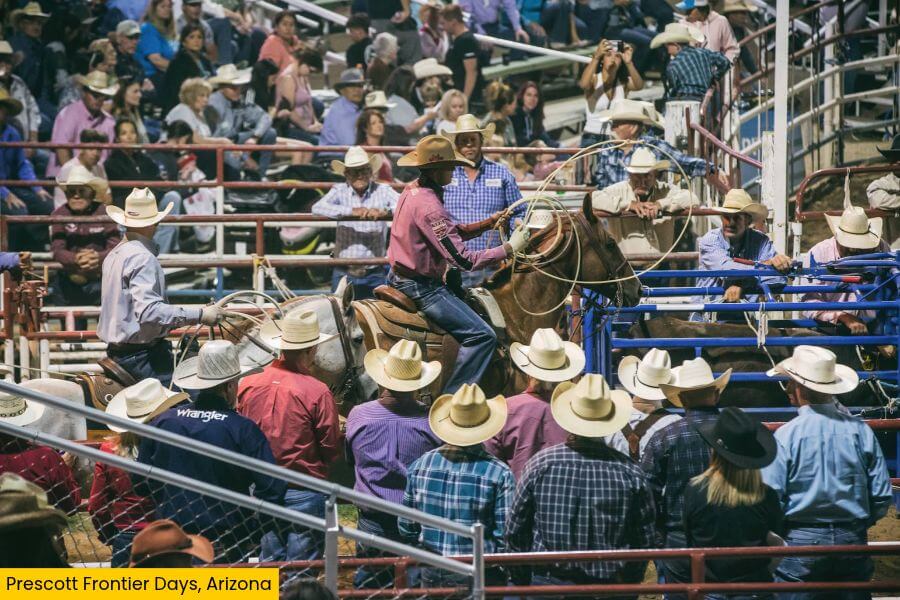
Despite its humble beginnings, the gathering stood out for its organized contests and cash prizes, helping lay the foundation for professional rodeo.
One of the first cowboys to make history was Juan Leivas, whose victory in 1888 earned him recognition as the first professional rodeo champion.
Over the years, the celebration grew in popularity, drawing more cowboys and spectators to Prescott.
Another milestone came in 1913 when it became known as Prescott Frontier Days and moved to its present location at the Prescott Rodeo Grounds.
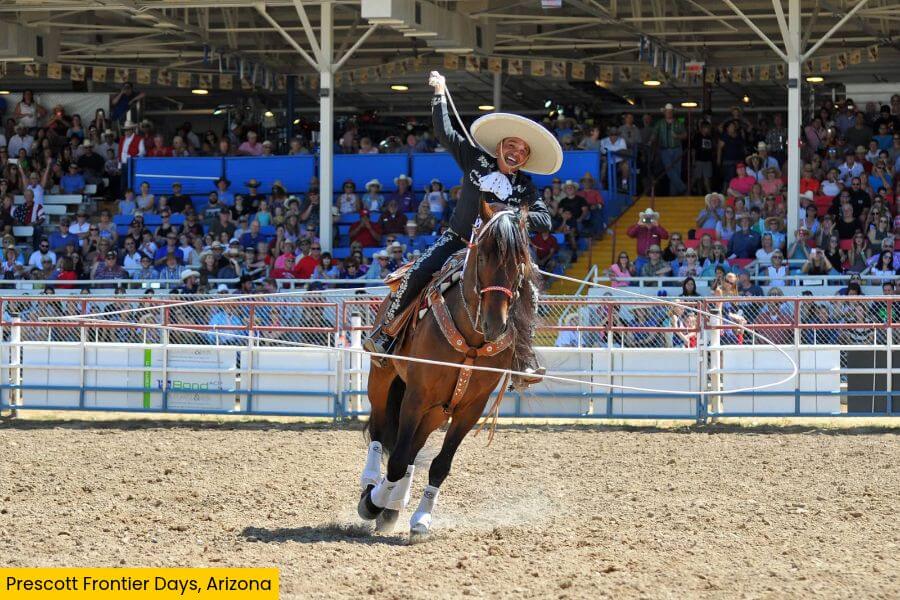
By then, it was already a major part of the area’s identity, and it continued even during World War II when many cowboys were away serving in the military.
That long history eventually reached Hollywood in 1972, when Steve McQueen’s movie Junior Bonner was filmed around the rodeo and its famous parade.
Fast forward to 1985, and the World’s Oldest Rodeo name was officially registered as a federal trademark, followed by the rodeo’s 100th anniversary in 1988.
Today, 138 years after that first Fourth of July competition, Prescott Frontier Days continues to celebrate the cowboy skills and Western traditions that helped shape the town.
Know Before You Go
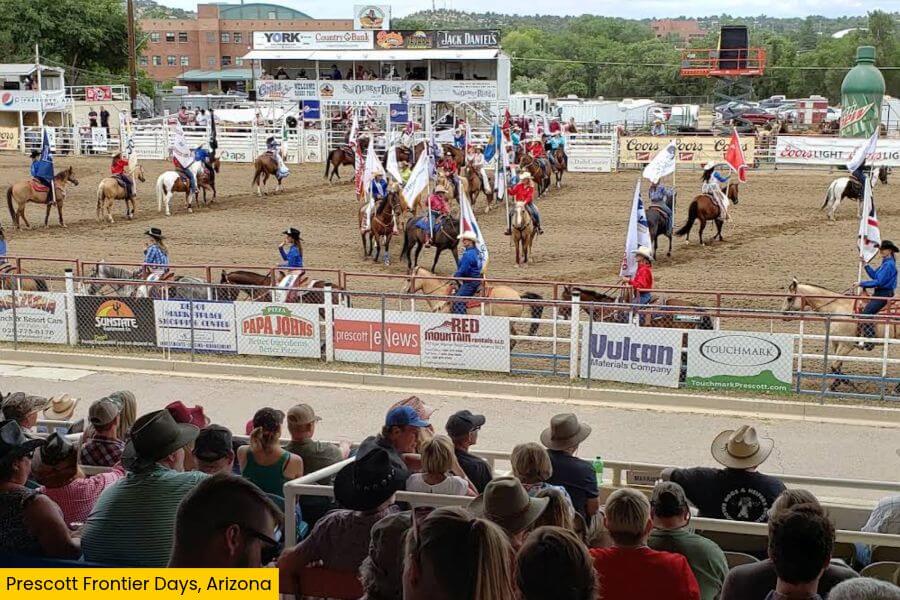
When to Visit
Prescott Frontier Days takes place every year in late June and early July, with the rodeo performances scheduled around the Fourth of July holiday.
Exact dates change each year, so check the official Prescott Frontier Days website for the latest schedule before planning your trip.
You can usually choose from eight rodeo performances spread throughout the week, including afternoon and evening options.
Since performance times vary, check the start time on your ticket and plan to arrive 45 to 60 minutes early.
Tickets
Each rodeo performance requires its own ticket, and you can choose from several seating options when booking.
To give you an idea of the cost, general admission was priced at up to $40 per person in 2024, while prices for 2026 started at around $35, plus fees.
You can check the latest prices, explore available seating options, and purchase tickets through the official Prescott Frontier Days website once sales open.
Parking and Transportation
General parking at Prescott Frontier Days costs $10 per vehicle (cash only), with accessible parking available in the same lot.
You can enter the parking area from Fair Street or Rodeo Drive, but keep in mind that RVs, trailers, and oversized vehicles aren’t allowed in the general lot.
If you’d rather skip the hassle of parking, the rodeo also offers a free shuttle service with multiple pickup and drop-off locations to take visitors to and from the grounds.
What to Wear
Since the rodeo takes place outdoors, sun protection is a must, especially for afternoon performances.
Bring sunscreen, sunglasses, and a wide-brimmed hat, and wear comfortable shoes that can handle dusty walkways and uneven ground.
If you’re attending an evening performance, bring a light jacket since temperatures can drop after sunset.
Related Posts