
This road trip packs a ridiculous amount of adventure into one drive, with mountain roads, crashing waterfalls, famous battlefields, and deep river gorges waiting along the way.
Instead of racing straight north, this itinerary turns the journey into the best part of the trip, with scenic hikes, historic streets, huge overlooks, and plenty of places to get out of the car.
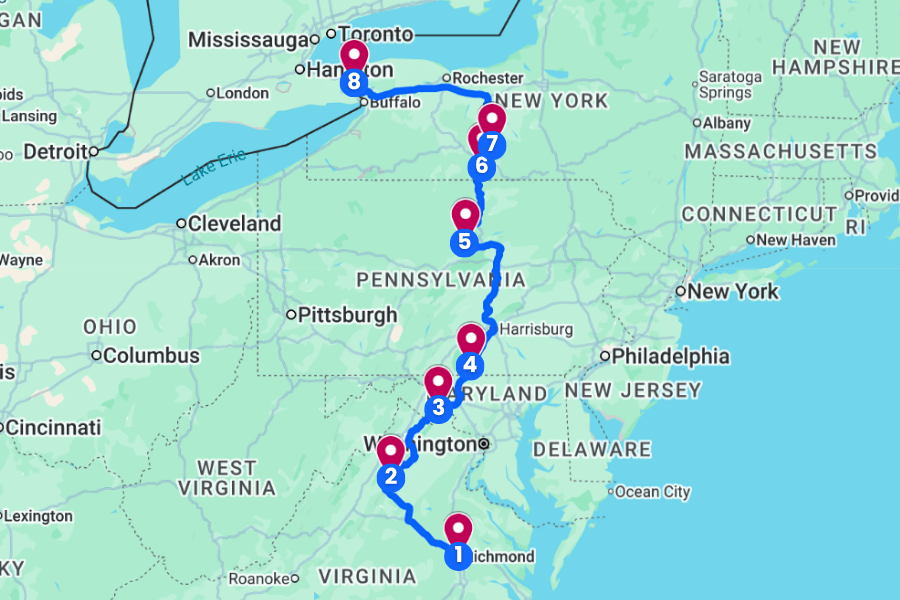
You’ll cross four states before reaching one of North America’s most famous natural wonders, and every section of the route brings something completely different.
I’ve mapped out the best stops, things to do, driving distances, and practical tips below, so keep reading and get ready for one seriously memorable road trip.
1. Richmond, Virginia

Richmond, Virginia’s capital, sits along the James River in central Virginia and makes a fun starting point for your road trip north toward Niagara Falls.
Start at the Virginia State Capitol, designed by Thomas Jefferson and completed in 1788, then head to the free Virginia Museum of Fine Arts, home to more than 50,000 works of art.
For outdoor fun, explore Belle Isle, a 54-acre island reached by a pedestrian bridge, or follow part of the 52-mile Virginia Capital Trail along the James River.
Richmond also played a major role in the Civil War, and you can learn more at the American Civil War Museum before grabbing local food in Carytown, a nine-block shopping district packed with restaurants, murals, and independent stores.
2. Shenandoah National Park, Virginia
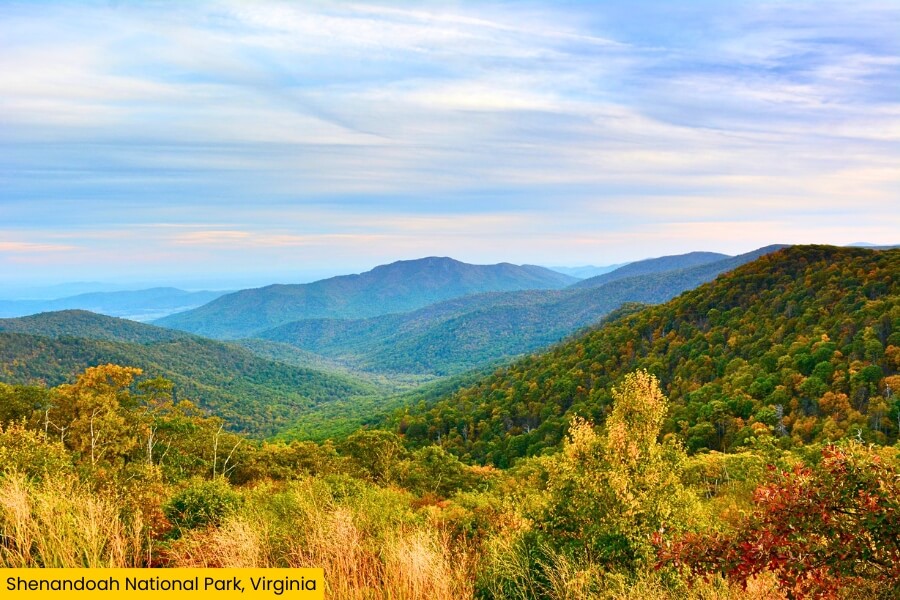
From Richmond, drive about 1 hour and 25 minutes to the forest-covered Blue Ridge Mountains of Shenandoah National Park, where the 105-mile Skyline Drive runs through the park.
Skyline Drive features 76 scenic overlooks where you can pull over for huge mountain views, including popular stops like Range View Overlook and Hazel Mountain Overlook.
If you want to stretch your legs, hike the 1.4-mile Dark Hollow Falls Trail to a 70-foot waterfall, or tackle the 9.4-mile Old Rag circuit with over 2,300 feet of elevation gain and a famous rock scramble.
Keep an eye out for black bears and white-tailed deer, and remember that Old Rag requires a day-use ticket during the park’s seasonal reservation period.
3. Harpers Ferry, West Virginia
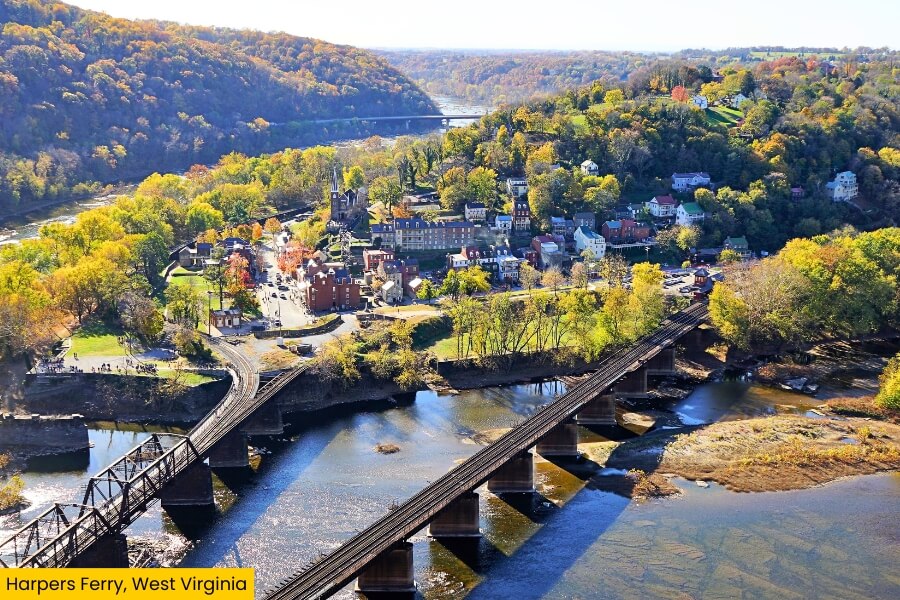
After winding through Shenandoah National Park, continue about 1 hour to Harpers Ferry, where West Virginia, Virginia, and Maryland meet near the junction of the Potomac and Shenandoah rivers.
Walk the steep streets of Lower Town to see historic 19th-century buildings and John Brown’s Fort, connected to abolitionist John Brown’s famous 1859 raid on the federal armory.
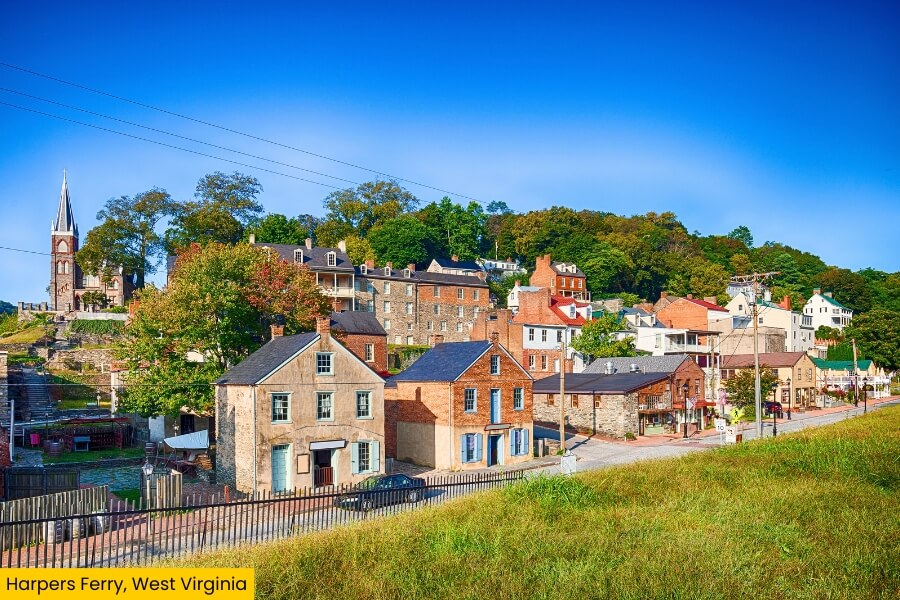
For a bigger adventure, climb the 4.5-mile round-trip Maryland Heights Trail for a postcard-worthy view over town.
Harpers Ferry National Historical Park covers about 3,500 acres, so save time for exhibits about the Civil War, industry, transportation, and the town’s important African American history.
4. Gettysburg, Pennsylvania

From Harpers Ferry, head about 1 hour and 25 minutes to Gettysburg, Pennsylvania, where one of the Civil War’s most important battles unfolded across farms, fields, and rocky hills from July 1 to 3, 1863.
Start at Gettysburg National Military Park Museum to see the massive 377-foot-long Gettysburg Cyclorama painting before exploring the battlefield’s roughly 5,700 preserved acres.
Follow the 24-mile self-guided Auto Tour to major stops like Little Round Top, Devil’s Den, Cemetery Ridge, and the site of Pickett’s Charge, where 12,000 Confederate soldiers advanced on Union lines.
Finish at Gettysburg National Cemetery, where President Abraham Lincoln delivered his 272-word Gettysburg Address on November 19, 1863, and take time to walk downtown Gettysburg’s historic streets.
5. Pine Creek Gorge, Pennsylvania
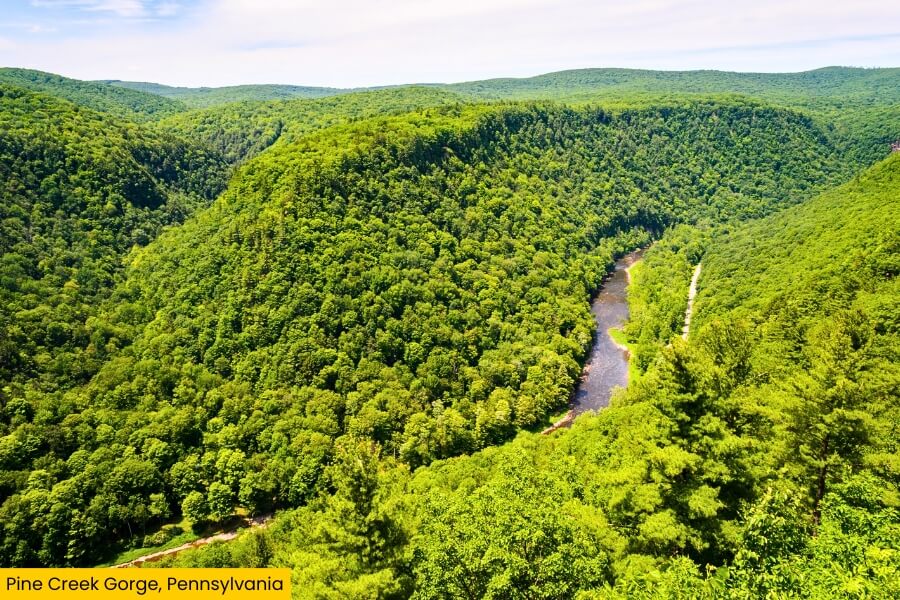
Leaving Gettysburg behind, drive roughly 2 hours and 45 minutes to Pine Creek Gorge, a 47-mile-long canyon in north-central Pennsylvania that drops nearly 1,450 feet at its deepest point.
Often called the Pennsylvania Grand Canyon, the gorge cuts through Tioga State Forest, with sweeping overlooks at Leonard Harrison State Park on the east rim and Colton Point State Park on the west.
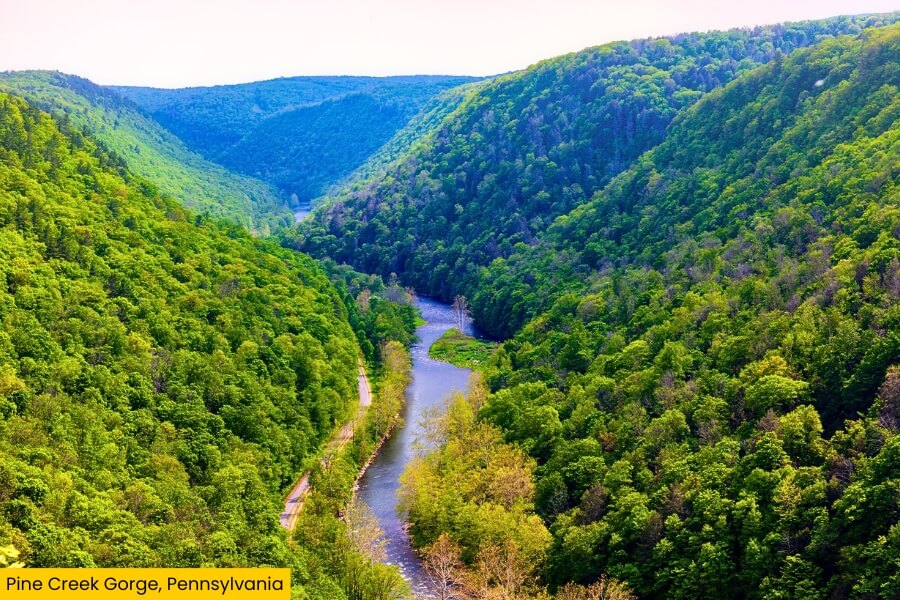
For a closer look, hike the challenging 2-mile Turkey Path at Leonard Harrison, which descends about 800 feet past waterfalls toward Pine Creek before climbing straight back up.
You can also bike part of the 62-mile Pine Creek Rail Trail, watch for bald eagles, or visit in October when red, orange, and yellow leaves cover the canyon walls.
6. Corning, New York
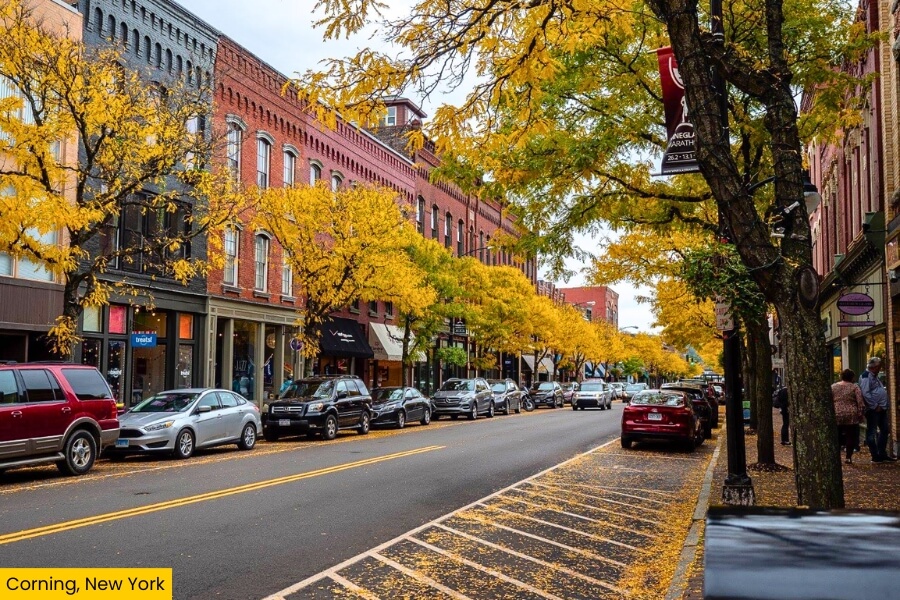
After all that hiking at Pine Creek Gorge, drive about 1.5 hours across the New York border to Corning, a small Finger Lakes city situated along the Chemung River.
Its headline attraction is the Corning Museum of Glass, where more than 50,000 objects cover 3,500 years of glassmaking, and live demonstrations show molten glass being shaped at temperatures above 2,000°F.
You can even make your own glass ornament or flower before walking to the Rockwell Museum, a Smithsonian Affiliate housed inside Corning’s 1893 former city hall.
Save time for Market Street in the Gaffer District, where several blocks of historic buildings are packed with local restaurants, shops, galleries, and studios celebrating Corning’s long connection to glassmaking.
7. Watkins Glen State Park, New York
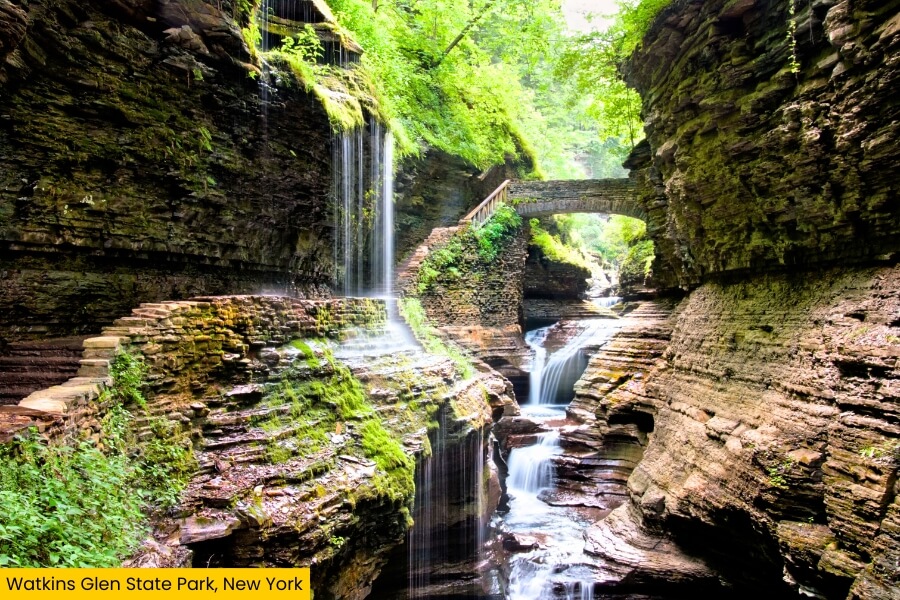
From Corning, it’s only about 30 minutes to Watkins Glen State Park, where Glen Creek has carved a dramatic gorge through layers of rock at the southern end of Seneca Lake.
The star attraction is the Gorge Trail, which climbs roughly 400 feet while passing 19 waterfalls, stone staircases, narrow tunnels, and towering cliffs reaching about 200 feet high.
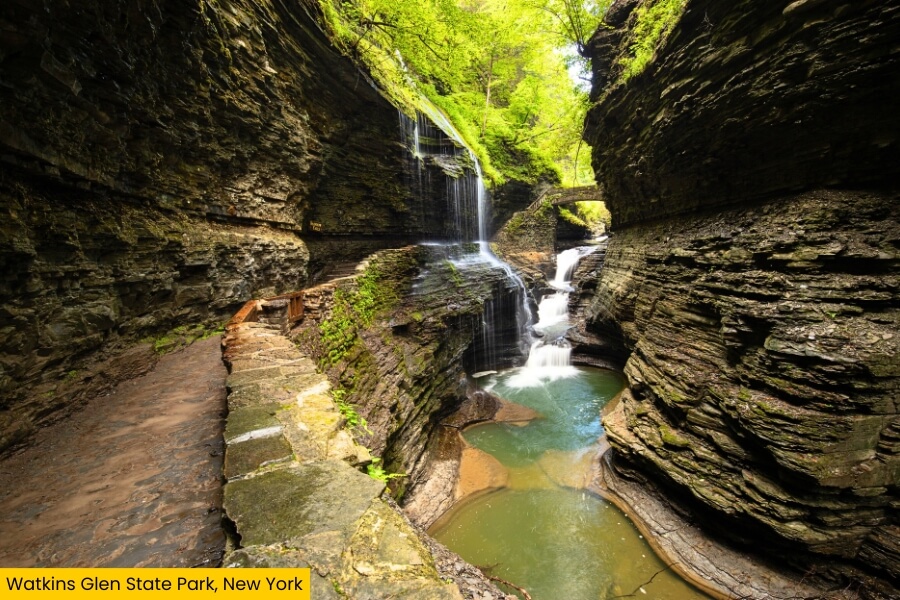
You’ll even walk behind the rushing water at Cavern Cascade, while nearby Rainbow Falls spills beside a stone bridge and creates colorful rainbows when the sunlight hits just right.
The Gorge Trail is usually open from late spring through fall, so check conditions before visiting and wear grippy shoes because those 800-plus stone steps can get seriously wet.
8. Niagara Falls, New York
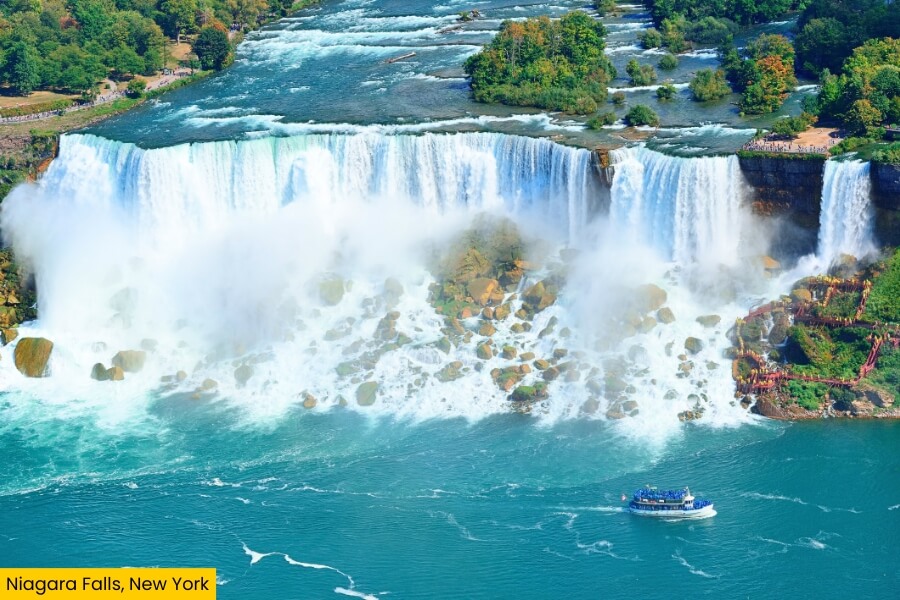
After chasing waterfalls through Watkins Glen, drive for nearly 3 hours to Niagara Falls, where the Niagara River thunders over three waterfalls along the U.S.-Canada border.
Niagara Falls State Park, established in 1885 as America’s oldest state park, gives you front-row views of American Falls, Bridal Veil Falls, and Horseshoe Falls.
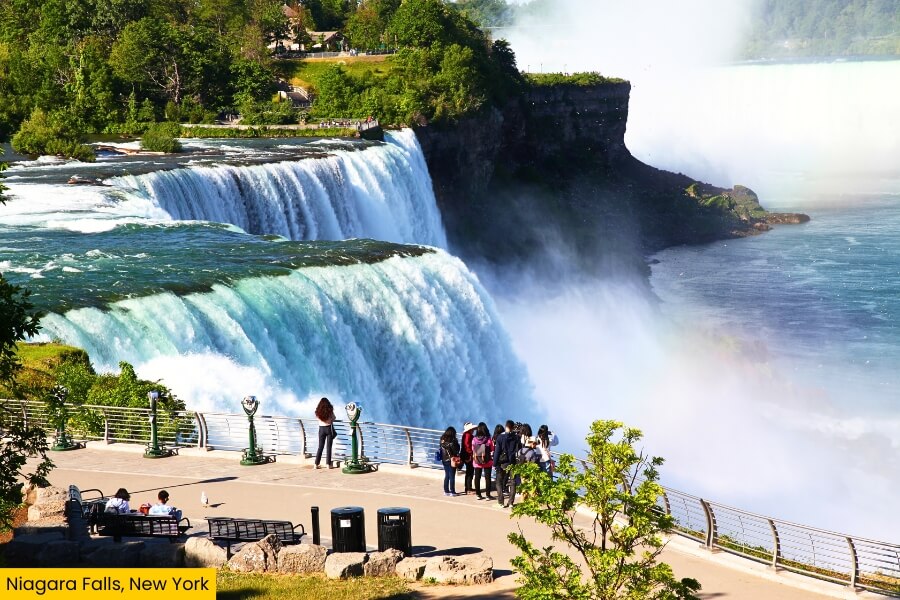
Ride the Maid of the Mist into the roaring spray below the falls, then tackle Cave of the Winds, where wooden walkways bring you within feet of Bridal Veil Falls.
For one last wow moment, head to Prospect Point Observation Tower, which extends over the Niagara Gorge and offers sweeping views across the river toward Canada.
Related Posts